
Tag: Ambika Sharma

  • Pulp Strategy launches AR powered creative tech suite of services

    By A Correspondent


    Pulp Strategy has launched creative tech to power up content marketing for brands on social media.


    Said Ambika Sharma, MD of the agency: “We have deployed creative tech for a few of our clients already, we are now opening up our capabilities to enable agencies and brands to get the best out of their content marketing and campaigns. Engagement today is changing, the clutter places a strain on the best laid plans and creative tech is a big differentiator. It elevated the engagement and cuts through the clutter, unlike the recent past there is no longer the need to download AR apps, or scan QR codes, this is simple and available within the most popular social networking platforms Facebook and Instagram. In a digital media campaign or in a retail environment the technology is accessible anywhere any time with awesome possibilities. We have seen up too 8X increase in engagement in campaigns which use the innovation Pulp Strategy through its Creative Tech services, aims to help brands drive interactive engagement to its full potential. “


  • Philips Avent promotes breast feeding awareness in latest campaign


    Royal Philips has rolled out an awareness campaign aimed to empower mothers, expecting mothers, and their families in India. Launched under the Philips Avent brand, the campaign promotes the importance of breastfeeding, address societal barriers, while also introducing solutions to prolong breastfeeding as much as possible.


    Said Dipanjan Chakraborty. Director Health & Wellness, Personal Health Philips India: “Nutrition, for a baby, is the highest priority and a mother’s milk provides the best nutrition for a child. At Philips Avent, we believe that a healthy start is a healthy future, and therefore leave no stone unturned to ensure that mothers and their families get the support they need to breastfeed their baby as long as possible.”


    Added Ambika Sharma, Founder & Managing Director, Pulp Strategy Communications: “The healthcare solution in sight is full of potential and addresses an actual need.  It provides for the opportunity to be differently creative and bring out the nuances of a little spoken about subject to start conversations across the country.”


  • Twitter leads Facebook and Instagram in B2B channel initiatives, notes Pulp Strategy study

    By A Correspondent


    As many as 75 per cent of marketers chose Instagram as their most preferred channel for sharing image-based content, while Twitter and Facebook garnered brand approval ratings of 63 per cent and 56 per cent respectively for the same. Twitter, on the other hand, leads the charts when it comes to B2B marketing, garnering 47 per cent marketer acceptance in the non-conventional B2B channel distribution. These insights are amongst several interesting marketing facts and figures released by Pulp Strategy – a full-service experiential, digital, and interactive marketing agency – in its ‘The Future of Content 2017 – Chartbuster Trends in Content Marketing’ report.


    The Pulp Strategy report also mapped several other interesting trends for marketers. User-generated content was found to enjoy greater approval with social media users, with 76 per cent of users surveyed considering it more trustworthy than brand-generated content. Image-based content generated the highest engagement for marketers online, clocking about 55 per cent of the overall engagement, followed by clickable links at 24 per cent and videos at 12 per cent. LinkedIn had the highest number of links shared by users, garnering 76 per cent of the overall engagement volume.


    Said Ambika Sharma, Founder & Managing Director, Pulp Strategy: “While it is already hailed as the king of marketing, content continues to gain more prominence and has become one of the major influencers in the overall customer decision making process. Today, marketers can experiment with a range of content types, marketing channels, and strategies to generate quantifiable results for their business. The Content Marketing Report 2017 discloses some very insightful aspects of marketing which will help marketers and businesses in positioning themselves more optimally.”


    The survey also observed personalisation, user-generated content, and interactive media to be the key drivers in the content market space. The assessment made by the survey even disclosed in-depth insights such as how a split of body text with engaging images inclines the users to finish reading the whole content. The report on content marketing also included a range of industry examples and marketing endeavours undertaken by a variety of top-rated international brands.


  • Pulp Strategy powers Yebhi.com with NFC

    By A Correspondent


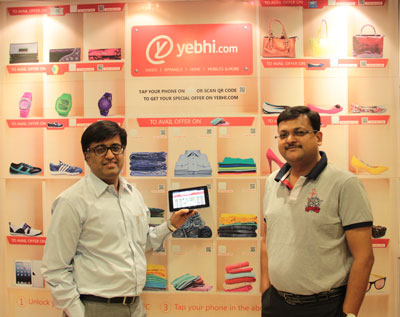
    yebhi.com launching virtual stores L-R: Mr.Nikhil Rungta Chief Business Officer, Yebhi.com, Mr.Manmohan Agarwal, Co-Founder & CEO, Yebhi.com

    Pulp Strategy Communications has launched Near Field Communication- based engagement solutions, allowing brands to engage with consumers in an interesting and meaningful way on a real-time basis. NFC is wireless technology for smartphones and similar devices to share information via touch. With smartphone penetration at 10% in India, the stage is set for creating unique experiences and enhanced engagement campaigns for consumers.


    Pulp Strategy recently powered the first NFC initiative with 30 virtual stores in Delhi and Bangalore for Yebhi.com. The virtual stores were strategically placed in premium cafes and saw a lot of interest from consumers. The virtual stores allowed consumers to shop for a product of their choice with a single tap of their smart phones. It takes seconds to get the product of your choice and in all sizes and colours. Commenting on the occasion.


    Nikhil Rungta, Chief Business Officer, Yebhi.com said, “30 Virtual Stores is first-in-class initiative in the eCommerce category from Yebhi.com. We have used the latest NFC technology to enhance user experience, as it is quick, easy and very interactive. We feel this is our first step towards training and exciting users towards mCommerce. We feel this kind of initiative can be a true game changer in etailing as it is a hybrid of both online and offline.”


    Ambika Sharma

    Commenting on the new offering Ambika Sharma, MD & CEO Pulp Strategy said, “Every marketer’s dream is a consumer who looks for value but appreciates innovation. A marketer’s nightmare is the consumer easily bored, wants everything on the go, and has seen it all before. Our NFC solutions for retail and brand activation help enhance the consumer experience, spice up and prolong the engagement with the consumer.”


    In the realm of new technologies, Near Field Communication (NFC) has clear potential and practical uses. This short-range wireless connectivity technology makes it possible to browse, choose, review, download, connect with brands on social media and even buy with a single tap.


  • Pulp Strategy named ‘Youth Marketing Agency of the Year’

    By A Correspondent


    Pulp Strategy was given the ‘Youth Marketing Agency of the Year’ award at the Global Youth Marketing Forum by CMO Asia. The Youth Marketing Forum is the largest rendezvous of youth experts, marketing professionals, cool hunters and brand marketing specialists, with the focus of 2013 being on bold vision and brand ideas for the youth audiences.


    Pulp Strategy creates and develops engagement initiatives with youth communities and works with over 4,000 campuses across India, including the premier business and engineering Ivy League campuses. A substantial chunk of the agency’s body of work is centred on youth marketing. Having taken an unconventional approach to experiential marketing, Pulp Strategy has built expertise in peer-to-peer marketing, ambassador-led programmes, influencer marketing and community seeding in addition to traditional experiential marketing and brand activation campaigns.


    Ambika Sharma

    “Youth is a much sought after consumer segment as they are early adopters and value brand engagement when in the correct perspective. We utilize a strong social media connect as part of the relationship building process in addition to using experiential marketing to create seamless engagements with the audience,” said Ambika Sharma, MD and CEO, Pulp Strategy Communication.


  • The Anchor: 6 things young companies should do to attract talent

    By Ambika Sharma


    Talent equals value and value drives strong organizations. Talent is capital and for young companies and start-ups, talent acquisition decisions can make all the difference between short-term and long-term success. Younger companies often face challenges when looking for talent. Here are six things one can do to attract the right talent.


    1. Build your brand, get your name out there. Most times it’s seen that startup teams get so busy pulling every day business together that they ignore showcasing and brand building. Build your organization’s brand carefully, ensure that you talk to potential talent pool right at the beginning and steadily create a conversation with your audience. Make sure you convey your brand values; what your company stands for, why are you doing something exciting and why they should want to work for you.


    2. Underline the opportunity for growth. Start-ups have advantages; they are less bureaucratic and hierarchical, show openness to fresh ideas and have a higher growth ratio as compared to traditional organizations. The new generation of talent realizes the potential of a free workspace and the growth opportunities it presents. Being able to walk up to the boss and present your case is a huge benefit. Don’t under value its potential. Be open list your advantages, package well and be honest, it’s a lot of hard work to be employed in a start up don’t let that fact slip through the cracks.


    3. Reward and respect. Respect the talent you have. Begin with setting the tone, if you had a good year don’t put off sharing the fruit for later. Give those well-deserved bonuses, and reward your talented partners, that’s what being a startup is about if you want to stop being a startup and graduate to being a respected employer. Last year, when the industry was putting off the increments and cutting the bonuses, we gave out nice juicy bonus packs. The team who ensured it is a good year deserves it. It’s about respecting the talent you have on board they are your strongest advocates to the outside world.


    4. Create value. Take initiatives early on to nurture the culture of being a valuable employer, being a great place to work in. Make your workplace fun, chose your benefits carefully and ensure your employees get well-constructed plans, Medical cover for the family, birthday bonuses, R&R programmes create value in the work place for every one on the team. Build in referral programmes, it’s a great way to identify talent as well as open a dialogue.


    5. Be inspiring: Talent and inspiration have a strong equation don’t forget to inspire. When you recruit, spend time to explain your organizations values to your HR partners, explain to them the qualities you want in a candidate and ensure you let them know why. They are your mouthpiece and must get the correct pitch on why your organization will be the game-changer for promising careers.


    6. Be consistent: Don’t go looking for talent when you are in need. It’s a constant process identify your 5 A-team list, constantly evaluate people you would like to have on board (yes even if you cannot afford to today) don’t settle for less it will not be fair on your current team or on your organizations future. I find this the most trying, to give time to a potential candidate when I am not looking to hire any time soon, but it’s important to know the trends and connect with talent on a consistent basis.


    Ambika Sharma is Managing Director and CEO, Pulp Strategy Communications


  • MxM Monday: Is BTL gaining acceptance as a must-have in a media plan?


    By Ananya Saha


    Is Below-the-Line (BTL) advertising gaining bigger share of clients’ advertising budgets over the last few years? How innovative has BTL become, and what are the challenges it still faces?


    Anwesh Bose, Senior VP, DDB Mudra Max

    BTL has gained prominence over the years and will continue to do so as advertising communication is evolving from a ATL-BTL model to a Through the Line (TTL) model. The lines have blurred between ATL & BTL giving rise to a new phenomena where a medium can take the form of ATL or BTL depending on the need of the communication. The challenge today is for the communication professionals to justify the Return on Investments on any form of media and the pitch will keep getting higher. It is time for the industry to jointly work on a multimedia optimization model that would justify investments.


    Narayan Devanathan, SVP, National Planning Head, Dentsu India Group

    That’s a very broad question, but going by overall trends, the answer is probably yes. The more pertinent question, how much bigger is “bigger?” Who is measuring this? How does it differ by category? What all goes into the definition of BTL? For example, with the expansion of modern trade in retail, you’ll obviously see a lot more BTL money being spent on in-store merchandising, POS and promotional campaigns. A second factor affecting expanding BTL investments will likely be the short attention spans and the myriad of choices and screens that consumers interface with today. TV, radio, web and mobile are probably vying for the consumers’ attention simultaneously at all times. But with definitive metrics, the impact of last-mile tactics and campaigns will be a key differentiator between brand success and business success. All this does factor into the fact that, yes, BTL as a share of clients’ ad budgets is seeing an upsurge.


    Innovations can happen on three fronts: technology, measurability and the balancing act between strategic and tactical objectives of the campaign.


    On the technology front, something like RFID, for example, can turn walking behind a shopping cart into inputs for a shelf-stacking strategy in-store. A combination of GPS, augmented reality and a promotional scheme can turn a mobile phone into a CRM platform. But innovations like these and others depend on the evolution of both marketers and the retail (and other parts of the brand) environment.


    Technology can also be the difference between best-case guesstimates and data-driven strategies that reduce wastage of marketing investments.


    Finally, marketers have to find ways to close the gap between strategic and tactical goals. If brand-building is a strategic goal, how do you use BTL not just be a one-off tactic or part of promotions but contribute to brand-building?


    All said and done, as with ATL, the point of all communications, regardless of medium, is to create stories, conversations and transactions (not always monetary) that people want to engage in. If that perspective is missed, then we will continue to see a “line” and see “below” and “above” this imaginary line that only marketers – not consumers – see.


    Nina Jaipuria, EVP and Business Head, Sonic and Nickelodeon India

    Nickelodeon has always believed in the virtues of experiential marketing through on-ground engagements. While TV helps in reaching out to millions of viewers, it allows for only one way-communication. On the other hand, BTL promotions despite the high cost per contact have the potential of making the engagement truly memorable for consumers. There is nothing that can replace the experience and thrill that kids feel when they meet their favourite Nicktoons Ninja Hattori, Dora, SpongeBob or Keymon in person.


    In addition to engaging our young viewers at schools, malls, retail chains etc, we also conduct van activities that helps us reach out to smaller towns and villages in the interiors of India. For example during the launch of Motu-Patlu, we engaged kids in over 30 towns like Lucknow, Kanpur, Allahabad, Varanasi, Agra, Mathura, etc in Uttar Pradesh and Gwalior Khandwa, Indore, Ratlam, Bhopal, Jabalpur, etc in Madhya Pradesh. We often do mall activities to celebrate days and occasions that are important to kids.


    At Nickelodeon, we are constantly seeking new and innovative ways of connecting with kids all through the year. In-store promotions and toon visits at retail stores further helps in strengthening our on-ground presence when it comes to merchandize


    Brand partnerships also play a very important role in creating unique propositions for designing innovative on-ground programmes. BTL promotions are thus an integral part of our media plan as they enable us to connect with our consumers and give them a ‘Touch. Feel. Play.’ experience. In today’s day and age, it is imperative to be present across multiple touch points and to tangibilize the brand.


    Uday Mohan, Executive Director – North, MPG India

    With the increasing fragmentation of the media space it is not enough to just make “contact” with the consumer, but more importantly to “connect” with him. First hand experience of the product/service offering and the customization of it allow this impact extending it to sales as also brand perception. It is here where the relevance of BTL in the overall marketing/media mix is increasingly gaining importance.


    BTL is now moving from its earlier perception of basic activation to being an integral part of the consideration set at the media strategy formulation stage itself. FMCG for the mass audience spends even up to 25 percent of their advertising budget, luxury would spend more. Auto, telecom, food outlets also see the merits of BTL as we see more spends and ideas. It is getting very innovative using insights and planning; 3M Scotch-Brite came up with Wash your Bill, where you had the choice of washing dishes over paying the bill, adding a fun twist to the old adage of ‘pay your bill or wash the dishes’. The activation connected with a younger audience, made them use the product, gave immediate gratification, put it up on YouTube and created word-of mouth.


    Lack of quality data is a major challenge that BTL faces as there are as yet no set parameters for evaluation. Another challenge is the infrastructure and operational co-ordination required from global and nationalized brands of mass appeal where delivery to target audience becomes an issue. For example even Pepsi in its ‘Open Happiness’ campaign could create the reach because of the use of digital and social, else the cost would go out of hand. BTL activation for a mass brand would require innovative use of the media mix to get the desired effect.


    Ambika Sharma, MD & CEO, Pulp Strategy Communications

    There is a definitive shift in perception, below-the-line is media that barrier is fading, it is new media which adds the rich creamy layer to the traditional media plan. Inclusion of BTL in a plan has increased steadily but has seen a stronger spike in the last 2-3 years. It is not in the perfect place that it could be in the consideration set but it is no longer ignored like it used to be a decade ago.


    BTL is now increasingly being evaluated and included when developing the mix, for the simple reason that it cannot be ignored, as it is the only media that allows people to experience the product outside of the retail format. Below-the-line activations can be great when done cleverly. The medium provides the freedom to engage with your core consumers and almost always has the potential if designed wisely to be quirky and attention-grabbing.


    BTL needs to be carefully considered in the planning process and not as an after thought. A well-thought-out, through-the-line campaign (or 360-degree approach), will always have more impact than one curtailed to a limited approach. This is perhaps the most positive change where in some marketers are consciously choosing BTL within their plan with specific deliverables in mind. This way the plan is tighter knit, and the ROI is richer. This change has reflected in a higher share of voice for activation in the media budget.


    Other factors have also contributed, one is what we call the “Ego” slice in the media plan, prominent some time back its the forced fit into the prominent / upmarket ATL mediums because “presence there was a must” at times this ate into the working budget which would have been considered for new media including activation. This is no longer the case. Activation / BTL is holding its own in media plans and gaining its due in media budgets.


    Samar Singh Sheikhawat, Senior Vice President - Marketing, United Breweries Ltd

    We do not call it BTL, but refer to it as activation or leveraging. I would say that activation has always been an important part in the UB Group’s marketing intervention. And today it is almost equal to our sponsorship amount. So if we are involved with an event, property or platform, and suppose Rs 50 lakhs as sponsor, we will spend an equal amount in leveraging it or BTL. I would say, it is practically 1:1 for UBL and our portfolio of brands when it comes to the ad pie division of BTL with other media.


    I think a lot of things are happening apart from the display being used in this medium. The kind of consumer touchpoints being used, digital and social media is becoming a big thing and is being used increasingly as activation by us. Video mapping, production technologies have improved a lot. There are new techniques we are using from overseas in terms of projections, holograms, video mapping on walls etc. the ways to reaching out to consumer is getting innovative whether it be direct mailers that we do or CRM or get-togethers. The kind of media being used in activations is seeing innovation and substance that is being used in production is getting innovative.


    This medium faces challenges in terms of credibility and execution capability. Anything that you do in BTL needs to be relevant to your product, your target audience and to your brands’ positioning. A large part of differentiation in BTL goes towards execution.


    Raghu B Viswanath, Founder & Managing Director at Vertebrand Management Consulting

    Media today is fraught with many challenges. While the overall ADEX spends has been growing at a much higher rate than GDP increasingly clients are questioning whether they are getting enough bang for buck they have spent by advertising in media.


    Earlier brands focused on getting more eyeballs translating to more awareness on the brand. Since the competition intensity was earlier relatively low mere awareness got translated to purchase. That is not the case today. With increasing competition and very little differentiation, it is important for brands to not just enhance the brand – building efforts on awareness creation, but to go beyond and engage their customers meaningfully. This in turn means that brands need to connect with their customers through as many touch points as possible. So, non-traditional (BTL) lends itself to this two-way communication. The rules of the game is not about seeing or hearing. It is about experiencing the brand with all the senses. Hence, touch feel and other sensorial connects with the brand, is the need of the hour.


    For many brands, BTL is becoming a more significant component of their marketing spends (almost equal to ATL). I believe this trend is expected to grow, as brands pursue serious efforts to engage better with their customers.


  • The Anchor: 6 things marketers must keep in mind while opting for social media

    By Ambika Sharma


    Everyone is on social media; we need to be present too! While this is true, what will work for your brand is probably unique to the brand. Rather than starting with “We have to have a Facebook page – let’s get one,” here are six questions you need to answer before you jump on the bandwagon.


    #1 What social media activities are consistent with your brand positioning? Start with your brand, and then think of social media activities and platforms that will help enhance its positioning and personality. Choose your platform carefully; it should provide you with the freedom as well as the reach to be able to communicate with your audience effectively. If you have a service with a lot to say, then you must evaluate a blog and/or forums alongside the social networks.


    #2 Set your expectations. What do you want from your social media presence, and how will it enhance your marketing initiative? It’s critical to list out and set expectations. This will be the first step to establishing not just the platform right but also what sets the tone of that platform.


    #3 Does it fit with the rest of your marketing plan? How will your social media programme take advantage of your other marketing initiatives? Social media built on advertising or promotion activity or sponsorship events have a head start. Before creating an entirely new programme, consider how you will cross-leverage existing initiatives.


    #4 Content is the king. Getting on social media is easy, keeping interest, excitement and relevance alive, but consistency is not so simple. Get a content plan in place. Research your consumer. What will keep him interested about your brand? Deep dive into your brand communication – what is the message that you want to reinforce? Marry the two. Keep it interesting, consistent, conversational and light.


    #5 Guidelines are a must. Set your organizational guidelines for social media in place. It’s a good idea to get the buy-in on all stakeholders in place. What worked for advertising will not necessarily work for social media. Be specific, for instance: what will you do if an irate consumer is vocal on your page? What is the information flow? What is the escalation plan?


    #6 How will you make your social presence valuable for your consumers? Social initiatives require a daily effort in customer delight and engagement. It’s imperative to have a plan in place that will chalk out a path towards the same.


    Ambika Sharma is MD and CEO, Pulp Strategy Communications


  • MxM Mondays: Why do marketers not spend enough on digital media?


    By Ananya Saha and Robin Thomas


    According to the latest IAMAI-IMRB report on Digital Advertising, as of March 2012, the total advertising spends, including classifieds, was valued at Rs2,850 crore. It is expected that by FY2013 the digital advertisement spends will be Rs4,391 crore.


    Search advertising constitutes about 20 per cent of the total online advertising spend or about Rs570 crore. Display advertisement, which has many components, forms a sizeable portion of advertising spends. Advertisements on portals and vortals form 13 per cent of the overall pie (Rs369 Crores). Advertisements on Social Media, Email and Videos over the Internet form 3 per cent (Rs94 Crores), 5 per cent (Rs144 Crores) and 2 per cent (Rs59 Crores) respectively. Mobile ads form nearly 4 per cent (Rs90 Crores). A major proportion – around 53 per cent of the overall digital advertising spends – are classifieds listings (Rs1,496 Crores).


    These numbers seem impressive, but there has been some concern that marketers are not spending enough on Digital Media. The theme for this week’s MxM Mondays is ‘Why do marketers still not spend enough on digital?’ While marketing spends may be shifting to the digital media globally, in India, television and print still rule. Is it because digital still doesn’t reach the masses, and homemakers, in particular? Or is that the bucks (hence commissions) are still big in TVCs? MxM spoke to some players in the industry to find out:

     

    Ambika Sharma

    Ambika Sharma, MD and CEO, Pulp Strategy

    The shift to digital media is not happening as fast as the industry would like it to be. However, we are witnessing an increase in aptitude and attitude with regards to usage of digital media. Marketers are not using the media aggressively as they prefer to wait-and-watch. Even then, they are aggressive on ‘search marketing’, but not other aspects of digital media.


    There is hardly any youth brand which is currently not on digital platform. Education is one prominent category that has been using digital media. The cents for digital, however, remain restricted. But as the impact of digital media grows, the impact of mobile advertising has seen a decrease as most people now do not prefer to click on banner ads on mobile screens. Some studies show that in the past one-and-a-half-year, the user has been ignoring banner ads.


    The digital spends depend on ROI, search and impressions, which needs robust backend engine. E-commerce websites have been the heavy users of digital advertising to create impressions. But there is little or no response mechanism on impressions and the visibility is highly fragmented. The numbers, like there is TAM for television, are not available for digital media. If a marketer advertisers on three digital platforms, every platform gives their own numbers. So, there is no comprehensive measurable strategy.


    Going forward, digital media will grow, but it will be a long while before it catches up with other media vehicles. Lotof factors such as measurability, reach, people not preferring to buy online are affecting the growth.

     

    Gyan Gupta

    Gyan Gupta, CEO, I Media Corp Limited (IMCL), Dainik Bhaskar

    In the US, the online spend is 29 per cent of the total advertising pie; in UK, it is 26 per cent. Now if you see the figures in India, it is not even 5 per cent. The trend shows that there will be 50 per cent increase.


    But I will not say that marketers in India are spending enough yet. The typical spender (who spends on television) is yet not on-board. Till the main spenders come on-board, the growth will be limited. FMCG’s have a deep share of the pocket, and it is necessary that they spend on digital media. Auto companies, e-commerce companies, financial companies have been heavy spenders on this medium.


    What are the marketers spending on, and how they spend also becomes important. What needs to be analysed is if the cost of acquisition is happening, if the leads are getting generated, how much a brand is spending on digital activation vis-a-vis on brand promotion. Trending is happening. This year will actually showcase the brands spending on digital media.

     

    Harneet Singh Rajpal

    Harneet Singh Rajpal, Vice President-Marketing, Domino’s Pizza India

    The use of digital media is picking up in India. For any marketer present in India, the digital media is beginning to become a part of their media plan. It is on radar for everyone, especially in the categories where youth is the target.


    For Domino’s, digital media has been important ever since we began our online ordering platform. Currently, it helps us drive traction. Hence, our media spends for digital medium have increased over the last two years. For us the return-on-investment is visible for every buck we spend on this media, since it results from direct conversion from inventory to revenue generation.


    We now spend close to 4-5 per cent of our total advertising budget on digital marketing, from almost nothing in the last two years. We work with leading publishers in the domain to create applications for Google search, Facebook and social media. I must say that on Facebook, we have the largest number of fans in the food category, and also followers on Twitter.


    Social Media management needs time and investment. It is important that the brand keeps the target in mind when planning the digital activations. Going forward, marketers will have to evaluate the prospects digital media brings. Of course, that depends on category to category. Digital media is still limited because of its reach, whereas traditional media garners higher reach. Also, the confidence about using the media is not too high among the marketers since there are no hard numbers to prove its success. The penetration of internet and the efficacy of the media will be tested over time.


    Jonathan Bill, Senior Vice President and Business Development, Vodafone India

    Digital Advertising is a growing medium in India. It will be everything we are hoping it to be and that too quicker than we think, so I think the business is starting to get in a healthy shape. The advertisers are starting to embrace digital more openly and they should do so, because India has the third largest internet population on the planet.


    On TV and Print bagging bigger ad share, I think that is a legacy issue among advertisers, but I do get a sense that it is fast changing. In the West, however, TV and Print advertising have declined in favour of online advertising. Print, therefore, has very less revenue share from advertisers as compared to online advertising and now online is beginning to even threaten television as a medium.


    I think we just need to continue on the path we are going. The quality of sales and, to a certain extent, the market needs to be made. The West took nearly two or three years to be made as far as the start of digital advertising market is concerned and in India we are only about a year ready. So, I am very bullish on digital advertising in India, particularly on mobile on three to five years timeline.


    Narayanan SP

    Narayanan SP, Senior Vice President, and Head VAS Mobile Commerce and Long Distance, Idea Cellular

    Compared to the global benchmark, certainly advertisers in India are not spending as much money on digital or mobile, but this is something which will change over a period of time. Marketers are experimenting to see if it makes sense for them to connect digitally for certain set of products/features and whether digital is the right medium to communicate or engage their brands. Thus, lot of experiments are happening.


    On the internet front, we are already seeing a significant traction which may not be as big as the international market because of the low internet penetration in India. So if you are looking at a certain type of product wherein the target audience are already digitally connected, then it makes immense sense to go digital. Digital, I believe, will evolve as more and more customer profiling is done and advertisers are able to target their customers precisely. When advertisers are able to measure the ROI (Return on Investment), then we definitely believe that a lot more investment will come into digital.


    The fact that TV and Print still bag more advertising share will definitely change over a period of time in terms of mobile being one of the vibrant channels. This does not mean print and television advertising disappear but, you will see an increase in spends on digital advertising and mobile advertising in particular over a period of time. This is because mobile is able to give the advertiser not only a more precise profile of the customer which makes it a lot easier for the advertiser to reach out to its consumers effectively, but it also allows the advertiser to interact with customers and measure the results of their campaigns effectively.


    Mobile industry, for instance, has a wealth of data in terms of customer usage, but there has not been much mining of the data which can be heavily leveraged by the advertisers. However over a period of time, you will see a lot more advertisers leveraging this data.

     

    Rakesh Rao

    Rakesh Rao, National Sales Head, Zapak Digital Entertainment

    The digital media has been growing exponentially. The year-on-year growth of this media vehicle is close to Rs2,800 crore, and is supposed to reach close to Rs4,000 crore in a year. So to say that it is not a preferred media would not be the right statement. Of course, it is not a dramatic growth, but given the growth of internet and smart phones, digital media is becoming a part of our daily life. The marketers are also following the trend.


    The ROI, when compared to TV and radio, is much more measurable. Cost per lead and cost per click measure actual conversions. This is the only interactive platform too, while rest of the media only give reach.


    Education, travel, finance are becoming the biggest spenders on digital because of conversion aspect. E-commerce, and categories like travel that look at selling inventory believe in digital media.


    The challenges that this media is encountering is getting TV-centric brands such as FMCG onboard because of reach. It is a given that while TV is cost-effective when it comes to reach, digital media will catch up in some years. About 60 per cent of these brands are on digital, but 40 per cent need coaxing. There is no hindrance apart from the fact that broadband numbers need to grow. Digital media is here to stay and grow.

     

    Sandip Tarkas

    Sandip Tarkas, President (Customer Strategy) and CEO, Future Media and T24

    As far as Future Media is concerned, our advertising spends on digital have been increasing year-on-year. Despite a lot of digital activities done by marketers specifically on social media, it does not reflect in spends. The problem with digital is not a lack of a credible or universal measurement system, but the fact that it is too measurable as people try to measure every little thing. Although there are so many metrics which evaluate the digital medium, I don’t think it is a lack of measurability at all, as in digital we are clearly able to measure our CPM’s (Cost per Thousands) and so on. Digital is something we use for more engagement rather than reach because it does not offer reach.


    We look at advertising based on two things – reach and cost efficiency. And then you look at everything else – whether the medium is interactive and so on. So, it is primarily about reach and cost efficiency. Digital media spend in India is a reflective of India’s internet penetration, whereas in a lot of markets digital penetration is very high. In those markets both print and television advertising have declined and digital advertising has been growing.


    In India too, digital is growing much faster than the traditional media, and the growth of the media certainly shows the growing importance of digital. The current size of the digital advertising pie is reflective of the kind of inroads it has made in the country.


    On digital being a 360-degree medium in itself and the role of online video and social media advertising, the biggest gain happening in digital at present is the fact that it is changing quite rapidly. Since the late 90s when we first started using digital advertising until now, the role of the medium has changed quite drastically.


    Digital today not only offers more opportunities for engaging the consumers, but the vehicles used in digital have also been changing with time. For instance, in the early days television ads would continue for quite a lot of time, but today with more options, even the television channels have begun to announce that the programme will be back in say a minute or two. So as consumers have more choices, the way the medium gets utilized also changes. Digital, I believe, be it in any form – video, social, mobile – if it is not going to be interactive, it will not be very successful.


    For anybody targeting the youth, digital is an inescapable medium. I believe the biggest change in digital advertising will take place through mobile, particularly mobile VAS and the data cost. Growth spurt in digital advertising will also come through the increase in smart phone usage and the lowering of data cost will revolutionize digital advertising.


    This is because India has a very high tele-density and today mobile phones have reached the lower-most strata. I believe digital advertising in India will explode once mobile advertising comes of age but, right now it is still in its infancy.


    Eventually digital advertising will impact television and print ads as marketers will have to allocate their budgets for digital advertising, once it comes of age. It may probably hit print advertising first and then television but for that to happen there is still some time.

     

    Sanjay Tripathi

    Sanjay Tripathy, Executive Vice President – Head Marketing and Direct Channels at HDFC Life

    There is still limited spend on digital due to lack of knowledge about the medium and utilizing it effectively as a part of marketing plan; reach/penetration of the medium; and its ability to create impact in the short term. Digital still reaches about 10 per cent of the Indian population and there hasn’t been much of a development in building infrastructure to support the growth of internet. TV continues to be the mass medium which gets the maximum eyeballs and reach.


    While the ROI variables will drive spends to digital, marketing needs a serious mind shift to look at the additional advantages which digital brings along –  a medium which allows two-way dialogue  and measurability to the last mile.


    Thirty per cent of our budgets are dedicated to digital this year – a big move from the fact that we spent a negligible amount last year. As BFSI marketing and advertising becomes more ROI focused, digital media will play an important role. Digital budgets will have a healthy growth each year and will also account for a significant part of the marketing budget.


    While marketing spends may be shifting to the digital media globally, in India, television and print still rule. This is because reach plays an important role. Penetration of Internet in India is still low compared to international markets. The consumption of non-traditional online media is still low and 360 degree integrated communication planning in India has not evolved to have online as an integral part of marketing plans. Also, online medium do not works in sync with other media.


    While there has been a tremendous amount of growth in the usage of internet among SEC A, SEC B audience, internet is yet to gain as big an audience in tier 2 or tier 3 cities. TV continues to be the mass medium due to lack of digital infrastructure. It is the reach and channel affinity which mainly drives the spending and this is where a traditional channel like TV gets one up over digital. There is also a problem of lack of content on digital. Either the content has not been customized to cater to the audience or often the language becomes a hindrance in consuming the content.


    But digital media will make a huge impact. Level of engagement, interactivity and ROI afforded by the medium means it has big role to play. For brands which don’t engage their users online will tend to lose their relevance. As reach increases, the importance and level of competition will also increase –  YouTube already affords a higher reach compared to most of the TV channels and is increasingly becoming an important part of the traditional media mix.


    Digital offers tremendous potential for business – whether it’s about spreading awareness or generating business even in the face of a slowdown. In fact, as people tighten up their purse strings, they will want to do more research before they arrive at a purchase making decision and internet remains the primary medium of product research.


    I see the spends going up because the whole media pie has been asymmetric- if you look at the reach-frequency formula and compare it to TV, print, radio and then digital. There are more people spending time on digital in comparison to other traditional media touchpoints. I see the digital percentage increasing in the overall pie.


    Youtube and pre-roll videos have become a mainstay when it comes to hosting TVCs on digital and these unique ad formats are as effective in reaching out to audience as a TVC. For print QR codes help bridge the gap between offline and online world.

     

    Saugata Bagchi

    Saugata Bagchi, Senior VP, Tribal DDB India

    The primary challenge is the need of cracking an ROI metric, which is acceptable by advertisers across the board.  The media spends are happening, but is it delivering enough clickthrough rate goes unanswered. Digital media cannot ensure high reach like television, but with 12 per cent penetration among various categories it can definitely give high frequency. Currently, only 25-30 per cent of population is online; hence, the spending on this medium will remain lower than other mediums.


    The point of advantage is that there is a big influx of youth, and they are ready to spend. While the marketers would want to catch the youth online, they (marketers) get no justification in form of numbers to spend much on media. Hence, they prefer doing mall activation to spending on digital platform. The agency and publishing community need to be more forthcoming to speak to the marketers, and in their language.


    Digital media is currently registering 15-18 per cent year-on-year growth, but it is important to note the gap between digital and television media.


    Since the offices of MxMIndia are closed on Monday, August 20, there will be no MxM Mondays next week. We will announce the theme for the next edition on Tuesday, August 21.



  • Pulp Strategy launches Augmented Reality app

    By A Correspondent


    Augmented reality (AR) is the new buzzword and augmented reality games have become a favourite with brands and consumers alike. Now introducing a new dimension to experiential marketing campaign, Pulp Strategy has launched a layar-based mobile application. The application is currently available for Android and Iphone users. This app is an excellent way to add digital content to printed media.


    Explainign about the app, Ambika Sharma, Managing Director & CEO, Pulp Strategy, said: “With the increased penetration of smart devices in the youth segment, the application allows the static creative advertisements and collateral’s traditionally used in on-ground activations to be infused with interactive digital experiences in real time. This means that a static poster or a standee – a method of delivering static information – can now be an information tool and an engagement prompter.”


    The possibilities of the application are amazing – consumers can be prompted for check-ins on Social media at the press of a button; drive ‘Likes’ or ‘follows’; go to the brand site or order a product or stream the brand video straight to the users hand-held device. The next time marketers plan for that poster creative in campus, or big branded wall in a mall activation, or even brand merchandise for a campaign, the app promises to bring alive each piece of static creative digitally for the consumers.


    “Marketers find value in such innovations, as not only is it useful and social media relevant but also breaks clutter, and adds pizzazz to existing branding elements increasing consumer engagement,” said Sharma.


    This thought is not new. RFID bands for check-ins have been used in activations before. However, they have been device restrictive and cost per user piles on if one scales up. It needs physical equipment presence to drive any engagement or check-ins.


    “But the Mobile app is device agnostic. All it needs is a smart phone and once planned it can be scaled up to unlimited consumers. It is not necessary to have a promoter or brand representative to drive the experience. Essentially, the added delight in experience for the consumer comes at a negligible cost as part of the ground campaign. It integrates, Facebook, Twitter, Google+ Linked In for social media,” said Ms Sharma.


  • Pulp Strategy wins Digital Media mandate for Lavazza

    By A Correspondent


    Pulp Strategy Communications has won the mandate for the Digital Media and Activation for Italian coffee major Lavazza after a multi-agency pitch.


    Barista Lavazza had called for a pitch a few weeks back and several agencies took part in the process. Pulp Strategy’sDelhioffice will handle the account. The agency’s mandate includes overseeing the brand’s digital and social media strategy, media buying, and planning across all digital and interactive channels. In addition to this, strategic planning for activation at retail is also a part of their area of responsibility (AOR).


    Barista Lavazza traces its roots back to the old coffee houses inItaly– the hotbeds of poetry, love, music, writing, revolution and of course, fine coffee. Offering alternative options and pleasures of coffee to millions, the chain is also revolutionizing the coffee drinking experience in most Indian cities.


    Barista Lavazza has managed to capture the loyalties of many, elevating the experience of coffee to a lifestyle. Its leadership position can be attributed to a remarkable expertise in specialty coffee coupled with a sound technical competence, an ever-evolving delightful retail experience.


    Ambika Sharma, Managing Director & CEO Pulp Strategy Communications said: “Being chosen as the Digital AOR by LavazzaIndiais a matter of honour and pride for us at Pulp Strategy. LavazzaIndiahas big plans towards quality and leadership position in the café business inIndiaand we are excited to partner them in fulfilling that goal. Our biggest strength is a talented team and a holistic integrated approach, which understands the sensibilities of the brand as well as the nuances of retail and social media”