Tag: Alyque Padamsee

  • Noshir was always the ever-smiling jovial human being: Tribute by Ajay Chandwani

    By Ajay Chandwani

    Noshir Desai was in Lintas the go-to person to while away your client stress and agency blues. In the ninetees I was one of the Lintas Mancom colleagues of Noshir who used to navigate the agency.

    Noshir used to wear a few hats quite comfortably. From heading the media department of an agency. Before media got unbundled, Noshir used to deal with a bunch of achievers in planning, buying and rural activation. From Helen Anchan to Sainath Iyer, from Meenakshi Madhvani to Lynn D’souza there was always a delicate task which a generalist like Noshir played with much aplomb. Media in Lintas was the domain of the thirteenth floor of Express Towers which the honchos in management rarely visited and was often called the floor that actually worked and brought the money!.

    The television industry was getting revolutionised with the onset of Satellite TV and the end of the domination of Doordarshan. Noshir led the Lintas charge in this with media associations and breaking the press stereotype  role that most media heads played in those days. The focus had shifted from Pradeep Guha in print to Peter Mukerjea in Star TV and Rupert Murdoch. Noshir started handing over the media reigns to the specialists in planning and buying and rural activation.

    Noshir then played a mancom coordinator of Regional Offices of Lintas . This meant he had to interface between regional heads of Lintas and keep Alyque Padamsee and Prem Mehta abreast of the growth of regional offices. The mancom had illustrious heads in regions like Asit Mehra and Ashish Bhasin in Chennai, Fali Vakeel in Bengaluru, Nures Sayeed in Kolkata, Preet Bedi in Delhi. Of these the Kolkata office which recently completed 50 years in 2020 had  been managed by such luminary stalwarts as Stanley Pinto, Ajay Shrikhande, Pranesh Misra.
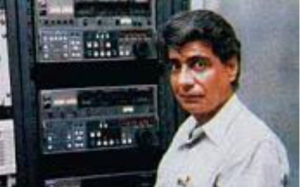
    Noshir Desai in his younger days

    Noshir built amazing relationships with regional clients like Tata and Titan, Brooke Bond and Lipton in Bengaluru, ITC and Philips in Kolkata, Kitply and Polar in Kolkata, Modi Xerox in Delhi.

    Noshir’s stint in MCM had made him understand how the creative output could radically improve in an agency. Kersy Katrak with Arun Kolhatkar and Kiran Nagarkar had set a pathbreaking trail in MCM and the likes of Christopher  Rozario, Viru Hiremath, Alok Nanda, Vikas Gaitonde, Kamlesh Pandey were making Trikaya and Rediffusion rock.

    Kersy’s advent in Lintas got Noshir excited to give shape to the dreams of Karishma the conflict agency of the Lintas Group. Kersy had broken down structures and formed art and copy partners using the MCM success model. In Lintas, Josy Paul and Neville D’Souza in special projects , Ryan Menezes and Sanjay Sippy in Lintas Bom 4. Agnello Dias and Mahendra Bhagat and Kiran Khalap  in Lintas Bom 3, and Adi Pocha in Bom 2 etc spurred Noshir to get in Quentin Coelho and make Karishma a creative boutique to target entrepreneurs and start-up businesses.

    Just round the time Noshir was consolidating Karishma, I had set up SSC&B Lintas at Lower Parel Phoenix which Alyque had fondly called Upper Worli to manage the drastic change from Express Towers in Nariman Point. At some point In the growth and development of Karishma, we had together found that the conflict management was the motivation.

    For, a second or third agency in the group was not being met. Noshir and I used to discuss this subject with great interest and depth with examples of Contract and HTA and Interface and FCB Ulka. Noshir loved the hyper-creative structure that  SSC&B Lintas had achieved with numerous International awards including India’s first ever Gold Lion at Cannes.

    Clients like Tata Safari, Sierra, Mercedes Benz, Smirnoff, Marico’s Parachute and later HUL’s Nihar, Kwality Walls Max made Noshir want to borrow a thing or two from the second agency culture.

    Noshir was the eternal optimist in all client relationships. He was the warm confiding friend or a patient problem-solver to others. He was passionate about building relationships most of which lasted a long time with many clients.

    His only mantra of management was to spread happiness and laughter round. Most meetings Noshir would gravitate  to end at the bar so that decisions could be taken! Noshir belonged to a breed of ad folks who have virtually vanished today though client pressures may have mounted up to more staggering levels.

    Keep smiling Noshir… you will always be fondly remembered in our hearts.


    Ajay Chandwani is a veteran strategic brand consultant. He was earlier Director on Lintas Mancom and President SSC&B Lintas



  • It’s Shobiz for Havas

    Image courtesy a screengrab of the popular game Pacman


    By A Correspondent


    In 1974, the veteran Alyque Padamsee commissioned one of the biggest event organiser Rehamatali Tobaccowala to launch Rexona in India. Tobaccowala wa known as one of the biggest wedding celebrations in Mumbai and beyond. And then Rehmatbhai, as he was popularly called, was involved with the Indian versions of Evita, Man of La Mancha and Jesus Christ Superstar.


    In 2016, Shobiz Experiential Chairman and Managing Director passed away at the age of 84. When in the early 1990s, this correspondent was to introduced to Rehamatali Tobacowala as the Father of the Indian Events and Experential Industry, the sector itself was in its infancy.


    Today, three years after Rehamatbhai’s his company was acquired by leading communications marketing services conglomerated Havas for what’s being billed as a handsome sum.


    This is Havas’s third acquisition in 2019, and perhaps its biggest. Shobiz may not be the #1 in size, but it’s decidedly the first and most experienced experiential agency. It employs over 300 professionals across its five offices in India. According to industry sources, a few years back Shobiz was close to inking a deal with WPP, but that didn’t happe. The current acquisition by Havas took over a year to fructify.


    Headquartered in Mumbai, the Shobiz portfolio boasts of over 142 recurring clients. While Sameer Tobaccowala, CEO, Shobiz will continue to oversee the business along with Vishnu Mohan, Chairman & CEO, Havas Group India & South East Asia, the daily operations will be led by COO Tejpal Singh Patpatia who will report into Rana Barua, CEO Havas Group India.

    In May this year Havas Group acquired Think Design, the leader in user experience consultancy and design in India, followed by the acquisition of Langoor a full-service digital agency led and driven by creative technologists in September this year.


    said Sameer Tobaccowala, CEO, Shobiz:

    “Crafting unforgettable brand experiences has the power to engage consumers in ways not seen before. Havas Group’s integrated approach to brand building coupled with their entrepreneurial spirit resonated with us. We are confident that this collaboration will unlock unprecedented growth opportunities for us and forge stronger consumer connections that foster trust, loyalty and business results. We are thrilled to be a part of Havas and look forward to a meaningful journey ahead, together,”

    Said Yannick Bolloré, Chairman and CEO Havas Group comments in a statement: “India has increasingly become a priority for Havas, and even more so over the past 12 months. With the acquisition of Shobiz we have delivered on our ambitious growth plan to triple our footprint in India. Shobiz’s talented teams are renowned for their solid track record and their excellence in the planning and flawless execution of complex events. After strengthening our local digital and service design capabilities with the acquisitions of Think Design and Langoor, we can now significantly boost our activation and experiential offer on the rapidly growing events market in India. Shobiz is a precious addition to Havas and I welcome them warmly.”


    Added Vishnu Mohan, Chairman & CEO, Havas Group India & South East Asia:

    “Experiential marketing is a critical component of an integrated approach to brand building as consumers are demanding personalized and meaningful interactions across all touchpoints. The acquisition of Shobiz will further strengthen the breadth of our multi-disciplinary Village model of working and bring on board a different kind of creative skills set. Shobiz’s transformation from a leading production house to be one of the country’s leading experiential communications agency is impressive and I am delighted to welcome Sameer and his entire team to the Havas family.”


    Said Rana Barua, CEO Havas Group India: “Shobiz’s acquisition adds an enviable strength to Havas Group with its forte in the experiential space. Shobiz’s thirst for innovation, impact and results, adds tremendous value to our existing offerings as a group, and seamlessly fits in with Havas Group’s multi-faceted, integrated, client centric “Village” style of working, giving us a distinctive advantage and making it a much stronger force to reckon with.”


    So what’s next for Havas. Accordiing to the grapevine, it has started discussions with a few leading PR agencies for a buy. But that’s possibly next year.

  • Five iconic ads created by Alyque Padamsee

    By A Correspondent


    We are sure there are many, many more ads created by Alyque Padamsee, and we are sure there are many more that we may find trendsetting. But here’s a list of our favourite five.


    Surf

    Watch this ad starring the Lalitaji character and you relive the good old days when the ad would air on Doordarshan. The ‘samajhdaari’ line that Lalitaji makes is what Padamsee’s mother once told him, and we guess that’s what made this commercial so very effective.


    Bajaj Auto:

    If there are many who think the brand is Humara Bajaj and not Bajaj or the company is Humara Bajaj and not Bajaj Auto, blame it on this commercial. Even before the nationalistic times set in, these ads would give you the goosebumps.


    Liril:

    The millennials may wonder what’s the fuss about this ad, but ask anyone who watched this ad in the 1970s, and you’ll be told how much they would wait for an airing on telly… just to watch Karen Lunel under that waterfall.


    KamaSutra

    Skin and such emotions aren’t uncommon in 2018, but when we saw this ad for the first time in 1991 and in that very special edition of Debonair magazine, there was, ah, well, magic. For the brand, we mean.


    Cherry Blossom

    The Cherry Blossom brand was already very popular, but this ad starring actor Rajesh Puri worked wonders for the brand, and was indeed one ad that people would look forward to.

  • Prabhakar Mundkur: Remembering Alyque


    By Prabhakar Mundkur


    Thou know’st ’tis common; all that lives must die,
    Passing through nature to eternity.

    — Hamlet, William Shakespeare


    When I first met Alyque back in 1976, I felt so exhilarated after meeting him for a musical part in “Man of la Mancha” (the screen version had Peter O’Toole and Sophia Loren )  that I regretted having declined his offer for a part in Jesus Christ Superstar a few years before.  But graduate studies had taken precedence.  He was tall and towering physically, just like his personality and reputation. A slight hunch made him look distinctive. It was the kind of hunch that tall people develop when they are young, when they want to compensate for their height and want to appear a little shorter, to make other people more comfortable.

    I was immediately taken up by this enormous personality and talent.  But talent alone can’t take you places. Alyque was extremely committed to whatever he was doing and for a creative person surprisingly organised.  For example, he would be constantly be making notes during our rehearsals with a small pad that was parked in the small of his back. Whenever he thought of something, he would pull out that note pad and make some furious notes, which he would recall in detail later.

    Like most stars, Alyque created volumes of folklore around him, typical of great personalities.   Even if you never worked in Lintas, any advertising person who worked during that time, would regale you with stories of God (as Alyque was affectionately and appropriately known) and Pope (his secretary whose real name was Jenny Pope).  They were all very funny and you couldn’t help a guffaw after hearing the punchline in the end.

    But it was not just people who worked with him that looked upon him with great respect. I worked at a competitive ad agency and although Alyque was the main competition, I daresay we were all overawed by him.  Seeing him at a pitch, for example made me terribly nervous.  Because in many ways, it was not just his advertising talent and creativity that had to be overcome but his personality and his showmanship.  Clients were equally awed by him. Somehow, I could imagine clients just eating out of his hands while we would go through several iterations of a creative idea until it was too dumb to produce.  I don’t think anyone would dare to argue with his advertising judgment. In fact, I was often asked by clients a rather uncomfortable question, “Who is the equivalent of Alyque in your agency?” I did not have a ready answer in spite of having painstaking pondered over it. In an era when suits became CEOs, after plodding for several years, Alyque proved that it was easy for a creative person to head an agency, something that is more fashionable today. What struck me most about him was that he was a perfectionist.  He was never happy with anything less than the best. Every imperfection made him angry and sometimes it was followed by string of expletives.

    He created many famous campaigns but perhaps some stood out more than others in public memory.  For example, the entire Liril campaign became the most talked about in the 80s and so did the Lalitaji campaign for Surf. Also, the first campaign for Kama Sutra condoms, which made a few waves in an India that was just coming out of the closet at that time and of course Cherry Blossom, Hamara Bajaj and many others.   He once grudgingly admitted that Lalitaji was inspired by his own mother who has a building named after her called Kulsum Terraces, the family home on Walton Road, a sleepy little lane in Colaba.  This was also where we rehearsed most of Alyque’s plays for the Theatre Group in the 70s.

    Alyque belonged truly to the Bombay of yore, so vastly different from the Mumbai we know now. When he spoke about the past, he would recall going to Olympia on Colaba Causeway for a ‘chai’ with Sylvester DaCunha because he was stressed out about something.  It somehow brought back images of an old Bombay flooding to your mind, with a young Alyque and a young Sylvester.

    About ten years ago we met at a party.  He was doing readings from Shakespeare then.  So, I couldn’t but help mention that Shakespeare wrote in Iambic Pentametre which is the same metre that the ‘blues’ is written in. He wouldn’t believe me.  So, I had to tell him that it was not my theory, but I had picked it up from none other than Leonard Bernstein, the famous American composer and musician in his speech on the “History of Jazz”.  Forever curious, Alyque invited me to his home for a demonstration of how Shakespeare could be sung to the blues. He found it remarkable and immediately ended his Shakespeare shows with a famous soliloquy sung to the blues, roping me in to accompany him on the guitar.

    Alyque was not just a star. He was an icon both for the advertising and the theatre industry.  And he showed us all that true creativity and leadership was multi-dimensional. Most people were shattered when they heard the news of his passing away on Saturday. Somehow, he had lulled all of us into thinking he was immortal.


  • Anil Thakraney: Voda must commission study on campaign

    By Anil Thakraney


    There is a controversy raging in the virtual world over the new Vodafone pug campaign. The one where the doggie plays cupid between two kids who look to be in their early teens. The problem is this: Some people find them too young to be flirting, and feel that this sort of a campaign would send the wrong signal toIndia’s kids.


    I did allude to this when I reviewed the campaign some weeks back, and I recall wondering if the two are indeed a bit too young to be glad-eyeing each other. But I left it at that and passed no value judgments. And that’s because I am not really sure of the propriety (or the impropriety) of the situation. While it is true that young ones in urban India often start dating early in their lives (and this used to be the case even when I went to school, so it’s nothing new), I am not entirely sure what happens in small towns and villages.


    However, some ad experts seem to think that the campaign is indeed a terrible influence on young minds, and veteran ad man Alyque Padamsee’s comments have gone viral in the social media. He seems to think that ads like these can lead to social problems like eve-teasing and sexual harassment when the lads grow up!


    Quite obviously this is an over the top reaction. My own view is that kids would most probably view this as harmless fun, and not as a license to either misbehave with members of the opposite sex or to get into bed at the age of 12. And I also believe that kids usually get influenced by adult behaviour, as it’s the grown ups who tend to be their role models.


    Still, it might be a good idea if Vodafone commissioned a study amongst the young teens, in urban and ruralIndia, to understand the influence of this campaign on young minds. And if it’s a harmless one, then great! And if it is found to be pernicious, they could pull the campaign. Either way the marketer will be appreciated for taking a pro-active step.


    [youtube width=”400″ height=”200″]http://www.youtube.com/watch?v=pSLOnR1s74o[/youtube]

    However, they must act quickly. Before, egged on by comments of worthies like Alyque, some dudes with too much free time on hand file in bitter PILs. And cause the early death of a campaign which to my mind seems to be quite cute, and doesn’t really threaten the moral fabric of the great Indian society.


    * * *


    PS: Wonderful use of emotion. The happywallah emotion. Keep a hanky ready, it’s sure to leave a little moisture in the eyes. Especially if you are a parent.


  • Industry veterans remember Ulka founder Bal Mundkur

    By a Correspondent


    Draftfcb Ulka Group held a prayer meeting in memory of the late Bal Mundkur, veteran adman and founder of what is today Draftfcb Ulka. The prayer meet was held on Thursday, January 19, 2012 at Yashwantrao Chavan Pratisthan in Nariman Point, Mumbai.


    Piyush Pandey, Executive Chairman and Creative Director, South Asia Ogilvy & Mather India; Alyque Padamsee, theatre personality and ad film-maker; Gerson da Cunha, stage and film actor, social worker and author; and theatre veteran Dolly Thakore were some of the notable personalities from the advertising and media fraternity, other than the leadership team from Draftfcb Ulka who attended the prayer meeting.


    Shashi Sinha, CEO, Lodestar UM remembered the late Mr Mundkur as a man who was always a leader, and never a follower. A man who was very generous, always ready to help those who needed help, and a man who did not work for money alone but, also for a lot of noble causes which he did not give up even after his retirement. Mr Sinha pointed out that Mr Mundkur had left his cushy job to start his own agency, and that he named the agency – Ulka – at his mother’s suggestion.


    A two-minute silent prayer was observed in memory of Mr Mundkur which was again followed by close friends, associates, former colleagues etc. sharing their thoughts and memories of the late advertising veteran.


    Mr da Cunha highlighted the recently released ‘Ad Katha’, a special volume tracking the history of Indian advertising, as one of Mr Mundkur’s huge achievements. Mr da Cunha was also quick to point out that a lot of people not just owed Mr Mundkur the brands he created for them, but many owed him their career as well. Mr Mundkur has created great professionals, he said, while dedicating the 300-page ‘Ad Katha’ to the memory of Mr Mundkur.


    Mr Alyque Padamsee was also among those who spoke about Mr Mundkur at the prayer meet, saying he remembered Mr Mundkur as a man of rumbustious character. A man who had big ideas and was determined to see each one through. Mr Padamsee also added that his inspiration comes from Mr Mundkur, who was always ready to defend someone – ie, if you believe in something then stand up and fight for it.


    Mr Mundkur passed away in Goa on January 7, 2012 due to heart failure. Mr Mundkur had founded Ulka in 1961, ten years after he joined the world of advertising. In a span of another ten years, Ulka had become the fourth largest agency in the country, and by far the largest independent Indian start-up.


  • Bobby Sista, Alyque Padamsee & Gerson da Cunha on Bal Mundkur

    While tributes keep pouring in for the ad legend and intrepid explorer who was ahead of his time, MXM asked his peers from the golden era to look back at the Bal Mundkur they knew.


    Gerson da Cunha, stage and film actor, social worker and author:

    Bal Mundkur was a man of immense energy; he was tireless. Once he decided to do something nothing would stop him. For instance, take the case of the book Ad Katha. There have been three previous attempts by the Indian advertising industry to write this book but every time it resulted in failure, because either the money could not be collected or nobody would be available to take on the writing task or both. But the key among the two was finding the money. Bal Mundkur then sat down and wrote off a series of letters to people asking them to donate money towards the cause. As soon as he collected the money it became a serious project and people began to join him. That’s what I mean: when he decided to do something he would go ahead and achieve it. The next important thing about the book was the drafting of the letter for the book. Otherwise you and I could also write to people and they would give a damn, but to Bal they responded. In fact many of them owed things to Bal – he had built a brand, he had given them a job, etc. So the book in a way represents the kind of person that he was.


    In fact we both met about a year ago in Goa and he told me about this book. He said to me, “Let’s do it.” I responded in the affirmative and thus began our quest. While I was in charge of the content, he was in charge of the money. While we were working on the book, I’ll never forget what he told me halfway through that project. He said, “You know Gerson, I have done many good things in my life but this by far is the best thing that I have done.” And he did it – he completed the job, and he left us.


    Also, there is something else about Bal Mundkur. There are people who, when they leave this life, take something irreplaceable away with them. For example Behram Contractor or BusyBee, as he was fondly known. When he died, he took away with him the bentwood Irani shops, the cuisines – that extraordinary part and spirit of Bombay, as it was known then, which no longer exists. He took it with him and went away. Or Mario Miranda, for example. He took with him a part of Goa and a part of Bombay – Colaba especially, and went off. What Bal has taken with him is a much more complex thing. Yes, it is an era of advertising that was professional, that was innocent… there was not the kind of cut-throat rivalry that was today. Even people competing for the same account were polite and would meet each other up for a drink in the evening. So that professionalism and innocence that existed in the advertising space then has gone with Bal Mundkur.


    He was also involved with a lot of public causes – for the crippled children, did his bit for cancer patients… in fact he he was the first to do a remarkable campaign around cancer. And there were many other causes that he supported. Not just advertising and marketing, he was involved in other facets of life like hosting seminars, promoting the industry to the outside world… he even got the Trinity College of Cambridge choir here.


    There was also a generous side to Bal Mundkur. He knew the value of money but what he did with that is what makes him even greater.


    Bal Mundkur has definitely left a void and he has taken a part of the world of advertising that we once knew.


    Bobby Sista, Founder and Executive Trustee, Population First:

    It’s not really easy to describe Bal Mundkur but he was certainly one of the most colourful and charismatic personalities in advertising. He was not your ordinary guy – he could be arrogant, he could be short-tempered, he could be very charming, he could be very helpful… all of these things, but certainly he was a very good adman.


    Bal Mundkur and I go back a long way. We were closely involved in mooting the idea for forming the Advertising Club of Bombay in the early days. We also discussed the idea of starting an agency together before he floated Ulka. We almost came close to an agreement and everything else was done but then there was a last-minute hitch and it didn’t work. A year or two after that he started Ulka. So while he became fully dedicated towards Ulka, I started working for a client. But we remained friends.


    He was very talented in what he did. Such was his stature that he could even walk into the cabin of an MD with full confidence and if certain things didn’t work out he wouldn’t hesitate in calling it off.


    I do know that he was highly respected by the advertising profession. He certainly brought in a new angle to how advertising could be created. He had that kind of leadership quality – making people think differently and come up with good work.


    One of his noteworthy works includes his effort around the book Ad Katha. I remember that when he conceptualised the idea, he came and spoke to me about it first. He wanted to form an advisory council to get help on this book. He was supposed to have named his book History of Indian Advertising. Bal had even written about 180 pages of the book by then. But then he got in touch with Gerson da Cunha and they went through 2-3 different changes before they renamed the book to Ad Katha. I am happy that he was able to complete the book and launch it at Ad Asia along with 1,500 people from the industry.


    Also, one of the things that you could say about Bal Mundkur and his extracurricular activities was that he was a great fund-raiser. He had the ability to collect funds for various causes, including for seminars around advertising, both in India and abroad.


    Alyque Padamsee, theatre personality and ad film-maker:

    Bal Mundkur was a pioneer who started his own Indian ad agency, even though all the ad agencies at the time were foreign-owned. He built Ulka Advertising into one of the big five agencies of the time. He was not only a superb account management honcho, but also an extremely creative genius. Bal Mundkur was known as a very frank and fearless adman, and pushed his ideas across with charm and force.


    Photograph: Shreta Arora/O Herald O