By A Correspondent
It’s July 2 today, and the first six months of the year have passed. While the slowdown has impacted spends in a major way, most of the 182 days from Jan to June have been eventful. On the positive side: new television channels, new agencies – media and creative, consolidation, people and account movements, government issues, digitization, awards… the list could go on. And on the negative: a channel being shut, pink slips, pay cuts, appraisals deferred, digitization delayed… the list could go on here too.
We have already embarked on the second half of the year, but as we do that, here’s a quick look at how industry captains review the half-year. We present you the half-yearly review in two parts… the first today and the second mid-week… on Wednesday.
As you would gather, there is much gloom in the industry, though no despair. Not yet.
ADSPENDS:
Nagesh Alai, President, Advertising Agencies Association of India (AAAI) & Executive Director, India Operations, Draftfcb Ulka Group

- Nagesh Alai
If I were to summarize the indications of the economy, then one has seen softness beginning last November and December leading to a situation of downturn. The macro-economic indications like rupee falling, impact in production and fall in demands have also reflected in the consumer behaviour in a negative way. The last quarter of 2011-12 (Jan-March) has seen a fall in GDP to 5.3 per cent. All this have impacted the manufactures as well as service providers, with the mood being that of postponing a decision. While some would have thought that the situation would not impact FMCG, but that one has seen a resistance from that sector too.
So in terms of advertising, the impact being in terms of ad outlays and remuneration; while the latter has been up for constant negotiation and any further would only impact the quality of service being provided, it’s the latter that is being hit now. I think this year one would see a growth of maximum 10-12 per cent as compared to 14-15 per cent in the past. While print and TV still comprise 80 per cent of the spends, but advertisers are looking at newer mediums, where the spends is not high and get better mileage for monies being spent.
I personally believe that even if government were to take corrective measures, one will only begin to see the recovery by mid-2013. The mood can be aptly summarized as being that of cautious approach.
PRINT:
Narendra Kumar Alambara, COO, Thanthi Group

- Narendra Kumar Alambara
In terms of the regional publications, I would say that the past six months have been good and bad. If one looks at readership and circulation, the regional dailies have seen an increase vis-Ã -vis the English language publications. However, there is a need to be bold and unconventional when it comes to regional publications, both by those selling this space and advertisers themselves. In today’s time when every paisa has to be accounted for in terms of returns, I think regional publications would have been an excellent answer to have targeted reach because of the value they provides for the money and reach.
However, we have failed to do that. Today when most media houses are not restricted to being uni-dimensional and have different platforms for advertisers be it television, print, digital and even regional newspapers and channels under their umbrella; I think the solution lies in integrating various offerings, including the regional to get a better value and growth.
Krishna Prasad, Editor-Outlook
It’s difficult to put a number as yet on the kind of growth that has been witnessed, but you will always see print being challenged by television and other mediums. As far as the past six months are concerned, I would say the growth of print has been at par. By this I mean that even though most advertisers have huge monies, they are shying away from advertising with this medium. This is somewhat similar to what was observed during 2008, where companies didn’t have any reason to opt for cost-cutting, but were up for it. Many advertisers are seeing this downturn as a reason to go easy with their spending and not be too extravagant.
Most newspapers today, especially in Delhi like Delhi Times, Hindustan Times and others appear chunky in their appearance, which gives you a sense that all is well but that may not necessarily be the case. Most of them are actually going slow with their spending and are trying to play it safe. I expect things to look better from October onwards – around the festival period. So largely, the growth of media will be dominated by how the economy transforms itself; it’s not operating in a vacuum. That’s the best case scenario.
But the worst case scenario is that it may take a little bit longer for things to get better; perhaps with the elections coming up soon, with the country seeing a new Finance Minister and the markets going topsy-turvy, the print industry may still take some time to stabilise itself.
RADIO:

- Prashant Panday
Prashant Panday, CEO, Radio Mirchi
The radio industry has been hit just as hard as any other segment. Maybe a little less than print and a little more than TV. The economic slow-down and the policy freeze has made advertisers a little wary. They are not exactly cutting spends, but they are demanding more from broadcasters. A broadcaster can either cut prices or offer more for the same. In some sectors, the advertising cut has been more severe like telecom, real estate and so on. But there are other segments that have done better – like core retail, and even auto.
Given the economic conditions, and the lack of new frequencies, radio has done as well as it possible can.

- Rabe T Iyer
Rabe T Iyer, Business Head, BIG FM
The last financial year was alright, but the last three months have been pretty flat. The reason for that is because categories like BSFI, Auto and some of the campaigns of the usual summer categories were a bit slow. Nevertheless, we expect the next three to six months to be a good run. This is because people ultimately want to keep their goods moving, and hence the next three to six months are going to be good. The last three months were flat for the industry because the dollar exchange hit the sentiments and some categories which were expected to fire up in the month of May-June have taken some more time, mainly because of the overall economy conditions and the sentiments attached to it, and also because of the fluctuating dollar prices. This has directly impacted the ad spends, not just on radio, but across the portfolio on media brands.

- Ashit Kukian
Ashit Kukian, COO, Radio City
The last six months has been very good for the radio industry. One of the reasons I would say is because the core advertising categories in radio namely: Telecom, FMCG, and Entertainment channels to name a few, had increased their advertising spends on radio.
DIGITAL:
Chhaya Balachandran Aiyer, CEO and MD, BCWebWise

- Chhaya Balachandran Aiyer
More and more brands are getting ready to seriously look at digital media and those who have been using it already, are increasing their spends. Digital is expected to deliver more cost-effectively. Amazingly, even production charges of films are expected to be cheaper, if they are being produced by digital agencies. It would help if brands which see real value in digital and see it delivering, also realize that results won’t come if they tighten their purse strings so much. Fortunately, there are a few clients who have realized the quality v/s quantity value and are waking up to the real digital age and extending their budgets.

- Rajiv Hiranandani
Rajiv Hiranandani, Co-founder and Executive Director, Altruist, Mobile2win
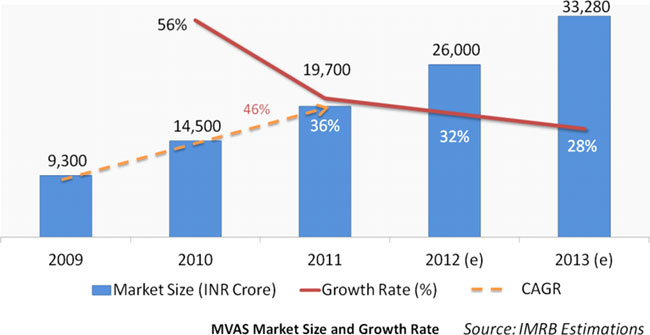
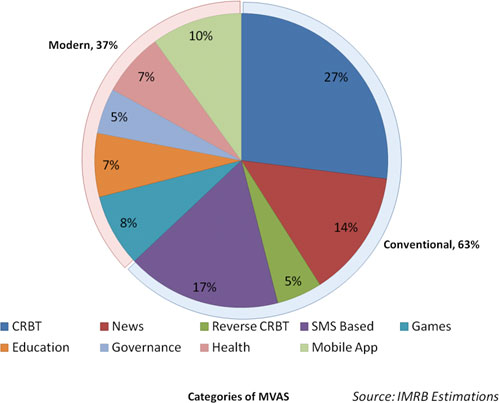
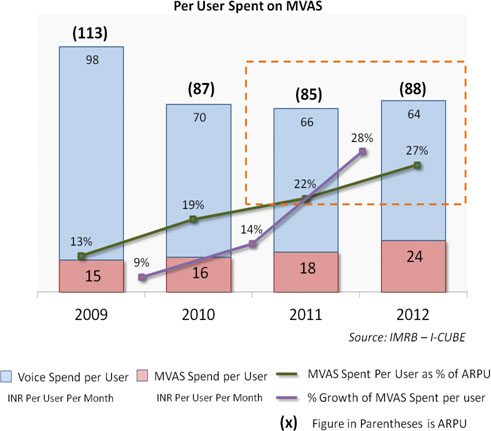
I think the mobile industry has underperformed in last six months, as per the overall outlook was supposed to be, in terms of number of handsets sold and amount of value-added services (VAS) consumed. Mobile industry has seen its slowest growth, and this has been also because of the negative outlook in the economy. Some of the reasons have been people waiting for better handsets models, the overall mood of economy not being good, and mobile VAS seeing a lot of restrictions in terms of TRAI guidelines.
OOH:
Noomi Mehta, Chairman and Managing Director, Selvel One Group

- Noomi Mehta
The last six months have not been good for the out-of-home (OOH) industry. The month of June, however, has seen a significant improvement, which is perhaps because the IPL campaigns in the months of April and May have fructified. Otherwise, I believe, the industry figures have been down. The markets, by and large, seem to be in a depressed state, along with the economy. Going forward, one of the basic steps needed to improve the industry’s performance is the need for a common currency for measurement. OOH is part and parcel of the country’s economy, and hence it will also be subject to the same pressures as the economy.
Image: Rafiq