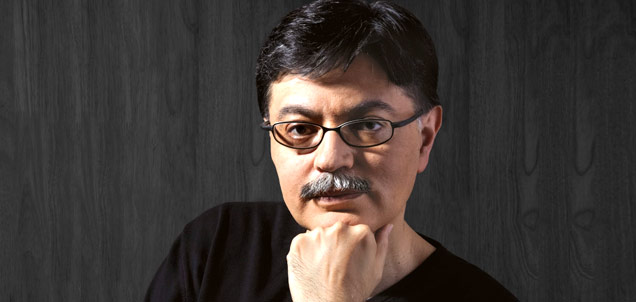
There are creative professionals and creative professionals and then there’s Alok Nanda. Founder and CEO of Alok Nanda & Company (ANC), billed as India’s only brand and communications consultancy focused on the lifestyle and luxury space. Nanda started his career with the legendary creative agency Trikaya Advertising, where he rose to become National Creative Director and then member of the Grey Asia-Pacific Creative Board. He left Trikaya (now Grey) to set up ANC in 1999 to bring together the worlds of advertising, design, experience design and branding under one roof. ANC has helped build brands like the Taj Hotels, Arrow, Wrangler, Sula wines, Lodha, Barista, Ambuja and Marico, to name a few.
But, then creative design for Nanda extends beyond the advertising work. He sells art, runs a design lab as well as a brand engagement firm. Pradyuman Maheshwari had a freewheeling chat with Alok Nanda essentially on advertising, and a little more. Read on…
You’ve been through the hyperactive days of Trikaya and are now part of the frenzied adworld of today. What according to you are the key differentiators between then and now?Â
It’s a huge sweep of time. At the time when I was just joining, clients were dictated by the advertising industry. Over the years, equations changed when agencies became suppliers to clients and there were these huge global manuals on following this and doing that. In the last couple of years, we have seen enough agencies and clients a communication partner can go to. From our perspective, the big change is you can choose to work for clients you love to work for and clients can choose agencies they love to work with.
To an extent, it’s a bit of the old, right? There are people who have seen your work would want to come only to you. Or they would also want a Piyush Pandey or an R Balki…
Very much. People know the kind of work they want and would come to you. Talking from a business relationship perspective, today we really only work with clients we want to work with. Ten or 15 years ago, you’d be driven by business imperatives. 25 years ago, it would’ve been the client chasing the agency. I’m seeing how the shifts have balanced out.
How has the journey been for you over the last 15-odd years?
It’s been pretty good. I wish I’d started earlier. Trikaya was where I learnt everything, I chose not to and I didn’t want to take any business from Trikaya when I left. Not sure, I could’ve easily taken business. There was the Grey part too, the global clients, they obviously wouldn’t consider me even if I wanted to consider them. Even though I had a good relationship with many clients, I was clear I was starting afresh. The drive was my fresh journey…
What were your sentiments when the Trikaya brand name faded away from the agency?
 I’ve honestly lost touch with Grey, have no alignment with the rest of the industry. I don’t even have a clue what’s happening at Ogilvy. I don’t track it.
Huh?
It’s not out of arrogance. Our business lines are vastly different. Advertising is actually a fairly small portion of what we do. We’ve carved our own space and we’re very happy with it. What I did and learnt at Trikaya was all premium brands. I was never a part of FMCG, big mass brands, rural India. I’ve only done what I know the best. The market has come full circle. India has grown rich, there’s premiumisation happening.
Did you intend ANC to be what it is today in terms of being a premium communication firm?
In the broader sense, yes. When I set up ANC, I was clear India doesn’t need one more advertising agency. Â I said we’ll be multi-disciplinary but without walls. We have multi-disciplinary people here, designers, retail designers, corporate communications people and advertising people. We all sit together, there is no centre. When a client comes, the answer is not advertising. Advertising may follow or may not even happen.
Everyone in the advertising world talks about rural India, about being able to connect with the masses and making a difference and here you want to stick to the elite urban stuff?Â
We’ve no such ambitions. We’re very focused on the lifestyle, luxury and also because of my personal passion, the corporate brand business, all of this are very focused on the premium urban India.
The advertising you said you want to do is has a different, premium feel. But your campaign for Lodha with the claim Wadala is the new Cuffe Parade, is typical of advertising. It’s hardsell? Isn’t calling Wadala the new Cuffe Parade outlandish?Â
Actually, there’s nothing new in it. If you study what happens worldwide, real estate is about creating destinations. If you go to New York, there’s a place called SoHo, created by the real estate industry. It didn’t actually exist. The city of London is about the size of a postage stamp. Every year they gobble up more villages and then they call it Greater London. Why? Why not give it the name of the village? When the government said they’re creating a new city the other side of the creek, didn’t they call it New Bombay? When the residents of York settled in America, they called it New York. There’s nothing new. I studied a lot of history of real estate when I entered the market. This emanates from there.
So was the new Cuffe Parade your idea or that of your client?
 My idea and I’m extremely happy about it.
While real estate is all about selling dreams, it’s finally about selling property.
It’s about delivery at the end of the day.
The delivery has to happen instantly. If an ad appears in today’s dna, they need to have the phones ringing from 7 or 8am onwards. Are you happy doing this kind of results-oriented advertising?
Yes and No. Each client has its own requirement and needs. You need to balance out building a brand and business calls. What you’re referring to is the amount of direct response that has to be built into a campaign. Working with Lodha, we’ve arrived at a manner that works for them. To what degree do you build a brand and at what stage do you start ensuring the calls come? You can’t start getting calls if you don’t build a desirable brand.
So, typically, after how many insertions do you expect the ad to make an impact to have the consumer to make a call?
It varies from project to project. It also varies from the scarcity of demand. If you were going to launch a tower in South Bombay, given the scarcity of land, chances are, even before you release your first ad, they would have sold a large number. It really varies from what is your location, your play.
Abhishek Lodha says you’re more than just an ad agency. You’ve partnered his projects. What is the degree of you involvement? Has this been out of the ordinary or is that the same with all your clients?
It’s the same with all and I’ll come to Lodha specifically too. We don’t call ourselves an ad agency because of the nature of the multiple offerings we have. We call ourselves, for want of anything better; a communications consultancy. We deep dive into what a client wants. When we work with a Taj, we did their ads, we also designed the identities of all their famous restaurants. We’ve worked in immense detail, bringing design in to Taj, bringing advertising to launches of their properties worldwide…
You have Lodhas, hardcore businessmen, and the folks at the Taj, who’ve earned their stripes in the hotel industry and understand their craft very well. Are they receptive to your kind of evolved communication practice?
The Lodhas were in the real estate business for many years before they came to us.Their vision, pre-ANC was to be in the middle class department in Thane and the suburbs. Abhishek came to us and we worked with him on re-envisioning the brand. I sat and worked with him and we were clear that Lodha is going to be playing a premium game, I said you can’t be seen as a builder. You need to become a lifestyle brand. That’s how my relationship started. One of the most powerful things we created for them is a brand architecture and brand identity. That’s how we grew and I go back to saying, life is too short to work with clients you don’t want to. One of the greatest joys of Lodha is to work with Abhishek!
You have a mixed bag of clients.
Real estate is visible because it’s visible in Mumbai. We do all corporate work for Gujarat Ambuja. We’ve managed their financial brand, we’re now managing their CSR brand. That’s my corporate financial side of work, not visible to the audience but to the investor audience.
If a BJP were to come to you for branding, would you accept it as a client?
I’d see if I were able to add value to the client, first. We’re in a situation where we don’t need to go back to business for business sake. I’d ask myself if I take them on, which is the other client I wouldn’t have to? At the end of the day, would I be successful for them and therefore would I have a case study for myself? That’s the only way I can grow. I can only grow by creating one case study after the other. Our vision is not to make 30 employees to 300. Our vision is actually margin driven, to put it from a different perspective. I’d seek higher margin business tan higher volume business. My clients know me that I’m expensive and they get value. If I was able to offer that to a political party, I have absolutely no problem. I prefer it that way. It’s not about ideology. That’s the other question you asked.
It’s the flavour of the season to do something for the government, Swaccha Bharat… aren’t you looking at doing some?
We devote almost 10 percent of our time on public service and charity. We work with hospitals, charities, do identities free for them. We’ve just finished doing one for a doctor who has pioneered free heart service for babies. He’s doing such wonderful work. We said we’ll support you in whatever communication we need. We’ll do our bit in that way.
What are the other categories that interest you as a communicator?
I’m really excited by education. The big thing about ANC and the joy is that we don’t just build brands, we build categories. We’ve transformed real estate, not just Lodha, in many ways. To me, the next big thing is education.
You seem to have a likeness for businesses with many shades of grey?
Education is getting corporatised. You’ll have chains with 500 schools. For the first time, they need branding. You need competitive positioning, schools competing for customers.
I’ve never seen an ANC ad which is less than a half page in size and in education you have very small 10×2-sized ads.
I think it will change when you see some of the things that hopefully will come out from us.
How much of TVC work do you do?
Very limited, lifestyle luxury is very limited on TV. Luxury certainly is the antithesis of television. Corporates also tends to not be on TV. We make films. For Lodha, for every project we make films that run on sites. We make corporate films…
Advertising agencies typically make their money on TVCs, right?
I’m sure, they do, Â we don’t. Most of our business is fee-driven and we demand a premium fee, upfront.
You say you don’t do much television and most of your advertising is done in English.
99.9%.
What about other languages? Has that come to you…
We do a miniscule amount.
You’ve never thought of creating a fair amount of advertising in languages. That’s where premium is going to extend to.
You’re right, premium will extend in that space. That’s not where the immediate growth is going to be.
You’re not aligned to any big network
Yes, we aren’t.
Don’t you intend doing that? There were some murmurs sometime back that you are looking to align
I wouldn’t say we have no intention to. We’d want to find the right partner. That wouldn’t necessarily be an advertising network. It could be a more interesting entity that deals with design and graphics.
WPP, for instance, has a Landor…
Not that Landor is talking to us or we are talking to them. But, if we did, that would only fit in as far as our brand architecture business would go. What will then happen to my advertising business? We’ll need a free thinking organisation that fits for who we are. People who design their own products. We’ve ventured into arts, for instance in a very interesting way with a JV. It’s a different space.
Is it a definite No to alignments or acquisitions in the near or distant future?
Well, we are also interested in acquisitions. You never know what comes your way. Our focus, if it has been driven on higher margins, by definition, we have to go from specialization to super-specialization. Art is a direction. If we were to get into interiors, I’d get a quicker way to learn the business, to acquire an interiors business. Things like that is where I would look at acquisitions. Packaging, in a far deeper sense, where you get into material plays, morals etc. We’ve done a fabulous packaging for milk from Sarda Farms. That’s where we started getting into, it’s not just graphics, it’s weight, performance of glass etc. If you want to learn that at a more rapid space, a quicker way is to do an acquisition.
Don’t you think this is the right time to align and grow?
We are looking for people to partner with, but we’re in no hurry if we don’t find the right person. We’re unique from a pure physical construct of the work we do.
Are you happy with the way advertising is going?
Yes and No. It’s developed pretty well in certain areas. The craft and film is phenomenal. It’s really improved. If you ask me the rest of it, it really sucks. Our digital design sense is abysmal.
A shorter version of this interview appeared in dna of brands dated February 2, 2015. And, btw, if you thought this 2500-word interview was long, the original transcript ran into some 6500 words.
 The Goafest Creative Abbys has announced the final jury list for the coveted awards. The Awards Governing Council of Goafest 2016 has declared the Jury Chairs for all remaining verticals i.e. Design, Print Craft, & Direct category. Alok Nanda, Founder & CEO, Alok Nanda & Company will chair the design category, Raj Nair, Chief Creative Officer, Madison BMB will chair the jury for Print Craft category and Ramesh Iyengar, CMD, Select Direct Marketing Communications will chair the jury for the Direct Category.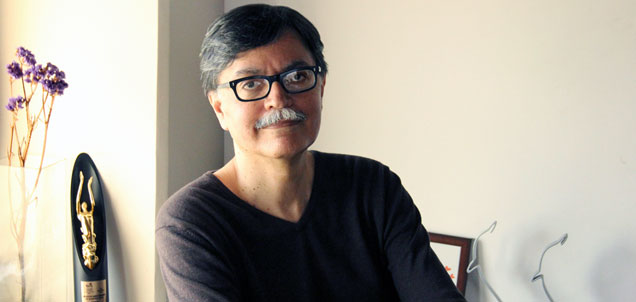
 Quikr has announced the launch of a new company logo that symbolises its successful rise in the Indian classifieds industry and its transition into a platform that has deep, verticalized offerings in large categories. The evolution of the company’s brand is also in sync with the evolution of Quikr’s users who have high aspirations, and have increasingly started using Quikr across a variety of categories such as cars, real estate, goods, services and jobs to fulfil these aspirations.