Tag: Air India

  • Air India Express launches campaign for elections

    Air India Express, the low-cost sibling of Air India, has launched its #VoteAsYouAre campaign, an initiative aimed at “empowering and encouraging the nation’s youth”.

    Speaking about the campaign, Siddhartha Butalia, Chief Marketing Officer, Air India Express, said: “As a brand that champions connectivity and inclusivity, Air India Express is committed to empowering the youth and fostering active citizenship. With a fifth of the world’s youth demographic, India’s demographic dividend can also be the world’s democratic dividend. The fact that #VoteAsYouAre trended organically across India on the eve of the first phase of the world’s largest democratic exercise ever, in the midst of a myriad topical conversations, is a tremendously gratifying validation of the movement capturing the imagination of an aspiring India seeking a voice of representation and the power of their collective voice.”

  • Air India launches new brand track: ‘India Takes Flight’

    Air India unveiled a signature track defining its sonic identity, ‘India Takes Flight’, reflecting, as it calls it, the “sound of a bold, vibrant, and confident India”.

    Air India’s new sonic identity is a jugalbandi (musical collaboration) featuring recent Grammy awardee and acclaimed musician Shankar Mahadevan, renowned percussionist and composer Taufiq Qureshi, celebrated lyricist and writer Prasoon Joshi, and London’s revered Royal Philharmonic Orchestra.

    Said Sunil Suresh, Head, Marketing, Air India: “We wanted to create a melody that embodied the Indian spirit. We also wanted to capture a universality that brings people together. This musical odyssey accomplishes it expertly, and as the country’s flag-bearer, we are proud to carry this to the world.”

    Added Prasoon Joshi, Chairman McCann Worldgroup Asia Pacific, CEO & CCO McCann Worldgroup India: “I am incredibly honoured to be a part of this collaboration that embodies Air India’s new global brand identity. Air India always had a sense of rooted cultural ethos. This ethos is not inward looking but connects and welcomes the world. This track signifies Air India the brand on the ascent, one that emanates from the roots but goes on to embrace the skies.”

  • Air India appoints P Balaji for corp affiars

    By Our Staff


    Air India has appointed P Balaji in a newly created role of Group Head- Governance, Regulatory, Compliance (GRC) and Corporate Affairs. He will oversee the Government Affairs, Legal, Ethics, Sustainability, and Corporate Communications functions at Air India, among others.


    Announcing Balaji’s appointment, Campbell Wilson, CEO & MD of Air India, said: “We are pleased to have Balaji on board. Having worked in the regulatory and policy space, he brings a wealth of knowledge and experience that will be valuable to the ongoing transformation at Air India. At Air India, we remain committed to building top leadership as we continue to invest in all the resources that are required to take the airline to the upper echelons of global aviation.”


  • Air India rolls out new global brand identity

    By Our Staff


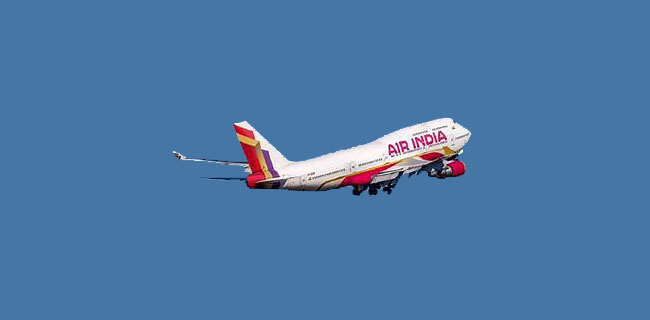
    Air India, remember the airline which we would all once take, has started the rollout of its recently unveiled global brand identity across guest touchpoints, beginning with a full switch to the new look across digital and online channels and rebranding at Delhi and Mumbai airports.


    The new identity, unveiled in August 2023, is centred around the ‘Vista’, Air India’s logo icon. Notes a communique: “The new look features Air India’s new brand colours, including Air India red, aubergine, rose gold, and accents of gold, as well as the extensive usage of customised iconography and a bespoke font, Air India Sans – all crafted to reflect a bold, modern, and world-class airline with an Indian heart.”


    Said Campbell Wilson, Chief Executive Officer & Managing Director, Air India: “The network-wide switch to our new global brand identity is a landmark moment for Air India. It’s not just about bringing our new logo and colours to customer touchpoints; it’s a promise to our guests of a transforming travel experience that is modern, seamless, and infused with the warmth and hospitality that defines a new India and a new Air India. We are confident that the modern, world-class look of Air India will appeal to our guests globally and serve as a strong reminder of all the remarkable changes that have come or are to come to their Air India experience.”


  • Air India and KidZania enter multi-year partnership

    By Our Staff


    We still can’t forget the fun and excitement about going on the Air India plane erected in a garden in Mumbai’s Santa Cruz West. Thousands of kids would go to the garden, just for boarding the Air India. With time, no one really cared about the maintenance of the structure, and soon it was set to be dismantled. It had become such an eyesore that one stopped looking out for it.


    It was hence interesting to see KidZania India and Air India entering a multi-year partnership to power the aviation academy offerings at KidZania’s theme parks in Delhi NCR and Mumbai.


    Said Rahul Dhamdhere, the Chief Marketing Officer of KidZania India: “At KidZania, our core mission is to provide children with practical skills within an enjoyable and immersive setting. The partnership with Air India seamlessly fits into this mission, enabling children to explore the fascinating world of aviation while fostering their inquisitiveness and imagination. We are thrilled to partner with the flag bearer of the aviation industry, Air India, and firmly believe that this partnership will introduce fresh avenues for learning and entertainment for our young visitors.”


    Added Sunil Suresh, Head of Marketing, E-commerce, and Loyalty, Air India: “The Indian aviation industry is currently the third largest and the fastest-growing in the world that presents huge potential for growth. As an industry leader and a responsible organisation, we aim to create meaningful experiences for children, and inspire the upcoming generations of aviation professionals in what is perhaps the most exciting decade for India. Our endeavour perfectly aligns with KidZania’s innovative approach to educational entertainment, which makes this partnership special.”


    Sureshji, this is a good beginning, and we strongly recommend that you build multiple Air India parks across the country. Nothing like catching them young!


  • Air India Express unveils new brand identity

    By Our Staff


    Air India Express and AirAsia India, both subsidiaries of the Tata-owned Air India, have unveiled a new brand identity and aircraft livery, alongside network expansion with flee induction.


    The livery of the first new Boeing 737-8 aircraft showcased at the launch, draws inspiration from the Bandhani textile design. The upcoming aircraft being inducted will feature designs inspired by other traditional patterns including Ajrakh, Patola, Kanjeevaram, Kalamkari, etc., showcasing India’s artistic diversity.


    Sid Campbell Wilson, Chairman, Air India Express, said: “With the merger of Air India Express and Air Asia India now in the final stages, we are also seeing the transformation of the aviation landscape. We are proud to present the new brand of Air India Express, a vitally important part of the new Air India Group, charged with providing the best value, accessibility and domestic and regional connectivity to every Indian, and to become the airline of a new generation. The broader ambition of these efforts is to better connect India and Indians, to each other and to the world.”


  • Air India- let’s not confuse logo with a mascot


    With apologies to none at all


    By Vikas Mehta


    Vikas MehtaOk, let’s begin with a question. What is the current Air India logo before the unveiling of the new logo? Simple question and the answer should be simple too. While we are all ranting about the new logo or mourning the demise of the Air India Maharaja, we must not forget to compare like to like.

    Let’s get this very clear. Maharaja is not the current Air India logo. It never was. At best you can call it a mascot. I would prefer to call it brand personification. Every mascot, be it the Asian Paint Gattu or the Amul girl or KFC Colonel Sanders or the Michelin man for Michelin Tyres were not brand logos but mascots. Amul’s logo is the way it writes Amul in a distinct registered typeface. McDonald’s logo is its famous M arch. But its mascot is the clown, Ronald McDonald which you will find outside its outlets. Duracell Bunny is its mascot. Not its logo.

    Below are some examples of logos and some examples of mascot of the same brands.
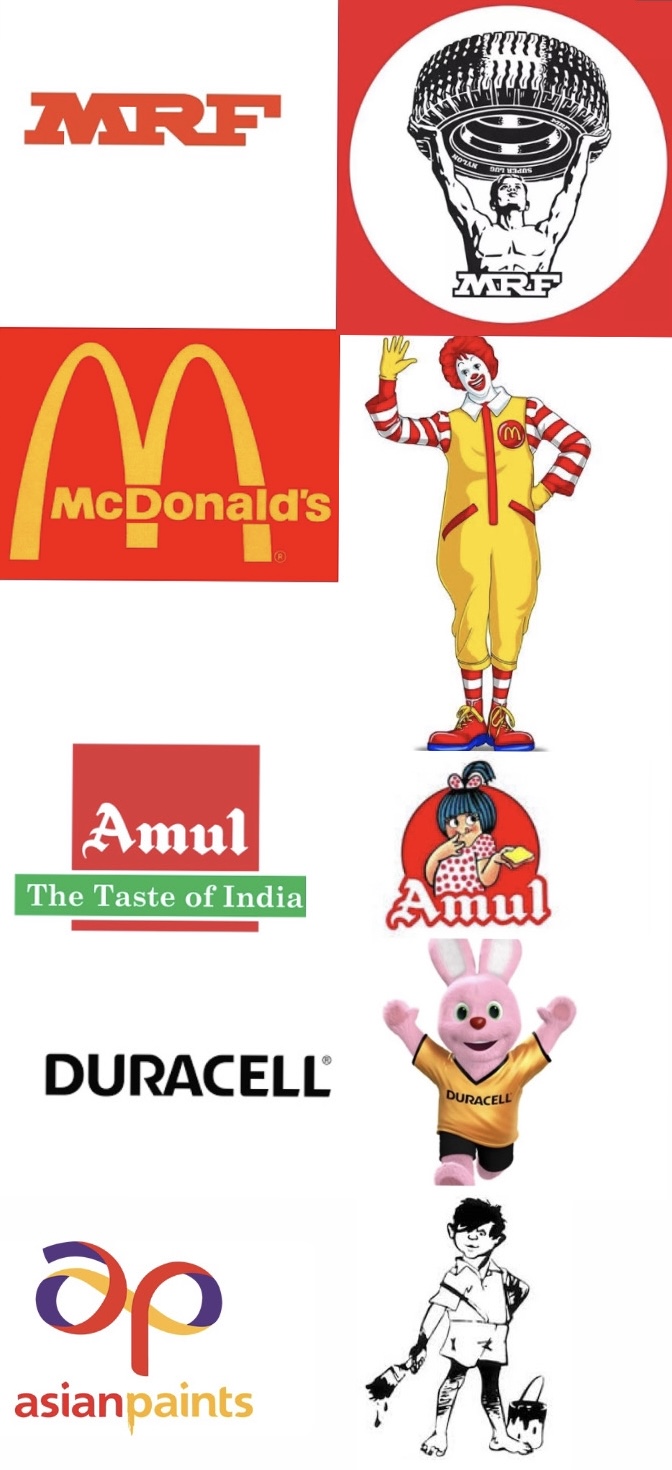
    So, what is the difference between the two and can they be used interchangeably?

    Let’s dive in.

    Simply put, the logo is the identity of the company. It’s a reminder of the brand or company. The name. The mascot defines the value, personality and sometimes even the culture of the company. In a way, a mascot is the extension of a logo. Many companies incorporate the logo in the mascot or make it a part of it. KFC is a good example of the same. So is the Duracell bunny.

    Earlier, brands strived to have a mascot. Even in India, MRF had the muscle man. Cherry Charlie for Cherry Blossom shoe polish. Asian Paints Gattu. Air India Maharaja. These mascots told a story. They were the brand personified. Gattu was the personification of Asian Paints. It was a mischievous boy, maybe a brat who could not stop painting. And in old ads, Gattu painted anywhere. Even used a bald man’s pate. And the tag line that went with Gattu was ‘any surface that needs painting needs Asian Paints’.

    In India, all these mascots worked because the also transcended the literacy barrier. Specially in rural areas Gattu, MRF Muscle man etc stood out as they identified a brand and also what the brand stood for.

    But we must not forget that for all brands with a brand mascot, there were always two elements to play with. Twin identities. One was the brand logo. In many cases it was just the way the brand was written, with a tag line. And the second was the brand mascot. As media proliferation started and media started becoming more expensive with a premium on space or time, something had to give. Mostly, it was the mascot. Because the logo was the brand identity. Indispensable. And over a period of time most brand logos were just the way you write the brand. No separate design element also.

    So, coming back to my initial question. What was the last Air India logo? And in categories like airlines, logos become more important because that’s what you see on the planes. The airlines is recognised by its logo. Air India also went through various logo transformations. I think its most famous logo was the centaur.

    And its last logo, which is in current use, is the swan with the konark wheel inside it. Remember this?
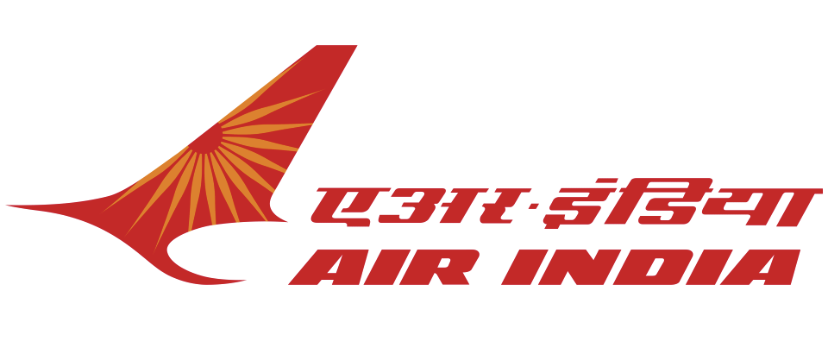
    The new design that Air India has released is therefore a replacement of the same. The vista along with the way Air India is going to be written now is the new logo of Air India. It is not replacing the Maharaja. For all you know, the brand may continue to use the Maharaja as a property in a limited way. Or maybe a different version of the Maharaja which imbibes the thinking behind the new logo.
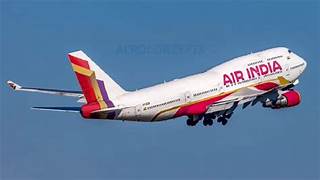
    I raise this point because I was dismayed to see not just marketing pundits but even national media announcing the death of the Maharaja when the new logo was unveiled. It may still happen. But it will not happen because a new logo has been designed. It’s not about a logo vs a mascot.

    And let’s not forget another point. Logo is not just a design to be seen in isolation. Logo cannot be judged immediately just because of a design element. Logo is what the company makes of it. And it evolves, registers and rules, over a period of time.

    The famous Nike swoosh. When Nike launched it, it was not exactly the current design but close to it. It evolved to what it is today. I am sure, if it was presented to the world then it would have met with outrage as a failed design. Nike was the name of the Greek goddess of victory. So, what had the swoosh to do with that? What Nike did over a period of time was identify the swoosh with its tagline, “Just do it”. Indeed, today the logo is so strongly identified with the brand that the brand name is not necessary when the logo of swoosh is around. Even Nike outlets today just have the swoosh logo outside. The brand name sometimes appears very discreetly in a small corner. Who would have thought of it, then? As I said, it’s what you make of the logo.

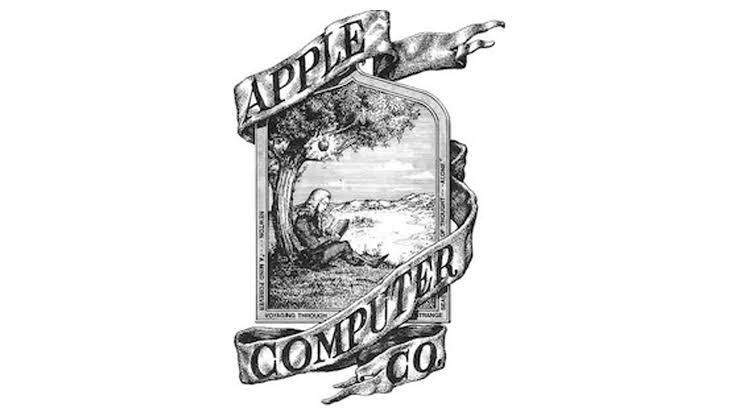
    Or take Apple. Imagine calling a technology company with the name of a fruit. And that too a half-eaten one! But today, Apple is the ultimate in technology and design. And the Apple logo is ubiquitous. Indeed, it’s so famous that in India I have seen the logo being used by even a potato chip manufacturer and as a garment brand too. This logo also evolved and was used in an iconic way on its products too. The logo is so important that a cursory check on Amazon and Flipkart reveal that most of the iphone covers have a punch at the back which reveal the logo. Full covers or covers without the punch are not many. For, who would want to own a iPhone without flaunting its logo. I am also amused that Apple still gives in its product boxes 2 stickers of its logo. And people use it. On their laptop bags, back packs, indeed even on cars and scooters. Again, it’s what you make of the logo.
    I would therefore not pass any judgment on the vista logo. It’s too early to make anything out of it. Even the critique that it’s not Indian is hollow. The brand is owned by a private company. It no more represents India. It’s as private or global as is British Airways or Air France. Why should it stick to representing India?

    How will Tatas use the logo? Will they be more creative with it? Will they strive to make it standout? Or will they just let it be one anonymous airline logo? Indigo has done very well with its logo of the dots as a plane, its typeface and the colour indigo.

     

    Indeed, even its airline code. It’s not 6E. It’s to be read as sexy. And all that has contributed to the brand personality. But that story is for another day.

    The ball is now squarely in Air India’s court to make the new logo count.
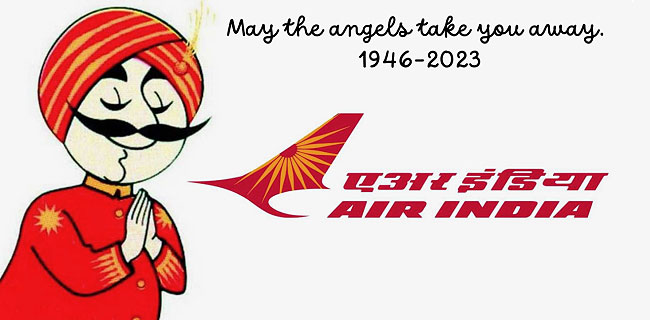
     

  • Air India Maharajah 1946-2023


    Prabhakar Mundkur

    By Prabhakar Mundkur


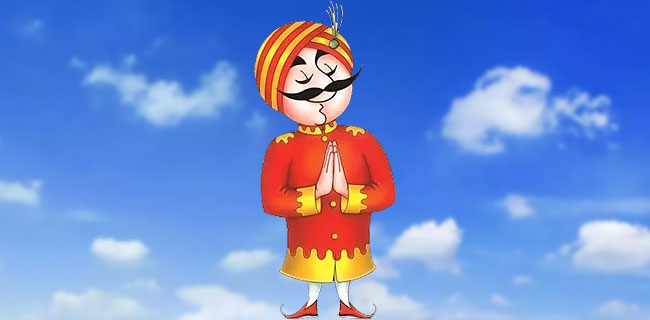
    When I read the obituary of the Air-India Maharajah this morning, I couldn’t but shed a tear. After all, he was mortal like the rest of us. Ailing for the last 20 years, and in and out of hospital, many of his detractors were not able to overcome his strong will. And in spite of the many attempts on his life, he just kept coming back like the strong royal Maharajah he was. In fact he just laughed it off in his inimitable style.


    While plenty has been written about him and his escapades through the decades through various lands, the end was solemn and brief. Just an unemotional announcement that his life had finally ended. There were no flowers. No prayers. No tears. No celebration of a life well-lived.


    Which makes me wonder whether all mascots have a life of their own and like us mere mortals have to finally bid a goodbye.


    Remember Gattu of Asian Paints? And the Murphy baby? Gattu, the mischievous Asian Paints mascot, was created by none other than the famous RK Laxman and enthralled us for a good 50 years. Murphy, another Indian favourite, was a brand born in Britain and founded in 1929 by Frank Murphy and EJ Power. The Murphy brand now belongs to the Shirodkar Group of companies but they don’t sell radios any more.


    It is interesting to examine why the Maharajah was so successful. For one his commentary was on our day to day lives and the life of the nation. He became the social mirror of Indian society. He reflected our happy and unhappy moments with a touch of philosophy and wit.


    Ivan Arthur, earlier National Creative Director of JWT, and now educator and author, when asked about the Air India advertising, said: “Conceived as a letterhead design, the Maharajah broke the fetters of the line drawing and became flesh with a personality and DNA of his own: the double helix of gracious exotica. That DNA did not permit him to stand in the street corners of conventional media and tout his destinations like a cheap ticket salesman. His famous romps on those hoardings were not advertising. They were non-advertising: parlour talk, one-liner points of view, camaraderie, provocation and good humour, all of which did not ask you to buy an Air India ticket. In fact, in many of the hoardings, he refused to have the Air India logo as sign-off. He was the sign-off. He was no commercial mascot. He became a national figure. Much loved and respected.


    The Maharajah was always accompanied by another symbol that belonged to Air-India and that was the Centaur. Equally old, it has played an equally significant role in the branding of Air-India.


    The Centaur had its own life as an alternative Air -India mascot. It flew around the world as the airline’s insignia, appeared on the inflight livery and even cutlery, was embroidered on some of its crew’s uniform, stood proudly on the top of the company’s impressive headquarters and became a brand name for its hospitality subsidiary!


    Hopefully the Centaur carries on, unless the new adopted parents of Air-India have another strategy in mind.


    In the meantime, let us mourn the loss of our favourite Maharajah once more. As the Byzantine Empress Theodora said “ For a King death is better than dethronement and exile”


  • Air India Maharaja debate: barking up the wrong tree?


    With apologies to none at all

    By Vikas Mehta


    Vikas MehtaI call my column ‘With apologies to none at all’ for a reason. And my article today actually justifies the title.

    For the last almost a month, since it was announced that McCann Worldgroup India shall be handling the Air India account, marketing and advertising professionals have been tying themselves in knots arguing for and against the use of the iconic Maharaja identity for the brand. Arguments ranging from nostalgia, royalty, Indianness, contemporary image and what not have been flung in the rung. Suggestions like contemporise the Maharaja or that royalty is defunct in today’s day and age are being touted. Compromises are being suggested and a few are sticking their neck out, asking to bin the Maharaja.

    And this is where most marketers exasperate. It’s also the reason why digital experts are gleefully claiming that advertising is dead. For, we forget that while marketing is an art, it’s foremost a science. And when we think from the gut or the heart and not follow simple marketing dictums then advertising opens itself to debate about its existence. We tend to go all mushy-mushy, not following some simple logic that defines marketing.

    The one big mistake which I see all advertisers make is not defining their target group and more importantly, not understanding the difference between target group and the user. Please do indulge me for a moment.

    Everyone uses a soap but a Lifebuoy soap talks to a mother. A Lux soap talks to a youngster who aspires film star beauty. A Dove soap user talks to a slightly middle-aged lady who feels that she is losing the softness of her skin. That does not mean that Dove will not be used by young females or even men. Similarly, Lifebuoy is used by working men too. But the brand always talks to a predefined TG. Just because everyone uses a soap all soaps do not talk to everyone.

    So, everyone may be wanting to fly but Air India has to decide who will it talk to. Just as Indigo clearly decided that it will talk to the no-frills guy who wants to reach from Point A to Point B with some basic amneties at an affordable price. This person is not looking for meals or a newspaper or a luxurious seat. He or she just wants an inexpensive ticket with a professional experience and on time flights.

    The question that needs to be debated therefore is who will Air India be talking to. And once that decision is taken the debate about the Maharaja is resolved by itself. So, please indulge me again.

    Air India is very clear that it is not a no-frills airline. In industry parlance, it’s a full-service airline. Young fleet of aircraft (on its way). Tick. Comfortable reclining seats. Tick. Choice of meals as part of the ticket. Tick. Entertainment on board. Tick. Higher ratio of cabin crew to passengers. Tick. Frequent Flyer programme. Tick. Lounge facility. Tick. Choice of premium classes. Tick. So, the whole experience is premium, specially when compared to no frill airlines like Indigo.

    Therefore, when we are debating Air India’s Target Group, very clearly we are talking to the premium-seeker. Someone who prefers fine dining over quick service restaurants. Someone who would much rather be looking for a vehicle at Nexa and not Arena. Maybe, someone who is not into Maruti Suzuki at all but into Honda or Hyundai or Kia.

    Very clearly, we are talking to someone who has that much bit more to spend. Or someone who wants to be seen in a slightly elevated company. Someone who has tasted some success in life and wants to enjoy it. Now, for argument sake, let’s say that this person is mostly the Millennial. Gen Y.

    My question therefore is simple. What is Air India to this person? Maharaja? Premium? Royalty? Or is it bureaucratic? Not dependable? Poor service? Surly cabin crew? I am not giving any answers but I do think that millennials had the worst of Air India in terms of their brand experience and for them Air India is anything but Maharaja. So, does it make sense to pitch the Maharaja to them?

    On the other hand, the Tata story could appeal to the millennial. Caring. Customer-first. Quality. Trustworthy. All these are the association with the Millennials. And of course how the Tata group treated its employees and customers post the 9/11 carnage is something that the millennial empathises with.

    Therefore, if Air India has the millennial as its target group, then more than the Maharaja, it’s the Tata association which will work. And that’s just one option. There could be many more.

    I am in no way suggesting that Air India ditch Maharaja or use the Tata connection. I don’t have enough data or research to back me up but as a hypothesis, it could work. And that’s my point. Rather than aimlessly get into a debate about the goodness of Maharaja or its non-relevance today, the marketing and advertising gurus must first try and define the Target Group for Air India. Rest will follow automatically.

    There is a very interesting corollary to this. Is there any Target Group for which the Maharaja is relevant? Does this Target Group have sufficient numbers to be attractive enough as a target group?

    Am not sure if there is any? Tales, nostalgia, reminiscences and stories are not good enough. Experience is. Air India was a Maharaja when? In the sixties or maybe till early seventies. Is the nostalgia or reminiscences of a few vanishing breed good enough?

    Not to forget the fact that Air India aspires to be a major international player. Is an airlines from India, in today’s day and age all about royalty and land of exotic animals and snake charmers. Or is India shining for them?

    And what about the future? The current Gen Z. These people in a few years will be looking at premium flying experience. Does the Maharaja mean anything to them? Will a 50-60-year-old icon excite them?

    The answers are there. But only if we ask the right questions. Unfortunately, that’s not what is happening now.


  • The Maharaja moves to McCann


    By Our Staff

    McCann Worldgroup India has won the coveted advertising and marketing communications mandate for Air India, the Tata group promoted global airline, following an extensive multi-agency pitch, which we learn including longstanding agency Wunderman Thompson, FCB and DDB Mudra.. The agency will develop a new brand platform and develop a comprehensive range of multi-channel marketing communication. And we presume the Maharaja, the mascot that has greeted passengers since 1946, will be retained.

    The selection process for this partnership entailed a rigorous evaluation as part of an exhaustive multi-agency pitch.

    Nipun Aggarwal
    Nipun Aggarwal

    Said Nipun Aggarwal, Chief Commercial and Transformation Officer, Air India: “We are building Air India as a ‘Global Airline with an Indian Heart’. This is a brand that is close to the heart of flyers around the world, and the new Air India will be a manifestation of the aspirations of the global Indian. With McCann Worldgroup as a partner, we expect to transform the brand into one of the most admired and trusted brands in India and overseas.”

    Prasoon Joshi, CEO and CCO at McCann Worldgroup India and Chairman, Asia Pacific, led the pitch alongside a dedicated team of local and global partners.

    Prasoon Joshi

    Delighted about the win, Joshi said: “Air India is a brand that inspires us, and we are excited to partner with them as they chart a new course. Our McCann Global CEO, Daryl Lee, has genuinely supported and guided us. Also, support and input came in from Harjot Singh ( Global CSO) and John Wright who were an integral part of the pitch along with the stellar senior management colleagues Jitender Dabas, Alok Lall, Ashish Chakravarty, and their teams,” adding: “We look forward to collaborating with Air India and offering the best-in-class strategic and creative services that build on and take the brand to newer heights.”

  • Are we Losing our Sense of Humour?


    By Prabhakar Mundkur


    Prabhakar MundkurHumour is a powerful communication device if used in the right way. Film, advertising and the other arts are often a mirror of society’s interests, attitudes and behaviour. As Ogden Nash once said: Life imitates art far more than art imitates life.


    Oscar Wilde affirms that what is found in life and nature is not what is really there, but is that which artists have taught people to find there.


    If a cool-headed Martian were to descend on to us to examine the state of humour in our art he could possibly find that we are probably losing our sense of humour. In fact no one is laughing these days, barring the laughter clubs that I encounter on my morning walks. And even those are forced laughs because there is actually nothing to laugh about.


    In Indian cinema, comedy was a central part of the Bollywood industry of earlier years. Look at Bollywood’s Jaane Bhi Do Yaaro. Never before was there such a great team of talent together. Kundan Shah, Om Puri, Pankaj Kapur, Bhakti Barve, Ravi Baswani, Naseeruddin Shah and Satish Shah to name a few.


    If Bollywood is no longer producing comedies, humour which always been a key way to communicate for advertising has nearly all but disappeared. The advertising figures of speech are very much like grammar isn’t it? There are just a few figures of speech that advertising plays around with.


    First there is the Torture Test. Where a product is put through strenuous and extreme conditions to prove it’s a good product. Take any tyre advertising and this is easy to see while the ad will put the tyre through extreme conditions like potholes and rough terrain.


    Then there is Hyperbole. Where you take a product attribute and exaggerate it just to make a point. You don’t expect consumers to literally believe it, but it helps to accentuate a particular point about a product.


    Another ploy that advertising uses is the Parody. The Parody uses humour to make a point about a product. It entertains them. It helps to sell a unique attribute of the brand.


    This is what I am missing now in Indian advertising. Commercials are becoming too serious and striving for a deep emotional response rather than entertaining people. And often portraying too much reality is getting advertisers into trouble as we have recently seen, with advertising getting trolled and ultimately having to withdraw their commercials.


    Look at some of the parodies that were created in yesteryears. What stands out amongst them and is relatively more recent is Mentos. I am just wondering why the ad industry is not attempting any more advertising in this genre. Another common ploy is Juxtaposition. Where you take opposites to make a point. Big, Small – Black, White, etc.


    Then there is Personification. This is very common in Indian advertising which is constantly using celebrities in the hope that some of the qualities of the celebrity might have a positive rub off on the product being advertised.


    The last category of advertising uses A Moment of Captured Reality. Attempts that fail are called Slice of Life.


    How Air India used humour in its ads

    All of Air India’s advertising was really based on humour. It was the Maharajah having a laugh at current events both in India and overseas. Which is why an Air India hoarding would always bring a smile to your face. Even advertising without the Maharajah employed humour as a ploy to make a particular point about the airline.


    Stand-up comedy is relatively new to our country. Maybe just a little over 10 years old. Although audiences are relatively small, we have proven that we are very close to the global standard of stand-up comedy. Unfortunately, our comedians seem to be getting into trouble with the law all the time.  This is unlike other countries where comedians have a free rein to entertain people. Which leads me to the conclusion that perhaps we can no longer appreciate parody, and we have lost our ability to laugh both at ourselves and at others.


    So, coming back to the question that I started with. Are we losing our sense of humour? I certainly hope not. If we are, then it’s time we did something about it.


  • Air India Maharajah: An Anachronism or Timeless?


    By Prabhakar Mundkur


    Prabhakar MundkurThe tirade against the Maharajah is almost as old as that against the airline itself. The Air India top management, the aviation ministry and their new advertising agencies have been wanting to do away with the Maharajah for almost 30 years now. The agency HTA* that created him and nurtured him, even lost the Air India business after handling it for over half a century, maybe because they were the creators of the Maharajah.
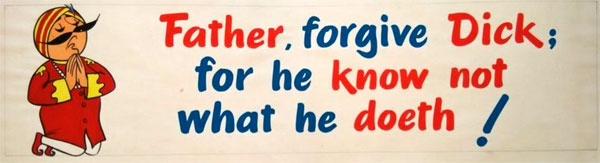
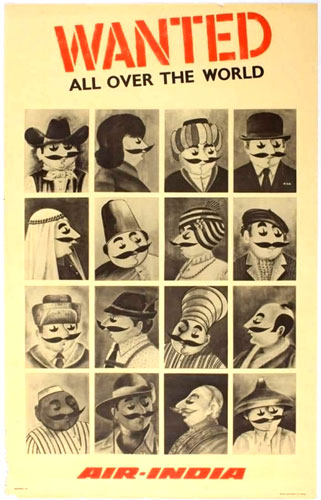
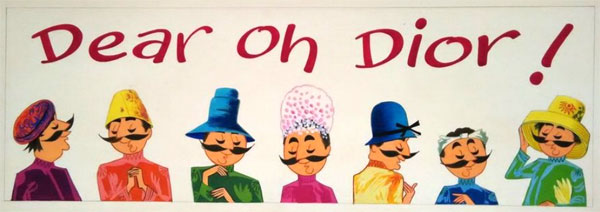
     

    It is really a wonder he has survived this long. He doesn’t look the same, he doesn’t speak the same language that he spoke years ago when I handled the business, he has lost his unique sense of humour and wit, he is completely out of touch with current affairs, in fact he is a mere shadow of his former self and he might as well have been executed than allowed to linger like this on a ventilator. He was born on the corner of a letterhead, and he has gone back to being there, making me wonder if he might also be buried there.


    On Richard Nixon during Watergate


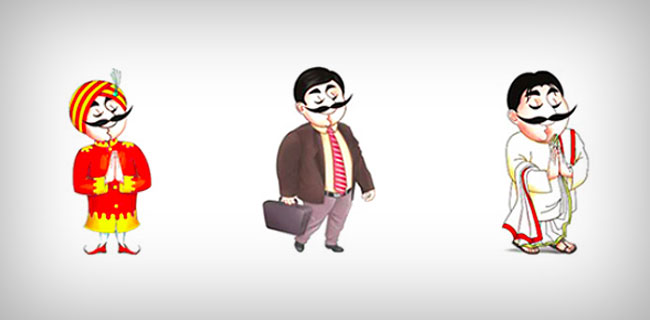
    Most people who have this point of view don’t understand that he is not just a Maharajah. He is a mascot who embodies the soul of Air India. Only his garb is that of an Indian prince. When he was conceived, he was meant to stand for everything that Air India stood for. Just like well-travelled Indian royalty that could speak authoritatively to both India and the world. Also, the Maharajah was not just the Maharajah. He took many shapes and forms disguised for the country he was meant to represent.


    Sawant, one of the Creative Directors at HTA who could draw the Maharajah in 15 seconds. was so inspiring that HTA once created a film, by making Sawant draw the Maharajah in real time, with a camera following his talented hands.


    K ‘Bobby’ Kooka, the Commercial Director of Air India, is once known to have said: “We call him a Maharajah for want of a better description. But his blood isn’t blue. He may look like royalty, but he isn’t royal.” Famous for having conceived the Maharajah along with Umesh Murdeshwar Rao of JWT in 1946, the Maharajah is one of the oldest mascots in the world. Kooka was later Chairman of Hindustan Thomspon Associates*) and watched the Maharajah and Air India advertising grow in stature and popularity.


    Ivan Arthur, earlier National Creative Director of JWT, and now educator and author, when asked about the Air India advertising, said: “Conceived as a letterhead design, the Maharajah broke the fetters of the line drawing and became flesh with a personality and DNA of his own: the double helix of gracious exotica. That DNA did not permit him to stand in the street corners of conventional media and tout his destinations like a cheap ticket salesman. His famous romps on those hoardings were not advertising. They were non-advertising: parlour talk, one-liner points of view, camaraderie, provocation and good humour, all of which did not ask you to buy an Air India ticket. In fact, in many of the hoardings, he refused to have the Air India logo as sign-off. He was the sign-off. He was no commercial mascot. He became a national figure. Much loved and respected.


    The Maharajah dies a 100 deaths


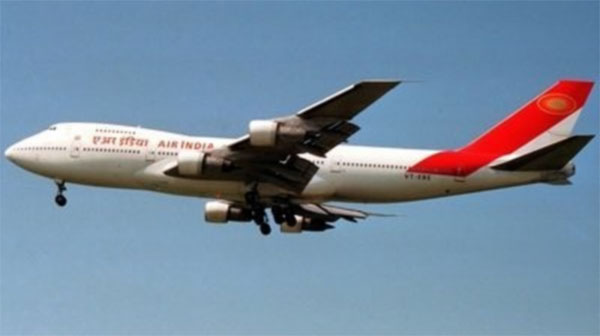
    Come the ’80s, however, frequent changes to the Chairman of Air India position resulted in the Maharajah dying a 100 deaths. Air India chiefs were keen to kill the Maharajah in lieu of something new and more contemporary. One such case was when in the late ’80s one Air India chief hired Landor, the well-known design firm, to redesign the logo of Air India in 1989. An airline identity change is one of the most expensive identity changes for any industry because it involves repainting all the aircraft, the livery, the ground vehicles and every signage in every country. But Air India went through all that bravely, eager to dump both the Centaur, which was their logo for the longest time and the Maharajah who was accused of not being in tune with the times. Rajan Jetley, then Managing Director of Air India, had said in defence of the new logo: “It is a public statement of change and a product exercise in the classic marketing sense.”


    Air India’s new identity created by Landor


    This was painted on the tail of the aircraft and the Boeing 747 Rajendra Chola became the first aircraft to carry the new logo and the livery. This facelift is known to have cost Air India $35 million back in 1989. But the public started questioning the change, immediately missing their familiar brand Air India. Questions were also raised in Parliament about the change of identity. But in spite of the identity change, the Maharajah seemed reluctant to leave the brand and its advertising. For every one person who didn’t want him, there was a loyal fan who wanted him back.


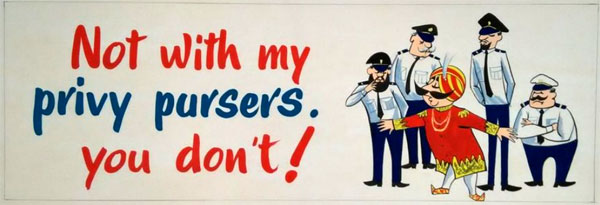
    Abolition of privy purses 1971


    Changing a brand’s identity is not an easy task. It is easy to say the Maharajah is an anachronism for those who don’t understand the Maharajah and the brand. Colonel Sanders who died in 1980 is still a part of the KFC logo. The Marlboro cowboy first made his appearance in 1954 while the cowboy era ended in 1885 at the end of the American Civil Revolution. They are not anachronisms. They are timeless just like the Maharajah. As Piyush Pandey, Chairman of Ogilvy is known to have said to Economic Times last week: “The Air India Maharaja stands for India. For any brand, any mascot, any logo, any identity is as meaningful as what they do with it.”


    With the Air India brand firmly with the Tatas, one wonders what the future of the Maharajah might be? Considering that the Maharajah is a crucial part of Air India’s brand equity and having worked on the brand, I can only hope that he will be re-incarnated.


    *now Wunderman Thompson