Tag: agnello dias

  • Josy & Aggie to present Ad Club Creative Review, event kicks off Club’s Diamond Jubilee

    By A Correspondent


    Josy Paul
    Agnello Dias

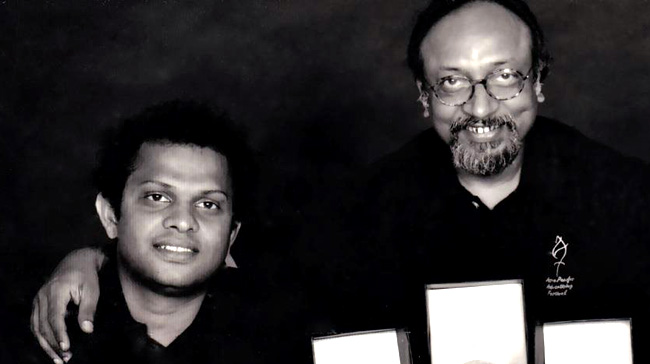
    The Advertising Club will revive its popular Creative Review with a  tweak in format. To be held at the Taj Vivanta in Gurgaon on February 28, it will be jointly presented by Josy Paul (Chairman and CCO, BBDO India) and Agnello Dias (CCO and co-founder, Taproot India).


    Colors is presenting sponsor of the Creative Review with Bharti Airtel and Pepsi being Associate Sponsors.


    Pratap Bose

    Meanwhile, a communique signed by President Pratap Bose notes that the Club which completes 60 years of existence has planned a series of new activities.


    For details: www.theadvertisingclub.net

  • Prasoon Joshi is jury prez at Cannes Lions

    By A Correspondent


    Prasoon Joshi

    Prasoon Joshi, Chairman, CEO and Chief Creative Officer, India & South Asia, McCann Worldgroup, has been appointed Jury President of the Titanium & Integrated Lions category at the 2014 edition of the Cannes Lions Advertising Festival to be held in Cannes, France from June 15 to 21. “Titanium brings the world’s most respected and eclectic set of people to the jury, and there is immense learning. The bar is raised and new benchmarks set for the world in advertising and communications. It will be an honour to work with the jury,” Joshi, who also is an awardwinning film lyricist and scriptwriter, said.


    Meanwhile at the Clio Awards which is scheduled to be held in October 1, 2014, Taproot India founder and Chief Creative Officer Agnello Dias and Malvika Mehra, National Creative Director, Grey India have been invited to the jury. Said Mehra, who will be on the jury of the ‘Content & Contact, Integrated Campaign & Innovative Media’ category, is looking forward to being on the jury. “It’s a great honour and a responsibility as one has a big part of play in setting a benchmark.” Dias will be on the Film jury.


  • Despite Omnicom-Publicis merger, WPP clear #1 in India

    By Samidha Sharma


    The $35-billion merger of American advertising and marketing group Omnicom with the Publicis Groupe will put the combined entity right on top of the global advertising industry in terms of revenues. But in India, Martin Sorrell’s WPP will maintain its No 1 position by far compared to its nearest competitor. Publicis Omnicom, the newly formed holding company, however, may narrowly topple the Interpublic group from its second spot in India, according to some industry estimates. These agency networks do not share their revenue numbers publicly in India.


    Most industry insiders said that the global merger will not have an immediate impact on the Indian market where the network’s agencies are expected to run independently. Both Publicis and Omnicom have upped their ante in the Indian market with acquisitions over the last couple of years to take on WPP head-on here.


    While Omnicom took full control of domestic biggie Mudra in 2011, Publicis has gone on to acquire smaller agencies like Convonix, Resultrix and iStrat, among others, in India. WPP, the clear No 1 locally with revenues topping Rs 1,500 crore, is still double the size of IPG and the newly formed Publicis-Omnicom here.


    Agnello Dias
    Agnello Dias

    “The combined entity will help in the Indian context when a global client of either Omnicom or Publicis decides to enter the local market. With a wider bouquet of offerings across creative and media agencies, the group will have higher chances of retaining these clients here,” said Agnello Dias, co-founder, Taproot, an independent agency which was acquired by Dentsu last year.


    Over the last few years, as traditional advertising mediums are being challenged by the likes of Google, the world’s largest online search firm, and social media platforms, consolidation has begun to take place rapidly across the advertising world. In 2012, Japanese ad network Dentsu acquired British media buying group Aegis to give it a much needed access to markets outside of its home country in a $4.9-billion buyout.


    The merger is unlikely to be a gamechanger in India until they get one head of the combined entity and cut flab which is not going to happen right away, said a CEO of an advertising firm who did not want to be named. Conflicting client interests – such as the one between Coke and Pepsi – is another issue which will be at the fore front for both the networks to handle going forward.


    Ashish Bhasin

    “The new entity has the potential of becoming a stronger player as well as a weaker one depending on how post the merger the group handles its clients and employees,” said Ashish Bhasin, chairman (India and CEO (South-East Asia) for Aegis Media.


    Source:The Economic Times

    Copyright © 2013, Bennett, Coleman & Co. Ltd. All Rights Reserved

    Licensed to republish


  • Umesh Shrikhande signs contract to be CEO, Taproot India. Joins today

    [updated]

    By A Correspondent


    Dentsu India Group has announced the appointment of Umesh Shrikhande as the new Chief Executive Officer of Taproot India. The former CEO of Contract India, Mr Shrikhande is an advertising veteran with more than two decades of experience. This is the seniormost appointment made in the agency after Dentsu’s stake buy in August last year.

    Indicating the significance of the announcement, a communiqué to inform the media of the appointment was sent on the Dentsu letterhead. Until now, all major communiques – including that of the hiring of Sameer Aasht as Head of Strategy and Business or the setting of the SquareRoot design unit – were sent by Taproot co-founder and CCO Santosh Padhi. Mr Shrikhande joins today (July 3).


    Welcoming Mr Shrikhande to the group, Rohit Ohri, Executive Chairman of the Dentsu India Group, said, “I’m delighted that Umesh has chosen to join us. Aggie, Paddy and I look forward to his partnership in this exciting new phase of growth at Taproot. Umesh is an industry professional I’ve always had the highest regard for and now, I’m happy to have this opportunity to work with him.”

    On Mr Shrikhande joining team Taproot at the helm, Agnello Dias, Co-founder and Chief Creative Officer, Taproot India said, “I am glad to have Umesh’s vast experience on our side, which will be a guiding light for us as we scramble around doing what we think is the right thing. He is sharp, insightful and most important possesses great clarity on the way mass communication in the contemporary world works. Everything we need.”

    “With the kind of experience Umesh has and the number of youngsters Taproot has, it will be a wonderful blend,” said Mr Padhi. When asked who Mr Shrikhande will report to, Mr Padhi replied: “Though on paper he will be reporting to Aggie, he is not hired for that…  he has been hired to take certain calls and just inform us and keep us in the loop”.

    Speaking on his appointment as the new CEO of Taproot India, Mr Shrikhande said, “Aggie and Paddy are not just immensely talented, they also happen to be wonderful people who have managed to build an attractive reputation for Taproot despite a hugely competitive environment. Our collective endeavour will be to build on Taproot’s innate strengths and culture to create a stronger organisation.”

    Mr Shrikhande, a management graduate from Jamnalal Bajaj Institute of Management Studies, started his career with Lintas (now Lowe Lintas & Partners), where he spent six years. Thereafter, he was a core member of Team Contract and took charge as the agency’s CEO in 2008. He left the agency in November 2012.

  • Taproot leads India with twin golds


    By A Correspondent


    Agnello Dias
    Agnello Dias
    Santosh Padhi

    When Agnello Dias and Santosh Padhi set up Taproot not many moons ago, one of their first benefactors was The Times of India. With reason. Aggie, as the Chief Creative Officer and Co-founder of the agency is better known as, had won his former agency JWT a Grand Prix in Direct at Cannes in 2008. The client in question was The Times of India.


    For, Aggie and Paddy (Santosh Padhi’s aka) have done some splendid work for the media group ever since.


    Rahul Kansal

    “The Times Group brand has an old legacy and is considered a great brand but I think with their association, Aggie and Paddy have managed to create a new buzz around the brand,” said Rahul Kansal, Executive President of Bennett Coleman and Company Limited. Talking of the duo the day the news that Dentsu had acquired stake in the agency, Mr Kansal told MxMIndia: “Aggie I would say is amongst the most versatile thinkers. He assesses the brand, market and consumer needs and comes out with a specific solution that will address the issue. Paddy then complements by giving the most appropriate treatment to the concept and that probably is their winning formula.” (Read full account at: Rahul Kansal: No shortcuts with Taproot).


    On Wednesday, even as Indian agencies had won a silver and 3 bronze metals in the PR and Direct categories, all eyes were on Outdoor where 43 Indian entries were shortlisted. Yes, there was Media too, but there were just two shortlists.


    While Media saw a blank for Indian entries, in Outdoor, there were as many as five metals, including two golds.


    Leading India in the metals foray this year is Taproot with two golds in Outdoor. Both are for The Times of India’s Farmer Suicides campaign. From amongst the numerous congratulatory messages he received on his Facebook profile, there was one from a senior creative: “To hear the word congratulations, must be so cliche for you. Boss how do you do it year after year!!!”


    The two golds are in the ‘Fundraising, Charities, Appeals, Non-Profit Organisations, Public Health & Safety, Public Awareness Messages’ and ‘Illustration’ sub-categories.  Meanwhile, Grey won two Bronze Lions for DHL and Duracell and O&M won its Bronze Lion for Philips Electronics.


    With this, India’s total tally of metals at Cannes Lions 2013 is 9: 3 in PR, 1 in Direct and 5 in Outdoor.


    But there are many shortlists in Press and Design. And the glamour part of the Lions – films, integrated are still to happen. The Cyber, Design, Press and Radio Lions will be awarded today (June 19) and Branded Content & Entertainment, Film, Film Craft and the Titanium and Integrated Lions will be presented on Saturday (June 22).


    Going past last year’s tally of 14 now appears easy, but will we cross the 2009 high of 25? We’ll know for sure before the week ends.


  • Taproot launches design unit, SquareRoot Design

    By A Correspondent


    Taproot India has launched a design unit, SquareRoot Design. Sameer Asth, who recently joined Taproot India as Head of Business and Strategy, will be involved in SquareRoot Design, which will be fronted by Santosh Padhi and Agnello Dias.


    SquareRoot Design is a brand consultancy focused on multiplying brand and business growth – from defining a path to growth to creating a name, nomenclature, verbal and visual language, packaging, tangible retail engagement and viral content for the virtual world.


  • Sameer Aasht joins Taproot India as Head, Strategy and Business

    By A Correspondent


    Sameer Aasht

    Sameer Aasht is joining Taproot India as Head, Strategy and Business. In a career spanning over 12 years across Strategy, Design & Communication agencies like Landor, Rediffusion Y&R, Contract, TBWA, Percept H & Ambience Publicis, Mr Aasht has worked on key strategic assignments for groups like Cadbury’s, ITC, HSBC, Mahindra, Suzlon, Tata, FICCI, Asian Paints, Samsonite, Black & Decker, Toyota and many more.


    Some key projects where he has played an integral role include rebranding of FICCI, expanding portfolios of Bytes & Celebrations for Cadbury’s , Brand Architecture implementation for Mahindra, Launch strategy for Volvo-Eicher, Integration for Suzlon, creating a special matrimonial brand for World Gold Council and the Design strategy for Himalayan Water by Tata among others.


    He has also been on the marketing side with Jet Airways, launching the brand in key global markets and leading segment initiatives for youth, business and leisure travellers, as well as an entrepreneurial stint with AlmaMaterPLC & Loveknits.org.


    “We are confident that Sameer’s wealth of experience and strategic acumen will add even more muscle to everything that Taproot India brings to the table and look forward to your continued cooperation in creating powerful value for your brands in the market place,” said Agnello Dias, Chief Creative Officer and Co-Founder, Taproot India.


    Santosh Padhi

    Santosh Padhi, Chief Creative Officer and Co-Founder, Taproot India, said, “For Taproot India, it will be a huge plus to have someone who has worked on 4 sides of the table – Advertising, Marketing, Design and Digital across a diverse set of categories ranging across Tourism & Hospitality, FMCG, Automotive,Financial Services, Fashion, Retail & Luxury and more.”


    Sameer Aasht said, “Taproot is a dream agency for most professionals in the industry today. I absolutely look forward to co-creating the best solutions for the brands we handle.”


  • A long story short: Rise of the 100+ seconder


    By Meghna Sharma


    Long copy became synonymous with David Ogilvy after he espoused its cause in his book Confessions of an Advertising Man (1963): “There is a universal belief in lay circles that people won’t read long copy. Nothing could be farther from the truth.”


    While one may not see too much long copy in print these days, television commercial writers seem to be following the great man’s adage, if recent TVCs are anything to go by.


    Dove’s Real Beauty Sketch campaign on the digital platform and the latest Tata Sky commercial, which made waves for being all of three minutes long, are proof enough. But in today’s fast-paced world where the 30-seconder rules, do such ads really work?


    MxMIndia asks adwallahs what are the characteristics of a lengthy ad or campaign, and why some work – and some don’t.

     

    Raghu Bhat, Founder Director, Scarecrow Communications Ltd & Founder, Fungus Designs

    The biggest challenge any advertiser faces is how to make one watch his/her advertisement. For instance, if we take a movie, people make an effort to go and watch the film; the same isn’t the case of advertising world. How many log on or switch on their television sets to watch a particular ad? Hence, it is difficult to find a programme which has a captive audience as well as has a two- or three-minute window to showcase an ad. People are watching IPL, but spots are sold for 10-seconders.


    For a mass brand, to launch a lengthy campaign, it cannot depend on the digital platform alone. It has to use television as a medium to reach its TG. And has to go beyond traditional content to catch people’s attention. For example, the Dove campaign turned out to be more of a social commentary and hence, caught people’s eye.


    Ramanuj Shastry, Co-Founder and Director, Infectious Advertising

    I would call such long-duration campaigns as branded content rather than advertisements, because people watch them more on the digital platform. A lot of such lengthy content is launched online, especially internationally, to go viral. However, it should have an ongoing story which will make one ask ‘what happens next?’. Apart from the story, other elements like music, acting, direction too are important. For such content to be played on air means that a channel has enough air space to fill; otherwise it doesn’t make sense to run them on TV.

     

    Arun Iyer, National Creative Director, Lowe Lintas & Partners

    I don’t think such lengthy advertisements or campaigns always work. The Dove real beauty sketch campaign worked because it was intriguing. It was almost like an experiment captured, which clicked with the people. But personally speaking, I think the Tata Sky is a bit too long, which wasn’t necessarily required. To run such ads on TV isn’t feasible for anyone and everyone. Maybe Tata Sky can afford to do so because they have their own channel.

     

    Agnello DiasAgnello Dias, Chairman and Co-founder, TapRoot India

    The Tata Sky TVC is one in a million. Today the biggest barrier the advertising agencies face is duration. Therefore, it is impossible to create something creative. TVCs today are just a reminder of a brand. What used to be known as edits are now the actual advertisement shown on television.


    Kartik Smetacek, Group Creative Director, Dratfcb + Ulka

    I think each piece of communication has its own ideal length (which isn’t always a pre-defined 30 seconds). A long-format ad has the advantage of drawing you into the story and building a much richer experience before the brand message is delivered. What you lose in frequency, you more than make up for in impact. Apple’s 1984 spot being a case in point. The key to a successful long-format ad is a compelling storyline that resolves to a relevant, well integrated brand message. The narrative must demand an extended build-up, so that every extra second adds to the intrigue. Apart from that, impeccable execution – whether it’s cinematography, casting or music – greatly helps the cause.


    Last year, Chipotle released a two-minute film online that was totally worth the time. It was an animated film that told the story of a farmer who dismantles his high-tech, mechanized farm to re-embrace a simpler, free-range approach. Set to an epic track (Willie Nelson covering Coldplay’s ‘The Scientist’), the film kept you riveted till the final second. The ad made its TV debut at the Grammies, by which time it had already travelled virally around the world, redefining Chipotle for a whole generation of customers.



  • Dentsu in talks to buy out digital agency Webchutney

    By Ratna Bhushan


    Japanese advertising agency Dentsu is in advanced talks to buy out leading digital advertising agency and consulting firm Webchutney.


    This will be Dentsu’s first local acquisition in the digital agency space. Network18, which holds 70.06% stake in the Sidharth Rao-promoted Webchutney Studios, is looking to exit from the alliance, two officials with knowledge of the development said. The deal size is estimated at between Rs 40 crore and Rs 60 crore for Network18’s 70.06%, which values the agency at roughly Rs 90 crore on the higher side.


    “Dentsu is expected to buy out Network 18’s stake in Webchutney. The promoters of Webchutney will continue to hold their stakes,” one of the officials quoted earlier said.


    Rohit Ohri

    Rohit Ohri, Dentsu India group’s executive chairman said: “We are looking to scale up our digital capabilities in India. Obviously, acquisition is one of the options. We are currently discussing the various options and putting together our plan.” Officials close to the development say Webchutney, which was ranked the No 1 digital agency in the latest Brand Equity Agency Reckoner, is the front-runner in Dentsu’s quest for inorganic growth in this space.


    Network18 had invested in Webchutney through its investment arms, Capital18 Ltd and Capital18 Fincap, in 2007. The agency, which services firms like Airtel, Microsoft, Hindustan Unilever, Marico and Titan, posted a profit of Rs 6.35 crore in the financial year 2011-2012 on revenues of Rs 21.55 crore. Network18 owns 49.42% of the shareholding through Capital18, Mauritius and 20.64% through Capital18 Fincap.


    Webchutney’s Rao said: “It’s very early to talk about any new alliance… nothing has been finalised as we are evaluating many options.”


    Sarbvir Singh, Capital 18 MD, too neither denied nor confirmed if Network18 was exiting Webchutney. “In the normal course of business, at any given point in time, we are approached by several interested parties and we speak to them as appropriate. We have no other comment to offer at this point.”


    Webchutney was set up in 1999 by entrepreneurs Sidharth Rao and Sudesh Samaria. The agency’s area of work includes online advertising, website design, mobile marketing and social media. Its employee strength is about 200.


    In July, globally Dentsu had acquired British media buying group Aegis for $4.9 billion. Back home, too, the Japanese agency has been on the prowl. In August, it acquired majority stake in creative hotshop Taproot.


    Founded by ad men Agnello Dias and Santosh Padhi, Taproot has created clutter-breaking ads including PepsiCo’s ‘change the game’ and Airtel’s ‘jo tera hai wo mera hai’.


    Denstu also has an indirect alliance with mobile marketing agency ad2c, a collaboration between Japan’s D2 Communications and Singapore-based Affle, led in India by Madan Sanglikar. In mid-August Aegis had acquired D2 Communications, a digital marketing and search agency. Indirectly, this deal gave Dentsu access to the digital space.


    Dentsu’s clients include car maker Toyota and electronic firm Panasonic whilst Aegis services brands such as Adidas and Philips.


    Digital agencies are increasingly being wooed by traditional ones. Earlier this year, Publicis Groupe bought out digital and performance marketing firms Resultrix and Indigo Consulting in two back-to-back deals. And in mid-June this year, WPP Group bought out a majority stake in Hungama Digital Services through its agency JWT Singapore.


    Source:The Economic Times

    Copyright © 2012, Bennett, Coleman & Co. Ltd. All Rights Reserved


  • AdStrat: Easy, anytime shopping with Myntra

    Agnello DiasAgnello Dias, Chief Creative Officer, Taproot India


    Name of the Campaign/Ad: Myntra.com – Real Life Mein Asia Hota Hai Kya?


    The Brief: The new TVCs have a clear objective of showcasing the wide range of products and convenience of shopping on Myntra.


    [youtube width=”400″ height=”220″]http://www.youtube.com/user/myntradotcom[/youtube]

    Research insights: The TVCs highlight the fact that shoppers have access to over 500 brands ‘anytime, anywhere’ and easy product return with the tag line ‘goods once sold can always be returned’. So it’s the promise of convenience at a click of a mouse and assurance that if not satisfied then it can be returned.


    The thought process behind the creative: The first film depicts a boardroom setup where three colleagues stumble upon Myntra while in a meeting and start visualizing stylish models walking on the boardroom table as they scroll through the website. The second film shows a finicky female shopper who wants to return her dress for unreasonable reasons and her request is immediately accepted by Myntra.


    Media vehicles chosen: The new TVCs are being shown across most GEC channels. Along with television ads, Myntra will reach out to its audience online with an innovative digital campaign on portals like Yahoo and YouTube which builds on the theme of the TVC. Myntra made the commercials available exclusively for its 7.5 lakh Facebook fans a day before they were aired on national television.


    Key issues kept in mind while executing the ad: Agnello Dias, Chief Creative Officer, Taproot India added, “This is a further extension of the original campaign thought – ‘Real Life mein aisa hota haikya?’ which had worked very well for the brand the first time round. Myntra does indeed have a wide range of fashion brands parading on the site at any given point in time and we thought it would be interesting to dramatize that fact by exaggerating the grand parade of fashion apparel through a catwalk in a place and at a time when one least expects it. Similarly, the second TVC emphasizes on a core offering of Myntra – hassle-free return and exchange.”


    What is the differentiating factor about the ad? This is a step ahead from the previous campaign focused on demystifying myths about online shopping by communicating the key benefits of shopping with Myntra.


    [youtube width=”400″ height=”220″]https://www.youtube.com/watch?v=T3etshTW-vc[/youtube]

    The TVCs were conceptualized by Mumbai based advertising agency, Taproot. The film was directed by Prashant Issar and produced by Radhika Sawhney from Tubelight films. Maxus is managing the media placements of the TVC.


    Client comment: Mukesh Bansal, Founder & CEO, Myntra.com said, “Having created a successful campaign showcasing the benefits of shopping online, we are now extending our communication to a wider audience with two new TVCs. This campaign is aimed at showcasing our entire range with shoppers being able to mix and match from our wide catalogue. With over 500 fashion brands, we are further consolidating our leadership position in the online fashion and lifestyle space”.


  • TAPROOT! We will not mess with what’s working wonderfully: Rohit Ohri

    When one speaks to Rohit Ohri, Executive Chairman, Denstu India Group, one can sense the passion and excitement with which he has embraced his role at Dentsu. However, he does admit that when he had taken the role more than a year back he was himself not sure if he was doing the right thing considering that he was moving out of a familiar environment where he had spent 21 years! But things couldn’t have been better for him and he certainly is enjoying being a part of the transformation that Dentsu is undergoing. Mr Ohri talks to MxMIndia post the news of Denstu Inc acquiring 51 % of Taproot India.


    By Tuhina Anand


    What a day it has been! Dentsu and Taproot coming together is certainly big news. However, what intrigues is that you already have 3 full-service agencies under Dentsu India. So what is the reason behind acquiring a creative agency?

    We are constantly working towards bringing the best skills and capability in the organization. We have three full service agencies under Dentsu India Group – Dentsu Marcom, Dentsu Communications and  Dentsu Creative Impact and we have the best of creative minds including Soumitra Karnik, Titus Upputuru and Harish Arora leading our creative units. In a year that we have worked together, I think we have come out with some great creative works like Canon India’s What Makes Us Click or Hero Motorcycles’ Sach Kar Denge Sapne. These are excellent works that have helped the clients remarkably increase the market share and put them on a growth trajectory.


    I have been reading that we lack creative prowess but I think that’s not the case. I think it has more to do with a perception that needs to be changed. We have been doing a lot to improve the quality of work that has been coming out of the agency. But we decided that we needed a dramatic shift to change the perception of Dentsu and we needed to make a quantum leap. Our decision of aligning with Taproot is a move in that direction. I would say that the change was already happening in the agency it’s just that now it has been accelerated with this development.


    Dentsu is a Japanese-held company but it is not a Japanese agency. If we are in India it means that to succeed we need to create advertising that clicks with the nation. We have Japanese counterpart in the system where they bring an understanding and expertise in our offering. It’s a happy marriage where we leverage each other’s strength.


    A well-thought of strategy then!  How will the partnership work on a daily functional basis?

    Very clearly we will not mess with what’s working wonderfully. So there is no name change or any change in the way Taproot has been functioning. The agency has been handling big clients on project basis and for them to handle them on a regular basis would mean that they need bandwidth and expertise like media or digital. That is where we step in by helping them to cut the labyrinth and give them direct access to our network’s strength. Taproot will grow on its creative capability and remain the iconic agency that it is today. The difference is that the support from Dentsu will come in when required thus helping them to focus on their creative output.


    There will be a Taproot Board that will be set up which is part of the process of the post merger integration. The Board will have four directors from Dentsu and I shall be one of them and three from Taproot. The key decision like the future of the agency will  need to be passed by the directors but I repeat that in day-to-day functioning Aggie and Paddy will run it as they have been doing till now. They will have complete freedom.


    With you coming on board, it appears Dentsu India is on an overdrive to get in the top race in the industry, how do you see the agency poised today and the road ahead?

    Dentsu is the number one agency in Japan for the past 110 years. We want to be the agency that clients want to work with. We are 100 percent integrated agency and have a holistic approach to communication. Today, the separation among various functions like creative, media or digital has become so deep that it is difficult to straddle across them. However, the clients want one-stop solution and that is Dentsu’s strength. Tim Andree, the President and CEO of Dentsu Network Global, says that we are network of agencies which collaborate with each other meaning we build complimentary skill and not competitive.  This is what we truly believe in.


    For you personally, how is the role different from your previous stint?

    Honestly speaking, I wasn’t sure of my move as I had spent 21 years of my career at JWT but now that I am here I can confidently say that I am having the best time of my life. Last year has been fantastic as well as challenging nevertheless satisfying.


    I think the biggest difference in the agency today is the culture that we have created within the organization which encourages creativity. I have got enormous amount of support from Dentsu Inc on this. The deal with Taproot was initiated by me and I got phenomenal support thus helping in making it happen. We had envisioned this almost a year back and it is extremely gratifying to get the congratulatory messages and calls from the industry and your peers which kind of validates that what one has planned was in the right direction. I have been overwhelmed by the support that the industry has shown on this move.


    I can feel the change in the agency, in the way people are approaching us now or during our discussions with the people from the industry. It’s just that we have accelerated that change with the move.


    Must be a tiring day for you given the buzz the news has created… how do you plan to celebrate?

    I think I just want to enjoy and savour the moment. It has been a significant move and to be accepted by the industry gives me immense pleasure and kind of validates that our strategic thinking was in the right direction. However, one must understand that the move of partnering with Taproot would have not have created much ripples had we not already been doing something to show that Dentsu was undergoing a transformation. It would have been just passed off as a one-time move.  I think we had already made a difference by getting the right kind of people on board, by our work and the culture that we have created within the organization. So there was some foundation and people knew that there was an agency undergoing change albeit at a slower pace. With Taproot we have increased the pace of change. Coming back to the celebration, I think we will do one when Aggie, Paddy and I get together.


  • TAPROOT! | Pops on the Rise & Rise of Aggie & Paddy


    By K V Sridhar


    Aggie:

    “Agnello Dias, I have always believed, is the Sachin Tendulkar of advertising industry. Aggie has the ability to camouflage himself with any brand, in any tone of voice, and in any style.”

    I have known Aggie for more than 20 years now. I have known him as a young boy who came into the advertising world in the year 1991-92 when I was in Lintas. I have seen him grow as a copywriter, I have seen him grow as a creative director, and I have seen him grow as a man. Agnello Dias, I have always believed, is the Sachin Tendulkar of advertising industry. Aggie has the ability to camouflage himself with any brand, in any tone of voice, and in any style. In fact, when Aggie was a young boy in the industry, he wrote some beautiful copy for Johnson and Johnson’s baby products. When we were in Lintas at that time, I remember asking him to write copy on Johnson’s baby gift pack. Initially I was wondering whether that little boy would be able to write anything on baby-related products, but he surprised us with a brilliant piece of work. It was since then we realized that this boy (Aggie) has got tremendous talent in him because it is not just the skills of copywriting alone that is required, but also observation skills. If you see all the successful creative people, they have all learnt so much from life… It is the people who have gone through a lot of hardship in life, and people with general interest in life, who make a great creative person.


    Aggie has come a long way. It may surprise you that Aggie’s first passion has always been football and not advertising. He came into advertising by default. Aggie not only has the talent of playing with words and expressions, but he also understands human behaviour exceptionally well. It is this combination that has made him a good copywriter.


    To the world Aggie is a very quiet person; however, I believe it is by choice rather than by default because he believes it is his work that must do all the talking. Probably he is the last copywriter or one of the quintessential copywriters in the country who knows how to put across a point of view and win that argument. A lot of copywriters today are clever one-line writers, but there is absolutely no one who can put across a point of view and win an argument. But Aggie was different; he wanted to win that argument, it did not matter where he wrote, whether it was for a newspaper or a woman’s product, he would argue for that point of view. Thus he was always of the opinion that hiding a little bit of his personality is always helpful.


    During his stint in Leo Burnett, I remember Aggie reluctantly accepting the post of ECD. In fact he never wanted to be an ECD because he never really enjoyed handling people, he never enjoyed designations, and he certainly did not enjoy the limelight as he always wanted to be the quiet guy.


    The biggest turning point in his career came after he joined JWT. It was only after joining JWT that he started becoming a little more of an extrovert, started becoming more visible, talking to people and expressing his viewpoint much more emphatically. Most importantly he started becoming a leader wherein he commanded the client’s respect by taking on a brand and transforming it. So, that work got him all the recognition and respect. The clients started respecting him even more for all the work he has done for the big brands like Pepsi, TOI etc. Thus, the relationship he has built and the respect he has earned in JWT is what made him a great creative leader.


    Paddy:

    “Paddy was never satisfied with crafting, he would always work and rework until and unless he achieved perfection. He always had that passion of going the extra mile to achieve perfection.”

    I’ve known Paddy for more than 14 years now. Paddy is passionate about cricket and commercial advertisement, he played cricket with Sachin Tendulkar in school. Paddy was never satisfied with crafting, he would always work and rework until and unless he achieved perfection. He always had that passion of going the extra mile to achieve perfection. So, despite his work being approved, he would sit through the night and polish it further and make it even better. Somewhere down the line I believe he always had this feeling about how much of his work as an ad director will be valued by the industry but, my advice to him has always been that, “You are a great creative guy, a great art director and not many are blessed with this kind of talent. Your greatness in fact comes from your talent, and what you do with your talent matters, and if you use your talent well, you will certainly achieve success.” His greatness therefore came from his art direction, from his simplistic ideas which were without much complication. Art directors are very simple-minded, unlike copywriters, because copywriters have to carry the entire world on their head, but art directors are much more simple. Thus it is his simplistic thinking and his crafting skills and that has become his path to glory. This is also the reason why he is one of the most successful and most respected art directors in the country today.


    Unlike Aggie who commanded respect from the popularity of his work and his ability to camouflage himself into anything whether it is about writing effortlessly a copy on baby products or even question the harmony between India and Pakistan, etc; Paddy on the other hand became popular by his craft and by his peers recognizing him, and when they both came together, it was a perfect combination. Both of them therefore complement each other. While one is the best copywriter of the country, the other is the best art director of the country and when the two come together they become a force to reckon with.


    Both Aggie and Paddy were never interested in designations unlike the younger generation of today. I feel a lot of copywriters today are ashamed of being copywriters, as they want to become creative directors, and they want to supervise somebody else’s work instead of their own work. The trend is similar with art directors too because they feel it is below their dignity to become an ad director or copywriter. Once a copywriter, you are a copywriter for life, if you are an art director, you are an art director for life because that is what becomes your identity.


    I hope they continue to remain the best Art Director and Copywriter and create many more campaigns.


    KV Sridhar aka Pops is the National Creative Director at Leo Burnett.


    As told to Robin Thomas