Tag: advertisers

  • India out, advertisers still in!


    By Ananya Saha and Robin Thomas


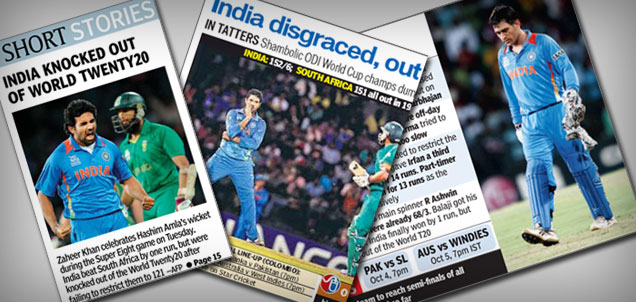
    India might not have made it to the semi-finals of the T20 Cricket World Cup, but the advertisers and sponsors of the event are still cheering. ESPN Star had sold inventories to about 34 advertisers and, according to industry estimates, the advertising revenues that the channel made for the T20 World Cup are already in the range of Rs 250 crore. Are they complaining?

     

    Mahesh Ranka

    Mahesh Ranka, Founder & CEO, Indus Sports and Sponsorship, feels that India’s performance would hit the advertisers. He said, “The ad deliveries in the World Cup will be lower given that India did not make it through. However, the advertisers and sponsors would have taken the factor of India not making it through before they signed up. The bigger issue is for ESPN Star, whose inventory might be affected.”


    It is no news that advertisers and agencies always plan with such contingencies, of India not winning or getting out of a tournament, in mind. And especially in the case of T20, India was going to play either five matches or seven. With just three games left, from a sheer quantity perspective, it does not seem a big loss to advertisers.

     

    Anwesh Bose

    Anwesh Bose, Senior Vice President, DDB MudraMax Media, said, “Advertisers and sponsors have got their value already. Cricket is a non-cancellable property, so nobody is going to withdraw the money they have put in. For the T20 World Cup, sponsors buy the inventory for the entire tournament.” He added, “The broadcaster, in this case ESPN Star, holds back about 10 percent of inventory of finals and semi-finals, which they sell at a very high premium. Now that India did not go, they might not be able to command the premium for the inventory.”


    With India losing, ESPN Star has definitely lost an opportunity that they would have capitalised on if India had made it through.



    Vivek Srivastava

    Vivek Srivastava, Joint MD, Innocean Worldwide, said, “If you are a brand that looks at tactical use of such opportunities then you might sound like prophets of doom at this eventuality. However, most strategically driven brands today have long-term sports marketing properties and a long-term perspective on leveraging them. They look at a long-term engagement via a mega sport like cricket. Our client Hyundai has a long-term vision about integrating the brand and engaging with India’s passion for cricket as well as other cricket-playing nations via a five-year official partner status with the ICC. While India missing out on a semi-final berth hurts the emotions, it is business as usual.”


    Agreeing with Mr Srivastava is Hiren Pandit, Managing Partner-Special Projects at Group M who opined, “Advertisers have got more mileage and viewership during the T20 matches, and India’s exit will be slightly disappointing for them. Most of the advertisers in cricket are long-term advertisers, all the deals have been done earlier. India’s early exit may have been a missed opportunity but it does not mean that advertisers will not continue to sponsor the sport. Viewership will be impacted by India’s exit but there will still be some viewership.”


    The industry believes that the viewership will only see a minor blip, if at all. According to Satish Menon, CEO, Sports 18, while advertisers may be slightly disappointed with the loss, it is not going to stop them from advertising or investing in cricket in the near future.


    Mr Menon asserted, “When (Team India) does not do well it does reflect on the viewership and so on. As far as the viewership is concerned there will be a marginal dip, not a huge one because cricket is a universal game and a lot of the cricket fans or viewers also follow other matches equally. So I don’t think India’s exit will have any major impact on viewership and especially because it is the T20 World Cup.”

     

    Sudha Natrajan

    “When India is not there in a tournament, there is between 25 percent and about 35 percent drop in the viewership as compared to when India is playing. This is the sort of trend you see in the earlier games. If the games are interesting, the viewership could even climb, despite India’s exit from the tournament. The problem however is the buzz and the interest level that the country has when India is playing as compared to when they are not playing. So more than the TVR, it is the overall interest that you see diminishing,” concluded Sudha Natrajan, founder, TMC Corporation.


    Given that it is the festive season in India, the advertisers might not mind a few losses.


    Clippings above (LtoR) from DNA, Hindustan Times and The Times of India

     

  • The Anchor: 5 ways to make print more relevant for advertisers

    By Ashish Pherwani


    1. To make print more relevant for advertisers, we’ve got to have more interactions and more engagement through either digital or activations on radio or any other vehicle. There needs to be a level of engagement built into the print offerings of media companies. Advertisers are looking at some kind of measurement which is not just readership but a measurement of a deeper level of engagement.


    2. You have got to make print more relevant to the reader, and therefore the one-size-fix-all newspapers being generated today may not be the answer and it may call for better segmentation and better understanding.


    3. Overall, the print companies need to realize that they are no longer B2B companies, that the main asset they hold is their relationship with their consumers and their readers. And therefore, they need to evolve into B2C companies, build databases with their customers as information and optimize that database for different advertisements.


    4. As youth moves away from its consumption of newspapers and moves towards different methods of consuming media, newspapers need to be able to figure out ways to retain those youth, either on some other medium or by giving them the kind of news that they want to read. Most publishers still believe in giving out news which they believe is relevant. Therefore giving youth-centric content is something that the industry needs to work on and youth is a category which most advertisers look forward to.


    5. Print companies need to proactively come to advertisers with innovations with products that resonate with their brands.


    Ashish Pherwani is Partner-Advisory Services, Ernst & Young India


  • InMobi & Cricbuzz announce partnership

    By A Correspondent


    Bangalore-based independent mobile ad network InMobi and Cricbuzz, the cricket property with over 17 million unique users, has announced an exclusive partnership for bringing mobile ads to consumers on Cricbuzz’s mobile site and applications, for the India market. This partnership will make it easier for advertisers to reach premium mobile consumers on Cricbuzz.


    Under the terms of the partnership, InMobi will have exclusive rights to monetize Cricbuzz’s mobile properties across all devices on phones and tablets in India. Advertisers that want to advertise on Cricbuzz’s mobile application on these platforms will now engage with InMobi.


    InMobi delivers reach to 578 million consumers, in over 165 countries, through more than 93.5 billion mobile ad impressions monthly. It provides end-to-end solution for mobile advertising including rich media ad creation, distribution, tracking and optimization.


    With a presence across multiple digital platforms, Cricbuzz attracts over 17 million monthly unique visitors on its web and mobile properties. This partnership is for ad monetization, and on all their properties – mobile web and apps on phones and tablets.


    “Since inception, we have focused on making cricket information available on mobile devices of varying capabilities and were the first to launch a WAP-enabled version as early as 2005. We are excited to announce this partnership with a global leader in mobile advertising, such as InMobi. Being the top cricket destination on mobile, we were looking for a globally renowned partner and InMobi was the obvious choice,” said Pankaj Chhaparwal, Founder and Managing Director at Cricbuzz.


    Sandeep Deshpande, Country GM -India at InMobi said: “This exclusive agreement with Cricbuzz reinforces InMobi’s leadership position in the Indian market. Cricbuzz’s mobile properties on all platforms have been immensely popular in India and abroad. In a Cricket fanatic country like ours, where all brands want a share of this pie, advertisers will now be able to reach their target audience wherever they are, through this partnership.”


  • The Anchor: 5 reasons language music channels are the way to go

    By Sandeep Bansal


    1. Regional music channels are registering increased viewership. The regional music channels have provided a good television platform for local music which was earlier not there.


    2. There is a steady revenue growth @15 per cent for the regional television channels.


    3. More focused targeting for advertisers and hence less wastage. Many big marketers are looking at a more focused communication for their consumers across markets and this can very well be addressed by the regional music television channels.


    4. Capitalization costs are lower compared to national music channels as one does not invest in national deals for distribution, content, and so on. The lower capitalization costs bring down the turnaround period for the regional music channel.


    5. Since regional music is not mainstream, the music content is available at a much reasonable rate compared to Bollywood music content. Also the regional content is created with smaller budgets making it cheaper for the broadcaster to source the same.


    Sandeep Bansal is Managing Director 9X Tashan


  • The Anchor: Faisal Farooqui on 5 changes he would like to see in digital media

    By Faisal Farooqui


    1. Government adopting Digital:

    There is a lot that the government can do by adopting the digital media. We look forward to significant changes in the government where the entire delivery of the government public interface services should be digital. I would like the government to understand that digital media is not just about having a website but it is really about reaching out to your citizens on a larger scale.


    2. More schools adopting Digital:

    All schools inIndiastarting with government schools must adopt digital as part of their curriculum and treat it as a separate medium. All the schools in this country should realize that digital is not a separate medium, but a medium which can be integrated with their teaching and curriculum, and they should make this change.


    3. Cutting down on the middle men:

    I would like advertisers and publishers to reach out directly to each other. There are a lot of middle men involved in the whole process of buying and selling of ads in the digital space. If the digital industry, both on the advertiser and publisher front, has to make progress then we need a lot of direct interaction between buyer and sellers. This will help ad buyers reach out to inventory sellers directly. Therefore, we need to cut down on some of the layers in between.


    4. Cell phone operators adopting digital:

    Cell phone operators inIndiahave not adopted digital completely. They have to realize that digital doesn’t just mean subscribing to SMS jokes. Most of their websites are not optimized. Hence, a great push can be given if the mobile operators can go digital. Cell phone companies must therefore make a lot of their services digital. So if they can change their digital strategies and adopt digital in a bigger way, I think that will be a big boost.


    5. Digital industry must think beyond the websites:

    Digital industry has to think that digital is beyond the website. You have to build social integration and a lot of these digital companies inIndiahave not embraced social media. Hence digital I believe has to become social.


    Faisal Farooqui is the Founder – CEO, Mouthshut.com


  • The Anchor: 5 reasons why advertisers don’t get desired ROI from Digital Media plans

    By Siddharth Puri


    1. Advertisers inability to identify right metrics to evaluate media plan performance

    Digital Media advertisers end up creating metrics which are not 100 per cent aligned to the business goals, which they wish to achieve, with campaigns being driven via digital media planned. For example, e-commerce advertiser looks to advertise and drive more transactions, but instead deploys money on media and optimizing media plan for a metric such as number of visits received on the e-commerce store front, instead of owning up to all metrics in the funnel till business objective of transaction. Lot of advertisers end up treating metric like on-site conversion ratio as black box instead of demystifying up to product searches, carts created, number of users reaching closer to end metric of transaction and optimizing media plan on deeper in sales funnel metrics.


    2. Cross Digital Media Channel Attribution Management

    Digital Channels have evolved from being a single channel to a medium with multiple media channels like social, search, display, mobile, affiliate among many others. With advent of multiple channels and ability to measure via technology, it is important that the advertiser doesn’t make a mistake in establishing, not only channel which leads to last content before conversion of customer in campaign, but the medias which lead user down the funnel.


    Performance channels like Search and affiliate networks sit lower in funnel and closer to conversion, but study of users’ path before conversion reflects strong display activities with correct frequency and media placement on media plan reflected as high as 50-60 per cent work done to influence conversion.


    3. Digital Media plan created with over-dependency on single creative format type

    To create 360 degree impact, it’s important that all formats, including Mailers and Text Ads, beyond Display should be used effectively to capture the user intent created. What’s required is the ability to synchronize communication across formats to deliver higher ROI than single creative format type plans.


    4. Measuring of Google as single property/channel on media plan

    Google is made up of multiple line items for an advertiser for instance:-

    1. Brand Keywords – Users search for your branded products and are captured via Google text ad words advertisers at the cheapest cost. The ROI should compete with your SEO/organic traffic metrics as there is no effect of advertising but ability for technology to funnel direct demand for you. 30 per cent is the ideal spend for a brand advertiser.

    2. Non Brand Keywords – Spend done on this bucket is for placing your ads in front of category specific searches happening and trying to influence or win SOV – 40 per cent spend for an advertiser

    3. Google Content Network – Spend done on this bucket is to place your ad in contextually relevant environment basis audience targeting driven from content on page taken as input or measurement of relevance. This category constitutes approximately 30 per cent of an advertisers spend


    From a ROI cost perspective, the above channels have been listed in order of their cost to return ratio, indicating clearly that the average ROI delivered by Google is lesser than ROI metric achieved on non brand keyword due to averages from brand keywords making other channels on digital media plan look ineffective in meeting goals. If, as an advertiser you treat all the three as different channels, you will be able to increase ROI efficiency on your media investments by 30-40 per cent.


    5. Ad Network buys which constitute 20 per cent of the media plans are bought on price with comparison of channel against Search than Display Properties

    Ad Networks are fundamentally Display Format Publishers and hence inherit strengths and weaknesses of Display. Their performance and optimization which can be achieved is similar to display properties. One uses Ad Networks over display properties due to the technology which brings along additional optimization capability beyond creative and placement optimization. Digital Media plans are being developed as operations plan rather than strategy plans. If brands marketers/advertisers change their approach to Digital Media plans, they will be able to generate desired ROI since the Demand being less than Supply scenario still exists on digital media.


    Siddharth Puri is the Business Head, Tyroo Direct


  • Airtel forays into m-advtg, expects 40% growth

    By A Correspondent


    Bharti Airtel recently announced its strategic foray into the mobile advertising (m-advertising) segment in India. With this, Airtel will equip advertisers to connect with their potential customers in a targeted and personalized fashion via their mobile phones. The platform is designed to meet all the essential demands of advertisers such as inventory management, campaign management, reporting and analytics. As has been reported by MxMIndia in the past, Airtel has mandated Mogae Digital, a company owned co-owned by Sandeep & Tanya Goyal, former JV partners of Dentsu in India & the Middle East, to be its sole and exclusive monetization partner.


    Commenting on the development, K Srinivas, President – Consumer Business, Bharti Airtel, said: “We are excited to launch our mobile advertising platform. Personalization, sharp segmentation and contextualization are increasingly making this platform an exciting proposition for brands. With the mobile advertising market poised to grow by more than 40 per cent over the next few years, Airtel with its technology, scale and customer intelligence is placed uniquely to leverage this growing medium. Airtel’s m-advertising platform will enable advertisers to land their message in a simple, effective manner in an increasingly complex media environment.”


    Through Airtel’s m-Advertising platform, advertisers will be able to leverage multiple communications outlets and tools such as mobile internet (WAP), Messaging services and Airtel digital TV to engage their audiences. With this platform, companies can also extend their access to the rural audience with voice solutions.


  • Ten years on, is radio still an insignificant medium for advertisers? (Text & Video)


    By Robin Thomas (Videos by Insiyah Rangwala)


    Radio is said to be a medium that has been re-born. With the FM Phase III rollout anticipated this year, radio is expected to penetrate further into the country, as a result not only will there be an increase in revenues but, also the fact that newer revenue streams will open up. Multiple frequencies, allowing news and current affairs, sports broadcasting will also bring more innovations in radio, new genre radio stations and great amount of differentiation in content.


     

    Radio’s share of media spends, according to industry estimates, is expected to rise from 4 per cent to 5 per cent in two years. Among categories that advertise on Radio, Real Estate, Telecom, Retail, Education and TV channels are the ones advertise the most.


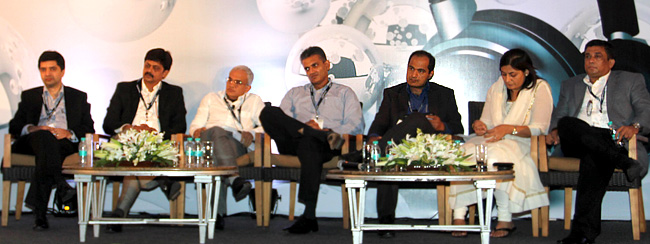
    What radio players say?

    Harshad Jain
    Joy Chakraborthy
    Joy Chakraborthy
    Apurva Purohit
    B Surender

    So, does radio still need to be evangalised? Is radio still insignificant to for advertisers? The India Radio Forum (IRF) 2012 discussed these issues. According to Mr Harshad Jain, Business Head – Radio and Entertainment, HT Media: “From a client standpoint, radio is still an insignificant medium. It all boils down to value addition of the medium – how can radio, as a medium, ensure value addition to its advertisers? The entire orientation has to be more than just vanilla FTCs. Radio is still an under-penetrated medium and has still a long way to go.”


    Mr Joy Chakraborthy, CEO, TV Today Network (which includes Oye! FM) pointed out that the Indian radio industry needs to stand united, not only on issues related to government regulations, but also for business related issues. “There needs to be some amount of unity among the radio fraternity. For the industry to survive we must stand together, not just for regulatory issues but even for businesses. Today radio is the most underpriced medium and unity within the industry will help us drive our sales.”


    Ms Apurva Purohit. CEO, Radio City was of the view that radio is still at an infancy stage and like any other medium, it will also take some time to evolve. She was quick to point out that television took many years to be what it is today. “Today the ad pie of radio is 4 per cent, the geographical coverage of radio is merely 30 per cent but, with Phase III the geographical coverage will see tremendous increase. Every year the number of advertisers on radio has only been growing, what we need to do now is to encourage these advertisers to spend more on radio and reach out to newer advertisers.”


    Mr B Surender, Senior Vice President and National Sales Head, Red FM said: “In the last two years radio saw tremendous growth. With the launch of Phase III also expected soon, the future of radio is certainly bright. Even radio stations outside metros saw tremendous growth, innovations in smaller towns and cities were high and in the next two years radio’s advertising pie is expected to reach 6 to 7 per cent.”


    The client perspective:

    Few years ago, radio was seen as a supplementary medium for advertisers wherein they would spend only the left over media spends on radio. This is said to be changing, slowly and steadily as advertisers are beginning to take radio seriously. There has also been an increase in the number of on-ground activations which has more or less become complementary for radio stations as a value addition to their clients. However, digital media, which was at one point in time an even smaller medium than radio is today, said to have become an even larger and a more powerful medium than radio and a possible reason could be because Internet, unlike radio, is a highly measureable medium.


    Giving a critical view on radio as an effective local medium, Mr Vinay Bhatia, Customer Care Associate and Senior Vice President Marketing and Loyalty said that radio has a very low share of mind and share of value medium to advertisers today. Digital on the other hand, which started off from 2 per cent of advertising share has a much higher share of mind and share of value. “To maximize assets, radio has to deliver business. Radio needs to world closely with clients, it can also look at which area of a city or town works better for clients. It can also partner with retailers to play radio in stores while customers are shopping. Radio is a response medium, therefore it allows a lot of engagement and interaction with listeners. However, there needs to be more innovations for advertisers on radio because clients love innovation and as a result innovation will bring more money for the radio station.”


    Arpita Menon, Head-Media Planning & Buying, Star India Pvt Ltd
    Premjeet Sodhi, COO, Lintas Media Group
    Harshad Jain, Business Head- Radio & Entertainment, HT Media

    Mr Shubhranshu Singh, Marketing Director-India and South Asia, Visa explained: “As far as Visa is concerned, radio has delivered us handsome returns. Radio, I believe, is economical and one can expect higher returns, it is certainly a cost effective medium. However, radio must come to clients as an industry and not as one single radio channel – it should be bolder in its approach towards clients and thus stay on top of mind of clients.”


    Mr Kartik Sharma, Managing Partner, Maxus had a slightly different take on the medium. He was of the view that radio is the oldest form of social media platform, it allows great amount of interactivity and engagement with the listeners. “Radio is in the business of producing great contents and so are the brands, I believe that both radio and digital can depend on each other. Radio is in the business of providing great content, the power of radio is sound and creativity therefore the mindset to learn this medium is very different.”


    Ms Shubha George, COO, MEC noted that in order to maximize radio’s asset and gain share of market spends, it needs to market itself more. She stated that radio today is sold and not marketed, what it needs is more marketing. She also pointed out that the industry must find ways to monetize every single phone calls and SMSes it receives and market them extensively.


    The Indian radio industry still needs a lot of evangelizing or marketing of the medium. Radio needs more nurturing, it needs to probably find newer ways of achieving better ROIs and thus increase greater share of media spends. More innovations in radio will also bring in more money and help it stay on top of advertisers’ minds. Radio needs to partner their clients and find newer ways to generate better ROIs for their clients. Radio needs to vigorously market itself to the advertisers and explain the power of the medium so that it becomes a primary medium for marketers.


    Image: Clipart, Imaging: Rafiq


  • The Anchor: Shailesh Amonkar on 5 reasons why national advertisers can’t ignore regional media

    By Shailesh Amonkar, Chief Marketing Officer, Sakal Media Group

     

    1. Relevant Circulation and Readership

    Regional publications in many markets have wider circulation reach and deliver better quality mass audience.


    2.  Stronger bonding

    Regional publications have a far stronger emotional bonding with the reader. The connect that readers have gets leveraged for the advertisers and strong credibility among their readers adds to this.


    3.  Speaking to consumers in their own language

    Reaching out to consumers in their own language delivers better response since they identify with the brand strongly.


    4. Advertisers are looking at maximum reach and sales

    The objective of any communication is reaching out to maximum audiences and achieving sales so if regional publications deliver these they would not be ignored.


    5. Regional markets growing for products and services

    Today regional markets are delivering sizable sales for most products and services and FMCG, telecom, consumer durables have all been focusing on regional publications and hence they are critical in any media plan. Yes, the brand credibility is an important factor and this is where the media planner needs to go beyond figures and understand reader bonds with each brand.


    Shailesh Amonkar is Chief Marketing Officer, Sakal Media Group


  • Media Matrix: Valuing Audience – Part II

    By Paritosh Joshi


    Remember the 5 weepies that you were forced to watch because of your spouse? The maverick British automobile journalist? The irritatingly intrusive news editor? If you do, we met last week. And even if you don’t, I’m going to try and make this week’s 870 words stand on their own feet.


    We signed off last week wondering about whether audience quality, and not just quantity, could be measured objectively. And whether current systems of audience measurement pay enough attention to measuring audience quality. The questions were tainted by an assertion that “In the relentless focus on audience volume as the prime metric, we have lost sight of audience quality”.


    Why does audience quantity take precedence over any other measure, particularly in a market such asIndia?

    • Almost every product category has low penetration, or in more technical terms, low Category Development Index
    • Marketers’ primary priority is to reach the widest audience to build awareness about their product/category to stimulate demand
    • When width becomes paramount it is easy to see why quantity always wins over quality


    The arrival of satellite television inIndiain the early 1990s was the first intimation of accelerating media proliferation. An unregulated regulatory environment in its early years and limitless viewer demand for exciting, entertaining content fuelled a torrent of channels, and indeed genre innovation which continues unabated over two decades on. Coupled with rising incomes in a domestic consumption fuelled economy and steadily growing literacy, India also saw simultaneous growth in the print media and, with the advent of better telecommunications in the last decade, the ‘new’ or digital media. Making systematic and reasoned choices in this era of abundance was no longer the simple exercise that media planning used to be in the stone age of media scarcity that preceded it.


    Enter- the media agency of record.


    The challenge for advertisers was just this: how to reach the largest audience at the least cost. Inevitably, the agency’s singular task was to stitch up defined audiences across multiple vehicles at the lowest CPT (cost per thousand) or CPRP (cost per rating point). Conversely, advertising sales personnel at all media outlets were under pressure to offer packages that were compared relentlessly on cost almost to the exclusion of everything. The age of quantity had arrived.


    We will leave the hurly-burly of the media market for a moment and look at how audiences are actually measured and how these measurements are consolidated into reports.


    Television measurement involves peoplemeters; devices connected to domestic TV sets that keep track of who watched what, when. These peoplemeters, once installed in a home, track TV consumption around the clock, through the week, across months and years. These days, most have inbuilt communication apparatus that enables them to transmit their observation record to a central server without human intervention. The central facility now consolidates thousands of individual viewer readings into audience ratings, again with little human intervention. Ratings report second by second ebbs and flows in audience aggregates. Cross sections – by second, minute, hour of any other time interval become more important than how a particular individual, or household, or even demographic, spent a day interacting with TV.


    Other media, most prominently print, are measured by large scale media surveys like the Indian Readership Survey or IRS. Thousands of households are contacted across the country to map print, TV, radio, digital and other media consumption along with detailed information on usage of a wide range of consumables, durables and assets (such as personal transport). Here too, the system is geared to deliver cross sections of readership, listenership and so on, rather than examining how an individual, household or defined demographic consumes across media and product categories.


    In days of yore when data tabulation, summarization and analysis was done manually, examining and interpreting research information, whether for  TV or any other media, on a ‘longitudinal’ rather than ‘cross-sectional’ was practically impossible. While individual cases might be studied, purely for anecdotal value, there was no practical way of subjecting, large parts of, or the entire sample itself, to cross-sectional study.


    WithMoore’s Law having given us exponentially growing computing horsepower and data warehousing, this impediment no longer exists. Imagine an individual’s TV consumption across a week. From spiritual or yoga type programs in the early morning, through news and business during the day to action, drama, music, talk and comedy in the evening night, she has a wide range of content on her plate. And when you start looking at her ‘TV timeline’, and start comparing and contrasting it with the thousands of others, you will find others that are rather similar, somewhat similar or rather dissimilar to hers. Simple, least squares type, approaches can scan across timelines to find patterns of behaviour.


    In much the same way, the entire mix of product and media consumption of individuals or households, rather than cross sectional tallies, can also be run on respondent level data in studies like the IRS.


    Shifting attention from cross sections to longitudes or timelines – of moving from a cross-sectional view of audiences to actually understanding how they behave and what they consume across time and place is the difference between understanding audiences as quantitative aggregates or behavioural phenomena.

    Paritosh Joshi was until recently CEO, Star CJ. He has been a marketer, a mediaperson and been a key officebearer on industry bodies. He can reached via his Twitter handle @paritoshZero


  • [MJR] Un-miserable about Trai’s ad regulations

    Ranjona Banerji

    By Ranjona Banerji


    This is actually an “un-grouse” – I go with the current zeitgeist and fascination with the un-dead (vampires) and the unlikely (werewolves).


    Despite the criticism on MxMIndia.com yesterday over the TRAI regulations about ads on TV channels, needless to say, as a viewer I’m a bit un-miserable. I understand the need to make money and profits and all that but sometimes watching TV can be an unhappy experience.


    TRAI has asked for commercial breaks to be limited to 12 minutes for every hour that there should be at least 15 minutes between consecutive breaks for programmes and every 30 minutes for movies. In addition, there are to be no part-screen or drop-down ads for live sports events. What’s to complain? It’s not as if the TV channels themselves don’t know how damn annoying constant ad breaks can be – they themselves advertise “break-less” movies as a cachet, as if the producer suddenly released a new uncut version of the film.


    The worst transgressors are Indian general entertainment programmes. Producers shoot what seems to be about 10 minutes of programming for those popular soaps and serials and the rest of the time is spent on dramatic repetitions of the last two minutes that transpired before the 40-odd ad breaks. Obviously someone in TRAI (or their families) watches these serials.


    There can be no one – except for some very brain-dead advertisers – who actually thinks that part-screen drop-down ads which mask action during a live sports events endears one to the advertiser. TRAI has only stated the obvious here.


    News channels are no better in particular, NDTV and CNN-IBN. If you catch them on the half-hour or the hour, you can be treated to about 10 straight minutes of advertisement. I keep hearing about how news channels are financially precarious which only leads me to believe that they ought to charge more.


    Times Now is terribly smart about this. During prime time, which is when editor-in chief Arnab Goswami conducts his nightly inquisition, there are minimum commercial breaks. The channel knows that people are watching for the drama and are not interested for the moment in Katrina Kaif having sex with a mango. TRPs skyrocket during Goswami’s Newshour (sometimes two hours) and Times Now knows that that benefit can be spread across the other hours of the day.


    It must also pointed out that newspapers and magazines also operate under some restrictions about the editorial to ad ratio and this does not lead to general hand-wringing and despair.


    Plus, it is also true that some ad breaks are necessary. You can make a few quick calls, run to the loo and check that the dinner is not burning. In between you might also decide that the Appy Fizz is indeed incredibly annoying and a talking soft drink should indeed be un-alive.


  • Broadcasters slam TRAI notification to limit ads

    By A Correspondent


    Broadcasters and advertisers have slammed Telecom Regulatory Authority of India (Trai) move to limit the duration of television advertisements to 12 minutes in an hour, and accused the regulator of exceeding its brief.


    A new notification issued by the regulator on Monday limited the amount of advertising on TV channels and disallowed any shortfall in a particular hour to be carried over. According to industry estimates, this could impact advertising revenues of broadcasters by 15-40 per cent.


    “Trai has no jurisdiction in the subject. Advertising is governed by the Cable and Satellite Act and the appropriate authority is the ministry of information and broadcasting,” said Uday Shankar, president of the Indian Broadcasting Foundation, and the chief executive officer of Star India. “The regulator is overstepping its brief,” he added.


    According to Mr Shankar, the low revenues from subscriptions give broadcasters no option but to rely on advertising inventory and revenues to survive.


    An Indian Broadcasting Foundation official said an earlier government guideline stipulated that Trai could issue an advisory with regard to advertising but not a notification.


    Sunil Lulla, managing director and chief executive officer of Times Television Network, which runs Times Now, ET Now and Movies Now channels, too criticised Trai’s decision. “This move is completely ridiculous. Self regulation is the best regulation,” he said.


    “This move will have an immediate impact because right now there is no other big source of revenue for broadcasters,” said Rohit Gupta, president of Multi Screen Media, the company which runs Sony Entertainment Television. The IBF will appeal against this new regulation, he added.


    Barun Das, chief executive officer of Zee News, questioned the timing of the regulation at a time when the entire broadcasting industry was going digital. “We have a limit mentioned in the Cable Act. If at all there is a need for regulating duration of advertising, it possibly could have waited some more time for the digitisation process to settle down.” he said.


    Mr Das said his channel had voluntarily cut its advertising inventory by 30per cent earlier this year. “We realise that too much advertising is a deterrent to viewership. We were not driven by regulations, rather we were driven by market forces,” he said.


    Mr Das said the viewers had choices not only of channels but also of media platforms. “I am not sure if advertising volume needs to be regulated. I would tend to believe that too much advertising would anyway drive away viewers,” he added.


    Sale of television rights have become an important source of income for sports bodies such as BCCI but the restriction on advertising will adversely impact the ability of broadcasters to recoup their investments, forcing them to scale down their bids.


    Source: The Economic Times
    Copyright © 2012, Bennett, Coleman & Co. Ltd. All Rights Reserved