Tag: ad:tech

  • The Future of Ad Agencies is in AdTech


    By Ashoke Agarrwal


    Ashoke AgarrwalIn the early naughts, a friend left the ad agency world for academia, calling the ad world “a conspiracy of mediocrity.” I thought he was egregiously wrong and, in my mind, started comparing him to Ignatius J. Reilly, the lazy, obese, misanthropic, self-styled protagonist of John Kennedy Toole’s brilliant book, “A Confederacy of Dunces”.


    I continued to spend decades in advertising and lost touch with my friend. I have always considered the ad world mercurial and more open to new ideas and talent than any other business. At one time, ad agencies were where to have the most fun with your clothes on.


    However, over the past decade, I have started feeling uneasy about the future of ad agencies – both creative and media types. In the era of mass media, the agency was the expert partner that offered insights into the consumer’s psyche and cutting-edge culture and the insider track into the workings of the media.


    Then, as the cushioning of the 15 per cent commission disappeared, agencies shed top-drawer planning and creative talent and lost their edge in consumer understanding and cultural trends. Moreover, the ad world stopped attracting the best crop from the fine arts, social sciences, and business schools, leading to an increasing feeling of superiority among marketing, product and brand managers when dealing with their agency counterparts. Over a decade, creative and media agencies sunk for a seat at the client’s marketing strategy high table to being vendors evaluated on specifications, speed, and cost.


    With the arrival and burgeoning importance of digital and social media, the decline of ad agencies accelerated—the emergence of Google and Facebook as the fulcrums of growing importance and the relentless and cold-headed demands of performance marketing further disempowered agencies.


    With the age of AI fast dawning on the world, another paradigm shift is in the offing.


    Media strategy, planning and operations are already slipping into the realm of algorithms with minimal human intervention. As AI matures, the last vestiges of human input will disappear.


    Two ongoing societal shifts impact creative strategy and development in the post-modern era. The new consumers – the Millennials and Gen Z – are way more advertising and marketing savvy, dismiss the hard sell, and are unaffected by traditional advertising’s hidden persuaders. They get their product information from credible sources and exhibit brand preference and loyalty based on a brand’s resonance with the value systems, concerns, and culture. At the same time, the new Millennium has since mass culture fragmented into millions of niches and tribes with ever-changing configurations of values, concerns and cultural totems.


    In this changing world, brand messaging and campaigns have split into two distinct tiers – performance marketing and content marketing.


    Performance marketing is tracking an individual’s purchase journey and contextual messaging that nudges her into the next favorable stage – click to the brand’s website or click away from a competitor’s website, click on the shopping or click away from it.


    Tracking and identifying the context in performance marketing is already algorithmic beyond human intervention. The messaging in the context of performance marketing is quite simple and is currently pre-designed by humans. As AI develops, the context and the messaging will be more tightly linked and will need no human intervention.


    Content marketing is a complex creative task, especially if it were to address all the relevant niches and tribes with relevant content that resonates with their changing values systems, concerns and cultural mores. While human creative teams struggle with this seemingly endless task, today’s LLMs can do a much better task. As AI systems integrate across tracking, segmenting, developing, and delivering content, even this last bastion of the creative agency will fade.


    So, if today’s ad agency groups are to survive, they will need to morph into AdTech companies with proprietary ad tech that they can deploy as an agency or deliver as a SAAS service to clients’ in-house teams.


    The first phase of ad tech that agencies could innovate and deploy is the development of fully integrated AI-driven AdEngine, based on an assimilated, up-to-date knowledge base-information on all relevant market data across all categories based on secondary and primary sources. While the knowledge base will integrate all available secondary and syndicated research, one of the distinguishing factors of an agency’s AdEngine would be the proprietary research and information it taps into. Based on business & marketing objectives and plans, the agency’s AdEngine would offer an alternative marketing communications strategy along with budgets, targets and pros and cons. Once the client has chosen the marketing communication strategy, AdEngine will execute the plan, with periodic reviews and fine-tuning that the client team can participate in.


    The technology that will deliver AdEngines is feasible today. Meta and Alphabet already have an AdEngine, but they deploy it to maximize their revenue. Tomorrow’s global agency must create AdEngines that maximize their client’s ROI.


    The next stage of AdTech is a decade or two away. Within a decade, a brand’s AdEngine will mature into the AI avatar of a brand. Parallelly, individuals, starting with the more affluent ones, will acquire AI assistants who manage all their interactions with the world – related to work, health, finances, education, training and consumption. I have termed this assistant Concierge Intelligence (CI), first in a post in February 2022 and the latest in a MxMIndia column in December 2023.


    The development of AI avatars at both the brand and consumer end will lead to an era of “AI-to-AI Marketing” while we humans focus, hopefully, on more creative stuff than just buying and selling.


    The AdTech agency will, in such an era, become a company with a consumer product – a CI for individuals- and market it like Apple and Samsung sell their smartphones today.


    Thus, the AdTech route promises to lead from a B2B SAAS service to a B2C product that could rival the size and impact of today’s smartphone market.


    Who will lead the AdTech market of tomorrow? Today’s global ad agency groups have the resources, but will they escape the rut all big successful companies get into? Will it be Big Tech that swallows the AdTech market with the already sizeable technology lead they have? Or will it be pesky start-ups free of legacy systems and pre-conceived notions fueled by the next generation of intrepid VCs? Interesting decades lie ahead!

     

  • Ventes Avenues announces two senior level appointments

    By Our Staff


    Ventes Avenues a Mobile AdTech Company announces two senior level appointments. Saurabh Gupta has been appointed as the National Business Head for the Performance Business, while Shriram Narayanmurthy steps into the role of VP of Sales (Branding) for the West & East regions. These strategic appointments mark a pivotal moment for the company, aligning with its vision for growth and innovation.


    With Saurabh Gupta and Shriram Narayanmurthy at the helm of their respective domains, the company is poised to navigate the challenges of an ever-evolving market landscape while capitalizing on emerging opportunities. As Ventes Avenues steps confidently into a new phase of its journey, the collective experience and vision of its new senior-level leaders promise to steer the company toward even greater success and distinction.


  • Ad:tech 2022 concludes with a positive message

    By Our Staff


    Ad:tech 2022 concluded with a positive message of R.I.S.E  – acronym for Responsible, Inclusive, Scalable, Experiential. The theme encompassed the challenges faced by business and the shift of business into new territories. The 2022 chapter of Ad:tech had over 100 speakers, 36 sessions, 35 sponsors and over 5000 signups for the event. The concluding session had Piyush Pandey, Chairman of Global Creative and Executive chairman Ogilvy India, sharing his four-decade-long advertising experience.


     

    Said Jaswant Singh, Country Head, Ad:tech: “This year has been special and exciting for us in more than one way with all the uncertainty and challenges. Post completing a decade of curating ad:tech we believe the platform is greeted and accepted as a platform of choice for the advertising fraternity. This year we witnessed participations from a lot of new and emerging brands and the content was appreciated by all as it most apt to the new changing world.”


  • Ad:tech kicks off 10th edition

    By Our Staff


    Ad:tech New Delhi, the marketing and media technology event, concluded its opening day with an overwhelming response, notes a communique. The 2022 chapter of Ad:tech has over 100 speakers, 36 sessions, 35 sponsors and over 5000 signups for the event. It will be hosting 80+ companies across its expo floors, and the range of services stretch across various industry segments including, media, marketing, E-commerce, retail, technology services and products, etc. over the two days.


    Said Jaswant Singh, Country Head, Ad:tech said: “Extremely thrilled to have seen an overwhelming response to the 2022 chapter with over 5000 registrations. It’s heartening to see that the theme R.I.S.E is truly relevant to the current market sentiments of moving towards a fast adapting and innovating digital marketing world. Marketers are increasingly looking at solutions that are data led and ROI driven and Ad:tech continues to their platform of choice for a decade.”


    (Note: the organisers spell Ad:tech with a lower-cased a. MxM wasn’t able to attend the event, though we were invited to it)


  • Globale Media launches new product for app marketers

    By Our Staff

    Adtech startup Globale Media has been trying to help advertisers up revenues through app recommendation engines, targeted ad campaigns, high-quality OEM placements, guaranteed 0% fraud rate, and accurate performance monitoring. Hence the app.

    Said Bhavesh Talreja, Founder and CEO: “We are excited to launch this product as we have already tried it with our advertisers and we are witnessing tremendous results. Mobile advertising is a space that needs continuous innovation and I am glad that Globale Media is leading from the front and trying out different ways to maximize ROI for the advertisers. Our new product is being loved by the app marketers and they are getting higher than ever post-install engagement.”


  • Anita Nayyar, others join Zee5

    By A Correspondent


    Anita Nayyar

    With a vision to augment its growth trajectory in the adech space, Zee5 has strengthened the team by on boarding three industry veterans led by Anita Nayyar, ex-CEO of Havas Media Group, India & South East Asia, Jayesh Easwaramony, an entrepreneur and expert in the tech and media world known for his ability to scale businesses and. Dhruvadeep Roy, who formerly was the Head of Digital platforms at DAZN.


    These new hires along with the current ZEE5 team will be spearheading and be responsible for paving the next phase of ZEE5’s advertising business growth.


    Nayyar, in her new role as Head of Customer Strategy and Relationships, will help build the agency-partner ecosystem for Zee5’s India business. On the other hand, Easwaramony joins as a consultant for adtech to drive all advertising, user data and audience related initiatives, right from strategy to implementation with vendors and product teams. Prior to this, Easwaramony was responsible to drive the APAC business of Softbank invested advertising firm InMobi for several years.


    Meanwhile Roy joins as Director Product – Adtech. Earlier, he has led the platforms and product bsiness at DAZN Sport Streaming Service across the UK, US, Canada and APAC in his previous avatar.


    Commenting on the new appointments, Tarun Katial, CEO, Zee5 India said: “I am ecstatic to share that ZEE5 has already taken a step towards flagging-off its next phase of growth by welcoming three acclaimed leaders of the industry to lead the advertising tech business. I welcome Anita, Jayesh and Dhruvadeep to the ZEE5 team and I am confident that their experience will further enable ZEE5 to achieve even greater heights. This current strengthening of our leadership team is line with a clear focus to build a robust digital advertising eco-system like no other.”


    Nayaar and Easwaramony will work closely with the recently hired Rajeev Dhal, Chief Revenue Officer.


  • The Power of Email in Marketing


    By Brian Wieser


    Brian Wieser

    Marketing technology continues to grow in importance, and email software one of the its most important sub-sectors. From analysis of our recurring tracker of headcount data via LinkedIn covering hundreds of pure-play companies in the adtech and marketing technology software sectors, we estimate that the combined group of companies grew by +10% year-over-year during 2Q19, similar to growth observed during the first quarter. Growth among these companies presents a stark contrast with ad tech-focused companies, which account for around a quarter of the activity captured here, and which were once again weak, declining by -1% year-over-year in 2Q19. One sub-sector performing better than this average is the collection we are tracking which are centred around or generally reliant on email service platforms, with component companies expanding by +15% during 2Q19.

    Email software enables media exposures. At a high level, email can arguably be viewed as more of a form of media than marketing technology, focused as it is on capturing consumer attention or driving a consumer action following an exposure. While practitioners who focus on email often characterise the medium as focused on retention or other loyalty-based marketing goals, it can be used to support brand-building objectives typically satisfied by other media. For example, a consumer who has chosen to engage with a brand and provide an email address may do so because they like that brand or its content; however, the brand may not always be top-of-mind without recurring reminders. Email is one way to provide those reminders.

    Email also serves as a critical source of data for marketers. More generally, an email address is often the best representation a marketer has for an individual customer and, consequently, email marketing software can attempt to serve as a “database of record” by capturing data on all of a marketer’s customers. For this reason, “marketing cloud” suites featuring a wide array of marketing technology software are often centred around email marketing software, which helps to plan, execute and monitor campaigns. Most of the industry’s largest players established their presence in this space via acquisition, as with Salesforce buying ExactTarget, Oracle buying Responsys and Eloqua, and Adobe buying Neolane and Marketo. Many other marketing cloud services featuring significant email offerings exist today, such as HubSpot, and then there are a wide range of independent point solutions including Mailchimp.

    Email has many intersections with other forms of media. Most prominently, email addresses are core to important ad products such as Facebook’s Custom Audiences and Google’s Customer Match. This is because of email’s capacity to identify unique customers and to build customized segments of actual customers, lookalikes, prospects and non-customers alike. Further, when brands send engaging content through email, they will have permission from a consumer to land in their inbox and deliver exposure to a subject line, even if the email is never read. This can have the effect of reinforcing media activity on other channels by providing consumers with brand-related reminders. The symbiotic relationship between awareness/acquisition focus of other digital media and retention/loyalty goals of email requires a focus on the right kind of awareness – among consumers likely to be loyal, for example – versus those not likely to become customers or likely to churn quickly. This can dramatically impact the effectiveness of a total media budget.

    Marketers tend to intentionally segregate responsibilities for email. Despite email’s potential to play a more powerful role, it is often segregated within marketers’ organisations, with email falling under teams responsible for CRM and not necessarily aligned with media management. Integration would allow more flow between awareness and loyalty-focused activities. Ideally, more integration between these functions would mean more seamless application of data and better customer segmentation for email and non-email-based platforms alike. The result: more efficient resource allocation overall.

    While there are certainly examples of marketers doing this well, direct brands and others with direct relationships with consumers probably do it better than others. This kind of integration doesn’t appear to happen often enough. Why?

    One rationale frequently relates to the more general separation between responsibilities for loyalty programs and CRM versus media and the different tactical goals associated with each type of spending. Budgets are then assigned and managed separately which reinforces silos. Once this has happened, a marketer’s procurement professionals may entrench these silos because of a common focus on optimizing individual functions rather than entire organisations.

    The need to “break down” silos and integrate marketing activity is not unique to email. Lessons learned from other silo-busting efforts are likely to be applicable here. Marketers can realise benefits from tying email campaigns, CRM-related activities, loyalty programs and other digital-centric activities to paid digital media campaigns. They can more tightly integrate email and digital media budgeting on a more dynamic basis, or they can foster collaboration more generally between different teams.

    Many marketers demonstrated that they can support collaboration between different functions, as with efforts to encourage creative and media to work together in the years following the unbundling of these disciplines. The view that the two related functions work better when integrated rather than segregated is likely as applicable to email and other digital media as it is to creative and media. Marketers who believe that integration should exist in one sphere will probably find similar benefits from others as well.


    Brian Wieser is Global President, Business Intelligence GroupM. This article was originally published at https://www.groupm.com/news/e-mail-message-digital-integration


  • ad:tech announces agenda and dates for the 7th edition

    By A Correspondent


    ad:tech, the world’s largest marketing and media technology event has announced the dates and agenda for its 7th edition in India. The event will be held on March 9 and 10, 2017 at The Leela Ambience Hotel and Residences, Gurgaon.


    The theme of ad:tech 2017 is “Accelerating The Evolution”, to keep pace with the transformative changes currently refining the landscape of technology, marketing and media. The last edition of ad:tech saw over 6500 attendees, 150+ Speakers including six Global Keynotes, 50+ Conference Breakout Sessions and the biggest exhibition featuring 90+ companies and an Innovation Zone with the latest disruptive technology in digital marketing.


    Commenting on the launch Jaswant, Country MD at Comexposium India said: “We are excited to bring the 7th edition of the biggest advertising and marketing technology platform in the world to India. The new ad:tech is hoping to be well timed to harness the enthusiasm for the kind of tech innovation in the area of marketing and advertising owing to an exponential rise of the digital sector in India over the past few years. Witnessing this boom, we believe that, now is the time to ‘Accelerate the Evolution’ and discuss avenues through which brands can enhance the efficiency of businesses thereby helping them deliver the right experience for their customers. The response of last editions has been exceptional and we are confident that this time around it will be bigger and better.”


  • India’s all-new Adtech Superpower


    By Krithika Krishnamurthy


    Adtech company SVG Media has acquired Networkplay Media, the digital media unit of German firm Gruner + Jahr for Rs 92 crore(over $15 million), making SVG Media one of the largest independent mobile advertising networks by revenue in India.


    Manish Vij

    SVG has platforms that can work on mobile, web and banners and is on track to earn revenue of Rs 210 crore this fiscal, according to a company executive who did not wish to be named “After consolidating our position in India with this deal, we hope to become the largest digital advertising platform in Asia,” said Manish Vij, 36-year-old cofounder of SVG Media who claimed his company has a 7% market share in India.


    The digital advertising spend in India is estimated to touch Rs 3,575 crore by March 2015, according to Digital Advertising in India Report.


    The deal, SVG’s second since inception, will expand its outreach to over a 100 million users in India. As part of the deal, Haryana-based startup Seventynine, which was acquired by Gruner + Jahr in November 2012 will also move to SVG. Seventynine will add the video ad-serving capability to SVG’s portfolio.


    In 2012, SVG bought out another ad network DGM India from AIM Listed Asia Digital Holdings.


    And more consolidation in the space is on its way, said experts. “The Indian digital market is going through a boom phase, with all aspects of digital media showing strong growth from e-commerce right to messaging services,” said Neha Dharia, research analyst at Ovum, who was not able to validate the SVG’s claim of becoming the largest ad network in India.


    “As with any boom period, we will see the growth of a multitude of advertising networks (innovating and disrupting established ad tech companies), after which we can expect a wave of consolidation to occur about a year or two down the line.”


    Manish Vji

    Founded in 2007 by Harish Bahl and Manish Vij, the ad tech firm has access to markets in South East Asia, Australia, and Middle East. So far, SVG Media has raised $2 million from Accel Partners, Whatsapp’s Neeraj Arora and Silicon Valley-based VC firm, Xplorer Ventures.


    And Gruner + Jahr’s exit from the digital media business in India seems to be SVG’s gain.  “Those at the headquarters have decided to exit the digital media play to concentrate on other markets. SVG proved to be a good option,” said Alexandra Harrop, director of Business Development Asia at Gruner + Jahr.


    Source:The Economic Times

    Copyright © 2014, Bennett, Coleman & Co. Ltd. All Rights Reserved

    Licensed to republish


  • Creating stories digitally for marketing success


    By A Correspondent


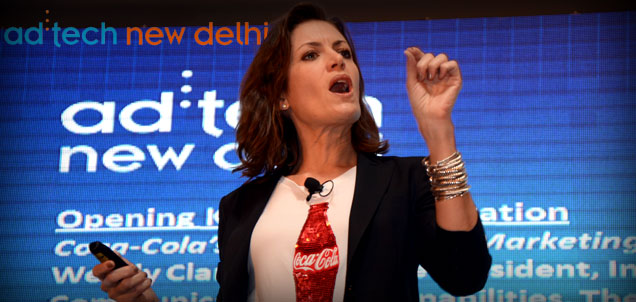
    Digital media is becoming an integral part of brand communication and journey. The content, connected consumers and convergence is only fuelling the digital marketing. From Coca-cola to SMEs in Delhi’s Chandni Chowk are exploring this medium to connect with consumers. There is close to 72 hours of content that is generated every minute of every day from around the world. Most of it is being consumed in real-time. Digital is growing exponentially, and brands not taking advantage of it might just face tougher time engaging with the consumers.


    Speaking at ad:tech 2013, the premier digital marketing event held in Gurgaon every year, Wendy Clark, Senior Vice President, Integrated Marketing Communications and Capabilities, The Coca Cola Company, stressed on the need to create more stories that are share-worthy instead of typical advertisements. Sharing the digital campaigns by Coca-Cola, she deliberated on the concept of Liquid & Linked Marketing. “There are eight learnings so far on this journey,” she shared, “be share-worthy by creating content that is interesting and compelling; embrace the new salesforce which are consumers willing to carry brand messages ahead; listen and then engage; test, fail, learn, and then scale; speed trumps perfection so be ‘flawsome’; disrupt yourself or be disrupted by the market; do not accept the status quo; and, play well on a behavioural level to manage increasingly complicated campaigns.”


    Ms Clark was of the view that storytelling could happen on digital, or any other traditional media, “It is only storytelling of different durations,” she maintained. Focusing on the three areas of stories, spread and value, she cited the example of the ‘Hug Machine’ set up by Coca Cola in National University of Singapore, which would offer a free can of Coke if you hugged the machine. Even though the campaign ran only inSingapore, it became viral globally and generated over 10 million views in theUSitself.


    Katharyn White, Vice President Marketing, IBM Global Business Services delved into how the changing consumer is also resulting in the changing role of marketers. She emphasized on the three imperatives for marketing professionals: understanding the customer as an individual; creating a system of engagement that maximizes value creation at every touch; and designing culture and brand so that they are authentically one.


    Technology, according to marketers is increasingly becoming an enabler that is helping brands create emotionally connected brand stories. Sanjay Tripathy, Executive VP – Marketing, Product and Direct Sales Channels, HDFC Life, spoke about how his company thought of engaging consumers by creating themes around insurance and thus, creating conversations. Nikhil Rungta, Country Marketing Head, Google India, cautioned, “Technology can be intimidating,” but that did not stop Google from creating conversations around real people and real stories, such as the Thanjavur painting. Technology helped the brand marketers to not only create stories but make conversations out of it.


    Mr Rungta also shared how AT&T created a series of 5 webisodes to connect with the consumer, instead of TVCs. The power of videos also enable to consumers to share it, co-create it, become a part of it and, in the long run evangelize the brand.


    Rajesh Chakrabarti, CMO and Chief Innovation Officer, Reliance Commercial Finance and Reliance Home Finance said that while internet penetration and usage is growing multi-fold inIndia, “it is still difficult to sell insurance online.” Reliance used the ground (offline) to get the customers to the web and today, the number of policies sold online has grown from 10,000 to 70,000 policies every month even though he emphasised that it is not easy to engage consumer on the internet. To attract the consumers to online insurance, Reliance kept the interface simple and managed to increase its online revenues by 83 percent in the Commercial Finance and Home Finance domain.


    K Ramakrishnan, President – Marketing, Cafe Coffee Day, stated that offline and online channels are merging. “The brands need to communicate to consumer has changed to ‘how to make consumers communicate on brands’ behalf’. With creating right conversations, consumers do indulge in brand evangelism. Being open to social media also implies that you will get negative feedback. It is an opportunity for brands in this case to look for opportunity here, brand should be able to listen and reward people for it. There needs to be courage to take risks.” Sanjeev Kapur, CMO, Citi (India) talked about delivering customized experiences to consumer according to their preferences.


    Harneet Singh, VP-Marketing, Domino’s Pizza India shared how Domino’s replicated its offline 30-minute delivery challenge online. And today, “eCommerce contributes 15 percent of delivery sales. With native Apps, we have introduced advanced analytical re-marketing strategy. The mobile ordering app has results in 10 percent of our total digital sales.”


    Marketers are also sure that going forward, digital marketing investments will significantly outpace the traditional media investments.


    With the changing media matrix, the role of media agencies is also changing. Speaking to MxM India, Mr Chakrabarti said that with digital becoming an integral part of any marketers’ plan, the need arises for specialised agencies which can provide specific solutions and plans. Ruth Stubbs, CEO, iProspect and Digital Media – Aegis Media APAC said, “Digital technology is creating more media. With more and more business being done online, we need to reinvent the roles we play. It is important to know how we can reset our approach to reinvent the way brands are built in this 24×7 connected environment. It becomes our massive responsibility to guide the brands through the massive digital chaos.”


    Digital chaos it may be, but it sure is throwing up some great stories and conversations!


  • Gutenberg wins PR mandate for Ad:tech New Delhi again

    By A Correspondent


    Gutenberg Communications, a global full service strategic communications firm, announced that it has been selected as the official public relations partner for ad:tech New Delhi 2013, the India edition of the digital marketing and technology event. The third edition of ad:tech New Delhi will be held on 20-22 February 2013 at The Leela Kempinski. Featuring eminent speakers and industry leaders hailing from the global digital marketing landscape, the three-day event aims to empower brands, agencies, publishers, advertisers, VCs and service providers to network, share knowledge and experiences that will help business transform and bolster their marketing strategies in the growing digital environment.


    Rammohan Sundaram, Event Chairman, ad:tech India, said, “Gutenberg Communications has been our steadfast partner ever since we launched ad:tech in India, and we are pleased to extend our association with them for this third edition as well. From building up momentum to supporting through the event by being the communications bridge between the speakers, delegates and the media, the Gutenberg team, with its firm grasp of the digital marketing & technology space, has played a pivotal role in helping us take ad:tech New Delhi to newer heights each year.”


    “The world is moving rapidly to digital communication and we see this trend across our clients from Technology, Healthcare to Education space as we continue to build on their external communication in offline as well as the online space. ad:tech has been a key catalyst in bringing digital change into the mainstream corporate boardrooms and we are delighted to be partnering with them in the third consecutive year to amplify India’s contribution in digital marketing space”, said Sonali Madbhavi, Country Manager and Vice President for Gutenberg Communications in India.


  • 10 takeaways from ad:tech 2012

    By Shruti Pushkarna


    ad:tech 2012 concluded in New Delhi on Feb 24, with the two-day conference witnessing invigorating keynote sessions and insightful panel discussions. MxMIndia takes a look at some of the major takeaways from the biggest digital marketing, media and advertising event.


    The world has gotten a lot more challenging for marketers- With 30 billion status updates published on Facebook every month, 250 million tweets published every day and 5.3 billion views in a 24-hour period on YouTube, marketers have a lot to compete against. With this kind of crazy amount of penetration, it’s a horrible time for marketers. Shiv Singh, Global Head of Digital, PepisoCo said, “From a marketer’s standpoint, from strategy and insight to execution takes a whole bunch of research, figuring out a creative, writing a script, it’s all a several months’ task. It’s so hard to compete with a tweet or a Facebook status update that is published in five seconds.” If Facebook were a country, it would be the 3rd largest in the world. With consumption patterns changing, it is important for marketers to take cognizance of where their customers are.


    Everyone’s a storyteller- In the changing digital world, the source of information has ceased to matter. Everyone is becoming a storyteller, a relevant owner of content. Marketers need to realise that consumers are also content creators for brands. Arun Tadanki, Managing Director, Yahoo India said, “The purchase cycle is far more complex because consumers are not simply recipients of your brand messages, they are curators of your brand message.” Anurag Mehrotra, Vice President, Marketing, Ford India said, “People want to co-create, the control of messaging is shifting and consumers are increasingly critical of manufacturer-speak.” Viral Oza, Marketing Director, Nokia said, “Give the people the tools and a message and they will tell your story.”


    Brands are now publishers– In a world where consumers are bombarded with messages, brands need to find a way of telling their message differently, they need to embrace the art of storytelling to engage users. Marketing needs to be inside the content. Nikhil Rungta, Country Marketing Head, Google India said, “Users will go and find you if they have a need. The user today is saying don’t come knocking at my door- users are beginning to ignore your message.” To fight this situation, marketers need to learn a new and better way of telling their message differently. They need to be content creators rather than just being content distributors. If they can create content, in a digital social world, the consumer will act as a vehicle to carry that content across. Therefore it is important for brands to understand the compelling need of enveloping their message in pure content form. Brands have to go beyond sponsorship, and become curators and creators of content.


    Growing influence of social media- Study says that 57 percent of people talk to people more online than they do in real life. 78 percent of people trust consumer opinions posted online. Gian Fulgoni, Executive Chairman and Co-Founder, comScore said, “Social networking has exploded globally. Nearly 1 in 5 minutes online is spent on social networking sites.” Brands need to take notice of the value of social in fundamental areas like connecting with people, finding long lost friends, sharing experiences. Personal connection on social can help brands connect and engage better with consumers. Digital is increasingly becoming a part of life and so marketers need to weave social media into everything they do.


    Listen, engage, transform- The new mode of communication is Dialogue. Brands need to first listen to their consumers and then engage them in a dialogue to transform and inspire their purchase intent. Viral Oza, Marketing Director, Nokia shared data stating, more than 30 percent of consumers refer to internet for accessing information on brands. 40 percent of those convert into referrals. 30 percent recommend products to their peers based on their experience. Therefore a marketer’s dilemma is really to adapt or die. With millions tweeting, it becomes important for the brands to listen in rather than throw out more messages at the increasingly bored consumer. Narasimha Jayakumar, COO, E-commerce, Homeshop18 shared that in their model of business, social media served more for listening to consumers and helping solve their issues. He said, “We use Facebook mainly to address consumer issues, problems with products etc. Once your consumer knows you are listening it is easier to start a dialogue.” Pete Blackshaw, Global Head of Digital Marketing and Social Media, Nestle said, “Three operating pillars of our roadmap at Nestle are “listening, engaging and transforming.”


    Technology matters less- An interesting point emerged from debates and discussion that it is the basics in the business that matter the most and technology should be looked at as a vehicle for delivering a powerful message. Technology enhances the message and the experience but marketers should not start with the technologies. They matter less, marketers need to focus more on user behaviours and the data they generate. Karthi Marshan, EVP & Head, Group Marketing, Kotak Mahindra Bank Ltd quoted Douglas Adams, “It’s technology if it was born after you.” The idea is to believe in the power of storytelling, believe that a strong narrative still helps engage and not be intimidated by technology.


    Shrink, Simplify, Serve- Small is the new Big. Marketers need to rethink digital in a world of smaller and smarter screens. Pete Blackshaw, Global Head of Digital Marketing and Social Media, Nestle said, “We need to think harder about simplifying our messaging and serving the consumer. We need to shrink, simplify and serve. Our screens are shrinking and so we need to simplify to serve better.” The future of shopping is small screens and the world is increasingly becoming contextual. Richard Dunmall, Vice President, Global Accounts & Agencies, Microsoft Advertising said, “Every surface can become a digital source of content in the future.” Marketers need to focus more on creating simpler messages that can reach consumers in any form.


    Youth driving internet consumption in India- Gian Fulgoni, Executive Chairman and Co-Founder, comScore shared data that indicates that young people drive internet consumption in India today which in turn suggests that future overall usage will rise dramatically. com Score’s extensive research on the state of global internet also indicates that Indian internet users are much younger than the global average. 75 percent of audience is under 35 years compared to 52 percent of the world and 55 percent of the region. India’s heaviest internet usage comes from people in the age group of 26 to 34 years.


    Move beyond the click- Gian Fulgoni shared some lessons learnt from online advertising in his presentation on the state of global internet. Research indicates that click is at best an ‘incomplete’ and at worst a ‘misleading’ metric. Clickers represent a small and declining segment of internet users. Global click ratio on individual campaigns are pitifully low. So, ad effectiveness needs to be measured beyond the click. Marketers need to go beyond the click and explore other ways of measurement. Mr Fulgoni said, “There are two other ways. One is that you measure the change in behaviour, so what we do in the case of comScore, we take the comScore panel, take the people who are exposed to the campaign and a group of people who weren’t exposed to the campaign and then measure how their behaviour changed. And that behaviour change could be, did they go and visit the brand website, did they conduct a search using the brand name, did they get information or did they buy the product, did they buy it online or offline. Those are all behavioural metrics. You can also see if you changed the attitudes. Did the awareness of the brand go up, did recall go up, did favourability go up, did purchase intent go up? But those are all kind of intervening attitudinal metrics and not hard behavioural ones. But both sets can be used and I think they are far better predictors of the effect of a campaign than a click.”


    ad:tech is here to stay: ad:tech has emerged as ‘the’ premier destination for digital media, advertising and marketing and the organisers announced that the next year’s congregation would also happen in New Delhi on Feb 20-23.