Tag: Aditya Sinha

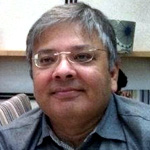
  • Jaldi 5 with Aditya Sinha, former editor-in-chief, DNA: Coincidence that quitting timed with Zee News controversy

    When Aditya Sinha announced his decision to quit DNA as editor-in-chief last week, the move surprised especially since he was rumoured to be getting along well with Zee group chief Subhash Chandra. On Saturday, he tweeted: To those who asked: I have resigned DNA to focus on writing novels. First book being reworked, second just started. For wishes, many thanks.”


    When asked to reconfirm this, he told MxMIndia that he had submitted his resignation on December 6 and has moved on from immediate effect. “I have been hanging around, however, merely to drag out my goodbyes,” he said.


    On when his first book is going to be published, he corrected us. “My first book, non-fiction, was published in late 1995. My first novel will be published once we find a publisher, so I cannot currently give you a date,” he said. Indeed: Death of Dreams: A Terrorist’s Tale was a book on a Kashmir youth’s ascent as the head of a terror outfit.  He also wrote a biography of Dr Farooq Abdullah in 1996 and as he mentioned in a column in the DNA, he has ghostwritten a 1994 book by Salman Khurshid.


    When asked on his replacement, Mr Sinha also informed us that: “Ravi Joshi, the recently appointed Mumbai RE, suddenly finds himself incharge. Bhaskar Das may find an alternative if he can convince someone from his old place of employment to join.”


    It may be remembered that DNA has seen a rehaul of its A-team in the recent past, and Mr Sinha’s exit completes that. CEO K U Rao moved out last month to join parent Zee group as CEO of WWIL (SitiCable). In September, it hired Sorbojeet Chatterjee, as Vice-President – Marketing from Neo Sports (and marketing head at the TV Today network prior to that). Earlier, it appointed Varun Kohli, chief monetizing officer with Mogae Media, to head revenue (as Executive VP – Sales).


    Since there has been much speculation about Mr Sinha’s reasons for quitting, given that it comes in the wake of the controversies around the arrest of two senior Zee News executives and his strong defence in his column last week, we asked him a few questions. While he denies the coincidence theory, do read the between the lines to figure what could be the real reason:


    01. Your resignation happens at a time when the Zee group is embroiled in a controversy, with the chairman Subhash Chandra also subjected to questioning and the pressure on the arrested editors to name him. Coincidence?


    Coincidence.

    a. Couldn’t you have pushed your decision to some other time?

    It could have been done at some other time, but why should I follow other people’s timelines?

    b. Your decision to move is also untimely because DNA’s CEO has moved to Zee and the new regime under Dr Bhaskar Das is just about settling in. Couldn’t you have stayed on more?

    Please see answer to 1a.


    02. You’ve been very candid in your columns. Last week saw you defend Zee and present the group’s standpoint? Could your resignation also be construed as that you are against carrying pro-Zee reports, or should one say: compelled to carry?

    I have never been compelled to carry reports. If a family member is accused of something, it is natural for a person to speak of their point of view, not to condemn them. I believe in what I write, and no one has ever forced me to hew to a particular line.


    a. Just to clear the air on the Zee-Jindal controversy. Since you would know the real story, and since one knows that you will not fudge things:

    – Are the Zee editors really innocent?

    – Was there no quid pro quo?

    Innocence or guilt, I do believe, are established by courts of law. And whatever the Zee News Editors may be, it is laughable to think that my resignation is a quid pro quo for them.


    03. Your highs and lows as Editor-in-Chief of DNA? Something that you would’ve not liked to see happening if you had to relive your tenure.

    My two-plus years as an Editor-in-Chief  have been great. Each day was a learning experience. The greatest satisfaction was when colleagues did work that was notable, which was often. Of course, it is a stress-filled job and each morning begins with some irritation or other. The only lows were realizing that people working in the company did not even read your newspaper! It shows you that most non-journalists in the media industry have zero passion for their jobs.


    04. We’ve heard that the paper is going through a redesign? And the edit page may be back?

    The paper is going through a slight redesign because Bhaskar Das wants to change the look-and-feel of the paper to a template that is familiar to us all. He is keen on an edit page, so I guess my departure strengthens his hands in some ways.


    05. What next after your books? Writing isn’t really a financially rewarding vocation. Are you going to continue to stay on in Mumbai?

    I honestly don’t know what the future holds. If I could, I would write books for the rest of my existence. Mumbai is an expensive place to live, but I do like living here.


  • Mediaah!: Of a toothless Press Council and spineless Editors’ Guild

    By Pradyuman Maheshwari

    Apologies for not being regular. A colleague has been indisposed. We’ve been getting our share of exclusives and firsts. So a good part of the day is spent in ensuring that MxMIndia turns into a broadbased media website. So all of you who’ve been missing your daily dose of Mediaah!, chill! I don’t think the blog will be a daily, but an update at least three to four times a week?!


    Mint editor R Sukumar’s ‘Edspace’ is a delight to read. Pity it doesn’t appear every Saturday. Delight for me because it deals essentially with the media, and often on ethics. For instance, last weekend, he wrote about journalists being responsible for the state in which the profession is in the India – the corruption levels given the direct and indirect favours journos take (see link). Like awards, being part of a government committee. Sukumar hopes the Editors’ Guild of India will debate these issues.

    Being a Delhi-based editor and “an unacknowledged member” of the Guild, I guess he hopes the apex association of editors will do something. My own belief is that it will not. It could do precious little when the paid political news controversy first surfaced a couple of years back and Medianet did a decade ago.

    If the Press Council of India is toothless, the Guild is spineless. And this is despite having editors like T N Ninan, M J Akbar and Rajdeep Sardesai at the helm. Guess it’s one thing writing about the government or demining, say, a Narendra Modi, but another to take on biggies in their own biradiri.


    Paid news and Mid-Day

    Mid-Day exec editor Sachin Kalbag makes a brave defence for the paid news practice that his paper indulges in. Quoted in The Big Story on MxMIndia.com earlier this week, he defends the ‘Centre Stage’ feature in his paper that contains advertorials. Just 15 percent of the content is paid for. He also calls the tagline under the Bombay Times masthead as a disclaimer.

    I don’t think people see it as a disclaimer. If The Times of India and Mid-Day are serious about informing their readers that some of the stuff in their papers is published not on the merit of its editorial content but the amount someone’s paid for it, they must clearly state that they are doing it. They must tell the reader that the content in question must not be construed as that done by the paper’s journalists. Just as Mint has been doing about its advertorials. So in every sense of the term, the 15% of the paper’s Centre Stage section is paid content.

    So, lemme repeat what Sachin says:

    My opinion on paid news is very simple: It’s an abhorrent practice. It demeans journalism. I don’t really know when this crept in, but it has plagued the media for decades. Unscrupulous journalists have been on the take for several years, and this is not a new phenomenon. The widely cited example of institutional selling of content space is Bombay Times which introduced a rate card for coverage in the supplement. Recently, the supplement began putting a disclaimer under its masthead. The phenomenon of institutional selling of content space crept into the media for various reasons – but the root cause was always to increase revenue.

    Our editorial policy is very clear: any “Advertorial” is placed in a two-page section called Centre Stage, which is part of the Classifieds section of the newspaper. Centre Stage in Mid-Day is differentiated in various ways from the editorial part of the newspaper. Here’s how: 1) The Centre Stage carries a prominent disclaimer in a large point size under the masthead “People, Parties, Promotions”. This has been happening since the day Mid-Day started Centre Stage, which was more than two years ago. In Centre Stage, we carry items on movie releases and profiles of actors, fashion designers, parties, etc, that happened in Mumbai that week, apart from product launches.

    Close to 85 percent of the Centre Stage advertorial section is non-paid, that is to say the Centre Stage team of writers (this team is not part of the Mid-Day editorial team) interviews people or writes about their parties or products. Around 15 per cent of the items are placed where the content space is sold by the sales team. Once again, these items are only about Bollywood, fashion, parties or product launches. There is a separate, specialized sales team that sells this space, and at no point in time do they dictate terms to

    Editorial, mainly because Centre Stage is not editorial space, but marketing real estate. In fact, there have been several instances when the Editorial staff in Mid-Day has trashed Centre Stage advertisers in the review section of the newspaper, and the sales team has gotten into trouble due to that negative coverage. Yet, we are very clear at Mid-Day that the Sales and Editorial wires do not cross, and that the Chinese wall between them stays even though we may be good friends outside the office.

    We are also very clear that Centre Stage will not carry any “news”, but only information on these three or four categories listed above. There is neither any opinion nor any recommendation made in the section that is endorsed by the editor. In the strictest sense of the term, it is an advertorial. Mid-Day, therefore, has stayed away from “paid news” and will continue to do so.

    Thus, Centre Stage in Mid-Day is institutional selling of content space which I guess has a rate card. I am told revenues are healthy and though they don’t run over a 100-odd crore as Medianet is said to be generating, but even if it’s 1/100th that, it’s too much to sacrifice for stupid things like editorial integrity.

    Guess for some publications, editorial ethics is also an abhorrent practice. It demeans ad sales!


    Dabbang Sinha!

    As a strategy, it’s a win-win. He took on the information broadcasting minister in public saying that ever since DNA went ballistic with the anti-corruption drive of Anna Hazare, the government stopped advertising in his paper. (Link to column)

    Now, from whatever I’ve known of Ambika Soni, she’s a pretty reasonable minister. Given all the complaints that every I&B mantri receives, she could’ve made life miserable for media players. Especially broadcasters. Like her predecessors did.

    A senior journalist in the Capital told me that Aditya Sinha’s column last Sunday is sure to see his scalp. Subhash Chandraji could find it too hot to handle, and the Zee supremo needs the government for his plans a helluva lot.

    But this is why I said it’s a win-win for Sinha. If he gets the sack, he will turn a martyr (that doesn’t help much, I can tell you from experience). And if he continues, he’ll turn into a hero because after all, few have had the balls to say the government is kinda blackmailing the press.

    Sample some gems from his column:

    > Soni’s statement led us to infer that our Anna Hazare coverage was being punished by a suspension of government ads, and that Soni met our ad executives just to ensure the point was driven home.

    >This was not surprising because DNA recently has faced suspicion and hostility from the government which has apparently adopted an attitude of “you’re either with us or against us”. The prime minister’s media advisor has privately accused DNA of an agenda against the government, and its Editor-in-Chief of being close to a political party in the opposition.

    >The day after the meeting with Soni, DNA started getting DAVP ads again. Presumably, from the government side, mission was accomplished

    >Loss of business can be measured, but the loss of credibility cannot. Above all, that someone in government tried to be petty and vindictive is, to us, validation that we were doing our job right

    The views expressed here are my own and are not necessarily those of MxMIndia and its editorial team. In fact often it’s in variance with their views. Meanwhile, buzz me if you have a story to tell. Confidentiality assured. There are various ways you can reach me: pradyumanm[at]mxmindia.com, 23050B5D, pradyumanm@gmail.com, @pmahesh, 98338 76278.


    Tomorrow:  Is The Times of India taking on Times Now?