Tag: Ad Asia

  • IAA Silver Jubilee Summit in Kochi announces speaker line-up

    By A Correspondent


    The IAA Silver Summit at Kochi is now bigger and even more impressive.
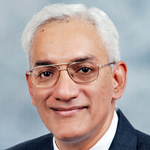
     

    Srinivasan K Swamy

    IAA India Chapter President, Srinivasan Swamy says “To accommodate the fantastic line-up of international and Indian speakers we are now beginning the Summit on 3rd evening itself. We are overwhelmed by the response received from some great speakers. We are now set to have the most impressive event of its kind in several years.”


    The confirmed speakers, segmented by broad topics are based on what’s really important to marketing advertising and media professionals:


    -Creativity and how you can design your own future?

    Cindy Gallop the famous Founder and former Chair of BBH (Bartle Bogle Hegarty) one of the most creative Agencies in the world. She Chaired the Cannes Glass Jury this year. And if it’s just creativity, there is Rob Sherlock Worldwide Executive Director Asatsu-DK as well.


    Social Media?

    Simon Kemp a Scotsman from Singapore, a renowned expert in bringing brands and consumers together using Social Media, an author, a DJ, an expert in whisky…a very interesting person. And to top up this segment there is Shailesh Rao of Twitter (VP Asia Pacific, Latin America and Emerging Markets).


    Brands?

    Fernando Ortiz-Ehmann a strategist from Madrid who played a major role in launching the global brand Desigual. To add desi flavor there is Sanjiv Puri(President FMCG ITC) on Creating a world class Global Brand from India. And to tell you how to craft brands in a connected world, Rahul Welde (VP-Media, Unilever, for Asia, Africa, Middle East, Turkey and Russia).


    Digital?

    Michel de Rijk CEO Asia Pacific, Xaxis will tell you all about Programmatic and its role in the digital world. Never heard of it? Don’t worry, here’s your chance to know all about it. And to comfort you that the more things change, the more they remain the same there is Jeffery Cole, Founder, Center for the Digital Future USA.


    -Funding?

    AbhayPande, Managing Director, Sequoia Capital on where future investments will go.


    -Local brands?

    Sam Balsara will extract the recipe for success from Darshan Patel (first Paras, now Vini). No gas in this statement.


    -Mobile?

    The future in the palm of your hand. There is, from London, Ralph Simon acknowledged as one of the founders of the mobile entertainment and content industry.


    Bestselling authors?

    Paul X McCarthy author of The Age of Online Gravity, with his take on freakonomics. You’ll figure out why economics behaves the way it does.


    India of the Future?

    Amitabh Kant, Principal Secretary Govt. of India (God’s Own Country and Incredible India) now in charge of the PM’s “Make in India” initiative delivers a keynote address.


    Icons?

    Sachin Tendulkar, the advertising icon for the last 25 years in conversation with Prasoon Joshi.


    - Classic Disruption?

    Arnab Goswami talks about why he disrupts the TV news industry.


    Officialdom?

    Official gravitas to an event like this is provided by the Chief Minister of Kerala, State Industries Minister and the State Tourism Minister.


    Spirituality?

    One of India’s best known mystics and spiritual gurus Sadhguru Jaggi Vasudev(coming down straight from his annual trip to Mount Kailash).


    Entertainment?

    Top class entertainers.Music and dance.Traditional and modern and even folk. A smorgasbord of native Kerala cuisine.


    Pradeep Guha, Summit Chairman said “this event will provide a great opportunity to learn, network and catch up with the who’s who of the marketing advertising and media industry.”


  • The Anchor: 6 reasons why you can’t do without attending AdAsia 2011

    There have been some angry responses to our anchor of November 2. As it emerged, it did touch some raw nerves. Here’s an angry retort, again anonymous. The writer has replied point by point. The responses are in bold.

    #1 Rs 40,000 for entry. Okay, you could get early bed or bulk entry discounts, but it’s still not small money. Plus travel – flight tickets, local travel and hotel. All of this amounts to around Rs 75,000 if you stay in a budget hotel. Rs 1 lakh if it’s 4-star-upwards.

    So what, dear brother (or sister)? The best things in life don’t come free. Look at the number of meals you get as part of the package. Gyaan sessions, entertainment and an opportunity to meet people and boast to the kids back home that you attended AdAsia. Btw, if it was held in some foreign land, you may have to pay twice. Of course you can bring those two litres of booze. But neighbourhood bootlegger hai na!

    #2 Usual suspects, usual suspects, usual suspects. It’s the same old faces at all our industry events. AdAsia had Harish Manwani of Hindustan Lever on Day 1. But Shah Rukh Khan? Grrrr!

    Manwani is a usual suspect? And Shah Rukh Khan is one of the most popular faces in India and in advertisements also. The fact is that Ad Asia didn’t have the usual suspects lined up. We even saw a swami in the line-up!

    #3 There is a need to draw younger professionals to AdAsia and not 40-plus and 50-year-olds.

    Point. But that’s for organizations to blood young talent. The organisers are doing their bit to organise quality content.

    #4 The same old format of keynotes, speeches and panel discussions is boring. C’mon marketers and advertisers. You guys are creative, why not think of something innovative?

    You should try some of the other industry conclaves and events. Boring panel discussions and speeches of people who plug their own work. Hey pal, you’re a mediaperson yourself, any ideas… pls mail them.

    #5 You network every day with your friends and aspirational friends on Facebook, LinkedIn and Twitter. So conferences like these need to relook the role of these events for connecting with the fraternity. Agreed there’s nothing like meeting people face-to-face, and Facebook friendship is also fine.

    Facebook is fine, but har physical meeting zaroori hoti hai. There’s nothing like meeting in person, exchanging cards and letting the relationship grow.

    #6 Why Delhi? It was good to not do it in Mumbai. How about Bangalore, Pune, Amritsar, Calcutta, Chennai? Wasn’t Calcutta once the capital of the adwallahs?

    Delhi is where there’s loads of action. All the big media guys are there and so are the advertisers. You said it right, Calcutta was once the capital. Unless Didi does some jaadoo-i jugaad out there, not likely that the boys and girls of adland will shift there in a hurry.


    The writer of this piece too is a senior member of the media industry. She/he prefers to stay anonymous as according to her/him why should he/she do it when the writer of the earlier piece didn’t reveal his/her identity. And we (as in MxMIndia) let that happen!

  • AdAsia Exec Summary: Lively sessions mark Day One

    By Tuhina Anand

    AdAsia 2011 was inaugurated with the anthem of the Republic of AdAsia and a performance by the Shillong Choir Group.  This was followed by lighting of lamp by the Minister of Information & Broadcasting Ms Ambika Soni along with Dr Bhaskar Das, Co-Chairman of the Organising Committee and President, The Times of India Group and Mr Madhukar Kamath, Chairman Organising Committee for AdAsia and Group CEO and MD, Mudra Group. The flag for AdAsia was hoisted by Shahrukh Khan who also addressed the audience and reminded people of all the brands he has endorsed in his short speech. He however did emphasise that he believes advertising is not just for entertaining but about informing the consumer of a product so that when he or she is making a purchase he can make an informed choice.

    The keynote address was delivered by Mr Ram Charan, Author, Speaker and Business Advisor. The first session of the day was on ‘The Game Changers’ where Mr Harish Manwani, Chief Operating Officer, Unilever , and Chairman, Hindustan Unilever Ltd gave an insight into the company reinventing itself according to the changing times.  Mr Michael Roth, Chairman and CEO, Interpublic posed questions to Mr Manwani who answered all with aplomb. The key that emerged from this session was on the importance of adapting to the changing environment thus making the brands relevant to its consumers while at the same time being able to sell its products.

    The second session was on ‘Decoding the New Age Consumer’  where Mr Adil Zainulbhai, MD-India, McKinsey and Company Inc and Mr Laxman Narasimhan, Director, New Delhi, McKinsey & Company Inc, Mr Kochi Yamamoto, GM, Global Solutions Center, Dentsu tried to understand the behavioural pattern of the ‘New Age Consumer’.  The session gave insight into the changing world where the future remained uncertain and how marketers are grappling with this reality and trying to understand today’s consumers.

    Tom Doctoroff, JWT, North Asia, Area Director, Greater China CEO moderated the next session on ‘Asian Creative? A New Brief. On the panel were Akira Kagami, Global Executive Creative Advisor, Dentsu, Bruce Haines-Chief Strategy Officer, Cheil Worldwide, Kitty Lun, CEO, Lowe China and Piyush Pandey, Executive Chairman and CD, South Asia, O&M India. The panel gave an insight into creative from different countries where they operate including Japan, Korea, China and India. While Ms Lun talked about challenging authority and showing by example to help youngsters come up with great ideas. Mr Pandey brought into fore the relevant issue of remuneration where he stressed, ‘if you want good people, start paying them better’. Defending  standard of Indian advertsing, Mr Pandey said, “Just because a market is not in international domain for a century doesn’t mean that India is not into brand building.” He mentioned The Times of India and Cadbury’s advertising over the years that have made them successful brand in the country.

    Mr Kagami on the other hand who too was on the panel discussed the importance of corporate brand building that is critical in Japan as this helps in creating trust for thecorporate and its brands.

    Nikesh Arora, Senior Vice President and Chief Business Officer Google gave a ‘Google’ angle to his session where he began by asking people to put questions to him as QandA was not allowed in the earlier sessions. This set the mood for his session.  The next discussion was on ‘From Chat Rooms to Twitter…What Next?’. Kate Day, Communities Editor, Daily Telegraph Online, Arvind Rajan, MD and VP, Asia Pacific and Japan, LinkedIn, Earl Wilkinson, Executive Director and CEO, INMA were on the panel which was moderated by Rishad Tobaccowala, Chief Strategy and Innovation Officer, Vivaki.

    The last session of the AdAsia on Day 1 was on India 2020 where Kurush Grant, Executive Director, ITC, Sanjay Kapoor, CEO-Bharti Airtel Ltd, India and South Asia, Ravi Swaminathan, MD and Regional VP (Sales and Marketing), AMD South Asia shared views on how India can be made a truly global brand in the next 10 years. The session was moderated by Pankaj Ghemawat, Global Strategist.

  • AdAsia: Learning the rules of the game from Harish Manwani

    By Tuhina Anand

    So what does behemoth like Unilever do when a shampoo sachet priced at Rs 2 and projected at doing big sales doesn’t take off in the market? It focuses on listening to the consumers and gets an insight into why the market is not responding as expected. Then goes into reverse engineering which helps in bringing down the cost of the product, builds a manufacturing plant for sachets and prices the sachet at Rs 1, a pricing figure that consumers were more comfortable with thus getting the perfect recipe for success. This and many more such insights were shared by Harish Manwani, Chief Operating Officer, Unilever and Chairman, Hindustan Unilever Ltd (HUL) who was speaking at AdAsia 2011 on the topic ‘The Game Changers’.

    Mr Manwani termed HUL as the `emerging market company’ as the economic centres shift to emerging markets. In fact, 54 percent of their business comes from the developing market. But one of the lessons to keep in mind is that it’s not one India but many Indias and how one caters to such heterogeneous consumers is the key to succeed. Affordability and accessibility needs to be kept in mind but at the same time one has to make money too and that’s where consumer insight comes in handy. He also talked about having a sharper focus on shoppers than consumers.

    The key that also emerged from this session was Unilever’s belief in doing well by doing good like the project Shakti that has empowered women which has also helped them in selling their product. The strategy that has emerged is of making brands meaningful as well as brands that are marketed should have a social purpose. Mr Manwani said, “We have been ensuring that all our brands just don’t have functional benefit but also has social benefit.” In fact Unilever factories have been working relentlessly towards sustainability and creating products through innovation that would also help in bettering our environment.

    This shift can also be seen in communication that Unilever has adopted like in the case of Surf where initially the messaging was simple and talked about the whiteness that is the basic want from detergent to taking the route of saving and addressing the housewives the obvious customer for the product in famous Lalita Ji. The communication has now taken the route of saving two buckets of water, thus the brand becoming socially responsible. So there is a technology that helps in building product that is superior and then there is communication that helps in delivering a social message with brands that have social purpose. That’s Game Changers.

    He also pointed that power of brands will not change, power of consumer insights will remain and so will the ability to create great advertising and its power will remain unchanged but going forward what will change or bring about a change will be the advent of the digital medium, the ability to work with consumers, importance of 360-degree communication, having a strategic and not opportunistic relationship with the agency and creating tools that will help marketers in knowing exactly where there money is going when they spend on advertising.