
By Shruti Pushkarna
 In my last piece, Building a Case for Access in an Exceedingly Digital World, visually impaired professional, Rahul Bajaj explained the basics of accessibility, how technology enables disabled people to function independently and how inaccessible products and services exclude them from the mainstream of things.
The disabled community is one of the largest minorities, as 15% of the global population lives with some form of disability. They have similar needs, aspirations and interests. Their limitations simply change the way they access facilities. In an increasingly digital post-Covid world, food delivery, travel bookings, banking, health appointments, entertainment, et cetera can all happen easily online. But what about persons with disability? Are mobile apps and websites just a click away for them as well?
Unfortunately, not.
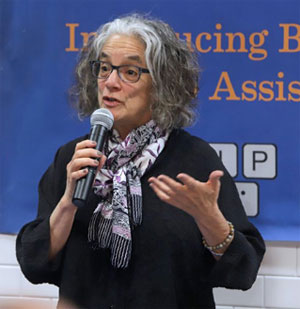
Rahul Bajaj along with a couple of other legal experts who are also visually impaired, has started an initiative against inaccessible websites and mobile applications. Interestingly, in this battle for inclusion, the legal route is their last option. They are applying a method called ‘structured negotiation’, a concept popularised by an American Disability Rights lawyer, Lainey Feingold. An alternative to lawsuits, Lainey proposes a meaningful dialogue with the service provider, to get them to become accessible, explaining the issues and encouraging them to do something about it. The method assumes that inaccessibility is a fallout of ignorance rather than a deliberate attempt to exclude.
In a candid conversation, Rahul shares certain issues with commonly used mobile and web platforms, accessibility guidelines and the need to advocate for equal rights.
 Question: What is this new initiative that you have taken up against inaccessible websites and apps?
Answer: I realised there is massive inaccessibility for the disabled in the digital world we inhabit. From making payments, to ordering groceries, making medical appointments, everything is either out of reach or very difficult to do independently. And if these were in existence in the physical world, I might still understand that it requires a lot of retrofitting as old buildings were not designed with accessibility needs in mind. But it is very painful that in the digital world, where there is absolutely no reason for it to be inaccessible to anyone, there are so many barriers. Mission Accessibility seeks to constructively work with service providers of apps and websites to get them to become more accessible. And we try to do this through a variety of ways. One approach is to identify the users of a particular inaccessible platform, and share a template to get them to write to the service provider. That is a way of empowering individuals to advocate for themselves. Another approach is systemic in nature where the idea is to create a more conducive environment at the systemic level, to ensure that the service providers are made aware of their obligation. That can be done by involving the government or regulators like, SEBI, RBI, TRAI, under whose control the service providers fall in. Third approach is some sort of judicial intervention against service providers who aren’t complying. The basic idea is to change things.
Question: You must have received several responses to your request, seeking details about people’s experiences of inaccessible apps and website?
Answer: We sent out an email asking people for the names of such platforms that we should work on. The response was overwhelming, we got as many as 40 to 42 names. And we got a whole host of service providers, from food, to groceries to dating to academic writing and referencing, to medical appointments, everything. Some people said that this is something they’ve always wanted to do, to take on the issue of accessibility in a more systemic fashion.
Question: Can you name some of the apps and websites that came up in the responses? I’m curious if there are any media websites in the list?
Answer: There are, definitely. In terms of more generally what it includes, Dunzo for groceries, the common app people use for home delivery. Practo to meet doctors online. Hotstar, which is an OTT provider, and Rapido for booking cabs and bikes online. Dating apps like Bumble and Tinder. There are a lot of media apps that came up, including NDTV, Moneycontrol, Economic Times, Times of India, all of these have some or the other issue on their platform. For instance, the iOS NDTV app sends you a notification when there is breaking news or some major update. When you double tap that, or when you open that with VoiceOver on the iPhone, it doesn’t actually take you to the article. It takes me to a random advertisement on the app rather than to the actual article that I had opened up.
Question: You mentioned that you access your daily dose of news on the YouTube programme put out by Faye D’souza. Are there any other examples of inaccessible news websites?
Answer: One other that I really struggle with is New Indian Express. Whenever you open an article, it keeps telling you other things. And that must be because there is some sort of a visual, these are dynamic websites, where the content is constantly switching from one thing to the other. So, either it will be an ad or some flashing stories, which come in the way of smoothly reading the article from start to finish. Even with Moneycontrol, there is a similar problem. The screen reader jumps focus because people don’t design the website properly. Nobody’s saying that you do away with visually appealing elements. Because at the end of the day, that may be a strategic call. But at the same time, I’m sure there must be ways to retain those visual features and yet remain accessible to the disabled. People just don’t think about it because they don’t have accessibility experts in their midst. Also, they don’t anticipate disabled users visiting their platform.
Question: Speaking of design, can you tell us about the W3C guidelines which are in place to ensure accessibility?
Answer: The World Wide Web Consortium has what are called the Web Content Accessibility Guidelines or WCAG. And the latest version of that is called 2.1 AA. They actually prescribe in granular detail what norms you have to comply with in order for something to be accessible. So, if you want to know, what you must specifically do to make your platform disabled friendly, then that is really the tool that you need to use. Like having headings in place, making sure that buttons are clearly labeled, making sure that you don’t use CAPTCHA without either an audio or text substitute, or both ideally, for the deafblind also.
Question: What are the legal remedies in terms of non-compliance? What does the law say on it?
Answer: Under the 2016 Rights of Persons with Disabilities Act, there is an obligation to make your platform accessible, and all service providers were required to do this by June 2019. The deadline to do that has already expired. Now, the question arises, what do you do about it? Section 89 says that any breach of the Act shall be punished with a fine up to five lakh rupees. There is a possibility of financial penalty being imposed on those contravening the Act, so you would basically need to go to the Chief Commissioner for Persons with Disabilities in the first instance, or the State Commissioner. If that doesn’t work, then you go to a High court and to the Supreme Court.
Question: OTT platforms are the trending thing now. We’ve seen with Covid and the lockdown, most of us were hooked to Netflix, Amazon Prime, Sony Liv, Voot or Hotstar. Are these OTT platforms accessible to a blind person? By the way, a lot of people think that blind people don’t watch films or TV. So why don’t you start by busting that myth…
Answer: While it’s true that movies are primarily visually oriented, there are a couple of ways in which someone who’s blind can also have a really enjoyable experience while watching them. One is by listening to the audio components of it, the dialogue, the music, all the background noises. And the second, perhaps the more important aspect is audio description, which is where the OTT providers’ role comes into play. Audio description is basically where whatever is happening on the screen is being described by someone for the benefit of a blind person. Like Meg is a white woman who has brown hair and black eyes; we see her standing in her living room; or Meg drives in her car, and goes to the grocery store. And this is something Netflix has really pushed the frontiers on. A large majority of their content, and I hope it stays this way, is actually audio described, even in Hindi. Amazon Prime is also good, but it doesn’t have as much audio description. But the platform itself is definitely accessible. However, Hotstar is the most disappointing of the lot, the platform is inaccessible, what to speak of audio description. The app is designed in a very bad way, different controls are jumbled up. Buttons are unlabeled, you can’t really find things on your own. Many issues are there, but we are working with them. Actually, we sent them a legal notice and after that they began talking to us. They have in fact asked us to conduct a sensitization session for their engineers.
Question: Let’s talk about the inaccessible content in terms of a sporting event on TV. Or national news coverage on Elections or Union Budget which is accompanied with a lot of graphics. How do these visual elements affect the visually impaired person’s TV watching experience?
Answer: That is definitely a big issue. Sometimes the ad comes even before they have told you the score at the end of an over, and you can’t read the score on the screen. Same with other graphic content. The way to resolve that is to mainstream audio description. It benefits everyone because it will generate more employment. It will also generate more revenue because at the end of the day, you will tap into more users who are not seeing the platform/channel currently. I was interviewed on this Good News programme where the news team portrayed me in a very positive inspirational light. That doesn’t help me. This was part of the India Today network, if Aaj Tak gives me audio description or subtitles, that’s what will truly change something. To the folk in media I would say, bat for accessibility in whatever shape or form you can. Some people might say that this is a call to be taken up by people higher up in the organization. That’s not true. You can connect relevant people, your product design team, your engineers, your marketing people who run your website, and so on, with people with disabilities and open up that channel of communication. It’s not okay just to be outraged by this. See what you can actually do in your everyday life to make things a little better.
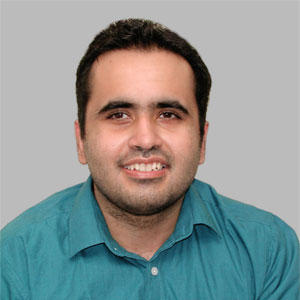
Rahul Bajaj works as a Senior Resident Fellow with the Vidhi Centre for Legal Policy. A Rhodes scholar, he also worked with a Supreme Court judge before joining Vidhi.
 By Shruti Pushkarna