
Tag: Accenture

  • Resilient consumers, resilient values


    By Our Staff


    More than half (65%) of consumers in India believe they are currently living with uncertainty, and one in ten expect it to last at least five years, according to new research from Accenture. The research is the latest in a series of consumer surveys that Accenture has been conducting to test the pulse of consumer outlook and sentiment since the start of the pandemic that has propelled an “Era of Volatility”, where an ongoing state of uncertainty is spurring people to change behaviours suddenly and often in unexpected or contradictory ways.


    ‘The Resilient Consumer’

    The survey – of more than 10,000 consumers in 16 countries including India – found that despite lasting uncertainty, the “resilient consumer” is adjusting to continued disruption by seeking out ways to protect and control what’s important to them. In addition, the majority appear bullish about their financial situation, with 88% of consumers in India expecting their disposable income to stay the same or improve in the next 12 months.


    Resilient spend categories

    A strong indication of consumer resilience is their intention to spend more. When asked how their expected spend will change over the next six to 12 months, respondents in India said they plan to spend more across 11 of 15 categories – such as wellness, clothing and apparel, beauty, and essentials like healthcare and groceries.


    Said Vineet R Ahuja, managing director and lead – Strategy & Consulting, Accenture in India: “Our survey reiterates the optimism of Indian consumers that is reflected in their purchase decisions across categories. To stay relevant and in step with evolving consumer demands, companies need to effectively use data and analytics to provide meaningful personalised offerings in real-time especially in an era of volatility. This consumer-centric approach requires a continuous reinvention strategy to stay agile and build forward-looking capabilities.”


    Health is a top priority for Indian consumers and 79% intend to maintain or increase spend on wellness in the next one year. 94% of consumers in India are willing to provide their personal data with at least one kind of company in exchange for meaningful health and wellness products and services with 87% of consumers interested in personalised offerings.


    After a year of strong growth for the travel industry, 70% of consumers in India plan to sustain or increase their current spending on leisure travel in the next year, with 76% planning leisure travel and nearly half (46%) planning two or more leisure trips in the coming year. This signals that consumers still see travel as an essential part of their lives.


    Companies must anticipate and proactively prepare for sharp and sudden shifts

    A separate Accenture macroeconomic analysis warns that the persistence of inflation, high interest rates, and growing income and employment uncertainty, could further test the resilience of consumer spending in the coming months.


    The consumer pulse survey highlights that consumers with resilience are not naïve about the state of the world. 67% in India say that challenges in recent years have created opportunities for them, and 77% are trying new experiences or adopting new habits to improve their lives.


    Resilient consumers, resilient values

    The environment is a top concern for Indian consumers with 57% saying they are more or equally concerned about the environment than they are about their personal finances. The survey also shows nearly all consumers in India (90%) have increased sustainable shopping behaviours in the last 12 months, such as only buying what they need, taking their own bags to the store, buying better quality goods that last longer, repairing or upcycling what they have, and buying reusable or refillable products.


    Accenture’s Consumer Pulse Survey 2023 surveyed a representative sample of 10,100 consumers from 16 countries: Australia, Brazil, Canada, France, Germany, India, Italy, Japan, Mexico, Saudi Arabia, Singapore, Spain, Sweden, United Arab Emirates, the U.K., and the U.S. The survey was conducted online and targeted consumers who have made purchases for their household in the past six months. The survey was conducted in 15 countries between March 2 and 22. It was conducted in Japan between April 21 and 28.


     

  • Accenture report finds consumer values and buying changed

    By Our Staff


    A majority of consumers – across demographics and geographies – are reimagining their values and basing purchasing decisions on factors beyond price and quality, according to a new report by Accenture.


    Accenture’s 16th annual research report based on a survey of more than 25,000 consumers across 22 countries including more than 2000 consumers in India, entitled “Life Reimagined: Mapping the motivations that matter for today’s consumers” set out to understand how companies can capitalise on evolving consumer expectations to achieve new levels of growth and competitive agility.


    71% of those surveyed in India are coming out of the pandemic having reimagined their behaviour and values as consumers. They have reevaluated what is important to them in life and are increasingly focused on their personal purpose. This is having a direct impact on what, how and why they buy. An additional 22% of consumers in India seem to have evolving values and purchasing mindsets while the unprecedented experience of the pandemic has had no impact on the buyer values of only 7% of respondents.


    Said Vineet R Ahuja, managing director and lead – consumer, sales and service, Accenture in India: “Driving innovation and growth in a post-pandemic economy will require the C-Suite to structure the entire organization around experience and ensure all aspects of operations including marketing, sales, innovation, R&D and customer service, understand new consumer motivations. It is extremely important to become a listening organization and invest continuously in data and analytics to understand changing consumer preferences.”


    According to the communiqué, the research  –  created by Accenture Strategy and Accenture Interactive – analysed over 80 unique factors across 14 industries and found that five distinct areas are increasingly driving consumers’ purchasing decisions. The five factors extend beyond price and quality to include health and safety; service and personal care; ease and convenience; product origin; and trust and reputation. Perhaps even more notable is that these five factors, which have been historically important to the specific demographic groups of Gen Z and millennials, have now hit a tipping point and are considered critical across the full breadth of consumer demographics.


  • Accenture snaps the Jewel in the Advertising Crown


    By Prabhakar Mundkur


    While the consulting and ad agency pot has been boiling for some time, some people claimed they couldn’t still see the bubbles. Now with Accenture announcing the acquisition of Droga5 the pot might well be boiling over.  This seems like a coup for Accenture. They are not only buying into a creative agency of repute, they now have one of the most celebrated creative directors in the world with David Droga.  He is the most awarded creative director at Cannes and rounded up his string of achievements by being recognised with the Lifetime Achievement award at Cannes in 2017. Also, he is the youngest person to be inducted into the New York Art Directors Club Hall of Fame.  In 2017, Adweek named him one of the top 100 most influential leaders in marketing, media and technology for the third year in a row.

     

    Droga5 has been named Agency of the Year 13 times, recently by Ad Week and the Cannes International Festival of Creativity.  It is also one of the only agencies to be named in Fast Company’s World’s Most Innovative Companies list and the only agency to appear on Advertising Age’s A-List for over seven consecutive years.


    Quite clearly Droga5 was the jewel in the crown of the ad industry as far as Accenture is concerned.  Much more attractive than buying a limping old advertising agency. With Droga5, Accenture seems to have focused on creativity rather than scale and size which is a wise move, because the consulting firm has been accused of lack of creativity more than anything else. So far, most advertising groups had been in denial about the inroads made by consulting firms, but the Droga5 acquisition will no doubt becoming a turning point.


    Of course, the sad thing is that Droga5 will lose its identity and merge into Accenture Interactive, not necessarily a good thing.  While David Droga will continue to be Chairman of the combined entity, one can’t help feeling that Droga might have sold out. For Droga selling to Accenture may have been a result of his healthy disrespect for ad agencies in general. After all, when he set up Droga5, he wanted to escape the traditional ad agency model which was perhaps stifling him.


    Also, Droga5 becomes a part of a fairly large unit since Accenture Interactive claims to be already a fifth of Accenture’s revenue proving that consulting firms are treating this diversification as an important one.


    Of course, people are questioning the fit of the two cultures and if they are consonant with each other.  While many management scholars have eulogised on the question of culture in mergers and acquisitions, my own experience is that the excitement of acquisition or being acquired typically blinds respective owners on the question of culture fit.  There is too much money involved for merging companies to take culture seriously.  They think it is a bridge they will cross when they come to it.


    In the meantime, of course, Brian Whipple of Accenture Interactive has stoutly defended any doubts about a culture fit. Although one can’t help thinking that consulting firms are essentially left-brained and creative shops like Droga5 are essentially right-brained. And the twain shall never meet.


    What might be upsetting for the advertising industry might be Accenture Interactive sweeping the awards at the Cannes Lions in 2020.  With Droga’s reputation there is little doubt that he will create a dent as usual in most of the prestigious award shows around the world.  Does that mean we are now close to writing the epitaph on the advertising industry in general? We just have to wait and see, but the end does seem uncomfortably close. In the meantime, I am sure Droga’s compatriots will hate him for selling out to the enemy!


  • Return of The Sorrell


    By Prabhakar Mundkur

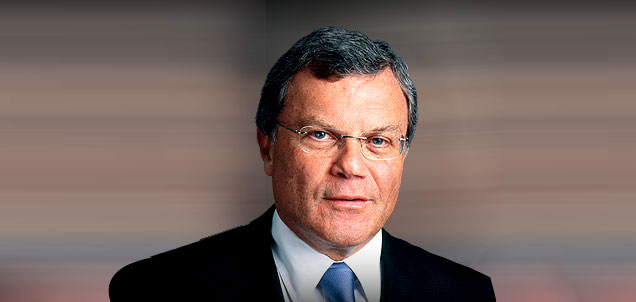
     If you thought that Martin Sorrell’s exit from the WPP group was the end of a great career you were wrong. Sorrell now 73, who stepped down from WPP a few months ago, is making a comeback with a new advertising (and marketing services) venture.


    With his experience of taking over an unknown firm called WPP which was largely a shell company 33 years ago, it was natural for him to try his hand again at a similar experiment.


    Sorrell now is taking charge of another shell company – Derriston Capital – which he intends to turn into an advertising venture. Confirmation of the Derriston deal was confirmed first by Sky News.  Derriston as a company has been on the New York Stock Exchange since 2016.


    In this first interview with Anant Rangaswami on CNBC last night at Zee Melt, Sir Martin spoke on a number of issues with his usual eloquence. For those branding experts who are wondering about the significance of S4, it stands for four generations of Sorrells in the UK. (His grandparents came to the UK from Eastern Europe in 1899.) He quoted Brian Whipple the CEO  of Accenture Interactive while speaking about how competition from consulting might affect the advertising agency business.  Quoting  an interview that Whipple gave he said: “the consulting companies don’t compete with the agencies head-on.  They go above the agencies to the CEOs and CFOs, the CMOs and the CIOs and CTOs. And they say to them you are going through significant change, they might describe it as a digital disruption. You are spending a lot of money. Let’s look at it as one and let’s see how we can improve your productivity, improve your technological response, digitise your company, transform your company and at the same time spend less money. And by the way pay us on the basis of what we save. Which is a very alluring concept”.


    Whipple has led Accenture Interactive’s disruption of the traditional agency landscape by creating a new service model.  Whipple is known to have said “[Holding companies] are changing, but the pace of change is woefully slow. And it’s not because of the intent. It’s because of the structure and the culture.”  One couldn’t help feeling that Sir Martin is welcoming the fact that by starting on a clean slate he might be able to do things differently with S4 than what he could do with WPP.


    As a new way of doing business Sorrell said in the interview that S4 would not only like to sharpen its tactical response but also develop its strategic response at the higher levels of the company.  He reiterated the need to be ready for change, whether cyclical or strategic.


    But what shape might Sorrells new venture take?  Given his penchant as a ‘math man’ and his various criticisms of the ‘mad man’ era of advertising he is likely to be more interested in the world of data and digital.  It is quite likely that Sorrell’s new venture might be devoid of the traditional advertising agency.  In any case revenues of all his advertising agencies put together in WPP were much smaller than the media company or the research company.  Which goes to show that he perhaps thought that advertising was really an old-world phenomenon.  Sorrell is putting in his own personal investment of £40 million into the new venture.  Institutional investors include Lombard Odier, Miton, RIT Capital Partners, Schroders and Toscafund would add a further £11 million.


    That of course does not mean that the new venture will be devoid of creativity in other forms.  Sorrell always believed in creativity and the power of ideas although he is often accused of marginalising creativity.  Sorrell always said that the definition of creativity needs to change because he said “we are not in the advertising business anymore”.  Sorrell in the past has also said “75 per cent of what we [WPP] do now, Don Draper and maybe even Sir John Hegarty wouldn’t recognise.”


    So what might we expect from Sorrell’s new venture is perhaps a smaller WPP minus traditional advertising and the traditional way of doing business by holding companies.  But like WPP it would grow through acquisition.


    To go back to Whipple he is known to have said that for agencies to survive they must leave the founder’s culture behind.  In the case of Sorrel it might well the opposite.  A case of the founder leaving his agency’s culture behind.


    Prabhakar Mundkur, better known as Prabsy, is a veteran advertising agency professional, having led agencies in India and globally. And if he’s not thinking brands and strategies, he’s into music, cycling and writing. A prolific writer, he was LinkedIn’s most influential voice in 2016. He also writes ‘Ad Buzz’, a weekly column on MxMIndia.


  • Are tech majors better at creative?


    By Ravi Balakrishnan & Amit Bapna


    The year started with a flurry of acquisitions. Within a week, three agencies, two German (ecx.io and Aperto) and one American (Resource/Ammirati) became part of a giant conglomerate. They had an impressive roster of clients: Victoria’s Secret, P&G, Airbus, Australian Airlines, Volkswagen and Siemens. But the real draw was each of these shops being at the vanguard of digital.


    A specialisation of great interest to the entity that acquired them — not one of the usual suspects like WPP or Publicis, but IBM. Over the last couple of years Big Blue has built Interactive Experience, widely reported to be the world’s largest digital agency. According to Ad Age it clocked revenues of a $1.9 billion in 2015. Global rivals Deloitte with Deloitte Digital and Accenture with Accenture Interactive are also vying for a slice of the marketing pie, venturing into spaces that were previously the exclusive preserve of marketing communication companies. Sapient started life as an IT services company, and was among the first to make marketing muscle a priority, buying The Nitro Group for $50 million in 2009. It was in turn acquired by Publicis in 2015, pursuing its stated objective of becoming digitally driven.


    So, why is this happening? To paraphrase Georges Clemeancu, has marketing and advertising become too serious a matter to entrust to marketers and ad men? Are the tech giants here to fulfil WPP CEO Sir Martin Sorrell’s prophecy: “the future of advertising and marketing services belongs as much to Maths Men (and women) as it does to Mad Men”?


    It’s a bit of everything. Rajdeep Endow, managing director, Sapient believes it’s inspired by the shift of advertising from communication to experience: “The time between consumption of a brand story (through mass media) to experiencing the brand (through website, ecommerce, social media, etc) has shrunk to a single click. There’s tremendous pressure to create experiences consistent with brand promise.” And therefore the opportunities for erstwhile system integrators to augment capabilities and get into the CMO conversation, he says. It’s also because these firms are trying to upsell. While they may host and collect data, true value lies in analysis and insights. Professor Jagmohan Raju, author and professor of marketing at Wharton observes, “These companies are pretty good at, for instance, guiding CEOs in developing new products and services. They are applying the same level of sophistication to marketing decisions. They already have C-suite access.”


    Access gets them a foot in the door, skills get them all the way in. Realising the limitations of insights based purely on advanced analytics, IBM’s trying to crack brand mentions in unconventional spaces: unstructured data online and on social media which could be text, video or voice.


    Says Rajesh Nambiar, general manager, IBM Services Integration, “The traditional way of computing can’t make sense of this. To decipher it in a big data world you need cognition and intelligence built into systems.”


    Which gives tech driven firms a rock solid proposition. The ability to do things that are still on the wishlist of many agency CEOs: being true partners to marketers, creating solutions that impact business. Nambiar says, “We formulate the problem, see if there’s a better way and then build and deliver. An agency can build and go away but we have no choice but to show results.” It’s an area few agencies dare to tread. Especially in India, in spite of a lot of chatter, the epic quest to “move beyond TV” often ends a few metaphoric blocks down the road, in the adjacent spaces of films on YouTube or 5 second clips on Vine.


    Agencies have a history of partnerships with marketers, a legacy of work that’s worked and creative chops. But tech firms are catching up. Sapient brought on board ad veteran KV Sridhar as chief creative officer of its digital offering SapientNitro. The buzz in IBM is that it’s moved from hiring from e-schools and b-schools (engineers and MBAs) to include d-schools — designers. In universities like Wharton, according to Raju, marketing students prefer tech companies to traditional ones.


    IBM is upping the ante on creative. Not via importing talent but taking employees through training modules on design thinking. Says Suparna Menon, associate partner & practice leader -Interactive Experience at IBM “Our engineering teams don’t see this as fuzzy, lofty stuff. They see it becoming real business requirements that they design systems around.” The key, simply put, is to restate a problem: for instance, designing a system to have flowers around a house as opposed to designing a vase.


    A lot of this upends many ad agency creatives’ pet theories on how good advertising is made: flashes of intuition and insights derived from a life well lived. Menon says, “When you lose to the competition, you realise that relying just on intuition which is art led and not science led does not drive business outcomes.”


    Depending on who you talk to, this shift has either caught agencies unawares or is the wakeup call they need. Rajesh Kumar, head of marketing -Indian Subcontinent, SAP observes, “I wouldn’t call the death of large agencies just yet but there is certainly a death of the large agency thinking.” Some Indian shops have seen the writing on the wall. They are hiring people with analytic skill sets, acquiring digitally driven shops and, in a few cases, urging marketers to look further afield when it comes to solutions. Poran Malani, president, Ogilvy South, and head of Ogilvy’s global hub based in Bengaluru says of the conflict, “Do we have the ability to assimilate knowledge and use it to inform our creative? Or do these companies have the clout now to add that creative component?”


    At least for the moment, the jury is out. Rishi Dogra, formerly with PepsiCo and current CMO, babajob.com, believes, “At a marketing ops level, we need a singular partner who deeply understands the consumer journey across all touch points. This is the opportunity as no single entity can hold their own across the physical and digital universe — from wall paintings to app store marketing.”


    If agencies are constrained by their reputation for being TV guys, the tech giants are held back by lack of top of mind recall. They are not yet the first port of call for a marketing solution. While powerhouses in the digital space globally, Deloitte and Accenture declined to comment on this story. Even IBM is reluctant to reveal the strength of its local Interactive Experience operation. What it’s confident about though is the opportunity it represents. Ask Nambiar and he says, “In my mind, it’s as big as the industry itself.”


    Source:The Economic Times

    Copyright © 2016, Bennett, Coleman & Co. Ltd. All Rights Reserved

    Licensed to republish