Tag: Abhijit Avasthi

  • O&M unveils latest campaign for Fevistik

    By A Correspondent


    Following its earlier positioning of Fevistik being the original glue stick, Ogilvy & Mather has unveiled a new TVC that’s based on the same theme. The campaign shows a fake hero trying hard to impress the shopkeeper by somersaulting his way into a stationery shop but ends up banging his head on the wall. After a series of failed stunts, he asks the shopkeeper for Fevistik. But, the shopkeeper gives him some other glue stick. He takes huge offense to being offered a duplicate and accepts only the original glue stick Fevistik from the shopkeeper.


    Abhijit Avasthi

    Commenting on the campaign, Abhijit Avasthi, National Creative Director – O&M, India said, “The challenge before us was to make sure that people insist on buying only the original glue stick Fevistik from the shopkeeper and not fall for local imitations. And what better way to drive the point than showing that even duplicates reject the fake glue stick and demand only Fevistik. The new commercial with the fake superhero delivers this message in an entertaining manner.”


    According to Anil Jayaraj, Chief Marketing Officer, Pidilite Industries Limited “Fevistik is a market leader in glue stick category and enjoys significant top of the mind recall. It is the only glue stick brand which consumers remember and recall. The new communication aims at reiterating the same fact and encouraging consumers about making the right decision when it comes to choosing the glue stick. The communication also aims at educating consumers to be aware of look-alike products. We believe this new communication takes our brand ahead and stands out in an entertaining manner.”


    Apart from television, on-ground activations and branded digital content are also on the anvil.


  • TV is good for kids, says Tata Sky in new TVC

    Tata Sky has launched its latest ad campaign ‘Ab Bachchey Seekhein TV se’ (Kids learn with television). The ad is set out to convey the fact that while television is a great entertainment medium, it is equally a good learning aid, helping children gain beyond bookish knowledge.


    The campaign is targeted primarily at the parents with children between ages 6 to 12 years, trying to break the myth most Indian parents have on ‘television is only mindless viewing for kids’. One of the three ad films features a young boy stating an interesting fact on how to find out if the eggs are old or new. Similarly the other two ads have two kinder garden aged girls quizzing the audience on facts about ‘rhyming words to orange’ or ‘how to escape a leopard’ that catch you by surprise and leaves you with a smile. All the three ad films deliver the overarching message -Television is good!


    Vikram Mehra

    Vikram Mehra, Chief Commercial Officer, Tata Sky said, “Kids today are smart, not just studious. Give them the right content in an interesting package and see them absorb the knowledge at lightning speed. Over the last few years, Tata Sky’s pioneering efforts in ‘education through television’ with interactive (Actve) services and a bouquet of infotainment channels have been very well received by subscribers, specifically kids. With this campaign we wish to take the message to markets across the country on how fruitful learning through television can be.”


    Abhijit Avasthi

    Elaborating on the ad campaign, Abhijit Avasthi, National Creative Director, Ogilvy & Mather said, “If you ask any parent they would say that television and education are like chalk and cheese, rather most will insist that television gets in the way of education. But what we found out in research was quite the contrary. Parents are starting to recognize that there is enough wholesome content on television to supplement their kid’s academic learning, more so in smaller cities where there are very few avenues to give kids holistic education, television plays a role to provide that. Our campaign, ‘Kitna kuch seekh saktein hai bacche TV se’ features kids flaunting the interesting pieces of knowledge that they have learnt from the 13 learning channels that Tata Sky has to offer.”


  • Google ‘Pledge to Vote’ film with India’s first voter

    By A Correspondent


    Independent India’s first general elections may have happened in early 1952, but an exception was made for Kinnaur in Himachal Pradesh as snowfall was expected. Hence the polls were held in October 1951 and there lies the story of Shyam Saran Negi, India’s very first voter, and a 97-year-old retired schoolteacher. This is the theme of the new Google commercial in the crafted by leading ad agency Ogilvy.


    Since 1951, Negi has voted in every single election, including each of the 15 Lok Sabha polls held thus far. The years haven’t diminished his belief in democracy and the power of elections. He also continues to be an inspiration to his family, friends and community in Kalpa.


    The film was shot in Mr Negi’s hometown, Kalpa, over several days in early March. The team worked closely with the village folk and Negi.


    Says Sandeep Menon – Director, Marketing, Google India: “Perhaps more than any other election in the past, these elections are about capturing the imagination of millions of both first-time as well as experienced voters. This video has been developed to inspire Indian voters to vote this election. The story of Mr Negi is a testimony of Indian voters’ belief in the power of democracy.”


    Abhijit Avasthi

    The film – part of the #Pledgetovote series – hopes to inspire both – seasoned, as well as first-time voters, said an Ogilvy India spokesperson. Added Abhijit Avasthi, National Creative Director at Ogilvy: “While all of us have cribs about the state of affairs in the country and a cynicism about the government, we forget that the only weapon of change we have in our hands is our vote. Like so many others, Google too wants to motivate people, especially youngsters to exercise their right to vote. But rather than being preachy, it wants to do it the inspirational and emotional way. And who better to inspire us than Mr Negi.” Leading internet services conglomerate Google has been attempting to integrate with the country through ad films that strike a chord. Its film on showing an Indian and Pakistani reuniting for the first time after Partition, has received rave reviews.


  • Now SOL with Tata Sky karaoke

    By a correspondent


    Having added another first to its name by launching a video-based karaoke service, DTH player Tata Sky has unveiled a series of ad campaigns explaining the concept of the newly launched service. Tata Sky’s karaoke service captures audience’s attention immediately with people singing out loudly off-beat songs. The service seeks to offer subscribers a world of options for singing and entertainment within their homes.


    While one of the ad films demonstrates a bunch of youngsters parting in their room, the other ad film demonstrates the whole family having some fun with karaoke singing. The ads showcase people from different age groups and different situations enjoying singing with Tata Sky karaoke. The message of ‘You don’t have to be a great singer to have fun, at least the lyrics will be right with Tata Sky Karaoke’ (Kum se kum lyrics toh sahi honge) is humorously scripted in both the ads. The ads capture the key features of Karaoke with identifiable situations of lives, bringing a smile to our face inevitably.


    Vikram Mehra

    Vikram Mehra, Chief Commercial Officer, Tata Sky said, “The love for singing and dancing is epitomized by Bollywood movies. Karaoke may be a new activity for a large part of India, but singing as an entertaining and collective activity was never an alien concept. Be it a family function or a night out with friends, singing our favorite Hindi songs in loud chorus adds tremendously to the fun factor of any evening. Capitalizing on this sentiment, the Karaoke ads capture the simplicity of tuning into the service any time of the day for non-stop entertainment.”


    Abhijit Avasthi

    Abhijit Avasthi, creative director, Ogilvy & Mather film stated, “Karaoke had to be pitched as a social activity in the realm of enjoyment. While the product was revolutionary we wanted people to see it as on obvious relevant product which seamlessly fits into, rather enhances an already existing moment in their life. Essentially, all we had to do was to let people know the key features of Karaoke that will make fun moments over singing, even more fun.”


  • Max Life unveils campaign that extends brand promise further

    By a correspondent


    Leading insurance company Max Life Insurance has announced the launch of a string of new TVC’s with the tagline “Policy dene ke baad humara rishta khatam nahi, shuru hota hai“. The TVC’s are an extension of the company’s brand campaign ‘Aapke Sachche Advisors’, which aims to highlight Max Life’s commitment to superior post sales service.


    Anisha Motwani

    Commenting on the launch, Anisha Motwani, Director and Chief Marketing Officer, Max Life Insurance said, “Amongst all the financial instruments, life insurance has the longest relationship term with a customer. In fact, the real relationship with the customer only start taking shape after the policy is bought, and does not end with a transaction being completed. At Max Life we are guided by the principles of Service Excellence towards our customers, hence, providing them with prompt, reliable, and quality services is our top most priority.”


    She further added, “Our new TVC’s are thus aimed at establishing a deeper bond with the life insurance industry audience at large. Through these ads we also seek to reinforce the idea of importance of identifying a reliable company, evaluating the correct selling behaviour and service orientation of agent advisors when seeking to buy life insurance products.”


    Abhijit Avasthi

    The ad has been conceptualised by the creative team at Ogilvy & Mather. Abhijit Avasthi, National Creative Director, Oglivy and Mather said, “Through this campaign, Max Life Insurance has taken the brand philosophy of “Sachchi Advice” to the next level by highlighting on their commitment towards the customers. The Agent-Devil format worked wonders for the brand in last campaign and we are sure that this time again, with the freshness brought in by lady devil and the agent and new situations, it will bring that smile back on our audience’s faces and an even deeper trust on the brand.”


  • Max Life extends brand promise of ‘Aapke Sachche Advisor’ further

    By a correspondent


    Max Life Insurance has announced the launch of a string of three new TVC’s with the tagline “Policy dene ke baad humara rishta khatam nahi, shuru hota hai“. The TVCs are an extension of the company’s brand campaign ‘Aapke Sachche Advisors’, which aims to highlight Max Life’s commitment to superior post sales service. The TVCs re-emphasize Max Life Insurance’s brand promise on quality of advice, honesty and transparency in services, which is reflected through the practices followed by the company’s agent advisors.


    Anisha Motwani

    Commenting on the launch, Anisha Motwani, Director and Chief Marketing Officer, Max Life Insurance said, “Amongst all the financial instruments, life insurance has the longest relationship term with a customer. In fact, the real relationship with the customer only start taking shape after the policy is bought, and does not end with a transaction being completed. At Max Life we are guided by the principles of Service Excellence towards our customers, hence, providing them with prompt, reliable, and quality services is our top most priority.”


    She further added, “Our new TVC’s are thus aimed at establishing a deeper bond with the life insurance industry audience at large. Through these ads we also seek to reinforce the idea of importance of identifying a reliable company, evaluating the correct selling behaviour and service orientation of agent advisors when seeking to buy life insurance products”.


    Abhijit Avasthi

    Abhijit Avasthi, National Creative Director, Oglivy and Mather said, “Through this campaign Max Life Insurance has taken the brand philosophy of “Sachchi Advice” to the next level by highlighting on their commitment towards the customers. The Agent-Devil format worked wonders for the brand in last campaign and we are sure that this time again, with the freshness brought in by lady devil & agent and new situations, it will bring that smile back on our audience’s faces and an even deeper trust on the brand”.


  • Abhijit Avasthi: As of today, Ogilvy not participating in Abby. But if Ad Club accepts its demands, it could…

    By A Correspondent


    Abhijit Avasthi

    Even as the Advertising Club, the Advertising Agencies Association of India and the Goafest committee finalise the dates of Goafest 2014, there’s no confirmation on whether Ogilvy & Mather will participate in this year’s Creative Abby.


    At its inhouse Envies awards, National Creative Director Abhijit ‘Kinu’ Avasthi , had told MxMIndia: “There are certain changes that we are looking for at the Abbys and till the time they do not happen, we definitely would not be thinking about it.” And should the changes happen? “We will think about it then.”


    So when we called Mr Avasthi for his reactions of the D&AD-backed Kyoorius Advertising Awards yesterday and asked him on the Abby participation, he said matter-of-factly: “No, not as of now. However, if they accept our conditions and change their stand, we may consider.”


    Last year, while confirming the news on not participating in the Abby, Mr Avasthi had told us: “We felt that they were not energizing our people as they used to earlier.”


    And when asked if Ogilvy will participate at the Kyoorius Awards, Mr Avasthi said: “We’ll want to hear a little more. I don’t know much about it.”


    An industry and Abby observer told us that by deciding to hold the awards in Mumbai and having very few judges, the Kyoorius hosts meet two of the main demands of Ogilvy. In addition, Mr Avasthi & Co are said to be peeved about too many unimportant categories and a skew towards domains where there is not much creative work done through the year.


    Watch this space for more.


  • Can(nes) we give our best in 2013?


    By Johnson Napier


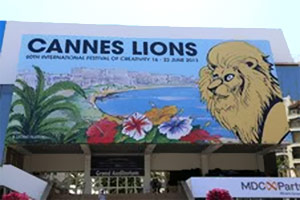
    With 3 Golds, 3 Silvers and 8 Bronze Lions the Indian tally at Cannes Lions last year ended at a disappointing 14 metals. This was a sharp decline compared to the 24 metals that India had bagged in 2011. But the dismay of last year seems to be forgotten as the Indian camp gets ready to put up a better, if not the best, show this year.

     

    MxM India gets a few biggies of the ad fraternity to share their expectations from camp India this year.


    Prasoon Joshi, President – South Asia, McCann India

    The tally apart, I go to Cannes with a completely open mind to discover new surprises, works, etc that are done from around the world. To be able to predict India’s performance would be unfair on my part because the festival is such that agencies from around the world come and participate. As a result one goes there with a very open mind to see what are the new trends that have emerged in recent times. Also, where India’s performance is concerned it keeps wavering; I do not go there with too many expectations ever. It’s always a bonus if you win more. But as I said it is always a learning experience where one can learn a lot more.


    As for McCann India, we did well last year and managed to win a Gold. For this year I am counting on work around Stayfree to win us metals. It is work that we are very proud of. The work managed to win Gold at Abbys too. We have managed to use multiple mediums very well for the campaign like video, uses advocacy of intention of people to drive home an important point of social change with the brand. It’s all about girls drop out of school because of toilet/sanitation issues and therefore try and create awareness of the issue and try and educate girls in the process. The project also benefits the brand equity in the market and also encourages good social habit. When such work gets awarded it kind of encourages the whole team to do more.


    Abhijit Avasthi, National Creative Director, O&M India

    I am an eternal optimist and hope that this year will be India’s best ever. Across agencies, across disciplines and across categories there is some very interesting and original work we have submitted as a country. Yes there is always a lot of cultural nuancing in our work but therein lies the responsibility of our country’s jurors to educate the jury about the brilliance of our work. Judges from other countries, especially Latin America, do make the effort to do the same and hence they benefit from it.


    Sridhar Kondiparthi, Chief Creative Officer – India Sub Continent, Leo Burnett

    I think India stands a good chance this year. We should do better than last year and I hope we win in all verticals including Digital and Mobile. But I do not think this will be our best year ever at Cannes.


    Mahesh Parab, Executive Creative Director, DDB Mudra Delhi

    I am quite confident of Indian talent and craftsmanship so I am expecting India to win a lot. I would also like India to see India winning in some of the most challenging categories like Titanium, & Integrated, Promo & Activations Lions etc. As technology evolves, so does the possibility of what you can do with your ideas. So I would expect more innovative stuff from India this time around.


    As for the tally, it’s going to be tough to go past the tally of 25 Lions (2009). After the glory of 2008, India’s first Grand Prix ever, it’s going to be a Herculean task for Indian agencies. All the best.


  • Ogilvy to skip Creative Abby @ Goafest 2013


    Familiar images of Team Ogilvy after the Creative Abby will not be seen this year!

    By Meghna Sharma


    The Men in Black will not be seen running to the stage at the Creative Abby this year.


    Yes, that Ogilvy & Mather shines at the Abby every year is a foregone conclusion for the creative fraternity in India. Yes, there are the folks at Taproot, DDB Mudra, JWT, BBDO, Creativeland and the like, but the Piyush Pandey-headed O&M has been ruling the Indian creative awards.


    Abhijit Avasthi

    “Yes, we won’t be participating  in Goafest this year,” confirmed Abhijit Awasthi, National Creative Director of O&M to MxMIndia. “We won’t be entering in the awards as we have felt that they were not energizing our people as they used to earlier. So we decided to take a break and may be see later what happens.”


    MxMIndia wasn’t able to reach Advertising Club for an official comment, though informally senior members have confirmed the development. While they don’t expect Ogilvy to reverse its decision, at least one senior person said that efforts are being made to get Ogilvy back.


    Goafest 2013 is scheduled to be held in Goa from April 4 to 6 this year.

    Update: While confirming the development with MxMIndia, Advertising Club president Shashi Sinha said that the awards will go on as usual, even though he agreed that Ogilvy’s absence will have an effect.


  • Mentos’ new Batti Jalao Campaign

    By A Correspondent


    Mentos, from Perfetti Van Melle India, was first positioned on the fresh thinking platform with ‘Aam Zindagi, Mentos Zindagi’ campaign. Mentos then evolved, literally, with the ‘Evolution’ campaign which portrayed an alternative theory of evolution where a monkey ate a Mentos and evolved into a man. Now Mentos has been positioned on the smart thinking platform with the tagline ‘Dimaag ki batti jala de’.


    ‘Batti Jalao’, the latest campaign by Mentos, is based on the insight that people have a natural fascination for puzzles and mysteries. The campaign uses a riddle with a twist and urges the audience to use their brain laterally. To make the campaign substantial and credible, there is a cash prize of Rs 25 lakh for solving the riddle.


    The marketing campaign aims to initiate conversations among consumers. To reach its target audience, Mentos will be using various platforms including social media, microsites, mobile, internet, radio and electronic media. The voice-over has been provided by Piyush Pandey, Ogilvy & Mather’s Executive Chairman and Creative Director, South Asia.


    Commenting on the campaign, Nikhil Sharma, Director – Marketing, Perfetti Van Melle India said, “The hope with this campaign is that can engage our consumers in an interesting and never-done-before way. With this communication, we have taken a leap and thrown a challenge to the consumers to solve a bizarre mystery. The entire look and feel for this is witty and humorous.”


    Abhijit Avasthi
    Piyush Pandey

    Abhijit Avasthi, NCD, Ogilvy India, added, “With a brand as fun and iconic as Mentos, there’s always this huge question: what next? It’s not easy to catch people by surprise and leave them with a laugh time after time, but we’ve done it yet one more time. And with the ‘Riddle’ campaign we’ve gone a step ahead by giving them something that will play on their minds even after they find out the answer.”


    Piyush Pandey, Executive Chairman and Creative Director, South Asia Ogilvy & Mather, added, “There comes a time in a brand’s journey where it must do something startling, something radical, even if what it has been doing before has worked really well. The new Mentos ‘Riddle’ campaign does exactly that. It takes a new leap without letting go of the essence of the brand.”


  • @FF12: Phase III will bring more innovation in radio


    By A Correspondent


    Radio has often been criticized for lack of content innovation, that all radio stations sound the same and that there is no differentiation in the medium currently. Although contents across all radio channels are more or less restricted to music, it is believed that once FM phase III is rolled out and multiple frequencies allowed by the government, it will lead to more innovations in content and differentiation within the medium itself.


    One of the sessions at the FICCI-Frames 2012 was on ‘Radio: Innovations in Content’ wherein industry veterans discussed at length on the innovations in content radio is witnessing currently and the enormous innovation opportunities FM Phase III would allow. While the session was moderated by Apurva Purohit, CEO Radio City, the panel members included Rabe Iyer, Business Head, Big FM; Abhijit Avasthi, Executive Creative Director, O&M; Bhavna Somaaya, Columnist and Writer; and Charles Falzon, Chair of The Radio and Television Arts School of Media, Ryerson University.


    Ms Purohit kick-started the session stating that radio currently is in a schizophrenic stage wherein on one hand the medium is witnessing immense growth, it has a huge reach in the country and the FM listenership has also further increased with higher number of mobile phones, whereas on the other hand the overall ad pie of the medium is merely 4 per cent. Ms Purohit also pointed out that in the next two years the industry anticipates another phase of growth which will bring news, sports commentary, multiple frequencies, besides further expansion into towns and cities.


    According to Ms Somaaya, “Innovation is a very subjective term and the definition changes from person to person and the state of mind one is in. I believe innovation comes only in content because technology has been exhausted and there is a whole rainbow waiting for us as there could audio books, short stories, debates, helpline etc. Radio therefore is much more immediate that any other medium.”


    Speaking about the strengths of radio Mr Avasthi first admitted that out of all the media, it is the toughest to write radio spots. He explained, “The strength of radio I believe is one can conjure up a world in the listener’s mind. What you hear on radio today is mainly restricted to Bollywood music. There are so many kinds of music still to be explored and so many types of content that can be experimented, and to break this format I believe the industry requires some amount of courage to do so.  The moment programming in radio opens up then there will be plenty of interesting opportunities for advertising in radio itself.”


    Mr Falzon highlighted the use of digital medium as a complement to engaging the listeners, “We are all experiencing a paradigm shift on how entertainment is being consumed, across the world. India has infact a better opportunity especially with the phase III expansion coming that too at a time we can think about how to use the digital medium. Digital and social media in Canada for example is being used in many ways wherein the entertainment experience of radio has been extended beyond radio.”


    According to Mr Iyer, although 80 per cent of content on radio is music and 20 per cent on the packaging of music, there has been some innovation in the medium and with the phase III launch it will bring with it immense opportunities especially on the innovation and differentiation front. Speaking on the reason radio being left out at times during advertising campaigns, Mr Iyer believed the possible reason could be because the industry has not encouraged radio creativity which in itself is a huge opportunity.


    The Q&A session which followed the panel discussion saw many people questioning the lack of innovation and the dominance of Bollywood-centric music on radio. The panelists more or less agreed that radio in India has seen lack of innovations primarily because of government restrictions which is most likely to change with FM phase III is rolled out.


    Photograph: Fotocorp

  • What’s more important? Creativity or Effectiveness? Or both?


    By Shubhangi Mehta


    [youtube width=”400″ height=”250″]http://www.youtube.com/watch?v=i6dEI6D_rcI[/youtube]

    Regardless of how ‘simple’ the end product may seem, creating advertisements for a brand has never been child’s play. It’s a task which only a creative mind can understand. And the complexities have grown over the years. When we spoke about campaigns 20 years ago, expectations were not as high as they are today.


    Today, it is the age of numerous and congregating media. While advertisers have many opportunities to reach to their desired audiences, the muddle can cause them to lose out. A beautifully executed campaign may not make its audience reach for their wallets, while an average one, creatively speaking, may end up garnering better results.


    What is the most important element, then, for the campaign of today? Is it creativity? Or effectiveness? Or a magic mix of both?


    MxMIndia posed the question to practitioners – people who create the campaign and people for whom the campaign is created.


    [youtube width=”400″ height=”250″]http://www.youtube.com/watch?v=odmcmnWjK10&feature=fvst[/youtube]

    Abhijit Avasthi, NCD, Ogilvy&Mather, said, “We only believe in creating effective communication. According to me people who separate the two cannot be called creative. If we look at the past 3-4 years’ trend, most of the campaigns that win at the Abbys are the ones winning at the Effies as well. A brand communication is complete only when it is an effective creative.”


    According to Ajay Kakar, Chief Marketing Officer, Aditya Birla Group – Financial Services, “What is the use of a knife that does not cut, or a gun that cannot fire? Similarly there is no use for a creative which isn’t effective. Such a creative work is only meant for Jehangir Art Gallery and not product promotion. According to me each and every creative needs to be effective and only then does it fulfil its very purpose”.


    The IPA/Gunn Report published in June 2011 examines the link between creativity and effectiveness. The original 2010 report had analyzed 257 campaigns over a period of ten years (1998-2008). The 2011 version of the report has been expanded to examine 435 campaigns over 16 years, from 1994 to 2010. The main aim of the report was to examine both effectiveness (a campaign’s ability to drive business like sales, profit and loyalty) and its efficiency for campaigns that have been awarded for their creativity and those that have not been.


    Some of the findings of the report include: creatively-awarded campaigns were seven times more efficient than non-awarded ones; between 2003 and 2010 creatively-awarded campaigns were 12 times more efficient; there is a pronounced time trend – creatively awarded campaigns are becoming more efficient over time, while non-awarded campaigns are becoming less so; the much greater ‘buzz’ effects of creatively-awarded campaigns appears to be why they are becoming more effective: in the multichannel world creativity is becoming more closely associated with buzz, leaving non-awarded campaigns struggling.


    Agnello Dias of Taproot said, “It is effectiveness that plays a key role. If the effectiveness is backed by a great creative it’s icing on the cake but if a particular campaign is effective for a brand then even mediocre creative can be accepted”.


    KV (Pops) Sridhar, NCD, Leo Burnett India, said, “One cannot really separate creativity and effectiveness in a brand communication. Both of them are two sides of the same coin. If one of these two elements is missing then it does not fulfil the purpose of an advertisement for a brand. There has to be an insight, entertainment, cut-through idea and it must break barriers. Hence it is impossible to choose between creativity and effectiveness. A creative is created for effectiveness of the brand.”


    Abraham Alapatt, Head – Brand & Corporate Communication at Future Generali India, said, “Neither the client nor the ad agency, have the luxury any longer, to choose one over the other. Given the growing media clutter, it is now more critical than ever to be creative and different to stand out and get noticed by customer prospects. I qualify ‘creative’ by using a phrase used by the Effie organizers – creative ‘work that works’ for real customers, in the marketplace. So put differently, both clients who are facing increasing competition, media clutter and tight budgets and agencies that are operating with these client constraints are now being called on to deliver marketing communication (which I don’t call advertising) that actively amplifies, complements and makes a tangible difference to the client’s pre-determined marketing efforts”.


    The debate may well rage on, but the market reality is that effective communication is the child of a creative mind. Both creativity and effectiveness are, thus, essential when creating communication for a brand.