Tag: AAP

  • Politics in the time of floods & landslides


    By Ranjona Banerji


    Ranjona BanerjiThe only news that some journalists think is worthy of discussion is politics. That is, the various internal shenanigans of political parties. Which is fine in its own way. However all too often their “sources” provide innocuous titbits, and the rest is conjecture and kite-flying. Very little that emerges is salacious or interesting or scary. And specifically in these times, many are fed party propaganda which they happily regurgitate.

    So if everything is politics, and that’s all people are interested in (apart from sport and celebrities and both of them together of course), let’s look at the politics of the climate. Okay, okay, I confess I lured you in and now I’ve lost you.

    But I will persevere.

    Across the globe, we are now in the midst of extremes. Massive heat waves and devastating rain. Enter here, the tired, experienced journalist who goes: it has all happened before. If you wait long enough, this is a truism you cannot possibly contest. Everything has happened before. In fact, our daily lives run on the same tracks, day after day. We wake up, we sleep and we do all the rest in between.

    The job of a journalist however is to present the present, and if possible, provide context between the past and the future. If you start by affirming that “it’s happened before”, you’ve done yourself out of a living.

    Somethings that happen again and again need not happen in the same way, and that is what we need to see discussed. I looked at a few headlines in the newspaper today. The weather was there, front and centre. Great. But it was reports about the weather – heavy rain warnings, landslides, destruction caused by rain. More interesting, were the throwaway lines. In one story about a bridge collapse, there was one sentence about villagers who complained about illegal mining on river beds.

    This in fact is a big story. If you work on it, you get — woohoo! – politics, possibly corruption, illicit favours, and who knows what else.

    Luckily, where the mainstream media does not goa s far as it could, we still have smaller independent journalism which does not rest on propaganda or on the dictum of “it’s all happened before”.

    The Reporters’ Collective has dug deep into the role of the state in allowing illegal mining on river beds in Uttarakhand.

    https://www.reporters-collective.in/trc/as-cm-lobbied-centre-went-against-rules-courts-to-allow-river-mining-in-uttarakhand

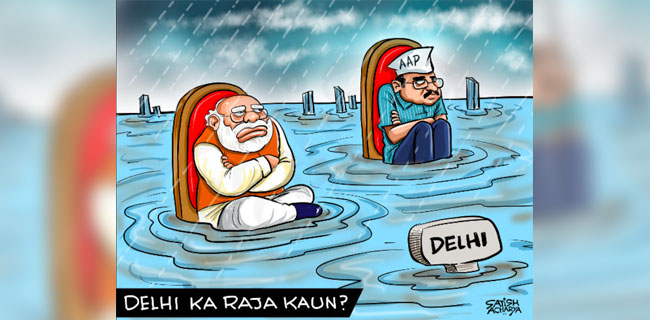
    Together with Himachal Pradesh, Uttarakhand has seen massive landslides, destruction of infrastructure and natural devastation this monsoon. But mainstream journalism has not focused on the politics of climate change, on the politics of infrastructure decisions and the politics of human suffering. It is exciting politics when a prominent member of the BJP points fingers at Delhi chief minister Arvind Kejriwal for attending a political meeting while Delhi is flooded. This is much reported by television.

    That the Prime Minister of India travels the world while Manipur still burns is not a matter of interest for the same TV channels.

    There’s politics and politics.

    Even within the flooding of the national capital region, there is a story of politics, of uncontrolled development, bad infrastructure and climate change itself. Delhi did not get a lot of rain. But heavy rainfall elsewhere caused the Yamuna to break its banks. There is politics in the destruction of natural floodplains. There is politics in water management in neighbouring states, and the lack of coordination and cooperation between the two. There is politics in refusing to understand or probe the sheer evil stupidity in ignoring environmental and geological reports.

    It’s just that this politics requires legwork. It requires diligence. It requires editors who look at more than the next dinner party. Or award. Or a chance at a selfie.

    Across India, rampant development without taking natural terrain or local requirements into consideration will have major consequences in the future. On the planetary level, India talks big about its commitment to the environment and climate change. At the local level, the opposite goes on with official sanction and blessings.

    If we’re still around when things get even worse, maybe those journalists who did nothing because of some possible reward, or sat back and consoled themselves that it’s all happened before, will have meet some sort of reckoning.

    It’s unlikely. But still. I can dream.


    Ranjona Banerji is a senior journalist and commentator. She writes on MxMIndia on Tuesdays and Fridays. Her views here are personal.

     

  • S-AAP Seedi: Lessons for Political Brand AAP


    By Avik Chattopadhyay


    Avik ChattopadhyayElections are the appraisal time for any political party. The outcomes tell one where it stands in the context of its KRAs and delivery against goals and targets. Just like any brand in the corporate world. The performances in specific segments, markets and customer targets do not tend to be the same, depending on the intensity of each effort.

     

    We have just gone through appraisal times in Delhi, Gujarat and Himachal Pradesh. In the first, the context was the Municipal Corporation of Delhi [MCD]. Three different political brands got A+ in the three markets. Of these, the AAP brand has taken my interest as it has seen ups and downs just like in the ‘Saap Seedi’ or ‘Snakes & Ladders’ game.


    It wrested the MCD from the BJP, lost in the Gujarat market and withdrew from the Himachal market. Three different markets and customer types and three outcomes. One has to see all three outcomes together than piecemeal to get the picture of how the brand is performing in a national context. Post-appraisal analysis of each market should be the next step of deep-dive analysis. Many brands do the analysis the other way round which robs them of the key indicators across markets and customer segments that helps in creating the bigger picture in the first place.


    Given this hypothesis, Brand AAP should be worried right now. It lies on the board of a Snakes & Ladders game right now even though it might think of itself being on a chessboard. Here are the reasons why…


    The numbers don’t add up

    Out of 250 seats in the MCD, it managed to get only 134. I am sure it would have internally expected a number closer to 170-180. The post-result media reportage used terms like “wrested control” and “managed to restrict BJP to 104”. This was not a landslide that their support base had expected.


    The assembly results did not reflect in the corporation result. The latter is the grassroots while the former is the superstructure. And that is worrisome if the grassroots do not recognise and reward you for your efforts over all these years! The target customer is not entirely convinced of your intent and actions as the initial euphoria has worn off and the dust has settled down.


    This should be a matter of huge concern within AAP. While it puts on the beaming smile for the outside, hope it does immediate assessment of what made it under perform. Has it been milking the past glory of its initiatives in health, education and electricity for too long? Does the customer not see any product in the portfolio? Have the initial products been upgraded and made ready for tomorrow? Portfolio management is crucial to any brand’s relevance and AAP has to work on the same with a clean sheet of paper once again.


    Living someone else’s life

    Entering the Gujarat market for the first time, you certainly have performed admirably by garnering 12.91% of all votes [roughly 3.4 million votes] even though it translates into only five assembly seats. The ‘funnel’ is rich and you need to convert better before the next appraisal. Also, the five constituencies should be nurtured so well that word of mouth helps you multiply next time.


    But is this enough or did you under-utilise your potential? Just like the current football World Cup teaches us, possession is not everything and attempts at goal count for nothing. AAP could have done much better if it would have stuck to its own narrative of “education + health + entitlements” instead of suddenly wanting to live someone else’s life, pointedly the BJP’s. it veered into the dangerous playground of religion and rituals…basically the territory of the main opponent, thereby losing its own identity. If the customer sees the new brand playing copycat of the market leader, might as well stay with the leader. It is like a Sensodyne trying to be a Colgate. Or a Hyundai trying to be a Maruti Suzuki. Sure recipe for underachievement and gradual erosion of the brand’s key promise. If it carries on in the same way in the Gujarat market, it should not expect any more than 5% vote share in the next appraisal!


    Management by remote control

    This has never worked and never will. The global CEO cannot run every market and represent the brand in all. Also, expats do not seem to work nowadays as the customer takes no brand at face value. The market-centric team needs to be created well before market entry. It does work the other way. Gone are the days when the customer missed the presence of a brand and queued up for it at launch.


    Appraisal reports of the market leader have also shown that merely flying down the global CEO for large functions and foundation stone ceremonies has not ensured an A+ in every market. In fact, in your own domestic market, it has not worked for the market leader, so why will you try the same in the leader’s domestic market? The market needs to see your regional team literally preparing the soil painstakingly before tilling it. However digital the world may become, trust is built on the physical presence of the local leadership team. Success in another market is not a guarantee of success in another. It is merely a testimonial of a brand’s capability and capacity to perform, not the intent.


    If I were in the AAP leadership team, I would be worried about these conflicting signals from the three appraisals my brand has gone through. In my victory lies vulnerability and in my defeat lies underutilisation of my brand’s potential. Both are equally worrisome requiring me as a newly-anointed “national” political brand to shift to a different board game altogether!


    Avik Chattopadhyay is a senior brand strategist based in Gurugram. He writes on MxMIndia every other Thursday. His views here are personal


  • Brand lessons from the Ballot


    By Avik Chattopadhyay


    Avik ChattopadhyayA little over a fortnight ago the election results were announced for the five states of Goa, Manipur, Punjab, Uttar Pradesh and Uttarakhand. The outcomes were as expected only that nobody expected the magnitude of the Punjab victory.


    This was one set of elections where we saw seemingly smaller and regional parties wanting to be counted. Not that this was their first attempt, but in this round they seemed more committed and invested.


    There are interesting brand lessons to be taken away from the strategies adopted by the key political parties and personalities and also the outcomes.


    PunjAAP!


    This was the most emphatic, so let’s start with the AAP’s campaign in Punjab. There is nothing like a solid proof-of-performance as a testimonial of what you can do when in power. Just like start-ups with the best proofs of concept get the highest investors, so did the people of Punjab decide to invest in this development model from the shark tank.


    Whenever entering a new market or business segment, it is always prudent to appoint and announce the person who will lead the operations and give him/ her the required bandwidth to set the narrative. It is best if the person is a local who understands the market better than an expat.


    A critical part of a market entry strategy is to get your ‘own people’ converted first before you set sights on the others. Your own people are those who are culturally closest to your domestic market in terms of codes, rituals and likes. They become your early adopters and brand advocates in an otherwise socio-economically fragmented market.


    Lastly, the classic advertising appeal of “try me once” never fails. The appeal still carries a sincere ring to it, sans all the hype. There will always be the experimentative and early-adopters who lead the way. Just that in the case of Punjab they seemed to be the majority!


    Another “Nokia moment”!


    You have a commanding market share and come crashing in just 12 months all due to your own obstinacy of not deciding on an operating system and understanding what the customer needs. That’s the Nokia moment of 2007. Can also be termed a Rip Van Winkle moment!


    The Congress repeated it with unerring accuracy in Punjab. It depended on legacy while the people wanted policy. And it failed to capitalise on a traditionally supportive segment in the farmers who could have turned the tide.


    Just like a market leader loses focus on its core customer base in its urge to capture newer markets and address new product and customer segments. A case in point are brands like Maruti Suzuki and Hero wanting to go ‘premium’ while their core base of entry level product offers gets neglected.


    Divide and Rule!


    It still works. As it did in UP for Yogi and the BJP. Astute marketers do not waste time in addressing all customers needs and desires. They go for those that have a natural alignment with the product benefits. Like aspects of protection, exclusion and intimidation in the case of BJP. Consultants call this segmentation.


    Also, the best event managers do not fuss with the entire duration of the show but create just one or two ‘wow’ moments that impact most and stay on longer in the viewers’ minds. So, images of temple corridors and highways that double up as airstrips combine very well to cover both tradition and technology. The recipient is not really bothered with all details of your narrative, so a few ‘doosras’ are forgiven. The average human being understands and remembers pictures much better than data tables.


    Do not reinvent the wheel, at all. All successful brand managers will tell you that. Not that they are halting the wheel but are going on the same track, faster, smoother, and better while refreshing the look and feel of the wheel. Within a smaller gestation period.


    Elephants cannot dance!


    If Kodak had taken heed of early digital photography and re-calibrated itself accordingly, it would not find mention here. Market leaders typically fail to notice warning signs on their radar screens… of a new technology, of a new trend, of a new entrant, of a new solution, of a new regulation…! Some quickly change course while others perish. Netflix did. Blockbuster didn’t.


    While divide and rule worked for the BJP, it cannot escape the fact that it lost more than 50 seats to the SP. Most contests have been very closely fought. It might not be a wave yet, but certainly a ripple. And it is not that the BJP has not been defeated before, despite the narrative being the same, albeit much milder.


    When both AAP and TMC announced themselves as true successors of the Congress, it needs to read the clear signals on lifecycle management.


    When you are too large as a brand, the Nirmas and Chiks of the world can come up, nibble away at your pie and create a larder big enough for them to sustain. Someone like Sensodyne can change the narrative at one end. Size has its disadvantages. Elephants cannot dance!


    Different ground, different game!


    “Khela holo na” for Didi and the TMC in Goa. The game may be the same, but the ground conditions are different. Knowing how to play football does not mean one plays equally well on hard and slushy turf and in any position. Just because VW rules the roads in Germany does not entitle it to do the same in India, as it has painfully learnt. Cut-copy-paste does not work especially when there are strong cultural differences in the two markets.


    Remote control operations do not work in any market and for any product category. Also, a non-playing captain is not always the best option. One has to have a leader of the team at the ground level to assess the pulse on a daily basis and take corrective action in narrative and promotion. Moreover, the local team has to be empowered to take decisions and modify strategies without having to wait for an approval from headquarters.


    Controlling is fine. Micro-managing kills.


    Tell me something new


    The general narrative of the legacy parties remains more or less the same, be it the Congress or the BJP. They typically bash each other silly. While it works in some places, it fails in others.


    The Congress had nothing to offer the people of UP except for the glamour of the family and the legacy of the freedom struggle. The fact that the leadership had to fall back upon the forefathers rather than create a testimonial in Amethi or Rae Bareilly, is telling it all.


    Even though playing second fiddle to the Akali Dal, the BJP could have certainly performed better had it not applied the same narrative of UP. Also, its stand vis-à-vis the farmers over the last 18 months did not help.


    Political parties rarely seem to have any candour. They never seem to accept mistakes and own up to them. They offer no apologies. Just like most big brands never do. The challengers, however, use candour and vulnerability as strategic tools to move ahead faster. Today’s customer appreciates brands that are frank and fragile rather than infallible. This is a trait that most brand managers need to train upon and acquire.


    The light at the end of the tunnel…


    Work shows. Good work shows better. I saw an interview of N Biren Singh on NDTV after the exit polls were out and showed that the BJP would get a 3/4th majority in Manipur. He said that the projections might be too optimistic but as positive work had been done over the last five years, he was confident of getting the mandate. Eventually, he did get a mandate close to the projections.


    Market share is the outcome and not the objective. Just like good governance. Profits, loyalty, repeat purchase, electoral results and majority are all outcomes of fundamental work for the target customer. I get amused no end when brands make announcements of “x%” market share by such date almost as soon as they enter the market. Makes for masala journalism and nothing more.


    Biren Singh should know that pretty well. He was a journalist once. And a footballer before that!


    Avik Chattopadhyay is a senior brand and strategy consultant. He writes on MxMIndia every other Thursday. His views here are personal


  • Mufflerman & the Mango People


    By Avik Chattopadhyay


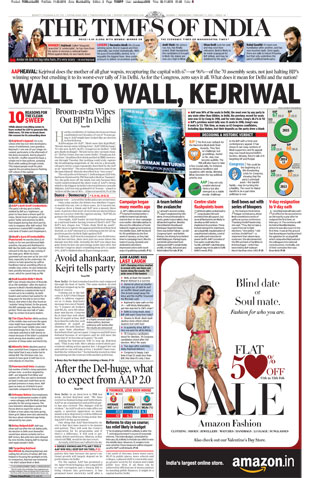
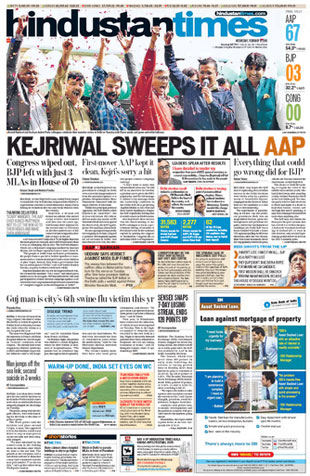
    In February 2015, I had done a piece for MxMIndia titled on Brand AAP on the occasion of Delhi waking up to the 67-03 mandate. Last night, my friend Pradyuman helped me refresh my memories of the same as I sat down to pen my thoughts on Delhi waking up to the 62-08 reality!


    After five years, I look at the AAP brand again.
    To see whether it remains the same. Or has it changed. Or evolved.
    There is nothing political in my analysis and assessment here…purely from a brand manager’s perspective.

    So, what have been the FIVE key learnings of the AAP brand?


    That the core purpose remains the same.
    The core brand idea cannot be tinkered with based on different occasions and opportunities.
    The AAP purpose remains the very same as it was in 2014 and 2015.
    It is all about fundamental deep-rooted development… about education, health, water, electricity, mobility and safety.
    It is an organisation of middle-class people who earn their bread the hard way.
    Therefore its purpose has to do with improving the lives of the middle class.
    You do not play around with your purpose just because you are in the driver’s seat… the destination remains the same as long as the vehicle remains the same.


    That the personality has to mature with time.
    This is crucial in the life-cycle of any brand, for it determines the ‘route’ you may take to help your vehicle reach its destination.
    It was “clean development” in 2015, it is “clear development” in 2019.
    The demonstrations on the street have given way to demonstration of actual work done.
    So, is the leader no longer the ‘rebel’? He sure is, but the cause is more clearly defined.
    And the energies of the rebel are channelised now.
    There was definitely some bluster in 2015. Its only candour now.
    The candour earlier was sometimes uncomfortable. Now, it is comforting.


    That the promise has to be clearly demonstrated.
    The comfort in the candour comes through the demonstration of the promise.
    At the end of the day, human life cannot improve by consuming tweets, memes and social media posts.
    It is by schools, clinics, uninterrupted electricity, free water, improved mobility and greater safety.
    It is about the here and now.
    Digital and social media are only supports and not the core food.
    Spinning stories are good for a satiated and secure person, not for someone who is still getting his / her life into order.
    As Lenin had said, “How can a man think with his mind when his throat is parched?”


    That the key stakeholders are to be respected.
    Most brands forget this in their ‘power trip’.
    As a ‘ruler’ one has the greed to look down upon the electorate and grant it a “mind” far lesser than it actually has.
    The context has to be set up right at the start, the key stakeholders identified and their engagement plans chalked out.
    Each stakeholder has to be given his / her due place, and space.
    The context is about every-day life and livelihood of the two crore people of Delhi, and quite frankly nothing more.
    The key stakeholders are [a] the voter, [b] the non-voter, [c] the candidate and [d] the reporter.


    The voter – central to your brand’s existence and is looking at you making his/ her life better, bit by bit, but surely, with every passing day. The Delhiite is immensely proud of a unique culture that the city-state has conjured up for itself. That has to be catered to and not rudely challenged. This is the “Mango People” and they come in various textures and flavours. Appreciate them and preserve them instead of putting them into a large mixer and churning them into one gooey mass.


    The non-voter – a very important influence on the voter – the children and the people in the NCR who will not vote but will surely have a clear opinion on who deserves to won.


    The candidate – is an individual in his / her own right, with a mind and a heart of one’s own; can chart out own strategies within the larger framework, express own opinion and share own plans rather than be a mute by-stander at the mercy of the bosses. Very similar to what happens in large organisations, is it not, with the regional managers / department managers / project heads?


    The reporter – do grant him / her the power to observe, analyse, digest and then opine; the sheer urge to browbeat and force feed ‘stories’ does not work especially in a battle-zone that is highly aware and expressive.


    That uncluttered messaging is crucial to any campaign.
    Keep it simple, uncluttered, frank and forthright.
    I just loved the little interactive film shared on social media about Mufflerman looking into your door saying “Can I come in?”
    In 2015 it was the Mufflerman game, this time it was this truly disarming video interaction.
    That is what the target stakeholder likes…clarity and candour, without mixing up issues that are not relevant to the occasion at all.
    I would surely want the entire nation to be united and stronger but right now I have to decide on who can improve my daily life better.
    The relevance of messaging is always critical to any campaign’s success, and this was a great demonstration of the same.


    The AAP 2019-2020 election campaign is a lesson for every brand manager.
    On how to carefully nurture and deliver a brand that rides on huge expectations and external challenges.
    And how to stay true and committed to the core purpose and not get waylaid into distracting and diversionary narratives.
    As my brand guru Wally Olins used to keep reminding me, “Live your own life, Avik. You only have one bloody chance!”


    Avik Chattopadhyay is a brand strategist living in New Delhi NCR. He writes on MxMIndia on most alternate Thursdays, but this time we requested him to write on a Wednesday. His views here are personal.


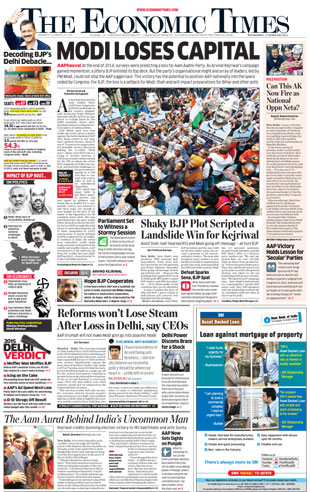
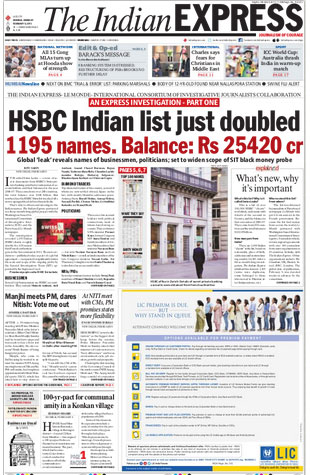
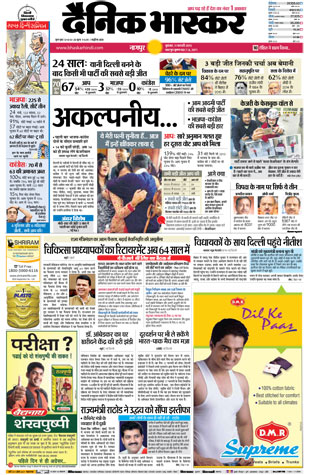
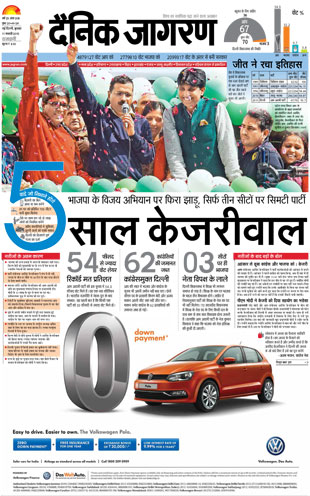
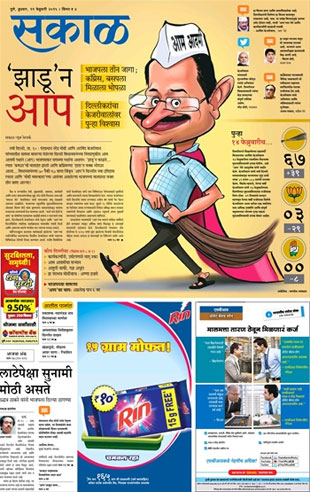
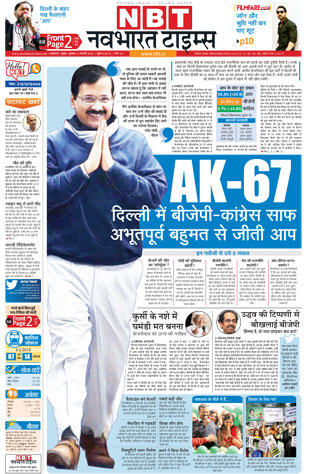
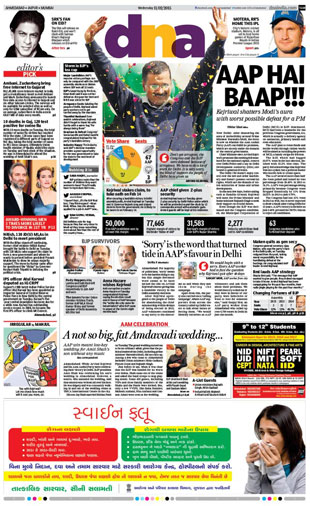
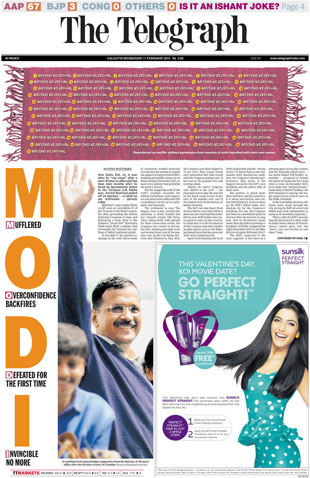
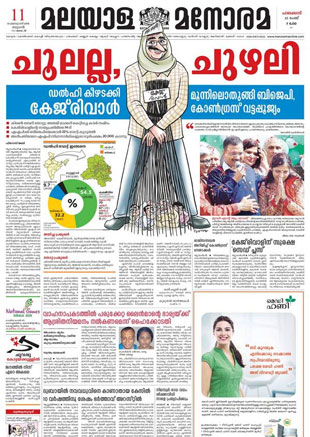
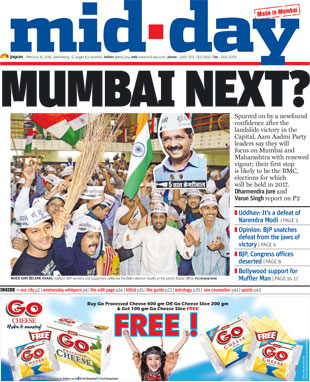
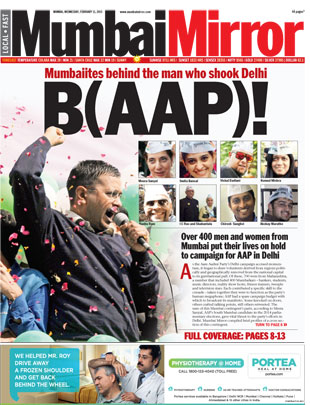
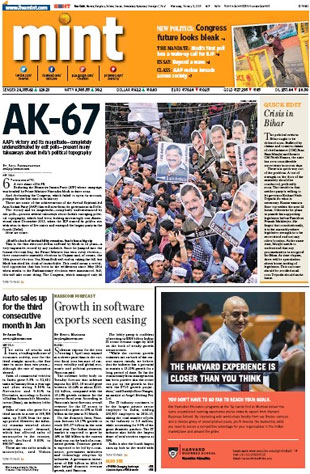
  • AAPHEW! | NewsStand: How various dailies chronicled AAP’s landslide win

    ou know this. We love doing it. Other than the Amul ads, MxMIndia brings ​frequently ​you a display of how the various morning papers cover the ‘hot’ news. And this is what our ​agile tech head Rafiq Barak found while surfing the epapers of today’s editions. All datelined February 11, 2015.


    So which Page 1 did we like most?


    ​While the laaarge ad is a bummer​ as it spoils the look (okay, okay, as a ‘business of media’ publication, we shouldn’t be saying this!), the Telegraph front-page in our mind was the most innovative. But, that’s what the ABP paper always scores with, right? Scan on…


  • AAPHEW! | Shripad Kulkarni: Arvind Kejriwal’s ‘Wake up Call’ to BJP and marketers!

    By Shripad Kulkarni


    This is not about the communication or media strategy of the Aam Aadmi Party versus the new age digital strategy of Narendra Modi/Amit Shah’s Bharatiya Janata Party. Nor is this post about the outreach programme of the two parties (we already know very well that you need to reach out and connect with consumers to succeed). It signals a big opportunity opening up in the Bottom of Pyramid (BOP) which both the BJP and marketers must address.


    The BOP – 40% (or bottom two quintiles) of Urban India is the next emerging market!


    The Middle Classes were the bull’s eye TG for the Modi/Shah approach. Arvind Kejriwal rightly found a gap and zeroed in on the BOP.


    The BOP, especially in the Metros, is now economically well off. These people have the aspiration and quite a few of them partake of basic consumer goods. But the ‘quality of basic living’ is a daily fight. A classic case of consumer aspiration but failure of public goods. And, now, these people have a new found voice. If Kejriwal delivers in some measure on power, water, transport, education, sanitation, healthcare, the BOP people would have tasted blood. BOP people in city after city, state after state will have to be wooed by politicians.


    What’s more, once governments provide decent quality basics of living, the discretionary income of the BOP segment will actually grow. The ‘value’ spaces of consumption that Rama Bijapurkar has written about will present a range of opportunities. And therein may be the key to opening up the huge market called Bharat! The new driver for the Indian economy!!!


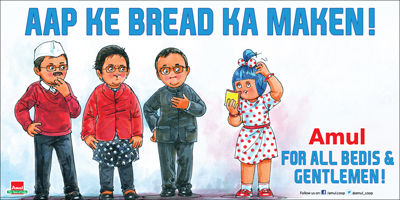
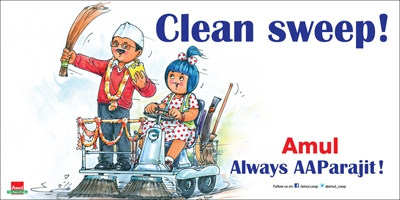
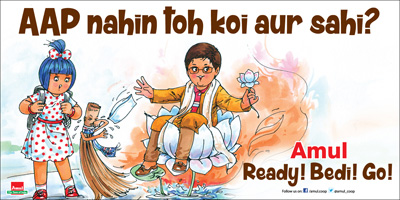
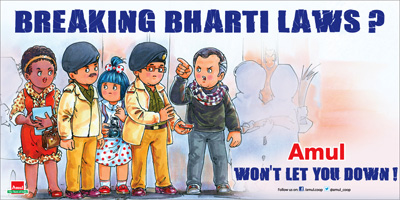
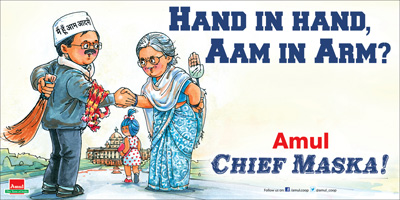
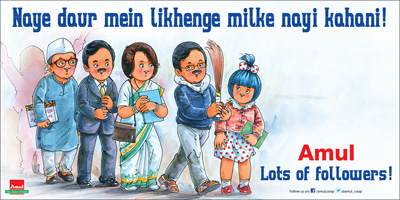
  • #AAPHEW! 6 Amul ads that tell the AAP Story

    Okay, we thought there would be more ads created by daCunha, Amul’s agency for the topical ads. After all, the Aam Aadmi Party (AAP) and Arvind Kejriwal have been occupying the headlines over the last two years in a huge way. However, the six ad reproduced below do tell us part of the story. Enjoy!


  • AAPHEW!| How Bad Messaging did the BJP in


    By Pratap Bose


    So the Aam Aadmi Party scored a landslide victory in the Delhi elections. It’s a huge win. Massive.

    As I wrote last week,  AAP was very clear and focused in its election campaign. The messaging was simple.  It was to provide an alternative to the BJP and Congress, and for those keen on a government run by a true representative of the common man. While it was an anti-Bharatiya Janata Party, anti-Congress, there was no negativity from Arvind Kejriwal this time.


    And as for the BJP, the negativity in the campaign didn’t work. In fact the very reasons why there was much sympathy towards the BJP and Narendra Modi in the Lok Sabha elections, seem to now be the reasons why Kejriwal won.


    Negative campaigns don’t work. Even if the BJP’s Lok Sabha ads painted a dismal pic of the country, the essential message was positive: Achhe Din Aane Waale Hain.


    In these elections, while there was a ‘Call to Vote’, the messaging was negative. And, according to me, that’s what possibly did the BJP in. There are of course a variety of other factors – the public’s belief that the AAP can deliver better and some dissatisfaction on the BJP doings at the Centre – but the sensitivities of the public at large cannot be ignored. How else can you explain a 23% drop in voter share?


    If you think about it, there was nothing spectacular that the AAP did. The BJP had far greater assets in terms of budgets, advertising expenses, and the might of the entire top cabinet at their disposal, but like any strong brand the AAP stayed close, relevant and true to the people of Delhi. The symbols of the AAP, like the broom, the AAP cap, Kejriwal’s muffler, the simplicity in which he dressed, and the simple promises, all clearly resonated in this humongous victory.  One must never forget that aspiration is always secular and never based on class-based politics.


    After the Grand Effie-winning campaign of the BJP last year, this was a dud.


    Courtesy: www.PratapBose.com

    Pratap Bose was until recently COO, DDB Mudra Group. He is currently President, The Advertising Club. Visit www.pratapbose.com for this views


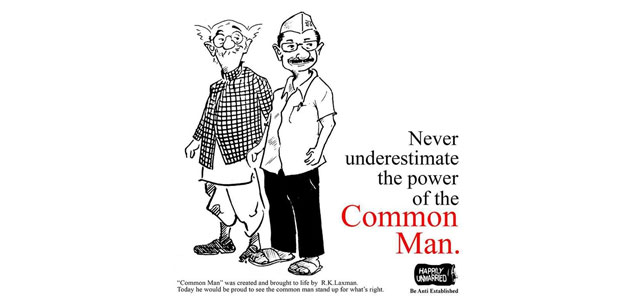
    Big Story image taken from the Aam Aadmi Party Facebook page. Visual of RK Laxman’s Common Man with Arvind Kejriwal in an ad by ‘Happily Unmarried’


  • #AAPHEW! | Avik Chattopadhyay: What made Brand AAP click

    By Avik Chattopadhyay


    The AAP brand has been very thoughtfully created, nurtured and matured by the party thinktank. I really do not know the names of the thinkers, but I am sure there are quite a few of them, from various walks of life and backgrounds, that ensures its unique personality and positioning before the man and woman on the street.
    And the positioning was summed up in BBC’s update on February 10 evening that said, “India anti-corruption party routs BJP.”


    “Anti-corruption”.
    This is the brand essence of AAP.
    This is their greater purpose…of existing, contesting, winning and administering.
    The party has stood for this purpose with a manic conviction.
    In November 2013, it was demonstrated through a raw, extroverted, abrasive sincerity.
    In January 2015, it has been expressed through a calm, collective and controlled aggression.
    But the missionary zeal… clearly remains, undiluted.


    This purpose brings an automatic emotional connect with all Indians, at every corner.
    And most so, in the capital, where forms and intensities of corruption proliferate and pulverise.


    The values of the brand?


    Candour. Inclusive. Challenging. Young.

    These are the values that tomorrow’s India aspires for, appreciates and aligns with.
    In the disarming candour of a man openly admitting he had made a mistake and requesting for another chance.
    In the inclusiveness of its volunteer forces that gave their all for a just cause.
    In their challenging the conventional central authority of its organisational and financial muscle.
    In the youthful energy in their approach to campaigning and the content that they shared on social media.


    There was a Pepsi to a Coke.
    There came a Mac to a PC.
    There is an AAP to a BJP.


    Both need to co-exist, for in their contrasting ethos and styles of functioning will lie the checks and balances of administration and development. That is the very essence of a thriving democracy. And I am sure proud to be born and live in one that is ours!


    Avik Chattopadhyay is a senior marketing and brand consultant. He now co-runs brand advisory firm Expereal. He has spent over two decades in the automotive industry and was also CEO of Saffron Brands India.


  • AAPHEW! Ranjona Banerji: Times Now, Twitter score with Delhi results

    By Ranjona Banerji


    “ARNAB GOSWAMI JUST CONGRATULATED ARNAB GOSWAMI FOR HIS VICTORY IN THE DELHI ELECTION!”


    This is a tweet, capital letters and all, from Overrated Outcast (@Over_rated). Because without a doubt, Times Now was the only channel worth watching, for its entertainment value at least, as the results of the Delhi state elections were being counted.


    It started soon after 8am on February 10 as the counting started. Other news channels started putting out trend figures. Goswami was spitting scorn. Other channels, he said, were “psephological paparazzi”. Some hapless guest tried to claim that phrase as his own. I laughed so much that I missed who the guest was: mea culpa. But Goswami used the phrase through the morning as results poured in and has effectively made it his own.


    He carried on with it and by 11.40am was even asking for a CBI enquiry into news channels which put out figures which inflated the BJP’s wins!


    Times Now and Goswami also took great glee in pointing out that exit polls and forecasters got the Delhi election wrong, since the Aam Aadmi Party effectively swept through Delhi. But one might point out that the night before, on February 9, Navika Kumar of Times Now said that the BJP could not be written off since the BJP claimed that there was a voting surge for them between 3 and 5 in the afternoon on voting day. Goswami did not at that time react as fiercely as he did with such claimants on February 10.


    Instead, Goswami, who is often seen as pro-BJP, took off on the BJP as the results became clear. Shazia Ilmi walked out of the studio after being asked tough questions. This is a sure way of getting ahead of the rating points for any channel and Times Now has won.


    Having surfed through most news channels in various Indian languages, it was clear that the most exciting channel was Times Now. And all credit for that has to go to Goswami for being compelling viewing, with all the attendant melodrama and hysterics. He interrupted the discussions to show us where in the world the hashtag #TimesNow was trending. The US apparently, where he told us, Times Now has a huge following. No ad breaks, however.


    But having doffed my hat to Times Now and it is still blaring as I write this, the winner has to be Twitter across all media. There is no better way to track news events. You don’t just get the news but you get humour, analysis, wit, scorn, anger, bitterness and rubbish as well: the whole human experience.


    And as for tracking the election results, the Election Commission is surely the most reliable: http://eciresults.nic.in/.


    You can track the results through constituency, party and vote share. You can therefore be ahead of the hysteria of news channels. Though the fun of Arnab Goswami cannot be beat! NDTV, too civilised and calm. Headlines Today looks like a CNN-IBN copy unless Rahul Kanwal and Gaurav Sawant are allowed to prance about. NewsX looks like a copy of all. CNN-IBN looks like His Master’s Voice except the BJP master and his main puppeteer are missing in action after this drubbing.


    **


    Jokes aside though, there is an urgent need for India’s best known journalists, especially those on TV, to do a little thinking. Their all out sycophancy for the government at the Centre has run its course. No?


  • NBA says members may boycott AAP if Kejriwal doesn’t stop hurling allegations against media

    By A Correspondent


    In what is a severe and what many consider justified indictment of the Aam Aadmi Party and its leader Arvind Kejriwal, the News Broadcasters Association (NBA) has asked the AAP convenor to “immediately refrain from making preposterous allegations failing which NBA Members would be forced to reconsider coverage of the  activities of the Aam Aadmi Party”.


    In a statement, the NBA said it was “shocked to note the unverified and objectionable statements being made by Mr Arvind Kejriwal and his associates regarding the electronic media and accusing the electronic media of being “paid” by political parties to drive their agenda during the General Elections of 2014″


    “NBA wishes to remind Mr Arvind Kejriwal & his associates that the electronic media is independent and is discharging its responsibilities in a fair, transparent and balanced manner and urges the AAP not to hurl unsubstantiated and unverified charges on the electronic media,” the statement noted


  • Modi, AAP exploiting digital in run-up to the General Elections 2014

    By a correspondent


    Ask anybody what’s different about the General Elections 2014 and the topmost reply would be the way political parties have migrated to the medium of digital to deliver them a miracle of sorts. A study undertaken by Prof. Kiran Thakur and Sagar Atre at the Pune-based FLAME School of Communication has revealed some interesting findings regarding the use of the digital medium by political parties.


    The study notes that while the Bharatiya Janata Party (www.bjp.org) and the Congress (www.inc.in), the principal rivals in the Indian political arena, are neck-to-neck in the cyber race, the BJP’s prime ministerial candidate Narendra Modi is ahead in terms of exploiting social media when compared to Congress’ vice presidential candidate Rahul Gandhi.


    In fact, Modi is the most aggressive user of the website and social media registering about 10 million Facebook likes, 3.47 million Twitter followers and 126969 YouTube subscribers. In comparison, Rahul Gandhi does not even have a Twitter, Facebook or YouTube account.


    The new entrant, Aam Aadmi Party (http://www.aamaadmiparty.org/), however, has stolen a march over all the six national parties in effectively exploiting websites and social media in the Lok Sabha election campaign.


    Political Party Website URL Facebook likes Twitter followers YouTube subscribers
    Bharatiya Janata Party www.bjp.org 2,544,235 375000 44500
    Indian National Congress www.inc.in 2,021,253 135000 5117
    Nationalist Congress Party http://www.ncp.org.in/ 208,808 12700 142
    Aam Aadmi Party www.aamaadmiparty.org/ 1,670,036 538000 40845
    CPI(M) http://www.cpim.org/ No official page 1574 55
    CPI http://www.communistparty.in/) No official page No official page No official page
    BSP http://www.bspindia.org/ 4909 364 10


    The study further notes that the websites of the BJP, Congress, Nationalist Congress Party, CPI, CPI (M) and Bahujan Samaj Party do not mention anything about the sources of their funding. The data of their websites and social media was recorded as part of a study on March 6, 2014, when the Election Commission of India announced the schedule for Lok Sabha poll.


    Though the BJP has a provision for online donation, the Congress expects its well wishers to write a cheque and send it to party headquarters in Delhi via a courier or through snail mail. The NCP, CPI (M), CPI, and BSP do not even appeal to the people for donations.  Only the AAP has an elaborate system to receive online donations, deliver online receipts and compute the data with names and addresses of donors.


    Of these parties only the CPI (M) informed the people how they spent its funds last year. It has put up an audited statement of the party accounts for the year 2013.


    The study further notes that the websites of BJP, Congress, NCP, and AAP are updated every day, sometimes several times in a day. These four parties have used these websites as platforms to inform, and educate the people on the topical issues, and stands of the respective organization on these issues.


    However, no party has ever mentioned anything about their electoral alliances and has explained why they had to enter into alliance in the past or for coming election. They do not have even a formal appeal to voters to vote for their allies.


    No party was able to upload its manifesto until the day the election dates were announced, because this important document was not ready for any of the six national parties. However, AAP has a unique feature. Its website mentions important issues of 70 constituencies in which its candidates will contest and how they will take these up.


    The FLAME School of Communication has planned to monitor these websites until the election results of all the constituencies are announced.