Tag: Aam Aadmi Party

  • Two World Cups & A Mega Election


    By Shailesh Kapoor


    Shailesh KapoorWe are in the last quarter of 2022. It’s been a fairly ‘normal’ year, after the painfully-disruptive 2020 and 2021. It’s also a year that saw normalcy return to the entertainment business, despite pandemic-related challenges linked to changing audience habits and taste.


    The last two-and-a-half months of the year promise to pack a punch from a mass media perspective. Starting later this month, we have the much-awaited T20 Cricket World Cup in Australia. The tournament was originally scheduled for 2020, but was canceled because of the pandemic. The 2021 edition in India was eventually held in the UAE, with ICC moving the Australia edition to 2022.


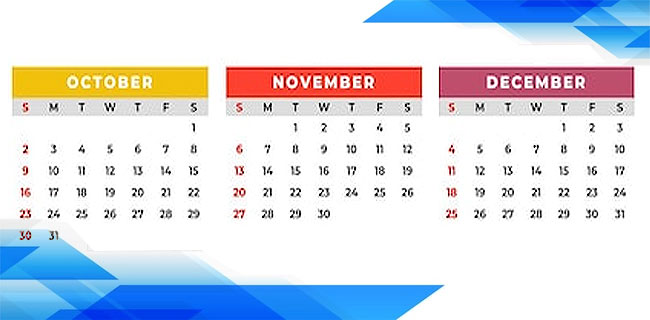
    India’s campaign kicks off with the marquee India-Pakistan clash on Sunday, October 23. With a depleted and somewhat-inexperienced bowling attack, India has its task cut out. But irrespective of how the team performs, the tournament is bound to be a viewership magnet.


    Cricket in Australia always makes for good television. And while the match timings (afternoons) may not be primetime friendly in India, three key India matches are scheduled for Sundays. And being in the middle of Diwali holidays helps, both from viewership and ad revenue perspectives.


    Within days of the Cricket World Cup ending starts the FIFA World Cup, being held in Qatar from November 20. Usually a summer event, the World Cup is being held in winters, to avoid the high summer temperatures the host nation witnesses. While the audience is understandably smaller than cricket in India, it’s the first Football World Cup in a long time where the match timings are India-friendly.


    And then, there’s the anticipated big-ticket political event, elections to the Gujarat state legislature. While the dates are not out, December is touted to be month. Gujarat elections always hold special interest, because it’s the state from which Prime Minister Modi hails. While a BJP win in these elections will not surprise anyone, the build-up and the campaigning are likely to gets news media all charged up. The Aam Aadmi Party has also thrown its hat in the ring, and a struggling Congress will be hoping that these elections provide some face-saving value to them, after a spate of embarrassing defeats in recent times.


    Between sports and politics, we have a packed 12 weeks, leading up to the end of the year.


    This column will take a seasonal break and return on November 18, 2022.


  • Axis-My-India gets Exit Poll right for India Today yet again

    By A Correspondent


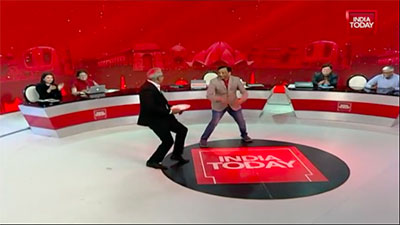
    Screengrab of Pradeep Gupta doing a jig with Rajdeep Sardesai shaking a leg

    We don’t know what’s your view, but for us, the ultimate accolade is when your competition compliments you. On Tuesday evening, while analysing the landslide sweep of Arvind Kejriwal’s Aam Aadmi Party in the Delhi Assembly elections, first former psephologist Yogendra Yadav saluted pollsters Axis-My-India for getting the Delhi numbers right yet again, and then NDTV founder Dr Prannoy Roy was very generous in his praise for India Today group Chairman and Managing Director Aroon Purie for his guts for letting the Axis-My-India folks to give the far-out numbers and not interfere (in carrying them as is). There was of course a nice laugh about the jig that Axis Founder and Chief Pradeep Gupta and India Today Consulting Editor Rajdeep Sardesai did on air which has been doing the viral.


    According to the information we have received, the India Today Group-Axis-My-India exit polls have got 33 out of 35 elections bang-on over the last four years. Yadav specifically hailed the polling agency for its Haryana poll results late last year. For Delhi, the exit poll aired on India Today anticipated the Aam Aadmi Party’s sweep in the February 8 vote, giving it between 59 and 68 seats in the 70-member Delhi Assembly. Its nearest rival, the BJP and its allies, were projected to get 2 to 11 seats and the Congress none. By Tuesday evening, the predictions turned out to be pretty accurate, with the AAP securing 62, the BJP 8 and the Congress knocked out for a duck.


    Noted a communique: “In Delhi the pollsters measured voting behaviours, preferences and predispositions of the city’s diverse demography. Like a thorough statistical exercise, the survey delved deeper into the voters’ educational background, economic conditions, work, age-groups, caste, and religious affiliations. Since 2013, Axis My India has conducted 40 post-poll surveys, of which 38 have been spot on. Since their association with India Today in 2016, the pollsters have predicted 35 elections, of which 33 turned out to be accurate.:


    Said Kalli Purie, Vice Chairperson, India Today Group: “Every time we get a poll right the stakes get higher. This was our fifthy poll bang-on. The trust put in us by our viewers is a big responsibility and makes us work harder (and gives us many sleepless nights!). People keep asking me what’s the secret sauce that even your bitterest competitor quote and copy your poll. The answer is simple. We wear glasses with no colour when we look at data. Data is always neutral. The partnership of the best data input from Axis and serious ground reporting from our team before every election has made this incredible feat possible. Having an unparalleled platform with the combined muscle of broadcast, digital and social also helps a little‼”


    Added Gupta while attributing his successful predictions to team work and scientific monitoring of voter behaviour: “We follow international best practices. Our methodology is highly refined that helps us eliminate margins of error,” adding: “Our sampling is the most demographically and politically representative in any given election. There’s zero tolerance for any compromise on quality. That’s perhaps the reason why the Harvard Business School is doing a case study on Axis-My-India for the GE 2019 predictions.”


  • Mufflerman & the Mango People


    By Avik Chattopadhyay

     

    In February 2015, I had done a piece for MxMIndia titled on Brand AAP on the occasion of Delhi waking up to the 67-03 mandate. Last night, my friend Pradyuman helped me refresh my memories of the same as I sat down to pen my thoughts on Delhi waking up to the 62-08 reality!


    After five years, I look at the AAP brand again.
    To see whether it remains the same. Or has it changed. Or evolved.
    There is nothing political in my analysis and assessment here…purely from a brand manager’s perspective.

    So, what have been the FIVE key learnings of the AAP brand?
     

    That the core purpose remains the same.
    The core brand idea cannot be tinkered with based on different occasions and opportunities.
    The AAP purpose remains the very same as it was in 2014 and 2015.
    It is all about fundamental deep-rooted development… about education, health, water, electricity, mobility and safety.
    It is an organisation of middle-class people who earn their bread the hard way.
    Therefore its purpose has to do with improving the lives of the middle class.
    You do not play around with your purpose just because you are in the driver’s seat… the destination remains the same as long as the vehicle remains the same.


    That the personality has to mature with time.
    This is crucial in the life-cycle of any brand, for it determines the ‘route’ you may take to help your vehicle reach its destination.
    It was “clean development” in 2015, it is “clear development” in 2019.
    The demonstrations on the street have given way to demonstration of actual work done.
    So, is the leader no longer the ‘rebel’? He sure is, but the cause is more clearly defined.
    And the energies of the rebel are channelised now.
    There was definitely some bluster in 2015. Its only candour now.
    The candour earlier was sometimes uncomfortable. Now, it is comforting.


    That the promise has to be clearly demonstrated.
    The comfort in the candour comes through the demonstration of the promise.
    At the end of the day, human life cannot improve by consuming tweets, memes and social media posts.
    It is by schools, clinics, uninterrupted electricity, free water, improved mobility and greater safety.
    It is about the here and now.
    Digital and social media are only supports and not the core food.
    Spinning stories are good for a satiated and secure person, not for someone who is still getting his / her life into order.
    As Lenin had said, “How can a man think with his mind when his throat is parched?”


    That the key stakeholders are to be respected.
    Most brands forget this in their ‘power trip’.
    As a ‘ruler’ one has the greed to look down upon the electorate and grant it a “mind” far lesser than it actually has.
    The context has to be set up right at the start, the key stakeholders identified and their engagement plans chalked out.
    Each stakeholder has to be given his / her due place, and space.
    The context is about every-day life and livelihood of the two crore people of Delhi, and quite frankly nothing more.
    The key stakeholders are [a] the voter, [b] the non-voter, [c] the candidate and [d] the reporter.


    The voter – central to your brand’s existence and is looking at you making his/ her life better, bit by bit, but surely, with every passing day. The Delhiite is immensely proud of a unique culture that the city-state has conjured up for itself. That has to be catered to and not rudely challenged. This is the “Mango People” and they come in various textures and flavours. Appreciate them and preserve them instead of putting them into a large mixer and churning them into one gooey mass.


    The non-voter – a very important influence on the voter – the children and the people in the NCR who will not vote but will surely have a clear opinion on who deserves to won.


    The candidate – is an individual in his / her own right, with a mind and a heart of one’s own; can chart out own strategies within the larger framework, express own opinion and share own plans rather than be a mute by-stander at the mercy of the bosses. Very similar to what happens in large organisations, is it not, with the regional managers / department managers / project heads?


    The reporter – do grant him / her the power to observe, analyse, digest and then opine; the sheer urge to browbeat and force feed ‘stories’ does not work especially in a battle-zone that is highly aware and expressive.


    That uncluttered messaging is crucial to any campaign.
    Keep it simple, uncluttered, frank and forthright.
    I just loved the little interactive film shared on social media about Mufflerman looking into your door saying “Can I come in?”
    In 2015 it was the Mufflerman game, this time it was this truly disarming video interaction.
    That is what the target stakeholder likes…clarity and candour, without mixing up issues that are not relevant to the occasion at all.
    I would surely want the entire nation to be united and stronger but right now I have to decide on who can improve my daily life better.
    The relevance of messaging is always critical to any campaign’s success, and this was a great demonstration of the same.


    The AAP 2019-2020 election campaign is a lesson for every brand manager.
    On how to carefully nurture and deliver a brand that rides on huge expectations and external challenges.
    And how to stay true and committed to the core purpose and not get waylaid into distracting and diversionary narratives.
    As my brand guru Wally Olins used to keep reminding me, “Live your own life, Avik. You only have one bloody chance!”


    Avik Chattopadhyay is a brand strategist living in New Delhi NCR. He writes on MxMIndia on most alternate Thursdays, but this time we requested him to write on a Wednesday. His views here are personal.


  • Ranjona Banerji: Breaking news culture leads to baseless journalism

    By Ranjona Banerji


    Delhi chief minister Arvind Kejriwal’s attempt to intimidate the media with the threat of defamation cases has been foiled for now by the Supreme Court. The Delhi government decided it would take all criticism of itself by the media very seriously indeed and file defamation cases in case the criticism was unfair, uncalled for, prejudiced, biased, not nice and most importantly, “spoilt the government’s reputation. The apex court has however taken note of a PIL against this Delhi government order and stayed implementation until its next hearing.


    Most of India’s politicians were probably hoping that Kejriwal would get away with this which might give them all one more stick with which to whack the pesky media. Still, as I understand it, anyone can accuse anyone else of libel, defamation and slander in India already so what was the purpose of this order anyway?


    And with so many journalists in the Aam Aadmi Party, surely Kejriwal could have got better advice? The best way to put anyone’s back up is to threaten them and why do that to a media which has served you so well in the past? Many journalists measure their success by the number of legal notices they receive. So your threats might even seem like compliments.


    Some gratuitous advice here: instead of a government order of this absurd sort, why not pass an order forcing media houses to issue gigantic apologies instead of teeny-weeny invisible ones after they lose cases?


    Okay, I’m laughing.


    **


    Congratulations to Sidharth Bhatia, Siddharth Varadarajan, founding editors, and Raghu Karnad, contributing editor, on the launch of thewire.in


    This promises to be a high quality news site with both reports and opinions. The intention is to remain independent of those influences which lately have so corrupted journalism and where editors have become management lackeys or political stooges.


    All power to thewire.in and here’s hoping for a grand future!


    **


    TV was in an uproar about a policeman in Delhi who threw a brick at a woman driving a scooter. He asked for a bribe, she refused, he attacked her. Someone recorded the fight on their phone. There was outrage all around. How dare and so on. Policeman suspended. However, later another story unfolded. The woman was not wearing a helmet. She had two children on the scooter with her. She threw a stone at the policeman.


    As happens all too often, this means that the story was aired without verification. This is precisely the reason why some of us in the media are sceptical of “citizen journalists”, bloggers masquerading as or being taken for journalists and “sting” operations. There is a certain rigour to journalism as it should be practised – and most often is – which amateurs are not aware of. There are also tiers in a newsroom to sift through stories and check on facts. I see on social media so many people who think that journalists do nothing, precisely because of such shoddy journalism.


    The rush to be first on TV with “breaking news” has destroyed too many of those basics. The result is this kind of baseless, asinine, manufactured “outrage”. Take a bow, you guys.


  • #AAPHEW! 6 Amul ads that tell the AAP Story

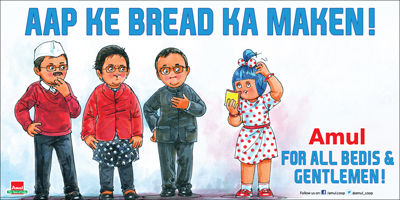
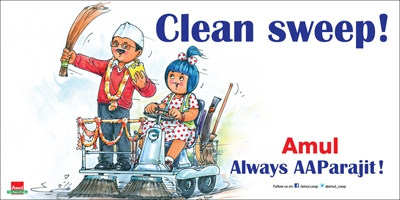
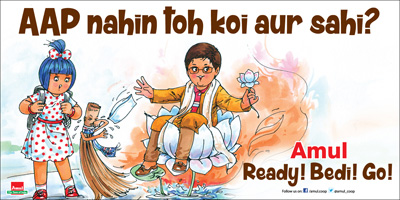
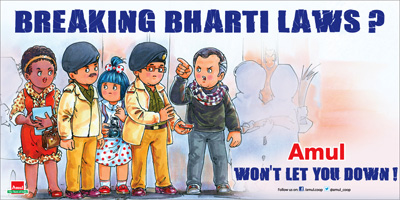
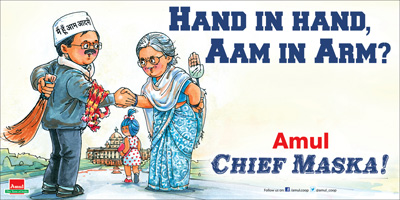
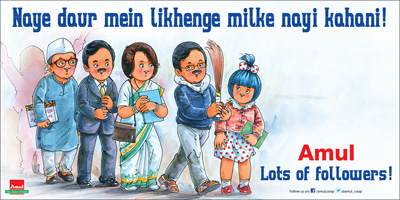
    Okay, we thought there would be more ads created by daCunha, Amul’s agency for the topical ads. After all, the Aam Aadmi Party (AAP) and Arvind Kejriwal have been occupying the headlines over the last two years in a huge way. However, the six ad reproduced below do tell us part of the story. Enjoy!


  • Ranjona Banerji: How the media is everyone’s whipping boy

    By Ranjona Banerji


    The media is now everyone’s whipping boy and there is no need for the media to get defensive about this. As long as everyone thinks you’re doing everything wrong, it is clear that you are doing everything right. The expression “paid media” is now indiscriminately used to describe journalists who do not subscribe to your political point of view, when the term within the media is used to describe managements who sell editorial space to political parties or politicians without informing readers or viewers.


    Arvind Kejriwal of the Aam Aadmi Party has accused the media of being pro-Bharatiya Janata Party and pro-Congress and also said that some of the media is dancing to the diktats of Mukesh Ambani and Reliance. More specifically, the media he says is either pro-Narendra Modi or pro-Rahul Gandhi; the unspoken implication being that the media is anti-him. However, through 2011 the media was extremely pro-Kejriwal and the India Against Corruption movement headed by Anna Hazare. One might wager that without media support, the IAC movement would have gone nowhere. Non-stop coverage of every IAC event, gross exaggeration of public participation figures all ensured that IAC, Hazare, Kejriwal, Manish Sisodia, Kumar Vishwas, Kiran  Bedi, Prashant Bhushan and others became household names.


    India’s controversial former chief of army staff VK Singh has also jumped into the fray, calling journalists “presstitutes”. This is how urbandictionary.com describes “presstitute”: “A term coined by Gerald Celente and often used by independent journalists and writers in the alternative media in reference to journalists and talking heads in the mainstream media who give biased and predetermined views in favour of the government and corporations, thus neglecting their fundamental duty of reporting news impartially. It is a portmanteau of press and prostitute.”


    In fact, I would question Celente’s (an American “trend forecaster) wisdom and political correctness in damning commercial sex workers (the now accepted term for prostitutes) by associating them with the media and with journalists.


    Jokes aside, Singh has been angry for a number of reasons – his various dates of birth did not sit well with either the Indian Army, the GOI or the Supreme Court, his various PR efforts sometimes backfired and Indian Express published a story last year about how some troop movements during his tenure were looked at suspiciously by the Government.


    The Editors Guild has taken exception to all this media-bashing and issued a strong statement: “Ironically, leaders who built up reputations and support by engaging the public through the media are now turning on the very media when they come under critical scrutiny…


    “The media that question and criticise political leaders and indeed every section of society should of course be open to criticism, even if it is harsh, of its functioning and to its flaws being exposed. The problem arises, however, when abuse and vague, unsubstantiated accusations of corrupt motives take the place of reasoned refutation and debate. An additional danger is that some of the followers could take their cue from the statements of leaders and may not stop with verbal attacks. Both print and television journalists have been subject to physical violence as well by political party workers.”


    Physical attacks on journalists are reprehensible and have to be tackled strongly by law and order. But general criticism of the media and of journalists has to be accepted as par for the course. As we have pointed out in these columns, there are clear instances of media bias on display at times and criticism of political parties, politicians and big business is sometimes a carefully calibrated exercise.


    The spread of the tentacles of lobbyists and PR people is well-known when it comes to film and business journalism for instance. And the Niira Radia tapes exposed the susceptibility of some of India’s biggest names. These are problems which the media must discuss more stringently, or criticism from those we criticise will only get stronger.


    If we don’t guard ourselves, someone else is going to try and do it for us. And that would be the real disaster.


  • Ranjona Banerji: So why did Times make a front-page statement?

    By Ranjona Banerji


    Truth is, we have no political masters, nor do we have any hidden agenda. The only side we take is that of our readers.”

    So what compels a newspaper to make this statement, especially one that declares it is “the world’s largest circulated English newspaper”?

    The Times of India’s edition of January 23, 2014 carried this on the front page. The rather thin (leading to some very ugly hyphenation) single column headlined “To Our Readers” was a declaration that although the newspaper had been accused of first supporting and then turning against the newly formed Aam Aadmi Party, in fact it is for no one and against no one and will support whoever does the “right thing”.

    The newspaper also pointed out its philosophy, such as it is, which includes belief in “the primacy of the individual over the state, and that democracy in its truest sense is the power of one. We believe in personal liberty and in freedom of choice.” There is more in the same vein.

    As to why TOI decided to make this announcement is unclear, except for the allegations that it had switched horses mid-stream regarding the Aam Aadmi Party. But so what? As it itself declares, it has been accused supporting one or the political party in the past and has not bothered to make any front page announcements. Is it because the AAP is the new party of the middle classes, which is TOI’s core readership? Or has someone inside Bennett Coleman suddenly developed a very thin skin?

    The worst that The Times of India has been accused of is not patronage of a political party. The worst has to do with money: the introduction of Medianet where news items are sold for a hefty price and for private treaties, where certain business houses and entities can ensure good coverage for themselves.

    Obviously, there were no mentions of either in this intriguing, and if one may point out, clumsily written and punctuated, front-page editorial declaration.

    **

    However, it is also true that the media seems to be getting polarised politically in a manner last seen during the BJP’s Ram Janmabhoomi movement of the late 1980s. Journals and journalists both declared themselves to be pro-BJP and Hindutva, with an emphasis on a preference for economic reform as well as religious majoritarism. Much of this media anger was also against Congress hegemony and also showed itself in massive support for VP Singh’s breakaway movement.

    Since then, the media has been seen as supporting one or the other political direction although very often the accusations are quite wild. Right now the Indian media is clearly heading towards the Right – except for the gauntlet thrown down by the Aam Aadmi Party and its particular brand of agitation politics. And perhaps that is where TOI’s confusion begins.

    **

    The biggest current problem for the Indian media and television in particular is that it cannot see beyond Delhi. If the Gujarat chief minister was the front page hero for almost six months, he has been ousted by Arvind Kejriwal. Much as the AAP and Kejriwal have changed the game, they are certainly not the only stories in India. Yet day after day we are subjected to a series of Delhi-centric stories.

    Part of the problem is that Delhi has become the epicentre of journalism in India. As a result, once strong regional media entities have been forced to pay extra attention to the national capital. Most TV channels are headquartered in Delhi – Times Now being the notable exception amongst the top English channels. And our star TV anchors cannot see beyond their neighbourhood. Who knows what has been happening in India and the world over the past couple of weeks. All we know is that Sunanda Pushkar thought her husband was having an affair and then may or may not have killed herself and that Arvind Kejriwal slept on the streets next to his car for a few night until he was sent some hot paranthas.


    Ranjona Banerji is a senior journalist and Contributing Editor, MxMIndia. The views expressed here are her own. Ranjona Banerji can be reached at @ranjona