Tag: 26/11

  • November 26, Dus Saal Baad


    By A Correspondent


    For news journalism in India, the Mumbai terror siege was a gamechanger. News channels had gained ground from the mid- to late 1990s, they played a key role in covering various political and social events in the period, Kargil, the Gujarat riots, the no-condidence motion that Atal Behari Vajpayee lost, the various Budget presentations, the various cricketing specials… but the Mumbai terror siege starting November 26 saw news television play a dominating role in news breaks.


    MxMIndia pays tribute to the departed soul and salutes all those who fought the terrorists and helped in those trying circumstances.


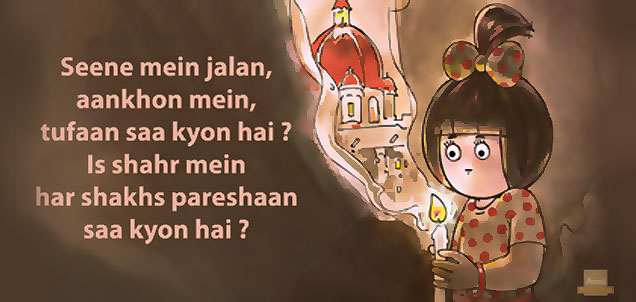
    The Amul ad that you see above was released on the first anniversary of the terror siege.


    At MxMIndia, we’ve carried many articles on the media coverage of the terror strike. Here, we bring you some of the articles we published on November 25, 2013 to mark the fifth anniversary of the attack.


    What’s made Arnab the Face of News TV

    The events of November 26, 2008 and thereafter saw the rise and rise of Republic TV editor-in-chief and chief promoter Arnab Goswami. A freewheeling chat with Goswami when he was Editor-in-Chief of Times Now.

    http://www.mxmindia.com/2013/11/whats-made-arnab-the-face-of-news-tv/


    Sebastian ‘Saby’ D’Souza: I want to erase the event from my memory completely

    Other than images of the Taj Mahal hotel and scenes of frenzy around the spots where the terrorist had struck, the Mumbai Mirror picture Ajmal Kasab in the concourse of the Chhatrapati Shivaji Terminus (CST) got Saby much fame and accolades. But the ace photographer says he doesn’t like to about the event. “I want to erase the event from my memory completely. I wish it had never happened,” he told us.

    http://www.mxmindia.com/2013/11/sebastian-saby-dsouza-i-want-to-erase-2611-from-my-memory-alert-some-explicit-pictures/


    Ranjona Banerji: 26/11 – battleground news channels and newspapers

    If 26/11 was the making of Times Now, it was also a battleground for newspapers, writes Ranjona Banerji. For journalists, it was the story of the decade playing out in front of one’s eyes.

    http://www.mxmindia.com/2013/11/ranjona-banerji-2611-battleground-news-channels-and-newspapers/


    Sachin Kalbag: No time for water, no time to blink

    Hindustan Times Executive Editor Sachin Kalbag reported on the Mumbai terror siege for Delhi’s Mail Today, where he worked as Senior Editor from 2008 to 2011. Here, he recounts the hardships faced by journalists covering the Mumbai terror siege. This article was written when Kalbag was Execuitve Editor at MiD-Day

    http://www.mxmindia.com/2013/11/sachin-kalbag-no-time-for-water-no-time-to-blink/


    Page 1 of some Mumbai dailies – Nov 27-30, 2008

    The following are the front pages of some Mumbai dailies from November 27-30, 2008

    Page of some Mumbai dailies – Nov 27-30, 2008

    http://www.mxmindia.com/2013/11/front-pages-of-some-mumbai-dailies-november-27-30-2008/


    Amul ads on the terror attack & after

    The creatives we see on Amul Butter’s billboards are excellent indicators of popular mood and perception. Here we bring you some of these released after November 26, 2008 and until the Kasab hanging.

    http://www.mxmindia.com/2013/11/amul-ads-on-the-terror-attack-after/


    Ranjona Banerji is a senior journalist and commentator. She is also Consulting Editor, MxMIndia. The views here are personal
     

  • Ranjona Banerji: 26/11 – battleground news channels and newspapers

    By Ranjona Banerji


    Like many others in Mumbai, I also got a phone call from friends asking me to switch on the TV on the night of November 26, 2008. And then all night, I watched the surreal events being played out in front of millions. The first suspicions were of a drug gang shootout in Colaba – an area known for the unsavoury characters that emerge once the sun sets. But as the focus shifted from Colaba to the Chhatrapati Shivaji Terminus (also known as VT) and then to Mumbai’s most iconic hotels, the Taj and the Trident (still called the Oberoi) it was clear that something far more sinister was going on.


    Images of the young and gleeful Ajmal Kasab began to flash on TV screens, evil intent apparent in his glittering eyes – or so it seemed to us. There was news of the best and the brightest of Mumbai’s police force being killed in the attacks. There was fear for friends who were out in the area – and never have mobile phones been more useful. There was immense sorrow as news of those missing began to emerge. In my case, it was an old school friend who I had known since we were both five.


    But in all this, you had also to look at the events as a journalist. You were not just a voyeur. You were a trained professional with what is in media terms the story of the decade playing out in front of your eyes. The first drum beat roll therefore has to go to television. Many brave young reporters stood out there for three days telling the world what was happening inside the hotels and Nariman House which were under siege for three days after the first attacks on Cafe Leopold and CST on the night of November 26 ended. By Thursday morning Kasab – the only surviving terrorist of the 10 – had been captured.


    Much as this was a seminal moment for television, it was a particular turning point for Times Now. It emerged as the best channel covering the events and Arnab Goswami – for a long time playing catch up with TV stars and his former colleagues Barkha Dutt and Rajdeep Sardesai – emerged as a national figure. Dutt and Sardesai made two rookie mistakes – they jumped into the fray and tried to get in front of the cameras instead of being the conductor in the studio. This meant that they could only give viewers impressions. All the ground information still had to come from reporters.


    Goswami by contrast stayed in the studio, letting his reporters do their jobs. Editors of newspapers very rarely jump into ground coverage. Not just because they are lazy fat cats but because they know that they have beat reporters trained to do their jobs and it is hard to beat them for information. An editor can go out there to see what’s happening. He or she can provide colour copy. But editors are far more valuable in the newsroom orchestrating coverage. Times Now’s other advantage is that it is Mumbai-based unlike other TV channels which are situated in Delhi.


    There have been complaints against Goswami and Dutt that they gave away vital information about the locations of guests to the terrorists. In the case of Goswami, he acknowledged the error and then stopped that line of questioning. The same cannot be said for Dutt.


    There were also complaints that the media concentrated on the five star hotels because it is anti-poor. This argument is ludicrous. The attacks moved to the five star hotels and stayed there as commandos fought a deadly battle with the terrorists. There were no terrorists at CST from Thursday onwards. Also, as events unfolded as fast as they did, it is unfair to expect the media to have a foolproof coverage plan. For a long time, no one had a clue what was going on, least of all the authorities.


    If 26/11 was the making of Times Now, it was also a battleground for newspapers. The Times of India was at the spot and that gave it a massive advantage. But even though I was working there at the time, I have to give a big shout-out to DNA. I had watched in horror as DNA was paralysed during the July 2006 serial bomb blasts in the train service. I could not believe that I had just joined a newspaper which fell to pieces during a crisis like this – when it should in fact have claimed it as its own, as a new entrant to the Mumbai market.


    DNA redeemed itself during the November 2008 terror attacks. In one of those remarkable miracles – which I had seen once before in The Times of India’s Ahmedabad edition during the Gujarat 2002 riots – the newsroom rose as one. Internal conflicts and politics were put aside and everyone assumed responsibility. It was a stupendous effort and it showed in print. The other newspapers could not match us – for that time at least.


    The tragedy at the personal level remained however. Old friend and fellow journalist Sabina Sehgal did indeed die in the attacks on the Taj. And in another note, none of the promises made to Mumbai at that time have materialised.


    Ranjona Banerji is a senior journalist and commentator based in Mumbai. She is also Contributing Editor, MxMIndia. She can be reached via Twitter at @ranjona. The views here are her own