Blog

  • With animals, what you see is what you get. With human beings, it’s more complicated


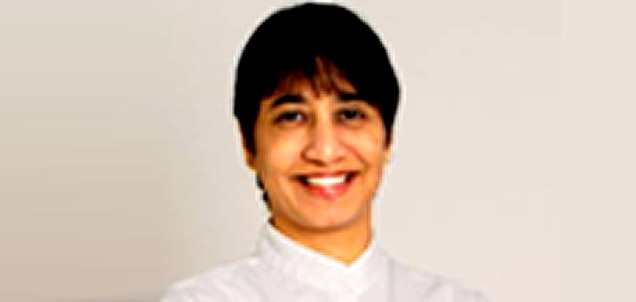
    Make no mistake about this: Lynn de Souza has a soft, warm, chilled out, happy exterior. But inside that resides a steely, tough, hard-edged professional. And she needed all that internal strength to survive and thrive in an industry notoriously dominated by what she calls the ‘Old Boys Club’. Lynn and I go a long way back, and this made our conversation frank, fun and, yes, highly argumentative. And we discussed many issues ranging from the dubious media research, the future of various media, her role in promoting gender equality, her formula for cleaning up the otherwise scandalous Goafest. And why she, er, chooses dogs over men.  


    By Anil Thakraney


    What’s your exact job portfolio at Lintas?


    I look after Lintas Media Group, and our subsidiaries Karishma Initiative, Aaren Initiative and Lin TV. LMG and Karishma are media agencies, Aaren Initiative is the largest OOH agency and Lin TV produces and distributes branded content. I am responsible for their overall financial and reputation, health, corporate governance, etc.


    Who do you report into?


    Michael Wall, the global CEO of Lowe Worldwide.


    Would you not like a global role now, having been there and done that in India?


    Have I been there and done that in India? I don’t think so. India’s potential story is not even the tip of the iceberg, and I haven’t even travelled the whole tip yet! I would love to have a global role that is based out of India, because this is where it’s all happening. I am fiercely proud of India and all things Indian and it’s our time to show the globe a thing or two. We don’t need to be sitting in Manhattan or London to do that, in fact, that could be counterproductive.


    Would it be correct to say you’ve reached the top of the Indian media peak?


    More like the bottom of the ocean, which has the most beautiful creatures and colours in the world. There are so many challenges ahead, so much to learn and so much to do. Our lives as consumers of media are being transformed so rapidly it’s really hard to keep pace, and this rate of change is even faster in an emerging market like ours. What we thought we knew yesterday is no longer relevant today, and what we think we know today will not be relevant tomorrow. The only people who can be on top of all of this are those who want to keep learning and keep evolving and keep travelling. There is no place for those who think they have arrived.


    What’s your goal for the next 10 years? What else would you like to achieve?


    Goals are for footballers and 20-year-olds. I don’t have any. I am just happy to be alive, to have a wonderful family, to work with some awesome people, to have a few good friends, and to do my little bit for my four legged friends. I take each day at a time, that’s all, and just try to do the best I can for that day, honestly. When I was young, I did have plans and was ambitious, too ambitious. My values have changed. It’s important to be good at what you do, but it’s also important not to be so good that you become bad for everything else around you.


    Key challenges ahead for the media buyers.


    Look beyond the colour of money to the colour of advertising and media content, and the kaleidoscope of consumer insights. Get away from the keyboard and play some real piano now and then. Visit places they have never been to, in reality, and not only on 3G. Meet and talk to people from all cultures including, especially including, our villages in the length and breadth of our country. Data will never be a substitute for reality and as long as we hold on to it for dear life, we will continue to reduce the value of the media, and the consumers they deliver, to the lowest common denominator – a CPRP.


    Are our creative people ready for the new media? And the clients?


    I think the younger ones are. I have been meeting a lot of independent digital agencies recently, and it’s always great fun to meet their founders – usually young creatives and techies who have left traditional agencies and employers to write their own dreams and ‘apps’! You would also be surprised how many clients are now taking to what you call ‘new’ media like fish to water. There are lot of questions and uncertainties and domain knowledge issues of course, but there is no dearth of desire to learn, because user technology has become so easy and enjoyable that once they use the digital spaces for themselves, they want to start using them for their brands.


    Was media unbundling a good thing? You pioneered it.


    It was the best thing to happen to the media function. Till then, media planners were languishing in the backrooms with their big red NRSs and estimates, always at the tail end of a presentation and often sent home without even presenting. Making the function profit seeking in its own right attracted the right kind of front-room talent, investment in tools and databases and the ability to then cope with a magnifying media world. Which industry has seen such an explosion of new offerings in such a short time – 600 TV channels, 70,000 print titles, 350 radio stations, and countless websites, all in 15 years or less? Unbundling has allowed us to specialize enough to cope with this growth, possibly even enable this growth.


    Predict the future of the print media in India. Newspapers are shutting down all over the world.


    You need to separate form from content. Newspapers abroad have digital versions that have a much larger following than the newsprint version. I read the NY Times every day because the reading experience is so enriching, it doesn’t matter that I don’t live in that city. As long as people have eyes, they will read, and as long as they read, there will be something delivering the news to them in a written form… in newsprint or cyberspace, or Kindles, how does it matter? About India, do you know that the highest read newspaper in the world is a Hindi daily? Regional language papers have trebled in readership in the last ten years. Tier two and three cities, where literacy is still not even 70% and growing, register the highest growth.


    And what about television?


    TV will be fully digitized very shortly and this means that the convergence of content across digital broadcast, web and telephony platforms is almost here. My agency is already producing content for television, re-purposed for mobile, and developing web apps to go along. As are many others. Consumers follow and lead content, so to track them and predict their behavior will be very important, our measurement systems will need to keep pace and adopt new technologies to capture, retrieve and analyze data.


    There are too many complaints about media research in India. What can be done to change things?


    There’s an overload of data in some aspects. We have different data sources for different media. And there’s no one single source available. That’s why many of the media agencies invest in their own studies. We have our own, for example. What worries me is that nobody’s looking at the future. So that we have future-ready research which is truly centered around the consumer. I told the IRS people that they need to think ahead. They have a 10-year-old way of collecting data and that has to change.


    Also TV viewership measurement.


    That’s why you can’t recommend media only on that basis. Which is why a lot of us have our own proprietary research which picks up a whole lot of other aspects. You cannot rely only on these data sources.


    That’s no solution. We need few but reliable research studies which the whole industry can follow.


    It’s not necessary for everything to be done at the industry level. You do things at an industry level when you want a currency. When you want a common parked research where both the buyer and the seller access it, so it becomes a currency. But if you want to do things that are genuinely good for the brand, you develop a whole lot of other proprietary studies, which many of us do.


    Lynn, frankly I am disappointed with you. You’ve spent a lifetime in the media industry, you’ve done it all, you’ve made your money. Isn’t it time for you to think of the industry and take on the challenge of reforming media research so that everyone benefits?


    If I did that, I wouldn’t say it to you. If I had any ambitions that I want to change something, I would quietly go about doing it my way. Three years ago, I didn’t want that there should be two research agencies, the IRS and the NRS. I was sitting on both the committees and I found both doing the same things, both saying the same things, so I said why can’t they be together. So quietly, at both meetings, I would suggest let’s have only one study. It took three years of doing this before the RSCI got formed. They’ve elected me as the first Chairman and we had our first meeting only last week. I am hoping we will change the readership agenda of this nation. Print is still the largest medium in India, and if the RSCI works out, we will make a big change. But I won’t thump my chest and say ‘Hum yeh kar rahe hain, hum woh kar rahe hain!’ (Laughs.)


    Not enough. You should take on media research full-time, and become the Queen B who made a huge difference.


    (Long pause.) I promise to give it a serious thought just to please you. (Laughs loudly.) But I will not commit to anything you wish me to commit to!


    You’ve cleaned up Goafest. There were no scandals this year. How did you do it?


    I am a great delegator. And I give a lot of respect to people I delegate to. So we had Shashi (Sinha) completely given the role of running the awards. I gave Sundar the role of running the conclave. I looked after the organizing and the venue. The most important thing I did for Goafest was to create an impression of being clean. I looked for a very clean looking place, I changed the venue itself. So it looked fresher, cleaner, greener. That had a very subtle effect. Then, I roped in the ASCI and the IAA with the responsibility agenda on the first one and the sustainability agenda on the second one. That gave the impression we are doing something good for the industry, and not just pampering creative egos.


    How did you handle the problem of self-voting?


    Shashi led that and he did a fantastic job. People were not allowed to self-vote. One or two individuals who were supposedly high on self-voting in the past were not included as judges this time.

    But Lintas still won’t take part in the awards…


    We do not have any confidence in the awards given by our peers. I was given a job to do, to chair Goafest. I was forced to do it, and I did it to the best of my ability. But that’s different. You know, I served at the Cannes media jury in 2009 and it was a fantastic experience. It was professionally run, it was technically advanced. I have served on the Indian juries as well, and it was nonsense, though am sure this time around they did a better job. I have seen the behaviour of our peers, the kind of lobbying and planning that goes on. As an agency we are not into chest-thumping. But when our agency wins awards because our clients have won, I value those because the consumers voted us.


    But now that you’ve cleaned up the place, will Balki take part next year?


    That you have to ask him. But it has to do with the value you place behind awards. Not everyone thinks awards are the best thing in life.


    Looks like you’ve fallen in line with Balki’s ideology.


    (Laughs.) On the contrary he may be falling in my line! We have our own independent reasons.


    What’s this about women’s rights you’ve been promoting?


    Internationally, diversity and inclusion is a big agenda. As a part of that agenda, two years back, IPG asked me to set up and lead the women’s leadership network. Initially I refused. I didn’t think there should be segregation of any kind. Later I studied the subject in detail, and I realized there’s a very powerful economic reason why you have to support women. There are three ‘Ws’ that will transform this century: Web, Weather and Women. And the power that women are exerting on this century is enormous. It’s said if women were empowered at Wall Street in 2009. things wouldn’t have been the way they were. In India we have 29 women heading banks and financial institutions. So there is an approach that women bring to the table that improves the productivity of a team. So it’s important to keep and retain women. At IPG, 30% of our staff are women, and when you come to the top, it’s just 11%.


    How do we change this inequality?


    We need hardcore practices in place. We can have a hiring quota set aside for women. I believe last month Hindustan Lever hired only women. We need to make everybody conscious we are not doing anything special for women. We have to make men and women understand that when you work together, you do well. For example, Coca Cola has something called the ‘Power of 3’. They believe that in any big team, the minute you have three women in the team, the group becomes far more productive. And if you have just one woman in the team, she gets eaten up.


    But Lynn, women falling out along the way is a social problem. Babies have to be looked after. How will you change that?


    You try and keep them engaged in the work orce. Some of the things we’ve done include giving them the option to work from home when they are pregnant. By giving them a desktop mirroring system at home. That’s literally like working in the office. There are lots of such ways in which you can keep women productive even if they have babies.


    Personally, I am quite cynical about this whole thing. You can’t change deeprooted beliefs and attitudes so simplistically.


    Anil, you are basically cynical about everything! Anil ‘bloody cynical’ Thakraney! (Laughs.)


    Why are all ad agencies headed by men?


    In the creative agencies there is a very strong old boy’s club. It’s very difficult for women to break through into that club. And if they don’t play by those rules, they will not break into it. Read my blog on this (link).

    Exactly why were the 3As of I guys giving you stress? Why didn’t they want you in?


    (Long pause.) Because I am clean.


    You found corrupt activities going on?


    (A longer pause this time.) No comment.


    One rival media chief you admire.


    Sam Balsara. He’s awesome. A hardcore desi boy with so much energy, he does so much.


    The best boss you’ve had.


    Ravi Gupta. And Steve Gatfield.


    One thing you learnt to do from Roda Mehta?


    Two things. Precision and integrity.


    One thing you learnt NOT to do from Roda.


    (Thinks.) Over-precision. Beyond a point you have to just let it go, you don’t need perfection.


    Roda didn’t just do the media job, she built the media planning and buying industry in India. None of you guys have been able to do that. She was a game changer.


    It’s not needed. You don’t need a crusader in today’s world. You need inventors and innovators. In today’s world we need enablers. Twenty years ago it was different, it was the licence era, there were strictures and rules. Today there’s far more freedom. No one wants a crusader. Everyone wants an enabler.


    Would it be correct to say you love dogs more than men?


    (Laughs.) Why only dogs, any animal. With animals, what you see is what you get. With human beings it’s more complicated.


    Is that the reason you are still single?


    No, it has nothing to do with that. I didn’t find anyone as intellectually stimulating as… my dog! (Laughs.) Are you happy to hear that?


    Have you watched Balki’s two films?


    I haven’t watched ‘Cheeni Kum’ yet. And Balki hasn’t forgiven me for that. But he sent me the ‘Paa’ DVD, and I really liked it. I didn’t watch the last five minutes of the film though. Because I wanted to make my own ending. I wanted the character to live. So I made him into a dog. (Laughs.)
  • AdStrat: Your dreams are not yours alone

    The campaign:

    Your dreams are not yours alone


    The client:

    Union Bank of India


    The agency:

    Mudra West


    The brief:

    To refresh the promise of partnership made by the brand in its 2008 campaign of ‘Your dreams are not yours alone’, making it more credible and relatable for the consumer. The conversation begun three years ago had to be continued.


    Considering the cluttered media space for banking and financial services, it was equally imperative that Union Bank of India had a compelling, clutter breaking campaign.


    Any specific advisory from the client:

    The previous campaign had gone a long way in putting Union Bank of India part of the young consumer’s world. The fresh, classy black and white execution had easily stood out among the monotonous category communication.


    This campaign needed to outdo the previous one, and connect even more strongly with the youth


    Research insights:

    People don’t succeed in isolation. Behind every successful person are those that worked in the shadows to ensure his success.


    Families and loved ones are equal partners in an individual’s success, working hard, giving them the much needed support and push to make dreams a reality.


    The thought process behind the creative:

    The idea was not just to take forward the philosophy of ‘your dreams are not yours alone’ but also make it larger than life.


    It’s difficult for a regular banking ad that talks about empathy and relationships, and shows happy customers, to catch the consumer’s attention in today’s day and age. We needed a powerful narrative that would make the consumer sit up and take notice of the advertising.


    Media vehicles chosen:

    TV, Print, Outdoor, Digital, Radio and Cinema


    Does the treatment justify the brief?

    The treatment effectively delivers on the brief on all aspects. It seamlessly carries forward and adds greater credibility to the philosophy of ‘your dreams are not yours alone’.


    The unusual use of celebrities effectively breaks clutter, while connecting with the younger generation of consumers.


    What according to you is the differentiating factor about the ad?

    Celebrating the people BEHIND the celebrities.


    The campaign speaks through one of the most powerful forces that connect with the youth – India’s youth icons. While examining the lives of iconic figures from the world of sports, Bollywood and the arts, the communication moves away from the typical use of a celebrity to promote a product.


    Instead of using the celebrities themselves, the narrative showcases the person behind the celebrity who was instrumental in making them what they are.


    Market and client feedback and follow-ups:

    Extremely eye-catching creative, that fits in beautifully with the Bank’s philosophy. Will go a long way in making Union Bank of India known as a contemporary, relevant banking brand.


  • Dainik Jagran calls agency to handle its creative business

    By Shubhangi Mehta

    Dainik Jagran, the Hindi daily has invited agencies to handle its creative mandates, some of the agencies participating in the pitch are Grey, McCann, Percept H.

    Though no official confirmation could be attained at the time of writing this report, industry sources close to the development have confirmed the news to MxM India.

    Dainik Jagran was founded by Puranchandra Gupta in Jhansi in 1942. In 1947 Dainik Jagran shifted its headquarters to Kanpur, where it launched its second edition on 21 September 1947. The Rewa and Bhopal editions were added in 1953 and 1956. In 1975, publication of Gorakhpur edition started, followed by Varanasi, Allahabad and Lucknow in 1979. In 1984, Meerut edition was launched, followed by Agra in 1986, Bareilly in 1989 and Delhi in 1990. Between 1997 and 2006,

    Eighteen new editions were added, and through 2007-08, six new editions were launched.

    More than 55.7 million people read Dainik Jagran making it the largest read daily in India. Currently, Dainik Jagran’s 36 editions are published across eleven states of India.

  • Aamir-Star reveal mega-show plans

    By A Correspondent

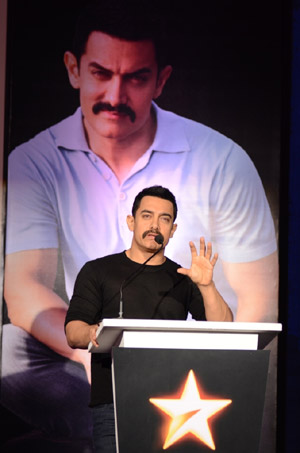
    Superstars on television don’t always work, but they are also known to succeed with a bang, and the Aamir Khan-Star combo is a good candidate to win.

    At a press conference on October 22, though officials from the broadcast major and Mr Khan too did not reveal much about the show, the buzz is that it will be a talk show, where the perfectionist will take the lead in telling stories of the common man. The format, however, is not clear.

    The official communiqué released at the event carries some information about the show:  “A show about India and its stories. A show that will change lives. A show that will touch the heart of every Indian. A show that will inspire a billion imaginations.” Time will tell if the show is really able to inspire a billion imaginations. But, the duo of Mr Khan and Star CEO Mr Uday Shankar were successful in inspiring imaginations at the press gathering.

    The show will be aired simultaneously in eight different languages, on network channels – Star Plus, Star World, Star Majha, Star Jalsa and Asianet, among others.

    Walking down memory lane, we know that Star has been the frontrunner in doing path-breaking shows, redefining television content on occasion. KBC was a huge success, as was Kabhi Saas Bhi Kabhi Bahu Thi and Kiran Bedi’s Aap Ki Kacheri. But in this case, the brain behind the show is Mr Aamir Khan, who rejected several television offers for this piece, which was playing in his head ever since he first thought of it some three or four years ago. So it is a case of him choosing Star, more than anything else. The show will be produced by Aamir Khan Productions, and will be marketed by Star Network.

    January 2012 is thus a date to watch, and, from what the industry and viewers know of Star and Mr Khan, it is likely to be a rousing success.

  • Tight strings on wallet this Diwali (text & videos)

    By Tuhina Anand

    With inputs from Shruti Pushkarna in New Delhi (text and videos) and Insiyah Rangwala in Mumbai

    Looks like the sparks this Diwali could be less bright as for people who traditionally would see big business during the festive season be it shops selling consumer durables, gadgets and gizmos and of course jewellery are not too optimistic on the sales. The mood seems a bit muted this year what with inflation and a general  economic uncertainty. Its not that purchases are not being made but the general consensus on the mood is that people are cautious before spending.

    For shops selling consumer durables, Diwali has been a money spinner but things seem to have changed in the last 2-3 years. Mohan Singh, Branch Manager, Next Retail Ltd in Delhi in a conversation does share that sales are down as compared to last year. But he is hoping on Dhanteras purchase to make up for this slow start. He said, “Last year there was a huge demand for microwaves, washing machines and TVs but this year except for LCDs, there isn’t much demand for other products in this category. In fact I would term it as black Diwali.

    HR Giria of Girias, which is a multi-city chain of consumer durables showrooms dubs that even if the sale would be encouraging this year it would only be `marginally better’. In the meanwhile Girias is leaving no stone unturned to woo customers with both offers in shop as well as extensive advertising in print to reach to large number of customers.

    While the mood may be sombre but one thing is clear that when its comes to making purchases this Diwali, its LCDs and LED’s that is `hot’ item. Samsung, Sony and LG are the preffered brands and the 32inch seems to the most popular buy. In fact in some shops like Vijay Sales, the floor manager informs us that these panels comprise almost 50 percent of their sales.

    Small appliances like hand blenders, toasters and rice cookers are popular picks for gifting purposes. Also the shift is now on gadgets especially tablets, MP3 and smart phones and digital cameras when it comes to gifting. One does not need to be disappointed as there are also shops who have seen increase on sales this year especially in terms of gadgets like Manpreet Singh, Manager, Hari Om Electronics informs that as compared to last year gadget purchases have gone up, and says it has increased by 30 per cent.

    Most of the shops have easy availability of credits to help shoppers purchase more. Some of these have also tied up with banks like ICICI, HDFC, Amex, Citibank to encourages customers to spend more.  The average spends could be anywhere between Rs 25000-35000. Also most retailers have scratch card or other such offers mostly given by the company itself to give something more to the consumers.

    And if one is discussing Diwali purchase one has to look at gold and silver purchases this Diwali as jewellery or coins is a major part of Diwali shopping. With spiralling gold and silver rates, these purchases have become far more dearer. In fact, a jeweller in Mumbai rues the fact that this year the sales have gone up only by 150 percent whereas in the past it used to increase to 450 percent. In fact, 10 per cent of his income would come from Diwali.

    Mohit Gupta, Vice President, PP Jewellers Pvt Ltd, said, “Sales have definitely gone down this year because of the soaring gold rates. Gold and silver coins are the most popular purchases, they are seen as investment. For gifting, because of high gold rates, this year people are going in for more light weight jewelery like ear rings and small pendants. Every year we see a growth of at least 20 to 30 percent but this year there isn’t any such indication so far. We are expecting a lot of purchases on Dhanteras.”

    Even though in the last few days the price of gold and silver have gone down but the increase in prices throughout this year will be a major deterrent for buyers. In fact, World Gold Council is advertising heavily on the fact that how gold is a good investment option. So the general mood is that the market is stagnant this year or the sales will be less than last year. Even in purchases people are going for small items. As a local jeweller in Bangalore informs that last year during diwali they had sold around 350-400 silver coins and will be stocking the same this year. Currently, a 5gm silver coin will cost around Rs 260 and 1 gm of Gold is approximately Rs 2600 (prices will fluctuate according to daily rates).

    Harish Goel, Owner, Goel Jewellers sums up the mood, “Sales are very low this festive season thanks to the gold prices. There are hardly any purchases from the middle classes so to say, even from higher classes, purchases are owing more to weddings rather than Diwali. Gold and silver coins like every year are preferred items. Last year the average spend per customer was somewhere around 50000 but this year it isn’t even half that amount.”

    These retailers are pinning their hopes on Dhanteras and let’s hope that they finally have their cash registers ringing on the auspices day.

    Also on Dhanteras, people buy steel items. Talking to Sumit Jain, Owner, Gift Gallery, he said, “Crockery is always an all time favourite. Like every year, this time too crockery items are popular gifting choices. Both china and glassware are popular gifting choices but we are seeing a big dip in sales. The market is not buzzing with consumers as it does every Diwali. Dhanteras is one day we are looking forward to but those are mostly steel purchases.”


    WHITE GOODS 

    On market trends in the last few years 

    Baldev Ahuja, Manager, Aarvee Sales (electronics showroom)- Market is down…four years back the market used to be buzzing but now because everything is getting expensive people are spending less on these items.

    [youtube width=”400″ height=”250″]http://www.youtube.com/watch?v=_IVkk-gpGkM[/youtube]
    On the most popular product this Diwali (LED) Saquib, Sales Executive, Audio Voice India Pvt Ltd- LEDs are more popular than LCDs because the prices have gone down. Also LEDs are better in quality as compared to LCDs.

    Baldev Ahuja, Manager, Aarvee Sales- People are more attracted towards LEDs this year because of the dip in prices.

    [youtube width=”400″ height=”250″]http://www.youtube.com/watch?v=B-TZcccS90M[/youtube]
    On the preferred gift items Saquib, Sales Executive, Audio Voice India Pvt Ltd – People this year are opting for more gadgets rather than home appliances, they go in for phones, ipods etc more as compared to LCDs [youtube width=”400″ height=”250″]http://www.youtube.com/watch?v=RKXr2hGOggc[/youtube]
    JEWELLERY 

    On most popular purchases this Diwali 

    Neeraj, Owner, Rama Krishna Jewellers- Gold coins are very popular this year, we have coins in all denominations; people are buying and investing more in coins this year.

    [youtube width=”400″ height=”250″]http://www.youtube.com/watch?v=d2k-84Twu78[/youtube]
    On how gold rates have affected sales this Diwali Lajpat Anand, Owner, Luxmi Jewellers- Lot of difference in the market this year…only people who have to buy for weddings etc are buying and even they have cut down on their budgets; as for other purchases, people’s budgets have been messed up because of increasing gold prices.

    Rahul, Manager, Rajesh Gems & Jewels- Big difference between this Diwali and last year is the gold rate that has gone up but it hasn’t really deterred people from buying gold during this Diwali…our sales have gone up as compared to last year.

    [youtube width=”400″ height=”250″]http://www.youtube.com/watch?v=rvPwnxqv6Pk[/youtube]


    CUSTOMER VOXPOP   Mrs Shukla, Housewife- As per the trend, prices go up every year, so obviously this year also it has gone up…but what can we do, we have to buy stuff for our own use and for gifting purposes.

    Nidhi, Working Professional- As compared to last year…we spend the same, Diwali is one special festival, so no cutting in costs, Its Diwali!

    [youtube width=”400″ height=”250″]http://www.youtube.com/watch?v=UmBk-uhlOl8[/youtube]


  • The Anchor: 6 things you could do in the looooong Diwali break this week

    There’s an extra long Diwali break coming up. So you’ve had to cancel your Bangkok holiday because of the deluge there and find the tickets to every other touristy place exorbitant? You would’ve liked to watch Ra One at least once, but the endless promos have ensure that you have the movie coming out of your ears, eyes and toe nails?


    Worry not. Here’s a recommendation from the MxMIndia editorial team of what you could do.


    #1 No 1 on our list is the exclusive biography of Steve Jobs. Written by Walter Isaacson, this book shot up on the Amazon popularity charts from oblivion to the top after Jobs passed away. Since it’s got the blessings of Jobs, be sure of getting some rare insights.

    It’s going to be on all bookstores and is available for quite a steal on Flipkart (Rs 559) or better still, off uRead.com at Rs 543. Hey, the 16 bucks could buy you a world of things. Isaacson’s book is scheduled to be out today (Oct 24).


    #2 Go shopping for the Smart TV at Chroma, eZone, Vijay Sales etc. The Samsung Smart TV or the other brands in the same genre. It can do loads of things together, plus also play videos from DVDs and YouTube. Prices are high, but can be fitted into EMI plans.


    #3 Get yourself a couple of DVDs. Check the ones at Flipkart (http://www.flipkart.com/movies). Okay the new releases may not excite you much: Nutcracker 3D is a downer. Zindagi Na Milegi Dobara has already been on telly recently, but if you want to see it at one go and with deleted scenes and the making of a few of the songs, go for it at Rs 255 (Flipkart again). Some good giftables are available from among the TV shows.


    #4 Live events: Eden Gardens is going to come alive with an ODI tomorrow (Oct 25) and a T20 encounter on Saturday (Oct 29)… the games are between India and England and they’ll be on Neo Cricket (and DD). There’s Metallica in Gurgaon (Oct 28) and Bengaluru (Oct 30). Plus of course Lady Gaga and all the entertainement acts to coincide with the big F1 days on Oct 28-30.


    #5 Go watch Ra One. Poor Shahrukh Khan. He’s invested huge sums of money and time for its promotion. May as well watch it. Meanwhile, visit MxMIndia next Monday for our expert view on the film and how we think the reviewers fared.


    #6 And last but definitely not the least, await MxMIndia’s Diwali special on Wednesday. Titled ‘It’s gr8 to be in the media’.  Guest writers plus Anil Thakraney, Ranjona Banerji, and, a little birdie tells us, even Mediaah! To those of you, who’ve been initiated to MxMIndia a little late, this may be a good opportunity to dig into our archives.


  • First (and only) on MxMIndia: Aroon Purie informs senior execs of Joy Chakraborthy’s appointment as CEO of TVTN

    By A Correspondent


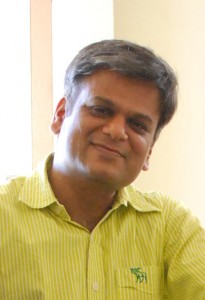
    Joy ChakraborthyIt’s now confirmed. Mr Joy Chakraborthy, Zee’s executive director (revenue and niche channels) and a veteran media industry professional, will be the new CEO of the TV Today Network. Mr Chakraborthy takes charge of the position left vacant due to the resignation of Mr G Krishnan early last month.
    MxMIndia broke the story on Saturday, October 22 evening even as many senior executives in both media conglomerates were unaware of the development.

    On Monday evening, TV Today Network chairman and managing director Aroon Purie met senior executives of the company and announced the move. Earlier in the day, Zee Entertainment Enterprises Limited officially announced that Mr Joy Chakraborthy has stepped down after a stint of six-and-a half years, to explore new vistas. Along with heading the media sales, Mr Chakraborthy was also the business unit head of niche channels which includes Zee Khana Khazana, Zee Café, Zee Studio, Zee Trendz, ETC and Zing, a communiqué said. At the time of writing, there was no written communication from TV Today on Mr Chakraborty’s appointment.

    Mr Punit Goenka, MD & CEO, Zee Entertainment Enterprises Limited (Zee) said, “I have accepted his resignation with a heavy heart. He did lead a strong team at Zee that will continue to be part of our family. The entire Zee family wishes Joy all the success in his new endeavors.”

    Speaking on his tenure at Zee, Mr Chakraborthy said, “My journey for the past six-and-a-half years has indeed been extremely rewarding and fruitful, which I shall cherish. I am thankful to Zee for giving me the opportunity to explore and broaden my experience in diversified functions. Now as I step out to expand my horizons within the media industry and take a leap of faith to venture into a world beyond Zee, I wish Zee – Chairman, Punit as well as my colleagues – the very best. Since I will be at Zee for some time, I will indeed be ensuring a smooth transition of all my portfolios.”

    ZEE will be announcing the appointment of a successor for this position in the near future.

    Information courtesy Zee corporate site: Over and above Zee, Mr Chakraborthy has rich experience of 15 years in strategic media sales across media organization like The Times of India Group and Star Network. His academic armory includes graduation from National Defence Academy, Masters in Marketing Management from NMIMS and, more recently, the Advanced Management Programme from the Harvard Business School.

  • Modi and Gujarati media: Two swords in one sheath

    By Urvish Kothari

    Blatant and vitriolic criticism of Narendra Modi seems to have become the norm for Gujarati dailies of late. Gone are the days when the Gujarati print media, with an average issue readership of more than 1 crore (according to IRS 2011-Q2), mostly adored the chief minister. It supported, or at least was non confrontational  about his publicity blitzkrieg and his self-projection as a tough, non-corrupt, pro-development, ‘No. 1’ leader with a subtle and not-so-subtle communal slant.

    As is evident from events of the last few months, Modi has been constantly at the receiving end in many issues — be it the arrest of Sanjeev Bhatt or his three-day Sadbhavana Fast. The prominence and the column space allotted to arrest and release of IPS officer Sanjeev Bhatt in the Gujarati media would have been unthinkable a couple of years back.

    While English dailies reported the whole episode with restraint, news and images of Sanjeev Bhatt were being highlighted on first and last pages of Gujarati dailies. Bhatt was made out to be a ‘singham’ — a hero.  The pro-Sanjeev Bhatt coverage was not just about appreciating the uprightness of the officer but was fuelled, to a large extent, by the anti-Modi ‘line’. Gujarati dailies had a field day when the late Haren Pandya’s wife vaguely pointed her finger towards the CM in her husband’s murder.

    Recent rhetoric against the Modi government, which was, in effect, against Modi himself, took off from very unusual point: the issue of cow slaughter. The issue was hardly discussed in the public forum. But suddenly the failure of the Modi government in protecting cows became the war cry in two major Gujarati newspapers.

    The purpose of the intensive news campaign that ran for days was to prove that Modi was un-Hindu, if not anti-Hindu. It was to falsify his deeply entrenched claim of being ‘the saviour of the Hindus’.

    Even the usual non-political Modi-baiters were baffled by the anti-cow slaughter campaign which gathered momentum so suddenly. The stage was set, and then came the burning issue of the appointment of the Lokayukta.

    Gujarati dailies grabbed the issue with both the hands, one daily even lowering its masthead with the news of the appointment of the Lokayukta by the Governor and the government’s legal challenge to it.

    When the Supreme Court referred the Gulbarg Society case back to the lower court and declined to monitor it further, Modi famously tweeted ‘God is Great’ and projected the SC’s decision as a ‘clean chit’. Many news channels echoed his view, but Gujarati dailies were more cautious and less jubilant.

    His three-day ‘Sadbhavana Fast’ was treated with scepticism and a pinch of sarcasm, due to the pomp and politics involved. There was criticism about the expenditure incurred during the fast and even the memory of Mahatma Gandhi was invoked for an uncharitable comparison.

     Gujarati dailies have been vocal in making allegations of corruption and in giving considerable weightage to the statements of Congress leaders in Gujarat recently. A Gujarati daily recently devoted a full page to CAG’s criticism of various departments of the Gujarat government. A clean image no longer remains Narendra Modi’s USP, at least for the Gujarati dailies.

    Mostly unfavourable and critical of Modi, for the reasons best known to them, Gujarati dailies have been conscious not to indulge in anything that may be perceived as ‘secular’ by a majority of their readership. During the Sadbhavna Fast, Modi’s advances towards the Muslim community were met with veiled criticism. One Gujarati daily even frowned at his attempted pro-Muslim approach in a eight column banner head line: ‘Allah-o-Akbar: Modi begins his fast’.

    The real irony is, Gujarati dailies with their massive reach have been successful in reflecting general sentiment but their capacity to generate or shape public opinion has diminished considerably — more so in the case of Modi’s criticism. Yet, there is a strange equilibrium between the anti-establishment stance adopted by the Gujarati dailies and Modi’s wide-spread popularity.

    There is a saying in Gujarati that two swords can’t stay together in one sheath, and that seems to be the case when one looks at the strange co-existence of flourishing Gujarati dailies as well as the sustaining popularity of Modi.

    The writer is a Gujarat-based senior journalist and columnist

  • It was Gaddafi all the way

    By Ranjona Banerji


    Thursday started out with Kiran Bedi, allegations of accounting fiddling, Tamil Nadu chief minister Jayalalitha and a 15-year-old corruption case and the launch of a new train service in Bangalore (I refuse to call it a ‘metro’, because by my reckoning, metros run underground and this one looked like an elevated service). But by the evening, it was the death of Colonel Muammar Gaddafi, dictator of Libya, which dominated everything. 

    For the first couple of hours, it was Al Jazeera which provided the most details, CNN and BBC catching up soon after. Indian channels got into it after that and images of people celebrating were soon replaced by pictures of what appeared to be – and was later confirmed as – the body of the dictator. 

    Gruesome as the images were, it was a poignant reminder of how death is the great equaliser and all your power and delusion cannot save you at the end. Please forgive that philosophical digression but sometimes TV will do that to you! 

    Of course, most channels tried to combine reporting with reportage and comment but experts were still grappling with what had happened to really provide any special perspective.

    **

    The prime time news shows on Indian channels mainly remained with Gaddafi – the newspapers on Friday morning informed us of hundreds of ways to spell and pronounce the name – and many ran documentaries on the dictator, his rise and fall. News X did a discussion segment on the Kiran Bedi issue, with a very well put together panel of former Team Anna members — Swami Agnivesh and Rajinder Singh, current India Against Corruption member Abhinandan Sekhri, Tushar Gandhi and activist Shabnam Hashmi. Rahul Shivshankar had to work very hard to allow everyone to speak as Sekhri was in a very defensive mood and took exception to question Bedi as well as the exceptions raised by Singh and Agnivesh. These two were quite clear in their condemnation of Team Anna and the way it operated. The allegations against Bedi were also discussed. Gandhi pointed out what many had foreseen — that the movement was getting lost in personality disputes while Hashmi expressed the viewpoint of those not enamoured of Hazare and his supporters.

    It was in fact an interesting, no-holds-barred discussion, if a little short, but then attention had to shift to the end of a 42 year dictatorship.

    A stop at Times Now in the break showed an interview of minister Kamal Nath over the Bangalore trains by Arnab Goswami. No scope for fireworks there.

    **

    Friday’s papers took the Gaddafi fall further but more or less reiterated what we already knew, so exhaustive had been the TV coverage.

  • The Anchor: 7 ways to keep a viewer glued to your channel

    By Sunder Aaron


    #1 Assortment: A channel needs to offer a variety of content to viewers to keep them coming back.


    #2 Thematic: It is important to be a part of local festivals and important historic days which makes the viewers feel closer to the channel – for example Diwali or Independence Day.


    #3 Original: A viewer today is bombarded with numerous communications all the time – it is more important than ever create a clear differentiation amongst the category to enjoy top-of-mind status with the viewers.


    #4 Young and fresh: Any viewer, young or middle-aged, would like to watch a film which excites him/ her. The best way to this is to keep the appearance of the channel vibrant and fresh.


    #5 Beyond the television screen: Gone are the days when television channels just aired promos and hoped to keep viewers glued – the need of the hour is to create brand extension programs.


    #6 Avoid repetition: Repetition could result into losing a fair amount of eyeballs since there is a sense of disappointment if the viewer has already watched the content.


    #7 Surprise element: Surprise your viewer! Exceed your promise by delivering more than you promise.


    Sunder Aaron is Business Head, PIX.

  • Spotting cricket talent in the gullies

    By A Correspondent

    Cricket is one game that forms part of the Indian DNA. Every by lane across the country has its own khiladis with local superstars known for their cricketing prowess. IPL has taken the game a few steps ahead with new heroes lining the landscape. Entertainment is the name of the game.

    However, the fact of the matter is that for every 1,000 excellent cricketers, maybe just one gets the chance to play professionally. Hidden in somewhere within this milieu is another Kapil Dev or Sachin Tendulkar.  This is a platform to spot just this prodigal talent lurking in the shadows.

    Over the past two years, Reasonable Communications has launched this platform in a few cities in India. Today, the Dainik Bhaskar Group and Reasonable Communications have joined hands in an effort to make it bigger.

    Dainik Bhaskar Group, the country’s largest media house with a presence in 13 states and publishing 64 editions, has a firm belief in this latent talent across the country. The Dainik Bhaskar Group believes that it can leverage its extensive presence across the country and unearth the best cricketing talent who can then be groomed as ‘Gen Next’ for India.

    This mega cricketing talent hunt will be the largest both in terms of geographical reach and players involved. The T-10 Gully Cricket initiative reaches 250 districts across 16 states, to touch the lives of hundreds of thousands of aspiring cricketers. Watched by experts with a keen eye for talent, the shortlisted players will first play for state honours and then national honours.

    The stage is now set for Gully Cricket to become a frenzy, because it reaches out to those far-flung and mofussil areas where playing with a leather ball is just a dream. Not any more.

    One unique dimension of the T-10 Gully Cricket is that no cricketer who has played first class cricket or even club cricket can be a part of the selection process or play for any team. This ensures that only new talent gets an opportunity to display their skills.

  • History chalks up high in 1st week

    By A Correspondent

    Making History from the launch week

    Factual entertainment channel History, which debuted its India edition on October 9, has made its mark in the very first week itself, with 19.8 million viewers across India tuning in. With a connectivity of 50 million households across on leading cable TV platforms, History cuts across segments and demographics, and took the Factual Entertainment Genre up by 24 percent in just the first week. History also garnered significant market share in the launch week across market clusters. In All India 1mn+ (including Metros), History ranks as a strong No 2 with 24 percent market share vis-à-vis Discovery (32 percent) and Nat Geo (18 percent) and ahead of the other factual entertainment channels. In 6 metros, History with 29 percent market share vis-à-vis Discovery (32 percent) and Nat Geo (14 percent) further reduces the gap between existing players and fortifies its entry into the genre.

    History also leads the factual entertainment pack in time spent per viewer with 32 mins vis-à-vis Discovery (20 mins) and Nat Geo (16 mins) which is an indication of differentiated programming and the stickiness quotient of History’s content.

    Source: TAM, Week 42’11, CS AB 15+, all India 1 Mn+, 0600-2400 hrs