Blog

  • Exclusive: Mindshare forecasts 12% media spends growth in 2012; it was 13% in 2011

    By Johnson Napier


    For all the doleful talk of the economy heading south and brands slamming their ad-spend doors on media, sceptics are in for disappointment as the industry managed a commendable growth story for Calendar Year (CY) 2011, clocking a growth rate of 13 percent. Further, with net revenues totalling Rs 33,388 crore, the media confirmed its status as being ‘unstoppable’ and guaranteeing advertisers a good bang for their buck. The results were the finding of a study put together by GroupM, led specifically by the team at Mindshare. Titled ‘This Year, Next Year: Indian Media Forecast’, the study highlights the positive growth story that was witnessed by the industry, especially in the first half of CY 2011.


    Continuing with its strong projections and putting aside fears of a financial downturn, the study hints at 2012 to deliver growth numbers in the range of 12 percent and net revenue to the tune of Rs 37,397 crore. This will be driven largely by the advertisers’ willingness to deploy budgets around the media of television, print, radio and digital, the study notes.


    Throwing light on the report and its findings, Ravi Rao, Leader, South Asia, Mindshare commented, “The economic outlook is something that one can never get the handle right, with most studies not agreeing on one number. But this is what makes it exciting to look and estimate the Adex growth in India. GroupM does yeoman’s service of providing some startling numbers based on science than the gut, even though India tends to buck the trend away from global predictions.”


    The detailed forecast and sector-wise spend analysis are part of ‘The Mindshare Indian Media Forecast 2012’ report published by MxMIndia and presented by UTV Bindass (Details on how you can get your copy at the end of this report)


    On the growth pattern to be expected by the industry in 2012, Mr Rao affirmed that since October of 2011, the moment the Eurozone market failure triggered a downslide the thoughts are very much soft where advertising budgets are concerned. “But if you look at the growth driver – every media is expected to grow in double digits with the exception of print and out of home. Every broadcaster and publisher is trying ways and means to cut down input costs while trying to extract the maximum. The first four months of this year will show the trend for the year, but the challenges are aplenty for media,” he asserts.


    On the performance of several domains in 2011, Jai Lala, Principal Partner – Exchange, Mindshare said that in terms of Adex, one of the media that stole the thunder last year was television. “In the first half of the Calendar Year (CY) 2011, the medium of television grew as high as 26 percent, which then slowed down to a rate of 16 percent in the second half. So while the average growth for 2011 for television hovers around 20 per cent, 2012 is anticipated to put up numbers in the range of 16 percent. But unlike last year, we expect the first half of CY 2012 to show a slow growth while the second half will manage to show a sudden spurt in growth numbers.”


    According to Mr Lala, the properties that will be churning out the numbers for television in 2012 includes cricket – led largely by IPL, reality shows, regionalisation and digitisation. They will be backed by increasing advertiser interest particularly from the sectors of auto, FMCG, finance, IT & ITES, retail, etc.


    As for the performance of the other big contributor to Adex – Print, the study envisages a growth of 8-9 percent for 2012. “This is due to the fact that there is going to be a certain amount of demand through elections and the possible bounce-back of certain sectors like auto, real estate, etc who will continue to look at print as a viable advertising option,” states Amin Lakhani, Principal Partner – Exchange, Mindshare. Another factor that will drive the fortunes for Print will be speciality magazines. “Being subscription-based and catering to niche audiences, these magazines will continue to attract the attention of the advertisers as well,” states Mr Lakhani.


    Continuing with its solid growth story in 2012 as well, digital is pegged to achieve a growth rate of 30 percent. Apart from servicing the many needs of the online and mobile worlds, marketers are expected to increase their focus on people during the ongoing year. Affirms Mr Ashok Lalla, Leader – Digital, South Asia, Mindshare, “In 2012, the most important media channel that smart marketers will increasingly focus on will not be specific Social websites, TV channels, print publications or radio stations, but it will be People. All the rest of the media mix will be oriented around activating a brand’s audience (People) to be the key driver and proponent of a brand’s communications.”


    As for radio, the biggest event that will change the fortunes of the radio industry in 2012 will be Phase 3. According to the study, Phase 3 will help radio owners to drive some incremental revenues. The only stumbling block, the study notes, would be measurement that will have to pan itself to include other cities and towns as well. A growth rate of 11 percent is what is expected out of the medium for 2012, the study notes.


    With Out-of-Home, the study notes that the formation of the IOA would lead to standardisation of rates and other operational modalities that will help push for more research into the medium. This effort by the industry would be recognised by clients who will go all out and invest in the medium, it states. “Marketers want to use outdoor as they provide good imagery and high visibility. It has even allowed for newer and better innovations to help advance the sector. Also, outdoor panels, screens, LEDs are now shaping up a new revenue stream which is now getting separately classified as retail. So the medium has come into its own and will continue to grow at a healthy rate in 2012 as well,” notes Mr Lakhani.


    Contributing silently but significantly, Cinema will continue to put up good numbers in 2012. The growth projections for this medium would be in the range of 14-15 percent for 2012, the study notes. Sector wise, a large range of advertisers would continue to pursue the medium as an effective advertising option.


    ‘The Mindshare Indian Media Forecast 2012’ report is presented by UTV Bindass and being distributed to select marketing and media professionals across the country starting today. If you want to make sure you get a copy, please write to us at editor@mxmindia.com writing MIMF2012 in the subject line. And, yes, while we are sure you’ll find it priceless, it’s not a priced report.
     

  • Rural market is the new siren call for OOH

    By Robin Thomas


    According to industry estimates, ruralIndiais growing at a faster pace than its urban counterparts, atleast in certain product categories. The overall Indian rural market size is believed to be Rs800 crore, with a total advertising pie of Rs12,000 Crore in rural markets. FMCG products, consumer durables, agro manufacturers, banking and insurance, telecom companies are some of the big spenders in rural markets.


    A survey reveals that FMCG products account for nearly 53 per cent of the market share in ruralIndiawhereas consumer durables account for the rest.


    The last few years have seen a drastic increase in the standard of living and purchasing power in ruralIndiaand many marketers heading for the lucrative rural markets. Also people in rural areas tend to spend a lot of time outdoors, which makes the rural market an ideal target for OOH media. As a result, almost every OOH industry player believes that the next phase of growth for the out-of-home media will come from rural markets.


    In interactions with MxMIndia, Mr Nabendu Bhattacharyya, Managing Director, Milestone Brandcom – who had shared his plans to launch Milestone Rural – and Mr Rohit Samarth, Business Head – Rural, Percept- Out of Home, were of the opinion that out-of-home media is seeing a tremendous growth in rural markets as consumption power in smaller towns and villages is increasing.


    Mr Anirban Ghosh, Senior Vice President, Adz Edge opined that an increase in purchasing power of rural masses in recent past has fuelled lot of interest amongst clients across all categories in ruralIndia. “Once considered a market only for low end products, today companies are seeing rural market as the new growth avenue. Comprising more than 70 per cent of the total consumers in India and annual market potential in excess of Rs12,30,00 crore, rural India is being charmed in novel ways. Naturally, out-of-home has also taken an upswing in rural market. More and more clients have shown interest in tapping this market which has got tremendous potential and increasing buying power” he said.


    The main revenue stream in rural market will come through a media integration and activation approach such as van activations, road shows, wall paintings, melas or village fairs.


    Mr. Ashish Pherwani, Associate Director, Advisory Services, Ernst & Young is very optimistic about rural out-of-home media. He believes that it can reach 25-30 per cent of the OOH advertising share in 5 years and that as consumptions shifts from metros to the 35 to 100 of the largest towns, OOH spends will also follow.


    Although OOH in rural areas is on the growth curve, it still has a long way to go and in order to continue growing in the long run; industry players believe that there are certain challenges and concerns that need to be overcome.


    One of the biggest concerns is the fact that the rural market is very fragmented and there is neither a credible measurement system nor a clear census data that can provide a clear definition of ruralIndiaand the socio-economic classification, among other relevant details.


    Mr Samarth observed: “While advertising in ruralIndiais growing, fragmentation of the market is a big challenge; there is no distribution network and there is no credible measurement system either. Another set of challenge is about living up to the promise of delivery in the rural markets. However, on the positive side, the biggest change in the rural is the fact that there is much less central control because today a lot of large companies are decentralizing their budgets.”


    Mr Pherwani said: “The rural market is extremely fragmented and there is little or no transparency to provide confidence to advertisers. Therefore, transparency needs to improve with better demonstration of proof of delivery. There are also few national players who can support large campaigns.”


    But Mr Ghosh believes that the biggest challenge for OOH is the lack of quality properties in rural market and also the fact that it is even more unorganized as compared to its urban counterpart. As a result, execution and proper monitoring is another core challenge. “To overcome these problems, we need to understand the rural market in a better way. Major players from OOH media owning houses should take initiative to open up their operations close to these locations for better control. They should collaborate with the local authorities to implement uniform regulations and open up more quality properties in rural market” he suggested.


    Innovations are the need of the hour to attract the rural masses and the OOH approach needs to be more interactive and integrated with brand activation for high recall value. As product consumptions increase, OOH media spends will also increase.


  • Publicis Healthware launches India presence at Health 2.0

    By A Correspondent


    Publicis Healthware International (PHI), part of Publicis Healthcare Communications Group (PHCG) – the largest healthcare communications network in the world, has launched Health 2.0 inIndia.


    PHI is an integrated agency focused on improving communications across the health & wellness community, with a strong eHealth and information technology focus. As one of the largest global digital agencies, PHI has developed a strategy which focuses on three key service offerings: consulting (innovation planning, change management and e-business strategy), communications (digital marketing, web development, e-detailing, e-CRM, e-learning, e-science, health 2.0 and KOL management) and eBusiness solutions (software platforms, business solutions and proprietary tools to increase the deployment of the digital tactics).


    Publicis Healthware International (PHI) will be based in Mumbai and would be spearheaded by Abhijit Shitut, Jt. Managing Director and Kiran Pai, Jt. Managing Director at Publicis Life Brands Watermelon.


    Roberto Ascione, President of PHI is currently in India to launch the new PHI presence, as well as, to promote its most recent product, Videum.com, a global health video portal able to globalize video assets leveraging an exclusive subtitling technology and featuring unparalleled search engine optimization.


    Ascione spoke on his plans for the Indian market at the Health 2.0 conference inDelhi: “Indiais an emerging information superpower. The digital medium is catching on fast with more and more people becoming web-savvy.Indiahas the largest population of new users after theUSandChina. Healthcare needs are growing and so are awareness levels. People are demanding better and more effective healthcare solutions. In fact, ‘healthcare’ is one of the most searched and Googled words inIndia. Launching PHI will help us widen our reach and aid us in getting a strong foothold inIndia.”


    Ashley Kuchel, President of PHCG, APAC, further elaborated: “With a growing focus on providing clients an enhanced digital experience, the launch of PHI inIndiastrengthens our position in this sector. With this initiative, we hope to increase our APAC footprint and become a formidable digital entity inIndia.”


    Abhijit Shitut echoed the sentiments: “Today, every healthcare client inIndiahas digital ambitions. Our clients for a long time have been demanding a keener expertise in digital solutions.”


    Kiran Pai added: “With PHI’s products and capabilities now added to the Publicis Life Brands portfolio, we can now call ourselves a full-service healthcare agency that would enable us to provide more focused and integrated campaigns; empowering client businesses to grow manifold.”


  • DDB Mudra confirms Sonal Dabral entry as Chairman & CCO; will also be on global & regional creative councils

    By A Correspondent


    Madhukar Kamath, the Group CEO and MD of the DDB Mudra Group, has announced the appointment of Sonal Dabral as the Chairman and Chief Creative Officer of the DDB Mudra Group. On Mr Dabral’s appointment, Mr Kamath said, “Coming on the back of an excellent 2011, both in terms of business and recognition, the DDB Mudra Group is poised for explosive growth. As the most awarded Indian agency at Cannes, Spikes, Abbys etc, to name a few, we are thrilled to welcome a truly exceptional talent, an excellent creative leader and a wonderful person like Sonal to the DDB Mudra Group. His mandate will encompass the entire spectrum of agencies that work across what is certainly the most integrated marketing and communications services network in the country. Agencies like DDB Mudra, Mudra, DDB Mudra Max (OOH, Media, Experiential and Retail), Rapp, Tribal DDB, DDB Health & Lifestyle, Water, Maatra etc. which constitute the DDB Mudra Group will now have their creative teams reporting in to Sonal.”


    He added, “I am personally thrilled to welcome Sonal Dabral. I have known him for two decades now. We worked together in Delhi years ago, on the iconic ‘Humko Binnies Mangta’ campaign. He will partner me on the exciting agenda that we have ahead of us for the DDB Mudra Group. The legendary Bernbach legacy, the much admired creative business solutions of the DDB Worldwide network, the Social Creativity agenda, the entrepreneurial zeal and track record of building several successful national brands that Mudra brings to the table, the extensive and certainly unique multi-faceted offerings in the DDB Mudra Group will all form an excellent platform for Sonal.”


    Mr Dabral has over two exciting decades of experience on brands like Audi, Fiat, Tata Safari, Dove, Le Sancy, Unilever Foods, Ponds, Lakme, Panadol, Cadburys, Asian Paints, Fevicol, Virgin Mobile, Tata AIG, Prudential, GE, Nestle’s Maggi and Milo, DBS, Remy Martin, Colgate, Pizza Hut, Sony, Coca Cola and DHL.


    A graduate of the National School of Design (NID), Mr Dabral began his career in Lintas, Delhi. After a brief stint in Mudra Delhi, he went on to have an extremely successful stint at  Ogilvy Mumbai before moving to Kuala Lumpur to head Ogilvy in Malaysia and make it one of the top creative offices in the region. Next, as the Chairman and ECD of Ogilvy Singapore, he led the agency to become not just the hottest agency in the region and the No 1 creative office in the whole of Ogilvy Worldwide but also in the entire WPP global network. His last assignment was in a dual role, as the Regional Creative Head and Chairman-India of Bates operating out of Singapore and Mumbai.

    Apart from being a prolific winner in most of the Regional and International Award shows like Cannes, Clio, D & AD, One Show, LIA, Andy Awards, AdFest, Spikes etc., Sonal has served on most of the juries globally.

    Said Mr Kamath, “Apart from partnering me in India, Sonal Dabral has also been invited by Amir Kassei, the Global Chief Creative Officer of DDB WW, to serve on the Global Creative Council of DDB. In the Asia-Pacific region, he will Co-Chair the Regional Creative Council with Amir Kassei. With the vast array of clients, brands, services and offerings in the DDB Mudra Group, an exciting ‘Growth Agenda’, an unparalleled creative manifesto in the Bernbach legacy, I eagerly await Sonal’s arrival.”

  • The Anchor: 5 things to follow when pitching for a new biz

    1. Getting all the facts right

    The more you know about the client and the key stakeholders involved, the context in which the pitch is being called for, with due diligence regarding client business fundamentals, the marketing issues facing the brand in question, the competitive agencies you are up against, the more it will help in channelizing the agency’s efforts in the limited time frame that is available to do justice.


    1. Getting the Brief right

    From a detailed RFP to providing a website link, client briefs can pose different challenges! Irrespective of the format, it is crucial that complete clarity on pitch expectations, deliverables and evaluation criteria is obtained before starting work. Government pitches are a totally different experience altogether …from the tendering process to the voluminous documentation required. Making sure that there is no ‘technical’ slip up is a critical part of the protocol.


    1. Getting the ‘pitch strategy’ right

    Even before formulating a brand strategy, it helps to have agreement on the broad pitch strategy. Are you going to lead through a strategic recommendation or do you spend more time on beefing up the creative idea? What’s the budget on the pitch…Do you need to spend money on conducting research to back the strategic approach or make a cheap and cheerful audio visual to amplify the idea?

    Do you need a simple brainstorm session or a war room kind of set up to get everyone aligned? Do you present one idea or more than one (different schools of thought here!)?

    What level of integration are you aiming at in the pitch with the number of specialists on hand…Media, PR, Digital, Activation etc.? Should the pitch be in the client conference room or an out-of-box location to create the desired impact?


    1. Getting the Team right

    Pitches can range from a small local proposal to a large global one. Getting the right team composition is vital to bettering your chances to make it a pitch winning effort. While some clients insist on strong local teams and people who will eventually lead the brand post the business being assigned, many clients are not averse to seeing what the agency has to offer in terms of national and global resources. Big global pitches, therefore, increasingly involve multi-country teams and specialized skill sets from across the world as part of the pitch offering.


    1. Getting the client engagement right

    Pitches nowadays tend to be long drawn affairs with multiple agencies and many rounds involved. It is important, therefore, to be completely engaged with the client- pre, during and post the pitch process. There can be many a slip between the cup and the lip at any of these stages! The pitch outcome in many cases may not have anything to do with the pitch, ironical as it may sound. The final act could well be enacted far away from the scene of the pitch…so all ears to the ground as they say!


    Rajesh Gangwani is the Senior Vice President-South, JWT India

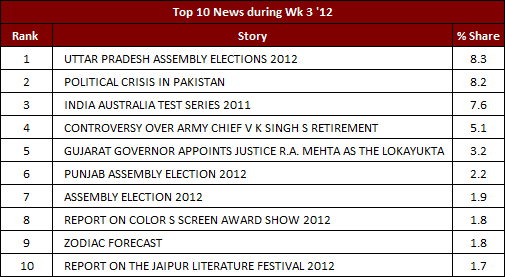
  • NCT Data Wk 3 ’12


    Source: News Content Track – A service of TAM Media Research Pvt. Ltd
    Channels: Aaj Tak, CNN IBN, Headlines Today, IBN 7, India TV, NDTV 24/7, NDTV India, Star News, Times Now, News 24 & Zee News
    Period: Wk 3 – Jan 15 to Jan 21, 2012
    Note : Analysis is based on the Telecast duration


    About TAM Media Research


    TAM is a joint venture between Nielsen Company & Kantar Media Research. Besides measuring TV Viewership, TAM also monitors Advertising Expenditure of Television, Print & Radio through its division AdEx India. Since 2004, it extended its presence in the PR Measurement & Analysis space for Corporate/Marketing Clients by setting up a separate division Eikona PR Measurement.


    In 2007, the joint venture introduced RAM (Radio Audio Measurement) service to track Radio Listenership for the Indian Radio Broadcast Industry. In year 2009, TAM launched a division, called TAM Sports that specializes in monitoring Sports Sponsorship ROI.


    TAM Media Research’s objective is to fuel media insights that will drive the growth of the Indian Media Industry.

  • Making fun of Page 3 culture

    By Ranjona Banerji


    Have to say, I just love the new Hindu ads. Making fun of your competition is not just unexpected from India’s most sober newspaper but it is also rare in India. Are these ads a direct response to The Times of India’s Chennai campaign, where the ads alleged that the Hindu put people to sleep? Perhaps not, since the Hindu campaign seems all-India and directly accuses the Times of dumbing its readers down. There is nothing implied in the Hindu ad – we can clearly see that all the idiots being quizzed on their knowledge (or lack of it) claim to read The Times of India, bleeped out though the name may be.


    The print ads include one which says “we also have pages 1,2, 4, 6” and so on, a clear dig at The Times’s introduction of society and celebrity news on Page 3 of the Bombay Times many years ago. “Page 3” culture is now part of our lexicon and indeed Madhur Bhandarkar even made a film about it, almost as scathing as the Hindu’s ads. The funny thing is that we always have had a society-celebrity media, what Bombay Times did was to both magnify and expand it. The even funnier thing is that almost every other publication in the country was quick to copy the TOI. Even the Hindu, which may not have a celebrity circus page, was increased its light feature content.


    It’s also curious that DNA ran a very similar campaign to the Hindu’s recently – interviewing young people who knew nothing about anything except Bollywood and then it turns out that they only read DNA After Hrs! In DNA’s case, there was apparent pride in ignorance; Hindu mocks it.


    In these times, when the media itself has become the news, the Hindu ads – done by Ogilvy – are bound to get attention and approval. There are many who believe that trivialisation of the media is dangerous and that there is cynical marketing manipulation of our apparent obsession with Bollywood. The Press Council of India chairman Markandey Katju is probably nodding away happily, especially when he sees line like “Because government malfunctions matter more than wardrobe malfunctions” – another of the Hindu’s print ads.


    For my money however far worse than the trivialisation of newspapers is the fact that all celebrity news and gossip is actually fake – paid for by the stars, studios, sponsors and so on. The readers are fooled into believing that what they are reading is the result of some digging up by journalists – as it used to be in the old days, even film news. The truth of course is that it is handed to newspapers by public relations companies or by the marketing department to the editorial staff.


    Bad enough that we are trivial, we are also, it seems, foolish and exploited!


  • South African Tourism launches ‘Leave ordinary behind’ ad campaign

    By A Correspondent


    South African Tourism has kick-started its television, outdoor and cinema campaign in order to promote the destination inIndia. Post the launch of its cinema campaign recently, South African Tourism has now started the campaign on television and outdoor to popularise the destination among Indian travellers.


    The 20 and 30 seconds advertisement captures an Indian couple who share their mesmerizing experience of travelling toSouth Africa. The commercial captures the experience of adventure, nightlife, wildlife, luxury, wine route and beauty ofSouth Africa. With this advertisement, South African Tourism is reaching out to numerous travellers through various entertainment and news channels.


    Indian television has a lot of shows that have the potential to draw good viewership and South African Tourism is tapping this opportunity to draw more Indian tourists to the Rainbow Nation.


    Along with its television campaign, South African Tourism has also launched its outdoor campaign. Outdoor Advertising Professionals (OAP) has done the creatives and execution for the outdoor campaign. The upcoming campaign is spread across 16 types of media that comprises of 452 media units covering an outdoor space of approximately 1,90,000 sq ft across 22 markets. The various media chosen for the campaign are billboards, backlit walls, bus shelters, cantilevers, glass façades, flagpoles, gantries, glow cubes, king-long buses, metro signages, pole kiosks, subway panels, skywalks, standalones, malls and airport displays.


    Commenting on the campaigns, Hanneli Slabber, Country Manager, South African Tourism, said: “Given the fact that Indian television is one of the strongest consumer influencers, we wanted to leverage the medium with the launch of our television campaign. The commercial aims to demonstrateSouth Africa’s warmth and affability through the eyes of Indians who have experienced the country. They are real people telling their story in their own words and we hope that the Indian viewers can connect well with the ad. With these two campaigns we want to intrigue desire towards the destination and aid brand recall towardsSouth Africa. We are confident that the television, outdoor and cinema campaign will definitely tempt the Indian audience to consider a holiday inSouth Africa.”


    South Africahas grown to become one of the most popular destinations among Indian tourists. South African Tourism has witnessed an exceptional 29.9 per cent increase in Indian tourist arrivals between January-September 2011 in comparison to 2010.


  • NDTV expands global reach in US

    By Akash Raha


    NDTV 24×7 and NDTV Good Times is now available on Dish Network in the US, bringing the channels to 74 countries and 18 million households outside India.


    Both channels are now a part of Dish Network’s South Asian Mega pack along with other channels from India. In addition, NDTV 24×7 also becomes the first Indian channel to also be available in their international base pack as well.


    Commenting on the launch, Vikram Chandra, Executive Director and Group CEO, NDTV Limited said, “NDTV is delighted to be partnering with Dish Network to bring its content to an even wider audience in the US. We recognize that Dish dominates the South Asian market in the US, but we are also delighted that NDTV 24×7 will also be available to a wider audience through their International base pack. We hope our association helps both companies reach new heights.”


    The launch of NDTV 24×7 in Dish Network’s international base pack comes close on the heels of the launch on Virgin in the UK, where it also became the only Indian channel to be launched in their basic pack.


    NDTV’s channels are now available in the leading platforms across the US, UK, Canada, Sub-Saharan Africa, the Middle East, Australia-New Zealand and the Indian sub-continent, among others, and reach more households than General Entertainment Channels (GECs) in the international market.


    In addition, NDTV Good Times, India’s very own lifestyle channel, has also done well in the international market, allowing the Indian Diaspora to enjoy the range of offerings that it brings, and giving them a taste of the New India. Within four years of its launch NDTV Good Times is available in key international markets, including the US and Canada, with a launch in the UK already in the pipeline.


  • Incredible India back with Ogilvy

    Ogilvy Delhi has been awarded the Ministry of Tourism (Incredible India) creative business. The business win is an outcome of a  multi-agency pitch from among agencies across India. Piyush Pandey, Executive Chairman & Creative Director, Ogilvy South Asia, said, “I am absolutely delighted that the Incredible India campaign that we had launched in 2003 is now back with us. We look forward to doing some incredible work for India Tourism.”


    With this win again, Ogilvy’s mandate over the next three years is to provide a strategy and creative vision. This should align with and take Incredible India to the next level in both, the domestic and international markets.


    Sanjay Thapar, Group President – North & East, Management, Ogilvy & Mather, New Delhi, said, “Building a Brand for the country is probably one of the highest honours that any agency can be given and I am so happy that we have received this opportunity once again for India. We launched Incredible India when the journey first began and will now partner the Ministry of Tourism to take it to greater heights again. This is probably one of the best things that could happen to us at the start of 2012.”


    Ogilvy India has established its capabilities in the tourism sector having created very laudable campaigns for MP Tourism, MTDC (Maharashtra Tourism Development Corporation), Gujarat Tourism among others. Ogilvy Delhi is currently handling J&K Tourism and has been empanelled with HP and Rajasthan Tourism in the past.


    Tourism is the second largest foreign exchange earner in India. Besides being an economic driver for growth. Tourism promotes national integration and international brotherhood. India’s thousands of years of history, its length, diversity and the variety of geographic features make its tourism offering interesting, large and varied.


  • Set-top shortage could dampen digitization drive

    By Nandini Raghavendra & Meenakshi Verma


    Five months before time runs out for homes across India’s top four metros to switch to digital transmission to continue watching cable television, operators are battling short supply of set-top boxes as well as ignorance among consumers.


    More than 60,000 set-top boxes need to be installed every day to enable an estimated 10 million homes across Delhi, Mumbai, Chennai and Kolkata to meet the deadline mandated by the government.


    But with India going digital at the same time as Brazil, Russia, China and South Korea, among other countries, set-top box makers are finding it difficult to meet delivery deadlines. This is the case even as most leading manufacturers, based in China, have ramped up production manifold.


    “Most consumers don’t even know that they won’t be able to watch TV with the same cable after the June 30 deadline and that a digital set-top box is a must,” says Mr Anthony Brian D’Souza, a Mumbai-based cable operator.


    Direct-to-home or DTH operators, who use satellite and dish antennae, are therefore well placed to grab the business from cable operators. Nearly 80% of the 70,000 odd cable operators are believed to be independent players, who are also finding it difficult to absorb the rise in the cost of imported set-top boxes due to rupee depreciation.


    “This is a great opportunity and we are well poised to make the most of cable digitalisation,” says Dish TV’s managing director Mr Jawahar Goel, “The DTH industry will be able to grab 30%-70% of the analog cable homes across various phases depending on the locations.”


    Tata Sky has also geared up to cash in on the opportunity. “Our billing and CRM systems handle millions of customers. These have been further scaled up to ensure error free service to many more millions of new subscribers who will join us in next few months,” says chief executive officer and managing director Mr Harit Nagpal. The company can install fresh connections within a day of receiving the order, he says.


    Big multi-system operators like Den Networks and Hathaway Cable & Datacom, which have too much on their plate upgrading their subscribers, might find it difficult to add too many new subscribers.


    Den Networks has hired Ernst & Young to conduct seminars and train its partners and affiliate local cable operators. “Local cable operators will help us upgrade our existing consumer base on the ground and will play an important part in the process,” says Mr Sameer Manchanda, CMD of Den Networks. He says the company will focus on upgrading its current subscribers in the four metros.


    While the industry expects a majority of independent operators to align with the bigger players, many of them may find the switch hard to survive. “The large investments expected from cable operators for setting up the infrastructure in such a short span of time and competition from DTH players could create unemployment among smaller cable operators,” says Ms Roop Sharma, president Cable Operators Federation of India, the largest association of independent cable operators in the country.


    Sharma, however, says even the bigger players might find it hard to prove equal to the challenge. “Digitalisation is a mammoth task and there are concerns whether the deadline for the four metros will be achieved,” she says.


    An independent cable operator says many affiliate partners of the bigger players are showing a huge resistance to digitisation at the moment. “If someone in the cable fraternity keeps holding out till the last moment in the hope that digitalisation will not happen, he will only be making it easier for DTH players to garner incremental market share at the cost of the cable industry,” says Mr K Jayaraman, chief executive officer of Hathway Cable & Datacom.


    Source:The Economic Times

    Copyright © 2012, Bennett, Coleman & Co. Ltd. All Rights Reserved


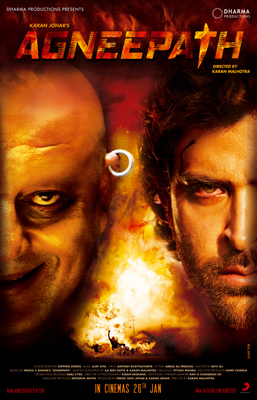
  • Deepa Gahlot: Reviewing the Reviews of Agneepath

    Agneepath


    Key Cast: Hrithik Roshan, Priyanka Chopra, Sanjay Dutt, Rishi Kapoor & Om Puri


    Directed By: Karan Malhotra


    Screenplay by: Ila Dutta Bedi & Karan Malhotra, based on Mukul S Anand’s Agneepath


    Produced by: Karan Johar


    It happens very rarely that critics are mostly in agreement and so is the audience. It was generally agreed that Karan Malhotra’s Agneepath remake, hit the spot, reminding everybody what was appealing about Bollywood formula flicks before filmmakers started trying to crossover. Simple revenge plots kept Bollywood chugging through most of the seventies and eighties, and it does look like moviegoers never forgot the taste of masala.


    With the exception of a couple of pans, and a couple of inordinate 4.5 kind of raves, a lot of critics gave Agneepath three star ratings, and everybody raved about Hrithik Roshan, Rishi Kapoor as villain; Sanjay Dutt as the bald-headed baddie got his share of kudos too.


    Was the 1990 Agneepath really such a cult film as it is now being made out to be?


    Karan Bali of Upperstall.com who obviously kept track writes, “One was surprised when the decision to remake Agneepath was announced. Especially, since though the 1990 version is (now) regarded as some sort of cult film (I wonder why), it is actually little more than a standard revenge story of the hero after his father is killed with several shades of Deewaar and Scarface thrown in already giving it a strong sense of deja vu. And of course there was the whole shoo shaa of Mr Bachchan’s ‘different’ voice (did not work) and his getting the National Award for Best Actor. With due respect to all, Agneepath (to me) has always been a highly overrated film as has been Big B’s performance. Sivakumar can rightly consider himself robbed when the National Awards for the films of 1990 were announced and his absolutely brilliant work in Marupakkam lost out to Agneepath.”


    Shubhra Gupta of the Indian Express writes, “This one is more an adaptation than a faithful remake of the 1990 original. Which is a good thing, because with the new characters and plotpoints, and minus some of the old stuff, the 2012 ‘Agneepath’ becomes its own film, which works precisely because it’s both a tribute and a stylish re-invention of the 70’s-spilling-into-the-80s retribution formula.”


    Sukanya Varma of rediff.com also concurs, headlining her piece ‘Agneepath less of a remake, more of a tribute. “The name, the man, the voice, the aura bears a lot of weight, the kind that’s impossible to measure. Or live up to. A multitude of films, including Mukul S Anand’s Agneepath, celebrate this indescribable draw he enjoys enhanced through sharply-written scenes and/or technical wizardry. Not everyone has such resonance among the audience. Realising this inadequacy rather humbly, the makers of the new Agneepath take an altogether fresh approach to its 22-year-old source. Remakes, however, are a slippery territory. They invite inevitable comparison and yet aspire for an exclusive identity.”


    Mayank Shekhar of The Hindustan Times justifies his 3 stars thus: “An earnest Vijay Dinanath Chauhan delivers poetic justice before a nearly packed hall on the proverbial ‘first day first show’. Audiences at my cinema respond to the cues and lines. The comments passed sometimes distract you from the screen. Everyone guffaws at the same time. This is the kind of genuine theatre experience, now getting rare, which remains most precious in the life of a film-goer. Reason can take over later. I had a ball!”


    Komal Nahata of koimoi.com was one of the ‘ravers’. “Director Karan Malhotra has handled the revenge drama with authority and he makes a fantastic first impression in his debut directorial venture. He is in total command of the subject and his cast and not only extracts great work from out of the actors but also keeps the audience engaged in the drama which unfolds on the screen. The man knows his art and craft and also seems to understand the commercial side of filmmaking. He is producer Karan Johar’s New Year gift to the industry just as this film is Johar’s Republic Day gift to the audience.”


    So was Taran Adarsh of Bollywoodhungama.com: “On the whole, Agneepath is a fitting tribute to the masterwork. The movie has all the potential to scale dizzy heights of victory and catapult Hrithik Roshan as the newest member of the Rs100 crore club, besides providing the Hindi film industry with the first giant blockbuster of 2012. A definite winner!


    Rajeev Masand of IBNlive found it well made but too long. “Debutant director Karan Malhotra’s re-telling of Mukul Anand’s 1990 vendetta movie ‘Agneepath’ is a glossy, well-acted production. Compared to recent ‘mass entertainers’ that tend to lazily sacrifice story and plot for retro-style action and star appeal, this remake rolls along like a well-oiled machine. And yet, after watching three hours of stabbing, gunfire, blasts, and hand-to-hand fighting, you realize the film is somewhat crippled by its over-indulgent length.”


    Sanjukta Sharma of Livemint was, however, left cold. “The film is made on a wide, impressive scale, and the cinematography by Kiran Deohans and Ravi K. Chandran makes it visually a celebration of colour and chaos. Everything about this Agneepath is over-emphasized. And at a running time of 3 hours, it is a test of your patience.”


    And Mihir Fadnavis of Mumbaiboss rants: “Karan Malhotra’s debut sits in a patch somewhere between a shameless cash grab and a callow vanity project. What is certain though, is that the film is compulsively horrible and full of unintentionally hilarious OTT drama. It’s been over 20 years since Big B’s Agneepath released, but there is not a shred of freshness to be found in the new version. The movie leaves absolutely nothing whatsoever for the viewer to digest – Mr Johar and Co just offer a frozen cadaver of Bollywood tripe and expect it to be reheated by paying audiences who can find nothing else in their fridges to snack on. It’s hard to say what’s worse, the film’s utter lack of entertainment value or the unabashed condescension towards its viewers.”