Blog

  • Alka Pillai: Media Director, Madison India

    Experience: 12 years


    Alka Pillai has been into media planning for the past 12 years. She has worked on different categories and with different clients like P&G, Godrej, Essel group, Pidilite, TTN, Lodha, Tata AIG, Blue Star.


    “I got into media planning because it is very dynamic and every day is action oriented. Being in media gives me the dual advantage of interacting with smart professionals from both, the clients’ and channel’s end. It allows me to gain fresh perspective on things every single day.”


  • Kanupriya Seyal: Director – Investments at MPG

    (Experience: 11 years)


    Kanupriya Seyal has over 10 years of experience in Strategic Planning and Buying for clients across categories such as FMCG, telecom, mobile handsets, retail, on-line travel, media houses, apparels, liquor, real estate and white goods. This journey of over a decade has been filled with challenges, excitement and learning.


    Talking about her beginnings, Kanupriya said: “I cut my media planning teeth at Lodestar Universal where I worked on Madura Garments, General Motors and Bacardi before moving to Mudra to provide specialized holistic strategic solutions to clients such as Electrolux, Amway and Dabur. I was instrumental in winning multiple new businesses such as Spice, Hotspot and Yatra.com among others for the agency. I was also leading the team responsible for the Media launch of these brands.”


    She joined MPG in 2009 to spearhead the investment planning on one of the largest advertisers in a highly competitive category: Reckitt Benckiser to improve the ROI through structured buying and increased innovative usage of various mediums.


    Beyond Reckitt, Kanupriya has developed buying strategies for MTS and other MPG clients. She has added value to the client business through high level of commitment, passion and application of cross functional skills of planning and buying.


    “I always found something interesting and stimulating in all my jobs. Having been nurtured in this vibrant and aggressive environment, my pursuit has always been new and loftier pinnacles of performance, which continues to spur me on. I have been ambitious for the brands that I steward. My award winning contributions include: a bronze for the category of “Best use of Sponsorship” at Goafest Media Awards 2008 and the Young Media Turks Award organized by NDTV.”


    Kanupriya has a PGD with specialization in Marketing and Graduation in Advertising from Delhi University. Kanupriya said that she was prompted to take up this field as there aren’t many jobs which allow creativity and strategies to come to life to be observed by thousands of people. “Work results are very apparent and I felt that can result in a very satisfying career. It is one interesting field where one is not restricted to think within a square room.”


    Kanupriya said that she has good critical thinking skills in terms of being able to evaluate information and analyze its relevance and meaning – which she felt was crucial to succeed in this field.


  • Shailja Vohra: National Director-ESP Maxus (Branded Entertainment)

    (Experience: 13 years)


    Shailja Vohra has been part of the Television Industry for over 13 years. Her work has taken her to over two continents Europe and Asia for content sourcing. She has hands-on experience of television programming, content strategy, acquisition, advertising revenue generation and consulting for the NGO sector.


    She has a special passion for TV and film acquisition and has extensive knowledge of the same. Being part of the start-up teams of new ventures, she has successfully acquired content for several channels. Shailja has a unique perspective and first hand experience of lifestyle, infotainment and word movies space. She has an innate awareness of cultural sensitivities and audience needs, and the expertise required to run the programming of a Pay TV channel. Shailja is a strategist and planner, and is a detail-oriented professional, organized and systematized in her approach to work.


    Prior to ESP Maxus, Shailja has worked for Fox Traveler channel where she headed the Acquisition responsibilities for the Network. Prior to that, she was appointed as the Acquisition and Operations head for National Geographic & Fox International Channels in India. As a special assignment she was instrumental in sourcing the best history and travel content for Fox History and Entertainment and Fox Traveler channel (first Travel channel of India). There she was responsible for laying down the acquisition guidelines and content strategy. In 2009, she did content consulting with FOX channel, wherein she devised content strategy for Fox History and Entertainment channel. In 2007 she turned her focus to movie genre. She got involved in programming, producing both live and filmed television content for UTV World Movies (India’s first international movie channel). Earlier in 2004, Shailja turned her passion towards her true calling – Programming for Discovery Channel, Animal Planet. Later she was assigned the senior role of Acquisition and Programming for Discovery Travel and Living channel (TLC- India’s first lifestyle channel).


    As for her entry into them domain, Shailja started her career media in T.V. advertising revenue generation with Zee Networks and later continued in the same field with Discovery Channel and Animal Planet till the end of 2003. In the short span of 4 years she was a star performer. She was duly recognized by the company at regular intervals, making her one of the youngest managers in the company. Her style was well appreciated by the industry which was a mix of innovation and research. She has good business sense and is an ace at negotiating the best deals. In that period she managed to generate many ideas and trivia’s for her clients base to name a few; Nestle, Goodyear, Samsung, Hughes Software, Canon.


    Apart from work, she has tremendous liking to a few hobbies like writing poems (she has a collection of over 100 poems), penning down her thoughts in her blog, charcoal sketching, yoga instructor at the Art of Living Foundation, etc.


  • Sujata Pawar: Vice President, Lodestar UM

    (Experience: 14 years)


    Sujata has done her post graduation in Communications, and has worked with agencies like Media Com (6+yrs), Starcom (2yrs), and Lodestar Universal (6+ yrs). She has handled a strong portfolio of clients including Marico, Gujarat Ambuja, Kelloggs, Heinz, Bisleri, Kelloggs, Birla Life Insurance, L’Oreal, Mahindra & Mahindra, Nerolac, Conagra, Abbott, etc.


    On the reason for opting for this field, she said: “I have always felt comfortable with numbers, my friends who knew of this advised me to consider media planning so I chose to come into this field.” In fact Sujata Pawar is fortunate enough to have worked with senior media professionals like Shashi Sinha, Nandini Dias, Jasmine Sohrabji, Harish Shriyan, Divya Gupta, Gita Ram, Andre Purshottam & Ravi Kiran.


    Sounding her mantra for all to practice, she said: “It is important to be constantly learning new things for mental stimulation and growth. In Lodestar UM, handling both planning & buying really helped groom understanding & thinking on Media as a whole in its entirety.”


  • Community Radio: On air, with a heart


    By Robin Thomas


    Community Radio began with the aim of being a medium for the welfare of the community, civil society, agencies, NGOs and citizens to work in partnership to further community development. That’s the Wikipedia definition, and community radio has been living up to it, making deep inroads around the world, even in a country like India which is largely dependent on external factors if one has to reach out or convey messages not openly possible on commercial radio stations.


    The Ministry of Information and Broadcasting (MIB) website states that as of May 15, 2012, there are about 126 operational Community Radio Stations (CRS) in India today of which 78 are centred on education, 38 on NGOs and 10 around Krishi Vigyan Kendra (KVK). The year 2011-12 has in fact seen a total of 25 operationalised CRS and a total of 100 Letter of Intent (LOI) issued in the same year, which is said to be the highest so far. Although community radio is still considered to be in its nascent stage, the government is expected to roll out over 4000 community radio stations in the near future.


    The MIB has also revised the DAVP (Directorate of Advertising and Visual Publicity) advertising rates for community radio stations from the earlier Re 1 to Rs 4 per second. Also, one of the recommendations from the Sectoral Innovation Council to the MIB was that Community Radio stations must provide grassroots content to AIR (All India Radio) and AIR in return should train the CSR workers in capacity building, content creation and station management.


    The DAVP which had for the first time issued advertisements to CR Stations in 2011 is said to have released its second campaign in the month of August under the Ministry of Consumer Affairs. However unlike last year wherein the ‘Bharat Nirman’ campaign ran for just 10 days, the consumer affairs campaign released this month is said to be for 30 days. In conversation with MxMIndia, Ms Archana Kapoor, Director, Radio Mewat, NIH, Mewat spoke about the implication of DAVP advertisements on CRS, “This month DAVP has released a month-long campaign of the Ministry Consumer Affairs. This too has been released after much lobbying with the Ministry. I was told that it will be a 212-day-long campaign, but as of now the release order is just for 30 days. I hope we will get the entire campaign as proposed by the ministry. Once DAVP decides to apportion a certain amount from each campaign to community radio the immediate resource crunch could be addressed and it could be a life-saver.”


    Since most community radio stations are not for profit, they do not follow any specific business model. While these stations air mainly DAVP ads, stations like Jago Mumbai (a CRS in Khar in western Mumbai) is said to have gone the CSR (Corporate Social Responsibility) way and approached corporates to fund specific shows that cater to their TG. Ironically, the response is said to have been poor.


    Do CRS have enough support?

    So what exactly is the status of community radio in India today? Is it receiving enough government support? What scope does it have? According to Mr Virender Singh Chauhan, Secretary General, Community Radio Association, “The community radio movement in India is still in its nascent stage as there are less than 140 stations that are functional. The government had set itself a target of 4,000 such stations in the country over two years ago. However more support from the government is required. In March this year the spectrum fee was hiked from Rs 19,700 per year to Rs 90,700 by the Communications and Information Technology Ministry. Such steps have hindered the expansion of the CR network in India. Despite our demand and despite having the support of the I&B Ministry, the Communications and Information Ministry is yet to announce a rollback of this illogical and irrational hike. The fee should be completely waived.”


    Mr Nitin Makasare, Station Head – Creative and Programming of 90.8 Jago Mumbai was of the opinion that government support is crucial and will lead the industry on a growth curve. “The government is currently in an active mode and a couple of decisions have been taken in the last one year to help expedite the process of making CRS self sustainable – DAVP advertisements being one of them, the other being the formation of a CRS fund at the central level. Once this gets implemented, it will prove to be a major help to community radio stations, all of which are trying hard to stay afloat.”


    Mr Pankaj Athawale, Station Manager, Must Radio, noted, “Government support is certainly there as far as policy matters and capacity-building is concerned. Financial help is in the pipeline from the government. There are about 130 operational CRS in the country and many of them are doing well. Unfortunately the CRS operators have just an emotional vision before them, whereas they need to have a practical outlook towards sustenance. They need to treat this as a social business so that the funds can be planned. Besides, most of the CRS are not interested in updating themselves regarding the technical information which is very important. This creates hurdles in the working of the CRS and thus impacts listenership.”


    However, Ms Kapoor disagrees with the view that CRS has been receiving the support it deserves. “As of now, CRS is not receiving the kind of support it deserves. Some of the radio stations are working in extremely difficult regions, with extremely deprived and exploited communities, and it is difficult for them to raise money even for day-to-day expenses. The increase of the license fee is one example of the inconsiderate attitude of the government. Despite promises of revoking the hike we have not heard anything from the Minister of Telecommunications or his office.”


    Only a rural phenomenon?

    While community radio is a very effective tool to bring about inclusive growth and spread social welfare in the rural parts of India, it is also seen as a medium through which it can help a particular community (ie the TG of that community radio) to provide information about various government initiatives, and social welfare schemes as well as to train the listeners in developing their skills. So is community radio only a rural phenomenon? What impact does it have on urban listenership? Are more community radio stations the need of the hour in urban India considering that urban issues are immense?


    Mr Makasare of Jago Mumbai was quick to respond that community radio is not a rural phenomenon, but a national phenomenon. “Nearly 35 CRS’s out of the 130 active stations are in the urban landscape. In fact the need for more to come up is immense. Issues in rural areas are pretty defined and known, but the challenges of an urban community are tough and hard to cope with. Community radio stations in the urban landscape can play a major role in developing citizens and equipping them to be able to face the rigorous challenges of living in cities and sub-cities.”


    Mr Athawale of Must Radio, the community radio of the University of Mumbai, explained that although community radio is very effective in rural India, it is also equally highly effective in urban India, “It has a great rural impact, but it can also be very effective in urban areas. In either case, it is up to the people to use radio as an effective means of communication. It has to be used in the right context in both areas. Today technology and its usage are very cheap in both rural as well as urban areas. Unfortunately people have lost the touch of talk-based radio in India, so attracting people towards CRS as a means of infotainment will be a challenge.”


    The road ahead

    With 4,000 community radio stations expected in the near future, industry players are very optimistic about the medium and its positive impact on listeners in both rural and urban landscapes. Community radio stations across the globe are said to have played an integral role in building communities, in India however the challenge is seen to lie in evangelising the importance of community radio and its benefits to the masses in both urban and rural landscapes. Community radio may well need to increase its visibility especially in areas where FM radio stations are the only form of radio known to the consumers. Mr Chauhan of Community Radio Association observed, “A bright future is ahead for community radio stations, provided certain policy hitches are removed. More government support and a flexible policy would strengthen the movement. Ten years down the line there will be a 4,000-strong network of CR stations in India, all fully digitised and interconnected, and all of them even available on the internet.”


    While Ms Kapoor of Radio Mewat was optimistic about the future of CRS, she also pointed out a list of challenges that CRS needs to overcome: “I think there is a huge potential in reaching out to untouched communities. I feel community radio stations are here to stay and can only grow in numbers and strength. The community will have to become a stakeholder and contribute effectively in the working of the radio station. However for making a real success of CR, it has to grow out of government control. Even today we cannot broadcast news, not even local news. We can get funding or sponsorship only from government or multilateral bodies. We cannot play commercial advertisements. Licensing is a tedious process. The future of the CR depends on it becoming independent and sustainable without having to look to the government for everything.”


    Mr Makasare noted, “The potential is amazing. The Community Radio Association (CRA) is doing its best to spearhead this movement and forge ahead in terms of creating the kind of opportunities that are required. If CRS stay together and are dedicated in their approach to empowering communities they will always have a chance of surviving and forging ahead to impact lives – something that commercial FMs are not really bothered about.”


    Mr Athawale said, “It is very encouraging, because the government is not just keen on setting up CRS, but also supporting them in some way. The major challenge will be in making sure that radio is used in its technical and practical capacity to reach out to the masses. The success of the CRS will depend on how good the planning by the operators is for the future. It cannot become a mechanical radio station which is run without understanding the local context and the needs of the people.”


    One of the biggest concerns facing the community radio stations today is the spectrum fee hike from Rs. 19,700 per year to Rs. 90,700 per year by the Ministry of Communications and Information Technology. Although the community has demanded a waiver of the spectrum fee, it is believed that this move is draconian and would negatively impact the growth of community radio stations in India. The industry is hopeful that the government lends some extra support and will be flexible with its policies, particularly in the area of news and advertisements. With nearly 4,000 community radio stations to be available in India in the near future, the revision of DAVP ad rates for community radio stations and the Sectoral Council’s recommendation has made the industry optimistic about the future of community radio stations in India.

     

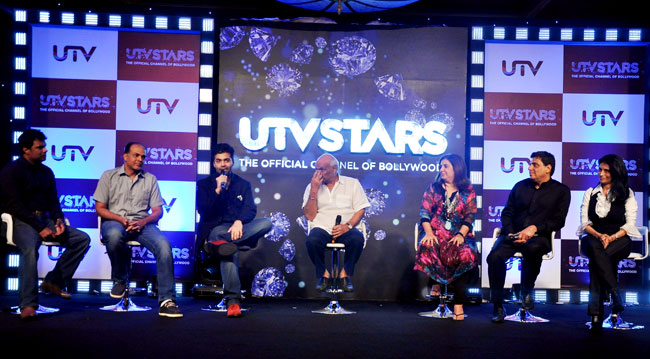
  • A year of glittery success for UTV Stars

    From Left to Right – MK Anand (MD, Media Networks), Ashutosh Gowariker, Karan Johar, Yash Chopra, Farah Khan, Ronnie Screwvala (MD, The Walt Disney Company India), Zarina Mehta at the launch of UTV Stars, last year


    By Meghna Sharma


    On August 19, the world of glamour and glitz had one more reason to celebrate – UTV Stars turned one. The Bollywood and lifestyle channel launched last year by the network promised to give the audience more than what the current lot of channels were offering.


    Nikhil Gandhi

    “UTV is synonymous with Bollywood. Having revolutionized the movie production space over the past few years, it seemed logical for us to launch a Bollywood channel. We believe that we have an edge over the channels because of the backing and our enviable access to the Industry. We provide the viewer with innovative content and showcase the land of Bollywood from the inside as opposed to an outsider’s perspective. We are the insiders and very much part of the industry that we’re showcasing,” said Nikhil Gandhi, the business head of the channel, describing what differentiates it from the rest in the genre.


    The channel takes immense pride in offering the audience outstanding and unique content. “Right from its inception, UTV Stars has been offering the average viewer path breaking and innovative Bollywood content, thereby bringing Bollywood closer to the audiences. Before launch, Bollywood channels were mostly all about music and news formats. But ever since we’ve launched, we’ve emphasized a lot on original content that has resonated very well with the audiences,” explained Mr Gandhi.


    But that’s not enough; it strives towards moving beyond TV too. In less than two months of launch, the channel took the brand on ground via prestigious associations with ‘The People Best Dressed Show’, Lap Buddh Circuit After Parties, ‘Cosmopolitian Fun Fearless Awards’ and FICCI FRAMES Excellence Awards as official broadcast partners. And in March this year, the channel went on to launch country’s iconic landmark – Walk of Stars. “The response to the initiative has been overwhelming, from both, the film fraternity and the audiences. And yes, we do plan to launch in other cities. We’re planning to launch in Gurgaon at the Kingdom of Dreams in association with Wizcraft, following which we also plan to take the property international”, said Mr Gandhi.


    Speaking on the marketing spend by the channel, Mr Gandhi said, “Marketing Activities are of utmost importance and we have indulged in several marketing activities right since launch. During launch, the channel was backed by an extensive outdoor brand campaign with the messaging ‘Touch,Feel, Believe’ endorsed by all the A-listers of Bollywood. Our shows Live My Life and Up, Close and Personal with PZ, were also backed by extensive outdoor campaigns. Also, with a view to strengthen the brand presence beyond television, we indulged in several prestigious on ground associations as the exclusive broadcast partner. In fact, our most recent marketing activity was an on-ground association with IIFA 2012 wherein we took ‘Walk of the Stars’ global.”


    The channel was launched simultaneously in India and Middle East. And, in less than a year, the channel was launched in UK as well. It plans to continue to grow from strength to strength in future by broadening our horizons and making inroads into other markets.


    “The channel will continue to create outstanding content and strive towards continue to build itself as a 360-degree brand. Ie, a brand beyond TV,” concluded Mr Gandhi on an optimistic note.


  • Mediaah! | Ratings controversy: Too little too late

    By Pradyuman Maheshwari


    That the meeting last week where the ISA and AAAI met with TAM did not have the IBF in attendance made one wonder whether all was still not well between the three bodies on the constitution of BARC, and perhaps television measurement itself. This despite the fact all key officebearers from the three apex bodies of advertising, ad agencies and broadcasters have been working overtime to make it happen.


    The controversy that’s erupted thanks to NDTV taking TAM and its principals to court is the biggest that Indian commercial television has faced thus far.


    And the governmental threat of setting up a TRAI-like Broadcasters’ Regulatory Authority of India is for real. Ideally it ought to be a Media Regulatory Authority of India which will also include newspapers, radio and the digital media in its fold, but successive governments and bureaucrats are too scared of taking on newspaper barons and editors. It’s the threat of a government-imposed regulator that got warring Hindi news channels Aaj Tak and India TV to smoke the peace pipe. If a TRAI-like regulator happens, all media entities know that could face a tough time.


    I don’t want to get into the merits of the NDTV v/s TAM, etc case. The matter’s sub-judice and discussed to death.


    The action points that TAM came up with on Friday may buy some peace for the moment, but it’s a case of too little too late (link: http://www.mxmindia.com/2012/08/tam-offers-6-action-steps-in-meeting-with-isa-aaai/). Ensuring security measures and an internal audit team are measures that ought to have been taken (and insisted on) from Day 1. The communiqué quoting Messrs Bharat Patel and Arvind Sharma says: “We look forward to speedy implementation of the six action steps outlined by TAM. With the formation of Broadcast Audience Research Council-BARC on the anvil, it will be appropriate for us to request BARC to review if these steps are adequate.”


    Note the statement says the formation of BARC is on the anvil. Given the extent of time the print readership council took to happen (note the appointment of the research company/alliance awarded the contract has still not been announced), my guess is that it will take it around 12-18 months for any alternative to be set up.


    None of the stakeholders – at last week’s meeting or outside of it – have announced stopping their subscription to the current system. So if they haven’t done it, and in fact still sport TAM numbers whenever the ratings are favourable to them, isn’t it time that stop having double standards?


    Already the ownership structure of BARC is not a healthy one. Advertisers ought to be paying the lion’s share since any research will help their money being better utilised. The broadcasters could’ve contributed to the corpus that will facilitate the operations of BARC and the research process (the boxes et al). But now all of this is history. Broadcasters will own 60% of BARC, and advertisers and ad agencies will own 20 percent each.


    Thankfully for the broadcasters, the I&B ministry is busy elsewhere (Assam, social media etc). One wrong move, you can be sure that the government will flex its muscles.


    My guess (and information) is an announcement on BARC will happen sooner than that.


    Mediaah! is written by Pradyuman Maheshwari, senior journalist and Editor-in-chief, MxMIndia. He can be reached at: pradyumanm[at]mxmindia.com, Gtalk pradyumanm@gmail.com, BBM 29FEA79C. Twitter @pmahesh.  The views expressed here are his own.


  • 1 in 4 online mins spent on social networking in June

    Digital media measurement leader comScore has released a study on the top online sites and activities in India from its comScore Media Metrix service. The report says that Google sites ranked as the top destination in June 2012 reaching nearly 95 percent of the online population, while social networking reigned as the top online activity accounting for 25.2 percent of all online minutes.


    In June 2012, Google sites ranked as the top online destinations in India reaching 57.8 million people age 15 and older accessing the Internet from a home or work computer. Facebook.com followed with 50.9 million visitors (83.4 percent reach), followed by Yahoo! sites (65.5 percent reach) and Microsoft Sites (48.1 percent reach). Local web properties secured several spots in the top 10 ranking, including Times Internet Limited, reaching 33.7 percent of the online population, Network 18 (29.3 percent reach), Rediff.com India Ltd (25.2 percent reach) and NIC.in (21.8 percent reach).


    Among the top properties, visitors were most engaged on Facebook.com, spending an average of nearly four hours on the site in June. Visitors spent 2.5 hours on Google sites, with YouTube accounting for a strong share of time spent on the property. Among local brands, Network 18 led as the most engaging property with visitors averaging 31.6 minutes during the month.


    An analysis of the top online activities in India found that social networking accounted for 25.2 percent of all time spent online in June, an increase of 0.8 percentage points from the previous year, as social media continues to be a primary driver of people’s daily digital media consumption. Entertainment sites ranked second, accounting for 10 percent of minutes (up 1.2 percentage points from the previous year), while Portals accounted for 8.8 percent of total minutes. Although it represented just 2.0 percent of total minutes, time spent on Retail sites grew 0.5 points in the past year as online shopping continued to gain adoption.


  • Debrief: Lazy creative work, BlackBerry

    By Anil Thakraney


    BlackBerry is out with a brand new campaign. The message this time is ‘Action starts here’. I don’t much care for this slogan, it’s too generic and boring. Just about any product can use it, including televisions, cars, deodorants and condoms. Now, when the slogan is weak, it’s all left to the interpretation, which has to dazzle, else the ad is sunk.


    After watching the TVC, I was left confused. So I watched it again, and was left even more confused. The treatment is the same old – an array of youngsters doing their individual number. One girl wants to turn the world green, another wants to lose some weight. One dude wants to patao a blushing chick, another wants to be a rock star (wow, how original is that!). And so on and so forth. Finally, the voiceover arrives and grandly declares: Whatever be your action, it starts here.


    [youtube width=”400″ height=”220″]http://www.youtube.com/watch?v=SuE2fzL8nXg[/youtube]

    Totally ridiculous stuff. How exactly does BlackBerry help these guys achieve their objectives, is a mystery. How did the girl change the world? By chatting on BBM? And how did someone lose weight? By reading Shashi Tharoor’s tweets on her slim BlackBerry? Like I said, I am confused. And the treatment is so very sixties. A whole lot of shiny, happy people, with a tired jingle playing in the background.


    Dear BlackBerry: I want to remove corruption from this country. How do I do that? By sending a text message to Anna? By asking my pals on Facebook to congregate at Ram Leela maidan? Why can’t I do all this from my Nokia? How will you help me differently? Please do explain!


    Rating: (On a scale of 1 to 5): 0. Same old, same old stuff.


  • Reviewing the Reviews: Ek Tha Tiger

    Ek Tha Tiger

    Key Cast: Salman Khan, Katrina Kaif

    Directed By: Kabir Khan

    Written By: Kabir Khan, Neelesh Misra

    Produced By: Aditya Chopra


    Kabir Khan’s Ek Tha Tiger foxed critics because it wasn’t as brainless as Salman Khan’s other ‘100 Crore’ films. It sort of foxed the public for the same reason. You want to see Salman be silly, you want him to go some belt-jerking kind of Dhinka Chika dance, you want him to maaro quotable dialogue.


    Still, the film had the gloss Yash Raj Films’ money can buy, a Bond and Bourne kind of action in exotic places — Ek Tha Tiger delivered what Agent Vinod could not.


    The film got mosty 3 stars and up, with grudging praise.


    Wrote Indian Express’s Shubhra Gupta, “There is only so much Serious Salman you can handle without wanting to burst out into giggles, so don’t go looking for a grim spy story. Grimness is best dealt with by the Bournes. Salman is much more in packaged-by-Yashraj-Bond mode, bashing ’em up, and lovin’ her for ever, essentially Bhai doing his stuff, but restricted from being all over the place, which is not such a bad thing. I had fun while it lasted.”


    Anupama Chopra of Hindustan Times commented, “But the screenplay by Kabir and Neelesh Misra requires Salman to emote and play a character. Thankfully, he makes an effort. Of course, he is always in invincible hulk mode — yes, there is a brief shot of him taking his shirt off — but there is also sweetness and a touch of vulnerability, especially when he first meets Zoya. He seems almost perplexed as he falls in love. Katrina doesn’t have enough to work with but she works hard to give Zoya some weight. Their romance seems effortless. In places, Ek Tha Tiger becomes downright silly. So the modus operandi might be to think of it as a fairy tale with spies and guns. And enjoy the ride.”


    Sukanya Verma of rediff.com wrote, “With Wanted, Ready and Bodyguard, Salman Khan did cheesy with such marvellous flair that even though these films are nowhere near quality line, ‘stupidity sells’ became the new mantra at the box office. No, I am not a Bhaihater or a Bhaitard, colourful expressions recently invented to describe one’s derision or devotion to the actor, addressed so with alarming familiarity, whether in affection or sarcasm. (Please note how I’ve NOT mentioned Dabanng along with the afore-mentioned poppycock because it was genuinely entertaining. Heck, it was one of my favourite films of the year.) My point is that we’ve gotten so habituated to the commitments and ehsaans, the raggedy humour and the implausible heroics written specifically to reinforce the larger-than-life presence of the superstar that we have started to expect JUST that. So here’s the good news. Ek Tha Tiger demolishes this mindset with such unhurried relish it will take me one more viewing to believe it’s actually happening.”


    Aniruddha Guha of DNA went with 3.5, “Ek Tha Tiger (ETT) is probably Hindi cinema’s best action film yet. Conrad Palmisano, who’s been stunt co-ordinator on films like the Rush Hour series, the Robocop series, Batman Forever and Romeo Must Die, directs four brilliantly put together action set-pieces. They are all lavishly mounted, shot at breathtaking locales, and executed with skilled precision. In the midst of it all is Salman Khan, Hindi cinema’s poster boy for escapist entertainment. Thankfully, ETT is the rare Khan film that has a plot too, thin as it may be.”


    Taran Adarsh of Bollywoodhungama.com did his usual 4.5 rave, “On the whole, Ek Tha Tiger is a high-octane thriller that works big time. This one has style and substance, both, besides dazzling action, stunning international locales and stylish execution. Most importantly, it has Salman Khan, the trump card of this enterprise. There’s no denying that Salman’s charisma has resulted in a mind-blowing, astounding, never-seen-before start at the ticket window, but the film’s content will sustain it thereafter. The film has long legs to prolong its splendid run. This is, without doubt, Salman’s best. Sure shot Blockbuster!”


    Then the 2.5s Rajeev Masand of IBN and Karan Anshuman of Mumbai Mirror. The former wrote, “To be fair, Ek Tha Tiger is a very different beast from recent Salman Khan starrers, particularly his last two releases, Ready and Bodyguard. Now that could be construed either as good news or bad news depending on what you thought of those films. For those like me, who weren’t fans of those blockbusters, it’s refreshing to note that Ek Tha Tiger’isn’t an over-indulgent one-man showreel. Hallelujah, this film has a plot. Unfortunately, however, it’s a one-line, threadbare plot around which director Kabir Khan constructs the entire movie.”


    And the latter ranted, “Stylistically, Ek Tha Tiger attempts to marry the grittiness of, say, Hollywood’s Bourne series with the gloss of a Yash Raj film. The result is an inconsistent look and feel. For instance, the cinematography in the action sequences work with a healthy mix of handheld, tracking, and steadicam shots, all in realistic, incidental lighting. While on the other hand you have a night scene about a picnic date in a park with swans and a lake that actually reflects a meteor shower. The artificiality and overdone lighting (so that you can see every inch of the frame) is totally outdated and old-school.”


    Kunal Guha of yahoo.com quipped, “Ek Tha Jackie Shroff. And then he had a son. But this one belongs to the genre mastered by Jackie Chan and plastered with superhuman stunts by Salman Khan: action comedy mashed up with a spy thriller. If you thought Agent Vinod made a Ronald McDonald out of the genre, Ek Tha Tiger (ETT) takes a mousey tail and sticks it up his nose for Salman to swing from ear to ear. Regardless, if you’ve followed Salman’s recent films, you know that they’re in a genre of their own and cannot be graded for the story, screenplay, performances or any other metric used to evaluate other films. They can just be enjoyed or suffered, depending upon the elasticity of your tolerance.”


  • Sunil Punjabi is India Business Head for SPT Networks

    By A Correspondent


    Sony Pictures Television Networks, Asia has appointed Sunil Punjabi to lead its Indian operations in the newly created role of Business Head, India. Mr Punjabi is based in the company’s Mumbai office to lead its local team in all business functions, with the responsibility for the profitability for SPT’s networks in India, said a release from the company.


    Overseeing the day-to-day management of the channels, Mr Punjabi will develop business opportunities and channel equity. He will lead the team in developing the go-to market strategy for new channels as well as oversee the development, acquisition and production of a content mix for SPT’s networks in India. Mr Punjabi is also charged with driving marketing strategies to grow the channel brands and to pursue further distribution opportunities. He reports to Ricky Ow, Executive Vice President and General Manager, Networks, Asia, Sony Pictures Television, who is based in the company’s regional head office in Singapore.


    Mr Punjabi brings 12 years of well-rounded experience in the Indian media and entertainment industry across key business functions including advertising sales, marketing, theatrical exhibition, business development, production, distribution, and operations.


    “We are pleased to welcome Sunil to drive our business in India. His acumen and experience across all functions will be key assets to lead our channels to greater heights in one of Asia’s largest and most competitive TV markets,” said Mr Ow.


    Mr Punjabi joins the company from one of India’s top three film exhibition chains, Cinemax India Ltd., where he served as Chief Executive Officer from 2010. Prior to that, he worked at Multi Screen Media Pvt. Ltd. where he was Senior Vice President for Business Development, leading the new media, mobile telephony and syndication divisions’ integration with the company’s sports and music TV channels.


    Mr Punjabi was instrumental in the formation in Fox Star Studios, the joint venture between Twentieth Century Fox and Star TV, and was also involved in major films including Slumdog Millionaire and My Name is Khan.


    Sony Pictures Television Networks, Asia, based in Singapore, was established in 1997 as the Asia headquarters for Sony Pictures Television Networks. It operates five ad-supported 24/7 channel brands in the region which are wholly owned by Sony Pictures.


  • AdStrat: 6 Days Mahabachat

    Anand Karir, Senior Creative Director, DDB Mudra


    Name of the Campaign

    6 Days Mahabachat


    Brief

    Mahabachat as a property was conceived in 2006 to spur consumption around the Independence Day holiday, offering great savings across product categories. This year the challenge was to instil confidence into the property promise of big savings at a time when persistent inflation was dampening consumer spirit.


    Research insights

    The consumer reality revealed that they harboured a sense of helplessness towards inflation, with no solution in sight. Over the years, the effect of inflation had moved beyond the kitchen and even impacted their purchases of fashion, education, fuel and entertainment, leading to an overall increase in the cost of living. At the same time consumer aspirations were also on the rise, resulting in an overall state of dissatisfaction.


    The thought process behind the creative

    As a solution to the consumer’s angst, the attempt was to empower consumers with a concrete solution throughout the six days of Mahabachat. The resolve of victory over inflation by participating in Mahabachat was brought alive through the optimistic clarion call of ‘Mehengai pe Halla Bol’.


    Media vehicles chosen

    TVC, Press, Outdoor, Radio, In-store and Digital.


    Key issues kept in mind while executing the ad

    The clarion call of ‘Mehengai pe Halla Bol’ was not an agitation or a morcha against anyone but the joy of having found a solution against inflation at Big Bazaar through the ‘6 days of Mahabachat’. The mood was that of celebration and freedom.


    Does the treatment do justice to the brief?

    Yes.


    What is the differentiating factor about the ad?

    Every Indian detests the inflation of the last few months. Our TG, the middle class Indian housewife, is feeling no different. Her budgets have not grown in proportion to the inflation and this is somewhere tying her hands and giving her a feeling of being helpless. Of not being able to do enough for her family. She wants to do something to change this and vent her feelings. We just gave her feelings an expression – ‘Mehengai pe Halla Bol’. She knows that Big Bazaar has always understood her needs and brought stuff within her reach. Mahabachat 2012 is yet another chapter in that epic.


    The TVC first mildly touches upon her and her family’s day-to-day encounters with inflation and then introduces ‘Mehangai pe Halla Bol’ as a positive cry, during these testing times, asking her to reach out to her friend Big Bazaar and grab everything she and her family wants and deserves, in abundance. Simple poetry narrated in the background subtly sets the mood and puts the point across without letting the harsh reality hit her in the face, which was a very important objective that we wished to achieve.


    Compiled by Shubhangi Mehta.