Blog

  • Citizen signs Kevin Pietersen as brand ambassador

    By A Correspondent


    Kevin Pietersen, the South-African born English cricketer, will be the ambassador for Citizen watches. He presently plays for England, Surrey and the Delhi Daredevils and has the distinction of being the second-highest run scorer from his first 25 Tests. He became the fastest batsman to reach both 1,000 and 2,000 runs in One Day International cricket.  He is the third English batsman to top the ICC One Day International rankings in March 2007.


    Katsusuke Tokura, MD, Citizen Watches India said, “We are delighted to have Kevin Pietersen as Citizen’s brand ambassador. Kevin Pietersen is one of the finest batsmen, his sophistication and style superbly personifies our brand.”


    Kevin Pietersen will also feature in the brand’s communication of the new Super Titanium watch collection. All models from the Super Titanium Collection feature a high-quality sapphire glass that helps resistance against scratches and always guarantees a perfect view on the time display. The watch is also water resistant to 10 Bar. Colour accents and changing design in minute division also revive the appearance of the dials, and Super Titanium watches are five times harder and 40 percent lighter than stainless steel watches.


  • Digital, the efficient earner: B N Chandrakanth, Theorem

    By Robin Thomas


    Theorem, a technology company focused on digital marketing or online media operations, started at a mere number of four, and today has over 1000 people  with offices in the Americas, Asia Pacific, Europe and the Middle East. The company provides a broad suite of digital solutions in areas ranging from creative services and media operations to reporting and analytical services. In conversation with MxMIndia, Chandrakanth B N, Co-Founder and Managing Director, Theorem India, spoke at length about the company’s journey over the last ten years since its foundation in 2002. He also spoke about his India plans, specifically post Rs 100 crore investments in India, and much more.


    Q: From mere 4 people in the organisation, today Theorem is said to be more than a 1000 in just 10 years, over 150 clients… What are the key drivers that have led to this success?

    We are more of a technology player in this domain. One of the biggest growth drivers for Theorem has been the growth of the digital media over the last 10 years. Even in mature markets like the US, the overall ad spends going to digital was only 7 percent; the digital ad pie has of course doubled over the years. We set up our company with the vision to focus on the digital media operations domain. What we brought was the strength of the strong Indian IT service business ie efficiency and technical knowledge, while keeping the costs low for our clients. This became very attractive to our clients in the west, and so our team achieved better quality service delivery than their own teams based in New York or San Francisco etc. Hence, it was very attractive for companies in the digital media space whether it is an agency or publishers or technology companies to work with us because we brought in both domain expertise plus we brought in the scales of operations and very importantly the technical knowhow and skills required. These are some of the factors that I believe helped us grow in the last 10 years.


    Q: What would you say are some of the learnings so far in the last 10 years?

    Digital offers the most cost-effective way of communicating or advertising. Not just cost-effective, but it is very effective in terms of reach as well. When we started, display and email were two big key drivers for digital marketing. Right after we started, Google took off, which basically brought in search marketing and so search became a key element of the digital marketing eco-system. We adapted to these changes and then obviously social media came along and mobile came along. So we have seen an evolution of different media vehicles within the digital sphere. We also saw a lot of technological innovation happen within this domain. The evolution of this space has been very fast and there has been so much technology coming in, and there has been much more efficiency too.


    Q: So, has there been a change in the way the marketers have approached digital media over the years?

    Absolutely. Since we have largely worked with western markets, we have definitely seen that change wherein marketers or brands are adapting to digital a lot more. We can see that in the numbers ie doubling of the digital ad spends from 7 to 14 percent. There is a lot more awareness about the effectiveness of digital advertising in the western markets and marketers are also a lot more demanding as far as their requirements from the media are concerned. It is a fairly mature market today.


    India on the other hand is still an evolving market. Marketers here need a lot more education to understand the benefits of the digital media, its effectiveness in delivering better ROIs, how digital is going to be different from the traditional media, and so on… So, there is still a fair bit of education that is required. We are seeing changes and I believe a company like ours can play a huge role in educating the Indian marketer. I still believe that there is a lot to be done in the Indian market.


    Q: What are your India-specific plans? Theorem will be investing Rs 100 crore in India over the next 3-4 years… What is the nature of these investments?

    We have a large facility and teams based out of India, supporting our global clients right now and so we are looking at expanding on that. In Mysore we have our own campus and we are looking at expanding that. More importantly though we are looking at India as a market and how we can take our domain expertise and add value as opposed to being a large-scale IT support organization. We are also trying to be in the forefront of the marketing itself and help with more innovation. So, yes in the next four to five years we are looking to expand our operations from both facilities and team perspective which is potentially a Rs 100 crore investment.


    Q: You have two offices in India, Mysore and Bangalore… Any expansion plans within India?

    Yes, as the industry evolves further this is definitely a possibility. It is nevertheless early years for us, but we are definitely looking at probably newer cities, newer regions. The operation centers are in Bangalore and Mysore right now so that may continue to grow in these regions but, if we see the need we may even look at other regions.


    Traditionally US has always been a very large market for us, UK would be the next largest and then Europe but, where we are really seeing growth is in regions like Australia and Middle East. In India we have to do a lot of work in terms of creating solutions and that is what we are working on right now. India as a market is very interesting for us, and we are definitely seeing growth in some of the non traditional markets as well.


    Q: What is the business model you follow? Which of your services bring bigger share of revenue – creatives, media operations, analytics, consulting? Any newer services we would see you introduce this year or in the near future?

    Right now we are an IT services company supporting the digital marketing world. Largely we provide experienced or trained resources to support online media operations. So, this is really our business model, it is a traditional IT services model but, then we are obviously trying to move up the value chain and provide more high-end services for some of the local markets.


    Our revenues are spread evenly across our services, our media operations have been a big portion of our business and all the other services are also growing quickly as well. We are working on some new solutions and products, a couple of which we will launch soon. Some time later this year we will be launching another product and some time next year we aim to bring in some more innovative solutions to the market.


    Q: What rich media services does Theorem provide?

    Theorem provides end-to-end rich media services including creative development, trafficking and QA (quality assurance), across a range of media including mobile, email, banner ads, landing pages and micro sites. Furthermore, our expertise spans technologies including MediaMind, DoubleClick Studio, Eyewonder, PointRoll, and Flashtalking among others. Theorem strength and key differentiation lies in its depth of knowledge and breadth of services in providing rich media QA that’s extremely complex and highly evolved. In fact, we are one of the very few firms globally that offer this service to our clients.


    Q: And what do you think are the biggest concerns or challenges that Indian markets face, as far as rich media ads are concerned?

    Bandwidth issues in India are a big concern as the internet infrastructure needs to mature a lot more for the mobile rich media ads to become more popular. I believe it has to evolve, the infrastructure needs to get better and I think once we see our infrastructure improve rich media ads will also get more popular.


    Q: We have been witnessing some consolidations in the digital industry, with a lot of mergers and acquisitions lately… What is your take on these developments? Good signs for the industry?


    I believe it is a sign of maturation for the digital industry in India. I personally think it is a good sign; there is a lot of focus on India. So, as the market matures, our internet infrastructure gets better, and we are able to convince the marketers that digital is a more effective medium for them to start leveraging. We have a huge youth population and they are all going to get on the internet and the easier it gets to log onto the internet, obviously the larger the population you will have to market to. Therefore all our tier II and tier III cities need to get better bandwidth and internet infrastructure.


    Q: And are we going to see Theorem too acquire some agencies soon …?

    Potentially yes. There is always a possibility of this as we grow …


    Q: What kind of impact did the global economic conditions have on your international and India business? Did it have any impact on the industry?

    Interestingly, we never saw never saw a slowdown in the last 10 years. In fact 2008-09 were one of the biggest growth years for us. During the slowdown we have been hiring and giving raises. So digital provides a cost-effective means of communication and advertising. During the years of slowdown more people look at cost benefits of digital advertising. Although the overall spends may shrink, the piece of the pie is definitely going to increase for digital during these times.


    Q: What are your growth targets and goals over the next one or two years?

    We are looking to double by the end of 2015…


  • NDTV-TAM war impact may be seen in print if Nielsen is appointed IRS research vendor

    By A Correspondent


    Measurement has suddenly become a bad word in the Indian media. Over the last month, there has been much sound and fury over TAM Media’s television ratings with news network NDTV filing a 194-page lawsuit in New York. Since last week, the channel and WPP, principals of TAM’s part-owner Kantar, have been sparring via statements issued to the media.


    But now MxMIndia learns that there could be rumblings in the print space too, over the appointment of the research company to conduct the unified Indian Readership Survey.


    The Board of the Media Research Users Council (MRUC) which manages the Readership Studies Council of India (RSCI) is scheduled to meet today and announce the results of the contract following the RFP (Request for Proposals) issued last year.


    In a departure from the prevailing system of the research body being a partner and pocketing 85 percent of the revenues earned from sales, in the proposed system, the researcher was to be vendor being paid a flat fee. Hansa which has been conducting the study for MRUC since around eight years tied up with Ipsos and presented a joint proposal demanding a fee of Rs 10 crore. Nielsen’s original proposal was of Rs 12 crore, but the research major has been beaten down to a little below Rs 11 crore.


    However, ever since the news of the appointment of Nielsen was leaked last week, it appears that the controversy plaguing the television media research space could well lead to rumblings in print if it is indeed Nielsen which will be awarded the contract.


    MxMIndia too learns from its sources that Nielsen will indeed be appointed vendor for the IRS. The relationship is not of partnership as of now, but that of a client-vendor, where the research company has to undertake the exercise as per a set of instructions and for a fee. A global tender was issued and a technical committee carefully pored over each of the proposals. Various proposals came in but were rejected. The Hansa-IPSOS proposal reportedly did not find favour with the decision-makers because of the consortium modeit followed. It is believed that there was opposition to Hansa from some quarters.


    An MRUC member this correspondent spoke with raised some alarm. “While the work put in by the technical committee is commendable and selfless, they ought to have considered the mess that Nielsen has been in thanks to its co-ownership of TAM Media. The 194-page lawsuit sees the firm getting noteworthy mention. Moreover, there have been question marks over the retail audit too,” he said on condition of anonymity. “But it would be wrong to jump to conclusions on Nielsen’s appointment. If it is indeed true, we will raise the questions and convince ourselves. We clearly wish to be certain of the new vendors’ expertise in newspaper readership measurement – either globally or in India. We can’t afford to have any publisher, advertiser or agency questioning the measurement exercise and the bona fides of the vendor as has been the case with television.”


    That last bit we agree with. The WPP statement came in at 10.43 pm IST last night.


  • NDTV, WPP trade statements yet again

    By A Correspondent


    On television, Dr Prannoy Roy is a gentleman-anchor. He apologises – with a sorry to interrupt – as he interjects while a guest is speaking. Quite unlike some others who are aggressive and don’t care a fig even with celebrated guests.


    So if you thought that the on-screen image of Dr Roy and his channel would also be the way his company would act in the ongoing litigation with TAM and its principals and war of words with global advertising conglomerate WPP, you’re mistaken.


    Last evening, we received two statements… one each from NDTV and WPP.


    First the one from NDTV. Clear here for the statement (PDF version)


    And then the WPP reply (again a PDF). Click here:


    We don’t really know why WPP chose to get involved in this war of statements but now that it has, no one seems to be complaining!


    PS:

    The following are the statements issued by NDTV and WPP so far:


  • TRAI sticks to 12-minute ad regulation in fresh draft, seeks feedback

    By A Correspondent


    Expect a fresh round of litigation or at least a war-via-the-media as negative responses have already started coming in on the new TRAI recommendations on ad duration. On Monday, the Telecom Regulatory Authority of India issued fresh guidelines on the duration of advertisements suggesting that no broadcaster can carry advertisements exceeding twelve minutes in a clock. Every broadcaster is required to present a report on ads carried within 15 days of the end of the quarter, with the first report to be submitted on January 15, 2013 for the Oct-Dec 2012 quarter.


    The TRAI released the draft regulation “Standards of Quality of Service (Duration of Advertisements in Television Channels) (Amendment) Regulations, 2012” on Monday for consultation with stakeholders.


    In the new draft, the explanatory note highlights the advertising code with the following:

    • The picture and the audible matter of the advertisement shall not be excessively ‘loud
    • All advertisement should be clearly distinguishable from the programme and should not in any manner interfere with the programme viz., use of lower part of screen to viz., use of lower part of screen to carry


    carry captions, static or moving alongside the programme.

    •  No programme shall carry advertisements exceeding 12 minutes per hour, which may include up to 10 minutes per hour of commercial advertisements, and up to 2 minutes per hour of a channel’s self-promotional programmes.”


    Given the above, although some of the earlier suggestions have been eased, the status is unchanged for news and sports channels who were most opposed to the regulation. There is a restriction on the use of the lower part of the screen to carry captions – static or moving alongside.


    All television channels are required to follow the advertising code as prescribed in the Cable Television Networks Rules 1994, and as amended from time to time. However, many broadcasters do not following the provisions laid down in the advertising code. A consultation paper, titled “Issues related to Advertisements in the TV channels” was issued on March 16 with comments from various stakeholders and consumers sought. The TRAI then notified the “Standards of Quality of Service (Duration Of Advertisements in Television Channels) Regulations” on May 14.


    There was an uproar even as public opinion was divided on the issue. The regulation was challenged by several broadcasters in TDSAT with the TRAI’s role in administering the issue also being questioned. The current draft  regulation “Standards of Quality of Service (Duration of Advertisements in Television Channels) (Amendment) Regulations, 2012” has been prepared for consultation with stakeholders.


    The full text of the draft regulations is available on TRAI’s website (www.trai.gov.in) and responses are expected to reach the regulator by September 10.


  • Suresh Balakrishna now also CEO of Lintas Outdoor

    Suresh Balakrishnan

    IPG Mediabrands has announced the appointment of Suresh Balakrishna as CEO of Lintas Initiative Outdoor. The leadership responsibilities of all the OOH businesses of IPG Mediabrands will now report to Suresh Balakrishna, with immediate effect, according to the official communique.


    Mr Balakrishna, a media veteran with over 25 years of publishing, brand building and media agency experience, had rejoined Lintas Media Group in January this year to roll out and lead BPN, the third agency network of IPG Mediabrands.


    He will be handling this assignment in addition to his current responsibilities as CEO of BPN India.


    Hemanth Shah, Managing Director of the company resigned a month ago and will be with the organisation till the end of August. His next destination is not known. He joined the company two years ago from Times OOH.


    Some of the leading OOH businesses in IPG Mediabrands include Nokia, Hindustan Unilever, Union Bank ofIndia, Coca Cola, Tata Consultancy Services, Expedia, Citibank, Monte Carlo etc.


    For the record, Lintas Initiative Outdoor has 22 offices around India.


  • MxM Mondays | Is there a crisis of ideas in Hindi GECs?


    By Ananya Saha and Meghna Sharma


    From ‘Buniyaad’ to ‘Bade Achhe Lagte Hain’, from ‘Mahabharat’ to ‘Satyamev Jayate’, Hindi entertainment has come a long way. In the channels’ bid to outdo each other in the TVR race, content can take a back seat. Can lavish sets, repeat telecasts, and infinite numbers of episodes help the GECs to win the race? Is the audience ready to lap up the same themes and content?


    The theme for this week’s MxM Mondays is ‘Is there a crisis of ideas in Hindi GEC?’. MxM spoke to a crosssection of industry veterans to find out.


    Ajay Kakar, Chief Marketing Officer – Financial Services, Aditya Birla Group
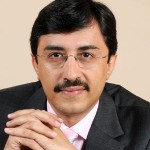
    Today, there appears to be a herd mentality when it comes to programming on GEC channels. What we have always noted in Bollywood seems to now reflect on TV too: the ‘success formula’ syndrome.


    If one kind of serial or format succeeds, there appears to be a rush, across channels, to try and follow and replicate that seeming formula, be it the trend of reality programmes, dance shows, talent hunt or even soaps.


    This apparent commoditisation makes decision-taking more difficult, as a marketer, when you are screening the market for opportunities.


    Anamika Mehta, COO, Lodestar UM

    In many ways, yes. We continue to see the same content and programming repackaged and marketed differently. While a couple of fresh initiatives have been undertaken over time, probably the fact they have been literally a handful is reflective of crisis of ideas. So there have been soaps and ore soaps with some twists right from the ‘K’ days to some with a social tack to comedy to the global reality formats customised to Indian flavour and culture. Given the fickle Indian viewer, and the fact that a GEC talks to the lowest denominator; the challenge is to bust existing myths and formula. And experiment large for success.


    Anita Nayyar, CEO, India and Southeast Asia, Havas Media

    When Colors was launched it brought a set of fresh content and then both Zee and Star followed it. It was a refreshing change because everyone was fed-up with the saas-bahu sagas. And as for the reality shows, most GECs are following safe genre which has worked well with the viewers. One must realise that programming costs are high and when a programme doesn’t work, it affects the channel. Therefore, a channel has to be very careful about what it puts out in front of the viewers. So, a time-tested genre is what most of them opt for, unless and until a broadcaster is very confident about a format and willing to take the risk.


    Indian viewers in general prefer only certain genres – serials, Bollywood related shows, reality shows (where they can related to the lesser known aam adami) and movies. Therefore, channels too prefer to revolve around these genres. For a channel viewership is important because only that will bring in the revenues.


    Himanka Das, senior vice president – West, Carat Media India

    Well, I won’t call it crisis, it has definitely become dynamic. Considering the dynamic nature of viewership patterns, viewers do not watch channels by appointment viewing but they watch programmes by appointment viewing. Having said that, it also reflects the way a broadcaster changes programming strategy within a span of 13 weeks most often, though very few of them that go for a longer period. In the term ‘GEC’, the word entertainment has significant relevance to viewers; so long as content entertains the audience, that becomes the longevity of a programme. In that regard, broadcasters do realise the competitive nature of business and are constantly trying new formats and topics in relevant time bands to keep eyeballs going.


    Jahnavi Pal, TV analyst and columnist

    If one surfs through different Hindi GECs today, he/she will find the same clichéd concepts and sometimes even titles. Today the trend is to name a serial after an old Hindi song! Broadcasters feel that is what viewers want, but to be frank it’s not true. No one is ready to take a risk. They follow each other or ride on a previous show’s success. For example, if a show XYZ was a success then others will have shows which are loosely based on it. However, there are some who are ready to take a chance; take Star Plus for instance, which showcased a revolutionary show – Satyamev Jayate. Agreed, it’s not a primetime soap opera, but a GEC did take a risk in showcasing a show like that on a Sunday morning. There are other shows like ‘Kuch toh log kahenge’ and ‘Bade achhe lagte hain’, which started off very well but somehow now have lost their plot and have become diluted. Therefore, it wouldn’t be correct to say that there is a dearth of ideas because there are plenty of them, it’s the willingness of a channel to take risk is more crucial to take the industry forward.


    Nikhil Sinha, producer, Triangle Film Company
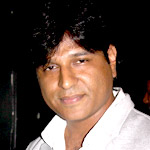
    There is scarcity of fresh ideas on GECs. Right now, the trend is about following each other; if one idea works for a channel then others too will start making projects on similar lines. New concepts are considered risk-taking propositions. However, one shouldn’t be surprised if one channel took the risk to experiment and it becomes a hit, others too will follow suit. I feel that GECs should try out new concepts as audiences are maturing too. However, what will click can’t be guaranteed in advance. Having said that, I also know that consensus between business and entertainment is also very important.


    Sajal Mukherjee, Media veteran

    All channels are trying their level best to create distinct content and appeal to specific audiences. Star Plus, which is the number one channel, dominates the scene when it comes to well-produced programmes, and all the other channels like Zee, Sony and Colors try to emulate the same formula. The shows on every channel go on and on, and they try to stretch the same content without changing the format, over a very long period of time.


    It is actually a vicious circle. Each serial has three important parts: content producer, advertiser and viewer. If the channel produces a good show, but it gets no advertisers, because of no or less viewership, the content producer has to balance the budget of the show. If there is no money, the production values also go down.


    The channels need to experiment more. KBC has had a good run, and still enjoys dedicated viewership. Satyamev Jayate was appreciated. It is only a question of stretching the innovation. Every channel’s focus is to get the viewership, and advertisers. Once they start making money, then they produce better shows. But it is important that every ‘me too’ channel tries to create different programming.


    Saurabh Srivastava, Producer, Panglossean Entertainment (of ‘Phir Subah Hogi’)
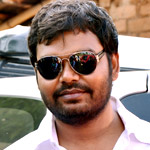
    I do not agree that Hindi GECs are facing a crisis of ideas. We, the producers, brainstorm every day to come out with new ideas. At the end of the day, it is just a competition. There are so many Hindi entertainment channels, we try hard to make our shows distinctive and different from all other shows. We work very hard on every show. It is definitely quite hard, but we have to keep trying.


    Shailesh Kapoor, CEO – Ormax Media
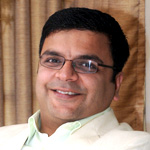
    There is definitely no dearth of ideas in GECs. The GEC category inIndiais only about 20 years old, and has constantly evolved in terms of new ideas, formats, stories and genres. Having said that, the culture of daily shows has stretched the GEC content machinery over the last 12 years. The pressure to deliver episodes round the clock means that the creative teams spend less time on ideation and development, and more on execution. This, in turn, leads to an under-exploitation of the potential. Channels and production houses should focus on creating a robust pipeline of strong ideas, which can be tapped when the requirement arises. This would ensure that the creative abilities of the teams, both channel and production, are utilised to their potential. Focus on content development, as against just content production, will ensure that better, bigger ideas see the light of the day more often than what’s happening currently.


    Sukesh Motwani, head – fiction programming, Zee TV
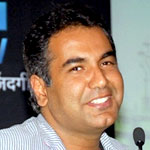
    I wouldn’t say that there is a crisis of ideas in Hindi GECs; on the contrary they are doing their best to entertain their audiences. However, I do think that broadcasters will have to decide and show confidence about how much they are willing to experiment with. Zee has always believed in going a step forward and has taken bold steps. For instance, right now we have a paranormal show called Fear Files and earlier we showcased Jhansi ki Rani, a historic saga about a female protagonist. Who had ever thought of it before?! Even our other shows like Choti si Zindagi and Karol Bagh have been different in their approach.


    Today, channels are focused on genres like thriller, crime, family drama; but we have to answer the bigger question – are GECs ready to get into genres like dark comedy, science fiction or a violent tale? There is an on-going debate regarding this because most GECs cater to family audiences. So one does have to take this into account. Therefore, for me, the bigger question is, how many genres are GECs open to?
     

  • Jishnu Sen remembers Vinod Prabhakar

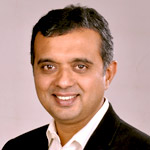
    Vinod Prabhakar (1967-2012)

    I have worked very closely with Vinod ever since I moved to Grey. I would say that he practically ran the place and was our strength. His ability to simplify a complicated problem and come out with a decision was something that the organization and I would always remember him for. His warmth, his smile and the twinkle in his eyes will be missed immensely. He had this innate quality of making people feel comfortable which made people go to him even before they came to me with an issue. I would say that he had broad shoulders, very broad ones actually that shouldered a lot that was going around in the agency.


    He was extremely generous as well as sensitive person. I depended a lot on his advice and he would always show the right direction. In the worst of times, Vinod would always come up with the best possible solution to wade through the issue. The news of his passing away has been personally shattering. I have lost a friend and an excellent partner at the workplace.


    Jishnu Sen is President and CEO, Grey Group India


    Succumbing to a cardiac arrest, Vinod Prabhakar who was the Chief Financial Officer at Grey Group, breathed his last on Sunday. He was only 45 years old.


    A Grey veteran for over 18 years, Mr Prabhakar began his work life with Trikaya as a young Internal Audit Assistant. In less than four years, he was promoted to Deputy General Manager where in addition to his regular responsibilities, was made in-charge of re-designing the Agency’s critical Cash Flow function. He also spearheaded the development of the agency’s unique integrated and all-comprehensive Financial Software Package as well as a new MIS aligning Grey’s internal reporting to the global formats.


    In appreciation of his performance, he has been recipient of many internal awards at the Grey Group. A people’s person, he lived by the idea that postponing of decisions or not taking them is dangerous than taking a wrong decision. When not engaged in financial processes at Grey, he spent his time watching movies, reading, badminton and listening to music.


    Information on Mr Prabhakar and photograph, from the Grey India website


  • NDTV v/s WPP: War of words over the Weekend

    By A Correspondent


    I need another holiday, I told the boss.

    But why, he asked?


    Because since the time I thought I could bring in the weekend with a drink, the inbox has been inundated with statements from both NDTV and WPP.


    Wait, why WPP? The case was against Kantar, right?


    Oh, yes, it is. But Kantar is a subsidiary of WPP. And while it’s a listed conglomerate, Sir Martin Sorrell is bossman and he decides what WPP will do.


    So while it was good to see the Big WPP Boss himself getting his hands dirty, I was a little surprised to see him speak to the Indian media on the issue. Interviews with Sir Sorrell don’t happen daily, so who wouldn’t want to miss the opportunity.


    In one of the interviews, the WPP boss has even suggested that since NDTV’s lawyers essentially deal with litigations for restaurants, the lawsuit has been served correctly.


    Ah, well.


    Here are the six statements:


    26 Aug: Statement saying WPP takes India extremely seriously. That it is “ludicrous” to say WPP is taking India lightly


    25 Aug: WPP reacts to the 6 points raised in NDTV’s statement of the same day. Statement says Eric Salama responded to a mail sent by Vikram Chandra on July 27


    25 Aug: NDTV responds to WPP’s statement of 24 August (as well as to media interviews). Stings WPP and Sorrel, and sad to read these words: we request Sir Martin not to take India lightly. We request him to clean up his ratings operation in our country and to refrain from using his global PR clout to perpetuate corruption in his India ratings operation


    24 Aug: WPP issues a statement in Q&A form. Asserts NDTV’s decline is not down to any perceived failures in TAM data. In an interview with Mint, Sorrell says: “Nothing has been served properly. Nothing at all, that is why we call it a hypothetical lawsuit. The two-lawyer firm (engaged by NDTV) is based in Florida and it specializes in restaurant law. This is an Indian issue, not American. It is a bit of mischief on their part.”


    23 Aug: NDTV responds to WPP’s statement. “We request that WPP should focus on honestly fixing (for want of a better word!) their badly damaged and dishonest ratings system in India.”


    22 Aug: WPP statement on the NDTV’s “hypothetical” law suit. Says: “WPP is also giving active consideration to issuing proceedings against NDTV for defamation and has instructed its lawyers accordingly.”


  • MxM Comment: Enough of trading charges. Industry needs to bring warring partners to the table

    By Pradyuman Maheshwari


    It’s the kind of content that’s been seeing our hit rates go up, but I seriously think enough is enough. It is time the industry gets together and brings warring partners to the table. It’s important that either an industry body like IBF or AAAI or someone who would earn the respect of all parties concerned were to convene this. MxMIndia would have been happy to take the lead, but we’d rather be an independent observer than a participant. Although both Star and Madison do have active linkages with NDTV and WPP respectively, I would think Messrs Sam Balsara and Uday Shankar would do well to take the lead. For, the current blamegame and exchange of unpleasantries can continue forever, and we could still be struggling for solutions.


    What’s worse is that Sir Martin Sorrell is himself being dragged into the war of words. So an NDTV statment rubbishes what Sorrell and WPP have to say. And WPP (and Sir Sorrell) haven’t hesitated from commenting on NDTV’s fortunes and its lawyers. Thankfully, Dr Prannoy Roy’s name hasn’t been pulled in yet. But for how long?


    Representatives from all stakeholders have privately confided to this writer and corroborated MxMIndia’s original standpoint that it’s the system that’s ought to be blamed for the mess the industry is in and not just TAM. I may even stick my neck out and say that from the information I have, the TAM management isn’t corrupt, though there one may not rule out the presence of some rotten apples in the rank and file. The only way to eliminate that is by a process that has a reasonable number of checks and balances.


    TAM’s problem is that for too long it has not had a joint stakeholder body (BARC, earlier Joint Industry Body) governing it and providing it a frame of reference for operations. In the recent past, with the exit of aMap, it’s been a monopolistic play but you can’t blame TAM for that. The industry didn’t patronise aMap well enough.


    News broadcasters are particularly peeved with the current measurement system because their demand for a stop to weekly ratings wasn’t accepted by TAM. TAM, on its part, said if all stakeholders – broadcasters, advertisers and agencies – were unanimous, they would make the switch.


    WPP is huge in India – Group M, Ogilvy and WPP and several other outfits. The aggregate employee strength is 12,000 and revenues are of around $500million. NDTV too has a reputation of being a quality broadcaster. I am sure neither is taking the Indian market lightly.


    Now let’s avoid a bloodbath of words.


    PS: I have another worry. The news broadcasters have already asked the Minister of Information and Broadcasting to intervene in the measurement issue. While one appreciates the sentiments of the NBA, asking the government to step in can be suicidal. If the government finds the war of words between statekholders never-ending, it may well do that and last week’s example with blocking Twitter ids is a fair indicator of how governments can act.


  • Ranjona Banerji: When governance and opposition happen out of TV studios

    By  Ranjona Banerji


    Many years ago, the founding fathers of India worked very hard and gave us a Constitution. Because of that, we got a Parliament. You might recognise it from the outside — it’s a roundish building in New Delhi. But you might recognise it better from the inside: Large rooms with circular seating, an imposing looking desk along one wall and lots of people screaming and shouting and rushing to the centre of the room.


    You may be forgiven for thinking that these rooms (there are two significant ones) are contemporary versions of the Roman arena, where gladiators killed each other or got eaten by lions and so on. You may even think that given the Indian philosophical idea of non-violence of ahimsa, our founding fathers had created a non-violent arena where people could scream and shout without hitting or of course killing each other.


    In fact, no one really knows why this building and these two very specific looking rooms were made. As far as we can see, people shout and the person at the imposing looking desk says “Sit down, sit down”, albeit in Hindi. Sometimes the shouters listen and sometimes they don’t.


    Almost no one can understand what is going on. But it’s quite good entertainment. There are smaller versions of this thing in all the Indian states. Here the principle of non-violence does not apply. Not only do people throw things – microphones, chairs, tables – in these state versions of the roundish building but they also beat each other up. If they took off their clothes and exercised a lot, it would be like pro-wrestling (okay, ew!).


    Besides, almost everyone knows that every night some of these same people gather in television studios and speak and of course, sometimes shout. All the things that they don’t say in the roundish building, they say in television studios.


    The funny thing is that politicians – that is who these shouting people are – work very hard to get into that roundish building. They prepare themselves (no, not exercise, money and support collection) and then they fight elections. The elections give them the privilege of getting to Parliament and in some cases, apparently to govern the nation and in other cases to be the Opposition. At least that’s what that Constitution which no one has read in many years, says.


    However it is clear to everyone that the world has changed. Governance and Opposition now happen from TV studios. The roundish building has outlived its usefulness. Would it make a nice multiplex, do you think? Or in keeping with its past, a pro-wrestling arena?


  • Big FM Launches Big Green Ganesha 2012

    By A Correspondent


    BIG FM has announced the launch of the ‘BIG Green Ganesha Campaign’ (BGGC), which is entering its fifth year, with the aim of nurturing a better environment while celebrating Ganesh Chaturthi. This year’s campaign is being launched with the slogan ‘Ganpati Bappa Morya, Dharti Mata Morya’ in a crusade that protects planet earth while seeking the blessings of Lord Ganesha. The initiative has found support from celebrities namely, Aamir Khan, Neha Dhupia and Ranveer Shorey among others, who have donated newspapers which will be used to make the papier mache idols during the festival. Donating newspapers may be a small but significant step in the right direction to spread the message on celebrating the festival in an eco-friendly fashion.


    Launched in 2006 before the Ganeshotsav, this initiative is aimed at creating social consciousness towards making one of India’s largest and most popular festivals better and more ecologically sound.


    Drawing attention to the fact that most commonly available idols are created from non-degradable material and the paints used contain a high amount of toxins, BGGC has helped generate awareness and gained steady momentum during the last four years by creating a sense of responsibility among communities and delivering significant value to its partners.


    The initiative has found support from leading celebrities including Aamir Khan, Neha Dhupia and Ranveer Shorey.


    The drive will culminate with the BIG Green Ganesha Awards, on September 19. Radio Jockeys accompanied by top celebrities will travel across cities and announce the names of winners based on measures they’ve taken to create ecologically sound Ganeshas.


    While 13 paper Ganesha statues were put up last year as part of the BGG campaign, this year will witness the erection of 30 Ganesha pandals (special temporary structures) across six major cities and a number of other smaller ones. Cities included in this campaign are Mumbai, Hyderabad, Bengaluru, Bhopal, Indore, Surat, Vizag, Baroda, Mangalore, Gwalior, Mysore, Sholapur and Goa. Tie-ups will also be initiated with popularpandals and malls to garner maximum awareness and participation. Supported with out-of-home media and print visibility, the campaign also aims to encourage close to 110 residential societies across the 13 cities to install eco-friendly Ganesha idols.


    The activities carried out last year saw more than 35,000 people donating paper by covering 15,000 households. With 14 lakh people visiting the pandals, it was no surprise when the Indian Radio Forum named the campaign the winner in the best On Ground Initiative 2012.