Category: TAPROOT!

  • TAPROOT! | What would make an entrepreneur sell?

    By Ananya Saha


    Some create to sell. Some create to keep. Why would an entrepreneur who has created, built up and nurtured a company, wish to sell it? And given that the reasons are good, what then is a good time for this sell-out?


    PV Sahad, Editor of VCCircle, a news website dedicated to covering private equity, venture capital investments and M&A in India, said, “The right time to sell a business depends entirely on the objective of the management or the entrepreneur.”


    Mr Sahad added, “Usually, the companies are sold off when the markets are high or if there are suitable buyers for the company. The suitable buyers knock on the doors when the company is at the peak performance stage. This is when a buyer looks at the company and makes a good offer.”


    Prof Kavil Ramachandran of ISB Hyderabad opined, “There are various reasons why a company sells out. One, when the entrepreneur gets excited by something more challenging and wishes to move away from something he has established and toiled over. The entrepreneur and/or management might wish to sell out when the Return on Investment (ROI) and Return on Time and Investment (ROTI) for the effort put in seem good in terms of the valuation.”


    One more reason could be that the management of the company feels that the pressures of growing the company further are beyond their current means, and the entrepreneur starts to feel that someone else might be able to do a better job, added Prof Ramachandran.


    Mahendra Swarup

    Mahendra Swarup, President, Indian Venture Capital and Private Equity Association (IVCA), said that the reason to sell out depends vastly on the outlook of the entrepreneur. “If one’s company is heavily invested or has raised money through IPO, then the compulsion to exit the business is much more.” According to him little or less equity rights with the entrepreneur is also one reason when the companies prefer to sell out.


    The companies usually try and scale up their business with the money that an investor (for a stake sale) brings in, or it the entrepreneur wishes to exit the business altogether.


    Mr Swarup added that a good time to sell company is also dependent on the entrepreneur. “They can sell when the company is doing well, or is actually not doing well. But usually, companies are sold when the entrepreneur has an alternative scheme of things that can be a new investment horizon or venture.”


    Sanjeev Bhikchandani

    Sanjeev Bhikchandani, founder and executive vice-chairman of Naukri.com, said, “There are no general answers to when is a good time to sell a company. The motive to sell depends solely on the goals and objectives of the entrepreneur. If they wish to make a quick buck, they might scale up and sell. If they wish to create a huge company, they might not. The time is decided by the motive of the entrepreneur.”


  • TAPROOT! | Anil Thakraney:Talent & values rewarded

    By Anil Thakraney


    Ordinarily, I would envy Aggie and Paddy. They have landed up with mind-numbing sums in their savings bank accounts following the acquisition by Dentsu. In fact, I don’t even want to hear the numbers… that would make me feel like a very small man. Am certain this must be the feeling inside every single creative director’s heart in the Indian ad world, even if they don’t admit to it. And most importantly, Taproot has pulled off this financial coup within just three years of starting out. This is beyond dreams coming true.


    However, instead of feeling jealous, I actually feel very happy for them. I have never met Paddy, but Aggie I have, on more than one occasion, and I can tell you I am yet to meet a more simple, down-to-earth creative director. He is the kind of bloke who you want should win. His success will inspire a whole generation of advertising people, and not just a few eager hot shops.


    It’s a win-win marriage. Dentsu, which is not a name one usually associates with sparkling creative work, has bought itself a nice creative powerhouse. They must be elated. Taproot gets the scale, the logistics and the bucks they need, so they must be obviously thrilled. And for sure the Dentsu suits will leave Aggie and Paddy alone to do their own thingy. Only a silly parent would meddle with a brilliant child. So all is well, as they say.


    The only area of concern is this: What happens when Aggie and Paddy decide to offload their shares and retire to a beach house? There must definitely be a lock-in period of at least five years, I suppose. But what happens after that? Will Taproot be the same agency minus the two Big Brains? This is the only thing Dentsu must keep a sharp eye on. Remember, Taproot is a baby agency, it has no legacy. And if Aggie and Paddy don’t create their clones in the agency, if they don’t cultivate talent that is equally bright and hungry for success, five years down the line this acquisition may not look as rosy to Dentsu.


    For now, dear Aggie, bring out the bubbly. And please hire a bubbly secretary for yourself. No need to figure out airline tickets on your own anymore. You can afford her now.


    ***


    [youtube width=”400″ height=”220″]http://www.youtube.com/watch?v=mpWmowUtn5M[/youtube]

    PS: This is the last TVC directed by Tony Scott, the ace Hollywood movie director who recently killed himself. Incidentally, Scott directed many commercials in his career. Nothing special about this one, it’s typical soft drink trash. Only, it’s difficult to imagine suicide was on Scott’s mind while he was working on such lively stuff. Complex and unpredictable is the human mind.


  • Dentsu acquires 51% stake in Taproot, Management (&creative) controls stay with Agnello Dias and Santosh Padhi

    By Ravi Balakrishnan


    Japanese advertising behemoth Dentsu has acquired a 51% stake in Taproot, arguably the most creative among the Indian independent advertising agencies.


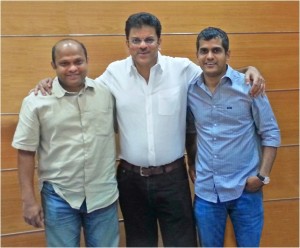
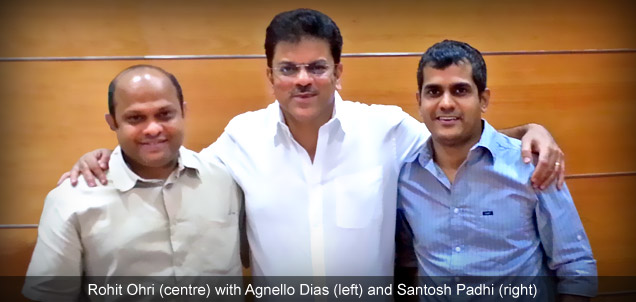
    Taproot's Agnello Dias (left) and Santosh Padhi (right) with Rohit Ohri of Dentsu (centre)

    With several of the most popular recent campaigns like ‘Har Ek Friend Zaroori Hota Hai’ and ‘Joh Tera Hai Woh Mera Hai’ for Airtel and ‘Change the Game’ for Pepsi under its belt, the five year old agency has seen a meteoric rise. It’s also won critical acclaim; the most recent being a Gold Lion at Cannes along with Ramesh Deo Productions for the ‘I Am Mumbai’ film for Mumbai Mirror, a newspaper from the Times Group, which also publishes The Economic Time


    The managements at both Dentsu and Taproot declined to discuss the financial aspects of the arrangement. Industry observers estimate the initial upfront payout at Rs 60 crore with another Rs 80 crore expected in future earn-outs


    In a global deal in July, Dentsu had paid $4.9 billion for British media buying group Aegis, valuing the company at 12 times its earnings before interest, taxes, depreciation & amortisation.


    The Economic Times had reported in June that Dentsu among other agency groups was speaking to Taproot about a possible acquisition. Says Rohit Ohri, executive chairman, Dentsu India group, who has previously worked with one of Taproot’s founders Agnello Dias at JWT: “They (Taproot’s co-founders & chief creative officers, Dias and Santosh Padhi) could have chosen anyone. What convinced them about Dentsu is that we are very entrepreneurial and evolving; and more willing to look at out of the box ways of working.”


    Adds Dias: “We felt it was the right thing to do. Of all the conversations we had, we felt most comfortable with the equation we were sharing with Dentsu. Another reason cited is Dentsu’s global strengths in the digital medium and that it is currently the leading network in Asia.


    Taproot will retain its identity and won’t be rebranded. Although Dentsu is a majority owner, management control of the agency continues to rest with Dias and Padhi. Dias says, “In terms of changes, there’s nothing in the pipeline. I think even Dentsu is saying ‘why should we upset a system that’s doing so well’?”


    What the arrangement brings Taproot is integrated communication, superior execution abilities and a national network. As far as Dentsu is concerned, Taproot, says Ohri, “is really the creative firepower we needed in the group.” However, the firepower is not likely to be immediately applied to any of Dentsu’s current client relationships.


    Both partners believe that Taproot will step in only when needed “on a case by case basis” according to Padhi. Interestingly enough, two of Taproot’s most productive client relationships have been with Airtel and Pepsi, brands that Ohri worked on in a previous stint at JWT. Ohri regards this as “a great bonus”, but he cites the talent of the two principals at Taproot and the chemistry with senior management at Dentsu as the main reasons for the merger.


    Among a spate of recently launched creative-led independent agencies which include Creativeland Asia and Scarecrow Communications, Taproot has arguably been the most successful with several marquee campaigns to its name for Airtel, Pepsi and The Times Group.


    The agency was founded in 2008 when Dias (then national creative director at JWT) decided to join forces with former colleague Santosh Padhi (executive creative director at Leo Burnett at the time). The 33 person strong agency has been particularly successful in wresting business from Dias’ former employer JWT, landing prestigious assignments from Pepsi and Airtel.


    Source:The Economic Times

    Copyright © 2012, Bennett, Coleman & Co. Ltd. All Rights Reserved

  • Global ad biggies like Omnicom, Publicis & Dentsu in hectic parleys to buy Taproot

    By Neha Dewan & Ravi Balakrishnan


    In 2011, when Taproot snatched two big-ticket assignments, PepsiCo and Airtel – both JWT clients – the joke was that JWTstood for Just Went to Taproot.


    Now JWT may just have to be shuffled around to become TJW – or Taproot Just Went – now that a clutch of global ad networks are in hectic parleys with the founders of the five-year-old independent Indian agency. Those in the fray, said a person familiar with the negotiations, include the Omnicom group, Publicis and Dentsu.


    Agnello Dias, chairman and co-founder, Taproot India, said: “There are three or four groups talking to us and Dentsu is one of them. It doesn’t have any head start and we are no closer to signing a dotted line (with Dentsu than with any other network).”


    A Dentsu spokesperson was unavailable for comment. Nakul Chopra, CEO, Publicis South Asia, said: “We don’t comment on acquisitions of any nature.”


    Taproot’s co-founders Dias and Santosh Padhi are clearly testing the market and checking out valuations, said an agency insider. But this may not tantamount to an immediate sale.


    “The global groups are speaking not just to Taproot but also to other independent agencies like Creativeland Asia. We are open to talking to anybody but at the end of the day it may not be Dentsu, Omnicom or anybody. We would just like to get an idea of how much we are worth and valued at,” is how the insider who requested anonymity put it.


    The agency, which had a slow beginning in 2007, eventually moved on to big clients. Campaigns such as ‘Har Ek Friend Zaroori Hota Hai’ (HFZ) and ‘Change the Game’ for Pepsi got popular acclaim as well as industry  accolades with HFZ winning seven medals at Goafest this year.


    At Goafest, considered the premier local ad festival in India, Taproot was runner-up to Ogilvy India, clinching 34 metals and beating top agencies such as Leo Burnett, DDB Mudra, Grey and JWT. Besides this, the agency had won the Grand Effie award last year for the ‘Change the Game’ campaign.


    In its fifth year, the agency runs a tight ship with 35 people on board. A senior official at a leading ad agency says that Taproot has had to turn down a lot of projects in the past year.


    “Funding via a sale of equity will help them increase their capabilities,” he said. For now though, a more interesting game is afoot with Dias and Padhi playing their cards very close to their chest.


    Source: The Economic Times
    Copyright © 2012, Bennett, Coleman & Co. Ltd. All Rights Reserved


  • Anil Thakraney: Unbundling of creative

    By Anil Thakraney


    In my interview with Taproot’s Agnello Dias for MxMIndia, the creative director made a stunning forecast for the future. He feels the typical ad agency will only consist of thinkers and strategizers. And that all creative work will have to be outsourced. This will mean specialized press ad shops, film script shops, digital design shops, and so on. And what he says makes a lot of sense. Here’s why.


    In the good old days, advertisers would use only press and TV as the key media, and the rest would consist of ‘supplementary’ stuff. And this resulted in ad agencies hiring copywriters and art directors. Writers would write storyboards and press ad copy, and the art directors would design the ads and other packaging material. So that was fine.


    However, in the last decade, the media has boomed big-time, and now clients look for special effort for a multitude of media platforms. Digital work, for instance, is being outsourced. Because agency’s creative personnel don’t get this space. As time goes by, and as technology unleashes more platforms, there will be serious pressure on ad agencies to find the right talent. And the agency shall not be in a position to hire all the staffers on its payroll; it would go bankrupt in months. The digital outsourcing will have a backlash on the traditional agency. It will mean that one day ALL work will have to be done by outsiders. In fact, radio, an old medium, has been crying out for specialists for decades. With the unbundling, we would see specialized radio script shops, and the quality of the creative work will dramatically improve.


    And most importantly, it will allow creative people to focus on their core competencies. It serves little purpose for a JJ Arts School grad to be breaking his head over internet videos. Likewise for fine English prose writers battling with Hindi television ad scripts. Specialization makes enormous sense.


    Yep, I hope Aggie is a good crystal ball gazer, and that what he predicts will come true. Personally speaking, I am all ready for the future. I have decided to start a specialized scam ads shop. Which to me sounds like a really lucrative business. 🙂


    * * *


    PS: A horrifying window display. Shocking is too mild a word. But it makes a strong case for stopping cruelty against animals. And hats off to the woman who volunteered for this campaign.


    Link: http://www.dailymail.co.uk/news/article-2134555/Lush-animal-testing-protest- Woman-subjected-experiments-horrified-shoppers.html?ICO=most_read_module

  • Disappointed at not winning the Grand Prix: Agnello Dias


    By Anil Thakraney


    Taproot’s Agnello Dias and Santosh Padhi ‘changed the game’ for Pepsi. And they’ve done ditto with the Indian ad world. Their huge, rapid success has prompted many creative directors to sit up and seriously consider starting their own little shops. Some have already branched out.


    Creative hotshops aren’t a new phenomenon in this country. Ravi Gupta, elsie Nanji and Mohammed Khan opened their boutiques many years ago. What’s different with Taproot is that they have been doing stunning work for large clients. Like Pepsi, TOI and Airtel.


    This makes the agency path breaking and special. In just three years they have won more Abbies than the number of people in their office. Including peons.


    I meet Agnello Dias for some steaming Southie fare at King Circle’s Mysore Cafe. As India’s most happening creative director shares his mantras and his plans for the future. Aggie is that rare advertising individual who listens more than he speaks. And that perhaps is one of the key reasons behind his enviable success.


    The last time we met was three years ago. You were running around buying computers and aircons for your new agency which had still to be named. How’s the journey been?

    It’s been like mounting a tiger you can’t get off because things have moved so fast in so many different ways. In terms of the actual structure of the agency and in terms of the actual advertising work.


    Did you expect to scale such heights?

    No. I had an idea where I would be and it was much lower than this. I thought we’d be a little quieter and much less in the spotlight. But things have happened and not in the way I thought they would.


    Runner-up agency at Goafest. That is something you would never have imagined three years ago.

    (Smiles). No! We knew we’d do well, we knew we had a couple of good campaigns. But statistical superiority was something we never expected.


    You must be a proud man.

    (Thinks.) Yeah. It was quite a pleasant surprise. I am proud but it’s also slightly unnerving because I wouldn’t like us to be measured against this every year. Though we are cognizant of the fact that it’s any given Sunday, and that the same jury judging the same work again today may have a different result.


    Disappointed that your ‘Har ek Friend’ work (Airtel) didn’t win the Grand Prix?

    Yes. It would be a lie to say that we weren’t disappointed. Because one was always given to believe that a Grand Prix isn’t just about good work, but also about work that has serious impact. And we felt it did have that impact, but the jury thought otherwise. (Shrugs.)


    Any major improvement needed in the Goafest judging process?

    I think we, as an industry, stretch ourselves too thin to find hundred judges. And so we end up having, to a certain extent, judges who are not yet ready for judging. One way to solve that would be to have two categories entirely judged by one set of judges. That itself would bring down the number of judges to fifty. That way we will have a far more concentrated, mature bunch of judges. I judged at the ‘One Show’ and it is the exact opposite out there. One jury judges everything. It’s a nightmare but it can be done.


    Don’t you at times miss the comfort of a large agency?

    I am not sure comfort is the right word, but definitely the conveniences. Figuring out your own airline tickets, talking to directors and producers about edit commissions, rates, etc because we don’t have a secretary and a films department. But one doesn’t really miss the conveniences because one is so engrossed in what one’s doing.


    Do you have a client servicing team and account planners? Are you following the structural format of traditional agencies?

    We don’t have pure strategic planners. We have servicing guys but the ratio would be the opposite of a large agency. It is 5:1 in favour of creative people. We have a managing partner, his name is Manan Mehta. He’s just about 28 years old and he’s the senior most servicing guy we have.


    Are you looking to expand into other cities?

    The only option we talk about is Delhi. We are looking at it, though it may not happen.


    How many clients do you have?

    Maximum ten.


    Want more or are you happy with that?

    If we have to do more than this we will have to hire more staff.


    When you started out you said to me that you guys don’t want to be a large agency. That the day you feel you aren’t able to give personal attention to clients you’ll shut down. Has that view changed?

    (Thinks.) It may be on the cusp of changing. Because so far we have been giving personal attention and therefore we aren’t taking on more clients. We are putting them on to other agencies. We are currently contemplating within the office on where we want to be. If we take on more people, they will be one step removed from Paddy (Santosh Padhi) and me. But we haven’t decided that as yet.


    What does your own heart say?

    I think one level removed is still fine. But no further than that. We don’t want a large reporting structure.


    Does money spoil?

    Yes, it does.


    Rumours have it that Aggie and Paddy are looking for investors to sell the agency and cash in.

    When the multinational networks come to town, they do meet us. We do meet them and talk about exactly this. But in this industry you can’t just sell and go away because no one will buy that. So even after an equity sale we will have to be around for at least five years.


    But you will still make a killing. Find that tempting?

    Yes, it is tempting. We have been talking to various people but it’s not worked out inside our heads.


    Basically they aren’t making offers you can’t refuse.

    Yeah, possibly.


    Okay, enough corporate talk. Let’s move to more interesting stuff. Like creativity. How do you go about creating an ad? Any mantras up your sleeve?

    The process is the same. But within that process there are a few quirks I personally have. We try to push a little more even after we’ve cracked it. We try not to go home early. It’s good old fashioned hard work.


    One campaign you’ve done at Taproot that you are most proud of.

    The ‘TeachIndia’ campaign (Times ofIndia). It was good creative and it’s also something I identify with.


    With ‘Har ek Friend’ I felt you guys have a good understanding of Young India. Did you hang out with the kids, or was that gut feel work? Do you research before starting out?

    Yes, I do. I try to walk the streets, I walk from Matunga (home) to Mahim (office) many times. I stop at all kinds of shops and observe. I once ordered from the teleshopping network just to see how the packet arrives. And I do these things even when there’s no brief. Also, what’s worked for me is that I get fascinated by people who disagree with me. I like to spend more time with them. I think it’s important for all young people in advertising, or anywhere else, to create a persona where people feel comfortable enough to give them negative feedback.


    When you hire, what is the one thing you look for in a young creative person?

    First, I look for resilience. Creative stamina. Because unless you come back as equally strongly as the last time, you will not have a long, successful career. Another thing is keen observation. People who notice things in a room which others don’t. And they should be good listeners.


    The biggest challenge facing the creative director of today.

    I think most national creative directors in large agencies are good. But the structure has turned on itself in such a horrible manner that they have no choice but to be so thinly spread that they are not able to do justice to a particular brand. And the reason for that is the accumulation of overheads by large agencies. So instead of one, you have to focus on eight other accounts because there are eighty other guys sponging off that account. See the number of designations going around. So the agencies should free their creative directors from having to do so much.


    What will the ad agency look like ten years from now?

    I can’t say ten or fifteen years, but the business will become craft agnostic. For example, there are some people who are creative thinkers or planners. And there are some who are not thinkers but craftsmen. Now these guys, because of their high level of craft, become indispensable. And they are given designations or titles which is actually a function of creative thinking. So good art directors become creative directors and attend research briefings though that’s not their core competency. In the future I see press ad shops, where you can get a press ad made. Or film scripting shops. And the ad agency would be a bunch of free thinkers. I think the unbundling of advertising will move to the unbundling of creative.


    Having said all this, is there one senior creative director you do admire?

    (Thinks for a long time.) I like Rajiv Rao (O&M). I think he has a naturally keen eye for aesthetics. He has the ability to boil complex problems down and come up with simplest solutions. And that’s visible in the Vodafone work.


    Didn’t you admire the way The Hindu hit back at your campaign for TOI, Chennai? even though it’s a rival brand.

    Yes, their response was very good. It’s a good contest. They could have done the crafting a little better, but otherwise it was very good.


    Was there any self-doubt when you started out? During the beginning period?

    Yes, there was a lot of self doubt. In fact, apart from The Times, for some time we had very little business. So we just decided to lie low and consolidate. We were open to the fact that we may have to find jobs again. even now if it doesn’t work out we’ll go and apply for jobs in creative agencies.


    One thing about the ad world you don’t like.

    The irrational level of competitiveness. I think it’s great to want to do better, but I wouldn’t applaud somebody else’s mistakes. For example, take the case of hard boiled sweets. Now every client wants to do wacky work in this category because someone started doing it. That’s great news for the whole category. The same thing is happening with electricals. Because of Havells we can’t do a normal ad anymore. We should applaud the people who started it, those who belled the cat. So what I am talking about is the difference between healthy and ruthless competition. The ruthlessness is what I don’t like. The attitude that ‘I didn’t do better so I will pull the other guy down’.


     

  • @Goafest, Taproot emerges tall. And how!


    By Tuhina Anand (with inputs from Robin Thomas)

    Photographs by Shailesh Mule/Fotocorp


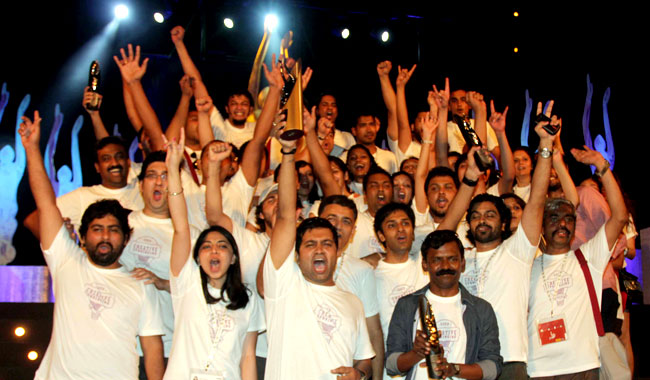
    When Big Dad of Indian advertising Ogilvy pockets 51 metals at Creative Abbys at the Goafest 2012, it is something that one expects, so no surprise here really. But when a three-year-old agency goes on to become the runner-up, leaving behind the much settled Leo Burnett, DDB Mudra, Grey and JWT, it is indeed a proud moment for Indian advertising. It says that all is not lost and what still matters in the advertising business is creativity and if you have the ingredients right then there’s no one to stop you from writing your success story. Taproot India and its founders Agnello Dias and Santosh Padhi have shown the industry the might of small and given hope to many aspirants on the same path.


    Talking about Taproot’s success, Agnello Dias said: “It’s been great, a satisfying feeling, but it is also slightly scary because we have got to do even better than last year as expectations have gone up, but as of now, we are just happy that we have performed well at the awards.”


    On Taproot missing out on the Grand Prix as there were huge expectations from Airtel campaign, Santosh Padhi said: “Yes, a lot of people said that our Airtel or Pepsi campaign would win us a Grand Prix, so I think that itself is a Grand Prix for us. Therefore, we have no grudge and we are happy with the way things have turned out for us. And definitely there were two strong competitors against us for the Grand Prix.”


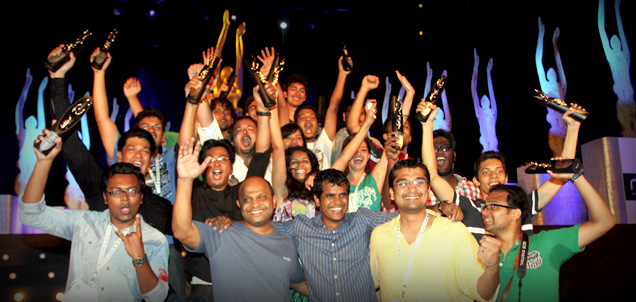
    The victorious Ogilvy team


    The most awarded work at the Goafest was for  brands, including The Times of India, Volkswagen India and Airtel. Even for Ogilvy India, the work that fetched them maximum awards was for Fox Crime. Also the work that got CreativeLand Asia its Grand Prix in the Integrated category was for Audi 8L 3D.


    TOI’s ‘Wake Up Chennai’ (that fetched accolades at Goafest) has been embroiled in controversy as it spoofed its rival, The Hindu. the ad showed how reading the old player (read The Hindu) puts people to sleep and the readers should wake up to something more exciting – The Times of India. The ad was crafted by Taproot which also created Airtel’s Har Friend Zaroori Hai that fetched many awards for the agency across various categories. In fact, Har Friend… can be dubbed among the most popular campaigns of the year.


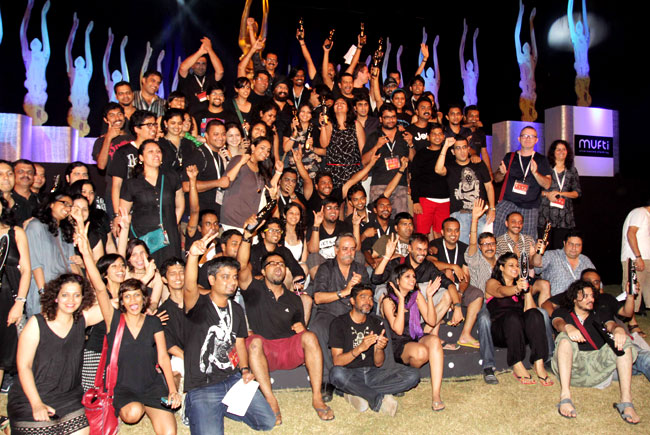
    A happy Creativeland Asia team


    Ogilvy’s work for Fox Crime titled The Photographs case, made by Good Morning, is in keeping with the genre of the channel and creates a mini thriller for its audience, building anticipation for what to expect on the channel. Talking about the wins, Abhijit Avasthi, NCD, O&M said: “It’s been a great year as always and I think the best part is that we have done well in every category, from design to direct to digital to integrated. Obviously there are some works where one wishes we had got more recognition, like the Cadbury in home campaign, but, overall, we are very happy. I think we have got the best clients who allow us to do really some very interesting work.”


    “It’s very reassuring that we have managed to win the Grand Prix back to back and this year I hold the digital grand prix to a greater importance, simply because it demolishes the myth of lots of clients that digital is something big network agencies cannot do,” he added.


    Volkswagen, which brought awards to DDB Mudra, Grey India and Nomad Films, is a brand that has caught attention because of its innovative use of media since its launch inIndia. While the fraternity may not have lauded all the innovations that Volkswagen did, but it cannot be disputed that the work did catch the attention of the people and fraternity.


    However, if one were to look at the Creative Abbys 2012, it will be remembered for Taproot India, which carved a name for itself among the behemoths, only because of its creative supremacy. More power to all those who want to chart their own path and keep in mind that great ideas zaroori hai and the rest will follow. Right, sirji?


    Click here to view all Goafest 2012 stories


  • TAPROOT! We will not mess with what’s working wonderfully: Rohit Ohri

    When one speaks to Rohit Ohri, Executive Chairman, Denstu India Group, one can sense the passion and excitement with which he has embraced his role at Dentsu. However, he does admit that when he had taken the role more than a year back he was himself not sure if he was doing the right thing considering that he was moving out of a familiar environment where he had spent 21 years! But things couldn’t have been better for him and he certainly is enjoying being a part of the transformation that Dentsu is undergoing. Mr Ohri talks to MxMIndia post the news of Denstu Inc acquiring 51 % of Taproot India.
     

    By Tuhina Anand


    What a day it has been! Dentsu and Taproot coming together is certainly big news. However, what intrigues is that you already have 3 full-service agencies under Dentsu India. So what is the reason behind acquiring a creative agency?

    We are constantly working towards bringing the best skills and capability in the organization. We have three full service agencies under Dentsu India Group – Dentsu Marcom, Dentsu Communications and  Dentsu Creative Impact and we have the best of creative minds including Soumitra Karnik, Titus Upputuru and Harish Arora leading our creative units. In a year that we have worked together, I think we have come out with some great creative works like Canon India’s What Makes Us Click or Hero Motorcycles’ Sach Kar Denge Sapne. These are excellent works that have helped the clients remarkably increase the market share and put them on a growth trajectory.


    I have been reading that we lack creative prowess but I think that’s not the case. I think it has more to do with a perception that needs to be changed. We have been doing a lot to improve the quality of work that has been coming out of the agency. But we decided that we needed a dramatic shift to change the perception of Dentsu and we needed to make a quantum leap. Our decision of aligning with Taproot is a move in that direction. I would say that the change was already happening in the agency it’s just that now it has been accelerated with this development.


    Dentsu is a Japanese-held company but it is not a Japanese agency. If we are in India it means that to succeed we need to create advertising that clicks with the nation. We have Japanese counterpart in the system where they bring an understanding and expertise in our offering. It’s a happy marriage where we leverage each other’s strength.


    A well-thought of strategy then!  How will the partnership work on a daily functional basis?

    Very clearly we will not mess with what’s working wonderfully. So there is no name change or any change in the way Taproot has been functioning. The agency has been handling big clients on project basis and for them to handle them on a regular basis would mean that they need bandwidth and expertise like media or digital. That is where we step in by helping them to cut the labyrinth and give them direct access to our network’s strength. Taproot will grow on its creative capability and remain the iconic agency that it is today. The difference is that the support from Dentsu will come in when required thus helping them to focus on their creative output.


    There will be a Taproot Board that will be set up which is part of the process of the post merger integration. The Board will have four directors from Dentsu and I shall be one of them and three from Taproot. The key decision like the future of the agency will  need to be passed by the directors but I repeat that in day-to-day functioning Aggie and Paddy will run it as they have been doing till now. They will have complete freedom.


    With you coming on board, it appears Dentsu India is on an overdrive to get in the top race in the industry, how do you see the agency poised today and the road ahead?

    Dentsu is the number one agency in Japan for the past 110 years. We want to be the agency that clients want to work with. We are 100 percent integrated agency and have a holistic approach to communication. Today, the separation among various functions like creative, media or digital has become so deep that it is difficult to straddle across them. However, the clients want one-stop solution and that is Dentsu’s strength. Tim Andree, the President and CEO of Dentsu Network Global, says that we are network of agencies which collaborate with each other meaning we build complimentary skill and not competitive.  This is what we truly believe in.


    For you personally, how is the role different from your previous stint?

    Honestly speaking, I wasn’t sure of my move as I had spent 21 years of my career at JWT but now that I am here I can confidently say that I am having the best time of my life. Last year has been fantastic as well as challenging nevertheless satisfying.


    I think the biggest difference in the agency today is the culture that we have created within the organization which encourages creativity. I have got enormous amount of support from Dentsu Inc on this. The deal with Taproot was initiated by me and I got phenomenal support thus helping in making it happen. We had envisioned this almost a year back and it is extremely gratifying to get the congratulatory messages and calls from the industry and your peers which kind of validates that what one has planned was in the right direction. I have been overwhelmed by the support that the industry has shown on this move.


    I can feel the change in the agency, in the way people are approaching us now or during our discussions with the people from the industry. It’s just that we have accelerated that change with the move.


    Must be a tiring day for you given the buzz the news has created… how do you plan to celebrate?

    I think I just want to enjoy and savour the moment. It has been a significant move and to be accepted by the industry gives me immense pleasure and kind of validates that our strategic thinking was in the right direction. However, one must understand that the move of partnering with Taproot would have not have created much ripples had we not already been doing something to show that Dentsu was undergoing a transformation. It would have been just passed off as a one-time move.  I think we had already made a difference by getting the right kind of people on board, by our work and the culture that we have created within the organization. So there was some foundation and people knew that there was an agency undergoing change albeit at a slower pace. With Taproot we have increased the pace of change. Coming back to the celebration, I think we will do one when Aggie, Paddy and I get together.


  • The Anchor: 10 TAPROOT! TVCs that you want to watch over and over again

    By A N Chorrea


    [youtube width=”400″ height=”220″]http://www.youtube.com/watch?v=nIuGHTAwi1g[/youtube] Airtel: Jo Tera Hai Wo Mera Hai


    The new Airtel ad may seem a little inspired from the original and hence not as refreshing, but it has caught on with the youth, and guess that’s what matters.

    [youtube width=”400″ height=”220″]http://www.youtube.com/watch?v=pIAKKtlyi6g[/youtube] Fox Movies: Subtitles


    Okay, it may take a second for you to get it, but when you do, you can’t help wanting to watch it over and over again.

    [youtube width=”400″ height=”220″]http://www.youtube.com/watch?v=v2FviMZkX5s[/youtube] Nirma Ambulance (New)


    Woman power at its best… in fact it may want you to sock those men where it hurts most. (Pssst: now would you really do what the women did if you were in your finery?)

    [youtube width=”400″ height=”220″]http://www.youtube.com/watch?v=xeg27rv__04[/youtube] A Day in the Life of India – The Great Indian Circus (The Times of India)


    It’s part of the Day in the Life of India series… nicely crafted.

    [youtube width=”400″ height=”220″]http://www.youtube.com/watch?v=WWq3101hotA[/youtube] Mountain Dew – Dam


    How did he do it!? We bet every time you saw it, you had a new theory on how the young man would’ve overcome fear.

    [youtube width=”400″ height=”220″]http://www.youtube.com/watch?v=rVb01vfbVEw[/youtube] Mumbai Mirror


    Award-winning ad… need we say more.

    [youtube width=”400″ height=”220″]http://www.youtube.com/watch?v=kxz4WvGG7uA[/youtube] TOI Chennai – Wake up to The Times of India


    This is the ad that woke up The Hindu… guess that’s what matters.

    [youtube width=”400″ height=”220″]http://www.youtube.com/watch?v=hZIFj3VF9KU[/youtube] Pepsi World Cup Cricket 2011 promos


    These were fun, weren’t they… remember the Helicopter Shot?

    [youtube width=”400″ height=”220″]http://www.youtube.com/watch?v=dz6YylorUGM[/youtube] Aman Ki Asha


    Tears roll down our eyes every time we see this.

    [youtube width=”400″ height=”220″]http://www.youtube.com/watch?v=P9BlCyTD-sw[/youtube] Airtel – Har Ek Friend Zaroori Hota Hai


    Huge hit. Earned cult status as you don’t mind seeing it over and over again.

  • The Complete Story: Win-win for Dentsu,Taproot; big loss for WPP (from yesterday)


    By Pradyuman Maheshwari


    So is it bigger win for Dentsu or Aggie and Paddy? Both parties, one would say. It’s not that Dentsu has no creative talent, but the Taproot India of Agnello Dias and Santosh Padhi has by far been the biggest creative story of Indian advertising in the last three years.


    An Ogilvy, Lowe or McCann may be thriving and a Mudra has won some great awards but nothing to beat Taproot, a CxO with an international network told MxMIndia on receiving MxM’s BBM alert at 6.30 am today.


    Agnello Dias

    The news of the announcement was made to the staff on Monday and key clients have also been informed. The nitty gritty of the deal was completed last week and the announcement by Denstu was made on Tuesday morning 10am local time in Japan.


    Although some estimates (and an Economic Times report that MxM carried as part of its syndicate arrangement) say that the deal is valued at Rs 140 crore (with Rs 60 paid immediately and Rs 80 crore in earn-outs), MxMIndia learns that this amount is exaggerated.


    No surprises here
    By Tuhina Anand 

    Taproot India in many ways has rewritten the fate of independents in India. In fact, Taproot would be an excellent example of a successful brand created in such a short span of time. The credit for this goes to its co-founders Agnello Dias and Santosh Padhi who have never looked back since launching the agency in January 2009.Like any new set-up Taproot would have had its ups and downs but the message that came out to the world from the agency was clear that the work they produced were superlative and consistent. The agency has done some memorable work like Airtel’s Har Ek friend zaroori hota hai or Pepsi’s ‘change the game’ which catapulted them in the big league and bigger brands which hitherto were prerogative of bigger agencies.Taproot continued its association with the TOI Group which had managed to win India’s first grand prix at Cannes Lions led by Mr Dias when he was with JWT. At Taproot too this association with TOI got them recognition at international platform like Cannes. It was also recognized as Cannes Lions top 20 independent agencies in the world. So it seems like a simple success mantra where the duo let their work do the talking and in return created a substantial equity for their agency.


    That Taproot decided to sell its stake doesn’t really come as a surprise as the talk was doing rounds that the founders were looking for partners. In their pursuit to get partners what probably helped was that Taproot had proved its mettle in a short span and there were prospects already willing to get a share in the agency. Then their choice of partner-Dentsu Inc- might come as a surprise initially as one would have expected an international hot shop to enter India via Taproot but if one stops to think the association seems perfectly aligned. Dentsu Inc has acquired 51 per cent stake of Taproot India.


    Taproot gets the scale and bandwidth of Dentsu besides the moolah. In fact, the deal is just at the right time for Dentsu Inc when the Japanese major has taken full control from Sandeep Goyal and is trying to get its arithmetic right in India starting with a managerial change where Rohit Ohri, ex-JWT was roped in as the Executive Chairman forDentsu India Group and later Divya Gupta to head its media busienss.


    For the latter, which is not really known for its creative prowess, Taproot is just the right fit as that’s the field where the agency scores highly.


    The fact that Ohri and Dias have worked together at JWT also makes them familiar with each Other’s working style.


    On the association, Rohit Ohri, Executive Chairman, Dentsu India Group, said, “Taproot has, very quickly, become one of the most respected communication agencies in India. In fact, Aggie and Paddy are globally recognized and celebrated creative talents. We are delighted that they have chosen to partner with Dentsu. This alliance will give a significant fillip to our growth plans for India. Our collective vision is not to be the biggest but to be the best in the industry.”


    On how this acquisition impacts Taproot, Mr Ohri added, “Taproot’s everyday operations and management will remain unchanged. We will ensure that Taproot’s independent spirit and fiercely creative culture stays intact. It will just have a lot more firepower added through integrated communication execution capability and an all-India network.”


    Agnello Dias, Co-Founder and Chief Creative Officer, Taproot India said, “While we are doing alright on the creative front, we felt that we needed to add a bit more logistical and service capabilities across markets. With Dentsu as our partner we feel we can scale up several areas of our operations very quickly without losing what has been working for us so far.”


    Santosh Padhi, Co-Founder and Chief Creative Officer, Taproot India added, “Most importantly, we are assured that this alliance will be mutually beneficial to Taproot India and also to each one of its employees going forward, without changing our creative offering or the nature of the relationships we share with all our clients.”


    Taproot India brings to Dentsu 33 full-time employees and a roster of clients that includes PepsiCo, Airtel, The Times of India, Polycab, Marico, Karbonn Mobiles,Myntra.com, Mumbai Mirror, Nirma, DSP BlackRock Mutual Fund, UTV Bindass, and UTV Stars among others.


    A wholly owned subsidiary of Dentsu Inc., Tokyo, the Dentsu India Group comprises three standalone full-service advertising agencies-Dentsu Communications, DentsuMarcom and Dentsu Creative Impact-as well as Dentsu Media and Dentsu Digital.


    However, in this entire celebration one question that really comes up is that for an independent who has bigger ambitions, the only way out is to become a part of a bigger network. In earlier MxM India’s conversation with industry players, some of the successful independents like Raj Kurup of Creative Land Asia and Manish Bhatt have voiced their opinion to remain solo. Mr Bhatt had explained to being open to partnerships but not a sellout. Mr Kurup had clearly stated, “I have started CLA with the prime motive of building it up, selling it definitely not in the plan.” (See: Stay solo or scale up with a biggie? http://www.mxmindia.com/2012/07/ stay-solo-or-scale-up-with-a-biggie/)


    With Taproot’s decision to go with Dentsu, the question of staying solo or scaling up with a biggie becomes much more relevant for the independents.


    The company is not valued above Rs 100 crore, and the amount paid to Messrs Agnello Dias and Santosh Padhi (both of who own equal stake) would be in the region of Rs 40 and 50 crore, we learn.


    Santosh Padhi

    There is an element of earn-out, but this depends entirely on the performance of the agency. So it could Rs 80, 180 or even 40 crore, is how one Dentsu insider told us after the announcement was made.


    Big loss for WPP

    There were many suitors for Taproot. While Publicis and Omnicom (via TBWA) were out of the race early, the choice was between Dentsu and WPP. In fact, MxMIndia learns that it was a decision that had to be taken by Messrs Dias and Padhi.


    WPP sources told MxMIndia that they were taken by surprise that the deal had been inked, as they were still hopeful that Taproot would pick them.


    So why was Dentsu chosen and not WPP, which has a huger presence in India and internationally. Ironically it’s WPP’s ‘bigness’ that’s perhaps one of the biggest reasons. While Dentsu has various arms, it is essentially one company in India, whereas WPP has various separate entities in Ogilvy, JWT, Group M and its new digital, BTL, etc interests.


    What Taproot realised in its journey is summed by Aggie’s statement in a Dentsu release: “While we are doing alright on the creative front, we felt that we needed to add a bit more logistical and service capabilities across markets. With Dentsu as our partner we feel we can scale up several areas of our operations very quickly without losing what has been working for us so far.” And this scale could be provided by Dentsu and not WPP was the thinking. The comfort factor with Dentsu was also greater, given the opportunities to grow.


    The likelihood of Taproot growing in the Dentsu fold is greater than it is with WPP.  There are big agencies like Ogilvy and JWT with WPP and folks like Piyush Pandey, Bobby Pawar etc who would always be centrestage and may try and pull rank given their seniority in the business. Not so with Dentsu, where even though there is talent within the India set-up, Taproot will have a star presence.


    Rohit Ohri

    Victory for Ohri, Future within Dentsu

    That the acquisition happened is a big feather in the cap for Mr Rohit Ohri, Denstu India’s executive chairman. It is Mr Ohri who is said to have initiated the discussion and gave the comfort factor to the Taproot co-founders.


    Some industry folk may remember there was a minor skirmish between Mr Ohri and Mr Dias when Taproot was awarded a Pepsi campaign and Mr Ohri was still at JWT heading Delhi operations, but all of that is history. In fact one of the main factors that Aggie and Paddy have inked the deal is the relationship with Mr Ohri.


    It may be noted that the stake sale deal has been signed with Dentsu Inc and not Dentsu India, and the reporting is to the Board of Dentsu headquartered in Japan. The other advantage this offers is that the fortunes of Dentsu India and the vagaries of its business will not impact Taproot. So, clearly while Mr Ohri is Dentsu’s face in India, Taproot will not report to him.


    What if?

    There is a three- to five-year lock-in period for most such deals, and the arrangement with Messrs Dias and Padhi is said to be of five years. However, there are various possibilities in the future as Dentsu grows in the scale post the Aegis acquisition and India becomes a bigger play for all advertising networks. The Dentsu insider we spoke to also said one shouldn’t be surprised if either Mr Dias or Mr Padhi or both could be given bigger roles in India or internationally.


    Since the deal helps both Taproot (scale, international network) and Dentsu (grow in India, creative powerhouse in its fold) the chances of a break-up are remote in the short and medium run, but even if there is, there will be no financial implication to monies paid out.


    Meanwhile…

    The papers are signed, the money may well be in the bank. There are no governmental clearances needed. People who do know Aggie and Paddy, as they are known in the industry, are aware that they have an easy, simple lifestyle. So don’t expect a cruise to the Bahamas or Hawaii or some such. The dosh will be well-invested. For the moment, it is getting used to being called Aggie San and Paddy San.


  • Rahul Kansal: No shortcuts with TAPROOT!

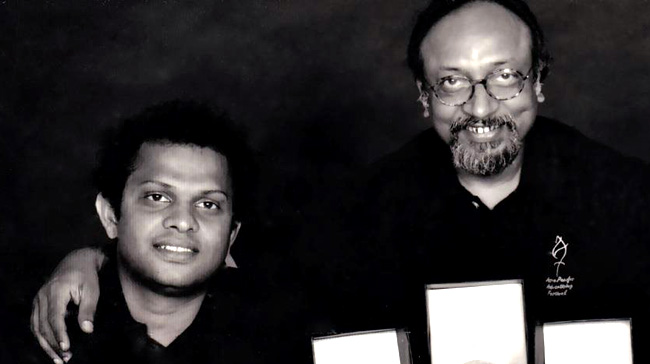
    Rahul Kansal, the Executive President at Bennett, Coleman and Co Ltd has been an adman before he moved to the print business with The Times of India. Having been part of the agency business, Mr Kansal is aware of the shortcut solutions that many agencies come out with for brands. And that’s precisely the difference that Aggie and Paddy who have worked on The Times of India campaigns bring to the table. According to him, Taproot India comes out with original work customized to answer perfectly a brand’s needs unlike taking the safer route of applying a formula to tackle the brand worries:

     

    Advertising industry has its own big names but I think the difference that both Aggie and Paddy bring together is that they are perfect teammates who complement each other thus helping in enhancing each other’s brand solutions. Aggie I would say is amongst the most versatile thinkers. He never has any preconceived notions of any of the brands issues so when his approach is always new and in accordance with what the brand needs at that point of time. He assesses the brand, market and consumer needs and comes out with a specific solution that will address the issue. He doesn’t apply stereotypes hence the brief that arrives is highly original leading to a highly creative solution.


    Paddy then complements by giving the most appropriate treatment to the concept and that probably is their winning formula. They are agile in their thinking and that’s the reason I think they have been able to create something as hard-hitting as I am Mumbai for Mumbai Mirror, something frothy for Mumbai Times, and created a sociological trend with Airtel’s Har Friend Zaroori Hota Hai with a mass appeal. They took an everyday insight of how friends are important and applied it to Airtel making a strategic shift for the brand. In fact, the campaign is not just a pretty creative work but strategically thought of insightful work that has helped the brand enormously.


    As for The Times Group, the brand has an old legacy and is considered a great brand but I think with their association Aggie and Paddy have managed to create a new buzz around the brand.


    I am looking forward to their association with Dentsu as I can understand that the independent creative spirit of Taproot will continue to remain as it is but will give them resources of a global network to equip them better. I think it’s a win-win situation for both. I think lot of boutique agencies falter as they lack skill to expand well leading to indiscriminate decisions which might not work in their favour. For Taproot, this has never been an issue. They have been able to attract fabulous talent and I have always been amazed how they can manage to find such bright and talented people. So there has always been a method in the duo’s thinking and this decision to partner with Dentsu will only strengthen their presence further.


    As told to Tuhina Anand


  • TAPROOT! | Pops on the Rise & Rise of Aggie & Paddy


    By K V Sridhar


    Aggie:

    “Agnello Dias, I have always believed, is the Sachin Tendulkar of advertising industry. Aggie has the ability to camouflage himself with any brand, in any tone of voice, and in any style.”

    I have known Aggie for more than 20 years now. I have known him as a young boy who came into the advertising world in the year 1991-92 when I was in Lintas. I have seen him grow as a copywriter, I have seen him grow as a creative director, and I have seen him grow as a man. Agnello Dias, I have always believed, is the Sachin Tendulkar of advertising industry. Aggie has the ability to camouflage himself with any brand, in any tone of voice, and in any style. In fact, when Aggie was a young boy in the industry, he wrote some beautiful copy for Johnson and Johnson’s baby products. When we were in Lintas at that time, I remember asking him to write copy on Johnson’s baby gift pack. Initially I was wondering whether that little boy would be able to write anything on baby-related products, but he surprised us with a brilliant piece of work. It was since then we realized that this boy (Aggie) has got tremendous talent in him because it is not just the skills of copywriting alone that is required, but also observation skills. If you see all the successful creative people, they have all learnt so much from life… It is the people who have gone through a lot of hardship in life, and people with general interest in life, who make a great creative person.


    Aggie has come a long way. It may surprise you that Aggie’s first passion has always been football and not advertising. He came into advertising by default. Aggie not only has the talent of playing with words and expressions, but he also understands human behaviour exceptionally well. It is this combination that has made him a good copywriter.


    To the world Aggie is a very quiet person; however, I believe it is by choice rather than by default because he believes it is his work that must do all the talking. Probably he is the last copywriter or one of the quintessential copywriters in the country who knows how to put across a point of view and win that argument. A lot of copywriters today are clever one-line writers, but there is absolutely no one who can put across a point of view and win an argument. But Aggie was different; he wanted to win that argument, it did not matter where he wrote, whether it was for a newspaper or a woman’s product, he would argue for that point of view. Thus he was always of the opinion that hiding a little bit of his personality is always helpful.


    During his stint in Leo Burnett, I remember Aggie reluctantly accepting the post of ECD. In fact he never wanted to be an ECD because he never really enjoyed handling people, he never enjoyed designations, and he certainly did not enjoy the limelight as he always wanted to be the quiet guy.


    The biggest turning point in his career came after he joined JWT. It was only after joining JWT that he started becoming a little more of an extrovert, started becoming more visible, talking to people and expressing his viewpoint much more emphatically. Most importantly he started becoming a leader wherein he commanded the client’s respect by taking on a brand and transforming it. So, that work got him all the recognition and respect. The clients started respecting him even more for all the work he has done for the big brands like Pepsi, TOI etc. Thus, the relationship he has built and the respect he has earned in JWT is what made him a great creative leader.


    Paddy:

    “Paddy was never satisfied with crafting, he would always work and rework until and unless he achieved perfection. He always had that passion of going the extra mile to achieve perfection.”

    I’ve known Paddy for more than 14 years now. Paddy is passionate about cricket and commercial advertisement, he played cricket with Sachin Tendulkar in school. Paddy was never satisfied with crafting, he would always work and rework until and unless he achieved perfection. He always had that passion of going the extra mile to achieve perfection. So, despite his work being approved, he would sit through the night and polish it further and make it even better. Somewhere down the line I believe he always had this feeling about how much of his work as an ad director will be valued by the industry but, my advice to him has always been that, “You are a great creative guy, a great art director and not many are blessed with this kind of talent. Your greatness in fact comes from your talent, and what you do with your talent matters, and if you use your talent well, you will certainly achieve success.” His greatness therefore came from his art direction, from his simplistic ideas which were without much complication. Art directors are very simple-minded, unlike copywriters, because copywriters have to carry the entire world on their head, but art directors are much more simple. Thus it is his simplistic thinking and his crafting skills and that has become his path to glory. This is also the reason why he is one of the most successful and most respected art directors in the country today.


    Unlike Aggie who commanded respect from the popularity of his work and his ability to camouflage himself into anything whether it is about writing effortlessly a copy on baby products or even question the harmony between India and Pakistan, etc; Paddy on the other hand became popular by his craft and by his peers recognizing him, and when they both came together, it was a perfect combination. Both of them therefore complement each other. While one is the best copywriter of the country, the other is the best art director of the country and when the two come together they become a force to reckon with.


    Both Aggie and Paddy were never interested in designations unlike the younger generation of today. I feel a lot of copywriters today are ashamed of being copywriters, as they want to become creative directors, and they want to supervise somebody else’s work instead of their own work. The trend is similar with art directors too because they feel it is below their dignity to become an ad director or copywriter. Once a copywriter, you are a copywriter for life, if you are an art director, you are an art director for life because that is what becomes your identity.


    I hope they continue to remain the best Art Director and Copywriter and create many more campaigns.


    KV Sridhar aka Pops is the National Creative Director at Leo Burnett.


    As told to Robin Thomas