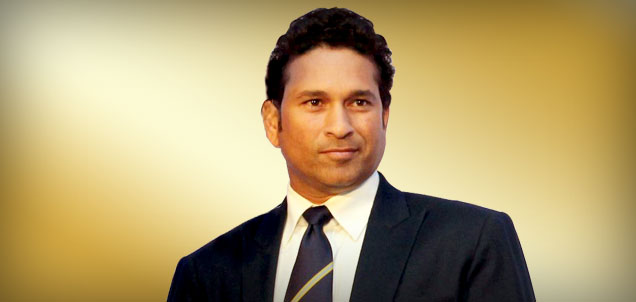
Category: SAAAACHHHIIIIN!

  • Ranjona Banerji: Same old same old on Sachin

    By Ranjona Banerji


    Sachin Tendulkar announced his retirement from cricket on Thursday and hardly surprisingly it shook the world and the media. Although the announcement has been anticipated, it was a still a moment of sorrow if not shock. Almost every newspaper led with it and most tried to outdo the other with a catchy headline. The Economic Times said “India will never be the same again”, The Times of India went for “God Bye”, Mid-Day took a bold decision to dedicate the whole paper to the great cricketer, Hindustan Times said, ‘There will never be another you” and The Indian Express went poignantly simple with “The Void”.


    The articles inside were a mix of rehashes of old comments by former cricketers and old interviews as well as some new writing. Plus all the facts we did and did not know about Tendulkar. (Yes, I did know that he was a big John McEnroe fan as a kid, so there!) The problem is that so much has already been said about Sachin Tendulkar, good, bad, indifferent. However, India captain Mahendra Singh Dhoni’s recollections of his first meetings with his idol in TOI were moving. If only TOI had found someone other than the dull and cliché-ridden Boria Majumdar to write its front page piece on Tendulkar. India has a vast collection of excellent cricket writers, some of them within the TOI stables. Why go to an outsider? Why not ask your national sports editor Bobilli Vijay Kumar? This is the easiest way to demoralise your own staff.


    News channels must have all gone gaga on Tendulkar but I could not watch the same old same old. They have all already had innumerable debates on when will Sachin go, why doesn’t Sachin go, who will make Sachin go, to make any discussions they have from now on seem like a bunch of hypocritical hooey.


    **


    This week, MxM editor Pradyuman Maheshwari wrote about communications he had with NDTV’s new ombudsman eminent jurist Soli Sorabjee. It is clear from the exchange that the role of an ombudsman is still muddy as far as India is concerned. Sorabjee’s responses were those of a lawyer rather than someone who had been appointed to act as the viewer or reader’s representative when it comes to grievances against a news outlet. A similar confusion can be observed in the manner in which Markandey Katju treated his earlier days as chairman of the Press Council of India.


    Much as everybody thinks that they can be a journalist, life as a newsperson is neither that simple nor apparent at face value. That old saying “it’s not rocket science” is deceptive – anything that you don’t know enough about can be as confusing as rocket science to a lay person. So yes, journalism is rocket science to an outsider and it is definitely not the same as law.


    The Hindu is the only newspaper which has taken the idea of an ombudsman seriously, where complaints against the paper are printed and addressed. The Mumbai edition of Hindustan Times used to have a reader’s editor but not any longer after the person who did it quit.


    As for NDTV, it is laudable that they have an ombudsman and such a well-respected one at that. However the job of the ombudsman is to protect the viewer from the channel and not the other way around. Also, it would help if the NDTV website told you how to reach the ombudsman. The Complaints Redressal section took me to this:http://www.ndtv.com/convergence/ndtv/new/Complaint.aspx


  • Sach an opportunity!


    By Ravi Teja Sharma, Ratna Bhushan & Vijaya Rathore


    Sachin Tendulkar’s 200th Test match is set to become a mega marketing event with his sponsors planning special campaigns to celebrate the milestone in the hope of reaping rich dividends from all the hype and hoopla.


    That this Test could be played in the master blaster’s home town of Mumbai and might possibly be his last, make the match even more of an occasion.


    “This is a national event. I don’t think people have been able to gauge the importance of the event until now,” says Shailendra Singh, joint managing director of media agency Percept.


    Tendulkar, who will become the first cricket player in the history of the game to play 200 tests, has repeatedly refused to specify a date for his retirement from Test cricket. But the cricket’s board decision to invite West Indies to play a special two-Test match series in November, ahead of a scheduled South Africa tour has given rise to speculation that India’s greatest cricketer will bid farewell to the game at the end of this series. The decision to award a Test match to Mumbai, ahead of Ahmadabad which should have hosted a game in the series, as per the board’s policy of rotating Test centres, has added fuel to the fire.


    Sensing one last opportunity to drum up some visibility in these depressing times, brands such as Aviva, Coca-Cola, Adidas and Toshiba, which are associated with the master blaster, are planning strategic campaigns and initiatives, which could translate into incremental sales in the festive season.


    Pune-based real estate developer Amit Enterprises is working on launching Sachin branded 200-apartment projects in Mumbai, Pune and Nashik. “The real estate market is slow but Sachin will sell. We have also asked JWT to work on a brand campaign,” says Kishor Pate, managing director of the company, which had signed up with the right-handed batsman in 2010, when Sachin had played 175 Tests.


    Aviva Life, the life insurance company, is planning a digital media campaign featuring Sachin to connect with the Facebook and Twitter generation. “We are looking to celebrate the 200th test by launching an effective campaign in social media and digital media since he has a lot of following in that space too,” says Rishi Piparaiya, director marketing at Aviva Life.


    Television-maker Toshiba has created a special television series with the cricketer and will be launching it by mid-September. “The new product is especially created with Sachin’s contribution and will be dedicated to cricket fans,” says Sanjay Warke, country head for Toshiba India (DS Division).


    Sportswear maker Adidas was drawing up a marketing plan for January. “But there seems to be a change of schedule now,” says Tushar Goculdas, the company’s brand director. “The exact plan is being worked out, but we have a few things on mind like creating a memento for Tendulkar himself and roll out some product for fans commemorating his 200th.”


    Swiss watchmaker Audemars Piguet and Coca-Cola, whose brands Sachin endorses, are working on smaller initiatives. While the watchmaker plans to roll out a bunch of congratulatory messages if Tendulkar breaks or makes any new records, Coca-Cola, which had invested heavily in a campaign surrounding Sachin’s 100th century only to see it bomb, is playing it safe. A spokesperson of the beverage maker said the firm will leverage Tendulkar’s achievement to amplify its CSR activities and projects.


    Two years ago, sponsors had seen their marketing campaign fizzle as Tendulkar’s 100th century took much longer than anticipated. Coca-Cola had planned to release 6.5 million special ‘Sachin’ cans in the summer of 2011 to mark the occasion. But Tendulkar’s poor form meant that the company had to release most of these cans before he reached the landmark.


    Similarly, Aviva had planned to fly contest winners to London to meet Sachin as he was expected to score the 100th ton during India’s four match test series against England in 2011.


    This time however, barring a freak incident, the date and venue of the milestone will be known well in advance. Brands associated with Sachin would certainly use this opportunity to leverage their association with him,” says Ajit Varghese, managing director at media buying firm Maxus South Asia, a part of Group M. Adds ad filmmaker Prahlad Kakkar:”Today, all brands are suffering because of the slowdown. The smart ones will ride on Sachin and in the bargain push their products, keeping the post Diwali festivities going.”


    According to Forbes magazine, Tendulkar’s earnings, including his match fees and endorsement money, stood at $22 million as of June 2013. He has played 198 Tests has scored 15,837 runs and has 100 international centuries to his name, the most by any player so far.


    For the record, BCCI refuses to admit there is a plan to help Tendulkar go out on a high. “Who said he will play? We haven’t selected him as yet. No one is picked just because he is playing his 100th or 200th match,” was a terse response from Ratnakar Shetty, a top official of the cricket board.


    The joint secretary of the Mumbai Cricket Association, Nitin Dalal, however, says every effort is being made to get the match to Wankhede. “We will request the BCCI. He is a Mumbai boy and the crowd will be thrilled to watch him play on the home ground. The MCA management committee believes that it is going to be a big event and we will have to make it very special not only for the cricketer but also the public,” he says.


    After undergoing a surgery on his left palm, Tendulkar recently started practising and has confirmed that he will be available for the Champions League T20 later this month on behalf of Mumbai Indians.


    Source:The Economic Times

    Copyright © 2013, Bennett, Coleman & Co. Ltd. All Rights Reserved

    Licensed to republish


  • Sachin’s second innings starts in style


    By Pradyuman Maheshwari


    It was early 2000. It was a Saturday, I had to drop by at my Chartered Accountant’s office on Bhawani Shankar Road in Central Mumbai. I took the 201 bus which wormed its way through this road on to Shivaji Park where my car was parked. As the bus started, the conductor shouted out a stop or two later: Shardashram School Sachin Tendulkar.


    I was familiar with the area, a batchmate lived in the building across the school as did former Finance Minister Madhu Dandavate. The bus stop was named after ‘Shardashram School’. A few of us peered out of the bus window, to check if the wonderboys Sachin and (then?) buddy Vinod Kambli were around. The newspapers then were full of their exploits.


    Sachin Tendulkar was always destined for bigger things, and the media adulation for the boy has been unparalleled. In 2005, I remember wanting a story done on whether he should retire given his lean patch. None of the journalists in my team or the few accomplished writers I spoke to agreed to write. They refused, citing other commitments. In fact until the social media arrived, one could hardly read any criticism of the man.


    Others could get out to a rash shot, but for Sachin it would be being bowled on a brilliant delivery. It’s not that journalists were not being true to their jobs, but it’s possibly because we believed that #10 could do no wrong. It was perhaps his commitment to the game. Even on the Ferrari episode, while there are many who still haven’t forgotten how he sought a duty waiver which he could’ve easily paid, Tendulkar came out with just a few bruises.


    So what does the master blaster do post-retirement? Having been hot on the endorsement circuit for over two decades, surely the taps wouldn’t turn dry overnight.  But his various interviews over the last year and his farewell speech on Saturday have me convinced that there will be more than one opportunities coming his way. Television, for one. Given the way sports broadcast is growing, channels will surely be eager to cash in on the Sachin wave. Motivational speaker, is the second. I am sure large corporations would like to have him speak to employees, premium clients etc.


    While the Bharat Ratna award is welcome, it could make things difficult on the business front. Bharat Ratna awardees come #7 in the Order of Precedence in the Government of India’s protocol list, way ahead of the three chiefs of the armed forces. He will need to get that wee bit more discerning and careful with his endorsements and commercial ventures.


    The Member of Parliament tag is also going to raise some expectations from Tendulkar as he will now not have excuses of being busy with the game. There will be pressure on him to cleanse the administration of sports bodies he has no connection with, make BCCI more accountable, ensure India wins more at the Olympics, take cricket to the Olympics and ensure there are more facilities for sports across the country.


    Sachin’s source of monies – from the contract he has with the Board of Control of Cricket – ended with the second Test against the West Indies. This meter officially stops ticking after today, the scheduled last day of the match. But, of course, the older endorsement deals will continue for a while. I am sure his manager -Vinod Naidu and his firm WSG – will ensure that the Bharat Ratna continues to rake in the moolah just as Kapil Dev is even 20 years after he bowed out (1994).


    > Visit www.starsports.com or the numerous Youtube pages for his speech and his press conference address.


    > Full text of Sachin Tendulkar’s ‘Thank you’ speech at the Wankhede Stadium:

    http://www.dnaindia.com/sport/report-full-text-of-sachin-tendulkar-s-farewell-speech-at-wankhede-stadium-1920240moolah just as Kapil Dev does even after two decades post retirement (1994).


    Photograph: Fotocorp.com


  • Ranjona Banerji: Not much imagination in the Tendulkar coverage

    By Ranjona Banerji


    Is it going to be all about Sachin Tendulkar’s farewell series or the Campa Cola compound? Either way, Mumbai dominates the news this week, making this a rare exception from all the endless political tamasha that we have been subjected to in recent times.


    Tendulkar’s retirement has been everywhere and it takes a very brave Indian Express to not run with the first day’s play on Page 1 of the Mumbai edition, bar a photograph. The rest of the newspapers knew what people were interested in and went with that. With everyone jumping on to the bandwagon though there is a range of Sachin nostalgia writing to pick your way through from the mundane to the sublime. Ayaz Memon’s piece in Mumbai Mirror on Thursday was filled with delightful nostalgic nuggets, based on his long experience covering cricket and as an editor. Clayton Murzello, sports editor of Mid-Day, showed why he is one of the best repositories of Mumbai’s (and India’s) cricket history today. The Times of India dedicated pages to Tendulkar’s retirement but could surely have expended more effort and dipped further into its formidable 175 year archives. The Hindustan Times was adequate but is often better at sports not called cricket. The Economic Times new sports page is still dismal and needs plenty more work.


    Cricket writing was once considered an art form but somehow that talent is not showing through enough in the new breed of sports journalists. It does not help that others have jumped on to the bandwagon but not every academic can write like Ramachandra Guha and not every former cricketer can write like Ed Smith. Given that most of the big celebrity names writing on cricket are sponsored and the cash registers can never be silenced, some more effort to nurture in-house writing talent may have good long-term effects.


    Of course, the Sachin Tendulkar story is not yet over so quite likely we shall see some more during the day. One thought on the Star Sports coverage and commentary: The discussion show on Tendulkar and cricket called Sachiiin Sachiiin is far more interesting and in-depth than the non-stop cliché-ridden jabber in the commentary boxes, particularly the Hindi ones. You feel that Navjot Singh Sidhu now has competition from Kapil Dev in how to never stop to take a breath between inanities. A little birdie tells me that apparently those who tune into Hindi commentary need cricket to be explained to them all the while and abhor silence. Sounds a bit… condescending?


    **


    The story of the apartment blocks with illegal floors in the Worli area of Mumbai has not unnaturally been covered by city newspapers. But it was a surprise to see the Campa Cola compound make it to national television on Monday, as the dramatic story of residents fighting to save their homes played out. There was misery, hope, politics and illegality on plenty of levels making for a great spectacle.


    The next day saw the effect of the media at work. Apparently the Supreme Court judge who had ordered that the residents vacate their homes on November 11 watched the media coverage, was deeply distressed and could not sleep all night. The next morning, he ordered a stay on the demolition of the illegal floors and gave residents till May next year to move out.


    In between all this were several comments from senior journalists about how because the Campa Cola residents were middle class they got media attention, which slum dwellers don’t get. Undoubtedly there is truth in that remark. But it is also true that the Campa Cola case revealed one more instance of developer-municipality-politician culpability, which affects slum dwellers and the middle class both. Any exposure is therefore not to be sneezed at.


    And just to push the point further, I have actually read about slum demolition in newspapers and seen it on TV. How far it has made Supreme Court judges lose sleep I do not know. Room for improvement everywhere perhaps.


    Ranjona Banerji is a senior journalist and commentator based in Mumbai. She is also Contributing Editor, MxMIndia. She can be reached via Twitter at @ranjona. The views here are her own


  • Bharat Ratna = Brand Ratna?


    By Binoy Prabhakar


    Sachin Tendulkar’s sparkling career ended with the mother of all farewells, the outpouring of adulation and emotion, the throng of photographers and hyperventilating fans who trailed his last days in India colours unprecedented in any sport, leave alone cricket. Milkha Singh, Prakash Padukone, hell, even Michael Jordan must be ruing their decision to pursue a non-cricketing sport. And then he was chosen for the Bharat Ratna.


    Now is that a good thing or bad thing? No doubt, Tendulkar the sportsman couldn’t have hoped for a more fitting bookend to his career than receiving the highest civilian award in India. But what about Tendulkar the brand ambassador? From a marketing standpoint, the award seems like a cross to bear. Here is why. The interest of brands in Tendulkar thanks to his farewell circus is as high as it was during his playing days.


    Surely, his marketing kitty of 14 brands (the number has dropped by four since May 2012 when he scored his 100th international century) can only swell hereon due to the attention.


    Yet, the award raises the uncomfortable question whether Tendulkar should be endorsing products in the first place. The frowns began on Twitter, the largest gathering ground for shouting heads, where users hoped the cricketer would stop associating with at least Luminous, an inverter maker, which jockeys with realtor Amit Enterprises as the most lackluster brand he promotes.


    Murmurs, Protests

    It didn’t take long for the murmurs of disapproval to grow louder and take a more serious overtone. A key argument relayed by this crowd was that Tendulkar had amassed tons of money from the game. Janata Dal (United) MP Shivanand Tiwari was of the view that Tendulkar was not playing for free. “Sachin has made crores of rupees by helping corporates market cricket in the country,” he said.


    A case has been filed in a Bhopal court against Tendulkar and the prime minister who recommended his name. At the heart of the wave of discontent was the money Tendulkar made from brands. The catcalls will grow shriller if brands decide to thrust the Bharat Ratna at the centre of commercials featuring Tendulkar. Indeed, the Bharat Ratna has inadvertently cast a harsh light on Tendulkar’s promotional pursuits. But Harish Krishnamachar, country head of World Sport Group (India), the company that manages the star’s commercial interests, says Tendulkar will honour all contracts, which run until 2014. Fortuitously for Tendulkar’s managers, a Bharat Ratna recipient is not barred from marketing.


    The rulebook states that “the honour does not confer any pre- or postnominal titles or letters; recipients are constitutionally prohibited from using the award name as a title or post-nominal”. That means the launch of a slogan like ‘Luminous Ratna’ or ‘Coca-Cola salutes Bharat Ratna’ can invite trouble.


    Mr Krishnamachar says the award increases the stature of the Tendulkar brand and will also carry with it an added responsibility of selectivity and an increased sense of trust and responsibility.


    In Tendulkar’s defence, he has been picky about his brand associations. He has said no to tobacco and alcohol promotions; he rejected a multi-crore deal with UB Group three years ago. WSG has no precedent to turn to as previous recipients such as Lata Mangeshkar and Bismillah Khan received the award in their twilight years. Not so with Tendulkar.


    At 40, he happens to be the youngest recipient of the Bharat Ratna. The “Sachin! Sachin!” fever is now showing few signs of letting up. So if there is a time to milk the affection of brands, it is now. Remember public memory is short. Sociologist Shiv Visvanathan says Tendulkar is too predictable a character. “I can see him growing less interesting day by day.” In that context, the award could have waited.


    A New Game Plan?

    Mr Krishnamachar says Brand Tendulkar has gained an increased visibility, adding that “Sachin has always done selective associations and hence we will assess things once he is back from his break”. It won’t be easy. Mr Visvanathan says Tendulkar has to choose from a range of brands. “He is the man who could not fail. So he has to vouch for products which are ‘fail-safe’.


    A safe bet for brands would be to focus on Tendulkar the legend rather than Tendulkar the Bharat Ratna. Even that presents a dilemma. Visvanathan says there is going to be the touch of the comic now. “Imagine Tendulkar says Boost is the reason for my Bharat Ratna. The problem then is the Bharat Ratna becomes a brand endorsing a smaller brand.”


    Source:The Economic Times

    Copyright © 2013, Bennett, Coleman & Co. Ltd. All Rights Reserved

    Licensed to republish