
Category: FRAMES 2013

  • #Frames2013: Text of speech by I&B Minister Manish Tewari

    Good morning ladies and gentlemen, please accept my apologies. As a result of the Parliament being in session, I have not been able to make it in Mumbai amongst you all for this very important conference which the Federation of Indian Chamber of Commerce and Industry has organised. I have had the privilege of being briefed extensively about the discussions that have taken place and I am sure that this conference will come out with an appropriate take away which both the industries and government would be in a position to implement in order to ensure that we are able to make the sector far more robust and vibrant than it already is.


    As in happens in governments, the information and broadcasting ministry has its various limits, we are licensors, we are also stakeholders in the media industry, and we are also regulators of some sort. Therefore it is a mixed bag which you have to really banister as the person who is in charge of the information and broadcast limit of the government. However, I would not like to focus upon the initiatives the government has taken over all these years specifically with regard to making the entire broadcasting sector far more transparent and far more attractive in terms of an economic proposition. But I will try to choose and address the four or five issues which my friend who is the chairperson of the FICCI entertainment committee Mr. Uday Shankar has apparently raised in the inaugural speech, a copy of which he was kind enough to send to me.


    I cannot agree with the sentiment that media and entertainment industry is not only a huge economic multiplayer but it also has the potential of absorbing the creative intellect of our younger people as India goes into its next two decades of its economic trajectory. It is therefore incumbent upon the government that we put in place the appropriate mechanism which try and play the role of a facilitator and an enabler that in order for this sector is even at a far more rapid pace than what it has witnessed in the last couple of years.


    Uday in his speech has specifically referred to two issues, one was with regard to increased customs duty on set-top boxes and I believe the other issue was withholding of content rights and taxation bought on it, if I got it correct. So as far as the first part is concerned, digitization has been a unique experiment which my honourable predecessor took upon as a legal remit in order to see that cable and television which is analogue across 51 present of television homes in this country is digitised. In the first phase we went through a digitisation process in Mumbai, Delhi, Kolkata and in Chennai. By and large this digitisation process has been successful but what is also come out as a result of this is that most of the set-top boxes are imported from our neighbouring countries especially South East Asia. So it is important that when such a huge exercise is undertaken which involves a revenue of about four to five billion dollars essentially paid by the Indian and multi system operators there must be some tangible benefits which must accrue to the Indian manufacturer so therefore to give the Indian manufacturer and to see that a part of this huge economic cake in the broadcasting sector does translate into tangibles in terms of providing appropriate incentives to the Indian manufacturing sector. The finance minister in his wisdom decided that the duty on set-top boxes needs to be increased slightly, so therefore I don’t think it has to be seen as an attempt to stall digitisation or set the process of digitisation backwards. It needs to be seen in its proper prospective that we as a country also do have a responsibility and a certain amount of vibrancy in our manufacturing sector as we implement this.


    Some of the sectors are made far more transparent and robust as we go into the second phase of our digitisation across 38 cities. I think it is very important for the industry also to realise that there may be a legal contract which backs this entire process and also a social context which calls upon all stake holders to this process whether they are broadcasters or multisystem operators or the local cable operators  to internally sort out the issues they have because eventually this process needs to be a win-win situation from everyone, broadcaster to the consumer and if any section within this larger family feels shortchanged then obviously there is a cause of concern and that is where the industry needs to walk the extra mile in order to ensure as we unfold the process. In the third and fourth phase this is a process which enjoys the backing of all the stake holders irrespective of wherever in the value chain they fit in.


    Similarly, the film industry has been one of India’s greaterstrengths be it Bollywood or regional films like Tamil,Telugu, Bengali … for the lack of time I wouldn’t go into all the languages which have added to the diversity of India’s soft power initiative as it has unfolded over the last 100 years and the beauty is that the Indian film industry has grown not because of the government, it has grown despite of the government, that is why we have been working to ensure that there is a single window clearance especially for people who want to come in from abroad and use Indian locales for shooting that clearance time between state and central government can be cut down and also issues which have come up regarding the certification process, though the entry of section 60 gives this power entirely to the union government to certify films fit or unfit for public viewing.


    The state governments have been organising a certain law and order remit for all powers which flow out of entry of section 33 of the state list. Therefore to reconcile and harmonise this, we have set a committee with former Chief Justice Mukul Mudgul to see that the integrity and robustness of the Central Board of Film Certification process is protected and film producers don’t have to go hand in hand from secretariat to secretariat even after they have been certified by the central film certification. I do hope this committee would be able to send its report as early as possible so that we can translate it into appropriate legal frame work and if it needs to be taken to the parliament, we shall take it in the next session.


    Another issue which Mr Shankar had flagged off in his speech was the crisis of talent, within the industry, and I think that is something that needs to be looked after in terms of public- private partnership. Of course the government has its film institutes, institutes in the information sector and also in the training and certification of journalists. But a far greater initiative in this regard will be especially when we go into technical prospects of broadcasting and film-making. We really need to come out of the private sector and if there are any suggestions on how this could be a viable economical model we are prepared as a government to look at it.


    Since this is a recorded speech and not the same how you talk to a live audience, so you are constricted by looking into a camera constantly. Therefore I would like to round it off by saying that the last issue that Mr Uday Shankar addressed during his speech is that of freedom of speech and expression and he had some strong words to say about it. I would just like to say that freedom of speech and expression is something that is guaranteed by the constitution, guaranteed by article 19 of the constitution, but the same constitution which guarantees the freedom of expression and speech also imposes certain reasonable restrictions on it and I think the challenge here is to see as to how we can find the golden weave between this liberty and the reasonable restrictions imposed on it by the constitution makers. But if you personally ask me the freedom of speech and expression does include the right to offend but then as someone is a practising lawyer, I ask myself this question what about my remedy if I have a legitimate grievance with the offence which has been caused to me as a result of certain amount of irresponsible attitude being interpreted as the freedom of speech then do I have appropriate remedy which can restore to me my dignity which are equally guaranteed by the constitution of India. Therefore the more we unfold this debate further, I think it is worth the while for the industry to introspect that there is a distinction between a debate which is honest and something which can be frozen to the national spirit.


    As India goes into the next two decades of its economic trajectory, this is the space for consolidation and in this space while we require robust oversight we need to safeguard at least the corrosive nature of discourse which also has the ability to derail India’s quest to be a part of the 21st century as everyone says is the Asian century.


    So therefore with these words, I would like to close my remarks and once again apologise to all of you that I was not present there personally. But as we speak I have requested the secretary of information and broadcasting if he can travel to Mumbai this afternoon to Mumbai to be present with all of you in the evening in order to amplify the remarks which I have made if he feels to or at least a road map initiative which the government has taken to be an enabler in the information and broadcasting sector which is something that I choose not to address in my remarks. But once again I would like to congratulate FICCI for giving me this opportunity to speak, remarks of which should not be misinterpreted as a policy statement under the government, but rather as a food for thought as you go into the penultimate and final rounds of the conference.


    Thank you very much.


  • #Frames2013: ‘Dependency on data unavoidable’

    By A Correspondent


    The ongoing 14th chapter of Asia’s foremost conclave on Media & Entertainment, FICCI-Frames 2013, Day III, hosted a session on ‘Unleashing the Power of Data’. The panelists consisted of some of the big names in the business of numbers. These include Ashish Khanna, Managing Partner, Communications and High Tech, Accenture; Lousie Chater, Audience Research Consultant & former head of research, Walt Disney Studios; Atul Phadnis, Founder CEO, WhatsonIndia; Anandshiv Paramatma, EVP, Consumer Rights, Star India; Nick Burfitt, Head, Global Business, Kantar Media,UK; Rajesh Rai, Partner & India Smarter Commerce Leader, IBM GBS and L V Krishnan, CEO, TAM who was the moderator for the session.


    “Data is king and it will drive the revenues of the entertainment industry,” said Ashish Khanna, Managing Partner, Communications and High Tech, Accenture. Ashish went on to add that data has become very dynamic and the challenge before the industry is to get this data together. “Today, data should be an enabler to provide real time content for a great consumer experience,” he said.


    L V Krishnan, CEO, TAM added that we are living in a digital world, surrounded by data be it phone, television, radio, movie, internet. In real life we live with data and are surrounded by this data matrix. He added that data has become an integral part of our livelihood.


    The discussion further moved around the increasing importance of data collation and market research in the media and entertainment space. “Data has become very critical in film making and marketing to make the movie a box office blockbuster,” said Lousie Chater, Audience Research Consultant & former head of research, Walt Disney Studios. “Today, movies are scripted and produced based on the researched data available; which makes the film projects viable and profitable,” she added.


    The panel also discussed the perspective of data in today’s scenario where there is an explosion of technology. Atul Phadnis, Founder CEO, WhatsonIndia said, “Today content is very critical and available across platforms be it television, movies, social media, mobile content and other available mediums.” He added that with the increasing number of channels in India, almost touching 700, audiences are becoming more cautious of watching the relevant content. “With the increasing number of channels, the need for enhancing the diversity of content is becoming more and more important,” he said.


    The session further went on to showcase the importance of data, fascinating ways in which both online and offline research and data can be harnessed to understand audience preferences and behavior so that the country can witness a real media revolution.


  • #Frames2013: Combination of data, bandwidth and content will be more valuable than oil: Ronnie Screwvala

    By A Correspondent


    Assigned the task of providing a roadmap for the M&E industry to take itself into the next phase of growth, Ronnie Screwvala, MD, Disney UTV did a splendid job at that at the valedictory session on day 3 of FICCI Frames 2013.
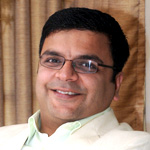
     

    Mr Screwvala began by presenting his observations about the trends that were witnessed across various domains and what was needed to take the growth to the next level. He said, “If we start with the assumption that we are growing at 12 per cent, then compared to the top 4-5 industries we are still growing lower than most sunshine industries. So if we want to be in the peg of those sunrise industries we cannot afford to grow at just 10 per cent. My sense is that there is a certain gap that we are missing between the phenomenal talent that we have in the industry when it comes to creating content and also the talent that we have to make commerce out of it. Somewhere down the line there is a sliver in which a lot of it goes away. Each of us needs to introspect as individuals and also players to bring about a genuine change.”


    Elaborating on the big thing that has happened in the recent past, Mr Screwvala said, “A good thing that has happened in the recent past is the onset of digitisation that has had a huge impact on us. But I think we should hold on to popping the champagne as it will be another 2-3 years before the monetisation from this exercise comes about. So while we have made the investments the consumer doesn’t necessarily reflect them. But it’s good news that after 20 years of waiting the move has finally come to fruition.”


    Where the issue of measurement is concerned, Mr Screwvala said that it is upon the industry to come together and solve the problem. “It is catastrophic to note that 70 per cent of television households are still not in the ratings scanner. I cannot understand how anyone can run a business if we still cannot scan such a huge population size. But, we have moved from 10 per cent to 30 per cent and that can be seen as the cup half-full.”


    Where new media is concerned, Mr Screwvala added that there is a lot to celebrate about, but unfortunately we have not been able to monetise the medium. “The fact that we are going to be a 150-200 million smartphones market in less than 2 years, and the fact that large digital and mobile players look at this market as the second or third in the world is phenomenal. There is a need to take this growth further.”


    Presenting his outlook on the other mediums, Mr Screwvala said that this is the only country where print as a medium is growing. “It speaks about the dynamism as far as the print market goes.”


    “Also, we have been one of the largest DTH markets in the world but if you look at the foundation stone that has been laid for the sector and of you see the 4-5 year view, I feel we are heading in the right direction. But it is again a matter of seeing the glass half-full. There is obviously a lot to be done to derive more out of this medium,” said Mr Screwvala of the medium of DTH.


    Moving on to a more important topic of regulation, Mr Screwvala was candid as he said, “The fact is that our country enjoys minimum regulation where the M&E industry is concerned and if we benchmark that against the outside world there is actually very little regulation that we go through. When it comes to censorship I believe it is not necessarily a regulatory challenge; it has actually become a democratic challenge, an environmental challenge and a political challenge. Most of the resistance to self-censorship comes from organisations that are not part of the regulatory framework. We have to look at how we can support the regulatory mechanisms.”


    According to Mr Screwvala, “another big that has happened is that we have seen a massive audience democratization; it has flattened out. No longer can one sit out there and believe that a single advertising or media agency and a single marketing message os going to get anyone to consume anything else. Social media and word-of-mouth has made everything that is being created into a level-playing field. So while we are living in a competitive world we cannot undermine that thought process.”


    “Also, the regional market has grown phenomenally and will continue to post that kind of growth in the next 5 years or so,” noted Mr Screwvala of the domain.


    Moving on to the needle-movers, as Mr Screwvala put it, “the first thing is that we lack unanimity in this industry. Everyone has to look at what is going to be our contribution over the next 5 years to grow this industry further. We do work in competitive environments but we cannot be at loggerheads over 3-4 issues that emerge every year; we have to be a force to reckon with.”


    Adding further he said that “the other thing is that there is going to be a lot of innovation and disruptiveness. There are very few innovations that have taken place in the recent past. We have to see how Apple-innovative or Amazon-innovative are we with our ideas and have to plan accordingly to take the industry forward in the future.”


    He cautioned the audience saying that it is going to be very imperative for them to know the consumer. “It is something we take very lightly but it is a very difficult thought process. We have to make it a point to study our audience and see what they are going to require 4-5 years down the line.”


    Summing up his address, Mr Screwvala said, “We all talk about the second television household but that will become irrelevant as it is going to be our personal screen. We will be surprised to see how consumers from all corners of India wake up to using mobile as their primary source for entertainment. The issue is going to be of bandwidth and pricing. As an industry we have to look at engaging a billion users, this medium is going to be the one that will help us achieve that target. The next ten years is going to be a combination of data, bandwidth and content, which will be more valuable than oil.”


  • Shailesh Kapoor | FICCI-Frames: 14 and counting

    By Shailesh Kapoor


    The 14th edition of FICCI-Frames concluded in Mumbai yesterday. I remember attending the inaugural one back in 2000, held at a much lower scale, and if I recall correctly, over two days, instead of the three-day schedule now.


    Many such conventions and events begin to fall apart in their second or third year. So, the fact that FICCI-Frames has been conducted for 14 years without a break is no mean achievement in itself. It has arguably got more commercial and less “conventional” over these years, but it that’s what it takes for an event of this nature to keep running year after year, one would gladly accept the commercialization.


    The bringing together of the various sectors of the media and entertainment industry, as well as the government and the regulatory bodies, gives FICCI-Frames the stature it enjoys today. However, there is an aspect of the event that may be worth worrying about in the editions to come – that of its positioning.


    FICCI-Frames is clearly a “networking” event today, than being a “learning” event. Over the last few years, with an enhanced Bollywood presence at Frames, it has also acquired some “glamour” connotations, apparent from the presence of gossip journalists in the media centre.


    Now, I’m not sure if Frames acquired this networking + glamour positioning by accident or design. But I’d like to believe that they certainly didn’t design to remove “learning” from their intended positioning. But learning has idneed become an incidental aspect of the event.


    Yes, there are some stimulating panel discussions and keynotes, but those are far and few in between. A lot of discussion tends to scratch the surface, with reasons ranging from choice of panelists to poorly conceived topic to political correctness to (the most common one) unprepared moderators.


    There’s another off-shoot of the learning debate, and that’s to do with the nature of the delegates at FICCI Frames. When it first started, Frames attracted a wider mix of executives across levels. Many middle management executives could be seen at the event, with a genuine desire to learn something new.


    By pricing the event at more than Rs. 10,000 per delegate, FICCI has effectively made it the events of haves vs. have-nots. I’d like to believe that the biggest convention of the media and entertainment industry should be inclusive in its approach, attracting many more than the 2,500 delegates it currently manages.


    But irrespective of the positioning it acquires over the next decade, FICCI Frames has managed what would have been unthinkable back in the 1990s – an industry forum that’s no pushover!


    Shailesh Kapoor is founder and CEO of media & entertainment research and consulting firm Ormax Media. He spent nine years in the television industry before turning entrepreneur. He can be reached at his Twitter handle @shaileshkapoor