
Category: Uncategorized

  • I want to put a ding in the universe: Steve Jobs

    Steve Jobs“We lost one of the most influential thinkers, creators and entrepreneurs of all time. Steve Jobs was simply the greatest CEO of his generation,” Rupert Murdoch expressed in his tribute to Steve Jobs.


    Jobs is gone – but examples of his genius would continue to be around us in form of  Apple’s innumerable gadgets, and also his words – which inspired many for more than last 25 years, and would continue to do so…always.


    Here are a few compiled by the MXM team:

    1. Some people are not used to an environment, where excellence is expected.


    2. It’s more fun to be a pirate than to join the navy.


    3. Do you want to spend rest of your life selling sugared water, or do you want a chance to change the world?


    4. The only way to do great work is to love what you do. If you haven’t found it yet, keep looking. Don’t settle. As with all matters of the heart, you’ll know when you find it.


    5. I think if you do something and it turns out pretty good, then you should go do something else wonderful, not dwell on it for too long. Just figure out what’s next.


    6. You can’t just ask customers what they want and then try to give that to them. By the time you get it built, they’ll want something new.


    7. We think the Mac will sell zillions, but we didn’t build the Mac for anybody else. We built it for ourselves…We just wanted to build the best thing we could build.


    8. I have looked myself in the mirror every morning and asked myself: ‘If today were the last day of my life, would I want to do what I am about to do today?’ And whenever the answer has been ‘No’ for too many days in a row, I know I need to change something.


    9. I mean, some people say, ‘Oh, God, if [Jobs] got run over by a bus, Apple would be in trouble.’ And, you know, I think it wouldn’t be a party, but there are really capable people at Apple. My job is to make the whole executive team good enough to be successors, so that’s what I try to do.


    10. I’ll always stay connected with Apple. I hope that throughout my life I’ll sort of have the thread of my life and the thread of Apple weave in and out of each other, like a tapestry. There may be a few years when I’m not there, but I’ll always come back.


    Being the richest man in the cemetery doesn’t matter to me…Going to bed at night saying we’ve done something wonderful…that’s what matters to me.

  • Cadbury’s Diwali message with a twist


    By Ravi Balakrishnan


    [youtube width=”350″ height=”250″]http://www.youtube.com/watch?v=Pl2xsSJbE3M[/youtube]

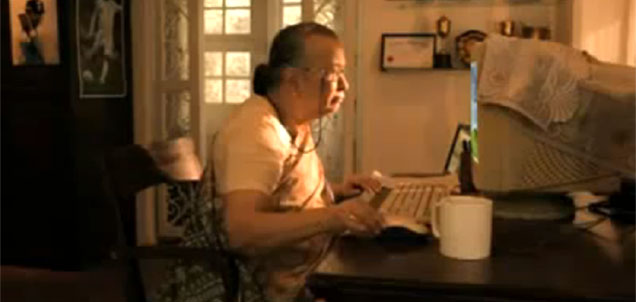
    Cup of coffee in hand, grim determination on her face an elderly woman struggles to turn on a decade old computer and struggles even harder to get online, spilling coffee over the keyboard. All the while a voiceover from her son intones about how busy he’s become, leaving him no time to ‘waste’ hanging out with friends (and, by implication, his mother), and why bother anyway when they can stay in touch via phone, chat and social networking? It seems like a fairly standard tearjerker for a HelpAge India style NGO. Except it is actually for Cadbury’s Celebrations; a range of chocolates specifically designed for gifting through the festive season.


    Celebrations’ previous ads have always been, well, celebratory. For instance, a sister shows up unexpectedly for Raksha Bandhan. And Diwali is a noisy backdrop to the commercial in which a young man bonds with the neighbourhood grouch. In ‘Lonely Maa’ though, there are none of these happy endings; no sudden ring of the doorbell with the son showing up, pack of Celebrations in tow. A courageous tack to take even if it is a bit of a downer.


    However, according to both marketer and agency, the new ad does not mark a radical departure from the central brand thought or strategy. The ad still ties into the line ‘Iss Diwali Aap Kisse Khush Karenge?’ (Who will you make happy this Diwali?). This time around, though, there’s a definite call to action, to provoke people into stepping out of the digital space. Says a company source, “We wanted to get people to physically meet the ones they want to make happy. There were many creative renditions, but we chose this one since quite often, our parents and elder relatives are not comfortable with the digital medium. The medium too does not convey emotion all that well.”


    Younger tech savvy consumers who spend large parts of their lives online were the main target audience. As a result, the commercial is an online exclusive and won’t be seen on television. Lonely Maa was seeded on the brand’s Facebook page, with links to YouTube. Says Mr Raj Nair, national creative director, Contract, who also stepped behind the camera to shoot the film, “It’s criticising the online medium while being on it. That’s hitting people a lot harder and driving the point home.” In its fifth day online, the commercial had garnered 14,112 views at the time of going to print. Both Contract and Cadbury are counting on the ad going viral. If marketer and agency are to be believed, it is particularly popular with the NRI audience who are unfortunately not the immediate target for the brand.


    The few comments on YouTube are full of presumably negligent children lamenting the error of their ways and promising to be home for Diwali. And that’s as per plan according to the company source: “While the mother in the ad is struggling, she still has a positive attitude. Unless we made it a bit provocative, the response to the call for action wouldn’t have been there.”


    For something built around the insight of technology as an alienating force, ‘Lonely Maa’ does evoke an early Nokia ad featuring a similarly lonely mother sifting through photos of her son. Mr Nair says he doesn’t recall the Nokia commercial at all but adds: “I leave it to people to draw their own inferences. This is a bigger thought: telling people to go and meet each other (preferably with a box of Celebrations). The non-technology aspect distinguishes it.” Apart from the commercial, Cadbury Celebrations also has a special Facebook linked programme lined up, to fly people home from Mumbai to Delhi in time for Diwali. So, to all the Lonely Maas out there; be careful what you wish for.


    Source:The Economic Times

    Copyright © 2011, Bennett, Coleman & Co. Ltd. All Rights Reserved


    Image: Grab from TVC on YouTube

  • MxM Diwali break fm Oct 27-30. C u Mon, Oct 31

    It’s Diwali, and our hearty ‘shubhkaamnayein’ to all our readers.

    Our offices will be closed Thursday through Saturday for Diwali. That’s Oct 27-30. On Sunday, Oct 30, our editorial production team will work to produce the next day’s edition (Oct 31).

    However, let us assure you that in case anything there is a major development, we’ll be around. Like we were on Dassera.

    Have a super weekend and see you Monday, October 31.

  • Gouri Dange’s Naming No Names: Cheeni kum!

    “You mean you don’t watch the cookery shows and competitions on TV????!!!” – people ask me, using up their entire quota of question marks and exclamation marks for the month. Well I do, sort of, but here’s my problem with them, and why I can’t watch any fully from beginning to end: First, the Indian food shows. The Indian shows invariably have self-consciously decorated kitchens as the background (the usual backlit shelves, phalanx of shiny knives, matchettes and muddlers, bubblegum pink walls, and suchlike). In front of this kitchen from kitschland is prancing (or trying to look as if) a fattish johnny stuffed into some garish shirt, trying hard to keep up the amusing chit-chat while clanging spoons and vessels together. There’s nothing to endear these chaps to me – not the maniacal chopchopchop of a Yan of yesteryear, or the lithe handsomeness of a Bourdain, or the extravagant booziness of a Floyd. Besides the nameless Indian chaps, there are the brand-name Indian cooks, smiling fixedly into the camera and serving up, what else, jazzed up versions of tandoori chicken. I tend to switch channels when I hear ‘adrak-lasan-pyaaz, pyaar sey bhuniye’. Then there are those non-cooking Indian food shows, in which hung-over-looking beefy chaps (always in khaki shorts) bumptiously muscle into dhabas and thelas and then turn around and wax eloquent into the camera. No fun. On top of it, when some of them snigger about the spelling or the naming of some of the dishes, and make the busy street-vendor stop what he’s doing and look foolish while he unsuspectingly explains what ‘Tandoori Manchurian’ is (stale, overdone joke) to the camera, I want to hurl a plate of instant noodles at them. (But my previous TV took its aakhri saans after going through a long melodramatic deathbed scene, when I threw a dibbi of sindhur at it; so chucking noodles at the new one is a serious no-no. It’s written in the manual.)


    As for the phirangi food shows, here’s my problem: either the person actually has adenoids, or speaks in that breathless way, to indicate shock and awe at the wondrousness of the food that he’s handling (it’s usually a Brit affectation); plus nowadays, with Indian food going places, they’re always going on about some aromatic ‘masalarr’ as they call it, and there’s cumin in everything. Or then it’s that lady who’s been named after the English word for kalonji seed. You know her, with the jaunty tilt of her head and the saucy positioning of other body parts served up for the camera on a plate. Ya, ya, I know guys reading this will say “jealous, jealous”, but honestly she’s a coy bore, and has a cloyingly heavy hand with the cream and butter and chocolate. The only thing I like about the western cookery shows is the big warm kitchens and the lush gardens that lie beyond that. But I get insanely jealous of this and switch channels.


    And then there are the chef championships. Again, my problem is that there’s far too little food and far too much drama. Call it OCD, but when I see contestants crying and wiping their noses in tension and despair, I want to say severely, like my ma used to (during traumatic chappati-making lessons): “Stop snivelling, wash those hands, and only then go near any food, you big cry baby.” On top of it, the Indian version of Masterchef has you go right into the humble homes of the aspirants and you know that they have far too much riding on winning this competition, and it gets all too sentimental and saccharine for my liking. I mean come on…food mixed with tears? Not a winning combo for me. (The least appetizing of all of this of course is the commercial breaks – currently there’s that daft girl going on and on about her phone working even when the lift shuts; how life-defining is that!) Again, there’s also too much non-food paraphernalia – immunity pins and aprons and t-shirts to be won, rather than actual food to be seen on screen. But here too I love the locales where the competitions take you – I mean cooking out in the open in Central Park while people row slowly past on boats or walk briskly by! Just for that I may cry my way into one of these shows, and teach everyone a thing or two about Indian masalarrs. Or I may indulge in that stab of envy and switch channels.


  • AdAsia: Why market to women consumers?

    By Akash Raha

    Does being a man or a woman define shopping habits? Moreover, are Asian women different from women across the globe and hence, are their buying habits different? The session ‘Marketing to Women Consumers in Asia’, discussing these and other points, examined typical traits of the Asian woman consumer. The speakers at this session were Abheek Singhi, BCG India and Yeonhee Kim, BCG Korea.

    The speakers talked about the significant political and financial changes that are happening around the globe, and women are not alienated from these changes. As a matter of fact, significant changes are happening in the behavioural aspects of women in general and women consumers per se. Research by BCG on women consumers, the speakers noted, has highlighted the necessity of marketing to women consumers. Apart from the revolution that we see around the globe, they said, a revolution is happening with women too. With the change of time, the aspirations and wants of women have changed too. According to the study, women are showing their dissatisfaction and are not happy with what they are getting.

    Women around the globe work, and share their household responsibilities with their spouses, but the case is a little different in Asia where they are entrusted with the bulk of the household chores. The chief challenge for women is Asia today therefore is the challenge of time. There is too much demand on time and too much to do. All this compounded by responsibility for the vast majority of household chores. The cultural DNA of Asian women is such that they perform a bulk of the household work far more than in western countries. On a graph, the speakers showed how the happiness and stress level follow a ‘V’ curve for women in Asia where the troughs are quite low.

    Yet, women remain a very important segment in terms of spends per year, albeit ignored by marketers. Women control US$12 trillion of annual discretionary spends which is two-thirds of the total pie. And if women are seriously dissatisfied with what is on offer, it is essential to innovate for them. But relevant significant products are more important to women consumers than mere innovation. Hence the mix should be of innovation and significance (value for money spend). Women consumers are more conscious of the price that they are paying and the value they get for it. Considering the amount of money that exchange hands from this segment, it is but ironical, pointed out the speakers, that marketers aren’t focusing on them enough.

    That said, it would be a fallacy to generalize, and moreover generalize about all Asian women. There is no one Asian woman but multitudes of them. And marketers will have to cater to them separately. A one-size-fits-all strategy will not work. But there are some of the features in Asian women that remain same upon which marketers can look into. The challenge of time is their main constraint. Yet, Asian women are optimistic about their future, community, life, family and country. In Asian countries, women are comparatively more dependent on their spouses (in terms of money) as compared to global figures. Even in Asia, there are so many countries with so many different ethnicities, motivation, per capita income, GDP etc. The one point remains, that women in general have a high quotient of influencing buy. Hence it is important that they are kept in mind while planning a marketing strategy. Moreover, the psyche of woman in each of the Asian countries have to be researched upon to truly understand how, what and when they buy and then these research data can then be leveraged upon.

  • AdAsia wrap-up by Ajay Kakar: Memories from a distant past

    By Ajay Kakar

    Having just attended the AdAsia 2011 in New Delhi, I was reminded of the multi-starrer movies that prevailed through the 1980s. Many top-notch actors and actresses, all together. Many, for the price of one. Wow! These movies caught the fancy of the generation and the very presence of the mega stars assured the movie a great opening.

    AdAsia 2011 has been no different. Post a gap of eight years, the prestigious forum was back in India, with a line up of mega-stars from the world of advertising, media and marketing; Ram Charan, Michael Roth, Harish Manwani, Piyush Pandey, Prasoon Joshi, Sanjay Kapoor, Joseph Tripodi, Bob O’ Leary, Simon Bond, Chris Thomas… Indra Nooyi. The list just went on and on. And for good measure there was song and glamour too… our very own SRK doing a dance number, with Diana Hayden adding to the glamour quotient. With a batting order like this how can one go wrong! So not surprisingly, there were over 1200 registered participants from all across the region.

    But once the initial euphoria of multi starrers settled, the audience became discriminating and demanding. A winning cast was appreciated. Great production values and style was expected. But the demand to have a strong story line became the differentiator between a winning multi starrer and a loser.

    While AdAsia 2011 could be a learning for the Goafest on its speaker line up, it could arguably give a run to Cannes for it’s star speaker quotient. It could also boast of a classy and world-class execution. Be it the event, the infrastructure, the meals or the entertainment.

    But what about the content?

    One heard many in the audience lament ke naya kya suna aur naya kya seekha? Who were the speakers actually targeting? The theme had a slant towards the future – “Uncertainty: the new certainty”. But the audience comprised most of the stalwarts of the industry. Very few of the new generation torch-bearers. And as always, we had some good, some bad and some not-so-good presentations. Some highs like the Contagious and Coke presentations. And some disappointments – a no show by David Droga – due to visa problems.

    The halls were full, with people standing in the aisles. But within the crowd I would have loved to see more clients. And more than just the very few creative people who made it. Surprisingly, not many of the Delhiwallahs from the fraternity made it.

    Now for the rating of this multi-starrer. Net-net, I would give this extravaganza a 5 on 5, as far as the ‘cast’ and style is concerned. And on content, a 3 out of 5. Kudos to the organizing team (the event was supported by all the key industry bodies) for doing India and the industry proud.

    And to end with a confession – the demands of being on the client side….I sneaked out at the end of Day 2 – needed to be back at the workstation in Bombay.


    Ajay Kakar is Chief Marketing Officer – Financial Services, Aditya Birla Group

  • The Anchor: 6 reasons why you can’t do without attending AdAsia 2011

    There have been some angry responses to our anchor of November 2. As it emerged, it did touch some raw nerves. Here’s an angry retort, again anonymous. The writer has replied point by point. The responses are in bold.

    #1 Rs 40,000 for entry. Okay, you could get early bed or bulk entry discounts, but it’s still not small money. Plus travel – flight tickets, local travel and hotel. All of this amounts to around Rs 75,000 if you stay in a budget hotel. Rs 1 lakh if it’s 4-star-upwards.

    So what, dear brother (or sister)? The best things in life don’t come free. Look at the number of meals you get as part of the package. Gyaan sessions, entertainment and an opportunity to meet people and boast to the kids back home that you attended AdAsia. Btw, if it was held in some foreign land, you may have to pay twice. Of course you can bring those two litres of booze. But neighbourhood bootlegger hai na!

    #2 Usual suspects, usual suspects, usual suspects. It’s the same old faces at all our industry events. AdAsia had Harish Manwani of Hindustan Lever on Day 1. But Shah Rukh Khan? Grrrr!

    Manwani is a usual suspect? And Shah Rukh Khan is one of the most popular faces in India and in advertisements also. The fact is that Ad Asia didn’t have the usual suspects lined up. We even saw a swami in the line-up!

    #3 There is a need to draw younger professionals to AdAsia and not 40-plus and 50-year-olds.

    Point. But that’s for organizations to blood young talent. The organisers are doing their bit to organise quality content.

    #4 The same old format of keynotes, speeches and panel discussions is boring. C’mon marketers and advertisers. You guys are creative, why not think of something innovative?

    You should try some of the other industry conclaves and events. Boring panel discussions and speeches of people who plug their own work. Hey pal, you’re a mediaperson yourself, any ideas… pls mail them.

    #5 You network every day with your friends and aspirational friends on Facebook, LinkedIn and Twitter. So conferences like these need to relook the role of these events for connecting with the fraternity. Agreed there’s nothing like meeting people face-to-face, and Facebook friendship is also fine.

    Facebook is fine, but har physical meeting zaroori hoti hai. There’s nothing like meeting in person, exchanging cards and letting the relationship grow.

    #6 Why Delhi? It was good to not do it in Mumbai. How about Bangalore, Pune, Amritsar, Calcutta, Chennai? Wasn’t Calcutta once the capital of the adwallahs?

    Delhi is where there’s loads of action. All the big media guys are there and so are the advertisers. You said it right, Calcutta was once the capital. Unless Didi does some jaadoo-i jugaad out there, not likely that the boys and girls of adland will shift there in a hurry.


    The writer of this piece too is a senior member of the media industry. She/he prefers to stay anonymous as according to her/him why should he/she do it when the writer of the earlier piece didn’t reveal his/her identity. And we (as in MxMIndia) let that happen!

  • Bawa Group wants creative partner

    By Shubhangi Mehta


    Bawa group of Hotels are in a lookout for an agency to handle their creative mandates, sources close to the development have confirmed the news to MxM India.  The incumbent on the account is Palasa and their media mandates are also handled by them. The account size could not be ascertained at the time of filing the report.


    Bawa Group of Hotels has established four properties are located in the commercial capital of India, Mumbai, since 1984, Newly opened in Kolkata and Jaipur and very shortly coming up in Goa, Hyderabad, Amritsar and New Delhi. The hotels are endowed with comfort and elegance at affordable prices.


    The Hotel Bawa International, owned by the Bawa Group of Hotels, has recently achieved ISO 9001:2008 certification by the International Organization of Standardization (ISO)

  • Bride and, well, prejudice

    Every week, my least favourite life-form in the media changes. It’s confusing, with so many creeps and monsters to choose from. Not anacondas and sting rays and the rest of those. I mean humans.

    This week I watched with pissed-off fascination as those bridezillas, western and Indian, obsessed on their wedding. While they fume, fret and squeeze their parents dry so that they and everything around them looks fairytale etc on their wedding day, the merchandizers sponsoring the shows and the channels showcasing their anxieties and fears laugh all the way to the bank.

    When the western bride shows first appeared, it would have been funny, were it not so grotesque, to watch a grown woman steam rollering even the groom, let alone her parents, in her consuming need to live up to the fantasy in her head. Now it’s the Indians who are out-Shining everyone in the bid to be the reigning Bridezillas of the world. Helped along, of course, ably by anyone who has a stake in their delusions of grandeur – skin, eyes, nails, hair people, body sculptors, designers and tailors, jewelers, caterers, decorators, wedding card printers, photogenic priests, hired white guests, photographers, honeymoon packagers, planners, et al.

    Casting is simply not a problem, for these bride TV shows. All you need is a dullish looking girl, with even duller wits, and there’s your heroine! Of course it’s big business. The industry, estimated at $11 billion a year, is growing at 25 percent annually. And this does not count jewellery sales, which are growing at 7 percent annually, and are projected to reach $280 billion by 2015, is what we are told.

    At the risk of carbon-dating myself as a relic of the ’80s, I ask: Does anyone remember a time when such weddings were only something that the rich and famous indulged in? And the time when the average Indian simply got married; they didn’t have an ‘event’ which needed to be ‘managed’? The wedding was not at a ‘venue’. A local ‘badminton hall’, or a modest and pleasant wedding hall was booked for the day. The girl changed her sari once or possibly twice. Guests dressed well, but did not spend a month’s salary and man hours on what they would wear.

    Not any more, though. Like Woody Allen says, life doesn’t imitate art, it imitates bad television.

    The invitation card, as one of the shows on TV lovingly showed us, is the first indication of the shape of things to come. It is often bulkier than your local restaurant menu. These cards definitely have more zari work, silk, tassels and sequins on them than any piece of clothing that many of us possess. In fact, you could wear one of them around your neck, and carry it off as a piece of jewellery. Some people even produce little booklets – complete with Indian miniature paintings, shlokas, minor treatises on vedic rites and other fundas about the auspicious and holy act of matrimony… all in a more-Indian-than-thou kind of font, that was at one time used by royal calligraphers when kings bestowed citations on people they wanted to honour. Sometimes, the invitation card is not a card at all – but a CD, complete with clips of the bride and groom and their families inviting you; there could also be a little audio-visual bio-pic of the bride and groom, running you through their first baby steps, taking you on a tour of all their achievements in school, college, work – a mini-movie of sorts!

    In these bride-busting-papa’s-bank shows, when I watch grown people talking seriously into the camera for 10 minutes running about the relative merits of wearing Ostentatious Orange over Fussy Fuchsia, etc, I have this one thought: if we put even one-hundredth of the energy that goes into the making of a wedding, into what goes into the making of a marriage, there would have been much less aggro in our families.

    However, there are early signs that, in some circles at least, this psychedelic dream may not be for everyone. Already, in some families, it is becoming retro-fashionable to have a traditional but quieter wedding.  The kind in which the bride’s and groom’s parents didn’t have to quietly sell off their retirement home, and can feel proud that the education that they gave their girl child has trickled down into her psyche, so she doesn’t think that marriages are made in Bollywood.

    Perhaps someone will then do a retro-show on TV – and call it the Small Slim Indian Wedding.

  • 7pm, the New prime time


    By Ritu Midha


    Once upon a time in Hindi GEC, 8 to 10 PM was known as prime time. Then happened Kahin To Hoga and Kaahin Kissii Roz (both on Star Plus), and prime time viewership extended up to 11 pm. The interesting thing here was that while 10 to 10.30 pm slot was viewed across HSM, 10.30 to 11 was largely metro centric. And today, the slot is used for more mature stories like Maryada Lekin Kab Tak.


    Interestingly, channels have now realised that older children and teenagers are not watching that much television any more – and there really is no requirement for shows tailored specifically for them in the 7 to 8 pm slot. Enter Saathiya – and now 7-8 pm has become an integral part of prime time television viewing. Star Plus successfully proved yet once again that Saas Bahu still works – and good scheduling too can be an excellent programming innovation. More on prime time expansion in a minute.


    Another interesting phenomenon one notices these days is that shows are not killed in too much of a hurry – shows that stop being TVR-garners are nudged, and shifted to another time slot preferably in the afternoon – two very recent examples are Na Anaa Iss Desh Lado and Laagi Tujhse Lagan. Elucidates Dinesh Vyas, Business Head, MEC Global, India, “Channels try out possible routes before killing the programme. And as a strategy they try putting programmes between two good performing programmes hoping for viewers to move on to this programme too.”


    While quite a bit of television slots are still sold based on GRPs, and many brands insist on prime time slots – there are a few which are keen to advertise on a specific show. what happens when these shows are moved from one time band to the other. Explains V Narayanan, General Manager , Maxus, Delhi, “This requires a deeper analysis of the new slot where the following parameters are taken into consideration in predicting the ratings which includes, Current viewership of the time slot, Whether the new slot is in prime time or non-prime time slot?, Ratings of competing programmes in the new slot, Promotion plan from the channel in promoting the specific programme slot etc.”


    Adds Mr Vyas, “The media planner analyses that time slot (over at-least 13 weeks) to which it has been shifted, to estimate drop or rise in viewership. Loaded with this data the planner/buying negotiate with the channel for better deal in rates proportionately to the drop percentage.”


    In place of these shows, in their previous time slot arrive new shows- which may or may not capture viewers’ attention – but this is a risk that channels have to take. It is after all about getting the desired eyeballs and audience acceptance.


    Moving back to the extended prime time, the 7 pm slot was made popular by Star’s Sathiya and 7.30 by Sasural Genda Phool on the same channel. However, now shows on Zee and Colors too are working well for their respective channels.


    A quick look at the delivery of this time slot:Star Plus: 

    Rank Date Day Start Time Programme TVR

    1

    25/10/2011 Tue

    19:00

    SAATHIYA SAATH NIBHANA

    4.3

    16

    27/10/2011 Thu

    19:30

    SASURAL GENDA PHOOL

    2.24


    Colors:

    Rank Date Day Start Time Programme TVR

    21

    25/10/2011 Tue

    19:32

    SASURAL SIMAR KA

    2

    87

    27/10/2011 Thu

    18:59

    HAVAN

    0.76

    Zee:

    Rank Date Day Start Time Programme TVR

    27

    24/10/2011 Mon

    19:30

    CHHOTI BAHU

    1.84

    70

    25/10/2011 Tue

    18:59

    EK NAYI CHOTI SI ZINDAGI

    0.89


    Target Group : CS 4 + Yrs ;

    For the week from 23/10/2011 to 29/10/2011

    Source: TAM peoplemeter system


    Havan, has, incidentally, not been able to do as well as anticipated yet. Says Mr Narayanan, “Saathiya is a popular programme and garners loyal viewership amongst the female viewers. Yes, with Havan being promoted aggressively by Colors, Saathiya viewership did drop during the first week of telecast which was expected. “

    While late night slots attracted metro audiences, the 7 pm to 8 pm slot has succeeded in attracting non metro audiences. States Mr Vyas, “I have always believed 7-8pm slots work best in non-metros where the audiences are home by that time.”

    Mr Narayanan, meanwhile elaborates that it is the mid-sized towns where this slot attracts maximum viewership, “ A closer look at Saathiya viewership across 8 weeks ( 2011, Wks: 33-40 & for the top channels only. Tg: All, AA, 15+, C&S.) indicates that 1 million + towns in Gujarat, Punjab/Haryana, UP, Rajasthan, MP procures higher ratings than 0.1-1million towns within each state respectively. As a comparison, the program ratings within the 1Million + towns of the above markets are relatively higher than Delhi & Mumbai ratings. “

    Interestingly the 7 to 8 pm slot is not doing well only in HSM but a similar trends can be observed in South markets as well. Explains Narayanan, “Within the 7-8 pm slot, the rest of AP and the rest of Karnataka performs better than Hyderabad and Bangalore respectively. Specific to TN, Sun TV programmes do well in 0.1-1 million towns than Chennai and 1 million+ towns.”

    Television always has options – programming experimentation, scheduling experimentation, changing the protagonist, the story line etc – and hence has the capability of being a step ahead of the curve. With three and a half hours of prime time – GEC don’t have much to worry – all they need is good characters. The next battle heating up is for the real prime time – 8  to 9 pm with all the channels bringing up new shows there.

  • Viacom18’s ‘Sonic’ plan to dominate TV-land

    By Rishi Vora


    After announcing the launch of Comedy Central, Viacom 18 has now unveiled yet another offering in its bouquet: Sonic, a sci-fi entertainment channel catering to young adults, falling in the age bracket of 10-17. The channel will bank on Action, Adventure and Animation – the three main areas around which the programming strategy will revolve.


    What Sonic’s launch does to the market is extend its scope a bit. With other channels in the kids’ genre typically falling in the age group, largely between 4- 14, Sonic extends that to slightly older kids, up to 17 years – a segment which constitutes 30-40 percent of the 4+ market, and the one which is underserved in India. For Viacom 18, it is a significant development, for now as a group it caters to every segment in the Indian entertainment industry. Colors – the Hindi GEC, MTV in the youth category, Nick catering to kids aged between 10-14, and Comedy Central – a comedy channel for 14 + audiences.


    But it is too early to tell, whether Sonic will make an impact. A senior member from one of the kids’ channels, who did not wished to be named, said, “While we welcome one more channel in the genre, these are early days to comment on what it does to the segment – will it succeed, will it not? So it is only fair to wait and watch. Coming from the Viacom stable, all I can say is it’ll be interesting to see how the channel progresses.”


    Nikhil Rangnekar, Joint CEO, Spatial Access said, “It’s going to be challenging for the new player to establish itself, with its new positioning of catering to young adults. It will be interesting to see what differentiation they bring to the genre, as animation and adventure is a game that existing players are already playing.”


    Viacom 18 execs, however, are confident of putting up a good show. Mr Haresh Chawla, Group CEO, Viacom 18, said in the official communique, “Sonic further expands Viacom 18’s presence in a demographic bracket that has remained un-tapped, but is probably the biggest influencer on family purchase decisions. Like our other businesses, we are confident of Sonic establishing a dominating presence within the first year of its operations.”


    He further added, “The next 12 months will see Viacom 18 in an expansion mode and Sonic is the first step in that direction.” Mr Bob Bakish, President and CEO, Viacom International Media Networks said, “The launch of Sonic is significant in many ways. Not only does it further expand the Viacom 18 Network in India but it also opens up an interesting category for both viewers and advertisers. The Viacom 18 Network can now take pride in being the only entertainment network that has specific brands to entertain viewers across every possible age segment.”


    Mr Chawla’s comment on reaching a dominating position is a clear indication that the channel will pump in distribution monies, and of course investments on content acquisition. The plan is to reach 40 million households in India. So distribution and content acquisition are two key areas of investments the channel is looking into, in its bid to be a significant player.


    Executive Vice President and General Manager, Ms Nina Elavia Jaipuria said that the channel’s efforts will be to have a large set of loyal viewers and keep them engaged through never-seen-before digital initiatives. Elaborating on the TG, she said, “It is going to be a challenge to hold the attention of our TG – the young adults – ones who are on the cusp of adulthood. They’re rebellious, impatient, tech-savvy, hyperactive, confident and competitive. They’re early adapters, experimental, extremely opinionated and big influencers on matters such as purchase decisions.”


    Revenue-wise, it will be both advertising and subscription. Though digitization will help, the channel’s foremost challenge is to bring a wide variety of advertisers, from different categories on the channel.


    The tagline for Sonic is ‘Thrills. Guts. Glory.’ For presentation and packaging aspects, UK-based company – Red Bee has been hired. Scarecrow is the creative agency and Vizeum will handle media duties.


    December 2011 is when Sonic will go on air. The marketing will roll out soon, it’s going to be a 360-degree campaign to start with and digital initiatives as an on-going strategy to engage and interact with tech -savvy young adults.


    As history suggests, in other categories of course, many channels have launched with a bang. On being asked what her expectation were at launch, Ms Elavia Jaipuria chuckled, “Wish I could get 30 percent share and even surpass Nick. On a serious note, it will be only be right to review the channel’s performance post four to five weeks of launch.”

  • Move to promote South Indian film industry globally

    By A Correspondent


    The Federation of Indian Chambers of Commerce and Industry (FICCI) recently concluded the third Media and Entertainment Business Conclave (MEBC) 2011 in Chennai. The two-day conclave in Chennai welcomed the recommendation from Wizcraft International, that the South Indian film industry join hands to create a global platform which presents the South Indian film industry at key markets across the world.


    Sabbas Joseph, founder-Director at Wizcraft International, the global event management and communication company, shared the IIFA success story, wherein key global markets were opened and quantum growth was achieved by the Hindi film industry. The IIFA story also demonstrated the attention that is being given to Indian culture and business by global counterparts, he said.


    The weekend for the South Indian film industry would be a huge step towards recognizing the growing importance of South Indian cinema, by celebrating it on a global platform. Joseph spoke of IIFA being a channel for the expansion of the regional film business, generating revenues from International avenues.


    Mr Joseph added, “The talent in the South Indian film industry is enormous. We wanted to seize this opportunity to establish a platform for talent to be promoted and honoured on a national level and international level for South Indian films. Regional Indian cinema has grown into a global phenomenon and we would surely look at promoting and leveraging it on a global platform through brand IIFA.”


    Pioneered and executed by Wizcraft International, the International Indian Film Academy (IIFA), is supported by key members of the Indian film fraternity. IIFA is the most respected South Asian film academy and its main highlight, the IIFA Weekend and Awards, are India’s biggest media event, with a viewership of almost 600 million worldwide.