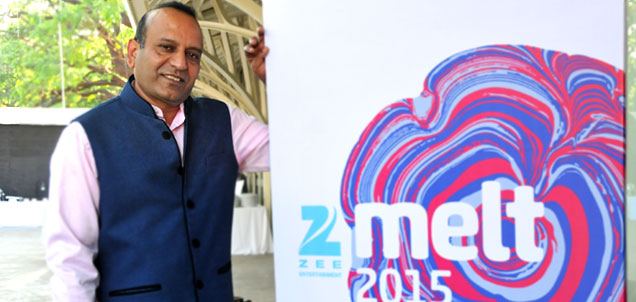
Category: MELT15

  • Ready, Steady, Melt!


    Last year, Rajesh Kejriwal, Founder and CEO of Kyoorius, created waves with the slickly produced and D&AD-backed Kyoorius Advertising and Digital Awards. This year, he has extended the offering to a two-day festival called Melt to be held in Mumbai on May 21 and 22. Not unexpectedly, comparisons are being made with Goafest, the three-day event organised by the Advertising Agencies Association of India and the Advertising Club. In a freewheeling interview with Pradyuman Maheshwari, Kejriwal takes pains to explain that there is no rivalry between the two. In fact, as he says, he created his events out of a desire to stimulate and encourage youngsters in the profession. Read on…


    A day to go for the inaugural Melt… your thoughts? All set?

    As set as one can be a day or two before the event. There always will be challenges but there are no hurdles or any real surprises, and that is a good thing.


    Are you satisfied with the way things are going? The speakers, the arrangements, the registrations?

    Very satisfied with the speaker list and topics being covered, satisfied with the arrangements, just about satisfied with the registrations in the inaugural event.


    You appear determined to take on the folks at the AAAI and Ad Club. Last year, you organised the Kyoorius Awards and this year, there’s Melt.

    There are two ways to look at this. First, I think the media is actually pitching us as competitors much more than we ourselves are doing. I don’t think there is any direct competition between the Goafest, Abby or Kyoorius, whether it’s Melt or the awards. I don’t even think the industry says it’s either this or that, except may be to those who have a slight budget constraint.


    Everybody has a budget constraint.

    But I’m painting a larger picture here. I don’t think it should be either/or. Goafest does what it needs to do, and we’re doing what we need to do. We’re exploring gaps that exist in the industry, especially for young people.  I’m not saying an advertising award itself was a gap that we’re filling; it was simply a space that allowed us to do something to stimulate the industry, and we did it. It wasn’t to say, ‘hey Goafest is doing badly so let’s do something’. I don’t think Goafest is doing badly. They need to tweak some things and it can come back on track. Like any other country with multiple festivals and award shows, India too can have that. What clearly needs to be defined is, can we make sure that these two festivals are positioned differently? As I mentioned last year, we are more of a critics’ event, while they are more popular. They have a gold-silver-bronze structure, while we have a certain standard that we maintain, and all the best works win. So there might be nine winners in a category, or none at all; it doesn’t matter. There’s a difference in how they view things and how we do, and that difference works for the industry too.


    Secondly, if you look at Melt, I don’t think this model exists anywhere in the world except perhaps with something similar at Cannes Lions. Cannes is obviously much bigger, more popular and with much more of everything. Melt, I would say, is a unique convergence of five segments — marketing, media, advertising, digital and emerging technologies. Other conferences have more straightforward sessions. People [in our industry] have a lot of questions but there are no ready answers. Nor are the possible answers all black-and-white, but more in shades of grey. Melt offers everybody an opportunity to look at these shades of grey critically.


    Let’s talk about the difference in the awards. First, you mentioned that one is a Critics’ Award, while the other is a Mass Awards event. But the entrants for both these awards are almost the same – it’s the same agencies

    I agree.


    Hence the thing of competition, because you’ll are catering to the same set of entrants…

    At the end of the day, I also compete with Cannes; with D&AD globally; with One Show, Clio, Adfest, all of them, because all the money an agency can provide, comes out of only one budget, right? As for Goafest and us, I agree that the universe is the same. The difference is, for instance, between having international and Indian jury members. We have an open jury system. We have an awards night which brings creativity and production qualities into the awards night itself. So there are a lot of differentiating ways in which we do things and those are what we think can stimulate the industry. There must be something beyond winning which motivates an agency.


    But you’ve still not been able to convince Lowe to participate.

    Last year was the first year. So if in our first year we’ve been able to convince and get 1,000 entries, I think that’s a great first year. Maybe Lowe will come in this year, or maybe they’ll come next year.


    You had Arun Iyer on the jury

    Yes, Arun was on the jury, but that has got nothing to do with the fact that we want him to participate.


    Maska?

    No maska.


    Give us more on Melt? Was the idea to first organise an awards event last year, impress the world, and give people something to talk about?

    I don’t think Kyoorius, at any point in time, does anything to impress the world. I think the larger goal is to impress the people from a content curation perspective, not grandeur perspective. I think what really kicked off this whole aspect of Melt was an internal discussion. We were talking to a few people, and a few of them said, ‘Next time make it bigger and better’. So my first question to them was, if you’re asking us to make it better, can you please tell me what was wrong with last year? Better usually means there was something wrong, otherwise why make it better? And when people say make it bigger, does that mean I look for an 80,000 square-foot space instead of 60,000, or do I use a larger LED screen? I think for me the more meaningful words were, can we make it more relevant to the industry?  Can we help fill a gap, especially for youngsters in the industry that can help them in their professional life? And can we bring the industry together in some way that celebrates creativity? So Melt, for us, is a festival of creativity.


    Are you saying that all this doesn’t exist in Goafest, hence, the gap?

    I’m not saying there’s a gap. I don’t think it exists in Goafest to the extent that we are doing it. Also Goafest happens in Goa, this is in Mumbai, and so more inclusive. I think Goafest also does not have the unique convergence of the five segments that I’m talking about, with something happening for all of these five people at the same time in parallel sessions. So we have workshops, debate sessions, discussions, conferences, installations, interactive Q&A sessions and such. We probably will have a showcase area and are looking at having what we call on-the-flow. People in the audience could think of a subject, go to a room and inform that they’re going to have this discussion in the hall, and invite anyone interested, to join them.


    What I’m trying to say is this unique convergence of marketing, media, advertising, digital and emerging technologies — nothing like this is happening in India.


    Do you think somewhere associating yourself with media houses could mean that other media companies may not embrace your event. Because once you are associated with a big player, the others just ignore you. For instance, when a Filmfare Awards happens, a Screen does not report about it, and vice versa.

    Which is sad.


    Which is sad, but don’t you think that will alienate the others from Melt?

    If you’re looking at it from a sponsor’s perspective, may be yes. But as a rule, Kyoorius does not take on sponsors from the same industry any way. We are very clear that if we take a sponsor from one industry, we normally and we’ve been able to maintain that so far, we do not take on another sponsor from the same industry. It makes no sense.


    So you’re not worried about The Times of India group not doing anything about Kyoorius?

    Editorially, the event is open to everyone. It’s not restricted to anybody. So if HT is my partner, editorially they have no exclusivity. None of them have exclusivity, editorially, nor do any of them have any preference, editorially.


    But since Zee is the principal partner and it has its name prefixed to Melt, do you think you’ll have a situation where Star will not participate as wholeheartedly, may not send a busload of people for it as it would have otherwise done, if it was neutral.

    I don’t think Star is narrow-minded. Zee also sponsors our Designyatra, Zee is our principal sponsor and we get our largest delegation from Star.


    Yeah, but Designyatra is different. Melt concerns the advertising agencies which is the big bad world, which is where all the negatives exist.

    So Melt is not specific to advertising. Melt is at the intersection of marketing, advertising, media, digital…


    Changing tracks, how do things work. For instance, is Zee Mindspace being organised by Zee or are you doing it for them?

    We, together with the Zee team, are helping in curation of what Zee is doing, which is the Mindspace conference. So Mindspace is happening at Melt, but it is Zee’s property. We are helping in the curation of speakers.


    In case of a dispute, who takes the final call?

    We argue it out  and a decision is taken. But we are very clear that Melt cannot be a platform where the content is not right for the audience. In terms of content for that audience, we take the final call.


    So, what if a partner decides to get a certain speaker or a certain panel and you say sorry, that doesn’t work…

    No, it doesn’t work that way. We’ve had one partner who said no, I’m willing to come on board and I want this hall blocked for half a day to conduct a session. We didn’t feel it was right for the audience since it was more of a sales speech for their own business. So we didn’t accept it.


    Was this partner paying you?

    Yes.


    And you didn’t take it?

    We didn’t take it.


    I thought you were a smart Marwari businessman?

    I am, but I have to look at it long-term, because if people are not happy about something, I will have a problem next year. I’d rather have a problem this year than have one next year.


    I’ve also heard stories where you’ve had partners or sponsors wanting a speaker slot and you said no. You told another partner that its logo wasn’t creative enough and such. How do you manage to get away with all of this?

    I don’t think it’s a matter of getting away with it. It’s a matter of convincing the other person that what we’re trying to tell you, is good for you. Designyatra is a design conference, Melt is a creative conference. You cannot tamper with the overall look-and-feel visually. It’s a creative conference and if you mess up your own creative output, you’ll become a big joke.


    But creativity is subjective right? What seems creative to you could appear tacky to somebody else. How do you manage to convince others about that?

    The convincing point has to do with how I can make sure you get the value that you want to out of this event. Am I making sure you’re seen at all the right places? I can make your logo smaller or bigger and make sure that people engage with your brand in different ways.


    Sirji, last year at the Kyoorius Awards, even though Colors was the sponsor, it did not even get any standees…

    Oh, come on! There were standees outside.


    Shouldn’t they have been inside the hall?

    There were screens inside with the branding. The standees mess up the décor.


    But aren’t all these things a given in sponsorship deals?

    And how much does this spoil the décor of the place? You go to an event, you’ll see some 10 standees on one side in small hall and 10 standees on another side. These are creative awards and you can’t not be creative about your own place. You mess it up because you have 10 sponsors, five from the same industry, all wanting their standees.


    And we don’t allow them to bring their own standees, we ask them to send the art work, we print the standees. We make sure that all standees are of uniform size and placed in a way that catches the eyes of everybody who walks in, but not by making it like 40 standees. Even four standees can do the same job, you just have to be creative about it.


    It appears you’ve managed to convince people about it.

    Yeah.


    By the end of the day, repeat sponsors is an indicator of the fact that they are getting their RoI.

    We’ve always had repeat sponsors. I haven’t seen any time any of my sponsors walk away with a minimum of two years, but mostly all have been there for three years.


    Back to Melt, if I were to attend it on May 21 and 22, what would be my takeaways?

    First, irrespective of whether you’re from a creative or planning background, there is something or the other happening that you can attend. At Melt, we have four pillars — learning, showcase, celebration and networking. We are curating things around these four pillars so that you are able to have exposure to all of these four pillars during your time at Melt. You should feel, at the end of either the first or the second day that the event was worth your while.


    Will Melt move to other cities or will it stay in Mumbai?

    One of the reasons we didn’t call it Mumbai Fest or something is that we don’t want to tie it down to any one city. For instance, it could go to Delhi next year,. I think for us, the two good locations are Mumbai and Delhi. There’s a huge gap in the way events happen in Delhi. There’s nothing happening in Delhi largely, so we are looking at either taking Melt to Delhi next year, or alternatively, doing another version of Melt in Delhi after six months. It may not be as large as what we are doing here, but will be similar.


    There is much anticipation and expectations from Melt. Is that a good position to be in or are you worried about meeting all the expectations?

    I think it’s a position that one always should be in and that becomes the driver to ensure that you meet as much as possible the expectations of the audience. One cannot satisfy 100% of the people 100% of the time but if the majority of the audience come back saying that they benefitted from being at Melt, we would have achieved our expectations. And for the reminder – thats feedback and we learn more from this and be better the next time around.


    Does the absence of some key agencies or decision of some adpersons to stay away upset you?

    In the larger scheme of things: not really. The industry is not defined by agencies – rather by the talent. This is our focus. However looking at how the future globally is going to be built on co-creation, co-existence, collaboration, etc – then yes to certain extent – our objective is to be inclusive and we’re sure to work with them and have them with us in the near future. The fundamental question one should ask always with programmes and initiatives like this is: Is it Good for the Industry? And I’m sure the answer is a resounding yes.


    A word to those who are undecided and can still register on what they can expect?

    There is a fear in the minds of the people in the marketing communication industry today – am I still relevant? The marketing communication industry is changing furiously and those who do not keep in touch with the changing landscape will face issues where the application of their particular skills can become redundant. Melt helps answers the big question to all stakeholders. Given this, I would say that it’s essential to be in touch with what is relevant today and that means – Be At Melt!


    A much shorter version of this appeared in dna of brands on April 27. This interview has been updated with a fresh set of questions asked yesterday (May 19)


  • Don’t compare Goafest & Melt..


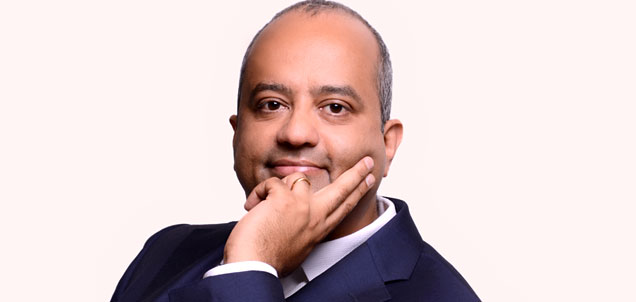
    Media agency heads have always played a key role in India’s growing media services industry. GroupM, the holding arm of a clutch of agencies owned by WPP, has been on the forefront over the years, with CVL Srinivas, CEO – South Asia, now doing that in a quiet, definitive way. So while we were not surprised when Mr Srinivas was actively associated with Goafest, we wondered whether all was well in the AAAI when we first heard that he had virtually turned co-organiser of Melt, a two-day festival of creativity being organised by Kyoorius on May 21 and 22. Here, in an interview with Pradyuman Maheshwari, Mr Srinivas talks about why GroupM supports multiple trade events and the ‘tu tu, main main’ between the supporters of Goafest and Kyoorius…


    You answered this question when Melt was being announced, but given that it is happening now, one would like to hear it from you again: How is it that GroupM and you personally are as actively involved with Goafest and the Abby as you are with Kyoorius Melt?


    At GroupM, we try to support as many initiatives as our bandwidth permits. Apart from Goafest over the years, and Melt2015, we have been supporting a host of events, be it MMA, Social Media Week or supporting organisations such as IAA. We believe in doing our bit to shape the market and help the industry evolve. One of our biggest challenges as an industry is to attract talent. We see all these events as having a role to play in keeping our industry exciting and attractive for young talent. For us, it has never been a case of either/or (with regard to the events). Having said that, I must confess that if at all we do not support any particular event, it will be more because of time and bandwidth constraints than anything else.


    When we first heard that GroupM was actively associated with Melt, our response was one of disbelief. Did this [Kyoorius] in any way impact your association with that [Goafest]?


    We have supported Goafest over the years and even this year, be it with speakers, designing the event, or with sponsorships. We continue to send the maximum number of award entries and among the highest number of delegates. When Melt came to us as an opportunity, we found the format interesting. Coincidentally, it came at a time we ourselves were driving a few programmes internally and externally around creativity in technology and media. We felt this would be a great platform for us to energise our teams and learn from the experts who will be taking part.


    I know it’s early for you to make a forecast, but what’s your sense on how Melt will turn out?


    We have a great line up of speakers and good buzz around the event. Considering it’s the first such event being held in Mumbai, I am sure it will pick up momentum as we go along.


    You were at the Kyoorius Awards last year giving away some of the awards, and you were also present at the Goafest Abbys both last year and this year. What, according to you, would be the key differentiators?


    Each awards event has its own flavour. There isn’t any need to compare the two and get worked up. Goafest is clearly an industry event, since industry bodies are behind it. Kyoorius awards is run independently. Just to clarify, GroupM has no role in the awards; we are only partnering on Melt.


    A slew of media agencies seem to have no problem with any of the awards shows, or even with each other. Why do you think creative agencies have problems with participating in awards shows?


    I am not very sure!!


    Even agencies from the WPP group have stayed away.

    Well, GroupM hasn’t.


    We may not hear it said out loud, but there is a clear ‘tu tu main main’ between Goafest and Melt/Kyoorius Awards. What would you say to the naysayers from either camp?


    It’s better to live and let live and not criticise either of them.


    And to all those in the industry who may not have made up their minds yet: Since you are one of the co-organisers, why should they register and attend Melt?


    It’s an event that combines advertising, media, digital, marketing and technology. In the real world, each of these areas is merging into the other. Melt is bringing alive this phenomenon in a very interesting way.


    A version of this first appeared in dna of brands dated May 18, 2015


  • Kyoorius announces partner events at Melt 2015

    By A Correspondent


    As MELT 2015 approaches, the two-day festival is shaping up with a packed schedule of events including conferences, seminars, workshops, showcases, exhibitions and installations catering to a variety of audiences and disciplines.


    Rajesh Kejriwal

    Rajesh Kejriwal, Founder CEO, Kyoorius said, “With MELT 2015, we’re pioneering an exciting new model where our partners co-curate content with us. Together, we have created opportunities to learn and interact in myriad ways, always keeping our partners’ brand goals and vision in mind. MELT 2015 is a chance for them to showcase what they do best.”


    The HT Osmosis Conference on 21st May offers insights into advertising as it exists today and a glimpse into what it could be in the future. Speakers include Chris Sanderson (Future Laboratory), Daniele Fiandaca (Creative Social), Bo Hellberg (Brave and HeyHuman) and Hugh Macleod (Gaping Void).


    GroupM is a knowledge partner at Zee Melt 2015. Besides powering the event with international speakers, workshops and seminars, GroupM agencies are also showcasing new technology in advertising at ‘FutureReady’ in the Hall of Knowledge. Participants of MELT can expect to see the Loop Room by Mindshare, Moribus- the Behavioral Economics Lab by Maxus, great global work by Mediacom and MECFresh by MEC Global.


    Industry stalwarts will battle out the question of whether mobile has taken over TV as the default screen for viewers, at the IAA Debate on 21st May.


    Kinetic Future Citizens on 21st May, is a series of seminars that looks at how brands can connect, entertain and understand consumers of the future.


    ZEE MindSpace on 22nd May, promises to be a stimulating and eye-opening conference for industry leaders to discuss, debate and reflect on issues and challenges facing the industry. Speakers include Sir Martin Sorrell (WPP), Tom Goodwin (Havas Media), Adam Ostrow (Mashable) and Joshua Black (GroupM).


    YouTube takes over the Hall of Vision at Nehru Centre with a series of presentations hosted by YouTube India’s Satya Raghavan along with a select group of YouTube Creators will go in-depth into developing a successful YouTube strategy for brands and creators. Delegates can sign up for a one-on-one consultation with a YouTube expert on how to develop compelling online content.


    Metalworks by Maxus helps brands explore the next frontier with creative technology in a series of talks and workshops on both days, designed to help companies generate and execute those really ‘out-there’ ideas.


    Madhouse India presents a Madhouse Mobile Masterclass with renowned mobile marketing consultant Tomi Ahonen. This invite-only workshop for brand managers explores mobile-first branding.


    Experienced D&AD Trainers Bo Hellberg of Brave and HeyHuman, and Alex Lampe of A+B Studio will conduct hands-on workshops on branding and idea generation.


    Hyper Island Master Class Speaker Daniele Fiandaca will lead two workshops discussing the most disruptive trends in digital and the challenges that the changing nature of work holds for modern creatives.


    iStock  & Happy Finish have collaborated to create bespoke workshops at MELT 2015. Delegates can learn how to bring a powerful campaign to life with the right imaging tools.


    The Other Bookstore will display its extensive collection of design and advertising books and publications.


    Augmented reality is one of the hottest technology trends at the moment. Happy Finish’s Global Chairman Stuart Waplington will take delegates behind the lens to create stunning 360-degree visual experiences on screen. A host of augmented and virtual reality tools will also be on display at Nehru Centre during the festival.


  • Kyoorius announces speaker lineup for MELT:2015

    By A Correspondent


    Kyoorius has announced the launch of readytomelt.com, a dedicated website for its upcoming festival, MELT: 2015. The site boasts a full lineup of speakers from all over the world, spanning a variety of events throughout the two days.


    MELT 2015 is a 2-day festival of creativity for the advertising, marketing, media, digital and emerging technologies, developed by Kyoorius in partnership with Zee, GroupM and D&AD. Each day offers a variety of formats, including conferences, installations, seminars and workshops, which will take place simultaneously at Nehru Centre and DOME @ NSCI, SVP Stadium in Mumbai.


    Day 1 of MELT:2015, will feature HT Osmosis, a creative conference curated for advertising and creative professionals. Speakers include Chris Sanderson – Founder, The Future Laboratory, Dylan Berg – Lead Creative, 72andSunny, Huib van Bockel – Founder, The Social Brand and Daniele Fiandaca – Creative Social.


    Zee Mindspace, a day-long conference on 22nd May, has been developed specifically for marketing and media professionals. Speakers include Tom Goodwin – Head of Strategy & Innovation, Havas Media, Adam Ostrow, Chief Strategy Officer, Mashable, Sir Martin Sorrell – CEO, WPP, and Parminder Singh – Managing Director, Twitter SE Asia/India/MENA.


    A series of workshops and seminars will be conducted across the two days on topics such as mobile marketing, digital strategy, brand experiences, branded content, prototyping ideas, sonic branding, youth marketing, and photography, by the likes of D&AD, The Partners, FITCH, Getty Images, Mindshare, Metalworks, Kinetic, Happy Finish, and more.


    FUTURE Tense is another series of seminars focusing on emerging trends and innovations in technology, media and digital. Topics to be explored will include wearable technology, digital storytelling, augmented reality, big data and social media.


    Rajesh Kejriwal

    Rajesh Kejriwal, Founder CEO of Kyoorius, said, “MELT has been conceptualized to help advertising, media, digital and marketing professionals learn – through lectures, discussions, case studies and workshops – how to marry their inherent skills and talent with emerging technologies.


    Tickets have been priced at INR 5,000 for one day and INR 8000 for both days. Online registrations will be open from Friday, May 8, 2015.


  • Kyoorius launches Melt, 2-day ad, media & marketing festival

    By A Correspondent


    Transmedia Fine Papers-promoted Kyoorius has launched Melt 2015, a festival of creativity for the advertising, media, digital and marketing industry in partnership with Zee Entertainment, media services conglomerate GroupM and London-based creativity body D&AD.


    The festival will take place on May 21 and 22 in Mumbai at the National Sports Club of India (NSCI) and neighbouring Nehru Centre, culminating in the Kyoorius Advertising and Digital Awards night on May 22 at the NSCI. “We expect over 5000 people over the two days which will be packed with seminars, exhibitions and workshops,” said Rajesh Kejriwal, Founder and CEO of Kyoorius who has curated the event, adding that the intent is to build the event around four pillars: Learning, Networking, Showcase and Celebration. “Our objective is to see everyone carry a key takeaway from each of these buckets,” said Kejriwal. The Kyoorius Awards will continue to have Colors as the presenting sponsor.


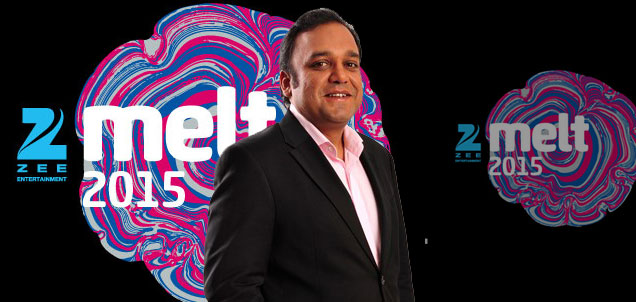
    Punit Goenka

    Said Punit Goenka, MD & CEO of Zee Entertainment Enterprises Limited (ZEEL): “Zee is proud to partner with Kyoorius at Melt 2015, which promises to be India’s largest celebration of creativity. Zee Melt offers us a platform to curate and present thoughts and lessons that all of us in the business need to know.“ Zee is also hosting the third edition of its Mindspace series at Melt with leading marketing heads from global and Indian corporations in attendance. “We are also looking at crowdsourcing content ideas, where we will give people the opportunity to put forth their ideas which Zee will then evaluate,” Goenka said.


    Added Tim Lindsay, CEO of D&AD in a statement: “Engaging the wider marketing communications industry in a conversation about excellence – in insight, creativity and execution – can only have positive economic, cultural and social outcomes. This is at the heart of what D&AD and Kyoorius are about.” Like last year, the judging process of the event will continue to be powered by D&AD.


    CVL Srinivas

    Talking of GroupM’s association with the event, CVL Srinivas, CEO, GroupM South Asia said that while there is a lot of talk about digital media, technology and data, “ultimately, ours is an ‘ideas’ business. We continue to support many initiatives that act as a rich learning ground for the industry. We will be partnering with Kyoorius and Zee to help curate the event and organise some interesting sessions around creativity in the digital era.” GroupM in partnership with HT Media Group and Kyoorius will conduct a print advertising contest, where entries will be invited from not only the creative community in advertising, but from young professionals who have a great print idea to share on the given brief.


    While attempts are made to not compare Melt with Goafest officially, the three-day festival held in April in Goa by the Advertising Agencies Association of India and the Advertising Club, industry persons are looking forward to both events. Srinivas believes it’s incorrect to compare the two and said GroupM is actively associated with both events as also with many such initiatives. Said Goenka: “We are confident of what Melt is going to deliver for the industry, and that’s why Zee has chosen to partner it.” And Goafest? “We’ve been associated with it in the past, and will continue our association with it,” Goenka clarified.


    Elaborating on the way he has built the festival, Kejriwal said Melt has no sponsors. “We only have partners. So, Zee is a principal partner, GroupM and D&AD are strategic partners, then there are other partners who are bringing in content in some way or the other.” The IP of each of the events at the fest will be owned by the partners, he added.


    Partners include Zee, GroupM, D&AD, Hindustan Times, Happy Finish, afaqs, Pepperfry, Future Laboratory, Hyper Island, The Partners, BrandMusiq, One Eyeland, Maxus, Youtube, Google, BARC and many more in the pipeline. Details on Melt can be accessed at readytomelt.com.


  • No gyaan, only learning


    This interview was conducted around Melt 2015 was announced in April this year, but the views Punit Goenka, MD and CEO, Zee Entertainment Enterprises Limited are still valid and relevant given Melt (or Zee Melt 2015, to be precise) starts today (May 21) and Zee Mindspace, the conference for CMOs, happens tomorrow. We asked Mr Goenka on why he associated himself with Kyoorius, will it impact his linkages with Goafest, on how speakers have been chosen for the event and finally with Rajesh Kejriwal, founder and CEO of Kyoorius.


    This is fourth edition of Zee Mindspace. What have been the learnings so far and what made you switch to a much larger scale?

    In this fast changing world, our own teams feel that the learning for the changing world is not happening at the pace that it needs to happen. We have got that feedback from our Mindspace series that we’ve been running so far. And when Rajesh [Kejriwal] approached me for Melt, I was of the opinion that we need to scale up Mindspace to a bigger level and why not put it as part of the industry initiative, which means it will be created for the industry by the industry. Normally, we do a half- day session, but this time we are extending it to the full day. Instead of just two speakers, we’re targeting many more to come in and speak up on different aspects of marketing and challenges and their learnings from other markets and bring it on the platform for the CMO world at large.


    There are quite a few events such as these which keep happening and apart from the likes of

    Goafest you have CII which does a marketing summit and there is AIMA etc. So how is it different from the others that you’re looking at?

    So, first and foremost the clear differentiation that attracted me to this was that I’m not just a sponsor here, I’m actually curating the content along with the Kyoorius team with learnings from my own professional space and what industry professionals are facing whether it be in the media or advertising or content world. So when people leave the venue, they should leave with the feeling that they have learnt something new which will help them in their day-to-day running of their professional life. And it should be clearly beneficial for to them, rather than it being a marketing conference where I talk about how great Zee is and what great thing Zee has done in the past. I want to actually make it a learning experience not just for my own team but for the industry at large.


    What made you choose on Kyoorius?

    I’m very happy to be partnered with Kyoorius because I have seen their benchmark in events that they have created and I don’t want to partner anything less than that. I want only improvement in that if at all, and I said yes to the partnership because I know Rajesh will deliver great standard of quality and best practices. And of course, why would I not want to associate my brand with something at that pinnacle of creation and implementation?


    You aren’t associated with the Awards though

    No, the Awards are not part of Melt. That’s an independent activity. It’s the culmination of Melt. So, by that definition we are not associated with the Awards as a partner or anything. But of course, I would love to be there and see who wins this year.


    With Goafest being an industry event and all creative and media agencies backing it, are you worried of a negative impact your association with Kyoorius can have on business?

    I’m not comparing Goafest with Melt. I know what Melt is all about and I know what it’s going to deliver for the industry, and that’s why I have chosen to partner here. I’ve been associated with Goafest in the past and will continue my association with them. Frankly the difference is that in the case of Melt, I’m working on creating the content for this festival. Whereas in Goafest, I’m not involved at. So I would not want to consider what’s good in Goafest and what’s not good in Goafest? Would those agencies look at Zee in a negative manner because I’ve associated with Melt, well, that’s their business, I can’t tell them what they should do and they should not do. We do so many events and that does not mean we make enemies with competing events.


    (Rajesh Kejriwal who was alo present while the interview was on steps in: Just to clarify this case, Melt has no sponsors. Melt has only partners. So, Zee is a principal partner, GroupM is a strategic partner, D&AD is a strategic partner, then there are other partners who are bringing in content in some way or the other. Everybody is a partner at Melt… there are no sponsors.)


    You’ve been associated with Kyoorius Designyatra for a while and I find it interesting that that you are actually not part of the event at all in the form of making a speech, presenting awards etc. We’ve also heard stories that Rajesh Kejriwal has told a sponsor that a certain logo doesn’t look very good in the creative, etc etc. Would you say he’s a tough guy to be associated with as an event curator?


    Yeah, he can be a pain, but nothing that can’t be fixed over a drink (laughs). There is no problem that you can’t fix over a drink, so let me just keep it at that.


    Zee has been associated with several industry events over the years. Is working with him different various others with whom you have dealt with in the past?


    As I said, normally people just put an event together and ask you for money and for a sponsorship logo on top of it. Beyond that, there is no value addition that one gets. Here, I’m being part of the team working on what should the event be all about. Rajesh came with certain ideas, my team then looked at the kind of speakers they should invite. What they should talk about. And we are actually considering all that before we take a speaker onboard, because I don’t want people to come and give us gyaan as to how good they are and how they have done great stuff, and what their great companies do. At the end, it has to be learning for the people who attend it, that here is the problem, and here are potential solutions, now debate.


  • DDB Mudra, Ogilvy win the Big Elephants @ Kyoorius


    By A Correspondent


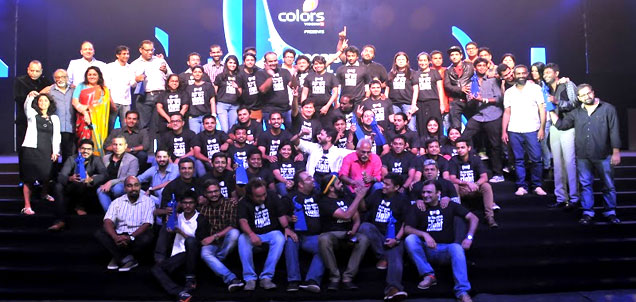
    In the news for the right reasons, screamed the T-shirts worn by the large contingent from DDB Mudra as they ran up to collect the only Black Elephant for Zydus Wellness Ltd’s Nutralite The Black Elephant is the highest award presented by Kyoorius and is the equivalent of the Grand Prix at the Goafest Abby.


    Kyoorius, in association with D&AD, the London-based body of creative, design and advertising communities, held an awards event to announce the winners of the second edition of the Kyoorius Advertising & Digital Awards at Dome, at the NSCI stadium in Mumbai. Over 1,800 advertising and marketing professionals from across India and abroad attended the event held on Friday evening.


    WINNERSPEAK:
     

    Piyush Pandey

    Executive Chairman and Creative Director, Ogilvy India

    I am so happy that we won 15 awards because the young people at Ogilvy are taking the tradition forward and making us look good, making me look good, and the brand Ogilvy look better, and they are making their clients look better. It feels good. I didn’t see much of mainline work today and I would like to see more of it next year. There is a lot of work that we as industry practitioners appreciate, but I would like to see more work that consumers appreciated and was good enough for the jury to appreciate as well. I miss some of that work. I think the jury was fantastic. I know many people on the jury; it was a wonderful jury. But I think the Indian jury should be more balanced, to get the sensibilities a little better. They are much better than I’ve ever seen, but we could get even better in the future.


    Madhukar Kamath

    Group CEO and MD, DDB Mudra group

    Good work rises to the top, appreciation is wonderful, the team is happy. Full credit to Sonal and his team for all the work they’ve been doing over the last few years. It is a vindication of the belief — work in silence and let success be your noise. It was good to see the quality of work right across different categories and feel happier that some of your work has risen to the top. It was a good body of work.


    (Talking about the jury )Every awards show has its own flavour. Globally, that’s also been the scenario. This is the type of jury that a Kyoorius puts together, which is good. I’ve always thought that as long as there is peer group appreciation, it is good.


    In India brands have been built over centuries. That does not mean that we’re not doing great work. I’ve never believed that India has been inferior. Here, you do work for India. Right from the beginning, we’ve built great brands here. Indian advertising has always been culturally contextual and it has been wonderful in terms of building brands for the country, because that is what advertising is all about, in terms of content that builds brands and connects to consumers.


    Rana Barua

    CEO, Contract Advertising

    The fact that Kyoorius has kept only one colour elephant is a good and interesting format for now. We’ll have to see in the long run how we can sustain something like this. We at Contract won a lot of awards. The quality of work is good, and clients are pushing us to do better, so that’s the big challenge. The jury is very prestigious, very eclectic, interesting. Only that sometimes you wonder whether they get the whole thing, because there is a lot of international jury judging Indian work. With a lot of Indian friends in the jury, I’m sure they understand what is happening. Maybe we need more Indian presence on the jury, because a lot of unique work happens within our country, because our country is a lot more unique than others. I think India is pretty sorted in the way we work, because it appeals to Indians. India itself is a nation of many countries put together. If our campaigns work for such a massive country, they will work anywhere in the world as well.

    (interviews by Dyanne Coelho)


    The next level of awards – the Blue Elephant — was presented for Creative (36 winners, 38 if you consider that two of them were shared by two agencies) and Digital Advertising (12 winners). Ogilvy bagged 13 Blue Elephants in Creative and two in Digital. Two of the Ogilvy creative awards were awarded jointly.


    From Times Square-inspired sets, to sound and motion graphics, the entire visual experience for the night was created by Dutch and Malaysian specialists. Hosts Suresh Venkat and Mandira Bedi regaled the crowd with witty banter in the 75-odd minute awards presentation.


    A total of 1,419 entries (up almost 40% from the previous year) were submitted across advertising and digital categories. Ogilvy, DDB Mudra, Contract Advertising, Ideas@Work, Scarecrow Communications, Soho Square, BBH, BBDO India, Dentsu Webchutney, Madison, Madison BMB, ITSA Brand Innovations, Experience Commerce, Rediffusion Y&R, BBH, Famous Innovations, Havas Worldwide, Fanatics Viscomm, Grey, Linen Lintas, PHD India, Sapient, Web Maffia, River Advertising, Creativeland Asia, Blink Digital, Whyness Worldwide, and TBWA were some of the agencies who were awarded the ‘Baby Elephant’ trophy as ‘In Book’ winners.


    Of the 163 In Book winners, also nominees for Blue Elephants, the advertising and digital juries awarded 36 Blue Elephants in Advertising and 12 Blue Elephants in Digital categories.


    In the advertising categories, the 36 Blue Elephant winners included campaigns by Contract Advertising, Ideas@Work, Creativeland Asia, Ogilvy, Early Man Film, DDB Mudra, BBDO, Fanatics, Grey, TBWA and Linen Lintas.


    In digital categories, 12 Blue Elephant winners included work by PHD India, Pigeon & Co., Quasar, Quidich, Dentsu Webchutney, Experience Commerce, Leaf Design, Madison Media, Sapient and Ogilvy.


    DDB Mudra was awarded the lone Black Elephant this year for the direct marketing campaign, Health Cha Shree Ganesh. The campaign for Nutralite, gave the Ganesh idol a healthy makeover – with a physically fit idol and equally fit priest, accompanied by sugarfree modaks and offerings at a pandal in Mumbai. Devotees could participate in Zumba workouts while waiting in line and ‘donate’ calories while working out on a treadmill.


    Said Aneil ‘Andee’ Deepak, Executive Director, DDB Mudra Group and Head of Ideas, DDB MudraMax and who now heads the agency’s experiential business after MudraMax President Mandeep Malhotra move on: “The standard of work that has come in this year has really improved and so have the judging standards. The judging is so top notch that winning here means everything. This is the best award show in India. We feel fantastic. I think the move of keeping only the Blue Elephant award, taking away division between categories of winning is a good move. It makes the hungrier survive. If you are hungry for that one black elephant, you better beat everyone else. It’s a great motivation to win the black elephant.”


    Rajesh Kejriwal, Founder-CEO of Kyoorius, said on the awards: “We are overwhelmed by the response. Our association with D&AD guarantees a transparent and neutral platform, with the jury representing the best of international and local talent.”


    When asked about the trends this year, he said: “We saw a lot of work around gender equality and women’s rights, reflecting the national sentiment on these issues. Plus, of course, in a World Cup year, loads of cricket.”


    Tim Lindsay, CEO of D&AD who is associated with Kyoorius for a second consecutive year (or a third, if you include the Design Awards that he is associated with for three years), said: “The Kyoorius Awards continue to grow in size and stature, and are an important indicator of the world-class standards of the Indian creative scene. But the real heroes are the creatives themselves, who are producing ever more engaging, emotional and beautifully-crafted work  D&AD are proud to partner.”  At the international D&AD awards, which were incidentally also held last week, Indian agencies won some ‘Pencils’, as the Metals?? medals?? are called there.


    Alongside the Elephant winners, all nominations will be featured in the Kyoorius Advertising Awards Annual and the Kyoorius Digital Awards Annual – distributed to over 5,000 corporates and creatives across India.


    The awards night marked the end of a two-day festival of creativity in advertising, media and marketing developed by Kyoorius in partnership with Zee, marketing services giant GroupM and D&AD.


  • #ZeeMelt15: Future-gazing, unlimited!

    By Dyanne Coelho


    Creativity had an unbridled run at Zee Melt 2015. The two-day festival of creativity brought stalwarts from the fields of advertising, media and marketing — both from across India and the world — together on one platform to share thoughts, insights and plans for the future. A host of seminars, conferences, workshops and exhibitions were put together for some 1,300-odd participants and visitors. The event was organised by Kyoorius, a not-for-profit company, in partnership with Zee Entertainment, GroupM and D&AD.


    A conference, held on Day One, saw speakers from all over the world like Chris Sanderson of Future Laboratory, Daniele Fiandaca of Creative Social, Christian Behrendt of Razorfish, Bo Hellberg of Brave and HeyHuman, and many others, drawing attention to the significance of innovation, creativity, uncluttering advertising and zooming out from the ‘billboard trend’. Fiandaca, for instance, pointed out the wonders that erupt when varied talent. even from the finance HR and other teams are included in the creative process. “When margins are being pulled, innovation is the only way forward,” he said.


    “What would you do if you could do magic?” Andy Jaspers of Maxus asked at a seminar he shared with his colleague, Unny Radhakrishnan, head of digital for South Asia. Think big, imagine the impossible, and then make it possible he pointed out. “The best people are not the ones with the most knowledge, but the ones who can solve the problem,” Jaspers added. Both speakers stressed the importance of merging creativity with the use of technology. They have to go hand-in-hand, they said. “While a picture says a thousand words, a prototype is worth a thousand meetings,” Jaspers joked.


    The consumer of the future was much talked about in the seminar entitled ‘Kinetic Future Citizens’. Consumers’ needs, wants, interests and overall behaviour was discussed in depth by an array of speakers, including Sid Talwar of Lightbox, Simon Gosling of Happy Finish, Satya Raghavan of Youtube and others.


    Delegates at the festival thronged in large numbers to the activities at GroupM’s showcase space. The Loop Room and the Purple Box, which explained innovative ways to understand consumer behaviour and patterns, was a crowded space. Participants were taken through the various technologies that the company works with, including Moribus, the Behavioral Economics Lab by Maxus, global work by Mediacom and MECFresh by MEC Global. Happy Finish’s showcase displayed the latest in augmented and virtual reality. A particular favorite among visitors was the Smash it!, a cricket virtual reality experience.


    The IAA Debate on the issue of whether the mobile is likely to become the primary screen for news and entertainment in the next three to four years, brought Day One to a close on a dramatic note as speakers Vikram Sakhuja and Raghav Bahl sparred with Arnab Goswami and Rajiv Lochan on whether mobile phone usage is increasingly on the rise in India. Goswami and Lochan were of the view that a period of three to four years is the equivalent of a split-second for this to be a reality, as mobile internet in India – especially the 3G network — is still a luxury enjoyed by a few since fast downloads and buffering videos are difficult.


    The Zee Mindspace conference was the highlight of Day Two. Adam Ostrow of Mashable set the ball rolling with an informative take on digital culture. Other speakers included Joshua Black of GroupM, Parminder Singh of Twitter, Sir Martin Sorrell of WPP plc, among others.


    The Indian media is constantly evolving to keep up with changing times. While technology is transforming the way content is being delivered to the audience, measurement systems seem to be lagging. The Think BARC India seminar brought together Jose Manuel Olivera of MarkData, Bruno Chetaille of Mediametrie, Erica Boyd of Nielsen Asia Pacific and William McKenna of William McKenna & Associates to talk about life beyond the traditional measurement methods.


    The art of great storytelling through advertising and film was delved into in the seminar entitled Making the Cut – Ad Learnings, with speakers that included award-winning filmmakers Vinil Mathew of Breathless Films, Ayappa KM of Early Man Film and Vishwesh Krishnamoorthy or Corcoise Films. “Don’t tell a director how to do his job, just like you don’t tell a plumber how to fix a tap,” Krishnamoorthy explained, while talking about how agencies are sometimes put under great pressure by clients. The trio, in an interactive session, discussed the technicalities of writing, shooting, editing and budgeting as well, in order to create an ad that will engage the end-consumer and also keep the client happy.


    Girish Raj of OML took participants behind the scenes of the making of the NH7 Weekender year after year in the session. The ‘Behind the Seen’ seminar concentrated on digital entertainment and experiential marketing. Other speakers included Rajesh Thomas and Vidya Sharma of RocketscienceLab, Shubhradeep Guha of SapientNitro and Saket Saurabh and Ankit Vengurlekar of #fame.


    The two-day event concluded with the much-awaited Kyoorius Digital and Advertising Awards night where 48 (+2) Blue Elephants and one Black Elephant were given out.


  • #ZeeMelt15: Multiple screens, many needs

    By Labonita Ghosh


    Digital is mainstream

    Adam Ostrow, Chief Strategy Officer, Mashable

    “In 2015, digital culture is the mainstream culture,” says Ostrow. Statistics show that the size of the online market has quadrupled in the last couple of years, he points out. Among other curious findings is the fact that about 38 per cent of two-year-olds now use mobile devices. However, while ad revenues for TV and broadcast are rapidly shrinking, as per research by Google, about 56 per cent of digital ads are never seen. Ostrow points out a few key trends in the media and advertising space. Social media has become primarily a mobile activity, he says. People are turning to social platforms for news and entertainment. “To succeed in 2015, you have to be relevant in your feed, you have to be able to draw attention in seconds,” he says. Nowadays, on a social media page, posts from advertisers and any corporate house are competing with posts from friends and family. You have to find a way to stand out of the crowd, he says emphatically, adding: “In a world where everyone is a content creator, data provides your competitive edge.”


    Content no longer king 

    Joshua Black, CEO, GroupM

    “If you believe that content is king, you’re probably still stuck in the 80s,” says Black. “Content is not king. The days of capturing a mass audience through television are over. If you’re not in the right place, distributing your content to audiences where they are, when they want it and how they want it, you’ve failed.” Today, the consumer is in control; people no longer have to sit before their TV waiting for their favourite show. “People are also always on the go,” says Black. “They don’t live in their houses any more. They live in offices, in coffee shops or even outdoors.” So content has to reach them wherever they are. Consumers want content in a specific way too. Studies in the US have shown that large numbers of people report binge-viewing their favourite TV shows, sometimes for six or eight hours straight. Clearly, consumers want control over this sort of consumption. “Producing great content is not a strategy,” says Black. “It’s only a part of the strategy.” The bigger, more critical part is delivering it, in a custom-made manner.


    Too many screens

    Tom Goodwin, SVP Strategy and Innovation, Havas Media

    There was a time when the TV was the most important screen in people’s lives. Then came the laptop. Now there are tablets, mobile phones and digital watches. A host of screens are competing for our attention. So what is a marketer to do? The answer, says Goodwin, is not to make ads smaller; but to “reimagine advertising for the future not by the size of the screen, but by the richness of data all around us.” Indeed, marketers will also have to keep some other things in mind. While the phone has become a gateway to everything, it will continue to become a thinner, more personal web experience. Moreover, the debate is no longer about digital versus traditional marketing; it’s just the modern world one has to cater to. Similarly, it’s no longer TV versus video; it’s just about video being viewed on multiple and different screens. “A whole generation of people will grow up with no concept of what it is to go offline,” says Goodwin.


    TV is a second screen

    Huib van Bockel, Marketing and (Social) Media Expert, The Social Brand

    Just as there is a whole generation that might never know what it’s like to be offline, there is likely to be a whole generation that will never know what a TV commercial is. Huib van Bockel has actually glimpsed such a future. On a recent vacation, van Bockel sat his kids in front of a TV to keep them occupied. After some time, his six-year-old daughter came rushing to him to say the ‘film’ they were watching was bad one because it had a man who was only talking about toothpaste. van Bockel explains that children today (his included) are so used to TiVo, provisions like TVadblocker or ad-less channels like Netflix that a whole generation might grow up never seeing a TV commercial. And that will pose a new challenge to traditional marketing. “Online has already or will soon pass TV,” says van Bockel. “Unlike an earlier time, the television is now your second screen. Your mobile phone is your first. There is no longer an ‘audience’ waiting for your message.” Consumers will decide, with just one swipe of their mobile screen, if they like or dislike a product. So brands have literally one second to grab their attention.


    It’s all about the moments

    Parminder Singh, Managing Director for SEA, India & MENA, Twitter

    Singh feels the important thing that marketers need to worry about today are the changing rules of customer engagement. After all, the mobile phone is less of a voice device today and more of both a content provider and a content creator (even when you take a selfie and upload it, it counts as content). According to Singh, in 2015, there are eight million connected devices. By 2020, this figure is estimated to grow to 50 billion. “We are in an age of digital Darwinism,” says Singh. “Only those who are adaptable to change, will survive.” Singh does provide solutions, too. He says there are at least two ways to improve engagement. First, to find the relevant moments, and then to create great content around those moments. “Brands don’t just have target markets any more, they have target moments,” he says. As a Twitter study shows, people tweet a lot during the Oscars or the World Cup, but they also tweet about special “moments” during their day, like the sunrise or a special meal.


    Mobile is the future

    Tomi Ahonen, Author and consultant

    The average smartphone owner looks at his or her phone at least 221 times a day, says Ahonen. He should know; among other things this long-time observer of the mobile industry has written 12 books on the subject exploring practically every aspect. “The mobile industry is worth 1.6 trillion dollars [as of 2014],” says Ahonen. “It is as big as the FM radio, internet, personal computers, and television and landline business combined. And its only 35 years’ old. While all of the other media continue growing, mobile is the future.” Indeed, there will be a ‘grand convergence’ of other industries with mobile, says Ahonen. “We all know that media is merging with the internet, which in turn is merging with advertising, which is then merging with mobile,” he says. “In all, some 17 industries will eventually land in the mobile space.” That is, they will find ways to do business on the mobile platform. “And the golden age of the mobile is only now starting,” says Ahonen. So what should marketers do? Jump on the mobile bandwagon, of course, with creativity and imagination. “But don’t spam and don’t spy,” says Ahonen. “Opt in to serve your customers better.”


    Navigate well through fragmentation

    Martin Sorrell, CEO, WPP Plc

    Sir Martin has no doubt that mobile phones and mobile content will become increasingly more important. At the same time, so will data (“Big Data is just a sexy term that trips lightly off the tongue”). So what can agencies do to keep pace? “We’re doing a lot to stimulate creativity and programming to various kinds, including lot of native advertising and sponsored content for mobile,” says Sorrell of WPP’s initiatives. But this will only get more challenging, he cautions. Digital today comprises about 10 per cent of the market. But as it grows, the market will get more fragmented. The role agencies will then have to play is to integrate the various kinds of media and lead their clients safely through the fragmentation jungle in a safe and coordinated way. Shouldn’t be too difficult for Indian agencies, however. Sir Martin believes India has the best talent in the world in the A&M sector, and that this will always be the case.


    Need ‘wide’ data, not Big

    Jason Harrison, Worldwide CEO, Gain Theory

    In this session about what keeps marketers up at night, Harrison said he found a few common ‘pain points’ in this group. They often find themselves swamped by data, which can be confounding; They work in a field which is replete with jargon and terminology, whereas it needs to be less so and more simplified; They often have to deal with inconsistent answers that they receive to questions and findings, and – the worst one – everything is about speed. That is, everyone feels the need to get faster and smarter insights. The last point, in particular, can be most challenging, says Harrison. “The reality of data is that it has created expectations among marketers that we should all be able to make decisions more quickly and effectively to grow our brand,” says Harrison. The fact, however, is that Big Data – that magical thing that everyone is talking about – is a misnomer, according to Harrison. “What we need to solve a problem is ‘wide’ data,” adds Harrison.


    Humanise the data

    Pele Cortizo-Burgess, Chief Media Strategist, MEC

    Cortizo-Burgess is a man with a mission. He wants to change what he believes is a globally-prevalent idea, that when it comes to various aspects of marketing, media people are always given the last 10 minutes of a meeting. In other words, the least important place in the discussion. “Media is treated as a backroom practice,” says Cortizo-Burgess. “[Brands feel] we need to create the idea first, and then we will invite the media people to come and take it forward.” Whereas the media function is extremely important because “the role of the media is to insert the brand and its products into the moments when people really need an ally,” says Cortizo-Burgess. But to be effective, the media team must be able to humanise data points; they must create insights that can ‘incite’ a change in thought or behaviour and keep connecting and reconnecting the dots till they have a better understanding of the market. “Don’t ask what’s the digital strategy,” says Cortizo-Burgess, in a refreshing change from the current preoccupation of marketers to create content for smaller and more multiple screens. “It’s all about storytelling.”


    (with inputs from Dyanne Coelho)