Category: GOAFEST 2013

  • Mindshare tops in Media Abby 2013


    By A Correspondent


    >It was the first day of awards at Goafest and media major Mindshare was flying high being ahead of the pack. The Group M agency continued its domination of the media advertising agency awards scene in recent times by bagging 10 metals in all, three of these being golds.
    While there were no Grand Prix awarded in the Media Abby, the highest level of awards in each category, Starcom Mediavest, Interface Business Solutions and Milestone Brandcom bagged a gold each. Although in terms of number of metals, Maxus was #2 with a tally of six, the bulk of its metals were bronze. Lodestar UM and BBDO Proximity bagged two silvers each.


    Crediting his team’s hunger for effective work and also awards, Ravi Rao, Leader, South Asia, Mindshare said that his clients also active encourage them to “break through the norms and come up with unique and different but also be effective in the process”.


    And how does Rao expect to carry on the winning spree into the next awards season? “Well, continue to do disruptive ideas that can really come alive, implementation is key but at the end it should be effective on the brands.”


    As many as 660 entries were received in the Media Abby category from 50 agencies. Of these, 16 agencies bagged 46 awards.


    Other than the Media Abby, awards for three award categories from the Creative Abby were also given away. These being from the Design, Direct and Digital domains. The highlight here was that Interface Business Solution won a Grand Prix for Tata Docomo.


    The Abby, which is organized by the Advertising Club at Goafest each year, is regarded as India’s most recognized award for the advertising fraternity.

    Sr No Name of the Agency Grand Prix Gold Silver Bronze

    Total

    1

    Mindshare


    3

    6

    1

    10

    2

    Starcom Mediavest Group


    1

    1

    2

    4

    3

    Interface Business Solutions (I) Pvt.Ltd


    1


    2

    3

    4

    Milestone Brandcom


    1


    1

    5

    Lodestar UM


    2

    3

    5

    6

    BBDO Proximity India


    2


    2

    7

    Maxus


    1

    5

    6

    8

    Madison Media -Pinnacle


    1

    4

    5

    9

    Interactive Avenues Pvt. Ltd


    1

    1

    2

    10

    McCann Worldgroup


    1


    1

    11

    Mediacom Communications Pvt. Ltd


    1


    1

    Source: Goafest/Media Abby. Note: the ranking, done in the Olympic style with metal type being the yardstick, is not provided by the organizers.
     

  • Put customer first: Ray Velez @ Goafest 2013

    By A Correspondent


    With the mantra being Digital everywhere one looks, it was not surprising that this theme predominated at the knowledge seminars on Day 1 of Goafest 2013.


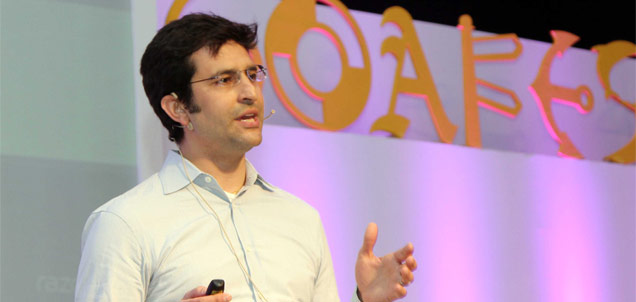
    The most significant points came from Ray Velez, Chief Technology Officer of Razorfish, who spoke on Transforming Business at the Intersection of Marketing and Technology. Emphasising that technology is transforming the customer experience, he cited a Gartner study which predicted that CMOs will own more of the technology budget than CTOs.


    This meant that technology plus media plus creativity made for the new brand experience, he said. Traffic is now two-way, and the hashtag is a way for customers to communicate back to the brand.


    He said there are five principles that must be embraced:

    1. Put the customer at the centre.

    2. Think of your brand as a service.

    3. Reject silos.

    4. Act like a startup.

    5. Embrace diversity.


    Your organization must be structured around the customer, Mr Velez said. What you get is data based on actual activity, in digital more than anywhere else. Strategy must be based on actual data from customer feedback. Marketing, technology and creativity are no longer discrete activities. If you don’t act like a startup and put the customer first, someone else will.


    As an example of such proactive responsiveness, Mr Velez cited the case of the Smart Car / Smart USA Twitter reaction to negative comments about the car. The tack taken was Humour the Haters, and for every wisecrack about the car, the company put out well-thought out, informed responses which gained them a great deal of goodwill and appreciation for the wit and good humour with which they had handled the comments.


    Mr Velez stressed that the organization must be structured around the customer; and that if it does not put the customer first, someone else will.


    Roger Mulchandani, Director of Warc Asia-Pacific, tackling the topic of ‘Seriously Social’, said the traditional way of looking at television and digital as rivals was no longer valid. TV and digital are buddies, he said, as their roles were overlapping and often symbiotic.


    Social media is certainly here to stay, he said, but he also highlighted the dangers of over-reliance on it. In any given week, less than 0.5 percent of a brand’s Facebook fans engaged in any actual engagement with the brand that they are fans of. That is how effective Facebook really is, he said, and added that we need to lower our expectations of brands on social media. Social media should be used for reach rather than loyalty, he suggested.


    Nick Vale, Global Planning Director of Maxus Worldwide, speaking on “What great work looks like in our changing world”, said that the focus needs to shift from the big idea to the long idea, ie, ideas that are sustainable over time and have staying power. Digital was a great enabler, as it can make ideas now live beyond the screen, he remarked. He added that the focus should be on storytelling across channels, not silo-based thinking.


    Each speaker also interacted with the audience in a Q&A session at the end of their talk, and the best two questions in each session won iPads.


  • Filmmakers need freedom: Dave Alberts @ Goafest 2013

    By A Correspondent


    Dave Alberts of Mo Film, speaking on Democratization of Creativity, said that for a filmmaker the most important aspect of democratization is freedom. He said that independence of thought was key to making groundbreaking and memorable films.


    He showed examples of films made independently by small and individual filmmakers, and said that technology was increasingly enabling filmmakers. “Any filmmaker can make a film of broadcast quality,” he said, quoting Francis Ford Coppola who had once remarked, “Some little fat girl in Ohio is going to make a beautiful movie with her father’s camcorder.”


    “The exciting thing about the internet and technology is that it is giving creative people a stage,” Mr Alberts said, adding that the agency should keep the process simple in order to liberate creatives. This only helps the client, he said, because different films have different roles, and with democratized creative, one can make certain types of films to reach specific targets.


    He said Mo Film had always encouraged independent film-makers, said Mr Alberts, and took the opportunity to announce their contest for a Durex film that interested people could bid for.


  • Digital dominates discussions @ Goafest 2013


    By Vidya Heble


    With the mantra being digital everywhere one looks, it was not surprising that this theme predominated the knowledge seminars on first day of Goafest 2013. Thursday’s speakers were part of the Industry Conclave which always precedes the two-day Goafest, the Indian advertising trade’s flagship convention-and-awards event.


    The most significant points came from Ray Velez, Chief Technology Officer of Razorfish, who spoke on Transforming Business at the Intersection of Marketing and Technology. Emphasising that technology is transforming the customer experience, he cited a Gartner study which predicted that CMOs will own more of the technology budget than CTOs. This meant that technology plus media plus creativity made for the new brand experience, he said.


    Mr Velez stressed that the organization must be structured around the customer; and that if it does not put the customer first, someone else will.


    Dave Alberts of Mo Film, speaking on Democratisation of Creativity, said that for a filmmaker the most important aspect of democratization is freedom. He said that independence of thought was key to making groundbreaking and memorable films.


    He showed examples of films made independently by small and individual filmmakers, and said that technology was increasingly enabling filmmakers. “Any filmmaker can make a film of broadcast quality,” he said, quoting Francis Ford Coppola who had once remarked, “Some little fat girl in Ohio is going to make a beautiful movie with her father’s camcorder.”


    “The exciting thing about the internet and technology is that it is giving creative people a stage,” Mr Alberts said, adding that the agency should keep the process simple in order to liberate creatives. This only helps the client, he said, because different films have different roles, and with democratized creative, one can make certain types of films to reach specific targets.


    Nick Vale, Global Planning Director of Maxus Worldwide, speaking on “What great work looks like in our changing world”, said that the focus needs to shift from the big idea to the long idea, that is, ideas that are sustainable over time and have staying power. Digital was a great enabler, as it can make ideas now live beyond the screen, he remarked. He added that the focus should be on storytelling across channels, not silo-based thinking.


    Roger Mulchandani, Director of Warc Asia-Pacific, tackling the topic of ‘Seriously Social’, said the traditional way of looking at television and digital as rivals was no longer valid. TV and digital are buddies, he said, as their roles were overlapping and often symbiotic.


    Highlighting the dangers of over-reliance on social media, he said that in any given week, less than 0.5 percent of a brand’s Facebook fans engaged in any actual engagement with the brand that they are fans of. That is how effective Facebook really is, he said, and added that we need to lower our expectations of brands on social media. Social media should be used for reach rather than loyalty, he suggested.


    Each speaker also interacted with the audience in a Q&A session at the end of their talk, and the best two questions in each session won iPads.


    A highlight of the day was the IAA Debate organised on the sidelines of Goafest which saw senior members of the industry debating whether with fragmentation of the media, the role of creative advertising has become more important in brand communication. Vikram Sakhuja and Anupriya Acharya from the Group M fold were against the motion while Prasoon Joshi from McCann Worldgroup India and Partha Sinha of BBH India were for the motion. The debate was won by those against the motion.


    The Media Abby and Creative Abby awards in the Digital, Design and Direct categories were awarded in the evening. Saturday is the closing day of the event with some more knowledge session, the rest of the Creative Awards and a rain dance to add to the festive spirit.


  • Leo Burnett maxes metals at Creative Abby

    Team Leo Burnett celebrating its rich pickings at the Creative Abby


    By A Correspondent


    The Men in Black from Ogilvy may have opted out from participating at this year’s Creative Abby but that did not deter around 4300 entries from vying for the most coveted crowns in the fraternity. The Creative Abby, as the Advertising Club’s awards recognising creativity is known, traditionally marks the culmination of the two-day Goafest.


    Leo Burnett bagged 71 awards of which nine were golds. McCann Worldgroup got 56 metals which included a Grand Prix and seven golds. JWT India got 48 awards with five being golds.


    Other than McCann, Grey Worldwide and Interface Business Solution were awarded Grand Prix.


    The metals have four grades with Grand Prix right at the top and Bronze at the lowest. Typically, Goafest’s Awards Governing Council does not hand out rankings of agencies as per award metals received.


    Last year, at Goafest 2012, Ogilvy received maximum metals and Leo Burnett was among the Top 5 with 3 Golds, 11 Silver and 21 Bronze (Total 35). JWT India has improved its performance from last year. Taproot India has dipped since last year with just one gold, four silvers and 13 bronzes (Total 18) while it was flying high with 6 Golds, 13 Silvers and 15 Bronze (Total 34) last year.


    Top Awarded Agencies
    Agency Grand Prix Gold Silver Bronze Total
    McCann Worldgroup

    1

    7

    15

    33

    56

    Grey Worldwide India

    1

    0

    7

    6

    14

    Interface Business Solution

    1

    0

    0

    0

    1

    Leo Burnett

    0

    9

    34

    28

    71

    JWT India

    0

    5

    17

    26

    48

    Click here for Agency-wise Tally of the Creative Abby (as provided by the Goafest Awards Governing Council)


    Photograph by Shailesh Mule/Fotocorp


  • Swami steals the show on Day 2 @ Goafest 2013

    Swami Sukhabodhanand

    By A Correspondent


    Uncertainty may well have been the theme of the past few years, what with the weakened economy and downslides in many industries. Management guru Swami Sukhabodhananda went for the jugular of the topic, opening the innings on the second day of Goafest 2013 with pithy and good-humoured advice to the audience on how to tackle uncertainty.


    Speaking on “Uncertainty is also part of life”, he started by examining the perception of uncertainty itself. “You think you are seeing right, but if your context is wrong your perception is distorted,” he said. “We need to perceive our uncertainty properly.”


    Uncertainty is the problem, he said, as it distorts our perception of the world. “We operate on fear, which makes us experience uncertainty in a distorted way. Buddha said we never experience an experience because the experiencer pollutes the experience.” Sukhabodhananda had the audience roaring with laughter with intermittent jokes and humorous examples illustrating his points. He told the joke of a taxi driver, who nearly jumped out of his skin when the passenger tapped him on his shoulder. The explanation for his reaction was that it was his first day on the job after 25 years of being a hearse driver.


    Shiv Singh, Global Head (Digital) of Pepsi, spoke about “Why no one cares about marketing” and outlined five ideas which he said were important in the current climate.


    1 Leaving marketing behind and engage in deeper creative collaboration;

    2 Think about experiences, not more ads;

    3 Bet on Facebook but not for the sake of mere likes, focus on engagement;

    4 Develop a 365-day culture, be with the brand consistently;

    5 Capitalise on the India opportunity, lead the world. Nothing can stop you.


    Speaking on the theme of “Do what your heart says”, Bollywood director Abhishek Kapoor, who received a rousing welcome with whistles and cheers from the audience, spoke about how his early years had been a time of struggle and a lot of self-doubt. Still, he said, he had persevered because he believed in what he wanted to do. It is all the more difficult to carry on when everyone around you is casting doubts on your goal, he remarked.


    By this time the audience may have been mentally gearing up for the awards, but DDB Worldwide’s Chief Creative Officer Amir Kassaei grabbed and held their attention with a no-holds-barred presentation on the “New Creative Revolution”. At the outset he debunked the theory of social media, call in it bullshit. “Digital is the electricity of the 21st century,” he said. “Facebook is a way for people to connect, an infrastructure that can help marketers become more efficient about their brand.”


    Receiving another rousing ovation, Mr Kassaei exhorted creative people to stop thinking about awards and about making funky ads. “We are not in the business of advertising, we are in the business of making our clients’ brands and business relevant. Winning awards only proves that you are good at winning awards,” he quipped.


    Q&A exchanges followed each speaker’s presentation, with the best two questions in each round winning iPads.


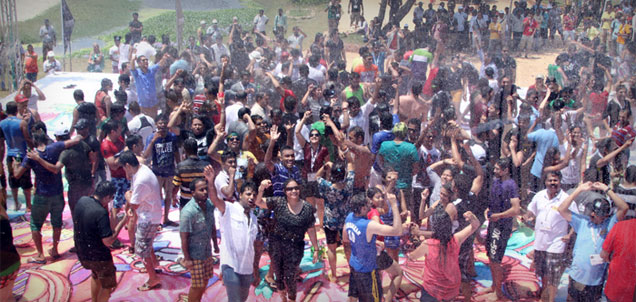
    The seminar sessions were punctuated with the much-awaited rain dance, and were followed by the even more awaited Abby Creative Awards.


  • We are not competitive, we’re lazy: Abhishek Kapoor

    Abhishek Kapoor

    By A Correspondent


    Speaking on the theme of “Do what your heart says” at Goafest 2013, Bollywood director Abhishek Kapoor, who received a rousing welcome with whistles and cheers from the audience, shared how his early years had been a time of struggle and a lot of self-doubt. Still, he said, he had persevered because he believed in what he wanted to do. It is all the more difficult to carry on when everyone around you is casting doubts on your goal, he remarked.


    He said he grew up surrounded by films but didn’t really want to become an actor. He considered different careers including a dotcom business, but it took 4-5 years and a slump to make him start writing.


    After his ground-breaking Rock On, it took four years to make Kai Po Che, he said. “It is difficult to do something you believe in. it was a difficult film to make, but when it came out it was immensely satisfying.” He said it was the many failures and setbacks he had encountered which had driven and sharpened him to do better work. “Success is all very well but it is the failures which are important in my life,” he remarked.


    Mr Kapoor was scathing about the state of the film industry in India. “People are not competing, they are lazy. We are congratulating ourselves on making something but it is not standing out, there is nothing new.”


    Compensation played a significant role in this, he said. “We don’t pay writers. But when the film reaches the stars level, that is when payment starts, because the stars are there.”


    The audience responded enthusiastically to Mr Kapoor’s talk with questions, in a session moderated by Madhukar Kamath.


  • Leave marketing behind: Pepsi’s Shiv Singh


    Shiv Singh

    By A Correspondent


    On the second day of knowledge seminar sessions at Goafest 2013, Shiv Singh, Global Head (Digital) of Pepsi, spoke about “Why no one cares about marketing” and outlined five ideas which he said were important in the current climate.


    1 Leave marketing behind

    Expanding on this, he gave the example of Beyonce’s unmarketing campaign, #beyherenow. “It was not just an ad but a new lens into Beyonce,” he said. The ad also launched a new song, Grown Woman, and the visuals and lyrics were anchored in the culture of her past and her future. It was the start of a deep creative collaboration.


    2 Think about experiences, not more ads

    In an age when every brand can have a tangible relationship with customers, original programming, owned or shared distribution, and sustained engagement and loyalty are replacing traditional marketing, Mr Singh said. He said digital data should be used to drive new business insights. “The insights you get from social impact how you understand cultures, consumers, brands and products, and how you can predict sales and measure engagement.”


    3 Bet on Facebook.

    He said that though Facebook was here to stay, the mere number of likes a brand has on Facebook is meaningless. “Having a lot of likes is like having a large hall with empty chairs. It’s meaningless unless you have people sitting in these chairs,” he said, adding that it is more useful to have a smaller audience that engages.


    4 Develop a 365-day culture. When the customer is listening 365 days, the brand should be there too, Mr Singh said. Realtime marketing is the answer, with realtime insights, and response, content studio, co-creation and distribution happening in real time too.


    5 Capitalise on the India opportunity. He said advertising needs to look at new forms of creativity. “Commercials are videos. Embrace that notion now,” he said, recommending that agencies should hire as many journalists as they have creative directors.


    The Q&A with the audience at the end of Mr Singh’s presentation was moderated by Viral Oza.


  • Metals proved that young team needs to be empowered: K V ‘Pops’ Shridhar

    In the past few weeks, the advertising industry saw a lot of ups and downs. But as the biggest award function – Goafest – of the industry ended, the best was applauded and appreciated. Leo Burnett triumphed at the event with 9 Gold, 34 Silver and 28 Bronze.
     

    MxMIndia’s MEGHNA SHARMA spoke to the agency’s chief creative office for the India subcontinent, KV Shridhar, who donned the angry young man look in a promo for the Goafest asking God to give him the metals, this year..


    So, the God has answered your prays?

    (Laughs) Yes. He has and how!


    Obviously it’s an amazing feeling, but do share with us a little more about the win?

    There are couple of things which I would like to mention. Firstly, all of our big campaigns like KBC, McDonald’s, Coke Studio etc won, which is very gratifying. Secondly, we won at every vertical which again showcases the vastness of our work. And lastly, there was a lot of criticism when we empowered our young talent. But this has been a testing ground where we have proved out that what can the young brigade do. Nitesh Tiwari and his team has made us very proud.


    Were you expecting so many metals?

    Never expecting anything. Ad when you win, the feeling is out of this world. However, it’s always good to be appreciated for your work.


    Of all the metals this year, which is the most special for you and why?

    The KBC girl child one. It is very dear to us as it was beyond advertising. I have been fighting for gender equality for years now and I hope this campaign and our win would make others sensitive towards women too.


    Last year, the tally was three and this year, it’s nine golds… who would would you attribute this jump to?

    The level of craft has improved and increased a lot. The technology, design and the new-age media has upped the game.


    Apart from the controversies and win, what has been the high point of the event, this year?

    If we take a look at the winner’s list, in the top 15 we’ll find a production house, design house which only means that now Goafest is not about Abby alone, but about ‘communication’. All the verticals have come together and are getting encouraged and recognized. This will help the industry in a long way and is a huge step as well as positive thing for the industry.


    What is your aim for next year?

    To keep up the good work.


    And lastly, how do you think these win will impact you and the agency?

    We are going to put this behind us and relax for a few days. And come back with new energy to bring out good work for our clients.


  • 5 things we’ll want to forget about Goafest

    The controversies didn't seem to dampen spirits at the raindance at Goafest 2013. Photograph by Shailesh Mule/Fotocorp


    By Pradyuman Maheshwari


    Every Goafest has its share of controversies, and this year’s was no better. Or worser, pardon the use of the word. Now that the event has concluded, here’s a list of the five controversies about the Creative Abby that we’ll want to forget soonest. However, it may make sense for the Awards Governing Council to take measures to avoid an encore.


    #1 Big O Missing

    At first it was Ogilvy not participating. The folks have been maxing all these years, and have been producing outstanding work. A Creative Abby without Ogilvy is, as Anil Thakraney writes in Hard Knocks, like the World Cup Cricket without Australia and England.


    Well, we didn’t see Ogilvy get back and all the pleading from the Goafest folks couldn’t get them to reverse their decision.


    The result: a Creative Abby minus Ogilvy. That didn’t see Lowe get back as it stuck to its stand of boycotting the adfest.


    Leo Burnett has been winning a fair bit over the years, and it wasn’t much of a surprise that it won the maximum metals, even though none of them were a Grand Prix.


    #2 Scams – JWT withdraws Ford Figo

    Ford’s controversial, gender-inappropriate advertising cost CCO and Managing Partner Bobby Pawar his job a few weeks back. At first it appeared that the ad was just uploaded on ad showcase site adsoftheworld.com.


    But, as it emerged, that the creatives were also entered at Goafest and as is the requirement of the Abby, the ads should have been carried in media and must be entered with the clearance of the client. The Ford Motor Company took this very seriously and an as-yet-unnamed marketing department employee who cleared the ad lost his/her job.


    #3 Inner Circle member quits

    Much celebrated independent ad agency honcho Sajan Raj Kurup publicy quit the Goafest Awards Governing Council (AGC) and had CreativeLand Asia opt out of the awards. His rationale: “Personally, to me it just doesn’t feel right deep inside my heart to be associated with awards in any way in our country.” His letter to the AGC is reported to have said: “I have decided, with the support of my organisation, not to return to awards in this country till we take up the issues on scams seriously and take stringent steps against these.”


    Ahem. Kurup’s resignation was accepted, but his agency’s pullout wasn’t. CreativeLand Asia had 3 silvers and 4 bronzes to its credit.


    #4 Radio ga-ga

    Should similar entries of a campaign in a certain category be clubbed together for a metal or should these be put in separately. At the Creative Abby, many juries decide to club them together – esp if there are different renderings of a certain creative idea or theme. But in the collective wisdom of the radio jury, the various entries were retained as separate ones… ensuring the numbers of entries received by certain agencies leapfrogged. Not everyone was amused by this on awards night, but we’ve been told that we shouldn’t read too much into it.


    #5 When the client said it didn’t pay for the award

    Although the Creative Abby is a celebration of creativity, the awards are meant only for ads that have been published/aired/put up somewhere. After the shortlists are done, the auditor contacts each and every client to ascertain whether the ad shortlisted was indeed entered by it. Pretty sound procedure this.


    Now in the process this year, a certain company from one of the most trusted business conglomerates in the country told the auditor that it hadn’t paid for the entries and the agency did it for the sake of awards. This was enough reason for the authorities to say ta ta to the entries, but soon enough a communication was received from the client saying that it had indeed released the award.


    Evidently someone from amongst the ‘authorities’ went to the client asking him/her to send in the clarification. Since we don’t have anyone on record, we wouldn’t name names, but suffice to say that there was some sound-and-fury and lobbying over these developments.


    The episode doubtless left some aftertaste, making a wag remark: Namak mein kuch kaala hai! Or should it be dal mein…

  • Mediaah!: 6 answers the industry wants to get


    By Pradyuman Maheshwari


    (as you read this, imagine it’s Arnab Goswami addressing us on Newshour… the same tone, the same aggression and the same energy!)


    Ladies and Gentlemen, we are facing with a situation which almost sullied the image of the grand and trusted empire that Ratan Tata and his ancestors have built. You’ve read elsewhere on MxMIndia on what really happened, here then are some questions that I would like to ask this second Tuesday of April. It’s important the questions are asked because the advertising and marketing fraternity wants the answers. Not just in India, the world over. From New York to Shanghai to Australia!


    My questions. Just 6. Simple questions, need simple answers.

    1. The Goafest Awards Governing Council (AGC) agreed to give away the award on Friday only – and I repeat only – after receiving a written letter from Tata Chemicals saying the ad was indeed commercially released by the company. Who wrote it? And why did he or she write after initially clearly stating in the letter to the organizers that the radio spots weren’t paid for? What really happened that fateful Friday?

    2. How did it occur to Tata Chemicals to send the (revised) letter? Did someone from the 10-odd-member AGC call them? Specifically, did someone from Leo Burnett (LB) speak to anyone at Tata Chemicals? This is no police case or CBI enquiry, but in the spirit of fairness and to allow for investigation and transparency, can we check the cellphone call records of some of the key LB officials present?

    3. That the Tata Salt Lite radio spots were scam ads has been exposed. And the spots withdrawn. Do we now have a declaration from Leo Burnett that all the other 67 metals it has won are for ads that are legitimate and paid for by clients and are not scam ads?

    4. Leo Burnett is an internationally reputed advertising network. Its Worldwide CEO Tom Bernardin is in fact in the country and was part of Goafest. While sacking people is not the answer, is there some kind of a disciplinary action happening so that other clients of the mighty ad network get the comfort that their brands are in safe hands?

    5. Will Bombay House now issue clear and explicit instructions to all its marketing and brand managers as well as its advertising agencies that they must not indulge in scam ads?

    6. Should Goafest authorities write to all advertisers and agencies winning metals that in case their awardwinning metals are indeed scam ads, they should return these honourably or stand the chance of getting exposed?


    Ladies and Gentlemen. MxMIndia hereby says that it will NOT name agencies and clients who take advantage of such an amnesty. However, those who don’t and have indeed ‘scammed’ and are not giving up their award stand the chance of getting exposed. Because your site will not just report the news, but will also interpret it for you. And your site does not shy away from asking the tough questions.

    Mr Sharma has referred to MxMIndia in his mail to the AGC chairman Shashi Sinha saying “a website alluded to this debate with unnecessary insinuations”. He was obviously referring to the Big Story on MxMIndia yesterday. Ladies and Gentlemen, we did not name anyone because we did not have any one on record. But now we do. And now, we are going to ask the questions.

    Ladies and Gentlemen, you deserve the answers. And we’ll come back with more questions, if they are unanswered.

    Until then, goodbye… ta ta!


    (Did we stretch our arguments a bit much? Put yourself in the shoes of Arnab Goswami on Newshour, and we are sure you’ll do the same 🙂 )


  • Leo Burnett withdraws awardwinning Tata Salt Lite radio spots [from Mon eve]


    By Pradyuman Maheshwari


    In what could spark a longdrawn controversy in the scam ads-afflicted Creative Abby awards, Leo Burnett has withdrawn two Tata Salt Lite radio spots that won it four coveted metals in the radio and radio craft categories.


    Arvind Sharma, Chairman and CEO, India Subcontinent of Leo Burnett, has mailed the Awards Governing Council (AGC) chairman, Shashi Sinha, with a request to treat these two spots as withdrawn from the agency’s side.


    Arvind Sharma

    The Tata Salt Lite ads won a silver and a gold each in the radio and radio craft categories, and their exit reduces the final tally of Leo Burnett to 67 (7 golds, 32 silver and 28 bronze). McCann Worldgroup has lesser number of metals, but with 1 grand prix, 7 golds, 15 silvers and 33 bronze, it becomes the numero uno agency this year.


    In his mail to Mr Sinha, a copy of which is with MxMIndia, Mr Sharma has written that he was aware that there was a debate at the AGC about two Tata Salt Lite radio spots submitted by Leo Burnett. While he “recused himself from this debate and the AGC decided to award the spots… a website alluded to this debate with unnecessary insinuations”. The dispute is over the ads being created only for awards and not as commercially released work.


    Although he hasn’t named MxMIndia, we believe that Mr Sharma was referring to the story at MxMIndia at: http://www.mxmindia.com/2013/04/5-things-well-want-to-forget-about-goafest-2013/. Much as we would like to be given the credit for having corrected a wrong,  sources tell MxMIndia that the word had indeed reached Tata Chemicals/Bombay House including the ethics committee ahead of our post.


    Updated: It is learnt that when KPMG, the auditors for the Creative Abby jury, pointed out that the the client (Tata Chemicals) had intimated that the ads were created for awards, it was decided to debar the entry. However, later, the AGC decided to go ahead with the awarding of the metals after it received a revised communication from the client that the ads were indeed released commercially.


    Meanwhile, Mr Sinha confirmed receipt of Mr Sharma’s letter of withdrawal. The AGC’s decision on the letter is awaited, though according to sources, the demand will be accepted.  Also, while it depends entirely on the decision of the AGC, there is a likelihood that in the Radio Craft category, a gold that Lingo India has won may also be considered withdrawn.


    Clarifying its standpoint on the controversy, Tata Chemicals has also issued a statement: “The entire award submission process is one initiated and entirely managed by the agency; our role as a client was limited to approval of the creative. As a client, we were not aware of all the other technical requirements and subsequent process of submission criteria etc.  As soon as the inconsistencies were brought to our attention, and upon further enquiry, we conclude that it would be appropriate for the agency to return the award to the organizers.  We regret this incident which only strengthens our resolve for and commitment to strict adherence to standards.”