 By Johnson Napier
It was a year of jumps and gains as also of twists and pains for one of India’s leading PR agencies Hanmer MSL. After a fruitful 2010 that saw the company acquire a host of clients leading to a healthy growth story for the agency, 2011 was a challenging year given the lull in financial markets and the possibility of another slowdown striking the industry. But the company did post a 20 per cent growth rate in 2011 that was followed by the launch of a host of new ventures.
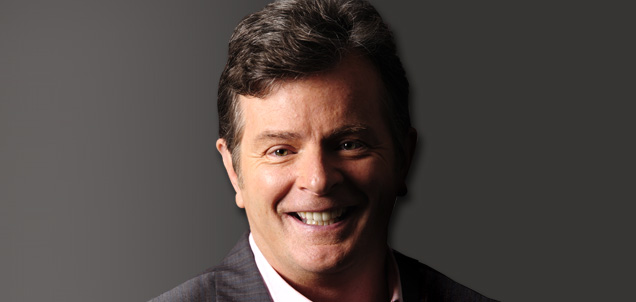
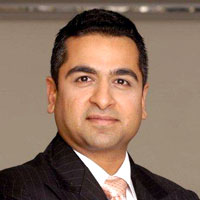
Jaideep Shergill, CEO, Hanmer MSL India puts on his thinking cap and scrutinises the year gone by in a brief conversation with Johnson Napier of MxM India. From an increased focus on digital – led by social media – to acquiring a host of new clients and getting the talent platform right, Hanmer MSL is on track to be amongst the best in 2012, he says. Excerpts:
Q: As the year 2011 draws to a close, how would you describe the journey so far for Hanmer MSL?
The year has been a good one, I would say. From a business point of view, the year was good because we tried a few things differently. We started focusing on certain practices and industries; started looking at offering better solutions for our clients… Also, in areas like content and insights where we were not doing much earlier those are the areas that we have invested in now. We have started pursuing digital very aggressively although we were doing that in the past few years as well. The other area that we have gotten into is employee engagement and working with companies on their employee communication.
But while we had a good year it was also a tough one – partly because the market has become very competitive. My feeling is that 2010 has been a bit better than 2011 and that’s also because of the fact that there has been a slowdown in the second half of 2011. Overall, it has been an okay year for us.
Q: How would you rate your company’s performances in the last two-three quarters since you took formal charge from Mr Sunil Gautam?
We continue to do the things we did when Sunil Gautam was around. It’s been a year now that I have been running the company. Sunil and I have been working with each for a long time now and we both had a common vision, which we continue to follow even now. So in that sense there is nothing new that we are doing.
Q: Could you quantify the growth story of your agency with appropriate figures?
I would say both in 2010 and 2011, we have grown by 20 per cent plus. We couldn’t grow at that rate in 2009 because of the slowdown.
Q: While your roster of clients boasts an aggressive line-up, how has the client acquisition exercise panned out for you in 2011?
It has been fairly good. Like I said, from the market point of view 2011 was not as good as 2010 although we did grow by 20 per cent – the thing is that we could have grown by more than 20 per cent. Normally what happens is when you’ve grown by 20 per cent one year, the next year you are expected to grow by 25-30 per cent. In terms of business development too, it was an okay year for us. We did win a lot of business. As for the centres, Delhi is an important market for us. In Mumbai we keep winning accounts consistently given our size and reputation but I think we need to do more in Delhi. We have grown to 60 people in Delhi though now. Bangalore is another market that has been performing well for us. There are already markets where we are established and are doing well like Pune, Chennai, Ahmedabad, etc. But with Delhi the thing is that there were a lot of agencies who were bigger than us when we entered that market, so they have a natural advantage over us.
Q: Any (client) win that was worth the effort more than the others in 2011?
I don’t just want to talk about 2011 but the last couple of years. Airtel, Star, World Gold Council, Western Union…and also across industries like Biocon (pharma), Volkswagen (auto), etc. So there has been a fair mix of clients and across sectors.
Q: How would you rate Hanmer MSL on the parameter of client retention? How faithful have your clients been to your group?
The retention levels have been fairly good. I would say 2010-11 have been our best years so far. We have hardly lost any business – less than two per cent, so to speak. This is a good number where the industry in concerned. For a long time the problem would be the inability of the agency to hold on to a business and clients too would not stick to an agency for a long time. But that is not the case here also because of the fact that we are investing in the right people and systems and making things work.
Q: There was the famous recession of 2008 and now there is financial turmoil that has gripped Europe and to an extent, the US as well. How do you see the PR and communications industry being affected going forward?
I don’t see an immediate impact right now. But there are signs that it is about to take place – pitches are slowing down, new clients coming and investing in communications is on a downward slide…and it is being observed across sectors like media buying and planning, advertising, etc. Moreover most of it is also psychological; it’s an artificial fear that is created in the market because of which companies start cutting back on their budgets. But after the 2008-09 slowdown, we should have learnt how to tackle the problem, which I believe we are ready for this time around.
Q: How has the social media as a unit under digital grown over the past year for Hanmer MSL? What can be predicted from the unit going forward?
It’s a medium that is going to continue to grow. Digital as an industry is growing by over 100 per cent. Currently it’s a very small pie in the entire media mix. As for the budgets, only 2-3 per cent of the budgets go into digital, which is very less. But I would say that digital is a medium that is here to stay. We started investing in the medium in 2008 itself and this year we have seen fairly good numbers.
Q: You recently announced the launch of a separate Crisis Network unit; what was the need to branch off and launch it as a separate vertical under Hanmer MSL?
We’ve only now started calling it by a separate name. Actually all global PR firms do crisis communications and we also have been doing it for a long time. The reason we have decided to package it and launch it like this is because we see that the world is changing very quickly and crisis and issues is becoming an integral part of people’s and companies lives and futures. 10-15 years ago nobody cared as such when crisis broke out as there was no social media – digital was largely undeveloped. So something would happen in the US and we in India wouldn’t know about it until later. But today the rate at which it spirals is a matter of concern.
For us, there are a few things that we see as trends. The first is trust. People don’t trust companies as much as they used to. There’s more accountability because ever since banks and financial systems collapsed in 2008, people have started raising doubts on trusting people and systems. There is also a trust issue when it comes to government. So when there is a lack of trust, an issue or crisis can become much bigger. And the other big reason is digital, as I already explained. So that is the reason we launched the unit in a formal way so that we can strategise and build around it going forward.
Q: What is the rationale behind agencies hiking their budgets when tending to clients in crises? Is this a common practice that most agencies follow?
Crisis communications is a very big part of the PR business. I wouldn’t say that clients are over-charged; it’s just that we charge them the right amount of money. Normally they undercharge, so this is the right charge. The fact is that when there is a crisis then money is not the concern – things like reputation and all takes precedence. Also, what happens is that because it’s a crisis, the PR agencies and clients are willing to invest more time in more people and more money because they have to make it work. I am not saying that they would be overcharged but that you will have to spend a certain amount of money or resources or people to make the crisis work in your favour. Moreover we don’t have to do it on a day-to-day basis so it is okay to go the extra mile.
Q: While pleasing the client is an attribute sacrosanct to any PR firm, is it right to gloss over the wrongs when engaging in a damage control exercise?
I think the best thing that one can do is have a point of view. So if there is a negative sentiment floating around a company, it’s their job and that of the PR agency to correct that and give the right perspective or message. But that doesn’t mean that media or people can be gagged or stopped from writing; I don’t think that should be the approach.
Q: How would you analyse the entry of foreign entities into India? Do you see more standalone Indian agencies being acquired in the future?
The PR industry will see the coming in of more foreign players and also the existence of domestic players. There are advantages of multinationals coming in as they get in systems, practices and other such things. There is also an opportunity for talent acquisition. But at the same time the domestic agencies will continue to exist and operate as well.
Q: How would you rate Hanmer MSL’s standing amongst your peers in the industry?
As a group we are definitely No 1 but Hanmer as an agency is amongst the top 3. If the market is valued at Rs 400 crore (rough estimates), then MSL occupies double digit numbers. But it’s difficult to put a specific number as there is no clear indicator of the size of the industry. Even the figure that’s being put out by ASSOCHAM puts the industry at an unthinkable number whereas industry experts peg it to be in the vicinity of Rs 700-800 crore.
Q: On the industry per se, do you see an order in the way the industry is organised or is it still work-in-progress?
I don’t think there is a single solution; time is the best healer — like advertising agencies got consolidated with time. There will still be fragmentation – small, medium and large agencies will coexist. In a country like India, you will need to have agencies of different sizes and shapes to service an array of clients. Our market is still not mature enough; it will be another 5 years for that to happen, I guess.
Q: What is the roadmap you have charted out for the agency for 2012?
To survive another year and keep on posting healthy growth. If there is a slowdown this time we will be better prepared because we have a game plan. So let’s see how it pans out.
Q: When do you see Hanmer becoming a clear No 1?
Only Hanmer becoming No 1 – maybe two years, but we are happy being No 1 as MSL group. We prefer to operate as a single brand under MSL.
 By Johnson Napier
 By Johnson Napier
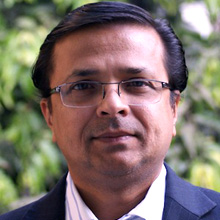 With Enron for its first client, the journey for the just-formed CMCG India in 1994 was clearly not an easy one. Anyone would know the agony that the AoR would have to face having to back a client with questionable leanings. But that was then. Today, CMCG India has made steady and progressive headway and is being seen as an agency of choice for many clients. The credit for this turnaround goes to Founder and Managing Director Samir Kale, under whose leadership the agency has grown to great heights in the communications world.
 In this competitive era where clients don’t mind slamming the brakes on services that do not bring much to the table, it is often the vulnerable who fall victim to the siege. And for an industry like PR which is anyway sidelined by clients and media alike, the scale is always in favour of large agencies. But then there are a handful of small – or rather ’boutique’ agencies, as Dennis Taraporewala, Director, Criesse Communications, would like to call it – which are changing the market dynamics and giving the biggies a run for their money.
 By Johnson Napier
 It sometimes helps not pushing oneself too hard to prove one’s worth in the market. It is better if the industry itself does that for you and puts you on the pedestal where you deserve to be. It has been a similar experience for PR agency LinOpinion that has been doing brilliant work without creating much noise or fanfare about its work. Part of the reason for the agency’s good standing is the leadership team, and particularly a person who has been at the helm for a loyal 17 years.
 It’s been a fulfilling and boisterous ride, to say the least, for one of the most prominent names in the domain of PR – Madison PR. Having made a modest start about a decade ago, the agency today has a roster of clients that most would die to have a hold on. Not to forget the healthy growth numbers that the agency has been posting year-on-year, which have been in double digits for long. None of this would have been possible without the guidance and leadership capabilities displayed by the face of the agency – Veena Gidwani.
 In between the extreme attention that a big PR organisation gets or the undue fanfare that follows a small PR firm as it straddles a difficult path down the fierce PR road, it is the mid-sized agencies that often get lost in this gratuitous display of affection and are often left on their own to walk the talk. But one cannot downplay the efficacy and value that mid-sized agencies manage to bring to the table – attributes that even clients will readily agree upon. Like for instance, Percept Profile, an agency that has managed to deliver impressive services and value to its clients and has managed to outperform industry expectations by delivering robust growth numbers year after year.
 By Johnson Napier
 Text and Videos by Shruti Pushkarna