Category: TV

  • ABP Majha to present Seven Wonders of Maharashtra

    By A Correspondent


    Leading Marathi news channel ABP Majha will presenting the Seven Wonders in Maharashtra awards in Mumbai today (June 6).


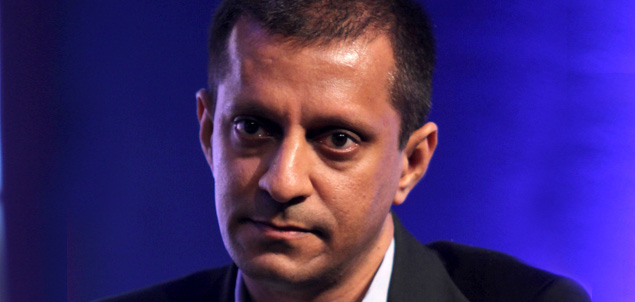
    Ashok Venkatramani

    Says CEO Ashok Venkatramani: “ABP Majha realizes the rich heritage and culture of the state of Maharashtra. ‘Seven Wonders of Maharashtra’ is a step forward to reinforce the belief of every Maharashtrian in his/her heritage. The state has a lot of wonders, but the ones who will make it to the list of Top 7 wonders will be decided by a stringent process of selection by the eminent jury and citizens voting.


    The Maharashtra Tourism Development Corporation (MTDC) is presenting sponsor.


  • Ad cap effect: Rising customer satisfaction & ad rates


    By Ananya Saha


    Broadcasters have agreed to the toe the TRAI line on 10+2 minutes ad duration in a phased manner and fully with effect from October 1. Is it a good call? Will it impact the broadcast industry as the ad inventory comes down to almost half? What should be the broadcasters’ strategy to balance the revenue since it might take time for digitization benefits (subscription revenues) to shape up? MxMIndia asked industrywallahs what they think.


    PM Balakrishna, COO, Allied Media

    The regulation is certainly going to have an implication. There will be a huge change that the broadcast and media industry will have to make. The broadcast industry is skewed towards time bands, where prime time commands higher rates. With lack of ad space, the demand will see an increase. Price will become an issue. It is the medium that will start becoming a problem. At increased costs, the television medium will have to justify the cost to the clients. It is a preferred medium for many brands but with increased costs, they may start looking at other media options. It might create ripples.


    At the moment, brands and clients have not looked at it much. The industry is in the habit of not reacting till it lands on their head. But in the next one month, clients will start reacting. Going forward, a lot of advance booking will come into play. The move has been strategically placed around the festive time and hence may become chock-a-block. It will affect client and media agencies – we will have to plan much ahead.


    Punit Goenka, MD & CEO, Zee Entertainment Enterprises Limited (ZEE)

    Increasing rates – to keep pace with the increased reach of our media brands – is an on-going endeavour of the sales team. Now, in light of the TRAI directive, requiring us to reduce inventory which will enhance the overall viewing experience to a more engaged audience, the advertisers only stand to benefit multi-fold. So, with our advertisers getting a much better media proposition, the value for the same will also be at a premium. As such, our efforts to increase rates will only get further intensified. The extent of increase in rates will vary across genres and will be through a process of renegotiation of all contracts in a phased manner between July and October.


    Nina Elavia Jaipuria, EVP and Business head, Kids Cluster, Viacom 18 Media Pvt Ltd

    There are two implications of it: long-term and short-term. In the long term, it is good for all parties, including the advertisers, broadcasters, audience. It is a win-win situation in the long term, and it is important to keep that in mind when we look at the short-term implications. There is bound to a short-term pain for a long-term gain. The subscription revenues, to start showing results post-digitization, will have to wait. Ad revenues will fall. However, with limited inventory, the ad rates are bound to increase.


    The ad rates in kids category has not seen growth in a while. The only increase happens due to FCT or a new channel launch. Most of the growth has come from increased inventory, and it does not make sense since we tend to over-depend on it. With an increase in inventory, the ad rates do not go up. There, clearly, has been over-utilization by about 15-20 percent.


    We are looking at increasing ad rates by 25-30 percent. We have started working along with the clients and will comply with the deals and contracts. By the time October comes, we should be ready! However, this 10+2 ad cap assumes 100 percent usage of ad time, which might not be true especially in our category. So the ad rate increase will have to take care of it.


    Rahul Johri, SVP and General Manager – South Asia, Discovery Networks APAC

    Our core mission is to satisfy viewers with the highest quality and entertaining programming. We are equally committed to offer the maximum value to our clients who continue to appreciate Discovery’s networks’ efficient and effective inventory.


    Ashish Pherwani, Partner, Advisory Services, E&Y

    Basically, this regulation will have an impact on broadcasters. By reducing the available inventory, it will put pressure on ad revenues. Broadcasters will try to combat this in three ways: (a) reducing content cost (b) trying to increase ad rates and (c) trying to increase subscription income. Channels with a heavier skew towards prime-time advertisements will face a higher impact. What will be of interest to see is how advertisers react to the reduction in inventory available for prime-time shows.


    Shailesh Shah, Secretary General, Indian Broadcasting Foundation

    No one is being asked to, and no one is “toeing a line”. Every single broadcaster believes that advertising should be in line with the law enacted in the mid-1990s. There are no exceptions. Some believe this will happen naturally as consumers make choices; some believe it can be done in line with digitization. The zillion-dollar question has always been “by when”. None of the broadcasters are really ready for a fell swoop, however.


    Even though the law has been in existence for almost eight years (Advertising Code of the Cable Television Act), it never got enforced as the government probably felt a new industry needs to develop its roots before such a law can be enforced. The authority (aka government) apparently feels the roots have grown well and it is now time to enforce the law.


    Broadcasters formed a well-represented committee to find the least-resistant and least-harmful way to help make that happen. The transition it has worked out is best, under the circumstances.


    Will it hurt? Most certainly, in the short term it will be agony – to advertisers, to agencies and to broadcasters. On the flip side, it is an opportunity for the broadcasters to come together to ensure digitization is done completely and in a hurry so that the thus-far-elusive subscription revenue kicks in, alleviates the pain and, hopefully, makes it go away. Clearly, it will become difficult to survive if one is at the periphery of the industry or has not become relevant as yet. New entrants will find it difficult to get things going in the short term. Regional players will also face hardships. Over time, as alternative revenues come about, and the battle for lesser space intensifies, I believe the industry will find its new level.


    Advertising rates have always been addressed by market forces, and will most certainly continue to do so. Where the enforcement-related water-line settles is to be seen.


    The advertising inventory today is an average of just over 11 minutes per hour as measured from daily inventories. The inventory, where it matters, will come down, however, but much less than by half. In general, please understand that it has not been as bad as it is being made out to be.


    Here’s the irony. There are well over 60,000 local cable operators. No one in the Government has an estimate of more than 75 percent of these. There are close to a 1,000 MSOs. The Government knows about 60 percent of them. These distributors manage their own (mostly) local channels and, as if it were a cottage industry, are not regulated at all. It is estimated that there are well over 30,000 such television channels operated across the country and several of them produce and carry news too. In comparison, the broadcasters are licensed for just over 800 channels, operate just under 650 channels and quite a few are still reeling under the current economic circumstances.


    The broadcasters are the real Davids in all this and the distributors, who purport to catch a cold every time broadcasters sneeze, are the real Goliaths. I really have not understood what is being “regulated” as a result. The complex sagas of the world’s largest democracy are far more interesting than fictional dramas.


    To sum up, India needs to digitize at break-neck speed. The industry will hurt in the interim. The quintessential cultural undercurrent of the Indian populace and its businesses that says “this is my fate” will decide what really is the fate of the industry!


    Ashok Venkatramani, CEO, MCCS

    Eventually, it is a good thing – especially from the point of view of the consumer. However, the speed and abruptness with which it is being implemented is a serious cause for concern. It puts undue amount of pressure on a broadcaster who is yet to reap the benefits of digitization and is not sure how it will reflect on the revenues.


    In the long run, yes, it is good for everybody. It will put pressure on broadcasters like us to create much better content. And of course, it is healthy for the consumer.


    We are contemplating an ad rate increase, and will announce it very soon. An ad rate hike, when the regulation is being implemented abruptly, is inevitable.


    *Responses are in alphabetical order by last name


  • BARC inches closer to new measurement regime, issues global RFP

    By A Correspondent


    The Broadcast Audience Research Council (BARC) has confirmed the release of Request for Proposals (RFPs) to global providers of Technology and Research. This is consequent to the response it received for the RFI (Request for Information) issued earlier.


    Punit Goenka

    Commenting on the development, Punit Goenka, Chairman of BARC and Managing Director and CEO of Zee said, “We are happy with the interest shown by global vendors of technology and research in our project. The RFPs are going out to all of them. This will be followed by discussions and evaluation of these proposals.”


    Said Partho Dasgupta, CEO, BARC: “This is our second step towards initiating a cutting edge measurement system which will see marriage of Technology and Research. The first step was the Establishment Survey which the TechCom led by Shashi Sinha and Paritosh Joshi has already initiated.”


  • Rahul Johri elevated at Discovery Networks, gets additional regional role

    By A Correspondent


    Rahul Johri

    Discovery Networks International (DNI) has announced an expanded role for Rahul Johri as Senior Vice President and General Manager, South Asia and Head of Revenue, Pan-Regional Ad Sales and Southeast Asia. It has also named Arjan Hoekstra as the new head of the Asia-Pacific region, effective September 1. The announcements were made by Mark Hollinger, President and CEO of DNI.


    Mr Johri, previously General Manager, South Asia, has taken on additional responsibilities in this newly created role. As Senior Vice President and General Manager, South Asia and Head of Revenue, Pan-Regional Ad Sales and Southeast Asia, Johri will now manage the advertising sales and solutions deals for the pan-regional business as well as focus on distribution and growing local ad sales for Southeast Asia. He joined DNAP in June 2001 in the ad sales division. Since then, he has been promoted through the organization to his previous role of Senior Vice President and General Manager of South Asia where he spearheaded the operations and overall growth strategy of DNAP’s portfolio in those countries.  He was also responsible for revenue generation, portfolio expansion, affiliate partnerships, viewership, content creation and talent management, and he pioneered localization strategy and the launch of multiple language feeds across brands. Most recently, Mr Johri oversaw the successful launch of Discovery Kids, a distinct channel promising to ignite imagination of over 370 million children in India.


    Mr Hollinger stated, “Rahul has built a very successful Indian business for us during his time with Discovery. I am delighted that he will bring his expertise to the Southeast Asia business and pan-regional sales efforts as he takes on this expanded role.”


    As President and Managing Director of Discovery Networks Asia-Pacific (DNAP), Mr Hoekstra will be responsible for developing the overall strategies for DNAP’s business to drive revenue across ad and affiliate sales, build the portfolio’s core brands and look for partnerships to drive the content and profile of DNAP within the region. He will be based out of the Singapore office, DNI’s hub for the Asia-Pacific region. His move to DNAP is another step that will continue to strengthen the relationship between Discovery and Eurosport as the two companies develop wider synergies in the Asia-Pacific region.


    “We are excited to have Arjan join our executive team,” said Mr Hollinger. “His strong management skills, his affiliate and sales experience and his deep relationships in the region will serve us very well as we look to expand our already successful business there further. Throughout his career at Eurosport, he was always looking for ways to innovate and develop new service offerings to his clients, and I look forward to his bringing this kind of ingenuity to Discovery’s portfolio in the marketplace.”


    Mr Hoekstra joins DNAP from Eurosport where he has been Managing Director of Eurosport Asia-Pacific Ltd. and Eurosportnews Distribution Ltd. Asia-Pacific, based in Hong Kong, since 2005.  In this role, he was responsible for the development and oversight of the entire Eurosport Asia-Pacific business, including Eurosport/Eurosportnews/Eurosport.com, which spans 19 countries. Under his leadership, Eurosport Asia-Pacific became one of the best-known sports media brands in the region.


    Having worked at Eurosport since 1994, Mr Hoekstra held several key positions within the organization including Director of Business Development Eurosport S.A. based in Paris, France; Managing Director Eurosport Television AB, based in Stockholm, Sweden; and Deputy Managing Director British Eurosport based in London, England.  During his tenure throughout Europe, Hoekstra was responsible for key business milestones including the launches of British Eurosport, Eurosportnews across Asia-Pacific, South America and Africa, and Eurosport Mobile.


  • Big RTL Thrill now in Hindi and English

    By A Correspondent


    Big RTL Thrill, the joint venture channel between Reliance Broadcast Network and the RTL Group, has announced its English feed, beginning Wednesday, June 12 across key Hindi-speaking markets. Targeted at the 15-44, SEC Males, the channel will now be available in dual feeds of Hindi and English.


    Commenting on the addition of the dual feed, Tarun Katial, CEO, Reliance Big Network, told MxMIndia: “We are also very excited about launching the English feed for BIG RTL Thrill which is seeing excellent traction amongst male audiences. We are confident of our channel mix, both on the English as well as the regional side, which are poised to optimize from digitization, as we steadily expand our presence across the 1mn+ markets.”


    Added Sunil Kumaran, Business Head, Regional TV, Reliance Broadcast Network, “With this latest development we intend to emulate the same success that we have achieved in Hindi-speaking markets. We have chosen the content as per our viewers’ penchants and preferences and are confident it will work. With the dual feed, variety of new shows in the offing, and Phase II of DAS being implemented, we are confident that Big RTL Thrill will find an enhanced relevant male audience base, proving to be the best possible choice for marketers wanting to reach out to this desirable audience.”


    Backed by the success in Uttar Pradesh, the channel has also recently announced its foray into the key markets of Mumbai and Delhi and now reaching over 17 mn households across the country. With the dual feed, the channel hopes to reach 29 million male audiences of Mumbai, Delhi, Kolkata, Maharashtra 1Mn+, Gujarat 1Mn+ , Rajashthan 1 Mn+, Madhya Pradesh 1 Mn+, Bihar 1 Mn+, Jharkhand 1 Mn+, Haryana 1 Mn+, Punjab 1 Mn+, West Bengal 1 Mn+ and Uttar Pradesh 1Mn+.


    The English feed of Big RTL Thrill will see a major launch across media. The promotional budget is said to be in the vicinity of Rs 5 crore, this includes advertising on RBNL channels and radio stations. Big RTL Thrill is available across DTH and Digital platforms of Reliance Digital TV, Digicable, Siti Cable, In cable, Hathway Digital, 7 Star Cable, JPR Global Satellite, Star Broadband and others.


  • Allegations hurt: L V Krishnan


    This isn’t the first time that a media measurement agency has been in the eye of a storm. We’ve seen many instances in the case of the print media in the past and ever since the stakes have raised, the same holds true for broadcast. In the business for around 15 years, Television Audience Measurement (TAM) Media Research was set up as jv by global research giants Nielsen and Kantar, the latter being a division of advertising conglomerate WPP. L V Krishnan has been at the helm of TAM and weathered many storms, including the one last year where NDTV took TAM and its principals to court. But this one appears to be more serious than ever before with three broadcast networks pulling the plug on the subscription. MxMIndia’s Pradyuman Maheshwari chatted with L V Krishnan on the broadcast measurement business, the various charges raised and what according to him is the way forward.


    With some networks opting out, another large one said to have put you on notice, the IBF issuing an advisory and a few others also mulling an exit, is it an end-game for TAM? How does TAM see the journey from here on?

    Globally, we know of many instances where the TV broadcast industry’s faith on its neutral and central audience measurement service has gone through fluctuations. Understandably so. As much as we want the clients to focus on audience insights and analytics, the story, starts and ends with the bi-product of report card/rankings. What comes to the rescue and resolve of such situations is when the central media audience measurement provider works very closely with the industry body.


    This current impasse has got created because of years of pending, constructive and participative dialogue between industry constituents and us. For years now, at almost every industry forum or during one on one client meetings, TAM has been appealing to the industry clients to create a central wish list or a common brief of aspects that it would like TAM to address. The idea was that, post their revert, we would submit a blue print of Television Audience Measurement. This would cover the required sampling, methodology, technology etc. Unfortunately, years have passed, not a single common brief has reached us. Having said that, this never discouraged or stopped us from re-attempting to get them together for this purpose.


    At the same time, we never stopped short of attempting to complete the dream of trying to measure the width and depth of this country. We are happy to say TAM today measures the whole of Urban in North and West and looking at the Rural frontier closely, a vision that TAM has and what has been indicated earlier by some of the industry constituents as well as the government committees.


    Also, as a market, we are yet to mature to a level where the audience measurement service provider will be revered and cherished. We will continue to be the bad messengers…for some more time to come. Here I must add that funnily enough, we have seen innumerable occasions in the past 15 years of our existence when broadcasters haven’t had an iota of an issue when their respective ratings and rankings looked good. The issue has always been when the same system showed low rating and ranking numbers.


    The current situation requires patience and we have plenty of it! Meanwhile, our parents – Nielsen and Kantar – have supported us all these years and they will continue to do so.


    There are allegations from the industry that TAM has been responsive to industry concerns Your comments.

    The case cannot be settled unless we are actually proven to be guilty! I would like to appeal and ask for documented evidence from the self-claimed aggrieved parties where TAM has not responded. Till then, allegations will continue to be baseless. We have a 50-member team set up only to address client queries and concerns. That is a part of any basic Customer Service one should expect, isn’t it? TAM has always responded to queries, and been transparent on its methodologies.


    In this specific case as well, yes, both Sony and Times Now did raise issues. As a normal practice, we did respond to them very clearly. So I don’t really see any reason for such a drastic and regressive move. In each of the meetings, we have explained issues and suggested means.


    Also, we have always maintained professional relationship with the clients. Which is why, we also made it a point that we communicate with them directly and not via media. Every query of theirs’ has been addressed professionally and promptly through one-on-one meetings. The question is that did they reciprocate in a similar fashion?


    With no money from broadcasters, will TAM be able to survive just from your promoters and monies from media agencies?

    As much as 80% of the revenue comes from broadcasters, but they also derive maximum value from the data… a lot more than what a media agency would. The data can be used for programming, distribution, sales, scheduling and migration of audience to competitive content, marketing or on-air promotions etc. (see box: 10 ways in which TAM has benefited broadcasters).


    Having said this, we’ll see how it goes, step by step. We aren’t averse to any subscriber wanting to use data, even for periods they have not subscribed to at a later stage.


    One of the oft-repeated charge is of sample size… how can a sample of 8000-odd be used to reflect viewing behaviour of a billion-plus population?


    The key question is that what is an ideal sample size? More than two years back, TAM worked closely with the FICCI Amit Mitra Committee report to arrive at the projected or required sample size of 30,000 and we are still waiting for the funding…


    While for the last 15 years, we have been the central and neutral TV audience measurement service, the key point here is that we were appointed by the stakeholders – advertisers, broadcasters and media agencies – with a promise of getting funded. While we specialize in research, conducting and operating it requires funds. My question is, why is TAM always blamed for small sample sizes? We have over these years, built the sample to 9500 Peoplemeters with whatever funding we could muster from our parent companies and subscribers. Today, we cover 225 towns in urban India, covering the entire urban landscape of north and west markets. Why is nobody speaking about what TAM has achieved for the industry even without any guaranteed funding? Good technology and large sample sizes require funds. Let industry open more funds, we will deliver their dreams.


    The other charge is transparency and methodology…


    What is their definition of transparency? If it means being transparent about methodology, well, we have always made sure that our methodologies are vetted by industry bodies and individual stakeholders before they are implemented. Take the latest case of DAS-1 roll out. TAM has been in constant touch and discussion with the Core Industry Committee (CIC) on methodology and its implementation. TAM took them through the detailed dynamics of data generation and reporting. It was only post that, the data was released for usage.


    In April, Phase 2 of DAS was put into effect. We know from Phase I experience, what kind of issues would crop up. We documented these issues and discussed the methodology. For Phase 2, we asked the industry for their views. We got no response. On March 19, we had a meeting with the IBF. The unfortunate thing is that no one is asking the broadcasters and IBF the question on why they didn’t respond to the methodology TAM had presented if they had any issues! The outcome, which is the result, is the scenario prevailing in the ground during the DAS Phase 2 period. Like in Phase I, it will take time for markets and consumers to settle down to the new devices to view TV, specifically among elderly women segments.


    So, if they really had a problem with us, why don’t they tell us where the problem in methodology is? No one person has come to us with a perspective on methodology in the last so many years. More so, during the last fifteen years, all documents pertaining to methodology have been shared with the industry constituents, attached to reports like Dr Mitra committee, TRAI reports and made available on the company website.


    There are also allegations that TAM has never met or has been in touch with the industry about their concerns and requirements. Your comments.

    Very surprising! The latest DAS exercise is a example of how TAM worked with the industry bodies and ensured the data roll out in time. Do I need to elaborate more? If there is a will, there is always a way!


    In sum, there appears to be crisis of faith in the ratings, it appears. In the methodology, in the number of boxes, in the leakages at the data collection stage.

    We first need to define what “faith” means! The set of industry captains – who created and re-created industry bodies – should ask a simple question as to why they requested the two global media research giants to set up a neutral TV Audience Measurement service for India fifteen years back?


    The data we deliver is sensitive to the environment it is gathering data from -changes in Content, Marketing, Distributional, Scheduling ….all affect viewing behaviour. We have over 1000+ case studies presented across the industry on how the data is reflecting the reality on the ground! Yet with so much knowledge, this lack of faith expression is too difficult to take…


    So whether it is sampling, methodology, attempts of illegal panel infiltration, all these and many more will get resolved only when Industry has an internal clarity on why it needs a audience measurement set up!


    The perils of our type of service - that of rankings and report cards - is that we cannot keep every one happy at the same time. Here is where, a cohesive industry and its vision is required to help and shield a service like TAM to withstand obstacles.


    Isn’t the setting up of the transparency panel and the security officer a case of too little too late, as one industryperson said?

    One needs to understand the ground dynamics well. Setting of Transparency Panel is a tall task. It requires years of planning, professional implementation and timing. We envisaged TTP a couple of years back. However, setting such heavyweight panels take time. It couldn’t have been done overnight.

    10 ways in which TAM has benefited broadcasters: LV Krishnan
     

    As a messenger and as a report card provider, TAM it has gone through a tough time with the broadcasters in its 15 year of service.


    While the industry remained fixated with “rankings”, in retrospect, very few realize, that the same Television Audience Measurement system, during this long journey, sprinkled us with some amazing understanding of the changing and evolving Indian TV audiences. For example, had it not been for TAM’s measurement, we wouldn’t have known the following:


    1. That news genre has grown and moved out of the 1% share mark…today it stands at around 6%.
    2. The grand success and growth of Big B from big to small screen.
    3. Without measurement, we would not have learnt that IPL has become such a success.
    4. 5 years ago, a Hindi General Entertainment Channel was launched. Without measurement, would we have known of it as one of the established and leading channels?
    5. It is only with measurement that the industry got to understand how digitization made an impact on consumer/audience behaviour.
    6. In the year 2000, the industry had less 100 TV channels getting reported. Today, the number touches is upwards of 600. Would the growth of these channels be possible without the presence of measurement?
    7. All these years, the industry has seen a healthy (sometimes even double digit) growth of TV advertising. Would this advertising investment have happened in the absence of measurement?
    8. Would the industry have known how the women audience lapped up the 2003 and 2011 Cricket World Cup? It is only through measurement.
    9. Without measurement, none of us would have realized the potential and growth of regional TV Channels
    10. Measurement helped the industry understand the dynamics and difference in viewership between small and big towns.


    Are you responding to the BARC RFP?

    Yes, we will. We also responded to the RFI.


    The TRAI has been very clear on the ownership structure of the measurement agency? How will you manage to clear that given that you are part-owned by WPP’s Kantar?

    There is absolutely no conflict. Kantar is not a broadcast company, it is a globally recognized research company. We have never hidden our ownership and we are proud to claim and stand by it.


    Is television viewership measurement a thankless exercise? Will it always be the case of broadcasters being unhappy and threatening a pull-out?

    I do understand that broadcasters have been facing a lot of pressure. Digitization, the 10+2 ad duration. Remember, it’s all eventually linked to revenues. So when broadcasters face pressure, they in turn exert pressure on TAM. TAM is the favourite punching bag.


    So if some channels want to unsubscribe until they get their act together, it’s fine. But to make allegations that our methodology is wrong and that we haven’t responded is wrong. It’s not right to say that TAM’s system is wrong or not transparent.


    As someone who has devoted his best years of his working career to TAM and identified with television measurement in India, how do you react to all these charges?

    For me, Life is TAM. And TAM is all about providing data truthfully and with integrity. As long as my team and myself have the honour of working at TAM, we will go about doing our work in the right and best manner we can. We will never, never compromise our integrity to all the pressures from the environment. That said, these allegations are definitely hurting. While industry talks of TAM’s transparency, my question is that, has the industry been transparent? Despite innumerable attempts and reminders, have they ever, shared with us a document on what their collective requirements are? Do we know what this industry’s vision and plan for the next five years is?


    Having said this, we are committed to continue with our best practices in a extremely complex market place. I leave the rest to the market forces!


    Is there a way forward?


    Till the time work of BARC kickstarts, why can’t the industry just constitute a small body to work with TAM and introspect the areas where they have a common concern. TAM has always been transparent and will always be so except for its town list and panel homes. It’s to facilitate something in this direction, TAM went on to attempt creating a separate panel of Transparency member team with global experts. The industry can very well take advantage of this committee to suggest ways in which TAM should improvise the exercises it conducts continuously.


    Meanwhile, we are happy to sit across the table and address all the queries and issues of broadcasters, including those who have opted out.




  • 1 Minute View: Opting out of TAM is not the solution

    Sony and Times TV have their reasons but opting out of the industry’s viewership mechanism is not the solution. If indeed there’s no confidence in TAM as a measurement body, it should’ve called for an extraordinary general meeting of all members and discussed the issue.



     

    It ought to have invited AAAI and ISA to this meeting so that they could’ve heard out all the issues. If there was indeed much unhappiness over TAM, they could’ve taken some dramatic steps including appointing a two or three-member panel to govern measurement process and data. They could’ve even asked Nielsen and Kantar to get the company a new CEO if there was dissatisfaction with LV Krishnan as CEO.


    But by unsubscribing to TAM is like pulling out of a cricket match when you are unhappy with the umpiring decisions.


    Already some advertisers and media agency professionals have told us that it’s just not right for channels to unsubscribe from TAM.


    The TAM CEO raised the issue in an interview with MxMIndia and said he’s willing to sit across the table and discuss the issue.


    Some industry folk have remarked that TAM’s transparency panel and security officer are a case of too little, too late. We agree it ought to have been done a decade back, but why didn’t the Joint Industry Body insist on it. Why did BARC take so much time to happen? Things have started moving in right earnest only in the last two-odd years.


    There are too many battles to be fought in the near future. A government wanting to win in an election, the 10+2 minutes ad cap  plus an uncertain business environment. The absence of a measurement system will take the industry down further.


    Let sanity prevail.


    PS: Interestingly, a day after Sony sent out a letter to TAM pulling out its subscription, a mailer was sent out by Sab TV claiming viewership superiority given TAM numbers.


  • Star Sports unveils sports bonanza in June

    By A Correspondent


    Star Sports has announced an array of sporting events across its network of SD and HD channels all through the month of June. With the biggest event in the ICC calendar – the ICC Champions Trophy 2013 – already underway in England, the network has also announced the acquisition of the TV rights for the FIFA Confederations Cup Brazil 2013 which kicks off from June 15 in Brazil.


    The third week of the month will also see the Championships at Wimbledon live and exclusive on the network. The sports broadcaster will showcase thrilling motor-racing action from the British and Canadian Formula One Grand Prixraces and the Moto GP. The month will be rounded off with live action from the FIFA Asian Football Qualifiers and the much awaited golf major – the 2013 US Open Golf Championship.


    The FIFA Confederations Cup Brazil 2013, to be played from June 15 to 30, brings together the strongest international teams in world football to play in Brazil, one year ahead of the 2014 FIFA World Cup.


    Vijay Rajput

    Vijay Rajput, Chief Operating Officer, ESPN Software India Pvt Ltd, said, “We are incredibly proud and happy to present this mouth-watering array of premium sporting content in the month of June. With such premium sporting action across sporting genres, our aim is to take the viewership of sports to a whole new level – be it through our quality of talent, look and feel of the presentation or through innovative production-led enhancements which help in creating an immersive experience for sports fans.”


  • Dumping TAM is not the solution!


    Dumping a system does not solve the problem: CVL Srinivas
     

    While both AAAI and ISA have expressed their views on the controversy, we asked GroupM CEO South Asia CVL Srinivas, CEO South Asia, GroupM as head of the country’s largest media agency conglomerate for his views on the issue.

     

    As the country’s largest media agency conglomerate, what is Group M’s view on the current imbroglio – given that three broadcasters have stopped their subscriptions making charges?

    In our view it is an extremely ill-advised, ill-timed and regressive move. TAM is the rating system followed by the industry. Rating systems world over have evolved and keep evolving. To simply junk them altogether is not a solution. Issues if any need to be addressed jointly by all stakeholders as were done in the past. Both AAAI and ISA have already made their stand clear on this. As a responsible member of the industry we will work with our colleagues across industry bodies to help address the issue.


    You represent some of the biggest adspenders in India: are you happy with the data dished out by TAM week after week?

    In a dynamic market like ours which is seeing a lot of structural change (like digitization, increasing penetration of TV in smaller towns, more access to satellite channels etc) there is bound to be fluctuation every time the sample is refreshed or any other change is made. In addition, there are behavioural changes from a viewer perspective that keep happening. Nobody can deny the fact that consumption of content on digital platforms is growing at a rapid pace. TV ratings keep shifting and mirroring real life in a manner they best possibly can given the limitations of a sample survey.

    And your clients? Have they (especially big ones like Hindustan Unilever) raised issues about TAM’s and the data’s bonafides?

    Our clients continue to back TAM. They do not think that dumping a system solves the problem. Whatever questions keep coming up are always discussed openly with TAM and addressed.


    TV as a medium has shown robust growth despite a general slowdown. To a large extent this is because of the existing rating system. Given the magnitude of spends on TV, a rating system is a must. With no ratings a spot on one channel is the same as a spot on another channel. The lead channels in every genre will stand to lose the premium they command on rates.


    Does the fact that TAM is part-owned by your parent WPP put you under greater pressure from advertisers – since you obviously can’t be vociferously condemning TAM, if there was need for it?

    TAM is recognised as an industry system and has been in existence for many years. All clients, agencies and media owners have been using this data.


    Would you think that broadcasters have too much of ownership of the measurement exercise when actually it should be advertisers and media agencies since you’ll are the primary users of the data?

    While advertisers and agencies use the rating data to help plan and buy media, for broadcasters it is the currency that helps them sell their inventory. They are able to command a premium wherever ratings are high. They use ratings to market their programmes and channels.


    AGENCY+CLIENT VIEW
     

    Srinivasan K Swamy, CMD, RK Swamy BBDO and President, International Association of Advertisers (India Chapter)


    TV ratings have shown a downward trend after digitization of distribution. The decline is quite steep – as much of 20-25% in several instances. Such decline affects the revenue stream of broadcasters and hence it is natural for them to reject it. But it is like giving a dog (TAM) a bad name to hang it.


    Advertisers and agencies need ratings for advertising planning. It would be a retrograde step if the ratings had to be given a go-by, even for a short run. I am confident a solution will be found to continue the ratings even with Channels withdrawing their subscriptions.


    Lloyd Mathias, Lloyd Mathias, Director, Green Bean Ventures formerly with Tata Teleservices, Motorola and Pepsi and former Chairman, MRUC

    Basically media doesn’t like being measured by a third party. It happened in print with people raising objections to the NRS and later the IRS. In fact the Media Research Users Council (MRUC) which was set up by stakeholders faced a constant threat of boycott.


    The same lack of discomfort of being measured by a third party afflicts television too.


    However, in all fairness even advertisers have said that the number of Peoplemeters isn’t enough. I think the methodology has to be transparent, the Peoplemeter base has to increase and the system must factor in cross-consumption of media.

    ISA view: Advertiser cannot advertise without television ratings
     

    Statements issued by the Indian Society of Advertisers (ISA) and the Advertising Agencies Association of India (AAAI)

     

    The Indian Society of Advertisers (ISA) has read with concern recent reports that some broadcasters have decided to stop subscription to television measurement service. This is a matter of immense importance as the measurement system is integral to the health of the industry. The rating system needs to continue for the smooth functioning of the industry as it’s the very foundation of the commercial process, media planning and pricing. The ISA believes that any measurement system should appropriately reflect the viewership pattern and should not be judged on a short term basis.


    The best course of action is to engage in a constructive dialogue and pursue continuous improvement. While some broadcasters have stopped using the current rating system for measurement, as advertisers we support it and will continue using it till another credible measurement system is made available. Any action taken which is detrimental to the measurement system would be detrimental to the industry at large. “An industry-accepted rating system is the need of the hour and ISA is working with rest of the industry to ensure this is in place and any action to the contrary will have an adverse impact” – Hemant Bakshi, Chairman, Managing Committee, The ISA and Executive Director, Home and Personal Care – Hindustan Unilever Limited.


    AAAI view: TV could lose popularity with advertisers

    Advertising Agencies Association of India (AAAI) has expressed shock at the decision of some channels, supported by the Broadcasters’ Association, IBF to decide not to subscribe to the only TV Ratings service in the country – TAM. TV ratings provide the currency based on which thousands of crores worth of advertising time is bought by advertisers with confidence. Ratings also provide the basis on which media agencies do sophisticated analysis and arrive at sharply targeted plans for a brand’s target audience to minimize wasteful advertising and improve advertising effectiveness.


    An established rating system augurs well for the Advertising and Marketing Industry, because it enables advertisers to invest large sums of money in advertising with the confidence that they are reaching the right number of desirable audiences. It has been seen from experience in India and other markets that an established media research study on an ongoing basis leads to rapid increase in advertising spends in that medium. Those media which do not have such a system have not grown in India. Also, the current TV ratings system has thrown up real leaders in each of the genres based on the audiences they deliver and enables such leaders to command a premium price based on such ratings, rather than advertisers and agencies having to rely on perception. And very often perception is different from reality.


    AAAI will hold broadcasters responsible for deliveries as per signed agreements based on the TV Ratings System. Says Arvind Sharma, President AAAI, “The move by broadcasters to discontinue with ratings is ill-advised and not in the interest of advertisers, advertising agencies or broadcasters. It will lead to overpaying and underpaying of advertising time, both of which will lead to a collapse of TV as an advertising medium. The ratings from Broadcast Audience Research Council (BARC) are yet some time away and until they are released it is critical to continue with the current system. Most broadcasters all over the world have some issue with media measurement systems but that does not mean that the system must be abandoned. Instead it must be improved and identified gaps must be plugged”.


    Wtf! Why can’t all stakeholders sit together and clear the mess?
     

    By Pradyuman Maheshwari


    The media industry is captained by grown-ups, wise and mature men and women. We propound theories on ways the world should be run on our news channels and send social messages via our soaps and shows. But, wtf, why can’t broadcasters, advertisers, advertising agencies and measurement/ research firms sit together and clear the mess?


    With BARC having invited proposals by issuing a global RFP, a new system can be expected to be in place this time next year. However, since there is a year to go and much business to be sought, can we do the following:

    1. Get a third-party to study the problems and come up with a white paper superquick? A consulting firm like Ernst & Young could be asked to do it. Or KPMG. Or PwC. Or whoever can do it without getting influenced by any of the stakeholders. We could ask the folks at BARC to do it. Let the three stakeholders plus the government-owned Doordarshan commission this soon.


    2. Let each stakeholder appoint a representative to have a Measurement Steering Committee which will work in the interim. These could be from amongst people running BARC currently.


    3. Alter the method of funding research. Although no one was willing to come on record on this, there is a sentiment that the broadcasters have a dominating influence on BARC (and now TAM). This has got to change (the perception and if it is indeed a fact). Currently, since it’s advertising which drives the broadcast business, the ad agency and the advertisers are the primary users of the data.


    Hence, the stoppage of subscription revenues going to TAM (and later BARC) can derail the entire system. And have a significant impact on the TV trade. Perhaps the South African model of a small percentage of all advertising revenue going to fund research may work.


    These are three immediate measures that may work. There are various other minds at work… one hopes we will eventually see reason.


    Whatever be the way out of the mess, it’s clear that the industry can ill-afford a system without a measurement system. TAM, in this case. And it’s also important TAM understands the problems of broadcasters and corrects all the problem areas.


    That’s the only way to go.


  • 1 Minute View: Time for stakeholders to sit together and clear the mess

    The following comment was carried as MxMIndia Comment today.


    We echo similar sentiments and would hence replay what our editor-in-chief wrote this morning:

    The media industry is captained by grown-ups, wise and mature men and women. We propound theories on ways the world should be run on our news channels and send social messages via our soaps and shows. But, wtf, why can’t broadcasters, advertisers, advertising agencies and measurement/ research firms sit together and clear the mess?


    With BARC having invited proposals by issuing a global RFP, a new system can be expected to be in place this time next year. However, since there is a year to go and much business to be sought, can we do the following:


    1. Get a third-party to study the problems and come up with a white paper superquick? A consulting firm like Ernst & Young could be asked to do it. Or KPMG. Or PwC. Or whoever can do it without getting influenced by any of the stakeholders. We could ask the folks at BARC to do it. Let the three stakeholders plus the government-owned Doordarshan commission this soon.

    2. Let each stakeholder appoint a representative to have a Measurement Steering Committee which will work in the interim. These could be from amongst people running BARC currently.

    3. Alter the method of funding research. Although no one was willing to come on record on this, there is a sentiment that the broadcasters have a dominating influence on BARC (and now TAM). This has got to change (the perception and if it is indeed a fact). Currently, since it’s advertising which drives the broadcast business, the ad agency and the advertisers are the primary users of the data.

    Hence, the stoppage of subscription revenues going to TAM (and later BARC) can derail the entire system. And have a significant impact on the TV trade. Perhaps the South African model of a small percentage of all advertising revenue going to fund research may work.


    These are three immediate measures that may work. There are various other minds at work… one hopes we will eventually see reason.


    Whatever be the way out of the mess, it’s clear that the industry can ill-afford a system without a measurement system. TAM, in this case. And it’s also important TAM understands the problems of broadcasters and corrects all the problem areas.


    That’s the only way to go.


  • Law firm files suit against NDTV, demands $1.7mn as “unpaid” fees. NDTV terms plaint “frivolous”

    By A Correspondent


    It may not have any impact on the law suit that NDTV has filed on television measurement practices, but it merits mention given that it concerns a leading Indian broadcast network.


    According to unverified information made available to MxMIndia, law firm Sabharwal & Finkel, LLC has sought ‘quantum meruit’ damages from New Delhi Television Limited (NDTV) for “unpaid legal services” provided by S&F to NDTV. The amount the law firm has demanded is USD One million seven hundred thousand dollars ($1,700,000).


    As per the law suit document filed at the US District Court Southern District of New York, S&F and NDTV had entered into a retainer agreement duty from May 25, 2012. The services were rendered till April 22, 2013 on the which date NDTV is said to have officially terminated its engagement with S&F. The termination notice is reported to have noted that S&F will not be entitled to fees regardless of the judgment in the case.


    The legal document filed (on June 4) further states that another law firm named Pepper Hamilton LLP has now been given charge of the earlier case on television measurement practices. A copy of the law suit is available with MxMIndia. However, as mentioned earlier, it has not been verified by either S&F, NDTV or information available online on the Court’s website.


    Meanwhile, when MxMIndia asked the NDTV spokesperson on whether the company, we received a statement saying: “NDTV has not yet been served with the complaint and will review it in due course with its lawyers after being served. NDTV strongly believes that this complaint is frivolous and without merits.  NDTV intends to fight it vigorously and will pursue all causes of action and remedies it may have against these plaintiffs.” Mr Ravi Sabharwal of the law firm S&F could not be reached at the time of writing.


  • Zapak engages with Twitter Influencers to premier Summerland

    By A Correspondent


    Zapak Solutions, the social media arm of Zapak Digital Entertainment, recently invited about 50 twitter influencers in Mumbai (who had a cumulative reach of over 3.5 lakh followers) and engaged with them through a phygital activity (physical activation with a digital mechanism to it) that was called Summerland Tweetup. The activity was thoughtfully designed and executed to create a buzz for the India premier of Big CBS Love channel’s new show, Summerland. The objective of the tweet-up was to engage viewers and amplify the social media presence of the show, which resulted in #Summerland trending at No. 4 nationally within 3 hours of commencement of the activity.


    Summerland Tweet-up: the event:

    Zapak Solutions invited close to 65 top influencers on Twitter to be a part of the Summerland Tweet-up through a unique Twitter invite designed for the event. This was followed by three personalized Twitter reminders sent to each invite with RSVPs. Upon reaching the venue, while the invites were being greeted physically by the teams at Zapak Solutions and at Big CBS Love, there were “welcome” messages sent to each invite on their twitter accounts as well. The event kickstarted with the exclusive screening of the first episode of the new show ‘SummerLand.’ This was followed by a small contest; the questions of the contest were based on the episode, the characters and the storyline. Post this, the guests were requested to write a brief review on their twitter pages – called the ‘Tweeview’.


    The Reach:

    The tweet-up was instrumental in propagating the show and creating a buzz on social media. The @BIGCBSLOVE Twitter handle added more than 200 new followers within 3 hours during the campaign. The campaign reached out to over 3.5 lakh Twitter followers with 1736 tweets, 497 re-tweets and total mentions of 226. The #Summerland trended at number 4 in India and in Mumbai at different intervals. All this on the day of the IPL final!


    Commenting on the success of the tweet-up, Rahul Avasthy, Head – Digital Strategy and SMM Business, Zapak Digital Entertainment said, “Social Media is rapidly becoming an integral medium to reach the target group. For Big CBS Love’s new show Summerland, we decided to leverage Twitter extensively and create an Influencer Outreach program via tweet-up inviting 65 Twitter influencers. With the influencers tweeting consistently, we reached out to 3.5 lakh Twitter followers which resulted in #Summerland trending at No. 4 in India as well as Mumbai. To entertain the Twitter influencers and add an element of fun to the event, we also organised a karaoke session along with some funky props which influencers took pictures with and shared on Twitter.”


    Anand Chakravarthy

    Anand Chakravarthy, Business Head for Big CBS Network, said, “Big CBS Love brought Summerland to the Indian audiences for the first time. In order to create a strong presence for the show, we partnered with Zapak Solutions to engage viewers with a unique tweetup event. The activity was instrumental in building hype around the premier of the show, along with engaging viewers and Twitter influencers in contests to enhance social media presence. We are extremely happy with the outcome of the event and the response the show has received across India.”