Category: TV

  • MIB seeks TRAI recommendations on local channels

    By A Correspondent


    The Ministry of I&B has sought the recommendations of TRAI regarding issues relating to transmission of local channels or ground based channels operated at the level of cable TV operator/MSOs. In its reference to TRAI, the ministry has sought to know whether there was a need to put in place a comprehensive set of provisions for local channels to cover issues related to registration mechanism, including eligibility requirements, fee, terms and conditions to be provided for such channels, including the definition of local or ground based channels and their area of operation.


    The ministry has also sought views on the issue of transmission of local channels at LCO level in the DAS regime. TRAI in its recommendations dated July 25 2008 had recommended that LCOs shall be permitted to transmit their ground based channels. However, in the current DAS regime only digital addressable signals can be carried out on the cable network, which is generated at the MSO head-end. MIB has also requested the TRAI to state whether there was a case for putting a cap on the total number of ground based channels operated by a single MSO/cable operator.


    The TRAI has also been asked to examine whether there is a need to prescribe separate eligibility criteria for cable operators transmitting local news and current affairs channels at their level. Specific recommendations have been sought with regard to eligibility criteria, terms and conditions including foreign investment levels, net-worth criteria and requirement of security clearance etc. for such channels.


    The need for putting in place a regulatory framework for local channels being operated at the level of cable TV operators, which has been engaging the attention of the MIB for some time, has assumed greater significance in view of the digitization of cable TV being implemented in the entire country in a phased time-bound manner. At present, cable TV operators/MSOs are transmitting local news, videos and other locally developed content as separate televisions channels in addition to broadcaster-owned satellite channels. These local channels are currently not subject to a regulatory framework unlike private satellite TV channels permitted under the uplinking/downlinking guidelines of the ministry. As a result, local channels continue to mushroom all over the country without having registration /license.


    Since the area/jurisdiction within which the programme generated at the level of the cable operators can be transmitted has not been defined in the Cable Television Networks (Regulation) Act, 1995, it is possible for LCOs and MSOs operating at the local levels to broadcast local channels over a larger geographical area, ie at Regional/State/National level, by transmitting the same content over their entire network. Instances have been brought to the notice of the ministry that some cable operators are also venturing into transmission of local channels over a wider geographical area which includes inter-state and intra state transmission by sharing the same content with others on their network. In such a scenario, local channels are basically operating as State/Regional/National channels like permitted private satellite TV channels, without getting any permission. The intent of allowing cable operators to generate and transmit local programmes is to keep the local people informed of relevant local issues. According to the MIB, this intent is not fulfilled when LCOs and MSOs start networking of the content to cover a larger geographical area. Given the present state of technological advancement, the tendency to network content in a larger geographical area has gained strength.


  • TV18 Broadcast announces Q3 results

    By A Correspondent


    TV18 Business (both News and Entertainment) show a strong growth trajectory this quarter. Reported revenues for the television and motion pictures business (including IndiaCast) stood at Rs.512.4 crore for the quarter. The reported operating profit for the quarter was Rs. 48.1 crore. The company turned in a profit of Rs.21.3 crore after tax.


    TV 18’S continuing broadcasting and motion pictures operations turned in a strong performance with a profit of Rs.58.1 crore during the quarter excluding one-time expenses/revenues and losses towards new launches and discontinued operations. The Net Distribution Income turned positive while Advertising Revenues grew 10 percent YOY.


    Announcing the results, Raghav Bahl, Managing Director, Network18 said, “I am delighted to inform our investors and stakeholders that TV18 has returned to profitability this quarter. Our Net Distribution Income has finally broken into positive territory and our recast balance sheet has helped us rationalize our interest payouts. We are now entering an exciting phase in our journey as we strengthen our existing operations and consolidate our regional acquisition.”


    Commenting on the results for the quarter, B. Saikumar, Group CEO, said, “We are extremely pleased that all our broadcast operations grew their margins despite softness in the advertising environment. IndiaCast has hit a positive trajectory and stays with its focus of correcting the group’s distribution revenues upwards and adding more brands and partners to its stable. The News Network will further consolidate its leadership position with the addition of ETV News to the stable. The brands across mass entertainment, English and Factual Entertainment, Kids, Music continue to grow and hold leadership positions. Importantly, all our programming initiatives in prime time and the weekend have paid off rather well on Colors and we hope to replicate this success in the regional ETV entertainment bouquet as well by investing in content and audiences.”


    Business News Operations reported a strong quarter with margins expanding almost threefold as compared to the same quarter last year. General News Operations broke into positive territory with 10 percent margins. Q3FY13 revenues for Viacom 18 grew to Rs. 473.5 crore, a growth of 50 percent over the same  quarter last year.


  • NDTV Good Times tackles life changes

    By A Correspondent


    Lifestyle channel NDTV Good Times has ventured into the home and decor space with a new home improvement show called A Whole New World.


    The show is based on the fact that everyone faces a life-changing situation at some point in time – the birth of a child, moving in of parents, moving out of a sibling after marriage. The 13-episode A Whole New World guides viewers in tackling these changes and making their home more suited to their needs.


    Hosted by Juhi Pande, the show features experts in the fields of architecture, interior design and home technology, and focuses on transforming one room of the house for the participant to best suit their needs.


    Shibani Sharma Khanna, Channel Director, NDTV Good Times and Creative Head, NDTV Lifestyle said, “Home decor as a segment has a lot of untapped potential, and being the pioneer in lifestyle programming it made perfect sense to explore this for our Indian audiences, worldwide. The show aims to open one’s world to myriad ideas with the assistance of the industry’s best designers and architects. The concept of the series is to help viewers welcome new and exciting changes in their lives with a smile. The show takes care of every little aspect that goes into setting up that special space in your home perfectly and promises to help you discover a whole new world.”


  • Can Hockey India League match IPL?


    By Ananya Saha


    From getting big brands to tie up, to having celebrities lend a face to the initiative, all efforts are geared towards making the inaugural Hero Hockey India League (HHIL) a success.


    The League, which began on January 14, is receiving similar enthusiasm from sports broadcaster ESPN, which wants to promote it similar to the IPL. It has even appointed cricketer Navjot Singh Sidhu as the brand ambassador of the League. Aloke Malik, Managing Director, ESPN Software India, is bullish on the future of the League and said, “We believe that hockey as a game has the pull as well as the potential to become a prominent #2 sport in the country after cricket. The game has huge following across pockets in the country. This league has all the ingredients like franchisee-led teams, home and away matches and the world’s very best players in action, to make it a success.”


    But can HHIL emerge a favourite for audiences as the IPL managed to do when it kicked off in 2008? Further, will the League provide enough bang for the buck of the brands involved? MxMIndia finds out what experts think.


    Lloyd Mathias, Director, GreenBean Ventures

    No, I don’t think the Hockey India League can become as big as the IPL, for two primary reasons. The fan-following for hockey is much smaller in India and the game format does not allow too much for advertisers: just 70 minutes and no advertising when the game is in progress, unlike cricket. Also, there are not as many superstars/big names as cricket – few people can name more than five hockey stars. There is little support from the allied entertainers that IPL benefits from – like Bollywood stars, politicians & other glitterati. Other than this, India has a relatively low standing in world hockey (we were 12th in the Olympics), fewer teams – just five this year, and not many category SA sponsors besides Hero, Dabur and Sahara.


    Anita Nayyar, CEO, Havas Sports & Entertainment, and CEO, Havas Media, India

    To compare any sport to cricket is almost unfair. The big league needs the big audience and cricket is an essential part of the Indian DNA, which is beyond any promotion.


    Just as IPL gave further impetus to cricket and local players, the Hockey India League will increase interest in hockey as a game. This is much deserved and should lead to its popularity, but in revenue terms it will be no match compared to IPL/cricket.


    Indian hockey in any form or league will only tend to gain, minus the politics the game has been plagued with for decades. It is sad and unfair to a game and its players when the game becomes a political playing field. Hockey has endured despite being written off many times, which speaks a lot about its popularity of this game which has won eight Olympic medals.


    The international focus will enable a stronger domestic league, more competitive on international platforms, so the unfortunate events of Beijing 2008 are far from repeating themselves.


    Ambika Sharma, MD & CEO, Pulp Strategy

    The money involved in the HHIL is less compared to the mindboggling figures of the IPL, but it’s a good start. With this investment there will be better facilities, more viewers, recognition, fame, sponsors and pressure to perform. It will definitely motivate the Indian hockey players to improve their stick work and attract more talent to join the sport. IPL is now a brand and it was the brainchild of the BCCI, which had the business motivation to market it. Cricket was at the height of its popularity. On the other hand HHIL is run by Hockey India; they will need to pull out all the stops to get to the level IPL is at today. It will take time, but well begun is half done.


    Aditya Save, Head, Media & Digital Marketing, Marico Ltd

    There is no point comparing the two leagues. Sport is supposed to encourage and bring out values. As long as it fulfils that, it should not be compared. When IPL was conceived, it was not supposed to be an entertaining format but look at how it turned out. As long as the game is interesting, it should be good.


    Raghu Viswanath, Founder & Managing Director at Vertebrand Management Consulting

    Comparison with cricket is probably not relevant. Indian hockey last won an Olympic gold in 1980 and since then has been on the downswing. With every passing year, it has touched a new low. The string of controversies which has accompanied this game recently has only added to its woes!


    Compare it with cricket, which won public imagination since India’s World Cup win in 1983. From being underdogs who pulled out a surprise win, the Indian team has gone from strength to strength. Cartloads of financial backing have poured in, making BCCI and cricket the richest things in the country today. This in turn has fired the aspirations of Indian youth, even in rural markets, each of who dreams of becoming the next Sachin Tendulkar and owning a garage full of Ferraris!


    The same generation has virtually no exposure to hockey today. May be it will not take another 10 years for HHIL to come to the level of IPL but it is definitely a long haul. Quiz any youngster about hockey and they are likely to give a blank stare.


    HHIL has tied up with a reputed industrial house, the Hero group. The challenge before them is not about making HHIL a hot property but about creating a favourable disposition for hockey as a game. How many of us would have really been interested in it but for the controversy of Pakistani players being denied participation at the last minute?


    Indians are known to tilt towards hero worship. Cricket, though it’s a team game, lends itself to individual brilliance, which in turn means heroes and gods are created and worshipped. Hockey needs to find a way to create heroes who represent the game. Their onscreen and offscreen persona needs to resonate with young Indians and they need to adopt the game. This means that you promote the game at every level of the community.


    So it’s a long way before hockey and cricket can even be compared.


  • By Invitation | Joydip Kapadia: BARC takes its first step

    By Joydip Kapadia


    As they say “A journey of a thousand steps starts with a single step


    BARC has issued a Request For Information (RFI). The RFI seeks ideas and capabilities from varied solution vendors (perhaps Research cos as well as Tech cos) to give their inputs on how they would approach TV Measurement. This presumably sets the ball rolling for precisely why it came into existence. This is but one step in the several layers that need to be laid before the final system is set up.


    The Three Fundamental Questions

    In the design of a system as complicated and consensus-based as TV Measurement, there are always multiple facets to look at and analyze. The three critical areas to address for any joint industry initiative at this stage are:-


    1. Industry Leadership Vision (awaited)

    2. User Requirements, Feedback (awaited)

    3. Vendor Capabilities  (this is the current RFI issued by BARC)


    Awaiting BARC’s Vision

    One is also hoping for a vision statement that puts clearly on the table BARCs ambitions. What will be the expanse of coverage in terms of geography, target groups, pop-strata and many more. Is the vision also to capture TV viewing on ‘other screens’? With consumption of TV having changed and changing fast how will this dynamism be captured and with what accuracy – meaning how much would the emphasis be on R&D?


    Industry leaders represented on the BARC Board should typically build a consensus on the contours of the new system. Not defining the perimeters in this case could lead to angst and confusion among some of the stakeholders.


    Consultation on User Requirements

    The current RFI has been asked from organisations who could possibly provide data or technology or both. However, one hopes that what will also come in soon is to ask Users of the data and other stakeholders, their requirements and concerns as part of a consultative approach. The stakeholders could be asked to present their consultative papers on what they feel should be the construct of the new system. There are clearly a lot of diverse users utilizing TV Measurement and some of these folks have had all sorts of angst on sample sizes, geographical coverage, representation of certain pop-strata, analysis variables in the system, sampling methodology/ criteria, etc etc.


    A compilation and understanding of these papers would help BARC look for a option that can provide more or less what the stakeholder are looking for. Very much in line with what TRAI did before implementing digitisation. The success of BARC lies in building consensus among all the stakeholders.


    Vendor Capabilities (The Current RFI)

    BARC has issued the RFI wherein they have asked varied companies to provide their capabilities. This is critical but will be only be a partial solving of the Measurement conundrum. The other pieces mentioned in this piece are also critical to capture. One hopes to see more action in this space in days to come.


    Joydip Kapadia is Business Head, Television Street Maps. He has worked with TAM Media Research as VP Operations from October 1998 to July 2008. Earlier, he had a 14-year stint with market research firms ORG-MARG and Mode (1984-1998).


  • Jaldi 5 with Arun Sharma: Friendship will never be boring

    While Airtel has been making the right noise with its ‘Jo Tera Hai, Woh Mera Hai’ campaign, is it moving towards saturation? Arun Sharma, Vice President Marketing, Head Media & Rural at Bharti Airtel Limited, speaks to MxMIndia about this and other issues.


    01. Is the ‘Jo Tera Hai, Wo Mera Hai’ not reaching a point of saturation, though it remains the clutter-breaking communication from Airtel?

    No, I do not think so. The whole campaign is only a few months old. The campaign is around the theme of friendship and there are different renditions of it. So when ‘Har friend zaroori hai’ campaign was ongoing, we actually cut it short even when it was early to do that. The ‘friendship’ theme will remain, but every year or so we will bring out new renditions so that there is no boredom.


    02. Digital’s role in the media pie for Airtel is increasing. How is it leading to innovation in advertising on this medium?

    Digital and creativity or innovation are synonymous for me. I do not see any difference. Digital, however, is not a linear medium; people have the control of skipping your ad at any point of time. Hence, creative is very inherent to this medium. The medium, with technology seeping in, allows you to do so many things, which is not the case with so many other media. Attention span here is less when compared to others such as outdoor or television.


    03. Digital ROI: Much appreciated yet criticized. What do you think?

    ROI is getting measured. We are in the eCommerce platform and can actually track our ROI to the last decimal. But it so happens that the more the data is re-routable, the more you want. More questions are raised when there is data. In terms of outdoor, there is no data but no questions are raised. I believe the problem is the part of the solution and vice versa.


    04. Which is showing more digital growth penetration: Rural or Urban?

    Rural.


    05. Going forward, what can be expected from Airtel on the digital platform?

    It’s too early to say. But whatever we do, it will be core to the brand idea and it will be available to those audiences. What we do has to be relevant to their language, to their needs and for the devices they have. For instance, in rural areas we cannot create communication on smartphones because there the device penetration is different.


    As told to Ananya Saha


  • Bindass way to go!


    When it was launched in 2008, there was some scepticism in the trade about how it would work. The music channels with their strong pedigree were doing their bit for the youth with some shows.


    Less than five years hence and part of the Walt Disney Company’s bouquet of channels in India, Bindass has firmly established the Youth Entertainment Channel genre.


    Big sister Channel V may be the leader of the pack in ratings, but with costs kept under control, the channel has taken a bold, bindaas approach to get to the top.


    The target is a hundred GRPs, says Nikhil Gandhi, Executive Director, Youth Channels – Media Networks at Disney UTV. Gandhi, who has been heading the channel since it launch, save a bit when he stepped out to launch UTV Stars, is bullish about public lapping up its programming content. A fair amount of investments have been made on distribution and get it in shape for the demands of digitization – first in the big metros and the 38 cities in Phase 2. The youth cluster of channels in the new management structure at Disney UTV comprises Bindass and UTV Stars (the other two clusters being movies and kids).


    Specifically, in the quest to ‘Rest Less and Do More’ in 2013 and while not changing its mix of music and long- and short-form shows, the popular shows like Big Switch and Emotional Atyachar will see new seasons with Gaurav Chopra and Pravesh Rana respectively. Snacky shows like Angry Appa and What on Earth will be built on.


    Much focus is going to be laid on on-ground and digital presence.


    Excerpts from an interview:


    How has the going been for Bindass since it took off about five years ago?

    The journey has been brilliant. We were the first ones to launch as a YEC and ever since then we have only leapfrogged from one level to the next. We’ve grown as a brand. There were certain mistakes that we made along the way but those were earlier days. We sorted ourselves out in 2009-10 and that is when we gave the first slice of the positioning called ‘What I Am.’ That kind of gave us an edge as audiences started to know that this is a brand for me and that it caters to my needs. This we did on the back of research, an exercise we continuously keep doing. So understanding the pulse of the audiences has been our core DNA. That is what drives us in whatever we do.


    As you look back, do you think that the Bindass concept was ahead of its time?

    I wouldn’t say it was ahead of its time; probably I think the audiences were not ready for it. We were still struggling with single TV homes, distribution was a huge issue, the industry wasn’t as organised… Now as I look back, I wish there was a DAS regime that happened at that time or that DTH was flown in a big way… Today, we can proudly say that we were the first guys to make a concept called YAC, which has become the need of the hour for any youth channel in this space right now. We were the first ones to launch a show that time – Sun Yaar Chill Maar – which went on to complete 150 episodes, which was a first sitcom daily soap. Even today our audiences go with such shows. So clearly we were a futuristic youth brand where even the advertisers and brands loved our concepts, shows etc. But somewhere we knew that we were a new brand and that we needed time to take on MTV at that time. But the tables have now turned and we are very strong in our leadership right now.


    So was it a first-mover advantage or disadvantage? Are you happy with the decision?

    I would say it was an advantage. I am absolutely happy now as all that we did in those years is now paying off. In fact all the learnings, perceptions, tracks that we had about our audiences is now very relevant as it has started paying off. The last six months have been a clear-cut work on the product, the brand as well as where do we take our audiences along with us as we progress.


    There has been some tweaking in the brand positioning over the years…

    Yes, the first one was ‘What I Am’ in 2009-10 which gave a sharp focus to Bindass being a youth brand. It gave it attitude and the audiences also lapped it up as they could identify with it. Having done that for two years, we realised that we had to give some purposeful meaning to Bindass because it was coming out to be wholesome entertainment but that’s about it. And we gave a whole new dimension of restless to it. So it’s about having an attitude with a purpose. Bindass today is an attitude and a positive one. It’s a must-have for you. If you have four engineers and one of them has a Bindass attitude, the likelihood of him succeeding above the others is far more than the others. So that’s the whole promise of being restless. We are trying to push our viewers and telling them not to be happy with what you have done; take your limit to the next level.


    Where is this viewer of yours located?

    Honestly, we have viewers from all across the country but our heart is sitting in North-west India. That’s from North of India to the West of India including Punjab, Bihar, Jharkhand etc. That’s because we have realised that all these people who have a different standard of living have the same dream as a guy from Mumbai. But their taste and perception of what is happening on television might be different.


    Has DAS been a shot in the arm for your channel?

    Not only DAS but the distribution across the country itself, we have really bolstered it. We have been on the ground and ensured that we have enough nuts and bolts to tighten our distribution.


    By being a YAC, you are also catering to the most fickle generation who can switch tastes very easily. How do you ensure they continue to hang around you?

    Predominantly our strength has been research and even before we launched this channel we realised that there is a gap for this kind of space. The name that came to be known of our channel was born out this entire TG who came on the channel and said we want the channel to be called Bindass. The second name that was close was Dhoom, but the name Bindass cut across Bombay, Delhi, Kolkata, Chennai, Hyderabad, Amravati etc. So the name itself is an attitude on its own.


    I wouldn’t call them fickle-minded but getting-bored-very-fast generation. You have to keep them on their toes rather than them keeping you on your toes. One needs to understand what is driving them and what their ambitions are and that’s when you start getting pegs of properties that need to be created. Every show that gets aired on our channel is backed by humungous amount of research.


    The other thing that we do with this TG is that we do not talk to them; we speak with them. We engage with them so that they start identifying very closely with us. That’s what keeps us going forward. Of course there are gives and takes as far as show formats and all are concerned but largely all the shows that we have done have been in that zone and has given us the edge.


    In terms of advertiser-friendliness, how would you rate the channel since you launched operations to now? How have brand-driven shows delivered for you?

    The biggest testimony is that we are in season 4 and 5 of most shows like Big Switch, Emotional Atyachar etc. The whole thought is to take them along with us. We have now become not just a platform to be heard but also an enabler. In fact this year the change on Emotional Atyachar is about empowering. Also, our brand is very well personified across all the shows that we are doing.


    Did you face issues with the moral police in terms of content being aired?

    The moral police will be there for any show and I am sure for every show in this world if you are in the public domain you will have issues with the moral police.


    Coming back to the present, what’s the story looking like currently?

    The story today is that we are very clear that we have created an identity for ourselves. We have an edge as far as our shows are concerned. The fact that all our shows are original home-grown concepts is the biggest feather we have in our cap. There are 5-6 formats that we have originally created and which are working very well. We are even looking at licensing some of our formats to different parts of the world. We have already done that with EA last year and are looking at Superdude and Big Switch format being licensed to different countries soon. So where the freshness of Bindass is concerned, the whole new leap that we took in the last three months has paid off. Superdude has given us good GRPs and we are in the process of launching two more shows. EA has been our flagship show and that is yet to come so I think we are only going to go to the next level as far as our performance is concerned.


    As for the business perspective, we are doing it at a different cost level altogether, where programming is concerned, as compared to competition. We are trying to give audiences shows in a different manner and at a different cost.


    Since HSM is your critical market, have you looked at going Hindi for Bindass?

    We were initially 70:30 Hindi to English but the moment I stepped in I said we need to go 100 per cent Hindi. There is a Hinglish touch to it as that is what audiences also want but largely, we are doing shows in Hindi.


    With various networks looking to switch to regional feeds what is your strategy on that front?

    We too are considering that option; it is there on the cards. We are looking at the right time and moment. As for the choice, Bhojpuri and Punjabi really do not interest us and we consider South to be a different country altogether. These are markets where advertiser interest is larger than any other market. But we are still doing research around these markets and will arrive at a solution very soon.


    How is the merchandising and web business doing for Bindass given that the youth look up to these segments as well?

    The first testimony is that we have 20 lakh fans on Facebook and more than 4 crore hits on YouTube. These are large numbers. When I quote this to an advertiser they just jump at the possibility as we are given them additional eyeballs for engagement. Also, for us these are all organic growth numbers. In the last two years we have been growing significantly and the plan is to take the number further and become the largest youth brand in the country on facebook. I am also the most spoken about and engaged brand on facebook, which tells me that there is something about my brand that works with the consumers.


    Also we have developed a very strong creative team internally. The OAP team is phenomenally entrenched with what the audiences like. From the time we have been born we have always been different in terms of look and feel, colours etc. All this has evolved over a period of time and all of this is also going on the web. We also do multi-lingual multi-level campaigns through various platforms where there is media exposure. Like we had a game on the DTH platform around EA. I think the group synergies give us a lot of empowerment to start and take such steps in other avenues.


    Another thing where we established ourselves last year was the ground space. We tied up with 3-4 mega events that took place across the country like NH7. We did Lady Gaga event to David Guetta to Enrique Iglesias…we are looking at doing similar things going forward.


    How much of Events is critical where engagement with the youth is concerned?

    I think it is one of the critical aspects. Youth will keep going to such places where they get entertainment and the whole idea is to engage at a different level. For example, we have created chickipedia on the web which is about the man’s perspective on how women think. It has been lapped by HUL who have pledged support for the next 2-3 seasons as well. So it’s about engaging with the right kind of shows on the web.


    Will these ground level activities be extended to B-class towns?

    Yes. For example, there is this concept called Croaking, which is the biggest karaoking competition in the country. It’s not about you having the talent to sing but about you having the b***s to take the mic and go on the stage and sing. So that’s again about empowerment and is being held across 15 cities. So that’s one important ground level activity. Another ground event we are doing is called Bindass Buddies Project being taken to 200 colleges across 15 cities. We will engage with the TG on campus which no other brand has been able to tap. We’ve got Axe who has come onboard as sponsor. So we’ve been able to create the right kind of associations.


    In terms of GRPs what is your target for the next quarter?

    Honestly, we have exceeded our target. We’ve now revised the targets on our own because DAS was anybody’s game and we didn’t know how it would pan out. We were hoping and had put all the right measures in place. Now that it has crossed that barrier and we’ve done better than what we expected – there is a channel V sitting at 52 and we are at 46, and they have 5 shows versus our 1 show. So the whole dynamics has changed for us. We will take it to the next level by adding more shows and at least be in this zone for the next 6-8 months.


    In this genre, any specific targets that you have to get to the No. 1 spot?

    The genre is growing and there will be a new number 1 as everybody progresses. Though there will be a level at which we will get saturated – 100+. That’s where we are headed to.


    What’s the plan to expand to 38 more cities…

    LC1 is very important for us and we are happy it is happening. These are markets which you’ve never heard of earlier. It’s not that we were not there; we were there in these markets just that our focus now will get even more larger. About 18-20 per cent of the play is going to LC1. The second phase of DAS is also what we are looking forward to. The first phase of DAS has given us a good boost for three metros; so that’s going to become the play now. The more mass you get with your content that will become the booster for your channel.

     

  • Dish TV reports Rs 4,943 revenues in Q3

    By A Correspondent


    Dish TV India Limited has reported third quarter fiscal 2013 unaudited standalone operating revenues of Rs 5,578 million, recording 13.1 percent growth over the corresponding period last fiscal. EBITDA of Rs1,377 million registered 4.8 percent increase over the corresponding quarter last fiscal. EBITDA margin for the quarter stood at 24.7 percent.


    Highlights

    • Dish TV added 829 thousand new subscribers in the quarter ended December 31, 2012 achieving a total of 14.7 million gross and 10.5 million net subscribers at the end of the period.
    • Total standalone operating revenues for the quarter stood at Rs 5,578 million, recording a growth of 13.1 percent as compared to the corresponding period last fiscal.
    • Subscription revenues for the quarter were Rs 4,943 million, recording a growth of 16.2 percent as compared to the corresponding period last fiscal.
    • Subscriber Acquisition Cost (SAC) at Rs 2,201 compared to Rs 2,273 in the immediately preceding quarter.


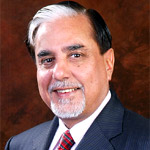
    Subhash Chandra

    Subhash Chandra, Chairman, Dish TV India Limited, said, “The Indian media industry is witnessing a sea change as it moves towards a fully digitized environment. With the government remaining committed to the cause, stakeholders across the value chain are working overtime to make the best of the opportunity. As digitization sweeps the pay-tv households in India, platforms with evolved business systems and processes having last mile reach are likely to have an upper edge. Amongst DTH platforms, Dish TV with its technological lead and superior product line-up is one of the best placed to capitalize on the digitization mandate,” he added.


    Jawahar Goel, Managing Director, Dish TV, said, “While the distribution industry remained on tenterhooks preparing for digitization, the third quarter saw the much debated compulsory switch off of analog television signals take place in key metro markets. Although lack of execution in Chennai and Kolkata was a dampener, festival demand coupled with mandatory conversion in Delhi and Mumbai brought the DTH industry back to the 1 million plus monthly run-rate. DTH garnered around 35 percent share of incremental additions post the sunset date.”


    He added, “In line with our expectation, we witnessed significant subscriber uptake around the sunset date of 31st October. Dish TV achieved the largest share of 28 percent amongst DTH platforms in the digitization territories. ‘Dish+’, India’s first standard definition recorder, played its part in differentiating and attracting consumer interest in a crowded market.”


    Commenting on the third quarter performance, Mr Goel said, “A larger base did create pressure on the average revenue per user which, primarily supported by price hike in the second quarter, increased marginally to Rs 160. In the third quarter, apart from the usual additional spends typically experienced due to the festive season, additionally this year the company’s investments to capitalize on the digitization opportunity are also reflected in higher costs during the quarter. A seasonally higher marketing expense was as per budget. Content cost for the year is expected to be within the guided range of 12 percent increase over the previous fiscal.”


  • Sony goes Liv with digital entertainment

    By A Correspondent


    Multi Screen Media (MSM) has announced a new product for digital entertainment, Sony Liv. Sony Liv is MSM’s new Video-on-Demand service, which will provide viewers a world-class viewing experience of their favourite shows from the Sony stable – Sony, Sab and Max. Viewers can watch ACP Pradyuman solve the most interesting cases on CID, revisit the most hilarious episodes of Comedy Circus and watch the 1st ever episode of Taarak Mehta Ka Ooltah Chashmah, online, on their personal mobile handsets and tablets, on the go, at their convenience.


    Apart from current shows, Sony Liv also gives viewers a chance to watch past episodes of their favourite shows on Liv Classics. In addition to episodes of all-time favourites like Jassi Jaisi Koi Nahin, Kkusum, Heena, Boogie Woogie, Movers & Shakers and Office Office, Liv will also showcase a large archive going back 17 years of movies and special events like Stardust and Filmfare Awards.


    The Sony Liv application is available globally for free, online on www.SonyLIV.com, for download on major app stores iTunes and Google Play (Android).


    Man Jit Sigh

    Commenting on the new initiative, Man Jit Sigh CEO, MSM said, “Liv is aimed at providing entertainment on the go for young India on the move. With the launch of this user-friendly and highly interactive application, Sony is slated to change the way this nation consumes entertainment. It is a great platform for brands to enhance their engagement and interactivity with today’s young consumers.”


    NP Singh

    NP Singh, COO, MSM, said, “Innovation is the bedrock of business at Sony and our latest offering, Sony Liv reiterates our commitment to engage and interact with our audience in a whole new way. Sony’s shows like Bade Achhe Lagte Hai, Comedy Circus, CID and Sab’s shows – Taarak Mehta Ka Ooltah Chashmah and FIR have very high repeat value and have been rated amongst the most viewed shows online. Through Liv, we want to strengthen our viewership in the digital space and provide the best entertainment preferences to our audience.”


  • Jaldi 5 with L V Krishnan: Core viewers of genres is up

    By Ananya Saha


    Digitization is having multiple ramifications for all stakeholders: MSOs, LCOs, broadcasters and advertisers. On the sidelines of the ‘Digitization Begins’ conference convened by afaqs.com, MxMIndia spoke to LV Krishnan, CEO, TAM India to get upclose to the real picture after mandatory digitization was implemented in the three metros.


    01. What can broadcasters learn post DAS, given that the two metros (Delhi and Mumbai) have shown differential changes towards genre preference?
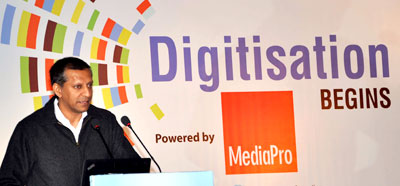

    There are two aspects to it. One, distribution is bringing order in the chaos post-DAS, where channels are getting in two metros. In a way, order that you now see will be much more systemised order and consist of core audience wanting to watch that genre than the trespass audience. This will go the long way in Phase II. The learning of Phase I is good enough to say what the next step should be. Step one is marketing: tell the consumers what the channel has and come and watch it. The second step would be much stronger content of engagement.


    02. So, do we have any surprises post-DAS?

    Overall, the core viewers of the genres have gone up. However, the overall reach of mass channels has gone down. Engagement levels have marginally increased with the genre and strong properties that are marketed are getting the audience. The core audience is still sticking to the preferred genre; it is the trespassing audience that are no longer accessing it. The broadcasters can create strong properties and communicate those properties to the audience so that the audience becomes loyal.


    03. How do you see the audience trend of Delhi and Mumbai replicating in other cities?

    Rollout of digitization will exhibit same phenomena in other markets as well. But the difference will be those markets already have strong penetration of digitization, eg MP and Gujarat. In metro markets, we see 50 percent penetration so such cities will see much smoother rollout of digitization than a Delhi or Mumbai.


    04. Many channels are claiming a spike in viewership. Have things shaken up much with digitization?

    These are the initial stages of digitization. The channels have worked hard to get their communication across to the audiences and have created better content and engagement.


    05. What is in it for the advertiser in the post-DAS scenario?

    They are getting targeted with audiences getting skewed to genres. Therefore, they can target their advertising more efficiently unlike the pre-DAS scenario. Secondly, geography is becoming clearer, especially for niche genre. Communication will be much easier in the digital era.


  • What next, now that digitization has begun?

    By Ananya Saha


    L V Krishnan

    The past two months, after the implementation Phase I of digitization, have been quite an incredible journey. From doubts about whether we would achieve 100 percent digitization at all to achieving it in Mumbai and Delhi. Of course the hiccups still remain. Probably Phase II will see less of these hiccups and more of successful implementation. This and many more issues about digitization were discussed at afaqs event in the capital titled ‘Digitization Begins’. The panellists not only discussed the ramifications of post-DAS scenario but also what the stakeholders should do to take advantage of digitization.


    Numbers game

    According to LV Krishnan, CEO, TAM India, the digitization onus is on marketing and programming. At the summit, ‘Digitization Begins’, culling facts from the data (based on eight weeks pre vs post DAS CS4+ in Delhi and Mumbai), Mr Krishnan said, “There has been 2.5 times growth in the availability of channels in the initial months but it does not match the viewing with 30 percent increase in incremental fragmentation.” He also noted how North and West markets in India are maturing faster than the Southern market when it comes to digitization. “Today channel-surfing behaviour is prolonged in digital homes, while direct landing is leading to increased reach for English entertainment, English movies, and the kids genre.” According to him, inter-genre surfing may also come down.


    Other findings that Mr Krishnan shared included: with sports channels becoming omnipresent, other sports will also get benchmarked; viewing is getting spread from primetime to other day parts, eg: youth music to the early morning band of 7-9am. However, he cautioned, “The biggest disadvantage is that DAS will hit single channels since the top seven channels garner almost 80 percent of audience in DAS-enabled Delhi and Mumbai.”


    Mr Krishnan, however, viewed digitization as a positive change and said, “The clear action step for the broadcaster to be present on distribution chain should choose between two cluster homes: home with kids, and home without kids. For the advertiser, they need to focus on cost of targeting, increase in co-creation of brands. Advertising will see a boost via paid media, and additional media budgets will get shifted from localized ground promotions to unique television content channels.”


    The next 6-8 months will also see a spike in free-to-air channels, according to Mr Krishnan, to cater to the bottom-end of the market.


    Chasing the momentum

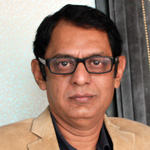
    Roop Sharma

    Digitization was promised to bring in not only the set-top boxes (STBs) into the house of the consumer, but also digital services such as digital billing, services such as video-on-demand, broadband etc. Even though the seeding of STBs has been achieved, it is still a long way before we achieve digitization in the true sense.


    Vivek Takalkar, VP, Marketing and Business Development, MediaPro and Roop Sharma, President, Cable Operators Federation of India believe that post seeding of boxes, digitization has not achieved desired results while Ashok Mansukhani, Director, Hinduja Venture and President MSO Alliance asserted that the all the stakeholders of the digitization process should work together towards establish contact with the consumer.


    Sugato Banerji

    Sugato Banerji, COO, What’s-on-India, noted, “Content discovery will become important for operator to push channels. As digitization progresses, EPG in various languages will also be required.” While broadcasters and content creators might struggle with monetisation, the panelists were of the view that digitization will result in demand for more content.


    Giving the advertisers’ perspective, Anita Nayyar, CEO India and South Asia, Havas Media, initiated a discussion with Amit Tiwari, Country Head, Media and Digital, Philips India and Sunil Raina, Business Head, Lava International. Mr Raina emphasized content co-creation, while Mr Tiwari said, “Channels have to become brands. They have to think from a marketers’ perspective. Even though we have not changed our media plans, depending on digitization numbers, but I am sure that as digitization grows and sub-category of genres emerges, it will impact us directly. We will look at focused advertising.”


    Anita Nayyar

    Ms Nayyar noted, “When it comes to advertising, the brands prefer to go with what has been working in the past and their gut feeling. When the digitization process began close to Diwali, we did not have the numbers. But even then the brands advertised because it was the season and went with the gut feeling.”


    Even as marketers have not clearly changed their media strategy based on initial numbers, it is clear that as content becomes targeted, media preferences could change dramatically.


    Neeraj Sanan

    Neeraj Sanan, CMO and Head, Distribution, MCCS India said, “Good content will determine market share and role of distribution will reduce. Even as time spent on television has increased by 5 percent, the choice has also increased from 80 channels to 250 channels.”


    Even as business models will undergo huge changes, the panel believed that the future implications have not had any affect on their current strategies. And while DAS is believed to be a game-changer, the veterans think that more then the distribution equilibrium, it is the convergence that will have an effect on the consumption of content. As Mr Raina said, “It is important for us to integrate online and offline media to create impact. Plans are not going to change because of digitization but because of convergence. I would like to reach my consumer through the medium they prefer: it can be a television or a tablet. I have to be present where they are.”


    With competition rising, Mr Sanan noted, “There are going to be some wild implications of digitization including, local events can become content through MSOs; a good EPG search engine could take off; concept of broadcast UGC can happen; with triple play, MSOs can think of ad options with a clear-to-call action.” He also noted how MSOs will start competing with national channels for content rights.


    Though there is still a long way to go, digitization is throwing up interesting trends. How many of these will get converted, only time can tell.


  • Ujala Asianet Film Awards held

    By A Correspondent


    The 15th Ujala-Asianet Film Awards 2013 were distributed at a glittering function held recently at Port Trust Stadium, Willington Island, Kochi. The show was attended by a 25,000-strong crowd.


    Star Kamala Haasan was felicitated by mega star Mammootty and Asianet Managing Director K Madhavan for his outstanding contribution to the Indian film industry. Director Priyadarsan was also felicitated by Mr Madhavan for his contribution to Indian cinema. The event was attended by a cross-section of stars from the South Indian film industry and featured colourful programmes performed by leading Malayalam artistes along with a mix of stars from Tollywood and Bollywood.


    Usthad Hotel won the award for the best film, and Ranjith won the award for the best director for the movie Spirit. Mohanlal won the best actor award for his role in Spirit and Run Baby Run, and Kavya Madhavan for the best female actress for the film Bavoottiyude Namathil.  Spirit won the award for the best popular film.


    Others who won awards include Vijay Yesudas (best male singer), KS Chithra (best female singer), Swetha Menon Sunil (best character artiste – female), Biju Menon (best character artiste – male), Babu Raj (best actor in a comic role), Nivin Poli – Isha Thalwar (best star couple), Rafeeq Ahammed (lyricist), Gopi Sundar (music director), Dhananjay (child artiste), Anjali Menon (script writer), Jomon T John (cameraman), debut artiste Gauthami Nair, Lena (best supporting actress), Shankar Ramakrishnan and Indrajith (best supporting actor), Ramya Nambeesan (popular singer), Jacqueline Fernandez (most stylish Bollywood actress), Vineeth Sreenivasan (multi-faceted talent), Prakash Raj (Asianet Golden Star award) and Manoj K Jayan, Kunjacko Boban and Anoop Chandran (special jury awards). Popular star Jayaram was also honoured for 25 years in the film industry in various languages.


    The awards show will be telecast by Asianet on February 2 and 3 at 6.30pm.