Category: TV

  • Zee Entertainment forms Independent Advisory Committee…

    The Board of Zee Entertainment Enterprises Ltd (ZEEL) has approved to constitute an Independent Advisory Committee that, it notes in a statement, will enable it to review and take cognisance of the widespread circulation of misinformation, market rumours, and speculation that has led to the formation of negative public opinion about the company and consequent erosion of investor wealth.

    The committee will be presided by Dr Satish Chandra, a former Judge of the Allahabad High Court, and will comprise two independent directors of the company, Uttam Prakash Agarwal and P V R Murthy.

    Notes a communique: “The committee will independently provide guidance on the measures and future course of action that the Board is required to take in order to protect the interests of all the stakeholders of the company. The Board will seek expert guidance of the committee on the aforementioned matters from time to time.”

  • Moment Marketing: The Mega Mandir Monday


    By Shailesh Kapoor


    Shailesh KapoorThe big day is knocking on the door, on the other side of this weekend. Monday, January 22, is the day of the ‘Pran Pratishtha’ at the Ram Mandir at Ayodhya. But far from being just a religious event, it’s shaped up to be the mega marketing event of the year. We are only in January, but it is safe to say that anything else this year will struggle to match this event on its hype and buzz. Not even the election results this summer, I’d say.


    Traditionally, brands avoid being associated with religion. It’s a sensitive topic, and more brand playbooks are not designed to handle religion as a domain, especially in a plural and complex country like India. But that rule (“don’t touch religion even with a bargepole”) will take a backseat this Monday, when brands queue up to cash in on the moment. It’s for days like this that you feel the term ‘moment marketing’ was coined!


    The event itself is certain to have huge celebrity presence, from all walks of life. Of course, the Prime Minister will be the face of it, but there is wide spectrum of eminent personalities from non-political fields attending the event too. Travel, fashion, food… nothing will be off-topic on the day. It’s a news event, but there the strong pop culture significance is hard to miss.


    The mass inclusion of religion in India’s pop culture has been a slow and steady process over the last decade. The song ‘Mere Bharat ka bachcha-bachcha, Jai Sri Ram bolega’ seemed controversial till a few years ago. But it’s now an omnipresent celebration song, playing at cricket stadia, Navratri functions, weddings, new year parties, the works. It’s now an unofficial anthem that doesn’t need any formal recognition. It’s also a song that will play through the day this Monday.


    The challenge for news channels on a day of this nature is to differentiate. Live feed is largely the same across networks, and it is only natural that viewers will watch the channel their daily-habit channel on the day. What can the second line of channels do to make their presence felt? Monday may give us some answers, including some rather comical attempts to break the clutter.


    The event would also mark the unofficial start to an election campaign, which will then go on for 3-4 months, depending on the poll dates. Even as winters begin to ease up just a bit in North India, political temperatures will continue to rise.


  • 2023: Resurgence of Cinema, Rationalisation of OTT


    By Shailesh Kapoor


    Shailesh KapoorIt’s that time of the year, called the year-end. Between this week and the next two, I will look at some defining features of 2023 from the Indian M&E perspective, and what we can expect (or at least hope) from 2024.


    2023 saw fundamental re-alignment of power centres in the Indian M&E industry, with two important mergers, both of which are still only in the pipeline. But if they indeed go through, we could have a duopolistic industry for the next few years to come, at least on the television front. Zee-Sony and Disney-Reliance will form the epicenter of the industry, even though Amazon and Netflix will continue to wield their influence. But all that’s still in the future. And a tad speculative one.


    Among the three major entertainment-led categories, 2023 saw the least action on the television front (even TRAI was unusually quiet through most of the year). Apart from the potential Zee-Sony merger, and the usual big-ticket events like the Cricket World Cup, it was an unremarkable year for Indian television. 2024 will, however, be a blockbuster year for television news, being the year of the General Elections. The Ram Mandir inauguration, scheduled for Jan 22, 2024, is set to kick off a 4-5 month long viewership bonanza for our news channels.


    The theatrical business saw a significant resurgence this year, and is already the best-ever year at the Indian box-office, with a weekend to go. At about Rs 11,750 cr, the year is a good 800 cr higher than 2019, which held the record earlier. Significantly, Hindi cinema saw a resurgence this year, with its share of national box-office increasing from 33% last year to a healthy 44% this year. It was also the year of Shah Rukh Khan’s comeback to the top, with top bonafide blockbusters in Pathaan and Jawan. If only his latest release Dunki would have performed at similar levels, SRK would have set a record that would have taken many years to break.


    Even as the theatrical category flourished, streaming platforms found themselves re-aligning to changing market scenarios. Post-pandemic, subscriber growth has been slow worldwide. Internationally, streaming platforms faced headwinds in the form of an economic slowdown and the prolonged WGA strike, leading them to rationalize costs, and focus on profitability. The impact was felt in India too, especially because early in the year, JioCinema disrupted the streaming ecosystem by offering the biggest property of them all, the IPL, free to its users. This set the cat among the pigeons in the SVOD-AVOD debate. With paid subscriber growth plateauing in the big cities, and audiences in the smaller markets being reluctant to pay for streaming, AVOD found a definitive this year. “TV+” was the buzzword through much of the second half of the year, and may well be the big streaming idea in India, going in 2024.


    Watch this space next week for more on 2023, and 2024!


  • Reality Check


    By Shailesh Kapoor


    Shailesh KapoorThe linear television business in India has been struggling to find its next big idea. The streaming originals marketplace in India is operating more cautiously too, with economic and industry considerations, both global and local, slowing it down. Amid this relatively low-action period, a new format is making its presence felt: Daily unscripted content.


    While Bigg Boss and Kaun Banega Crorepati have been around for years as dailies, non-fiction has largely been seen as a weekend content type. GECs rightly expect daily soaps to build loyal weekday audiences. In any case, most non-fiction shows in India are in the broad genre of talent competitions, and they tend to be upto five to 10 times more expensive that fiction shows, making them unviable as a staple proposition.


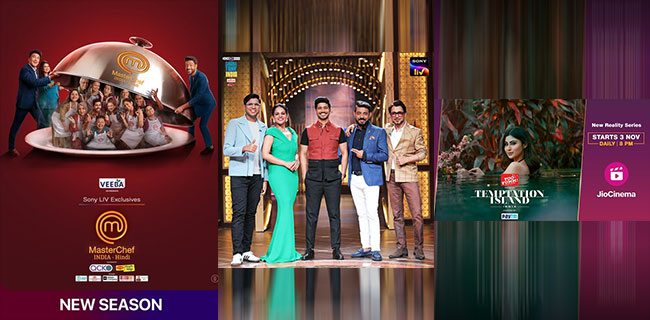
    But the advent of streaming may have changed things a bit. Sony LIV recently launched MasterChef India only for OTT. The show has been around on GECs for years, across two networks, but has never quite found the success it would have hoped to. No surprise, then, that Sony has given up on its ambitions for the show related to mass television.


    Shark Tank India is a more recent, and a more obvious, example of a streaming-friendly show failing to deliver on linear TV, despite the network backing it with up aggressive marketing. The third season will follow the MasterChef India template, with daily episode drops on Sony LIV.


    JioCinema (earlier Voot) has done two seasons of Bigg Boss OTT. MX Player did its own homegrown variant, produced by Balaji Telefilms, titled Lock Upp, in 2022. Tonight, the first-ever season of Temptation Island India, starts on JioCinema. All these shows are in the daily format.


    The weekday-weekend distinction related to fiction and non-fiction seems to have blurred in recent times. It could be a result of many factors: Less compelling fiction content on TV, change in audience habits in the OTT era (such as low appointment viewership), episodic content being more preferred to continuity-driven stories, etc.


    While the reasons are a subject of further analysis, daily non-fiction is finding its takers, both at the platform side and the audience side. The new season of Bigg Boss has opened very well from TV standards. The show has original content in the form of interstitials and spin-offs on OTT, which are carefully designed for better monetisation. In what’s increasingly an AVOD-SVOD hybrid environment for original content (compared to 2020-22), monetisation via advertisers has made non-fiction a more relevant option on streaming.


    The Indian non-fiction market needed this boost in its thinking. There has been a sense of sameness to the shows over the last five years, with the same formats being rehashed. But formats that were safe bets till before the pandemic have struggled to deliver numbers in recent times, and viewer fatigue is evidently one of the primary reasons.


    Daily non-fiction may help GECs and OTT platforms, especially those with a strong AVOD service, find a new business model. It may be just the right time too, given that the web-series (fiction) content on SVOD is beginning to look just a tad jaded. The audience will surely not be complaining if they get a legitimately-different option on the menu.

     

  • The Games Take Over


    By Shailesh Kapoor


    Shailesh KapoorThe Cricket World Cup has taken off to a good start. As good as the World Cup for an eight-hour format can be, in today’s age of instant gratification. Why does the 50-over format still exist is a larger question, whose answer is purely commercial in nature. Many experts have raised doubts over the purpose this format is serving, but who needs to disrupt a cash-generating machine, in India at least?


    So, the current World Cup will put that question aside for a few weeks, even months. The 2027 World Cup, by the way, is already planned to be held in South Africa, Zimbabwe, and Namibia, though four years is a long time away, and a rethink is not entirely ruled out in the coming year or two. On the format itself, not on the venue.


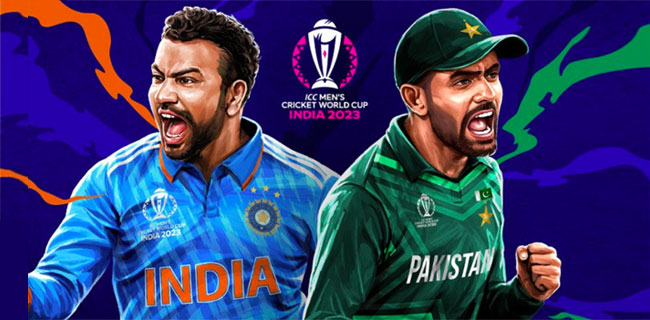
    But let’s come back to the World Cup that is currently underway. By and large, on-field action has taken large share of the attention in the last one week, and India’s two wins have given an initial sense of comfort to the fans. All eyes are currently on the big India-Pakistan clash tomorrow. India’s record against Pakistan in the 50-over World Cup remains unblemished, with a 7-0 lead. We could see both television and online records for live sports being rewritten tomorrow.


    The only major off-field controversy over the last week is not a frivolous one. It’s to do with mismanagement of tickets. The opening game between 2019 finalists England and New Zealand had thousands of empty seats visible on camera, even as the tickets showed largely sold out on online platforms (Imagine that happening with ad inventory during a World Cup game!). BCCI’s handling of scheduling and ticketing of this event has been unprofessional, even incompetent. The advantage of a long tournament is that you can learn on the job, and one hopes corrective action is already being taken.


    The broadcast of the World Cup is strictly on expected lines, and I say that in a good way. BCCI and Disney-Star have kept it simple, focusing on first principles, than offering too many distractions via meaningless innovations. Commentary in nine languages is impressive, though the absence of Bhojpuri (JioCinema’s cute contribution to sports broadcast) takes a bit of the fun factor away.


    The World Cup ends in the week after Diwali, and shortly after, we will be entering the elections season. Our news channels have enough fodder to keep themselves busy till mid-2024 at least. Which is not such a bad thing at all, because at least they will not have too much time to conjure up bizarre stories to keep the ratings going.


  • Knocking on November’s Door


    By Shailesh Kapoor


    Shailesh KapoorWe are at the start of what may be a long election season. Legislative assembly elections in Madhya Pradesh, Rajasthan, Telangana, Chhattisgarh, and Mizoram are scheduled for the month of November. These campaigns will segue into the bigger one, the General Elections in 2024. There’s going to be enough in the news to keep everyone busy for at least six months, perhaps a bit longer.


    Of course, when one says “news”, one doesn’t mean print or television anymore. It’s a collective, amorphous mass of sources that intersect and feed into, and from, each other. Earlier this week, Rahul Gandhi interviewed former J&K Governor Satyapal Malik for his YouTube channel. The video has, since then, been widely circulated and discussed on YouTube and social media. But not surprisingly, TV channels and most newspapers have ignored it. Malik is known for being a critic of the Prime Minister, and has gone on record in recent times, including a rather candid interview to Karan Thapar for The Wire, about the systemic lapses in the Central Government that led to the Pulwama attack in 2019, at the time of his Governorship.


    Why did Rahul Gandhi have to interview Satyapal Malik is as interesting as the interview itself. The interview itself has a conversation on this topic. With mainstream media not giving any coverage of any consequence to the Opposition voices, social media and digital news platforms seem to be their recourse to get themselves heard.


    This could be how the media side of the story of the 2024 General Elections plays out. YouTube, and not TV news, could be primary platform where the story unfolds, at least for those hoping to upset BJP, which continues to be a frontrunner to win those elections.


    YouTube’s daily and weekly reach in India is not very different from that of the television news genre’s reach. TV carries more credibility than digital media, but purely for legacy reasons. We have seen digital media overtake traditional media as the lead marketing medium in various mainstream domains, including cricket and theatrical films. Politics is next on the list.


    Talking of cricket, a rather uneventful Cricket World Cup is underway currently. It’s been more than halfway through the round robin stage of the tournament, and we haven’t had a single nailbiter so far. There have been some exciting games, including the recent India-New Zealand one, and some upsets by Afghanistan and Netherlands. But no game has gone into the last five overs without reasonable clarity on who the winner will be.


    Of course, this is an inherent issue with the 50-over format itself. India’s winning streak, now at five matches, has kept the otherwise-drab World Cup alive for fans and sponsors. A semi-final spot is all but assured, and India has a strong chance of being the first team since Australia in 2007 to win a Cricket World Cup without losing a game.


    November, then, is expected to be an action-packed month for more than one reason.


  • The Health of our News


    By Shailesh Kapoor


    Shailesh KapoorPolitics is in the air (though that may be true for any given day of the year). We are in election season again, and the build-up to the 2024 General Elections has well and truly started, even though there remains speculation on the dates, even the possibility of an early election, before the stipulated May timeline.


    It’s only natural then that the media scene heats up too. Last month, the I.N.D.I.A alliance announced a ‘boycott’ of 14 news anchors across channels. The news has met with various reactions, depending on which side of the political spectrum one is aligned to. Some have called it a violation of press freedom, while others have endorsed the move as a message against hate speech and biased media coverage.


    The decision to not engage with certain sections of the media is an age-old tactic followed by politicians and celebrities frequently, and to call it a violation of freedom of press is quite a stretch. It’s not so much the move that has caused the debate, but the public announcement of it. If I.N.D.I.A would have silently decided to not send their spokespersons to the shows hosted by the said anchors, no one would have cared much. But by making their decision very public, they have stirred up a hornet’s nest.


    The decision itself carries limited practical value. Many of the anchors listed don’t even have programs that have spokespersons on them. In any case, debate shows on Indian news channels do not need official spokespersons. There is a long list of unofficial supporters and sympathizers who are willing to come on debate shows on short notice. Many even get paid for it, from what one gathers.


    The only pertinent question that is more important than the short-term controversy is: How did we reach here? The Indian media and polity were in a symbiotic relationship for decades, and incidents of friction, some dating back to the times of Indira Gandhi, if not earlier, were more aberrations than norm. But over the last few years, there has been a gradual decline in the health of this relationship. It is no secret that the current Government at the Centre does not give press the kind of access earlier Governments did. Cabinet reshuffles, for example, are rarely known to the media till they are formally announced. This seems a part of a well-considered media strategy, where engaging with the voters directly, via social media for example, is a preferred option.


    But there has also been a gradual decline in the quality of political representation on news channels. Till about a decade ago, it would not be unusual to see faces like Arun Jaitley, Sushma Swaraj, Jairam Ramesh, Ravi Shankar Prasad, et al on various TV news debates, often every night. That is almost unthinkable today. People of stature and experience do not want to be associated with the cacophonic mess TV debates have degenerated into, over the years. They would rather give one-on-ones when they something specific to say.


    But these occasional one-on-ones cannot fuel four hours of prime-time programming every night. So, news channels must manufacture topics, and ‘spokespersons’, to keep their ship running. The viewer may see it as news or entertainment, but that’s not something anyone is losing sleep over. Not anymore.


    The ‘fourth estate’ role of the media seems like an age-old idea in today’s Indian context. Boycott or no boycott, the Hindu-Muslim debates and the thin-on-facts coverage will continue. Because if there are eyeballs, no one is really complaining.


  • Free-to-stream: Will subscription models survive?


    By Shailesh Kapoor


    Shailesh KapoorThe much-anticipated India-Pakistan clash in the Asia Cup, scheduled tomorrow (Sep 2), marks the start of a busy cricketing scene. The action is equally hectic off the field too. The start of the Asia Cup also coincided with the news that Viacom 18 has bagged the rights for BCCI-organized bilateral series in India over the next five years.


    Viacom 18/ JioCinema’s entry into sports has disrupted the landscape in 2023. From being a driver of paid subscriptions, cricket is now playing the role of reach aggregator on OTT. The Asia Cup is available for free streaming on Disney+ Hotstar, and the ODI World Cup that follows will go the same way. Indeed, the era of paid sports content in India maybe over. It’s only a matter of time that sports channels on TV go free-to-air as well.


    With the no. 1 sport in the country (and by some margin) being available for free, the state of several other sports, including football, tennis, wrestling, etc. hangs in balance. Will they continue to be “premium” offerings that get smaller audiences who are willing to pay for them? Or will the networks hope to expand the reach of these sports by making them available free? The question, of course, extends to television too.


    Are we going back in time, by shunning subscription models in favor of those dependent on advertising? Far from it. For the last several years, almost all major players, in the streaming space in particular, but also in linear television, have over-rated an average Indian’s inclination to pay for content. They have priced their products at levels that are untenable, and then gone on to offer handsome discounts, to the extent of 50-75% at times.


    But the core question is not about the price alone. It is: “Why pay at all?” Changing a market’s mindset from free to pay is an arduous task. We have seen how niche channels lost out once the NTO effects kicked in a few years ago. Outside the top 10 cities in India, paying for data, however low the rates maybe, itself is a choice to make. Stand-alone subscriptions are not even serious considerations. Reluctantly but inevitably, platforms have consented to being a part of aggregator bundles, where the ARPUs are much lower. A Jio-Netflix deal was announced just last week.


    It may seem like an extreme position to take, but the days of pay content in India, especially when it comes to mainstream content that’s targeting a wider demographic, may be numbered. The major GECs going free-to-air in the next 2-3 years is not ruled out either. It would just take one of the top 4 to make the move and grab the top spot, and things may look very different overnight.


    All hail the advertising economy!


  • Pankaj Rai is Business Head of Wion & Zee Business

    Pankaj Rai
    Pankaj Rai

    Zee Media Corporation Limited (ZMCL) has announced the appointment of Pankaj Rai as the new Business Head for Wion and Zee Business

    Raj brings over 15 years of extensive experience spanning the realms of broadcast and digital media. Before joining Zee Media, he served as National Head for The Q. Prior to that, he held a significant role at Zee Entertainment for more than a decade, managing revenue portfolios for channels such as Zee TV, Zee Cinema, and Zee Bollywood in the North and East regions.

    Notes a communique: “We are confident that his expertise will further strengthen our team and propel us towards our goals.  We are excited about the fresh perspectives and ideas he will bring to the table as we continue to grow and innovate.”

  • Zeel streamlines revenue vertical, Rahul Johri quits

    Zee Entertainment Enterprises Ltd has announced strategic changes in the revenue vertical of the broadcast business. Revenue leads will now report directly into MD and CEO Punit Goenka post the resignation of Rahul Johri, President-Business South Asia, the former CEO of the cricket board BCCI and Discovery Networks and a slew of news entities.
    With immediate effect, Ashish Sehgal, Chief Growth Officer, Advertisement Revenue and will now directly report into the MD & CEO.

    Notes a communique: “In line with the strategic approach undertaken by the MD & CEO, this announcement is the first step towards streamlining the organization, in order to optimize the resource allocation and enhance productivity. The Company has accepted the resignation of Rahul Johri. In his stint at Zee for over three years, Johri has led the revenue and monetisation vertical.”

    Said Goenka: “With his rich expertise and experience, Rahul has added immense value to the organisation. I wish him all the success in his future endeavours. I am most certain that with his passion towards the sports and media business, he will continue to contribute towards the industry at large. I also look forward to working closely with Ashish and team, with an aim to drive higher growth in the advertisement revenue segment, as the linear business landscape unlocks more growth opportunities.”

    Commenting on his decision, Johri said: “It has been a pleasure to work with Punit and the entire team. Zee is an ‘Academy of Talent’ and I will always be a proud alumni. I will continue to work towards the upliftment of the sports and media industry, leveraging my expertise to unlock its potential. I wish Punit and team Zee all the very best.”

    Meanwhile, in line with the new lateral structure being implemented, other than Sehgal, all other reportees of Johri, will report into the office of Goenka.

  • India Today Conclave is back with 21st edition

    The India Today Conclave is back, with its theme of ‘Brand Bharat: An Assertive Nation in an Uncertain World’. The 21st edition of the conclave is all set to “redefine India’s narrative” on March 15-16, 2024 in New Delhi.

    Notes a commuique: “The 21st edition of the India Today Conclave will host thought-provoking discussions, exploring how India, with its political stability and unique social vibrancy, can ascend to the forefront of geopolitics and business. The event promises concise yet impactful debate on India’s role in shaping the global landscape.”

    Speakers at the conclave include Prime Minister Narendra Modi, Home Minister Amit Shah, External Affairs Minister S Jaishankar, and Finance Minister Nirmala Sitharaman, Sadhguru – Founder Isha Foundation, Egyptian Comedian & TV Host Bassem Youssef, Member- Rajya Sabha G V L Narsimha Rao, MLA from Mizoram Baryl Vanneihsangi, Vice President RP Sanjiv Goenka Group Shashwat Goenka, Author & Historian Hindol Sengupta, among others. The line-up also features renowned figures from the entertainment industry, including Akshay Kumar, Tiger Shroff, Orhan Awatramani (Orry) and others.

  • Star Sports collaborates with YouTuber CarryMinati for IPL 24

    As the countdown to IPL 2024 begins, Star Sports has collaborated with YouTuber and content creator, CarryMinati aka Ajey Nagar. The 24-year-old Delhi-based creator, who is popular for his expletives-laden satirical roasting videos, has been signed as the new face of ‘Cheeky Singles’, Star Sports’ special weekly show that captures the fun side of the sport.

    The show is being written by Vishal Dayama, who has worked with CarryMinati on some of his previous YouTube sketches.

    Notes a communique: “With a long-term vision to transform sports broadcasting, the collaboration will marry CarryMinati’s authentic brand of sharp humour and strong youth connection with Star Sports’ vast cricket viewership, promising an unprecedented viewing experience. The first episode airs on March 21, 9:30 pm, on the Star Sports Network.”


    Now will CarryMinati minus all the abusive words lose his following on Star Sports?