Category: TV

  • Mahrukh Inayet quits Times Now, starts school for anchors

    By Archita Wagle


    If you thought anchoring was just about sitting in front of the camera and talking, Studio Talk, a finishing school for those looking to make their career before the cameras, will prove differently to you. “A lot of youngsters believe that anchoring is not serious journalism and I want to break that myth. It’s time one understands that anchoring is impossible without knowledge,” said Mahrukh Inayet Rizvi, Course Director, Studio Talk, who recently resigned as senior editor (news) at Times Now.


    Ms Inayet was part of the core team at Headlines Today, that helped set up the channel. From the TV Today group, she joined Times Now, again as part of the core team that set up the channel. Her 72-hrs non-stop reportage from outside the Taj Hotel during 26/11 earned her much acclaim and was appreciated as an example of unbiased coverage of the Mumbai terror strike. She has reported extensively on national politics with special focus on the Kashmir imbroglio.


    From the breathlessness of breaking news to understanding the nuances of business and sports anchoring to the intricacies of entertainment and live events anchoring – Studio Talk aims to prepare the young journalists in all genres. ‘This programme is a must for anyone and everyone looking to work before the cameras in the television,” said Ms Inayet.


    Ms Inayet believes that journalism schools teach you how to be a good journalist. But few teach what to do before the cameras and fewer prepare you for what to expect once the cameras start rolling. That’s exactly what Studio Talk aims to do- prepare and polish newbies with an intensive 14-day program on how to be a television anchor/presenter.


    The course is aimed at teaching youngsters how to anchor news, business, sports and entertainment stories. The course will have studio simulated environment and the students will be taught how to work in front of the cameras and connect to the audience, ‘either as an on-field reporter who has 60 seconds to connect to the viewer with his/her story or as an anchor who has to present the final product to the audience. The students will also be taught basic make up skills so that they don’t look washed out in front of the camera.’


    “The camera is ruthless and does not allow you to rewind and press record the second time. Being on television is hard work. Anchors and presenters have to face all kinds of situations. From just one-line information on breaking news to anchoring in live situations,” Ms Inayet added.


    And, Ms Inayet definitely knows what she is talking about, given her rise from a reporter to being among the senior most anchors at Times Now. It is this extensive experience that has allowed the former Times Now Senior Editor to develop perhaps the only such training program in the country.


    While Ms Inayet, as the course director, will personally oversee the 14-day hands-on-training program, Studio Talk will also have some of the best names from the television industry such as Mandira Sawhney Lalwani, former presenter, Times Now, ESPN, Ten Sports & Star News; Prerana Thakur Desai, Producer, Aamir Khan Productions; Ragini Kumar, former sports anchor, Times Now; Mikhail K Vaswani Presenter, Neo Cricketer and Ameet Sawant, Producer & Director, 96 Karatz Productions as guest lecturers to share their experiences on topics like Inside A Television Newsroom, Teleprompter Training, Fundamentals Of News Anchoring, Handling ‘Breaking News’, On Field Reportage and other such relevant topics.


    At the end of the 14-day course, the student will be awarded a certificate and a demo CD on completion of the workshop. “Earlier we could learn from our mistakes on the job. But now there is no time to make mistakes. The demo CD ensures that the recruiters realise that the person knows what in required to be in front of the TV,” concluded Ms Inayet.


  • Zee Cine Awards beats all other Bollywood award shows in the US

    By A Correspondent


    Zee TV, the number 1 South Asian entertainment network, announced recently that the 2012 Zee Cine Awards (ZCA) achieved record-breaking ratings this year. According to Rentrak TV Essentials, Zee Cine Awards delivered the highest rating for any South Asian program in over a year’s time (since Feb 11). ZCA received a viewership share of almost 75 per cent during its broadcast.


    On the monetizing front, the network saw a 40 per cent increase in revenues from last year’s awards show as announced by Zee TV America’s Business Head, Sameer Targe. He said: “Despite cut-throat competition we always find ways to reinvent, than to discount. As a market leader we have no one to follow, hence the challenge is to always focus on expanding the pie. This year we were able to bring well known mainstream brands like Omega, Verizon and MetLife as sponsors of the show. The idea was to sell the inventory at a premium value, keep the breaks short which eventually resulted in highest viewership.”


    Zee TV – the name that has become synonymous with unparalleled quality in entertainment – has been a dominant player in broadcasting content for more than 17 years in the national and international space.  As an Indian channel, Zee TV is committed to supporting the values and traditions that appeal to South Asians across the globe.
    In July 1998, Zee TV expanded its presence in the international space by establishing itself as a mainstay in American households, reaching more than 2 million viewers.  Zee reaches over 600 million viewers in about 168 countries.

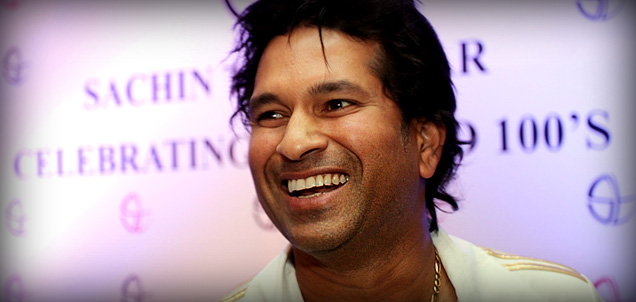
  • Is Sachin’s brand aura on the wane?


    By Binoy Prabhakar


    Even if you are cricket’s greatest overachiever, there is no escaping pressure. When Sachin Tendulkar recently collected his latest superlative – a century of centuries – the deed helped banish the pressure of ‘when’ that had been building up for a year. No sooner did he say “phew!” than a new pressure took the earlier one’s place: his retirement.


    The answer from the man himself, though “in a not Tendulkar-like way”, according to Mr Suresh Menon, editor, Wisden India Almanack, was: “When I retire is something I will decide…” Mr Menon broached the subject in a rather unflattering article earlier this week. “… the pressure on Tendulkar now is to keep playing so his minders can squeeze the last drop out of his huge commercial value,” he wrote.


    Mr Menon called this the “flip side of the millions”. “High earning sportsmen make a Faustian deal with the money devil; they are paid sums beyond the dreams of avarice for a decade or two… the devil demands his part of the bargain. Keep playing. Keep bringing in the money,” he wrote.


    Brands Tendulkar Endorses…All the deals are pre-existing, no new deals since the ‘Century of Centuries’Aviva, Adidas, Amit Enterprises, Audemars Piguet, Boost, Coca-Cola, Canon, Castrol, Sach (private label Kishore Biyani’s Future Consumer Products Ltd has created with Tendulkar), ITC Sunfeast, Jaypee Cement, Kaspersky, Luminous, RBS, Reynolds, S Kumars, Tohsiba

    Moot Question

    It still does not the answer the critical question: when will Tendulkar call it a day? But if endorsements were the deciding factor, as Mr Menon suggests, the answer would be 2014. All the 17 endorsement contracts in Tendulkar’s kitty run until then, according to his managers, World Sport Group (India) Pvt Ltd. Tendulkar remains among the highest-earning sportsmen in the country, second only to India captain MS Dhoni. But at least for now, there is no prospect of brands prolonging his career beyond 2014. No company has signed him up since his last milestone, belying the widely held expectation in the advertising fraternity.


    The only marketing event commemorating his achievement has come from beverages major Coca-Cola, which announced a rollout of 7.2 lakh cans featuring the cricketer. Sportswear major Adidas is preparing to launch a new marketing campaign featuring him in the first week of April. But both are existing sponsors of Tendulkar.


    Is it still early to rule out new sponsors, given that Tendulkar’s feat came about only on March 16? Advertising executives don’t think so. The buzz in the industry is that many companies were in talks with Tendulkar’s managers to make the most of his 100th century. Mr Harish Krishnamachar, senior vice-president and country head of World Sport Group (India) had said the feat will not have any impact on Tendulkar’s valuation. But no name has arrived on the scene.


    That’s because Tendulkar has always been selective about his endorsements, according to Mr Krishnamachar. “And we have never seen a milestone as a short-term opportunity given that our focus has been on creating a sustained long-term value for him,” he says.


    Tendulkar, says Mr Krishnamachar, has been very categorical about what categories he will be associated with and what he will not. “We have a very good assessment of what he is comfortable with and we have stayed true to that.” The brands that Tendulkar has said he will not endorse are tobacco and alcohol, says Krishnamachar. Tendulkar is said to have turned down a multi-crore deal with liquor baron Mr Vijay Mallya’s UB Group two years ago.


    …And Those That Haven’t RenewedContractsPepsi, Action Shoes, MRF, Britannia, Fiat, TVS, Airtel, G-Hanz, Colgate-Palmolive, Philips, VIsa, Ujala Techno Bright

    No New Deals

    Mr Krishnamachar says as far as any other category is concerned, it is something they “will consider as the opportunities present themselves”. But for now at least, there are few on the horizon.


    And all the existing contracts are many years old, even as much as 20 years in the case of Boost. The ‘newest’, if one can call that, is a deal with Coca-Cola signed in early 2011. Tendulkar’s last deals of note too were signed around then – a Rs 9-crore contract with Pune developer Amit Enterprises and another with apparel maker S Kumars for Rs 13 crore.


    Mr Prashant Singh, director of Octagon India, a sports and entertainment marketing company, says it is true that there has been no frenzy over Tendulkar’s latest feat. “There won’t be any until companies realise what his [retirement] plans are,” he says. Mr Singh says in one sense, Tendulkar, who turns 39 next month, is restricted by his own persona. “He has become the grand old man of Indian cricket… a la elder statesman than a player. That restricts more brands coming.”


    Mr Singh says what is keeping new brands away could also be the sheer number of endorsements. “He is endorsing 17; where is the scope for more?”


    Yet, many brands have not renewed contracts (see adjoining chart) with Tendulkar. He also now has few brands that cater to the young, except Coca-Cola and Adidas, an important segment for marketers. This is the upshot, says Mr Krishnamachar, of changing his portfolio of brands to reflect maturity and high-value categories.


    What about his brand value? Mr Santosh Desai, MD and CEO of Futurebrands India, says it isn’t what it was a few years ago. “Clearly, Tendulkar is in the evening of his career.” Mr Desai says the cricketer’s performance of late has been below par and because his century took a long time coming, there was fatigue associated with his feat. Taken together, it explains why Sachin hasn’t received new deals, he says.


    Whether Tendulkar wins new deals depends on how he evolves as a brand ambassador, says Mr Desai. “We have to wait and see… there is no clue from his current endorsements.”


    Source:The Economic Times

    Copyright © 2012, Bennett, Coleman & Co. Ltd. All Rights Reserved


    Photograph: Fotocorp


  • Starry starry rights from BCCI

    By Rishi Vora


    Star India’s winning the rights to broadcast Indian cricket for six years – from 2012 to 2018 – is a significant development in the Indian sports arena where cricket is the only celebrated sport, and the one that attracts the maximum moolah.


    Though Star has won the rights much to the joy of the senior management team, the fact is that it has come at a staggering cost of Rs 3,851 crore for 96 matches.


    What this means is – for every single match played in India till 2018, Star will pay BCCI Rs 40 crore as part of the contract. The contract also says that Star will also have the rights for internet and mobile besides TV.


    Mr Uday Shankar, CEO, Star India said in a prepared statement, “BCCI is a great property and we are overjoyed to have an opportunity to develop it further. It was decided amongst ESPN Star Sports, ESPN and Star that Star would bid for the rights and if Star were to win the rights it would be exploited in collaboration with ESS.”


    So while it is great news for Star India for it augments its position as a network, there are some murmurs within the industry on whether it is a viable deal as far as profitability is concerned, especially when Indian cricket has seen one of its worst ever phases of late.


    A broadcaster of a sports channel who requested anonymity said, “It’s a move from Star to dissuade MSM from its cricketing interests. MSM already have the Indian Premier League which is one of India’s biggest properties, so the BCCI rights would have put them in a superior position in the industry. Hence it’s a setback of sorts for them, especially when they’ve been in the news on launching a sports channel.”


    He further said, “The price Star is paying is on the higher side. But it’s not very surprising that they’ve won it for the price they have, as they have the strength and the clout to pull off a high-value deal such as this one.” MSM came second to Star with a bid of Rs 3,700 crore.


    T Gangadhar, Managing Director, MEC India commented on the development: “Sports is a rights-driven genre and channels compete on that basis. As faras exploiting rights is concerned, Star India has announced they will collaborate with ESPN-Star Sports, an already established player. To that extent, life is as usual. However, going by the size of the winning bid, it is clear that Star is betting big on digitisation and increasing subscription revenue therefrom.”


    With the BCCI deal, ESS has now become a significant player in Cricket. They’re the official broadcasters of ICC matches, plus Australian and England cricket. Ten Cricket – the channel from the Zee stable airs matches played in South Africa, Sri Lanka, West Indies.


    Neo banked on World Series Hockey after having lost the rights for Indian Cricket. They however continue to own Bangladesh rights – the Asia Cup which was recently concluded was aired on Neo Cricket.


    Neelkamal Sharma, COO – Buying, Madison Media Group said, “For sports as well as for Star, it is really a big news – Star TV acquiring the rights for Indian Cricket for next six years. Since rights are with Star TV and not ESS, there could possibly be some more development on the way forward and time will tell what will those developments be.


    He further added, “There will be some consolidation of sports companies in the near future to leverage this opportunity. I will not be surprised if Star becomes a dominant player in sports as and fiction”


    According to Mr Mahesh Ranka, it will take some time before the investments could be recovered. “I can say that by the end of six years, Star will make money out of this deal on the back of subscription plus advertising revenues. It’s just not the Indian market. There are a lot of viewers who follow Indian cricket in other countries. Plus they have the mobile and the internet rights too. So it seems to me that it’s a good win for Star.”


    On what it means to other players in the sporting arena, Mr Ranka said, “Sadly cricket is the biggest game in India and quite clearly, other players such as Neo and Ten Sports would face a bit of a setback. They’ll survive, but that’s not the big question. The big question is whether they will be able to grow and build from where they’re now.”


    Advertising revenue may not be much in the first few years, and experts predict price points to range from 2 lakh to 3 lakh per 10-second spot. Profitability will be an issue.


    Star Network is poised to gain more strength. But will the Star shine yet again?


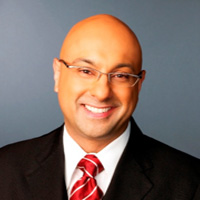
  • Single biggest role is accountability: Ali Velshi, CNN

    Being associated with a network that prides itself on coverage being different from the clutter as well as being responsible for making the people and authorities accountable for their actions, are roles that many journalists would hanker after during their lifetime. And this is where Ali Velshi of CNN holds himself in high stead as he embarks on an enduring journey of bringing about accountability and response from the viewers in a way that affects the functioning of an economy. Whether it is connecting the news through finance, global issues, contemporary governance, education and big ideas, CNN’s Ali Velshi executes several roles across CNN as the network’s chief business correspondent and anchor of Your Money and World Business Today on CNN International.


    In a short yet crisp conversation with MxM India, Mr Velshi shares his sentiments around the political and business scenario bracing several economies and suggests patterns that would emerge as countries try and lift themselves out of the slowdown dilemma.


    Q: There’s talk of an ongoing slowdown that’s said to be impacting growth of several industries across the globe. How do you view the current economic crisis?

    The biggest differentiator between what the world is going through right now and what it went through in 2008-09 is that the current crisis has not evolved into a global credit crisis – that’s what made the last economic crisis substantially different in the sense that we learnt that we are all interconnected and that credit arrears that started in the US froze up the flow of money globally. Here we have a situation where we still have a great deal of uncertainty about Europe but you have stronger-than-expected economic growth in the US and weakening but still very strong economic growth in Asia. So we are not on the threshold of a disaster like we were globally in 2008-09; the general view is that the economic growth story is much more positive. It looks like the global economy is going to move forward heavily dependent on emerging economies and on strong growth in China & India.


    Q: What role will Asia play in helping the world rebuild its growth story?

    A lot of what happens to global growth is going to depend on China and India. We do see some slowing of growth in both of those markets for different reasons – in some cases because of the inflation and in the other cases because of the slowdown in spending in Europe. So the sum total of what happens in 2012 will probably have more to do with politics and inflation and oil prices then it’s going to have to do with organic growth. There are a number of things that are going to happen in the coming months particularly with respect to Iran and oil prices that will have an impact what 2012 will end up looking.


    Q: At CNN, what are some of the new viewership trends that’re redefining the way you cover news?

    The biggest trend that we’ve been witnessing at CNN and in the world of news is the remarkable surge in digital consumption of news, especially business news. Digital consumption of business news has been high for several years but the thing that is becoming important in financial news and economic analysis these days is context. And that’s where we can shine at CNN and that’s where we can gather the experts to add context to simple numbers or political results or debates as we have a strong stable of excellent analysts and commentators who can bring colour to the discussion. And that’s what is important; digital has given us access to development and news. But in the end, regardless of how our readers or listeners consume their news the value of the content and the context remains our major advantage in the market.


    Q: Don’t you see digital challenging the traditional medium where accessibility of news is concerned?

    As a journalist, I am highly agnostic to how people consume our product and one thing I have learnt at CNN is how to be agnostic. So I have to be able to report through TV, through social media, through blogging, through videos, etc. There are different types of audiences for these mediums, but ultimately if you are trying to get news and analysis out it should be relevant to the audience. I don’t think digital takes away the sheen from traditional media; in fact it adds to it as it allows us instant access to our audience and allows us to respond to them more quickly etc.


    Q: How according to you does CNN stand out from its peers in the highly competitive news market?

    Our reach continues to grow at CNN because it’s a must-have product for people who want to stay informed about global events and happenings. Whereas the Indian market is concerned, it’s fascinating how much news there is, how much broadcast there is…the growth of newspapers, etc. So Indians are clearly national consumers of news but where we stand apart is that CNN is a key channel that offers global perspective. We only see an upside potential in terms of busy, crowded, noisy world where people need to understand context in digestible portions.


    Q: Apart from being just a disseminator of news, how do you ensure you play a larger role in impacting the lives of people?

    The kind of initiatives that we take up like CNN Heroes etc we see to it that it really creates an impact because what ends up happening is that we can throw a light on corrupt practices and the plight of people who have no other voice. We can influence bad policy and have an impact on changes in an effective way. Also, the other thing is that using the strength of CNN we can get accurate reporting where sometimes a smaller organisation that doesn’t have a similar reach is not able to do so. As a result, we can hold people accountable. In media, the single biggest role that we can play is that of accountability. It makes for a more honest and fair world and I think that’s what our viewers appreciate.


  • Five days to return of IPL mega-carnival


    By Tuhina Anand


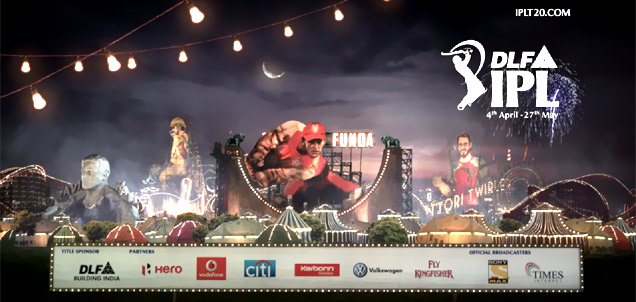
    The annual IPL event is no less than a carnival or a circus and the TVC featuring the two kids with the Eena Meena Deeka song playing in the background aptly sums it. As the countdown begins for the circus to visit our cities or beam in to our TV sets, we take a look at the various marketing activities planned around the IPL.


    Once touted as the biggest property for marketers, the game lost some sheen because of the negative coverage it got in its last avatar. Fully aware of the situation, those involved with the IPL have now gone all out to woo audience and it’s no surprise that lately, especially in the last two weeks, one has seen and heard a lot about IPL on various medium.


    Eena Meena Deeka- Carnival- Ye IPL Hai Boss
    [youtube width=”400″ height=”200″]http://www.youtube.com/watch?v=b2lDDabuGLs[/youtube]

    Rohit Gupta, President, Multi Screen Media (MSM), the official broadcaster of DLF IPL, talking about the inventory sold on MAX said: “We are in the process of closing deals and it’s been a regular sellout process. The start was a bit slow, but once our marketing campaign kicked off we have managed to rope in most of the key brands. In fact, we have not dropped our rate which is Rs5.5 lakh for a 10-second spot.”


    Mr Gupta, in fact, is confident that the rates will go up once the game begins and more audience comes in to watch the matches.


    Talking about the campaign, Gaurav Seth, Senior VP, Marketing and Communications, MAX, said: “We have reached the end phase of a very long campaign that was kickstarted on February 23 with Aisa Mauka Aur Kaha Milega and April 4 will see the culmination of all the activities we had undertaken as the IPL begins. As for sustenance, we will take a call on the basis of the viewership and address the issue accordingly.”


    [youtube width=”400″ height=”200″]http://www.youtube.com/watch?v=UXQsIgN_530[/youtube]

    Some of the activities that MAX has undertaken include a partnership with Radio Mirchi for 40 stations across India which will include radio spots, RJ mentions, and IPL contests. For OOH, they have taken over 700 units across 70 towns including billboards, bus shelters and various other innovative OOH panels. The print engagement includes both English and vernacular newspapers. They are also engaging the audience through mobile and FB along with BTL activation. It is learnt that the budget earmarked for IPL 5 is almost Rs30 crore.


    Mr Seth said: “We are reaching out to our audience with one million printed schedules which will be distributed through multiple outlets. We have planned flash mobs across 10 IPL towns. The mobs will give info on IPL by disruption and the sequences will be uploaded on YouTube which we hope will go the viral route.”


    “This is the 5th year of IPL so people know what it is. The challenge is to create something that is innovative and appeals to the consumers. Aisa Mauka is perfect as it talks about IPL being an opportunity to bond with family and friends. It invites people to enjoy the IPL experience,” he added, on marketing IPL which has definitely been a mega exercise.


    [youtube width=”400″ height=”200″]http://www.youtube.com/watch?v=xkBVlfisg88[/youtube]

    Extraaa Innings T20 2012 on MAX has also come out with a special video featuring its presenters on the theme of Aisa Mauka Aur Kaha Milega.


    Here’s a look at some of the marketing initiatives taken by various IPL teams:


    Mumbai Indians

    Mumbai Indians has taken the digital route to connect with its close to 2.5 million fans. The unique marketing campaign by O&M is being digitally driven on Facebook’s MI fan page ‘MIPaltan’. The campaign ‘Players become Friends’ is aimed at increasing the interactivity quotient between the players and the fans in the digital space. The fans can get to be friends with Sachin Tendulkar, Harbhajan Singh, Rohit Sharma, Munaf Patel and other team players and know about their real lives, practice sessions and much more.

    https://www.facebook.com/mumbaiindians?sk=app_358303457535779


    MI has also unveiled its new website www.mumbaiindians.com, which offers a fresh view for the fans to know more about the team. The new website presents dynamic online tools, easy navigation and is rich in its contents. The fresh look and feel of the website, designed in keeping with international standards, echoes the value which best epitomizes the team – ‘Play Like One’.


    Mumbai Indians has recently signed a brand alliance with Walt Disney India, which marks the first time Mickey Mouse will be associated with cricket. The Mumbai Indians Disney merchandise is available for sale in India.


    Delhi Daredevils

    Delhi Daredevils, in its bid to engage its fans, signed four remarkable flagbearers of daredevilry as Delhi Daredevils Superfans. These include India’s only IronMan athlete, Anuradha Vaidyanathan; the youngest Indian climber to summit three peaks beyond 8000m, including Mount Everest, Arjun Vajpai; India’s only ultramarathon runner Arun Bhardwaj and the only Indian woman to ski her way to South Pole, Reena Kaushal Dharmshaktu.


    It also launched the team’s Hindi website, making it the first IPL franchise to create an online destination for cricket fans who would like to follow the game in the language. The English website too had been redesigned. Also on anvil is the launch of mobile version of the website. Smartphone users can download a mobile App to get scores and updates. DD also launched its new official song titled ‘Munday Dilli Ke’ to herald the coming season of DLF Indian Premier League.


    Chennai Super Kings

    CSK took its ‘Whistle podu’ further by launching a brand new participative cheer video. Titled ‘Chennai Super Kings ku Raise Your Hands’ this video too is a tribute to the unwavering fan support that the team enjoys. The one-minute video captures a fan formation that gathers momentum, with supporters joining in to form a Mexican wave cheering their favourite team. The video was uploaded on YouTube late evening on March 25, and in less than 12 hours it had already generated over 10,000 views.


    In another unique initiative, Washington Apple have partnered with CSK as ‘Official Fruit’ for the upcoming IPL season. South India is India’s largest market for Washington Apples and Chennai, in particular, is the key port of entry and distribution hub and also a key market for the company, hence the association.


    Kolkata Knight Riders

    Venky Mysore, MD & CEO of KKR on the marketing initiatives said: “KKR recently unveiled its new marketing campaign, ‘New Dawn, New Knights’. The campaign is about the new team that we have formed and its new attitude and intensity. It signifies the new winning spirit that has been brought in by our new players and the new coach. All of these go a long way in ensuring a new beginning.”


    He also said that their digital community exceeds 700,000 and before the start of the latest season of IPL, they are confident of reaching a million. The marketing would be mostly done through merchandising on the digital platform as well as through ticketing. “Contrary to public perception, we don’t go out and buy media, because we don’t need to. We have a brand that we constantly work on. Part of how we do that is to ensure the team is doing well, and we also try to be a part of mutually beneficial associations that can be leveraged. Hence, we develop marketing programmes that allow brands associated with us to activate themselves. For instance, we created a lot of content with our sponsors on digital and electronic media last year which they utilized advantageously,” Mr Mysore said.


    KKR is working to create new revenue streams like merchandising and licensing. Since various third party reports indicate that KKR is the most valuable brand franchise, they are looking at ways to strike licensing agreements to monetize on the same. As a result of multiple merchandising deals, they have made available a number of branded KKR merchandise like T-shirts, hats, head bands, fridge magnets, pens, ties and so on.


    “The market segment that IPL attracts is very different from that of a Test and One Day format of the game. I think it depends on the product. If you look at toothpaste today, you have hundreds of brands, but it all depends on how you package it and how you market it. So the challenge for us is to keep working on the product, its packaging and delivery, and if we do a good job, then we would be successful as a franchise,” he added.


    Rajasthan Royals

    Rajasthan Royals has again tied up with Sanskar School for their annual inter-school Kanni Thahryamal Tournament to develop, nurture and motivate young talent at the grassroots level. Various Rajasthan Royals players, including Rahul Dravid, scouted for talent at the tournament and. RR also supported the Ambuja Jaipur Marathon 2012 as Official Fitness Partner.


    They recently unveiled the pink-coloured training jersey dedicated to the city of Jaipur, the team’s home. On the digital front, the focus is on interactivity and their fan zone on the website encourages fans to express themselves through content, videos, images, forums or polls. Points are awarded based on interactivity on the website which can be redeemed for exclusive memorabilia and merchandise.


    UltraTech Cement Limited is the team’s Principal Sponsor for IPL 5. The cement brand has been associated with the squad since 2008.


    Kings XI Punjab

    This IPL team hosts the Kings XI Punjab Cup, a tournament organized to provide a platform for young guns to showcase their talent. Through this annual tournament, KXIP aims to nurture talent at the grass root level by giving them an opportunity to display their talent.


    Kings XI Punjab has initiated an activity with Institute of Fashion technology at Punjab University. As a part of the initiative, the aspirants were given an opportunity to design their favourite local team’s merchandise. The chosen designs have been used in the merchandising of Kings XI Punjab.


    The team associated with Indraprastha All India Sports Foundation to launch the one-of-a-kind reality show ‘Cricket Champs’. This reality show is being powered by Kings XI Punjab and a number of players from the franchisee are also part of the proceedings. This pan-India initiative is featuring on UTV.


    Deccan Chargers

    Emirates International has come on board as the Team Sponsor for Deccan Chargers. DC also kick-started its Blue Campaign in Hyderabad with ‘its gotta be blue’ line celebrating food, music and cricket. Some Tollywood films have also associated with Deccan Chargers for promotional campaigns. DC is also taking the digital route to connect and interact with its fans in a better way.


    Royal Challengers Bangalore

    RCB launched its new website earlier this month, which is aimed at making navigation easier for its fans. The site has new collection of photos, videos and other downloads for its followers. Most of the initiatives are on the RCB site.


    Pune Warriors

    This IPL team has been focusing on interacting with its fans with its website. In keeping with the name, the site has sections like ‘Our Warriors’ which give information about the players, War news and Warrior Club Updates. The Bhartiya Nrityanganas or the cheer queens with the Indian flavour will be encouraging the team on field. The team has also associated with Bookmyshow for buying tickets for the games.
     

  • IPL 5: Online ticket sales picking up pace

    By Ameya Chumbhale


    If ticket sales of the fifth edition of the Indian Premier League are anything to go by, India is certainly not cricket fatigued.


    Mumbai Indians, which began its online sales on March 1, claims to have sold close to a third of its tickets already. Some of these tickets are priced as high as Rs40,000 – the most expensive among all teams.


    Pune Warriors (PWI) and IPL winners Chennai Super Kings (CSK), as well as Delhi Daredevils are also doing good business, said bookmyshow’s chief executive officer Ashish Hemrajani. Bookmyshow is the online agent for five IPL teams, including Mumbai Indians (MI).


    Online sales are critical to the success of the IPL as stadium sales usually commence only a few days before the match. “Last year, we sold close to 60per cent of our ticket inventory online through thermal printing which enables us not to have restriction on quota for online sales. This means the system allows us to print tickets similar to international practices and also allows the Mumbai Indians fans to choose their own seats,” said an MI spokesperson.


    Hemrajani says bookmyshow has already sold 50,000 tickets this year. “Mumbai and Pune are doing really well, while ticket sales of Rajasthan Royals and Kings XI Punjab have picked up over the last two days,” he added.


    The inaugural match on April 4, between the CSK and MI in Chennai, is sold out. Chandrabhan, general manager, marketing at Chennai SuperKings said online tickets for the second and third matches are also sold out. CSK has kept 60 per cent tickets for on-ground sales as “Chennai is known for fans queuing up to buy (movie and cricket match) tickets,” he added.


    Since the first IPL season, on-ground ticket sales and television viewership have moved in tandem, say media planners. “Both went up for the first three years of IPL, and both came down last year. The link is very strong between the two,” said Ajit Varghese, managing director (South Asia), media agency Maxus and Motivator.


    Multi Screen Media, the company that operates Sony Max, which broadcasts IPL matches, has signed six sponsors till date. Among them are Vodafone, Pepsi, Hyundai, Idea and Tata Photon. It had nine sponsors last year. MSM, according to sources who did not want to be named, has sold only about 50-60 per cent of the ad inventory until now as against 75-80 per cent around the same time in 2011.


    According to industry sources, MSM is charging around Rs5 lakh per 10 seconds and they expect it to rise if television viewership goes up in the first seven to eight matches.

    MSM president Rohit Gupta confirmed that the company had signed six to seven sponsors and some of them have come on board for deals valued at over Rs40 crore.

    “We have sold nearly 70 per cent of the ad inventory and expect it to reach 80 per cent before going into the tournament,” said Mr Gupta who is confident of filling up the ad spots, as it will take only a sponsor or two more to do so.

    Generally, associate sponsors get a certain percentage of the ad inventory as a part of the deal.


    Source: The Economic Times

    Copyright © 2012, Bennett, Coleman & Co. Ltd. All Rights Reserved


  • Monetising big ticket movies isn’t easy: Hemal Jhaveri, Star Gold

    Movies on TV are, no doubt, a hot business now especially for general entertainment channels who often do premiers of big-ticket movies to spur GRPs and in the process move ahead of the competition. Recently Star has acquired the rights of Kahani and Dabangg 2 while Zee has acquired Don 2.
     

    Last year Star acquired the Viacom library as a strategy to become the largest player as far as the sheer number of movies is concerned. Now the network enjoys a rich library of movies that it showcases across channels.


    MxM India’s Rishi Vora speaks to Hemal Jhaveri, Business Head of Star Gold on acquisition strategies, cost versus profitability issue and much more.


    Q: What is Star India’s strategy as far as acquisition of movies is concerned?

    We have been very aggressive on movie acquisitions. In fact, Star Gold, where we do a lot of premiers, is in the forefront of movie acquisitions. In the recent past we’ve acquired movies like Singham, Ra.One, Zindagi Na Milegi Dobara and Rockstar, to name a few.


    Q: Do you normally sign deals even before the movie goes on ground for the shoot?

    It is Dabangg 2 that we signed before the shooting began. A few acquisitions we’ve done – some of them are under production. While the stars do matter, what we do as a practice is put a strict content lens on it, so we try to minimise the risks in that fashion.


    Once you buy a movie it has to deliver the same amount of returns over seven to 11 years. That’s the length of time we look at while acquiring movies. So it’s clearly beyond the premier game. If a great movie comes our way and we feel that it’s not apt for the television audience, we will not go for it.


    Q: In case of Dabangg 2 – you’ve acquired that at a significant price. So, why make that kind of an investment when you don’t really know if it’ll deliver?

    It’s Dabangg 2. It’s Salman Khan.


    Q: That’s the only factor?

    Yes. See, Dabangg 2 is a great franchise to earn. After acquisition of the Viacom slate where we have Dabangg and now Dabangg 2 – we’ve acquired the whole Viacom library. All of their 500 movies are ours.


    Q: When did this acquisition take place?

    We acquired that in December last year. With this, it just makes us the largest movies library in the country.


    Q: Huge monies are spent on movie acquisitions at times. Dabangg 2 in this case. Is it a risk worth taking?

    It depends on what you’re buying and at what price.


    Q: 3 Idiots got acquired in about Rs 30 crore by the network which owns the rights. They’ve milked it well and the buzz is it has made about Rs 200 crore or even more.

    Yes, 3 Idiots did very well from the standpoint that it made a lot of money.


    Q: The buzz is that Dabangg 2 has been acquired for Rs 50 crore.

    I will not like to make a comment on that. The cost of acquisition is higher than 3 Idiots considering the latter was acquired some three to four years ago. And the fact that inflation plays its part.


    Q: What is your view on ROI for advertisers who buy spots on big-ticket movies that premier on TV?

    Well, I can only talk about Star Gold and the advertiser response we get. Singham rated 8.7 TVR, Bodyguard set the new record at 10 TVR and Ra.One was 6.7. All of these movies have done well on the ratings front.


    From the standpoint of an advertiser, these movies are a fantastic platform. So it’s really a win-win situation.


    Advertisers need to look at it from a portfolio approach and not just a single movie. There are movies which may or may not do well on TV. It’s not easy monetising big-ticket movies. The cost continues to go up. The cost of movies has gone up close to 30 per cent since the last two or three years. Advertisers should look at the portfolio of movies and the duration period till we own the rights. We have movies to which we own the rights for 11 years.


    Q: But if you keep playing the same movie again and again, how much will you be monetising on that anyway?

    We’re in the business of repeats. First and foremost there are not many movies that get made, and out of the movies that are released, there are only a few that do well. So the universe of movies keeps getting smaller and smaller. For example this year there are going to be only two Salman Khan movies and one Aamir Khan movie from what I gather.


    Q: But what I’m saying is that if you’re running a movie say for the 20th time, the revenue in terms of ad sales on that 20th run will not be much.

    Not really. Say a channel which does 140 to 150 GRPs, there are a good set of audiences that come on to the channel. So yes, we may have movies running many times on the channel. What we attempt to do is make enough profits. And the revenue that eventually gets generated is not bad.


    Q: What movies are we going to see from Star this year?

    The movies for 2012-13 which we have acquired are Bol Bachchan, Kahani which will be aired soon, and Housefull 2.


    Q: When was the acquisition done for Kahani?

    Kahani we acquired four months ago. I can’t tell you exactly when it’ll be aired on TV.


  • Brand IPL needs to play innings of its life: MSL Group report

    By A Correspondent


    MSL Group’s executive report on the Indian Premier League, its ups and downs and the viability of continuing, concludes that if Brand IPL has to remain a smash hit, it must work its strategy carefully.


    When it began, the league made a splash and wowed India with the razzle-dazzle of intensively commercial cricket. Then came the slide downwards with slackening viewer interest leading to falling ratings, followed by the scandal that surrounded allegations of favouritism and money-laundering.


    “There’s no denying that Brand IPL is on choppy waters. It will have to steer clear of fresh controversies, reflect on mistakes and rectify the damage as much as it can. Most importantly, it needs to win back the confidence of stakeholders. As Season 5 unfolds from April 4, 2012, the BCCI will need a stronger game plan to rejuvenate the brand,” says the report.


    Quoting media sources including reports from MxMIndia, the MSL report mentions instances of prominent sponsors pulling out, questionable ownership patterns, and the big one – runaway costs. “Keeping the wage bill in check and managing revenues will mean the difference between survival and falling by the wayside,” says the report.


    Brand IPL has other problems too, such as controversies galore, falling TRPs, and overly high ad rates. Yet, the report concludes, “There must be something right with a sports property that, despite a fall in valuation, is worth more than $3.5 billion. By its second year, the IPL was thought to be the fifth largest sports brand, just smaller than FIFA and bigger than Wimbledon and F1.”


    An integrated communications approach, the sheer advertising benefit of being on the IPL bandwagon, the fact that sports sponsorships do work well, and the Indian cricket fan’s conveniently short memory are opportunities in the IPL’s favour, the report remarks.


    In fact, while other sports such as hockey and wrestling are trying to emulate cricket’s league success, the fact is that India has been loyal to cricket for far too long, and grabbing those eyeballs will be a “massive challenge”.


    The full report can be read here:

    http://www.slideshare.net/mslgroup/indian-premier-league-still-a-smash-hit-for-advertisers


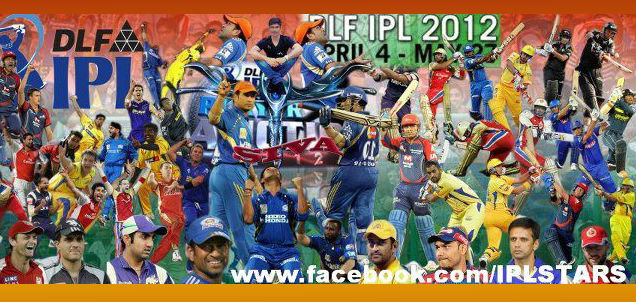
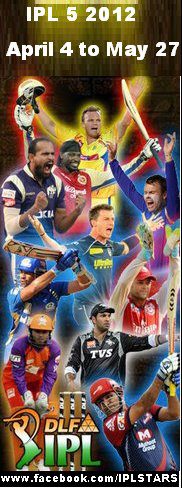
    Image courtesy: http://www.facebook.com/IPLSTARS

  • Will IPL 5 ratings match those of earlier seasons?


    By Johnson Napier


    The Indian cricket team’s performance over the last year has left much to be desired. Having suffered humiliation at the hands of several opponents and having failed to pep up ratings with their cricketing prowess, it was a telling sign that all was not going well for the men in blue who were crowned World Champions just about a year ago. Had such a downfall in form gripped any other country, it would have attracted the wrath of the fans that would’ve boycotted the sport by staying away from the game even if it meant empty stands (in stadiums) or viewership ratings on television taking a plunge.


    But that is precisely what is different about India, especially the bond that its people share with their favourite sport – cricket. Lose or win, big score or small score, there will always be a legion of fans who will continue to stand by the sport (and their idols), and be there in good times and in bad. This probably even sums up BCCI’s recent move in selling the broadcast rights of Indian cricket to Star Group for a staggering Rs 3,851 crore for a period from 2012-2018. One can only empathise with the broadcaster who now requires to come with a foolproof strategy that would see it recover revenues and also arouse curiosity levels amongst advertisers. But that is for later. For now, all eyes are on the most-anticipated tournament – IPL, that kicks off from April 4, 2012.


    Not wanting to take sides and given the string of ups and downs surrounding cricket in the recent past, experts are opting to play it safe and are predicting viewership ratings to be at par or slightly lower than the past year. In a sense, this augurs well for the wellbeing and popularity of the sport given the uprising it has faced in the recent past particularly with brands many of whom have opted to stay away from the event given the high costs being quoted for a 10-second ad. Also, the fact that a few franchise owners were left in the lurch awaiting divine intervention from the BCCI and with big players not being picked up by stake owners during the bidding process didn’t help solve matters either. And so while an average rating of 3.5 was what IPL managed to throw up in its fourth season, experts predict a somewhat similar rating for the fifth instalment too.


    Avg. Viewership of all IPL Seasons
    Tournament Number of Matches Avg. TVR
    IPL Season 1 59 4.81
    IPL Season 2 59 4.17
    IPL Season 3 60 4.65
    IPL Season 4 74 3.5


    Viewership of first match of all IPL Seasons
    Tournament First Match TVR
    IPL Season 1 L/T DLF IPL T20 KKR/RCB-BG 7.19
    IPL Season 2 L/T DLF IPL2 T20 MI/CSK-CT 5.09
    IPL Season 3 L/T DLF IPL3 T20 KKR/DC-NM 5.86
    IPL Season 4 L/T DLF IPL4 T20 CSK/KKR-CH 7.14

    (Source: TAM Peoplemeter System / Market: All India / TG: CS 4+)

    * In IPL 1 one match was abandoned due to rain

    * In IPL 2 two matches were abandoned due to rain

    * In IPL 4 one match was abandoned due to rain


    According to data from TAM Sports for season 4, the inaugural match between Chennai Super Kings and Kolkata Knight Riders had notched up a 7.14 TVR in the all India market for CS4+ (refer table for data). The number was much higher than what the previous seasons had managed to notch up. But despite the number of matches being increased to 74, the tournament managed an average TVR of 3.5. For season 5, while the tournament average is touted to stay the same the opening day numbers are estimated to be below par than the previous year. Asserts Anita Nayyar, CEO India & South Asia at Havas Media: “There is some commonality in the average ratings that season 5 is expected to throw up from the previous year but where for the opening day numbers are concerned, it could fetch a TVR of 5 or so.” Elaborating on why the numbers would not be as high as the previous years she said, “If you see, there has been an overdose of cricket in the past one year leading it to be a cricket-heavy year for team India. This has resulted in some form of fatigue setting in amongst the masses. The fact that a host of advertisers have opted to stay away from the event this year further signals the plight of the event in the days to come. But one could look forward to the event garnering an average rating of 3-3.5.”


    Echoing a similar sentiment, Nandini Dias, COO – Lodestar UM said that this year could be one of the bad years for the event where ratings are concerned. “The average ratings have been slipping over the years and would hover around the 3-3.5 mark this year. But what is more concerning this year is the way the advertisers have been treated despite trends suggesting an expected downfall in ratings. With such exorbitant rates, most advertisers have preferred to stay away from the event.” On the opening day numbers to be expected from the event, Dias said, “The buzz around the event this year has been surprisingly low and much of this may have to do with India’s dismal performance in the year gone by. I expect lower opening day numbers compared to last year given the low decibels around the event. Even the sale of tickets is low-profile with many preferring to stay away from making a purchase.”


    So while a dip in numbers is what is forecast, it would be interesting to see how the broadcasters play up the viewership numbers game as there is a slight change in the opening day schedule of the event. While in previous years, the opening ceremony was followed by a match on the same day, this year the organizers have split the two for separate days. Explains Jai Lala, Principal Partner – The Exchange, Mindshare: “Last year and in the previous years the opening ceremony was followed by a match being played on the same day and the number as such was high but this year there would be a difference in the numbers as the opening ceremony and the match have been separated from each other. So just the ratings from the opening day of the match per se, I would say it would be marginally low but as suggested that is due to the splitting of events. We’ll have to watch how the broadcaster plays up the numbers.” In fact according to Lala, “Season 5 may have an upper hand where the average ratings are concerned as one, there was no World Cup like last year that resulted in fatigue amongst viewers and also the fact that a lot of teams were in a sense rehashed last year resulting in small drop in ratings. But that shouldn’t be the case this time around; hopefully the ratings could be better than what was last year.”


    Preferring to stay optimistic, Neelkamal Sharma, COO – Buying of Madison Media Group is hopeful of the event managing a good opening in terms of ratings. And his supposition stems from the fact that the “general public’s mood being low due to economic slowdown/ scams/inflation etc hence they may look forward to watch something more entertaining and something that will drive away their attention from regular news.” As for the average numbers per se, he expects the numbers to be somewhat similar to last year +/-5-10 per cent.


    Having faced the heat last year for reporting a drop in viewership numbers that was backed by an unwarranted hike in ad rates, MSM would probably have to come up with some magic formula that would see them gain their way into the hearts of the viewers and naysayers too. It may help that the reach numbers for the tournament are estimated to be 8-10 per cent higher than last year due to rise in C&S households but the question is: will the viewer cling on to see the event complete the journey in its entirety or will he (or she) quit midway resulting in depleting numbers than previous years? The ball, for now, is in MSM’s court.


    Image courtesy http://www.facebook.com/IPLSTARS

  • Is the serial woman tellying it like it is?


    By Ritu Midha


    About a decade ago, we saw the emergence of Tulsi, Parvati and Kussum. Strong protagonists – but all of them set in more or less the same socio-cultural setting, grounded in traditions but fighting against the evil (another woman in most cases) trying to tear their families apart.


    Cut to the present-day GEC. The protagonist is stronger, and differentiated. She is no longer just about pacifying the mother-in-law, and mothering her growing-up children. She is aware, educated, has a mind of her own, and she speaks it too. She has the spunk, and many a time, she takes the lead in decision-making. To put it simply, she does not wait for someone to save her, she is fully capable of doing the saving. And in between all this, she has a heart too, and dotes on her family.


    There is a Pratigya fighting against the issues in her own house – a decision maker in Allahabad; there are working or aspiring-to-work women in quite a few soaps – among them Kuch Toh Log Kahenge set in Lucknow and Afsar Bitiya with a Bihar backdrop. There also is a Hitler Didi, where the protagonist, living in Delhi, is the master of the house, and of course Balika Vadhu and Diya Aur Baati Hum (both set in Rajasthan), which propagate women’s empowerment in the rural and semi-urban areas.


    Is it an accurate reflection of the real Indian woman, or are these shows akin to the funhouse mirrors that exaggerate certain parts of our collective reality? Even if it does exaggerate the social consciousness, it definitely provides an example for those women whose staple diet of entertainment is still the Hindi GEC.


    States Anamika Mehta, COO, Lodestar Universal: “Undoubtedly media, at an overall level, influences society and television has a huge role to play in that sense. While at some level, some shows and protagonists do play a role in sounding a wake-up call or instilling confidence, courage, and independence of thought, they thereby create followers or loyalists. However it’s more of media mirroring society on television essentially – witnessed for instance in the shift from ‘saas bahu’ soaps to the current lot.”


    While the woman protagonists are bolder and more intelligent now, the socio-cultural cauldron from which they emerge varies from show to show. The reason, of course, is increase in purchasing power of women across middle India – Madhya Pradesh, not a favourite setting for television serials till some time ago, suddenly finds itself as the backdrop for a number of soaps. Is the appeal of these shows universal or does it appeal to audiences in a particular geography? States Nandini Dias: “The traditional shows like Uttaran and Balika Vadhu do find better resonance in smaller towns while the talk shows like Oprah Winfrey or Barkha Dutt show a skew towards metros. The shows which do well across all towns are usually love stories like Kuch Toh Log Kahenge.”


    However, Shubha George, COO, MEC, South Asia, believes that in case the objective is to target a specific audience profile, a lot more needs to be done in this direction. She states: “Indian TV shows are fairly homogeneous and cater to a pan-India audience in most instances. I cannot think of any particular example that is more popular in metros because of a bolder woman character. Rather, this is a concept which is yet to be experimented on by Indian TV shows for mass audiences.”


    Many of these shows depict subjects like second marriages, domestic violence and other women-centric issues, but do they manage to send a message across to society? As per Anamika Mehta: “Frankly it’s little to do with evoking social consciousness and more to do with experimentation with new audiences, new generation, different content and eventually eyeballs. While many of these shows initially kicked off with a social idea and an attempt to rouse audiences, eventually, given the eyeball battle, they turn more into trials and tribulations of a woman with plot twists and turns.”


    There is a conscious attempt at creating a protagonist who wants to change the world, who would capture the attention and imagination of young women. Are these shows with the new realistic woman favoured by certain brands – or it is only TRPs that matter in the end? States Ms Dias: “Media planning is called a science and an art for exactly these reasons. Media planners do look at data , quantitative parameters. But finally when they take decisions they need to predict the future of how a show will do in the future. So the qualitative factors need to be considered too. In fact with the number of brand integrations that are done, it is detrimental to a brand if they do these brand integrations without understanding the content and relevance of the show.”


    Ms Mehta too states that brands do look at the content of the show, however, many times the storyline changes in chase of TRPs. She says, “Only if the brand’s personality is in sync with the show do they look at doing show exclusive deals. Very often the shows digress/change/derail chasing eye balls which often could defeat the rationale for association.”


    On India’s wide-ranging social canvas, there are many Indias, and the psychographics change not only from New Delhi to Basti, but also from Defence Colony to Rohini. It is not easy to depict the myriad colours of the Indian woman. However, the effort is being made towards being progressive, covering a broader spectrum, and bringing to the fore social issues that women in particular face. Does it matter that it is for the sake of eyeballs, or to get more advertisers on board, if the issues are addressed in the end?


    INDEX
    Success mantras from media captains
    All work and some play
    Riding the creative crest
    Holding up the managerial sky
    Celebrating the difference
    Managing Middle India’s Golden Lady
    Wooing vibrant India’s Wonder Woman
    Rural women – how strong is their ‘spending say’?
    Is the serial woman tellying it like it is?


  • MSM hits the ball hard for Six

    By Rishi Vora


    It’s been about two years since it was first heard that Multi Screen Media Pvt Ltd (MSM) will launch a sports channel. The wait is finally over as the channel was launched on April 7. This is MSM’s sixth channel – one of the reasons why the network chose ‘Six’ as its brand name.


    The TG for Six is skewed slightly towards the younger lot of sports fanatics and the first phase of the content plan is to  make most of the Indian Premier League’s five editions and evoke special interest among fans to watch non-cricketing sports such as mixed martial arts, basketball, badminton and football. Its main property, to begin with, is Ultimate Fighting Championship (UFC), a martial arts contest that has more than 30 events globally. The next season of IPL will be aired on Six.


    The channel will reach out to 80 million homes on DTH and analog platforms in India with a reach of 20 million in phase 1.


    Six is being promoted heavily on network channels and the on-air biggest cricketing property, IPL. Quite surprisingly, the channel has not gone for a 360-degree marketing blitzkrieg – the usual strategy adopted to support the launch. It is learnt that outdoor and radio will subsequently follow promotions on TV.


    If one looks at the sports broadcast arena as is currently placed, it makes an interesting read. Neo Sports and Ten Sports are facing a tough time sustaining business. And, of course, the fact that IPL was running on a sticky wicket as far as sponsors are concerned, tells the story – that advertisers feel there’s no point investing big monies where the returns are not very good. Plus, the recent development of Star winning the BCCI rights… something which MSM was eyeing to provide that much required impetus for the new channel, is a sure-shot big miss of opportunity.


    “We have the IPL and as we move along, we hope to acquire more rights,” said NP Singh, Network COO. He confessed that the BCCI rights was an opportunity missed, however, he also said: “It was in our long term interest to launch a sports channel. We had been talking about it, so it wouldn’t have made sense to further delay the launch just because we did not win the rights to broadcast Indian cricket.”


    According to a senior media planner who wished anonymity, the launch of Six has happened at a time where it may not be easy for the channel to make a mark. “Cricket is the only sport India loves. Besides IPL, Six doesn’t have much to offer. Also, there isn’t much left as far as rights are concerned, so the channel will really have to do well on non-cricketing sports, which is a big challenge in a country like India.”


    Ms Basabdatta Chowdhury, CEO, Platinum Media is of the opinion that though the channel might face many roadblocks, in the end it’ll be a sustainable business. “I think there is space for one more sports channel. It depends on what kind of content they bring to the channel. Football is quite popular in some sections of the country and they will look to target them. Similarly, other sports which have their specific audiences in the country. If the channel does well in targeting these niche sections, it’ll sustain. And of course, they have the IPL and the New Zealand board for cricket lovers.”


    Mr Anwesh Bose, Senior Vice President, DDB Mudra Max offers a similar view: “MSM has made very good profits this year and that would give them muscle to gain rights from other cricket boards around the world, they already have the New Zealand Cricket rights. In addition, there is football and a few other sports to look forward to. With the new channel, new vistas would open for Sony and given their past successes, they can surely make a profitable venture out of the sports channel.”


    He further added: “They still have five years of IPL left and they will make good use of it.”


    Overall, there are mixed reactions on the prospects of MSM’s new channel, Six. One major worrying factor is that there aren’t many rights left to be acquired, and those which are, are available at exorbitant prices, making sports broadcast a challenging business.


    As the Network’s COO mentioned, every time they’ll (channel execs) step out to get the much important rights, the attempt will be to go for a six.


    Time will tell how well they hit the ball.