Category: TV

  • Can telly newbies score with biggies around?


    By Dhara Salla

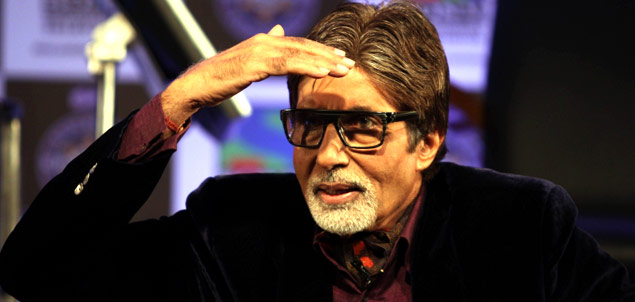
    Whenever one thinks of Antakshari on Zee TV there is only one face that comes to mind: Annu Kapoor. Or it’s Sonu Nigam for Sa Re Ga Ma. Fast forward to today, and the story is much the same – the big faces on television have always helped audiences to connect and reinforce the recall value. Today, all the channels have either celebrity hosts or celebrity contestants, be it the Big B Amitabh Bachchan in KBC, Salman Khan and Sanjay Dutt in Big Boss, Akshay Kumar in Khatron Ke Khiladi, Mithun Chakraborty in Dance India Dance, Madhuri Dixit in Jhalak Dikhla Jaa… and the list goes on. In the reign of big faces, the question to ask is, what is the scope for newcomers and can a new face create the same magic?

    Ms Anita Mookerjee, GM, Mediacom, said, “It depends on the newcomer and the format of the show. However, a big name is most often successful. In most of the cases the celebrity, along with the mass appeal, also has the ability to engage and enthrall the audience. Amitabh Bachchan is an icon, a legend people can’t get enough of.” She further adds, “Salman Khan has a unique mass appeal, he was media elusive for a long time and it was the fact that the audiences were getting to see a more personal side of him which worked to the advantage of the show. Akshay Kumar took Khatron Ke Khiladi to a different level; the same show as Fear Factor didn’t really click.”

    Mr Jamnadas Majethia, MD, Hats Off Productions, says, “No, I don’t believe a newcomer can create the same magic as the big stars. The life of a reality show is limited to about three months or 12-14 episodes. So it would take time for a newcomer to get established. By the time they reach the third or fourth week the viewers would have already shifted their loyalties. The pull that a Hrithik or any celebrity like Madhuri can give, nobody else can give.”

    Industry pundits’ views seem to reflect that a newcomer cannot create the same magic that big names and faces can. An established celebrity with an X-Factor, hence, can add more to the flavour of the show than a newcomer can. Having said that, the success of reality shows depends on influences such as the celebrity quotient, programme promotions, the channel on which the programme is telecast, controversies and PR, and lastly the concept.

    We may remember that Shahrukh Khan, Abhishek Bachchan, Genelia D’Souza and R Madhavan were also hosting shows which did not do well and were taken off air, so the success of reality shows depends not only on the celebrity but also on other things. There is more to it, as Rajendra Dwivedi, Vice President, Starcom Worldwide, Mumbai, explains. “Emotional stakes are more valuable than financial stakes. A real life credible drama or story of the participants works better than prize money. The format has to be engaging and good talent scouting should be undertaken. Then the celebrity host can build on these factors.”

    On Indian television, where there are celebrity hosts there are also celebrity participants on the other side. Examining the question of which one works better, Ms Mookerjee says, “Celebrity participants definitely work; we see spikes in episodes with celebrity participants.”

    On the contrary Mr Majethia says, “The shows with celebrity anchors or judges work better but not really the shows with celebrity participants. Celebrities should be there as they add a lot of value to the content. There is a lot of fresh talent, and because of these celebrity hosts they also get some mileage.”

    When almost all the reality shows currently on television include celebrities, then how does the TG differ? According to Mr Dwivedi, the TG of the reality show depends on the format of the show. Hence, for KBC it will be all individuals but for Emotional Atyachar it will be youth and for Khatron Ke Khiladi, it will be males.

    The big faces have been ruling the roost on the small screen for a long time in the reality show format. What is more interesting, however, is that the emotional storytelling and the HSM focus has added to the success of shows as it helps with audience connect. That’s something for media planners to note.

    Photograph: Fotocorp
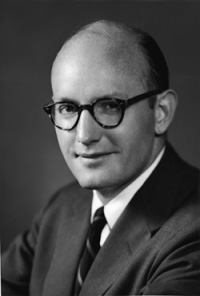
  • AC Nielsen Jr, father of TV ratings, passes away

    By A Correspondent


    As someone pointed out on his Facebook status, had it been any other day, he would have got more obit notice. One could say significant notice. For, Mr Arthur C Nielsen, Jr, who passed away on October 5 is indeed the father of television ratings.

    Here’s a press statement taken from the Nielsen site:

    October 5, 2011 — It is with great sadness that Nielsen learned of the passing of Arthur C. Nielsen, Jr.  ‘Art’ Nielsen was an early pioneer of the global information services industry, dedicating his life to investing in innovative ideas to understand and measure consumer purchasing and viewing behavior.

    During his tenure as President and Chairman of Nielsen, Art’s passion and tireless commitment to helping industries better serve consumers led to the creation of many innovations we all rely on today, including consumer and performance surveys, market share, department and food index, and television ratings to name a few.

    Throughout his life, Art was a strong supporter of the Chicago Food Bank, the Museum of Broadcast Communications in Chicago, the Arthur C. Nielsen, Jr. Campus of the North Shore Senior Center in Northfield, Gertrude B. Nielsen Child Care and Learning Center in Northfield, the A.C. Nielsen Center for Marketing Research at the University of Wisconsin, the Arthur C. Nielsen Jr. Research Professorship of Parkinson’s Disease and Movement at Northwestern University’s Feinberg School of Medicine, and the Nielsen USTA Pro Tennis Championship.

    Nielsen expresses its profound appreciation and gratitude for Art’s leadership and his legacy, which we proudly continue. The thoughts and prayers of our 34,000 associates in more than 100 global markets are with the Nielsen family at this time


    In India, other than its presence as The Nielsen Company, the television ratings research is conducted by TAM Media Research, a joint venture between Nielsen Company & Kantar Media Research.


    Picture: Nielsen.com

  • G Krishnan moves on

    By A Correspondent

    A mail from Mr G Krishnan yesterday morning took his industry friends by surprise. It said he was moving on, but had no mention of his next destination.

    Mr Krishnan’s departure from TV Today Network happens after a long and productive stint of 16 years. At the time of putting in his papers, he was Executive Director and CEO of the media giant.

    In an internal communiqu, Mr Krishnan simply stated, I write to inform you that I have decided to move after 15+ years from my current role of Executive Director & CEO, TV Today Network Ltd., to pursue new opportunities. He further said, In view of the above, I would like to relinquish my position as Vice President and Board Director – IBF and also the Chairmanship of IBF-AAAI subcommittee. However I am always available for any industry-related issues. I would like to take this opportunity to wish IBF and the sub-committee all the best.

    Meanwhile, India Today Group Chairman & Editor-in-Chief Aroon Purie stated in an internal communication, This is to inform you that G Krishnan (GK) has resigned from the services of the company with effect from September 1, 2011. All his direct reports will report to me until further notice. I would like to place on record my appreciation for his immense contribution in making TVTN a leading news broadcasting company of the country and AajTak, India’s foremost news channel in Hindi, right from its inception.

    Mr Krishnan’s stint with television began in the mid-1990s, with the introduction of the daily TV news bulletin Aaj Takon Doordarshan. Krishnan played a key role in launching Aaj Tak as a news channel. TV Today Network today runs news channels Aaj Tak, Headlines Today, Delhi Aaj Tak and Tej.

    Before the TV Today Network, Mr Krishnan worked with Bennett, Coleman & Company as the head of its marketing and sales departments. At BCCL too, he was credited with many firsts, among them Times FM.

  • MSM pumps up the volume with new music channel

    Multi Screen Media (MSM) is all set to launch its music channel, Mix, on September 1. Promoted as a pure Bollywood music channel, Mix will play songs not only from contemporary cinema but also the earlier decades, appealing to a wide audience spectrum.


    It is after a five-year gap that MSM is launching a channel  the last one was Sony Pix in 2006. Reflecting on the reason for launching a channel at this juncture, that too a music channel, NP Singh, COO, MSM said, We wanted to first advance our existing channels, and then launch the music channel. Now that Sony is number two in the GEC space, and SAB, Max and Pix too are doing very well, the time is just right for the launch of music channel. He added, As a network, we have seen tremendous growth this year. There has been viewership and revenue growth in every quarter.


    Music, Mr Singh believes, is a natural extension of the MSM bouquet of offerings. Mix primarily plans to cater to the core target group of 15 to 24, as the youth consume maximum music. However, the channel will also target adults in the age group of 25 to 44, the section which, Mr Singh stated, is largely underserved when it comes to music on television.Thirty percent of the programming on Mix will be targeted towards this group.


    The channel will have theme-based programming through the day, playing different types of music. For instance, Arziyan will feature devotional songs at 7am, Ishq- Vishq will have softer love songs from noon to 3pm, and Music Madness with faster numbers will be from 6pm to 8pm.


    Alleyah Asgghar, Vice President and Head Programming at Mix, said that scheduling on the channel is a result of mood mapping research conducted by MSM, combined with the network’s learnings from viewership pattern on its other channels.


    Answering questions on the key differentiators that the channel would have, Neeraj Vyas, Executive Vice President and Business Head, Max and Mix, stated, Though the content on a music channel cannot be unique, Mix will showcase good quality music in an uncluttered environment. It will have factoids about music similar to what Max has about movies.The channel, he said, would have a large library of songs to reduce the number of repeats.


    At the moment, average time per viewer on a music channel is 25 minutes. As Mr Vyas remarked, it is important to not only get more viewers to the channel, but also to keep them engaged and increase stickiness.


    The channel also plans to have user-generated content on the channel wherein the users can send in their stories and the channel will play related songs.


    Mix, Mr Vyas said, would be on all distribution networks in the duration of a month.

  • India Shops Online is thrust of HomeShop18.com’s new campaign

    Shopping for the Indian consumer usually means in-store  but with e-commerce gaining ground, HomeShop18.com has unveiled its new television commercial, called India Shops Online.


    The TVC is built around the idea that the e-commerce portal delivers the best brands at great value, and emphasizes the click of a button concept visually as well as in the audio.


    Announcing the launch of the new commercial, which is produced by Cell18 under the direction of Zubin Driver, the company shared some key statistics: 300 percent growth in traffic over the past 12 months, six-fold growth in online shopping revenues and nearly 30 percent repeat customer base.


    In creating the commercial, the brand has taken care to introduce the modern within the context of the traditional in the Indian household. The commercial also captures the instant nature of e-commerce shopping, and reflects the growing stature of homeshop18.com in the category.


    Commenting on the commercial, HomeShop18 CEO Sundeep Malhotra said, This commercial is reflective of our deep focus on the e-commerce domain and is meant to accelerate the growth of the e-commerce category and of homeshop18.com as a consequence, being the clear leader. In this commercial you will find a clear leader-like tonality and a deep association of e-commerce and homeshop18.com.


    The TVC, the first in a series, has been produced in a 30-second format with 15-second versions to follow, and more commercials are scheduled to be produced under the Indian Shops Online theme.


    HomeShop18 has recently been in the news for having acquired a books e-tailer called coinjoos.com and also for raising funds worth Rs 100 crore.

  • A pinch of cynicism, please!

    Instead of raising awkward questions, theIndian media went along — and encouraged — with the wave of emotionalism which took over some of the country during Anna Hazare’s anti-corruption campaign… introducing a new weekly column by Editors tracking news across the country
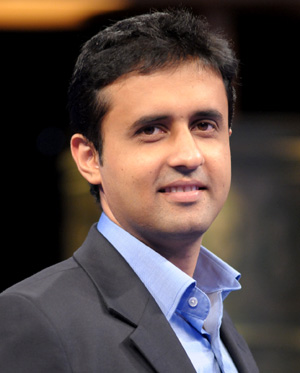
    By Aroon Tikekar

    It is distressing to see the Indian media print as well as electronic- going berserk at the slightest provocation. Has the constant fear for survival affected the healthy vision of the Indian media? Why have the tried and trusted tenets of the profession been disregarded, intentionally or otherwise? These are some of the questions that demand a discussion.

    First and foremost, do the new brand of journalists sincerely believe that a demonstrative approach to solving social problems can and does help? Coming out on the streets shouting slogans can highlight political issues. Pressure put on the powers that be may help hasten a political process. But mere highlighting of social issues does not ensure their solution, as essentially it requires a change in social mind. Obviously journalists are not so nave as to believe that the Anna Team is not going to wipe out corruption from the Indian scene at one go. Then why did they not educate their readers or viewers to doubt the efficacy of any such attempt? Without a pinch of salt called cynicism, media ceases to be the Fourth Estate in a democracy.

    Indian media should raise awkward questions on the right occasions. Joining the bandwagon would have been considered in the past as bad journalism and an affront to the calling. The editors do have a right which is ex-officio to criticize the high and the successful. Reporting on the news and analyzing it for the benefit of readers or viewers as the case may be, is one thing and creating news by emphasizing unimportant aspect and commenting on it is another.

    Today’s Indian media, while fighting a battle of survival, is creating news unworthy of reporting and repeating it ad nauseum, much to the chagrin of readers or viewers. Supererogation of emotion has become willingly or unwillingly the hallmark of our electronic channels, but why should the print media too compete with the electronic media in sensationalizing or pandering to emotions? Whenever we, the people become victims of emotionalism in any large democracy, it becomes the prime duty of the media to educate them. The gullible masses are prone to seek and expect miracles to happen and can easily be tricked into accepting an apparent solution. The media has to come out to warn that miracles are not possible by emphasizing need to be cautious, even cynical of quick successes.

    Secondly, it may sound strange but the media, by definition, is supposed to be critical and is duty bound to take a negative stand by pinpointing weaknesses and lacunae in any proposal or happening which the gullible and innocent person may accept without complain or questioning. Social responsibility is nothing to be ashamed of. In fact it is expected that a newspaper editor or channel editor be so detached from the theatre of activity that he should be able to swim with ease against even torrential current of people’s emotions. The editors should not ride waves of emotionalism. Such objectivity is a pre-requisite in journalism.

    Thirdly, why do the media fail to grapple the historical fact that a political revolution is possible almost overnight but there cannot be a social revolution? Social change can take place only on evolutionary lines. History has shown us time and again that change for the better by slow absorption, not by convulsion, but by assimilation this is the only formula for social change. There are no short cuts to social change, no miracles, and no magical remedies.

    The same newly cropped up weaknesses were displayed by our journalists when the Anna phenomenon was taking shape in Delhi. Society should have been warned that wiping out corruption is not an easy task. Team Anna has only made a beginning. The entire country is aroused and is up in arms against corruption. All these are good signs, but nothing much per se is going to be achieved by the mere introduction of Anna’s Jan Lokpal Bill in Parliament. The roots of corruption have reached deep within our system. Again, on the issue whether the electorate is sovereign or the Parliament, the media should have brought out that our Constitution-framers have taken care to see that no section enjoys absolute sovereignty.

    Even while appreciating the novel idea of distributing caps with I am Anna written on them, the media should have warned the agitators about the limited use of such symbolism. It was on the contrary seen going overboard and was quick to call Anna Hazare as the Second Gandhi.

    The catapulting of Anna Hazare into a national figure is largely the media creation. Media is responsible for creating his larger than life image. One is not even sure whether he has the qualities of a national leader. But media called him as the second Gandhi. Let’s face it. To compare Anna with the Father of the Nation is a cheap gimmick. Comparison of the two is odious. Anna lacks vision. He also lacks wisdom, one doesn’t even know how much the Gandhi literature he has read. The original Gandhi did not even approve of the ways of revolutionaries as he believed that to assassinate is the highest kind of censorship, but Anna does.

    Aroon Tikekar is former editor of Loksatta

  • Voice for Imagine TV

    By Dhara Salla

    After Colors with Bigg Boss and Sony with Kaun Banega Crorepati, it is the turn of Imagine TV to come up with a big-ticket reality performance show – The Voice. The Voice is an American reality talent show based on the reality singing competition The Voice of Holland, created by Dutch television. MxM India talked to Mr Nikhil Madhok, Senior Director Marketing and Communications, Imagine TV, about the show and what it means for Imagine.


    Q: Imagine already has a great new lineup of content; why did you feel the need for this big-ticket?

    One of the things we are trying to achieve is a good balance with fiction and non-fiction. We are revamping and refreshing the line-up of our show. We got our fiction shows line-up in place and it was the time to start the phase with non-fiction. Imagine TV has done a lot of reality shows like Rakhi ka Swavamyar, Shaadi Teen Crore Ki and Pati, Patni Aur Woh, to name a few, but had never tried a talent show. If you talk about Nach Le, it was a differentiated concept with Saroj Khan teaching the contestants to dance. Therefore, we never had a talent show per se, and The Voice is it.


    Q: Tell us about the show.

    The Voice, which will start in January 2012, actually has a differentiated concept, we are not saying it just for the sake of it. We will have blindfold auditions; the judges will be blindfolded and will select the contestants only on the basis of the voice. The contestants cannot influence the decision of the judges with their looks, crying or an emotional sad story. Beyond this, there will be involvement of the coaches. There will be four teams, with 14 contestants per team and every week the coaches will only select the good and the bad from their team. With The Voice we want to ensure that the final talent will be a superlative talent. The auditions will go to 12 cities – metros and important states where we can pull the maximum talent. It will be positioned in cities where people can easily drive down to the location.


    Q: Why an adoption of the international format, why not original?

    If you see Imagine TV has already experimented a lot with original shows such as Rakhi ka Swayamvar and Shaadi Teen Crore Ki, and we thought that it is the right time to get this show on board. We did not want to experiment at this stage. The Voice has already been a successful show in other countries and its rating has proved it. This format has already been syndicated in 25 countries. It has proven itself in markets and the strength is the format of the concept.


    Q: What is the show’s budget? We hear it is a big number…

    (Laughs) If I tell you the budget then I will have to resign from my job. But I can tell you that we have invested a lot in this show and it is a big ticket in real terms.


    Q: What part of the total budget will be allocated to marketing?

    We are going to do a heavy marketing campaign and about 20 to 25 percent of the total amount of the budget will be dedicated to marketing.


    Q: How will the marketing campaign be distributed, and what is the strategy?

    It will be distributed among different phases. The first phases will be the call for entry, second will be about educating the viewers to know how the show is different and talent matters, third will be the launch campaign. The show will run for 12-14 weeks and we will be marketing throughout the time the show is on air. The campaign is still in progress and we will come out with it once everything is finalized and things fall into place.

  • History launches with innovations blitz

    By Dhara Salla

    The History Channel launched its India edition on October 9 as part of a joint venture between TV18 and A+E Networks. The launch is a significant milestone in the Indian media space as it marks an alliance between dynamic television media conglomerate TV18 and factual entertainment biggie A&E Networks.

    Mr Raghav Bahl, Founder and Editor, TV18 said on the occasion of the launch, “We have always believed in making a difference in the domain that we work in and we believe that factual entertainment will emerge as one of the mainstays of the Indian television space.”

    Mr Haresh Chawla, Group CEO, Network18 said, “We believe that the Indian market is ripe for alternative formats and that is one of the reasons for us to bring in channels like History into this market. Factual entertainment is emerging as the new preferred choice across the world and the genre has the potential to become mainstream in India as well.”

    Ms Sangeetha Aiyer, General Manager Marketing, History, told MXM India, “By far this is one of the biggest media launches in the year and most definitely the biggest in the factual entertainment genre, in terms of impact, visibility, engagement, etc across traditional and new media.”

    As a channel, History has transformed itself by using very innovative formats that move away from the traditional concept of History being about dates, B&W footage, World War II etc. That DNA of innovation is being replicated everywhere including the marketing campaign. According to media reports, the marketing spend would be between Rs 150-170 million.

    The string of innovations began with the channel announcing its association with Bollywood star Salman Khan to be the face of the channel in an attempt to broad-base the appeal of History and the factual entertainment genre.

    In terms of Outdoor or Out of Home, innovative formats where the content seems to come alive and appear real will give passersby a first-hand taste of what History is all about. Some examples of engaging outdoor innovations are the Ice Road Trucker bridge replicated on a foot overbridge, Sliced where the anchor actually seems to ‘slice’ the hoarding, Swamp People, which has a brilliant life like cut-out of a crocodile/alligator, and Top Shot where smoke actually comes out of a gun which is part of the hoarding.

    On the programming and the content front, History channel has found out that Indian viewers across demographics are interested in experimenting with alternative forms of content, as far as the entertainment quotient is not compromised upon. The channel is being launched with universal themes that use the premise of history.

    Ms Aiyer said, “It will also announce a few big-ticket local productions that match international scale, very shortly.” The major chunk of the content is currently from the History US catalogue, with an appeal to viewer preferences in India. However, the channel is also experimenting with local production possibilities.

    How would this channel differ from the existing ones in this genre? Ms Aiyer said, “Firstly there is no other History channel in the country. History Made Everyday, the channel’s new positioning, encompasses the breadth of content and themes that History brings to Indian audiences. History here is not just about the past, it’s as much about people making History today.”

    AETN and Network 18 have come together as AETN 18 where Network 18 group holds 51 percent share and AETN holds 49 percent.

  • Media tigers roar back at Minister Soni


    By Ritu Midha


    Rewind to Anna Hazare’s Anti-corruption Movement. A senior Congress minister had then reportedly stressed on the need to curtail exaggeration in media reports.  News editors had expressed anger and dismay when MXMIndia spoke to them.

    Read Will Anna Wave Link to Media Curbs? Link to: http://www.mxmindia.com/2011/09/will-anna-wave-lead-to-media-curbs-2/

    However, the Government did not really take any such measures – and all was well until Friday, Ocober 7, 2011. (see MxMIndia disclosure below)

    A proposal for amendment In Policy Guidelines for Uplinking/Downlinking of TV channels has been approved – and among other things this approved proposal  states,

    ‘Renewal of the permissions of TV channels will be considered for a period of 10 years at a time subject to the condition that the channel should not have been found guilty of violating the terms and conditions of permission including violations of the Programme and Advertisement Code on 5 occasions or more.’

    Read the approved proposal here.( http://pib.nic.in/newsite/erelease.aspx?relid=76506)

    Broadcasters are up in arms. Mr Sunil Lulla, CEO & MD, Times Global Broadcasting, told MxMIndia on Sunday: “The new guidelines have come as a shock.  More so, because the self-regulatory guidelines of the News Broadcasters Association (NBA) have been shared with I&B Ministry. One had never thought such guidelines could be brought in.”


    The NBA members too have collectively taken a strong objection to the guidelines.  A statement issued by Ms Annie Joseph, secretary general of the apex association, says: “Firstly there is no such requirement under the existing Uplinking and Downlinking Guidelines for renewal. Secondly, there  certainly cannot be any power vested in the MIB to cancel or “refuse to renew” a broadcaster’s license on their subjective view that a television channel has violated the terms of the Uplinking and Downlinking guidelines or the provisions of the Cable TV Act.”


    It further says, “The NBA urges the Government to urgently review the regressive decision which would be anathema to the constitutional framework of our country. NBA is seeking an urgent appointment with Ms Ambika Soni, Hon’ble Minister for I&B, to explain and clarify the concerns of NBA.”


    And here comes the twist in the tale. An unnamed person from the I&B department expressed surprise at the protest, saying that the government had in fact increased the number of violations from the present three to five.

    However, news broadcasters do not believe that the government has the right to decide on what makes for public interest and what does not. Says  Mr NK Singh, General Secretary, Broadcast Editors’ Association, “How will the government decide what is in public interest. Section 19 of the Indian Panel code, that speaks of Freedom of Expression, does not give the right to the government the right to decide Public Interest. The Government has no right to punish – for that we have the judiciary in the country.  No bureaucrat can decide content code. “


    When asked should the BEA not be happy considering that actions would now be taken after five violations instead of three earlier, Mr Singh states, “Well, did the government say that media has been doing a good job – and so the limit has been extended?  What the government is doing is against the constitution.”


    The guidelines are a reason for concern for existing players:  what about the channels, which already have five or more violations against their names. Is it a cause of concern for them, or would the slate be wiped clean now – and the violations counted effective today. Read the complete list here: http://mib.nic.in/writereaddata/html_en_files/content_reg/OrdersWarningsAdvisories.pdf)


    While news channels are leading offenders, GECs are not far behind. There are also cases of all news channels being pulled for the coverage of the Mumbai terror attack. In the case of GECs, the objections have been both on programming and advertisements.


    Does this mean that news channels will always be subjected to the whims of the government? The Broadcast Editor’s Association is definitely seeing red. Mr Singh states, “Content is jeopardised by the government. Does it mean that self-regulation by broadcasters has no value? ”


    Mr Singh adds: “There would always be a threat – and more so after the fourth notice. It is not practical and none of the broadcast bodies have been consulted.  It is all the more unfortunate because it has come at a time when Indian media is doing its best. BEA strongly criticises the new guideline regarding content – it is against civilian law. The government must desist from such measures.”


    Both the Indian Broadcasting Federation (IBF) and News Broadcasters Asscoation (NBA) have regulatory structures and complaint cells. Channels also carry announcements at frequent intervals inviting viewers to lodge complaints, if any. And then we have the Advertising Standards Council of India (ASCI), the watchdog for advertisements, which has been a reasonably active player for over 25 years. The new guidelines make all of these bodies in a way answerable to the cabinet committee (or Electronic Media Monitoring Centre).


    The NBA statement sums up the concerns of the fraternity:

    “Most importantly, the proposed modification of the Uplinking and Downlinking guidelines is a direct assault on the self regulatory regime put in place by broadcasters, which has been encouraged and recognized by the MIB. Such proposed step is wholly retrograde and places broadcasters at the arbitrary mercy of the MIB; and is therefore a violation of the constitutional right to freedom of speech and expression and will not be countenanced by the NBA.”

    Clearly the government and I&B minister Ms Ambika Soni specifically must address the concerns of broadcasters. The request from the NBA to meet Ms Soni is a move in the right direction.

    Update @ 10am According to reliable sources in the Ministry of Information and Boradcasting, representatives of leading television industry bodies are likely to meet Minister Ms Ambika Soni on today (Tuesday) afternoon.


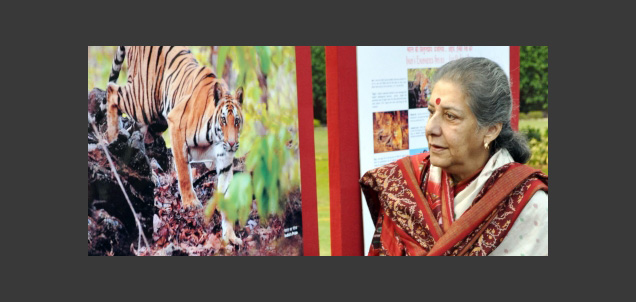
    Photograph: Fotocorp (File photograph of Ms Ambika Soni releasing a DAVP calendar for the year 2011)


    Disclosure: MxMIndia is a firm believer in the freedom of the press and the self-regulatory route to check on content. We will take every effort in guarding this and ensuring that governments do not step in to police the media. However, we also believe that broadcasters must need to re-examine the content they air and help make the self-regulatory process a success.


    Also, read print media reports on the issue:


    The Indian Express: http://www.indianexpress.com/news/cabinet-nod-to-tightening-eligibility-criteria-for-running-tv-channels/857167/

    Mint: http://www.livemint.com/2011/10/10010542/Media-criticism-of-uplinkdown.html?h=B

    Dainik Bhaskar: http://daily.bhaskar.com/article/NAT-TOP-govt-trying-to-control-independent-media-with-new-rules-tv-channels-2489322.html

    The Hindu: http://www.thehindu.com/arts/radio-and-tv/article2521281.ece

    The Times of India 1: http://articles.timesofindia.indiatimes.com/2011-10-08/india/30257931_1_downlinking-tv-channels-current-affairs-channels

    The Times of India 2: http://timesofindia.indiatimes.com/india/Govt-bid-to-gag-TV-outrages-broadcasters-libertarians/articleshow/10283957.cms

  • Star Plus launches iPhone & iPad app

    By A Correspondent

    Star Plus has announced the launch of its app for the iPhone and iPad, becoming India’s first GEC to make an entry into the iPad/ iPhone app store in India and over 120 countries around the world. This initiative will make entertainment content available on the go.

    With iPhone sales topping 100 million and over 25 million iPads already sold, the Star Plus App is an enriching addition to viewers, who can download the app on to their devices from the iTunes App store.

    Mr Sanjay Gupta, COO of Star India, said, “We have always provided our growing viewers with discerning content using cutting-edge technologies. Our entry into the iPad, iPhone App store will enable our upwardly mobile viewers to watch their best loved programmes on the iPhone and iPad wherever they are and whenever they want to.”

    Mr Lalit Bhagia, VP Digital of Star India, added, “The iPhone and iPad devices have changed the way people consume content globally. With the Star Plus app discerning viewers will now have access to the best entertainment content available on their personal iPhones and iPads.”

    The app offers features like, live TV, catch-up of missed episodes of the last two days, and updates/news from Star Plus current and upcoming shows. A unique, built-in interactive feature also allows users to connect with their favourite Star Plus characters through audio blogs and pictures.

    The application has been launched in India and in over 120 countries around the world. The app also offers unique interface which enable users to browse content either by the show or by the characters.

    The launch of the application comes soon after Star India announced global same-day telecast of its flagship GEC brand in India, Star Plus, with English subtitles. Star has been leading the industry in bringing to viewers new and innovative products including Asli HD that is shot, recorded and edited in HD and mixed for 5.1 Dolby surround sound.

  • Ashvini Yardi quits Colors

    By A Correspondent
    Ms Ashvini Yardi, Head of Programming at Colors, has announced her decision to move on.


    In the next quarter, she will move out of her current role and switch to working on film projects, the first of which is being backed by Viacom 18’s film division.


    Ms Yardi has been with Colors ahead of the launch and led the programming efforts of the channel that took it to numero uno within nine months of its launch.


    Commenting on the development, Mr Haresh Chawla, Group CEO – Viacom18, said, “Ashvini’s contribution to Colors’ success has been significant. With her experience and knack for content that connects with the masses, she not only brought ‘differentiated’ concepts to Colors but also gave the format shows, her distinct touch. We now look forward to working with her on her maiden venture in the Films business.”


    On her resignation, Ms Yardi said, “I’ve had a great time creating a destination that’s today visited by millions of people every day. I am excited to continuing my association with Viacom18 Motion Pictures, as I set out as an entrepreneur into the films business.”

  • Government plans to retire analog Cable TV

    Ninety million homes in the country receiving television programmes via analog cable networks will need to switch to digital set-top boxes beginning March 2012, with the government approving complete digitisation of TV transmission over a two-year period.


    The Cable TV Networks (Regulation) Act will be amended through an ordinance, Information and Broadcasting Minister Ms Ambika Soni said after a meeting of the cabinet committee on economic affairs on Thursday. Consumers in the four main metros – Delhi, Mumbai, Kolkata and Chennai – will be the first to switch to the new system.


    The first phase will require 12-15 million set-top boxes and cost multi-system operators (MSO) about Rs 3,000 crore. The digital technology will offer improved quality of transmission and greater choice of content, albeit at a higher cost to consumers. “This will bring a paradigm shift in television viewing experience,” said Mr Avnindra Mohan president (legal) at Essel Group, which owns Wire and Wireless India Ltd (WWIL), an MSO.


    “Consumers can avail of digital cable, broadband and telephony services, all bundled in a single connection.” The announcement boosted stock prices of publicly-listed MSOs, the conduit between broadcasters and the neighbourhood cable operators. WWIL shares surged 19.92%, while Hathway Cable & Datacom rose 10.3% and DEN Networks gained 0.80% on BSE. DEN and Hathway have raised money and got listed on the stock exchanges over the past two years in anticipation of the new law.


    There are an estimated 130-140 million households in the country with TV connections. Of these, 90 million are cable and satellite homes while about 35 million have direct-to-home (DTH) connections. The remaining, in remote corners of the country, use old analog antennae-receivers.


    According to industry estimates, MSOs will need to invest Rs 25,000 crore to carry out the digitisation. “This will benefit the entire broadcasting industry, both economically, and from the point of view of content,” said Mr Uday Shankar, president of the Indian Broadcasting Foundation and chief executive of Star India.


    He said the government should ensure that the deadline is honoured. The broadcasting industry has been suffering from poor bandwidth of analogue cable, which will be resolved with digitisation, he said, adding this will also plug leakages in the revenue system by solving the problem of under declaration of subscribers in the analogue cable system.


    “India has been the world’s cheapest cable and satellite market with an ARPU (average revenue per user) of $4 (Rs 200) for a bunch of channels, a majority of which are unsolicited,” said Mr Yogesh Radhakrishnan, MD and CEO of Prime Connect, the distribution company of Times Group.


    “This move will change it drastically and people will end up paying only for what they wish to see.” A change in hardware may inflate the consumer’s cable bill. “They will pay an initial conversion fee to digital cable operators to buy set top boxes, but it will be more value for consumers,” said Mr MG Azhar, president (strategy & business development) at DEN Networks. This could lead to higher ARPU for both the DTH and digital cable industry. Currently, ARPU for the cable operators ranges betweenRs 100 and Rs 200, depending on the city or town.


    For DTH, it is betweenRs 170 and Rs 180. “The ministry and Trai will now have to come out with interconnect as well as tarriff orders as the ordinance is notified,” said Mr Ashok Mansukhani, president of MSO Alliance. “But the current level of extreme competition between DTH and cable will continue and, at best, customer will have to pay marginally more, specially for niche and sports channels.” DTH operators are hoping they will get a piece of the pie.


    “We can connect consumers with television even in the farthest and remotest of areas,” said Mr Salil Kapoor, COO of Dish TV. A senior executive with a DTH service provider said with the increase in demand, prices of DTH could go up in the first phase by 10%-15%.


    Source:The Economic Times

    Copyright © 2011, Bennett, Coleman & Co. Ltd. All Rights Reserved