Category: TV

  • Alok Nair appointed EVP at Bloomberg

    By A Correspondent


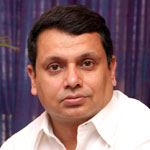
    Alok Nair

    Bloomberg TV India has appointed Alok Nair as its Executive Vice President. As part of his new portfolio, Nair will be responsible for P&L, business strategy, marketing, content, distribution and overall growth strategy of the channel. He will be working with the board of Business Broadcast News Ltd.


    During his tenure at Network 18, Alok’s last assignment was as the National Revenue Head – CNBC TV18 & CNBC Prime HD.


    Nair comes with a rich experience in Print, General News and Business News domain. Having worked and interacted with the finest minds in the industry, he has many firsts to his repertoire. At Network 18, he was a part of the initial team and has seen the network grow from one channel – CNBC TV 18 and one portal – www.moneycontrol.com to one of the biggest integrated news network. Alok was instrumental in creating pathbreaking formats and properties across business and general news channels. He eventually went on to head the FOCUS business across the News Network.


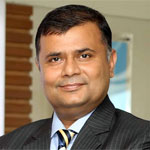
    Lavneesh Gupta

    Commenting on Alok Nair’s appointment, Lavneesh Gupta, COO – Bloomberg TV India said, “Alok brings a unique blend of talent, experience and deep understanding of the News Channel business and will surely add tremendous value to the group. I am confident that he will be a prodigious asset to the organization and will help us reach the next level through his keen understanding of the business. We endorse Alok’s belief that there is serious value unlocking to be done in the Business News space & Bloomberg TV India, a part of the world’s world’s most influential news network, can surely lead the way. The year 2015 will be exciting with many disruptive and differentiated media products that will be offered by the channel. It will definitely ensure a higher impact for advertisers as well as viewers.”


  • Star India acquires broadcast biz of Maa TV Network

    By A Correspondent


    Star India and Maa Television Network have announced a deal under which Star India will acquire the broadcast business of Maa Television Network. This opens up an opportunity for major creative content innovation in the Telugu television market.


    The acquisition would give Star India access to the highly attractive Telugu TV market and a market where Star has a very limited presence till date. Maa Television Network is a leading broadcast network in Telugu language content and has a strong trajectory of growth driven by fiction content and movies.


    The strategic deal will come into effect upon complying with the necessary regulatory formalities and the broadcast business of Maa TV will be integrated with the business of Star India, once the policies and procedures in the acquired broadcast business of Maa TV are aligned with those at Star India.


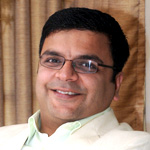
    Uday Shankar

    “The Telugu market is an important market however the pace of innovation has been slow. We are keen to change this by acquiring a local presence and fundamentally changing the content quality paradigm. We were very impressed by the solid creative core and quality and depth of the management team at Maa Television Network. In a short span of time they have built a leading business which is poised to take the next leap. The acquisition fills a vital gap in our portfolio allowing our advertisers targeted access to a critical market,” said Uday Shankar, CEO, Star India.


    “The strategic decision to align with Star India and be part of a global media group will be a big leap in our efforts to take the Maa TV Network to the next level and strengthen the positioning of Maa brand in the entertainment industry. Star’s leadership in Indian media and entertainment industry and its parent company’s proven expertise in media business on global scale will enable Maa to offer more innovative, rich and differentiated entertainment content to the Telugu Diaspora worldwide,” said Nimmagadda Prasad, Chairman, Maa Television Network.


  • Ten Sports lands exclusive broadcast rights for MotoGPâ„¢

    By A Correspondent


    Ten Sports Network has secured exclusive rights for MotoGP™, the premier World Championship for motorcycle road racing. This is for the first time that MotoGP will be broadcast exclusively by a broadcaster in the Indian sub-continent.


    This new deal between Taj TV and MotoGP™ rights holders Dorna Sports will run for a period of five seasons starting 2015. As a part of this deal, Ten Sports will broadcast all MotoGP, Moto2™ & Moto3™ races and Qualifying practices live on their network of six channels. Ten Sports will also be offering multi-screen feeds on its digital platforms and will develop a dedicated MotoGP section on www.tensports.com.


    Rajesh Sethi
    Manel Arroyo

    Rajesh Sethi, Global CEO of Ten Sports, said: “We are very excited to embark on this new journey with Dorna. We are committed to building this property in India over the next five years and viewers will witness unprecedented MotoGP programming initiatives on Ten Sports Network. Viewers identify MotoGP with the Ten Sports Network as can be seen with the higher MotoGP viewership numbers on Ten Sports viz a viz other networks. We have also been rightsholders for this premium property since 2006 and we are delighted to continue and take this partnership to the next level.”


    Announcing the agreement, Manel Arroyo, Dorna Sports Managing Director commented: “We are thrilled about our exclusive partnership with Taj TV and looking forward to developing a close relationship with them. India is a key market for MotoGP in the coming years and the World Championship will benefit greatly from the extensive promotion that Taj have committed to provide.”


  • Shailesh Kapoor: Ranking The World Cups: 1983-2011

    By Shailesh Kapoor


    We are a day away from the 11th edition of the Cricket World Cup. The 1983 World Cup was the absolute initiation into cricket for me, at the age of eight. The eight World Cups from 1983-2011 have left lasting memories behind them, driven by two strong factors – India’s performance and the media experience they created.


    Here’s my ranking of these eight World Cups, from the worst to the best.


    8. The Cup That Ended Before It Started: 2007

    I still thank my stars that I decided against a West Indies vacation for the Super Sixes at the eleventh hour. I suspect if there was a list of the worst World Cups, 2007 will top it even 100 years from now. It had nothing going for it. And as it turned out, late night match timings, no crowds and poor television viewing experience were only the smaller problems. Both India and Pakistan were eliminated in an ill-thought-out qualification format. When a coach’s (Bob Woolmer) mysterious death is the lasting image of a big tournament, you know it didn’t go as planned at so many levels.


    7. The Something-Was-Missing Cup: 1999

    England is a good venue for a World Cup, except that rain can spoil the fun far too often. 1999 was the introduction of the Super Sixes format, which died a death after the 2007 fiasco, with ICC going back to the safe 1996 format. After 1983, this was the World Cup I was least engaged with. Our team was not exactly consistent (that loss to Zimbabwe seems bizarre after all these years too) and I was settling into my first job. The classic tied semi-final was followed up by a damp squib finale, which started Australia’s World Cup dominance. The famous story about Tendulkar flying to Mumbai (for his dad’s funeral) and back, and scoring that century, is going to endure. Not much else from 1999 may stand the test of time.


    6. The Small-Nations-Can-Win-Big Cup:1996

    The sub-continent hosted this World Cup, which I have to admit, looked rather tacky on television, much in contrast to 2011 which had superlative production. The knock-out format (where only seven games effectively decide who wins the title) was introduced here, and then brought back in 2011. It’s a format so evidently lacking in logic. But commercial interests, especially after 2007, have ensured it stays. 1996 was Sri Lanka’s World Cup in every respect. It changed their cricket forever. The India-Pakistan game at Bangalore was entertainment of the highest order, but it was followed by our semi-final defeat at Eden Gardens was perhaps the most torturous cricket game I have ever seen. If only we had batted first after winning the toss…


    5. The How-The-Hell-Did-We-Win Cup: 1983

    To be honest, I have little memories from this World Cup, except listening to the commentary of the finals while on vacation in Srinagar, and then reading the papers the next morning. 1983 was also the last World Cup that had limited media coverage in India, including a broadcaster strike that meant Kapil Dev’s 1983 not out at has no video footage available.


    4. The Long-Forgotten Cup: 1987

    Very little has stayed from the 1987 event. It was the last white-clothing World Cup, and the footage looks un-broadcast-able on TV by today’s standards. I’m not even sure if anyone has the rights to it. There were some gems, like that absolutely superlative batting performance by Zimbabwe’s Dave Houghton in an early match. But it was Graham Gooch sweeping India out of the cup that would remain the lasting memory for me. The 1987 edition ranks high on my list because it was my first World Cup as a proper cricket fan. It was also my second experience of the sheer devastation a fan can feel, the first being the Australasia final (the Chetan Sharma match) a year before that.


    3. The Cup-That-Got-It-All-Right: 1992

    I have to confess I absolutely loved the 1992 World Cup, and if India had done any better, it could have been right at the top of my list. The format was to kill for. Everyone plays everyone and the top four go through. You can’t beat that on fairness and excitement. It was the first cricketing event I watched on satellite television, with world-class commentary, nothing short of a luxurious experience back then. It was also the Cup that had the best jerseys. Take that laughable rain rule out (really, what did they smoke up while deciding on it?), and you have what a World Cup should be. That Pakistan won it, after being on the verge of elimination, in many ways sums up the spirit for the 1992 event.


    2. The So-Near-Yet-So-Far Cup: 2003

    Memories of that excruciating final at Wanderers still haunt many of us. But the 2003 World Cup was a lot more than that for India. After a slow start that included decimation by Australia and a scrape-through vs. Holland, India got into its own and showed a streak of dominance that one had not seen since the 1985 World Series. I remember the loss in the finalleading to a mixed sense of dejection and pride, the latter for having played the way our team did, under Ganguly, over the previous three weeks. This was also the MandiraBedi World Cup, for the record.


    1. The Yes-We-Can Cup: 2011

    The 28-year-long wait had to be end at some stage. The three matches – Australia at Ahmedabad, Pakistan at Mohali and Sri Lanka at Mumbai – that led to the title were individual celebrations in themselves. I was there at the finals at Mumbai. After that high, watching any other limited-overs cricket in a stadium seemed pointless. There’s so much to remember from 2011, yet so little needs to be said, because it’s all fresh in everyone’s memory, like it happened last week. Hope the wait doesn’t last another 28 years.


    I’m off for a cricket vacation to Australia and this column will take a two-week break, to be back on March 6.


  • & the countdown begins for Rajesh Iyer…


    This interview almost did not happen. Many moons of leading the marketing function from the front have made him believe that it’s work that should do the talking. Not words. Some recent dostis and a bit of pushing did the trick though.  The objective was to read the mind of the Business Head of the world’s newest general entertainment channel: &TV. The finer details can follow.


    Rajesh Iyer isn’t an old Zee hand, having spent his past at Colors and earlier with Star India and adshops Publicis Ambience and Ogilvy & Mather. It is also his first stint at independently heading operations of a big budget television business. But despite that fact all eyes are on him from within the broadcast ecosystem and the Zee group, the nerves are in place, and he and his team are looking forward to the launch on March 2. Excerpts from a free-wheeling interview with Pradyuman Maheshwari:


    Two weeks to go to the launch, what are the preparations like?

    Quite honestly, we’re pretty much there. There are a couple of pieces we need to put together. We’ve been working on this project for the last eight to nine months now. We pretty much displayed part of our content piece at the press conference. That’s in place, our distribution is in place. Our marketing and promos have already kicked in – in and outside the network. The activities, primarily the marketing piece, will intensify as we go ahead. These are the three or four pieces we’re working on – the content, distribution and marketing. And, currently we’re well on course to launch.


    There are GECs and there are GECs. Is there one clear message to the trade as to how &TV will be different from the others?

    Our view in the group is that good content is good business and, it will always continue to be that way. The typical question is always how will we be different? The answer to that is it’s not about being different. It’s about how will we be different? That’s the key differentiation we need to make. As a GEC, by definition, one is playing the mass game. You’re catering to mass India. If you’re very different, then you become niche. Therefore, you can’t be very different from the marketplace. It’s a question of how you’re different from the marketplace and that you’ll see in the content and slant we put up. The love stories are universal. A love story is a love story but the slant which we take is going to be slightly different. It’s going to be contemporary, progressive to a certain extent.


    This applies to many media entities. If you remove the masthead, one paper looks like the other. Similarly, if you remove the logo of the channel, one channel looks like the other. Obviously, there is a challenge out there.

    The first task is to get audiences to sample the platform. Are the shows going to be extremely different from what’s there? To answer your question, if you remove the logo, will it look like another channel? I don’t think so. It’s a question of what position you want to occupy in the marketplace as far as the GEC is concerned. The content will define that. The consumers will position us. We won’t position ourselves. They will slot us. Let them slot us, we won’t position ourselves and go into the market saying, this is what we are. Our job is to give them wholesome, good, variety entertainment.


    As someone who’s looked at the marketing of various channels over a period of time, how tough or easy is the job of creating a perception for a channel?

    It’s not an easy job. We need to have a good product, fundamentally. We need to give people accessibility. Distribution needs to be strong and you need to create perception and enough entry for them to come and sample. There are so many products which are there currently. The choices are so many that if you don’t create entry, accessibility, meaningful, good content, you don’t have a chance. You’ll need to create all of these for people to come and watch. You need to have noticeability.


    Did it worry you that Sony Pal TV channel failed?

    Of course! Any channel failing isn’t a good thing. I was hoping that Pal will do well. It gives the audience more choice and opportunity to see what they want to and competition is good in this category. Pal is currently on air. I’m sure they have their own strategy and they’ve chalked out their year map and stuff like that to go forward. I would like Pal to have succeeded.


    I remember Zee had EL TV and Zee Next. Although Life Ok has done well having not followed the beaten track, the second channel of a large network with a major player like Zee TV is always tricky. All the best eggs tend to go to the flagship!

    I’ll answer your question in two parts. The first part of your question was Zee Next. We’ve learnt from our mistakes and we obviously won’t commit the same again. To answer your second, are the best eggs going to go to Zee TV? This is a different franchise, a different brand. We’re putting everything into this basket as well and the kind of investment we put into this channel is in line with any GEC. The question of the best going there and we getting second best does not arise. We’re playing in the same marketplace and we’ll go with the same ammunition and firepower. It’s not the same eggs, we’re multiplying the eggs.


    Is Zee TV for you as much of a competition as a Colors or Star Plus or Life OK?

    I’ve said this previously. There will be sibling rivalry. It’s like the Williams sisters playing a tennis match. Both of them want to win and when the time comes we’ll pair up to play doubles to beat the other networks.


    But you are advertising on Zee!

    It’s our channel, part of the group, part of the same family.


    Will the promotion continue even after the channel is launched?

    Till we find our feet, it will. Once we find our feet, it may or may not, but we’ll feed into each other.


    A channel like Zindagi has carved a niche for itself but isn’t doing too well on the ratings roster. Clearly, good content doesn’t really make for good ratings!

    Zindagi is premium Hindi content and we’re hoping that market will grow over a period of time.


    You’re launching &TV when the World Cup quarter-finals would’ve started, and then there’s the IPL post that.

    As far as the World Cup is concerned, it’s being played in Australia, the matches are between 9am and 6pm. That shouldn’t affect us too much. Our primetime starts well after that. As for IPL, we launch five to six weeks before that. In the last two-three years, the IPL hasn’t dented the GEC space much. We believe in our content. If it sticks, people will come and watch us.


    In the past, we have had some channel launches and the IPL kinda killed them.

    IPL is a very established and good entertainment brand. There’s no question about that. It’s just for 45 days, we’re there for the long haul. It’s not dented the GEC space that much, a few channels have grown too during IPL. We’re aware of IPL and our launch date. We’re confident we’ll stick around.


    Moving to your driver show. You’ve obviously had Shah Rukh Khan work for you. The media has written about it, people are talking about it. But he’s possibly one of the least bankable stars on original television.

    I think, Shah Rukh Khan is the biggest star in this country. He’s done extremely well in the cinema space, like we all know. If you look at the ratings, he’s done very well in the television space too. We believe this product Sabse Shaana Kaun perfectly aligns with Shah Rukh and he was the perfect match. It’s about the common man, Shah Rukh is an inspiration to the middle class. Everyone wants to be like him.


    Wouldn’t Salman have worked better?

    We were very clear from Day 1 that it had to be Shah Rukh Khan.


    But two high profile Shah Rukh shows have failed in the past. You had Paanchvi Pass on Star Plus and Wipeout on Imagine. Both were produced by Big Synergy. Given this, don’t you think you are betting rather big?

    Shah Rukh was a perfect fit for the concept. You can’t predict the fate of a show. It may or may not work, just like the movies. But Shah Rukh is the most bankable Bollywood star today. He’s India’s massiest star. We’re a mass channel. The product works for him and he works for us.


    What else do you expect to drive the channel?  Razia Sultaan looks good…

    We’ve faith in all our properties. Razia Sultaan, Begusarai, Bhabhiji Ghar Pe Hai which is a sitcom. Badi Devraani is a story based on a Marwari family in Kolkata. We have all of that as well and a few other shows which we’ll soon display.


    You don’t have anything from Ekta Kapoor as of now.

    Not yet. Well, anyone who’s giving us good content we’ll be glad to have them on board.


    Many GECs have a lot around Gujarati families. Is there any community you’re looking at?

    Not really, we’re not profiling it that way. As long as we get good stories, the backdrop can be different..


    It’s a good thing to say that but it’s all about ratings, finally. Is there a target you have in GVTs/GRPs? Is it three digits in Week 1?

    Of course, we have a target on GRPs. We’re hoping viewers accept us. That’s what our focus is on. Is it going to be two or three figures? While we do dream, I think it’s too early to put a number to it.


    Are you dreaming big?

    We’re dreamers and there’s no doubt about it. We obviously want to be accepted and successful. We’ll see how it goes. Rating is one of the success measures, not the only one.


    A bigger googly than the World Cup or the IPL are the new ratings from BARC which will come out from around mid-April. Is that a worry?

    At the end of the day, BARC will expand the universe. There are more people who’re going to be metered on this one. Preferences, behaviours don’t change overnight. The consumer behaviour won’t change with the rating system. They won’t switch channels or watch some other programmes because there’s a rating system which has changed. As long as the show is doing well, it’s accepted, we’ll be metered on that. We’re not too worried. As a matter of fact, we’ll be happy. With more people being metered, it gives us more opportunity.


    We’ve seen in print readership where the new IRS system was released with a new establishment study. There was a bloodbath after that and we’ve had no fresh round of data. I’m sure BARC is taking care of all of that, but the worry does exist for some of the existing players. In a sense, it’s also an opportunity for you, right?

    We need to wait till the BARC data comes up. At this point in time, it’s hypothetical to give you a direct answer on that one. We’ll have to wait for the BARC data to come out but we see it clearly as an opportunity for ourselves.


    How LC1-friendly are you going to be?

    From a marketing strategy, we’re also focusing on the LC1 belt.


    I see less of LC1 content in the mix…

    That’s part of the LC1 content that you see. We’ve to still unfold the other part of the content. We’re no one to differ on what’s LC1 and what’s Metro content. It’s universal. When we give them good content which is relatable to them, we will be fine. That’s the premise we’re working on. Some movies work well across single screens and multiplexes. We’ve done extensive research as far as content is concerned with consumer innovation studies or ethnography across cities to get feedback on the kind of content we’re putting across.


    As you are getting set to launch, there are others too gearing up to welcome you! Are you looking over your shoulder or just going ahead with what you’re doing?

    We’ve got to do what we’ve got to do. I’m sure the competitive set is also geared up. We’re gearing up and are confident about what we want to achieve so we’ll stay the course.


    One last (or second-last) question: there has been a fight between Zee and Colors for the No 2 slot. So guess it made sense for the Zee bouquet to have a Colors-like channel which is where they decided to launch &TV and it was best to have someone from that stable head it?

    We were obviously looking at a second or a mainline GEC channel. It’s not about competition, we’re not reactive to that. We’re reactive to what the consumer wants and that’s exactly what we want to dish out. We’ll give what the consumer wants and not what the competition is doing. We’re very clear on that. Our philosophy is that.


    Any message to the Colors team as you get set for launch?

    (laughs out loud!) That’s a tough one! Quite honestly, I wish them very well. Each of us have to do what we’ve gotta do. We’re just starting off.


    That last one was meant to provoke and figure if there are any chinks in the relationships. Even as it’s evident that &TV will fight Colors fiercely for audience mindshare, the camaraderie (and more importantly goodwill) between old colleagues and friends hasn’t faded away. Now, not all former employers and colleagues do that. Ask us.


  • Srikant Malladi appointed Head of Programming at Zee Khana Khazana

    By A Correspondent


    Zee Khana Khazana has appointed Srikant Malladi as Head of Programming. Formerly with Colosceum Media Pvt Ltd. as Head of Entertainment (Non-Fiction), Srikant played a pivotal to make MasterChef India one of the most popular shows in the Indian TV Industry.


    Srikant Malladi comes with over 14 years of diverse media experience – web journalism, films (Bollywood & Hollywood) and television, he has donned multiple hats. In the last eight years he has focused and specialised in large format, prime time, non-fiction shows for a variety of Indian broadcasters.


    Commenting on the appointment, Amit Nair, Business Head, Zee Khana Khazana, says, “Zee Khana Khazana has been growing at an incredible momentum and it is time we take it to the next level. We are honored to appoint Srikant Malladi as the Head of Programming for our channel. Srikant comes with a lot of valuable experience across the entertainment & media platform and we are happy to have him on-board. We are confident that he will help us take the brand to greater heights.”


  • MTV appoints new heads for programming & creative

    By A Correspondent


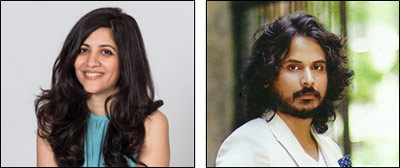
    MTV has brought in Shalini Sethi as the Content and Programming Head and Keegan Pinto as Creative Head. With varied experience in every aspect of the media industry, right from production to programming to movies, Ms Sethi joins MTV India from Bindass where she was part of the launch team and was Director, Programming; while Mr Pinto, who has won several awards including Cannes Lions, Abbys and Effies joins MTV from DDB Mudra where he worked as the Group Creative Director. At MTV, both Shalini Sethi and Keegan Pinto will be reporting to Aditya Swamy, EVP and Business Head, MTV.


    Expressing his pleasure over the additions to the team, Mr Swamy said: “People are the biggest asset of my business and we are continuously looking for talent that believe in the power of MTV but are also hungry to push the envelope and challenge the status quos. Shalini and Keegan have an infectious energy and are key drivers in taking MTV into its next phase in the India journey.  I am thrilled to have them as part of the part and I am excited about the madness that we will unleash together.”


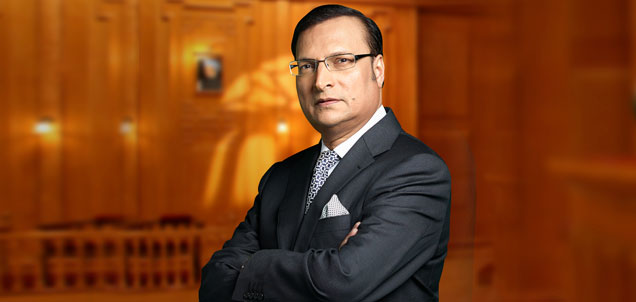
  • Rajat Sharma UnLtd


    By Rohini Singh & Vasudha Venugopal


    He’s close to Prime Minister Narendra Modi, BJP president Amit Shah and Finance Minister Arun Jaitley. He counts many Congress heavyweights and Bollywood’s big stars as friends. Some of India Inc’s savviest investors, including group companies and companies associated with billionaires Gautam Adani and Mukesh Ambani, have put money in his company. His life started in a 100 square feet room he shared with nine family members in a grimy Delhi locality, but Rajat Sharma (58), editor-in-chief and chairman of India TV, is arguably now India’s most powerful editor.


    Delhi’s political establishment considers Sharma, who was an active student politician from AVBP, BJP’s student wing, to be a remarkably well-networked person. The buzz about him is that he has access to VVIPs and occasionally advises or counsels important politicians. But Sharma, awarded Padma Bhushan this year, has a different take: “It is unfortunate that you refer to my 30 to 40 year old relationships as networking…Most of my friends are with me from my days of struggle when I was nothing and they were also struggling…”, Sharma said while answering a detailed set of questions over email.


    He said he had first interviewed Modi when the latter was a BJP general secretary. “Modi’s witty remarks impressed me,” says Sharma. India TV’s financials are out-of-ordinary as well. Independent News Service Private Limited, the parent company of India TV, was incorporated in 1997. But capital build up started from March 2006, two years after the channel was launched. Among India TV’s past and present investors are Aditya Corpex Private Ltd, a group company of the Gautam Adani-owned Adani Group, as well as Shyam Equities, a wholly owned subsidiary of Tally Solutions that has as directors, Anand Jain and Manoj Modi, two aides of RIL chairman, Mukesh Ambani.


    A group company of HFCL, which is owned by Mahendra Nahata who has close business associations with RIL, is also an investor. May be it’s friendship and not networking, the fact is Sharma is an unusually well-connected editor, even by the standards of Delhi’s political-media establishment that has seen many ‘influential’ editors.


    India TV’s 21st anniversary celebration of Aap ki Adalat – the signature show helmed by Sharma – in December 2014 saw the PM give the opening address, followed by President Pranab Mukherjee. Politicians from virtually all parties, Bollywood biggies including the three Khans, Shah Rukh, Salman and Aamir, media barons were all in attendance. Uday Shankar, CEO of Star India and one of India’s most powerful media honchos, recalls that Sharma gave him his first break in television when everyone else had virtually told him he was not fit for TV.


    “It was Holi and I was jobless…this was years ago…Rajat was working on Holi because he’s a workaholic…I called him and told him I needed a job…and he told me to come over”, Shankar recalled. This year, his network had bought the telecast rights of the Aap ki Adalat’s 21st anniversary show. “There was an emotional connect,” Shankar says, on Star hosting the show. Sharma’s show had run on Star for a few years.


    That anniversary show telecast by Star had a remarkable moment: The PM’s speech on Sharma saw Modi saying, “ye mere liye thanksgiving ka avsar hai” (this is a thanksgiving occasion for me). The PM also said, referring to his pre-election interview with Sharma-India TV got the first interview with Modi as BJP’s PM candidate-that the platform complemented efforts from BJP workers in getting the message out.


    Delhi’s establishment tells and retells plenty of anecdotes on Sharma and the PM. Around the time Amit Shah was appointed general secretary, BJP and was set to take charge of UP for general elections, Modi had asked Rajat Sharma to “advise Shah on UP’s political intricacies”, a BJP leader said on condition of anonymity. Shah had driven to Sharma’s India TV offices in Noida to have a chat with him. Another story shared by a BJP leader and officials of the Sri Lankan embassy said Sharma played a role in India’s negotiations with Sri Lanka on the release of jailed Indian fishermen.


    Sharma was in Sri Lanka and with the then Sri Lankan president, Mahinda Rajapaksa, when Rajapaksa had called Modi to tell him Colombo was freeing the fishermen. Sharma, again, has a different take on his relationship with the PM. “I have no reason to meet the PM,” he says and to buttress his argument on not being a mover and shaker pointed to his decision to stay away from the recent presidential banquet for Barack Obama. “I chose to go ahead with the recording of a show abroad…my viewers have given me the platform of my shows.


    “I don’t need to meet the PM.” Sharma contests suggestions that he may be sympathetic to BJP. “In my 33 years of journalism I have made friends across political parties. I am sympathetic to my friends irrespective of the party they belong to. But I don’t allow that to interfere with my work. I have always fought for free, fair and fearless journalism,” he said. But senior Congress leaders, who did not want to be identified, say the Sharmas – Rajat and his close aide Hemant Sharma, a director at India TV – played a “significant role” in BJP’s Lok Sabha campaign, including Modi’s decision to pick the Varanasi constituency.


    A senior BJP leader points out that when the PM visited Varanasi last November and launched the Swach Bharat Abhiyan, Manu Sharma, Hemant Sharma’s father, was one of the nine people nominated from the state for that project. The others included such notables as UP Chief Minister Akhilesh Yadav, singer Kailash Kher, comedian Raju Srivastav and cricketers Suresh Raina and Mohammed Kaif. Shatrughan Sinha, ex-Bollywood and a BJP leader, candidly describes Rajat Sharma as being hugely influential and humble, a “yaaron ka yaar” (friend of friends).


    “Sharma today is more influential than many ministers in the cabinet. He can get a seat in any House, any award because he knows everyone, but it’s his humility that keeps him grounded. He is a lifetime friend,” says Sinha. Sinha recalls how a few years back Sharma had mediated between him and Amar Singh, who was then a powerful leader of the Samajwadi Party. Finance Minister Arun Jaitley is one of Sharma’s closest friends. At that Aap Ki Aadalat anniversary party, Sharma had said Jaitley has been his “moral police”. Sharma and Jaitley were ABVP activists and alumni of Delhi’s Sri Ram College of Commerce.


    Sharma rose to being a general secretary of ABVP and courted arrest during the Emergency. CPM leader Sitaram Yechury remembers the student leader Sharma as someone “totally into Sangh ideology… with fierce views against Congress”. Sharma said his relationship with “Arun Jaitley, Lalu Yadav and Sharad Yadav go back to university days, when we were all part of the JP movement.” Late Congress leader Rajesh Pilot became his friend, Sharma says, when Pilot delivered milk to Delhi’s VIP homes.


    Sharma’s point is that personal relationships developed over years, not political networking, explain the list of his powerful friends. He says although he has no relationship with Rahul or Priyanka Gandhi he “had an equation” with their father, ex-PM late Rajiv Gandhi. Congress treasurer Moti Lal Vohra said he and Sharma have been friends for 25 years. Congress heavyweight Salman Khurshid says his and Sharma’s “contrasting political ideology” never got in the way of their friendship.


    Does Sharma’s friendship extend to AAP, which has just routed BJP in Delhi polls. AAP leaders privately complain about India TV’s “bias”. Some AAP supporters tweeted photos of what they claimed to be India TV vehicles campaigning for BJP. Sharma refutes suggestions of an anti-AAP bias. “I have relationships with individuals and not with parties. Like other political parties, I have friends in AAP also,” he says. Arvind Kejriwal in Aap Ki Adalat?


    Source:The Economic Times

    Copyright © 2015, Bennett, Coleman & Co. Ltd.

    All Rights Reserved, Licensed to republish


  • Zee engages Interbrand for its Corporate Brand Valuation Study

    By A Correspondent


    To take its vision forward, ZEE has associated with Interbrand to further strengthen, study and analyze its corporate brand. Along with the corporate brand, six key channels under the mother brand form a part of this brand study, aimed at chalking a clear path for ZEE to achieve its goals set for the year 2020.


    Roland Landers
    Ashish Mishra

    Roland Landers, Head – Corporate Brand, ZEE Entertainment, said, “Corporate Brand ZEE has grown stronger, with its presence in over 169 countries. With our engaging content, which entertains over 800 million viewers worldwide, we envision to be ranked amongst the top brands in India by the end of 2015 and top global brands by the year 2020. Interbrand’s association will certainly add immense value to this journey, in terms of valuating the brand’s contribution to the enterprise value and in navigating the brand to achieve its qualitative goals.”


    On the ZEE partnership, Ashish Mishra, MD, Interbrand India said “Our purpose as Interbrand India is to help Best Indian Brands navigate their ambitions to be Best Global Brands. We are delighted to be entering into a long term partnership with ZEE which is a Best Indian Brand contender and has the potential to emerge as a strong global brand too.”


  • Punit Goenka to deliver a keynote at the 19thWharton India Economic Forum

    By A Correspondent


    Punit Goenka

    Punit Goenka, MD & CEO, Zee Entertainment Enterprises Limited (ZEEL) will deliver a keynote at the 19th Wharton India Economic Forum (WIEF) to be held at The Wharton School, University of Pennsylvania on Saturday, February 21, 2015. Speaking on the theme of the conference ‘India: Delivering the Dream’, Punit Goenka will address the changed business environment in India with initiatives by the new government and the current state of the media and entertainment industry in India. He will also discuss ZEEL’s journey over the past 20 years and the opportunities and challenges he foresees over the next few years.


    The Wharton India Economic Forum (WIEF) is a student-led business conference to discuss the opportunities and challenges faced by India. Started in 1996, it is a leading India-focused business forum held annually at The Wharton School, University of Pennsylvania which is among the top three institutions in the world for business education. The WIEF attracts business leaders, policy-makers, professionals and students to engage in fruitful dialogue and is attended by over 400 delegates including Wharton MBA, Penn Graduate and Undergraduate students, Wharton alumni and industry representatives and professionals.


    The other keynote speaker at the 19th Wharton India Economic Forum is Hital Meswani from Reliance Industries Limited while some of the other confirmed speakers include Rehan A. Khan, Abbott India, Sanket Akerker, Microsoft and V.R. Iyer, Bank of India.


  • Big Magic Ganga now available on Videocon d2h

    By A Correspondent


    BIG Magic Ganga is now available on Videocon d2h network. Available on the base pack, it will be on Channel No. 859 adding another 8 million subscribers to existing reach of the channel. This move enables availability of the regional content of Bihar, Jharkhand & Purvanchal for viewers across the country.


    Commenting on the association, Lavneesh Gupta, COO, Reliance Broadcast Network said, “With this availability, we are happy to present the content of BIG Magic Ganga across the nation for audience who wish to view Bihar, Jharkhand & Purvanchal content. Our strong regional connect, local festivals and true representation of the culture of the region has helped us emerge as No. 1 in the region. It thus makes for excellent platform for the national as well as local advertisers to connect with their focused target audience in the region through this medium.”


    Saurabh Dhoot, director of Videocon Group added, “We have always strived to bring the best package of entertainment to our Videocon d2h viewers and this is a big step in that direction. We want to offer the whole gamut of channels and services empowering the consumer to opt for his preferred choice of language. We will continue to focus on strengthening our regional content offering and at the same time provide quality services. ”


    BIG Magic Ganga is also available on Reliance Digital TV, Dish TV, Hathway, Incable, Manthan, Digicable, GTPL, Siti Cable, Maurya, DEN , Dish TV and other all independent operators.


  • Punit Goenka delivers keynote at WIEF

    By A Correspondent


    Punit Goenka

    Punit Goenka, MD & CEO, Zee Entertainment Enterprises Limited (ZEEL), delivered a keynote at the 19th Wharton India Economic Forum (WIEF) held at The Wharton School, University of Pennsylvania. In his keynote, which was on the theme of the conference ‘India: Delivering the Dream’, Punit Goenka spoke about the changed business environment in India with initiatives by the new government and the current state of the media and entertainment industry in India. He also discussed ZEEL’s journey over the past 20 years and the opportunities and challenges he foresees over the next few years.


    Speaking on the Media & Entertainment Industry in India, Punit Goenka, MD & CEO, ZEEL said, “Widespread technological advances in the ecosystem and the digital experience driven mainly by aspects like digitization of cable industry, has brought a new mindset to make business – quicker, targeted, transparent, and collaborative. This industry is certainly a sunrise sector for the nation’s economy. Proving its resilience to the world, the Indian M&E sector is on the cusp of a strong phase of growth.”


    He, furthermore, commented on ZEEL’s journey saying, “With most industry firsts to our credit, we as a global entertainment conglomerate have always been at the crest of innovation and leadership. We take immense pride in the fact that, unlike other global media companies which have travelled to India to set up their operations, ZEE has travelled against the flow and has successfully set up its presence across 169 countries, entertaining over 730 million viewers across the globe.”


    The Wharton India Economic Forum (WIEF) is a student-led business conference to discuss the opportunities and challenges faced by India. Started in 1996, it is a leading India-focused business forum held annually at The Wharton School, University of Pennsylvania which is among the top 3 institutions in the world for business education. The WIEF attracts business leaders, policy-makers, professionals and students to engage in fruitful dialogue and is attended by over 400 delegates including Wharton MBA, Penn Graduate and Undergraduate students, Wharton alumni and industry representatives and professionals.