Category: MEDIA

  • LS Digital expands into the USA Market

    LS Digital, an integrated Digital Business Transformation (DBT) company, has announced a new partnership with .fearless, a marketing consultancy in USA, to launch .fear-LS. This joint venture aims to provide businesses with a Comprehensive Solution to help solve Digital Business Challenges and achieve a more effective digital presence.

    Many companies in the USA face digital friction, struggling to meet customer expectations and maximize revenue due to challenges within their systems. fear-LS addresses these issues by helping businesses across industries better understand their existing systems, identify underperforming areas, and implement strategies to streamline operations and enhance success. The U.S. market, known for its large-scale operations and a blend of traditional practices with openness to innovation, presents unique challenges and opportunities. With the rapid growth of the DBT category, LS Digital is poised to leverage this momentum to drive business success in this dynamic landscape.

    There is a worldwide surge in companies embracing digital business transformation to eliminate friction and fuel growth.

    Said Prasad Shejale, Founder and CEO of LS Digital: “Our focus is on delivering a product and service mix that stands out in the market. We build trust by connecting with the right customers and gaining a deep understanding of the new digital landscape, rather than just chasing revenue. Partnering with .fearless, a leader in marketing consultancy and industry veterans in the US market, aligns perfectly with our global ambitions. Through this joint venture, we are excited to bring our innovative DBT model, developed in India, for the world. Under the banner of  .fear-LS, this partnership offers American businesses cutting-edge solutions to overcome digital friction and achieve sustainable growth.”

  • Ranjona Banerji: Hatred of Muslims and Women

    Ranjona Banerji PhotographOf the many things which the mainstream media in India is unable to discuss – and we have touched on most of them here, if not all – two stand out in the current scenario. Women’s issues and attacks on Muslims.
    For both, can we conjecture that it is because forces within the media are unwilling to face the truth? No matter how much sound and fury were generated by the MeToo movement a few years ago, the media has not been able to clean up its own house. Over and over again, the story of exploitation, harassment and assault on women journalists continues. The perpetrators are usually powerful media men and therefore progress is slower than sludge climbing uphill.

    And then there are the attacks on Muslims, which have increased alarmingly since Narendra Modi first became prime minister 10 years ago. Here we find the media’s role very disturbing. Several top channels run constant campaigns about how Hindus are in danger, which only serves to increase hatred against Muslims. Which is of course what they want, and what they do to stay in tune with the general RSS agenda.

    This anti-Muslim slant has been relentless over the past 10 years and nothing has stopped them. The vicious rhetoric in TV studios and the sly dog-whistling by BJP politicians, including Modi, are perfectly in sync. The result is catastrophic. The lynching of Muslims which began in June 2014 with Mohsin Sheikh in Pune has been consistent. The reasons are also tied in with the Hindutva narrative – mainly to do with cow slaughter and the notion of travelling with beef right down to storing beef at home as with Mohammed Akhlak in 2015, the case which got the most publicity.

    Nothing however has stopped the lynchers. Worse, in the past few weeks, the number of cases of attacks on Muslims and cases of rape have increased. Mainstream media and television coverage is calibrated to serve the rulers and men.

    The courts have been slow to pick up on these murders. And soon the lynching dovetailed with the illegal destruction of Muslim homes on equally flimsy charges. The Supreme Court has initiated legal action now, years after the UP government began this inhuman and illegal form of “justice”.

    Regardless of election results and BJP losses, some of these channels continue. What makes them do it? Why are News18 and Times Now, to name two of the worst, so hellbent on destroying India’s social fabric? It is hard to conjecture why two responsible companies should allow their TV anchors to behave in this manner. Nothing that you read in the Times of India correlates with the vicious Islamophobia and pro-BJP stance of Times Now. Why would an Ambani-owned channel like News18, which has business associations with Arab states, constantly attack Indian Muslims?

    Is the degradation of the media complete, if it cannot wake up from its dangerous strategies even post-Modi’s limited 2024 victory? The fall of the Sheikh Hasina government in Bangladesh was only presented as anti-Hindu, even though there are several other implications for India and even though many of what TV showed later turned out to be fake and misinformation. The same sort of misinformation is happening with Bengal, after the rape and murder of the doctor at RG Kar hospital. Here, the agenda is being set so that the BJP can benefit politically from the doctor’s death. The issue of women’s safety, which has riled the nation, has been sacrificed by our TV channels, in order to bring down Mamata Banerjee and prop up the local BJP.

    The Assam chief minister who has been gunning for Muslims ever since he switched from the Congress to the BJP is not called out by the legacy media for his Islamophobia, just as the UP chief minister was practically lauded by the same media for his bulldozer injustice. Several TV anchors, if you remember, gleefully jumped into earthmovers to get firsthand experience of how it feels to destroy someone’s home.

    With women’s issues, celebrated actor Mohanlal’s unchallenged “plea” that the Kerala film industry not be “destroyed” by women asking for justice and an end to sexual exploitation, demonstrates how low women fall in the list of priorities.

    In such circumstances, perhaps it is impossible to even imagine that women within the media will get any justice at all. Either from harsh bigotry or suave predators.

    Ranjona Banerji is a senior journalist and commentator. She writes on MxMIndia on Tuesdays and Fridays. Her views here are personal.

  • ENIL appoints Sumit Aggarwal as Chief Strategy & Growth Officer

    Sumit Aggarwal
    Sumit Aggarwal

    Entertainment Network India Limited (ENIL), the company behind Radio Mirchi and Gaana, has appointed Sumit Aggarwal as the Chief Strategy and Growth Officer.

    In his new role, Aggarwal will lead the strategic vision and growth initiatives across all ENIL platforms, including radio, digital, and the company’s extensive events portfolio. With a focus on innovation, expanding audiences, and digital transformation, Sumit’s leadership will be key to strengthening ENIL’s position in the rapidly evolving media landscape.

    Said Yatish Mehrishi, CEO at ENIL: “We are thrilled to welcome Sumit back to the ENIL family. His strategic mindset and extensive experience in the media sector will be invaluable as we continue to navigate the changing dynamics of the industry and explore new growth opportunities.”

  • Sony acquires rights for Hero Asian hockey

    Sony Sports Network has acquired the media rights to live broadcast the Hero Asian Champions Trophy 2024, set to take place in Hulunbuir City, Inner Mongolia, People’s Republic of China, from September 8 to 17, 2024.

    Rajesh Kaul
    Rajesh Kaul

    Said Rajesh Kaul, Chief Revenue Officer – Distribution & International Business and Head – Sports Business, Sony Pictures Networks India: “As the official broadcaster of the Men’s Asian Champions Trophy 2024, we are thrilled to bring this prestigious tournament to hockey fans across the region. Audiences will get to watch Team India, the defending champions and Olympic Bronze medal winners playing for the first time since the Olympics Games Paris 2024. We are committed to serving hockey fans and delivering high-quality coverage that showcases the talent and competitive spirit of the best teams in Asia on Sony Sports Network. ”

    Added Fumio Ogura, President, Asian Hockey Federation: “We are pleased to announce that the Hero Asian Champions Trophy 2024, a prestigious tournament showcasing the finest talent in Asian hockey, will be broadcast live on Sony Sports Network, one of the biggest broadcasters in the region. This partnership reflects our dedication to bringing the sport of hockey to a broader audience and ensuring that fans can witness some of the best hockey teams and athletes in action. Working together with Sony Sports Network, we aim to elevate the profile of hockey and inspire the next generation of athletes.”

  • Chariot Productions Media and Digitek partner with Janhvi Kapoor

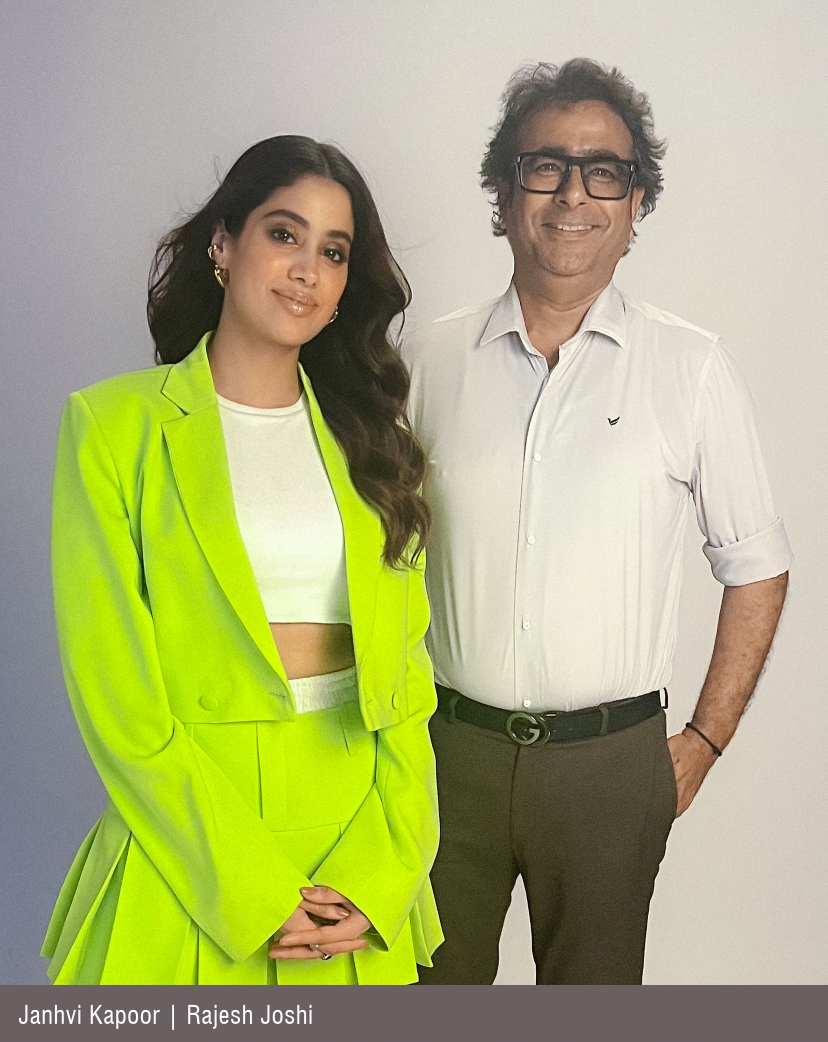
    Digitek has announces a collaboration with actors Janhvi Kapoor and Rohit Suresh Saraf. With this partnership Digitek will continue to expand its footprint in the realm of content creation and professional photography and videography equipment.

    “We are delighted to welcome Janhvi and Rohit to the Digitek family,” said Amit Kumar Saraff, Managing Director of Digitek. “Their dynamic energy and widespread influence perfectly align with our brand’s vision. This association underscores our commitment to innovation and engaging meaningfully with our audience.”

    Added Rajesh Joshi, Director of Chariot Productions Media Pvt Ltd, the agency facilitating this collaboration: “As the media partner for Digitek, we recognise the dynamic presence and widespread appeal that Janhvi and Rohit bring. Their alignment with Digitek’s brand values and vision will enhance our efforts to merge cutting-edge technology with the vibrant world of entertainment. We eagerly anticipate blending these elements to create something truly remarkable.”

  • Free over Pay: Reset Time for Streaming?

    Free over Pay: Reset Time for Streaming?

    Shailesh Kapoor2023 saw the release of 383 streaming originals in India, across languages and formats (fiction series, direct-to-OTT films, unscripted, etc), across all major OTT platforms (excluding YouTube and social media) put together. That’s more than one launch a day. The equivalent number in 2024 so far is a lot more modest. On a pro rata basis, the year can be expected to just about touch the 300 originals mark, a good 20% below last year.
    Clearly, streaming platforms are commissioning less content than before. The number of originals were significantly higher than 300 in both 2021 and 2022 (337 and 368 respectively). Effectively, we are back to the pre-pandemic levels in terms of supply of Indian OTT originals. Like the US, our peak TV phase (which we never really celebrated last year) is also over.

    One can call it a slowdown or a correction, depending on how one looks at things in general. But semantics apart, the signs are there for us to see. Streaming originals may not be the next big story anymore. The OTT category is still growing, with immense headroom for growth, given that only 38% of Indians watch digital videos at least once a month. But this growth will come via sports, YouTube, social media videos, news, comedy, catch-up television, etc., all of which are ‘free’ content forms on OTT in India today. On the paid side, new theatrical films were already a strong force, and are going to be get increasingly stronger compared to originals in the coming times.

    A huge creators economy has flourished in India on the back of the demand for OTT originals, and one can already sense the impact the supply slowdown is having on this economy. It doesn’t help that the film (theatrical) industry is not producing a lot of content either, especially in Hindi.

    In all this, traditional linear television, the punching bag of many, could emerge as an unlikely saviour. The TV industry has been on perception and business decline, but it’s nowhere close to losing relevance, and a bounce back is not entirely ruled out. But even there, free-to-air platforms, more than the pay ones, seem to be better positioned to drive some growth in the future.

    Has the pay-for-content endeavour in India died a premature death? The top platforms like Netflix and Prime Video would choose to differ. And indeed, “death” may not be the accurate term. But pay TV or pay OTT are going to go through their toughest challenge yet, in the coming year or two. And all eyes will be on the big players in the category to shape the trajectory ahead.

  • India TV launches India TV Speed News Channel in HD

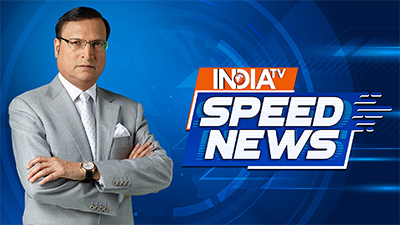
    India TV has launched India TV Speed News, a 24-hour fast news channel in the HD segment, designed specifically for the linear audience.


    Said Ritu Dhawan, Managing Director of India TV: “With the launch of India TV Speed News Channel in HD, we are setting a new benchmark in the news broadcasting industry by delivering the fastest, most reliable news in a format that meets the needs of our modern audience. Our mission is to offer timely and accurate information while upholding the highest standards of journalistic integrity.”

  • Swastik expands digital leadership

    Smita Roy
    Smita Roy

    Mythology major Swastik Productions has announces the expansion of its digital leadership team with the appointment of Jitendra Joshi as Head of Digital Monetisation and Brand Partnerships and Smita Roy as Head – Digital Operations. While Joshi will oversee content monetization through strategic partnerships and ad revenue initiatives to drive the company’s digital growth, Roy will be responsible for driving the focus on expanding digital presence across medium and content absorption in order to deliver exceptional content to a broader audience.

    Jitendra Joshi
    Jitendra Joshi

    Jitendra Joshi and Smita Roy’s appointments are with immediate effect. They both are based out of Mumbai and will report into Siddharth Kumar Tewary.

    Said Siddharth Kumar Tewary, Founder and Chief Creative, Swastik: “We welcome Smita and Jitendra to our Swastik family, I believe both of them will drive our journey towards telling stories to newer audiences through the digital medium. With our experience and understanding of Indian history and culture for over a decade now, we are really excited about this journey as it enables us to tell stories of our past to our future.”

  • Ultra unveils two new OTT Services

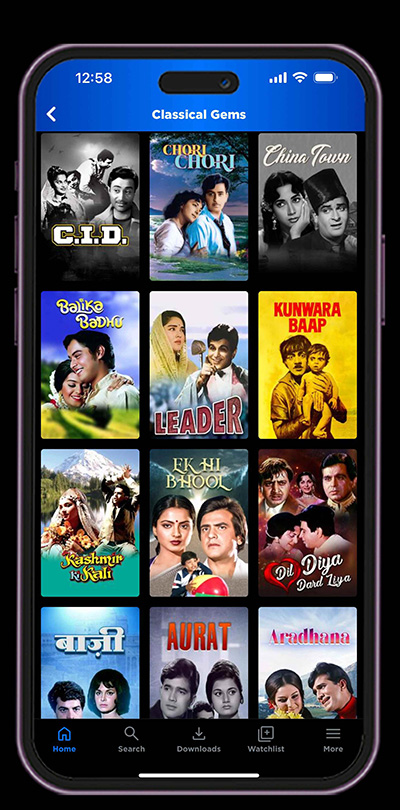
    Ultra Media & Entertainment Group has launched two OTT platforms on Hindi cinema and music.

    Said Sushilkumar Agrawal, CEO, Ultra Media & Entertainment Group: “Over the years, Ultra has acquired thousands of titles in Hindi, Marathi & other languages. Moreover, starting our own OTT apps was a logical business extension. The launch of both these apps is a significant milestone in our ongoing mission to bring India’s rich cinematic & musical heritage to the global audience. Old Hindi films & songs have a nostalgic value & are a driving force for these apps. We’re also exploring opportunities to expand into other languages with future OTT platforms”.

    Added Rajat Agrawal, COO, Ultra Media & Entertainment Group: “Ultra has always been a pioneer in home entertainment, evolving from VHS to OTT while preserving and digitising classic films. Our goal is to safeguard these gems for future generations and deliver an exceptional audio-visual experience. With platforms like Ultra Play and Ultra Gaane, we’re committed to elevate Indian content globally, ensuring our timeless stories resonate with audiences everywhere.”

  • Ranjona Banerji: Where is the journalistic instinct for scandal and shenanigans?

    Ranjona Banerji PhotographWhat makes headline news and why? Sometimes, you have no option: Government declares war, terrorist attack kills several, cyclone destroys, Someone important assassinated and so on.

    Sometimes you choose, you as in the editors in charge. The New York Times famously decided not to lead with the death of Princess Diana unlike just about every newspaper and news channel in the world. The editor felt it was not important enough to be the main story because something local was going on.

    In a similar way, just about every legacy newspaper and channel has decided that the intriguing story of Madhabi Puri Buch, SEBI, Hindenburg, Adani and Zee is not just unworthy of constant lead status, but in fact unworthy of coverage. I won’t be unfair. But I will stress that what is a remarkable story of alleged chicanery and cheating, which should actually thrill every newsroom and every viewer and reader, is relegated to the shadows.

    Small side note on the use of the word “alleged”. This is a massive trigger for informed readers and viewers who feel that journalists succumb to government or other pressures when they use this word about crimes committed. In fact, this is a simple safety mechanism for newsrooms. First, in Indian law, innocent until proven guilty. Secondly, this is protection against legal action against the media house. It is not a word that requires conniptions from concerned citizens. Just ignore it and carry on. Side note over.

    On August 10, the US-based Hindenburg Research LLC accused Buch Puri, the head of the Securities and Exchanges Board of India, a quasi-government body, of various counts of conflict of interest. Including that she and her husband owned parts of Adani entities. Hindenburg had already accused Adani of irregularities in its offshore funding activities. Buch Puri is the first non-government employee to be made head of SEBI. She was handpicked by those at the top of the Government of India. In other words, You Know Who.

    Buch Puri denied the allegations and then that was it. Radio silence from her. Vague huffing and puffing from GOI. The usual accusations that this was a conspiracy against India (Adani means India, obviously) by a conglomeration of that amorphous entity: The West, the Congress Party, George Soros (who is a sort of Commie West), Klingons and who knows what else.

    Since then, though, the story has not died down. SEBI employees have protested against a toxic work culture under Buch Puri, Subhash Chandra of Zee has accused her of “bribery and corruption”, and the Congress Party has released data that she received from a higher pension from her former employer ICICI Bank, than she ever earned at the bank.

    (Interestingly, the Supreme Court picked MV Kamath, formerly of ICICI Bank, as member of a committee to examine how SEBI had investigated the allegations against Adani.)

    An article linked below from veteran journalist Paranjoy Guha Thakurta, who has been relentless in his coverage of corporate fraud and Adani, and paid the price from it, explains much of the conflict of interest. As well as why this case is important and why Buch Puri should resign as SEBI chairperson.

    https://www.freepressjournal.in/business/why-sebi-chairperson-madhabi-buch-should-resign

    These other links point to the tip of the iceberg when it comes to crimes and misdeamenours and cover ups.

    https://frontline.thehindu.com/news/hindenburg-report-sebi-chief-madhabi-puri-buch-conflict-of-interest-adani-group-controversy/article68515614.ece

    https://economictimes.indiatimes.com/news/politics-and-nation/icici-banks-clarification-on-sebi-chiefs-salary-raises-more-questions-congress/articleshow/113039154.cms?from=mdr

    Now you may well ask, how come I state that the media is not covering this story, while I provide media links. Good question. What I am saying though is that given the importance of the story, of the links from Narendra Modi and Amit Shah downwards, of the allegations of various kinds which raise many red flags, why is the story not getting its due? Why are TV anchors not blaring irregularities nonstop the way they do about imaginary crimes against Hindus?

    Where is the journalistic instinct for scandal and shenanigans?

    Hah! Where indeed.

    Ranjona Banerji is a senior journalist and commentator. She writes on MxMIndia on Tuesdays and Fridays. Her views here are personal.

  • 13 years of MxM, 13 years of the slow demise of Indian media…

    13 years of MxM, 13 years of the slow demise of Indian media…

    Ranjona Banerji PhotographIt’s been 13 years since Pradyuman Maheshwari started MxMIndia.com. Congratulations to him, his courage, for putting up with me, and congratulations to his amazing team and contributors.

    It seems unbelievable that I’ve spent 13 years watching and commenting on the Indian media. I remember kicking and screaming when Pradyuman said I had to watch television news. Unlike most people, I never got addicted to 24 hours of vapid material. I prefer reading to listening, which is why I find podcasts intolerable beyond about five minutes. It takes me three days to finish a half an hour podcast. The written media works fine, whether on paper or online. Anyone who has read my columns knows this.

    When we started, though, I did watch a bit of TV news. NDTV was of course the best of the lot, but they all had their moments – India Today, CNN News 18, Times Now and the rest. Arnab Goswami was extremely entertaining, although his spiral into Howard Beale was disturbingly evident. (You haven’t watched Network (1976) yet? Despite all my imploring? Please do!)

    No sooner did the first Narendra Modi government come to power in 2014 than the signs of collapse we had already seen in the Indian media were now no longer hidden in newsrooms. Owners and editors decided that bowing down was the best sign of survival. Actually, I am being kind. Some of them obviously believed in the sectarian policies of the RSS and rejoiced that their time had come.

    I saw the signs when I quit my last full-time job in 2010. The paper changed hands and the new owner openly told us that all this “secularism” would no longer do. Soon after the India Against Corruption movement began, with the support of the RSS, and political strategists used financial fraud as a means to create the myth of Modi.

    The capitulation of the media to political ideology did not in fact quite work out the way its masters and owners thought it would. A gradually flailing economy further ruined by incompetent governance meant that ad revenue was low. The pandemic took a heavy toll on everyone, including the media. Instead of tackling the issue head on, the media carried on with its adulation tactics. It is only when death tolls and general mismanagement became intolerable that some – not all – media outlets realized they owed something to their consumers, not just to the ruling regime. These forays into journalism ended as the pandemic ended.

    But by then, something else had changed. Consecutive lockdowns meant that people got used to an offline life. Digital media, and I don’t mean the traditional media here, took over. YouTube, Instagram and so on, were easier to access for those who had smartphones and the time. Nothing in the traditional media has gone back to what it was, and what it was had been struggling for years with a broken model that everyone knew was broken.

    A lot of this assessment is easier in hindsight. But many of us who watch the media knew that some of it was coming and that the legacy media thought it could continue to run on past glory. Even if that past was about 30 years old. Whether centuries or decades, though, the end result has been the same: if you do not deliver the news as is it is not how your masters want it to be, people will go elsewhere.

    In India, as political fortunes have changed, some in the legacy media have made allowances in their usual sectarian love fests. Those further from Delhi have usually been more courageous. But when you look at how the media has ignored Manipur because it is a BJP-ruled state and how Bengal is being blown up because the BJP wants to make inroads there, you see how old habits die hard.

    This has been the tragedy of the past 13 years. The chronicling of the slow demise of traditional media where I spent most of my life.

    You want me to end on a hopeful note? All right. Stop paying attention to its last throes and move on to credible and intelligent independent digital sources. Or just get doped out on the dopamine hits from Instagram. You’ll learn more than you will from TV debates and have more fun!

    Ranjona Banerji is a senior journalist and commentator. She writes on MxMIndia on Tuesdays and Fridays. Her views here are personal.

  • Challenging the Disparity in Our Reverence for the Paralympics

    Sanjeev KotnalaThe recent 2024 Paris Summer Olympic Games were a grand spectacle that captivated the world, where athletes from every corner of the globe pushed the boundaries of human capability. Nations celebrated their victories with exuberance, their stories of dedication and sacrifice lauded by everyone, and their achievements etched into the nation’s sports history annals. With their extraordinary performance, many of these names fulfilled the nation’s desires and dreams and became household names. Shreyesh and Manu Bhaker, Neeraj Chopra and Sindhu are examples of this.

    But there’s a darker side to this celebration of the human spirit–a glaring inequality that is almost racist in its subtlety and pervasive in its impact. There is a disparity in how we address and react to the Paralympics, as if the challenges are somehow less, the medals are of a different hue, or the gold is of a lesser carat. Pat yourself if you know Bhagyashri Mahavrao Jadhav and Sumit Antil and their sports: the flagbearer for India at the Para Olympics 2024. Or if the names of sportspersons like Nitesh Kumar (Badminton), Avani Lekhara (Shooting), Bhabina Patel ( Table Tennis), Yogesh Kathuniya Mariyappan Thangavelu and Preethi Pal (Athletics), and sound familiar to you. I did not know many of these names before I started writing this article.

    Like the Olympics, the Paralympics are a stage where athletes represent their countries, strive for excellence, overcome incredible odds, and inspire millions. Yet, the enthusiasm, pride, and recognition accompanying Olympic victories are noticeably dimmed when it comes to the Paralympics. This disparity in perception is not just unfair–it’s unjust.


    Double Standards in Recognition

    Consider the emotional wave that swept across the country when Manu Bhakar won the bronze or the emotional tsunami that cut across the nation when Vinesh Phogat lost her chance because she was a few grams overweight. These were moments of collective pride and charged emotions of national unity, where the athlete was hailed as a hero.

    Compare this to the reaction when a Paralympian achieves the same feat. Fortunately, nowadays, they make it to the sports page and the front page like Avani  Lekhera and Mona Agarwal did for their win in shooting. However, the applause is fainter and lasts that much shorter. The media coverage is sparse, and the recognition is fleeting. It’s as if their gold is not as golden, and their victory is not as victorious.

    This disparity reveals a troubling double standard. Paralympic athletes train just as hard, if not harder, than their Olympic counterparts. They face the same pressures, gruelling schedules, more demanding physical challenges and most often, a challenging sponsor and monetary gap. Yet, the world seems to view their achievements as lesser, as if the effort required to overcome physical disabilities diminishes the value of their triumphs. This is not just a failure to recognise individual merit; it’s a failure to acknowledge the full spectrum of human potential.


    The Need for a Paradigm Shift

    This almost dismissive attitude towards Paralympic achievements reflects a more profound societal bias that equates physical ability with worth. This bias sees disability not as a different ability but as a deficiency, something less than a whole. This mindset is changing but at a pace that is too slow for comfort. It must change now.

    The Paralympics should be celebrated with the same enthusiasm, pride, and respect as the Olympics. Paralympians, too, represent the countries. Their dreams are just as big, their efforts just as intense, and their victories just as hard-earned. They deserve not only equal recognition but also equal respect.


    Steps Toward Change

    A concerted effort on multiple fronts is needed to address this issue. Fortunately, media coverage of the Paralympics has improved—though still far less than that of the Olympics. Educational campaigns should be launched to raise awareness about the Paralympics, highlighting the athletes’ stories, the challenges they overcome, and the significance of their achievements.  Touch your heart, and you will know how much you have celebrated your para Olympians. How have the brands, corporate sectors, and government short-changed them? We talk of equality in sports. Can we start with equality of support, funding, sponsorship, and recognition for Paralympians?

    Most importantly, we as individuals need to change our perceptions. We need to challenge our biases and recognise that the value of a medal is not in the physical act of winning it but in the courage, determination, and spirit it represents. The colour of the medal, the carat of its gold, is the same whether it is won at the Olympics or the Paralympics. We must feel the same pride and maybe more when our athletes win in Para Olympics. We must celebrate- but more importantly, we must watch them perform the way we watched and chased our summer Olympians. That may pull the money into the sports, trigger a new wave of recognition and push para-sports.


    A Call to Action

    It’s time for us to change the narrative. It’s time to celebrate Paralympians not as athletes with disabilities but as athletes. It’s time to give them the recognition they deserve and to be as proud of their achievements as we are of any Olympic victory.

    The Paralympics are not a sideshow but a testament to the indomitable human spirit. Let’s honour that spirit with the respect it deserves.

    In doing so, we uplift Paralympians and ourselves as we move towards a more inclusive, equal, and just society. Let the pride in our hearts be as strong, the cheers as loud, and the recognition as enduring for every champion—Olympic and Paralympic alike.