Category: MEDIA

  • MEC wins media mandate for ParentCircle

    By A Correspondent


    MEC India has been awarded the media duties for ParentCircle, for its upcoming products and platform. MEC won this account after a multi-agency pitch.


    A household brand of Shri Harini Media Ltd (a Ramco group associate), ParentCircle started off as an English monthly magazine that caters to various subjects related to parenting and child development. After tasting its initial success, SHML also garnered mileage with Chellamey – a monthly Tamil magazine exclusively designed for Tamil reading audience around the subjects of parenting and child development. Taking this success further in an anticipation to strengthen its product portfolio, ParentCircle is planning to launch its new product in the market and create a demand for subjects like parenting and child development.


    Commenting on the win, T. Gangadhar, MD, MEC India said, “We are delighted to associate with Parentcircle. ParentCircle is driven by a vision to bring about a positive transformation in the Indian parenting community. We look forward to an exciting partnership”.


    Nalina Ramalakshmi, Founder and Managing Director of ParentCircle says, “This is another significant moment for ParentCircle. We are extremely pleased to partner with MEC to help us in our growth strategy. Given the proven record of MEC worldwide, we believe this partnership should bring in more efficiency into our overall media planning. We now are best placed to optimise the opportunities available in the market.”


    The account will be led from MEC’s Chennai branch.


  • IAMAI toughens stand on Zero Rated Services

    By A Correspondent


    In its recent response to the DoT paper on Net Neutrality, the Internet and Mobile Association of India [IAMAI] has clearly and unambiguously opposed zero-rated plans of any type. In its submission made last week IAMAI has held that “these plans will ultimately harm Internet content and service providers by limiting competition among them, and, by extension, limit consumer choice”. Such plans will also “allow the operators, if given control of which apps/services to push to consumers, to discriminate and privilege certain web services over others, and throttle innovation”. The association has also reiterated that it does not support any plans that violate principles of net neutrality “especially paid or unpaid prioritization or other discriminatory practices”.


    IAMAI has also reacted strongly against the proposal to license domestic and national VoIP, as suggested by the DoT paper. The association contends that such a regime will be directly against consumer interest and against future innovations. The association contends that licensing any domestic and national Internet based voice communications services would be impractical especially since such services in many instances are offered as bundled services. The association also feared that licensing one type of internet service may be the beginning of a “slippery slope” and may lead to a clamour for so called “same service same rules” for other internet services.


    The association has also cautioned that while traffic management is a technical right vested with telecom operators, this right should not be misused to charge customers differentially for different types of data. Technical requirements of traffic management should also not be used to promote operators own services at the cost of other services, the association cautioned.


  • Ranjona Banerji: Gobbledygook on our business news channels

    By Ranjona Banerji


    If ever you want to treat yourself to some fine gobbledygook then you must tune into business news channels when some stock market event happens. Of course, I call them business news channels but what I mean is “stockmarket channels”. This is their forte. (I think.) So when the Sensex and the NIFTY plunged on Monday and the rupee took another beating against the dollar (every other day), these channels were in their element.


    Or rather, some looked as if the world had ended.


    Fortunately for them, the world has ended many times and recovered and ended once again thanks to human greed and stupidity. For those of us who understand nothing of this, we crave the excitement of crowing about extreme human fallibility. Like the fun money explosions of the past – tulips, North Sea bubbles and such.


    There are the tragic ones of the past. Although wit played its role there too. So who was it who said after the 1929 Wall Street crash that it’s time to get out of the market when the shoeshine boy starts giving you stock advice? Here in India, those of us alive and adult at the time were all taken in by the Giant Harshad Mehta Good Times Game. And almost everyone lost money in the end.


    To get back to our business channels, you have to get past their remarkable screens before you can even concentrate on what the voices are saying. There are more things happening in a second than happen on regular news TV screens on election days. There could be six running scrolls, five pop-up boxes, some channels have colour schemes like white and light blue, others experiment with every shade in the Pantone Color Guide, often there are several talking heads and information moving both vertically and horizontally…


    After you get past that, you try and zone in on the voices. Or in my case, you get stuck.


    I listened to an important mutual fund manager talk in a constant monotone for 10 minutes but my fickle mind kept thinking about why I ate that popcorn yesterday and whether it was going to rain. Then the anchor thanked him and translated what he said: buy when prices are down. Yeah, I thought that was basic stuff but as has been established, what do I know?


    Like what does “being overweight on PSU banks mean”? I am overweight all the time, as it happens. It is fabulous metaphors like this that make this jargon fascinating. Like getting a haircut is a bad thing although many people I know spend vast amounts of money to get their hair cut properly.


    I was happy to see one growth manager on Bloomberg say that no one had a clue as to what was going on. This was remarkable honesty when you consider how much people were talking and explaining on the other channels. I needed no more. If even experts admit no one has a clue what’s going on, why watch any more?


    **


    Twitter was far more fun since it was full of jokes co-relating crashing markets with rising onion prices and promises of better days.


  • 4 ways to turn great strategy into effective execution


    By Anita Kotwani


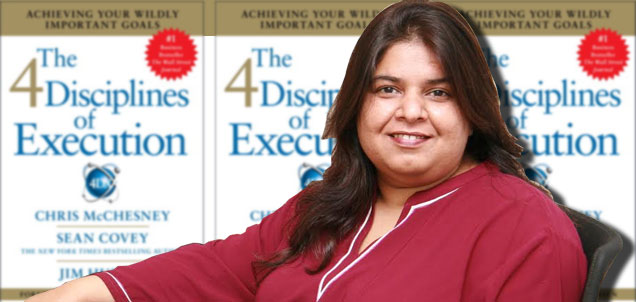
    Strategy without Execution is Hallucination. In today’s competitive environment staying ahead of the curve is a challenge that is faced by most companies. And when you are one of the top ones, you have to be that much more nimble. As organisations, we tend to focus on crafting strategies for the year; what we also need to really balance, is ensuring that we execute those strategies. At Mindshare West, we have been inspired by the book, ‘Four Disciplines of Execution’ by Chris McChesney, Sean Covey and Jim Huling, to imbibe this learning. The results have been astounding, changed the way we need to think as an organisation and, most importantly, has helped us institutionalise excellence.


    The 4 Disciplines of Execution (4DX) is a simple, repeatable, and proven formula for executing on your most important strategic priorities in the midst of the ‘Whirlwind’. By following the 4 Disciplines, leaders can produce breakthrough results. But while 4DX represents a new way of thinking and working that is essential to thriving in today’s competitive climate, at the heart of this is a behavioral change that also requires a commitment from the team, despite the daily grind.


    The real enemy of execution is the massive amount of energy that’s necessary just to keep your operation going on a day-to-day basis. The 4 Disciplines aren’t designed for managing your whirlwind, but for executing your most critical strategy in the midst of the whirlwind. Here’s what the book says about each of the 4 Disciplines –


    Discipline #1: Focus on the Wildly Important Goal (WIG)

    Focus your finest efforts on one or two goals that will make all the difference to your businesses. Execution starts with focus. The idea is to spend disproportionate energy on the WIG — the one area where the change would have the greatest impact. This needs to be ensured across the organisation, across disciplines and also across teams.


    Discipline #2: Act on the Lead Measures

    While a lag measure tells you if you’ve achieved the goal, a lead measure tells you if you are likely to achieve the goal. We call them lag measures because by the time you get the data, the result has already happened. A lead measure is predictive, meaning that if the lead measure changes, you can predict that the lag measure will also change.


    Discipline #3: Keep a compelling scorecard

    The third discipline is to make sure everyone knows the score at all times, so that they can tell whether or not they’re winning. This is the discipline of engagement. If the lead and lag measures are not captured on a visual scoreboard and updated regularly, they will disappear into the whirlwind. People disengage when they don’t know the score. And a ticking scoreboard keeps the momentum going within the team.


    Discipline #2: Create a cadence of accountability

    The fourth discipline is to create a cadence of accountability, a frequently recurring cycle of accounting for past performance and action planning to move the score forward. Discipline 4 is where execution happens. Disciplines 1, 2 and 3 set up the game; but until you apply Discipline 4, your team isn’t in the game. This is the discipline that brings the team members all together. In Discipline 4, your team meets at least once a week in a WIG session. This meeting lasts no longer than 20 to 30 minutes, has a set agenda and goes quickly, establishing your weekly rhythm of accountability for driving progress toward the WIG.


    We at Mindshare West have started on this journey as a team and are truly inspired and motivated with the results and goals that it has help drive as a team. It has seen results that have been astounding, changed the way we need to think as an organization and most importantly it has helped us institutionalize excellence.  To us as a team, 4DX represents a new way of thinking and working that is essential to thriving in today’s competitive world.


    Anita Kotwani is Leader, Client Leadership at Mindshare


  • Arre wah! Indian Express inks deal with Screwvala/Saikumar to produce docus

    By A Correspondent


    It’s a tie-up that could well change the world of investigative journalism in the country. While we can boast of a truly free press, how much of it is truly free to cover whatever it would like to. Or whatever ought to be covered.


    The Indian Express and Arré,the digital media property being set up by UDigital, the company set up Ronnie Screwvala, B Saikumar and Ajay Chacko, have entered into a strategic partnership in creating video documentaries to be distributed across digital and linear platforms globally.


    Commenting on the initiative Anant Goenka, Wholetime Director and Head – New Media, Indian Express said, “Arré is an ambitious and exciting project championed by a visionary leadership that understands the need for high-quality, original content produced in a made-for-digital format. Not digital-first, or digital-friendly, but digital-only.We believe that some of the journalism that we have been doing has the potential to reach an even wider audience. With Arré, there’s a meeting of minds in terms of commitment to quality storytelling and the need for a different and disruptive tonality. ‎We’re excited by the potential of this powerful combination.”


    Ronnie Screwvala

    Ronnie Screwvala, Co-Founder, U Digital said, ‘ We are delighted to partner with an institution like The Indian Express group, which has stood for journalism of courage and we hope to break new frontiers of storytelling for a new generation of Indian and global audiences. This collaboration represents a new generation of partnerships that bring together complimentary strengths in the digital era’.


    Sai Kumar

    B Sai Kumar, UDigital’s Co-Founder and MD said, “The raison d’etre of the partnership is to make documentaries that appeal to the mainstream and resonate with the youth.”


    While Goenka indicated that the output will be standalone content, the statement by Raj Kamal Jha, Chief Editor, The Indian Express, gave another picture. “Arré’s team has a formidable record of excellence in TV and cinema. Together, we shall work to translate our journalism — done first for print to the highest standards of fairness and accuracy — into the evocative language of a documentary. And ensure that the story always gains in translation”. Whatever it may be eventually, we can expect some good, solid journalism on a screen near you.

    Watch out, holy cows!


  • BARC-TAM: We told you so! MxM broke the story…

    By Our Research Editor


    Okay, guys. Time to blow our own trumpets. But we see so much of it on television and print that we couldn’t help doing it. After all, when we wrote, no one else wrote about it, and when Kantar CEO Eric Salama slammed our report, we heard there some even grinning with fiendish delight. Whatever.


    So here are links to the two reports. Read them again. We may not have the maximum page views amongst media sites, but we have the pages that matter. And doubtlessly viewers like yourselves who matter most.


    Enjoy.


    This is our first story: http://www.mxmindia.com/2015/03/exclusive-barc-in-talks-to-buy-tam/


    And our second report where we spoke of how Salama rubbished our report: http://www.mxmindia.com/2015/03/eric-salama-slams-mxm-report-says-no-selling-tam-to-barc-mxmindia-stands-by-story/


  • BARC-TAM: Did the industry kill TAM?

    By Our Research Editor


    Let’s be clear on this. The only people responsible for TAM getting out of the television audience measurement business are the people who set up the body to do the job.


    There were complaints of pilferage, corruption and incorrect data and analyses. Some of these complaints continue to come in for BARC data also, but since here the BARC stakeholders are all of those who could be complaining, we have murmurs and not shouting.


    So TAM was made to exit, be it the politics of the industry or simply apathy.


    While it was set up by a joint industry body, how much did they monitor and guide TAM?


    Was there enough clarity, the way it is today?


    Did the politics between the stakeholders see TAM in?


    But, then, also did Nielsen and Kantar also not be progressive enough and make attempts to streamline operations and make it future-ready? Couldn’t the boxes have been manufactured locally?  Did Nielsen and Kantar use TAM to shore up their own global bottomline?


    Many of these questions will stay unanswered and/or brushed under the carpet.


  • Komli Media sells India business to Gurgaon-based SVG Media

    By Krithika Krishnamurthy


    A day after adtech firm Komli Media spun out a separate company RevX, it sold its India business to Gurgaon-based SVG Media for an undisclosed amount.


    Under the terms of the deal, Komli India will function independently alongside the existing businesses of SVG Media — Tyroo Technologies, DGM and SeventyNine. About 100 employees will join SVG as part of the deal. Komli India, SVG’s fourth acquisition, brings in 60 million unique users taking SVG’s reach to 150 million internet users in India.


    “Social was a very important piece for us as commerce today happens through mobile. Komli had the social piece, and so we acquired it,” said CEO Manish Vij of SVG, who said SVG was in talks with Komli for the past five months.


    SVG’s revenue from all businesses stand at over $50 million, which it claims is third only to Google and Facebook. The combined entity would reach 150 million Indian internet users across all devices, with 60 million coming in from Komli.


    “They are probably looking to streamline on a strategy that works best, instead of doing multiple things. That may be the rationale behind hiving off its business units,” said Neha Dharia, a senior analyst at UK-based research firm Ovum.


    Earlier this year, it sold its South East Asia operations to Malaysia’s Axiata group for $11.5 million, and just this week, it spun out its mobile remarketing platform RevX as an independent entity with $4 million in funding. “All companies go through various phases in their journey. We wanted to change approach, go more regional and invest more in technology,” said Amar Goel, founder and CEO of Komli Media.


    Source:The Economic Times

    Copyright © 2015, Bennett, Coleman & Co. Ltd. All Rights Reserved

    Licensed to republish

  • BARC-TAM deal: Win-win for all


    By A Correspondent


    The evening was organised to celebrate GroupM’s continuing dominance in the country, but there were just two things that were being discussed in not-very-hushed tones at a cocktails hosted by Mark Patterson, APAC CEO of the media services giant.


    The first was the INX Media founder Indrani Mukerjea with whom many of adland’s swish set had a muah-muah relationship, and the second was of course something that’s virtually as big a story as a Coca-Cola buying over Thums Up in the 1990s. That BARC has got TAM out of the audience measurement business in India in the form that it has been doing. And not just TAM, but even if it’s co-owners the WPP-owned Kantar Media and Nielsen.


    For BARC, it’s a huge win.

    1. It ramps up current meter strength of 22,000 to 34,000

    2. It kills a huge competitor in TAM

    3. Subscribers – channels and media agencies – will now not be able to compare the two systems, as TAM will cease to exist in the audience measurement space

    4. Having been around for a while, the TAM system is a well-oiled machinery

    5. It’s a no cash deal. Earlier, it was rumoured that TAM wanted Rs 70-odd crore for selling out completely. Now, it emerges that BARC is not paying any dosh upfront. But it needs to share 49 per cent of the spoils on the sourcing of the raw data, which may get diluted as BARC’s boxes increase if Nielsen-Kantar don’t invest more monies


    For TAM, it’s not a bad deal

    1. It’s an honourable exit

    2. Agreed it’s not going to make money upfront, but the 49 per cent (as against Rs 70crore upfront) isn’t a bad sum. The 49 per cent may get diluted to 25-odd per cent if its joint owners don’t put in any more money to grow the number of meters to 50,000


    What’s not been spoken about

    1. The announcement is following the signing of the term sheet. It’s going to take a minimum of three to four months for things to really happen. Until then it’s business as usual

    2. There are some 900-950 people in the PeopleMeter business. While a lot of them will be absorbed in some way by the new company, there may be some who will not be


    And the million dollar question

    What happens to LV Krishnan?


    The new truncated TAM Media is too small an operation for someone like LV Krishnan to run.  For, even though he’s young too be called that, but he’s surely the Father of TV Audience Measurement in India though of course some folks like Praveen Tripathi etc were around in the early days (and is now associated with BARC). From what we heard earlier, LV will help in the transition and get absorbed in the Kantar-WPP fold. Or he may well be hired by a broadcaster to help interpret numbers. Or he may set up his own consultancy.


    What we do know about LV is that he is not just a fighter, he’s got the endurance. From a record 56 push-ups at MCA Club in Bandra, to loooooong meetings with stakeholders, you’ve got to acknowledge that he is – as of today – the best in the business. He can tire you down, but he seldom gets tired of work.


    Back to the GroupM party, it’s ironical that the discussion and the clinking of glasses to celebrate the announcement happened for an organisation which reportedly batted much for TAM in the BARC boardrooms in the early days. Interestingly though it’s after sibling GroupM unsubscribed from TAM that people said BARC has arrived.


    PS: MxMIndia has been at the forefront of the coverage on the measurement business. Some of the best interviews given by all stakeholders have been published by us at MxMIndia, including the tearjerker of an interview of LV Krishnan that appeared a day before BARC ratings were launched. We will continue in our coverage. Accurate and fair. Keep the faith!


  • Siddhartha Mukherjee: What Biking taught me about Brand Communication Management

    By Siddhartha Mukherjee


    I do not know when and how the virus of Bike Riding infected me. Well, it happened some years ago and it happened for good! I genuinely believe that such developments in your life happen for a purpose.


    Bike rides, especially the long ones, have benefitted me in many varied ways – relaxation, regular checks on stamina and sturdiness, ability to adapt, sense of forecasting, get to see the real India, et al. However, off late, given my passion and belief on PR/Earned media as a tool, my mind has been wandering around, trying to explore the learnings from biking and use them for Brand Communication Management. Little did I know that, subconsciously, I would end up learning or realising dynamics which a Business School may not provide very naturally.


    Below are some initial thoughts:

    1. Research well about the Route you plan to take:  Doesnot matter how much of information you get, but never embark on a journey without Research. Be aware of the weather, terrain, road conditions, miscreants, food and shelter availability etc. Try and LISTEN to as much as possible. Always be ready with as many “what if” situations as possible. You can do this only when you Research/Listen well.

    :: Learning for Brand, PR & Ad Communication Teams: My respect for Brand Communication Heads enhances when I see them start their planning with Listening or Researching the Terrain. Before you push out your Brand Campaign into a market or prospective Target Group, LISTEN to THE MOOD of the market. Leverage the mood and create Campaign talking points. Use the potential tool of PR and Advertising optimally and right amount of mix.


    2. Rely on a Good Mechanic:  The mechanic’s diagnosis of your mean machine can make the difference between life and death. Doesnot matter if he charges more, but if he knows the subject and diagnoses well, all the more pick him as an Insurance. He will advise you well on the condition of your machine – change of spares, sturdiness of the machine, engine oil quality, tightening required, etc. Again, listen to him and reconcile it with your Research on the Road Terrain.

    :: Learning for Brand, PR & Ad Communication Teams: Having a good mechanic is like having a good Communications Agency. If they are really good, they will know your brand and its health. They will help you channelise your communications strategy based on the MOOD listened/researched from each market. For example, it is quite a waste of ROI for a Life Insurance ULIP product to be pushed vigorously in Eastern India. Same way, a Term Plan being aggressively marketed in Western India may not be a fruitful effort.


    3. Protective Gears, Necessary Accessories and Spares, etc: A successful road journey is a mix of Gut, Luck, Mental and Physical preparation, will power etc. Sometimes, CRISIS hits you from an unexpected corner.  Using the right protective gears, spares, driving skills, driving rules, etc. can give you long term pleasure of the road journey.

    :: Learning for Brand, PR & Ad Communication Teams: Keep a Crisis manual ready. A manual that envisages and  lists down every possible crisis that can come up across stakeholders and custodians – consumers, customers, employees, vendors, investors, government, society, trade, etc. The Manual should list down the names/departments responsible for handling each type of crisis and how.


    4. Before you start, set a Target/Benchmark: Driving or any journey is not fun in the absence of targets or benchmarks. Even if it is a leisure or pleasure ride, set a benchmark or a target in terms of distance you want to cover within a stipulated time, things you want to do at destination one, two, three, etc., the kind of mileage you want to achieve and therefore  the speed momentum you want to maintain, so on and so forth. The kind of feeling you want to go through…Actually, it is all about the Input, Output and the Outcome!

    :: Learning for Brand, PR & Ad Communication Teams:  Post listening, before you blindly commence on Planning, Execution and start chasing your agency, Client and Agency can jointly list down the Ingredients of Communications Tool (Input) that will be used, the media exposure (Output) that they seek and finally the kind of Outcome one wants for the Brand – recall, engagement, conversion etc. Each phase of Input & Output can and should be targeted, benchmarked and monitored towards a desired Outcome. Having said this, happy to see Agencies and Clients are warming up to the idea of Benchmarking and Target-setting.


    5. Measure your bike’s ongoing performance: What’s my average speed? What’s the mileage that my bike is giving me? Has the engine heated up…time to let it cool down? How are the tyre conditions? Any symptom of oil leakage? Are indicators and headlight dippers working? Is the wind speed, rains or dry mud causing engine inefficiencies? Well, regular (period can be defined) reviews/measurement is a lifesaver. It is a diktat for early cure.

    :: Learning for Brand, PR & Ad Communication Teams: Because benchmarking/target setting is not a common healthy habit, the urge to measure/review frequently is similarly sagging. Benchmarking and Frequent reviews should go hand-in-hand. It is like the temperature gauge of your Brand’s engine. Whether my inputs are giving desired media exposure output, whether I need to adjust the frequency or messaging, whether all the effort is creating the needed Outcome of recall…all these are good to be tracked regularly. Health checks or Measurement & Audit reports play an important role in this area. Brand custodians and agencies can make fabulous use of this service and adjust/adapt for the road ahead.


    6. Importance of Road Signs, Driving Skills and Traffic Rules: Being aware of Road Signs, Indications, Traffic rules and more importantly, to follow them, is a matter of scientific habit and discipline. Giving your stakeholders – traffic police, other commuters on the road, your family dependants waiting for you at home, etc. – a noticeable and constant update on your intentions and plans at crossroads, split roads, U turns, heavy traffic signals etc. minimizes or averts crisis.

    :: Learning for Brand, PR & Ad Communication Teams: A brand journey goes through various twists, turns, cross roads, halts, damages and bruises. Keeping your stakeholders – customers, employees, owners, vendors etc – posted with your intentions of the Brand is a safe and required practice.


    7. Making full use of Clutch: Misuse or improper use of Clutch is one of the biggest common reasons for engine inefficiency. Carried away with our excitement to speed up, to impress an onlooker, to catch up on lapsed time, whatever the reason might be, we end up misusing or not utilizing the clutch lever properly. Clutch prepares the engine to adjust (reduce/increase) speed and take (more/less) load. If clutch is not used properly, it will create wear and tear to your engine and your health.

    :: Learning for Brand, PR & Ad Communication Teams: When it comes to the definition of a clutch for the Brand Machinery (team and agency), it can be some of the following:

    i. Regular Measurement and Audit reports to assess if Brand Communications (ATL & BTL) speed is matching up to the Business Speed

    ii. Aligning/Adjusting  the Communications Brief with the Business Brief

    iii. Corporate Communications and Marketing Communications working together

    iv. The CEO giving a standard and clear brief to all CXOs with broken down KRAs for each CXO


    Well, learnings can go on and on! It’s such a pleasure to imagine the bike as a brand entering different terrains, adjusting and responding to different clutch, gear, brake and throttle combinations. How proper benchmarking, constant measurement/reviews, following communication signals etc. can make the journey so pleasurable.


    No wonder, it is one of the diseases, I will never have regrets getting infected with!


  • Tech is fine, but relationships will always be there: Jasmin Sohrabji


    Omnicom Media Group CEO India and South East Asia Jasmin Sohrabji says the agency goes public only when there is a need, like the establishing of its second agency, PHD. But who needs a constant spotlight when you’ve got a full trophy case and several ‘firsts’ in the industry to your name, particularly in the digital and mobile space, she tells Pradyuman Maheshwari. Hmmm. Read on…


    There is a perception that both you and OMD are extremely low profile. That you are doing great work, but you never talk about it!

    I set up a brand which didn’t exist in India, so there was some conscious effort to establish the brand. In the first four or five years, everything we did — every win, every office opened — we made it into a PR story. Once the brand was established, the focus was on internal consolidation of the second brand and the group. That’s why I think you won’t see the sort of media coverage we sought earlier. We did it again when we launched our second brand, PHD, year before last. We did the big Cannes wins that we had last year. And while we’ve been inundated with awards we’ve won, particularly for PHD, we didn’t PR the whole thing. By that time, we believed our fraternity and our potential clients, already knew us.


    Others who are well-established, are also high profile. Is this [reticence about PR], then, OMD’s personality?

    No, it’s not a personality and it’s not even my personality. We go in cycles of doing PR when we need to. We went through a cycle of establishing OMD, then establishing our second brand. Now the focus is on the overall group, and we will make a big group hiring. When we hired Shavon Barua as Managing Partner for PHD, we did some PR around that. But I think maybe you are right, to an extent we have not [gone public much].


    How is OMD doing? And PHD? What is your self-assessment?

    We’ve done very well in the last few years we’ve been there. Our growth has never been under 25 to 27 per cent. We’ve done very well both in terms of organic growth as well as new business. Not all of it is announced, or can be, sometimes. It’s not just the growth per cent, but we’ve established ourselves quite well across markets. When OMD launched, it was first a Mumbai entity, and later went to the south and Delhi. With PHD, it’s the other way around. We won the HP and SC Johnson [accounts]. The geographical balance is something I’ve always valued, because if you’re going to establish yourself as a group and grow, you can’t be seen as a one-city, one-market business. If you look around, many of the agencies – not just the top ones – have struggled to establish themselves in the south, west and north zones. I think we’ve been fortunate with our brands. Though OMD is stronger, PHD is relatively new since it’s been around for only two years. And so it still needs to be established and that’s why you’ll see more buzz around that.


    Other agencies have branched out into various areas like outdoor, digital, even activations. What about you?

    So have we, and on that we’ve done a little more conscious thinking. We’ve been one of the key agencies in the digital space, and it’s helped because of the kind of clients we’ve had. I think the biggest strength we had in digital is not just client and leadership, but the fact that because we were relatively new and launched in the heart of the digital era. In our case, digital didn’t come as a little add-on to offline; we’ve evolved it as a product as we’ve grown.


    You were among the first one to bring in mobile too.

    We’ve done a lot of firsts in digital. That’s been our key strength. We’ve focused on creative and content, in terms of both alignments as well as internal hiring, in digital. We’ve not done that much in the offline space. We focused on mobile too, very early on. I think the out-of-home space is an area we haven’t built, in-house.


    There are rumors that Mudra Max might merge with OMD

    When there is something to share, we’ll do it. Right now, there isn’t. Mudra is one of our partners. We’ve never gone the route of just one alignment because a lot of the clients are looking for a whole mix. So the pitches happen separately. The agency selection process is also quite different, and doesn’t always come as a part of the mix. So if you win the business, it doesn’t mean that you [automatically also] win digital and outdoor.


    Technology is virtually ruling the way business is done today. Is that a worry

    God, no! I think it’s great. It’s a huge positive for various reasons. New media has driven technology into the future. Old media has not seen the change as much yet, but it will. The change we’ve seen, however, are just in the efficiency of tools. We’ve not seen a smarter technology, just tool efficiency which means I can get my teams to finish their runs faster and spend time on the more interesting parts of brand communication. Although we haven’t seen a big technology change in the offline space, I believe it’s just a matter of time before they merge. It’s my belief that the more we go into technology, the smarter the machine becomes and the more important it is for us to then keep ahead and be smarter than the machine. The day we let the machine decide, I think we’ll have lost a large part of the value we bring to the client. We operate a lot on gut, so I think, we need to be smarter and always one step ahead of technology.


    And relationships do matter, don’t they?

    See relationships will always be there.. They will go up and down in terms of relevance, but will never go away. But if people let technology decide or guide their plans and think therefore they’ll sit back and see a run being done I think somewhere that, that individual or that agency will not be ready and prepared for the future. My expectation is, the more we advance in technology, the more quality people we’ll attract, the better our industry will be. Think of the kind of work that’s happening in our space today.. What was the conversation all you media people came and asked us about 10 years back? Every conversation is that do we have enough talent available. Why are people going and joining channels? Why are people going away to Asia? Remember all those conversations? Today who has that conversation? Today, we can attract very good talent because of technology. Because today our industry seems so much more in the front rung of decision-making.


    Are you able to attract talent from top B-schools and such?

    Top B-schools are not easy right now because of cost reasons. Top B-school graduates expect to get paid more than someone who has five or seven years of experience in our industry. We can’t give entry-level people those kind of salaries. So I may not be able to get that kind of talent yet, but in future I think we will. There is only plus and plus coming for us. The kind of work that we are seeing, that our network is doing globally in combining both offline and online data to better our strategies and such. When I see that, I wish I was still a planner at that time.


    You’ve been on the Cannes jury and you know that not too many Indian agencies make it [there]. So how do you rate our work versus the rest of the world?

    Firstly, I did media and we only get to see about 20 per cent of the work that’s out there. I didn’t see too of the India work, but I do know there was work like the Touch The Pickle Campaign this year, which generated a lot of talk. So while I think we have huge potential, we’re not up there on storytelling, when compared to work done globally. I don’t think the work is such a big issue with us as much as the way we tell our stories. If you’ve to wait for the idea after almost a minute into the video, that’s not good.


    OMD is not too active on the awards circuit in India, especially the Emvies

    OMD has not been as high profile as PHD. Yes, we aren’t at the Emvies. We don’t dominate that. Only PHD has been doing it, we’ve not been doing it.


    Any reason why?

    There is no reason; it’s just not happened. But this year we have. I’m going to send you a list of this year’s wins of OMD because I think you’ll be a little surprised.


    Do awards matter?

    It’s client specific. I feel the quality of your work, your team, your efficiency and savings takes precedence over winning awards, but it’s good PR. However, I don’t think that’s the reason we could be winning. Our product has so many elements to it; a big part is on savings, rates and negotiations. I don’t think [awards are] winning us pitches. So it’s important, but not the most important for a new business, for sure.


    Where do you see yourselves in 2020? How do see the business shaping up

    Earlier, I was a seeing a lot of data analytics and insight-informing strategy work. It was being done a lot more efficiently with technology in the digital space. Now all the conversations are looking at data across, because while digital makes sense in the evolved markets, data leading to insight-leading to solution-leading to optimisation may not work in India where there are a large number of activities happening offline. Four years later, I hope we will not be having these conversations and will have better integrated [online and offline] media. So there will be people who understand data well, and there’ll be people who can ideate and optimise from that data. Technology will help drive it, and I think people will eventually become online, rather than offline, specialists.


    Do you think going forward, media buying will get integrated as against just print or television or digital…

    I think it should. I really think it should because today you can afford the isolation but or the separation but I think as we go forward if there is a conversation… a buyer should know a conversation about buying a video versus buying a channel. And why am I paying this versus that? How can there be two separate conversations? It should be a video conversation. It shouldn’t be this channel and that Youtube kind of conversation.


    In terms of the kind of media you do, how do your digital spends compare with the rest?

    Our digital is way higher than the industry average. I think our digital spend is more than a component; the skew is more than 20 per cent of our overall.


    Over media investments?

    As a percentage of our overall media investment. We are very high on digital which is why our focus has been so much on the kinds of platforms we are launching, the technology we are investing in, the people we are hiring. When you think of long-term investment in other media, there’s an industry average. Everyone’s spends have similar amounts of outdoor and activation in their mix. But they are not growing at the same rate. Today, we are all at one level. Two years later, I might still be spending only 10 per cent on these mediums. But when you look at digital, it may have moved from one to five to 10 or even 20 per cent.


    Going forward, what new things can we expect from you?

    Now that our second brand is also established, I think the focus will be on consolidating individual brands and consolidating as a group. The work that we are doing in digital, research and technology, will be of benefit to all the brands. Earlier, we were carrying out initiatives for individual brands. We’ve hired a senior investment lead because it was time for us to compete at a group and brand level. Earlier we did have brand-level investment and trading leads. But now we feel the need to do a lot more of our initiatives, not just at the brand but also the group level. We recently launched a study called Touch Point Analysis, an OMD initiative. There’ll be more things which will benefit both groups.


    Is it the knowledge you provide or is it finally the kind of discount you offer?

    There is no one person or client in a pitch. There are multiple kinds of clients. For some, your rates have to be the best. For others, it could be the quality of your future thinking. How much are we able to read the future in our industry, and the quality of our people, is driving the pitches. That’s why clients want to meet more of the people going to be involved in the business.


    In your business, you can’t be isolated from the environment around you. Do you look at how others are playing? And where do you want to be, say, two years from now?

    Of course we do. When we started out eight years ago, we were very clear in our minds that we had to quickly catch up [with others] in terms of scale. Clients want to give their business to someone who is well established. The focus at that time was to ramp up very quickly, which we did really well and balance the geographies. We’ve seen agencies who’ve just focused on one market or another, and not been able to maintain their momentum over the long term because they’re seen as a Delhi or Mumbai agency, not a national one. Today, while we look at other agencies, we don’t look at what someone is doing right or doing wrong. I don’t think any agency styles itself on another agency. People just compare to see where are we on digital versus someone else on digital, or talent, or buying capabilities.


    And where would you say you are?

    We are always No 1 on everything. We’ve built a strong business for ourselves.


    This interview first appeared in dna of brands on August 24, 2015

     

  • Shailesh Kapoor: Prime Time News or Murder Investigations?

    By Shailesh Kapoor


    In the short history of news television in India, there would be very few weeks as bizarre as the one we are currently in. We are in the middle of a full-blown investigation of the Sheena Bora murder case, unfolding in near real-time across news channels. Everything else has to take a backseat then, including the disturbing state of affairs in Gujarat.


    It’s understandable that a high profile murder case would generate audience interest, especially when it has elements that point to decadence of values, much like the Aarushi Talwar murder case. I’m all for running a story that the audience want to watch. But is debating a whodunit with half-a-dozen talking heads the best way of reporting a murder case? I’m not too convinced about that.


    That Indrani Mukerjea, the principal accused here, has a broadcasting lineage has created that much extra interest in media offices. If you have spent at least three-four years in the media industry, chances are very high that you are within one degree of separation from everyone else in the industry. It’s easy for journalists to find colleagues and ex-colleagues who knew Indrani. But very few like Ravina Raj Kohli have chosen to go on record with their views.


    So, we end up with the same generic talking heads that we see all the time when a non-political story gets prime-time coverage. But when you see Rahul Roy as one of them, you know it’s getting really desperate.


    Last month, I read Avirook Sen’s book on the Aarushi murder case. Coming from a journalist who followed the case and the trial all the way through (for Mumbai Mirror), and continues to do so even now, the book was an eyeopener in many ways. I have spent a fair share of my primetime viewing on the Aarushi case, but when I read Sen’s book, I realised how little I knew about the case till then.


    I then googled a few news channel videos from the day of the verdict, and even found Sen on-air in a couple of them. But he got only about half a minute to speak on about three occasions, and while you sensed in that short time that he was the one who knew the case better than everyone on the panel, including the anchor, you never got to know his point-of-view in that short period of time.


    If viewers are interested in a story, investigative journalism of Sen’s quality would engage them a lot more than debates based on half knowledge and conjectures. But then, that requires some effort, doesn’t it? As Sen says in his book, there were several days in the Talwars trial when he was the only journalist at the Ghaziabad court.


    Are news channels getting addicted to this easier way out, where debates from the comfort of the studios are the new form of journalism? It would seem so, going by what we see all the time.


    One hopes that there are young journalists with fire in their belly wanting to change that perception!