Category: MEDIA

  • Dentsu OOH firm Milestone Brandcom

    By A Correspondent


    Dentsu Aegis Network has announced the acquisition of Milestone Brandcom, the leading Out-of-Home (OOH) agency by taking a majority share in the firm. With the acquisition of Milestone Brandcom, combined with Posterscope – Dentsu Aegis Network’s global outdoor media agency – Dentsu Aegis Network gains much clout in the Indian OOH space in terms of quality and volume.


    Founded in October 2009 and led by founder and managing director Nabendu Bhattacharyya, Milestone Brandcom has more than 100 active clients across a wide range of industries, and provide a full service comprehensive OOH offering which includes an event promotion activation division, rural OOH activation, retail and digital OOH division. Milestone Brandcom recently launched the ‘Milestone Optimizer’, a powerful tool which optimises OOH media plans by tracking 25,000 sites across India and providing Gross Impression Points of an OOH campaign, a first in India.


    Nabendu Bhattacharyya will continue as CEO and Managing Director of Milestone Brandcom, reporting to Ashish Bhasin, Chairman and CEO of Dentsu Aegis Network South Asia.


    Said Mr Bhattacharyya: “We are thrilled to join hands with the Dentsu Aegis Network and my entire team and I are looking forward to taking Milestone Brandcom to even greater heights. Being a part of a dynamic global group like Dentsu Aegis Network will help us be stronger together. OOH will become more and more important in India and we are confident that as market leaders we will be at the forefront of this progress.”


    Said Nick Waters, CEO of Dentsu Aegis Network Asia Pacific: “Milestone Brandcom is a highly awarded and well respected agency in India. This acquisition marks another significant step as we build a high quality and scaled group in India.  We welcome Nabendu and the team to the company.”


    Added Mr Bhasin: “Milestone Brandcom is not only a market leader but also a pioneer of several developments in the OOH industry in India. Posterscope was already amongst India’s fastest growing brands. This investment now establishes clear leadership for us in this very important medium, making us the leader in the OOH and OOH Retail space in India. We believe that OOH will play an increasingly important role for clients in years to come so we are delighted to be able to offer clients a market leading service.”
     

  • Shailesh Kapoor: Pro Kabaddi: A Giant Leap for a Dying Sport?

    By Shailesh Kapoor


    When I first learnt that Star Sports are investing in Kabaddi, I rubbed my eyes in disbelief. A wrestling league, or even a boxing league, would seem like a good idea, given the talk value around these sports in recent years, especially in the wake of India’s creditable performance at the global stage, including the 2012 London Olympics. But Kabaddi?


    India has monopolized the sport at the Asian Games, winning all seven golds since its introduction in the event in 1990. But the primarily sub-continental sport has not found many takers outside South Asia. Awareness of the sport is very low amongst young audiences, many of who confuse it with the traditional Indian (dying) sport of Kho Kho.


    Star’s decision to invest in Kabaddi, then, can be labeled as ‘high-risk’, a decision that would have to rely on exceptional execution to even find a critical audience in its first season. To their credit, having taken the decision, they have gone all guns blazing, with some good advertising and high media visibility. The simulcast on Star Sports and Star Gold will also help in widening the reach in the first year.


    But you can’t “buy” relevance and appeal for a media property. It needs to be intrinsic to the content. Hence, it was with great curiosity that I tuned into the first four games.


    My skepticism about the league has reduced considerably, say from 9/10 to 5/10, having watched the first two days of action. The last I watched Kabaddi was probably back in mid-90s. What I saw this time was strikingly different and several notches higher in entertainment than the sport I had imagined Kabaddi to be. Here’s why:


    1. Shifting from mud to mat makes the sport visually cleaner and colorful. It is far more appetizing for TV than the ‘brown sport’ I remember from the 90s.


    2. The rules have been changed to make the sport fast-moving and contemporary. There is less scope for time-wasting and the speed of action is higher than most other contact sports.


    3. Hindi and English commentary are both available. The quality of commentary is very acceptable, and there’s a lot of focus on explaining the rules in the early games, while maintaining the energy of the event.


    4. The celebrity quotient is present in good value. If it is only a function of the opening matches being in Mumbai, we will know soon. But if it sustains, the celebs would generate a lot of chatter around the league, a critical aspect in the first year.


    It’s difficult to say if these steps will be enough to make the league work. But they at least give it a chance. I believe there’s definite entertainment on offer in the league, but the ratings would tell us over the next few weeks if the young audiences across India connect with this form of entertainment.


    Even a moderately successful first year should encourage the organizers and Star to come back stronger in the second year. Other sporting leagues, including the much-hyped hockey league, have struggled to sustain themselves after a season or two. Star Sports Pro Kabaddi will hope to buck that trend.


    TV Trails is a weekly column written by Shailesh Kapoor, founder and CEO of media insights firm Ormax Media. He spent nine years in the television industry before turning entrepreneur. The views expressed here are his own. He can be reached at his Twitter handle @shaileshkapoor


  • Quasar wins digital mandate for Philips TV

    Quasar has won the digital duties for leading television brand Philips from PE Electronics Ltd. The full service mandate encompasses creating the digital strategy encompassing owned media assets, social media and digital media planning and buying. The account will be handled by the Quasar Mumbai office.


    Speaking on the announcement, Neeraj Sethi, CEO, PE Electronics said, “We are extremely glad to welcome Quasar on board to help us manage our digital mandate. TV is a dynamic industry and we needed a disruptive agency with a unique approach, which Quasar was able to demonstrate. We are impressed with Quasar’s capability as an all-rounder in the digital industry, their thought leadership and above all their passion and enthusiasm to partner with us made them an obvious choice as our digital partner.”


    Commenting on the win, Gaurav Nabh, Head, Quasar said, “We are excited about working with PE Electronics on the Philips LED TV digital mandate. Quasar will manage a 360 degree digital marketing campaign, encompassing paid, owned and earned media initiatives. Our task includes setting up a digital ecosystem encompassing Philips television and its consumers to facilitate positive engagements and build strong brand association.”


  • Dainik Bhaskar hosts Unmetro event in Bengaluru

    Following the successful series of the first-ever conceptualized Unmetro events in three cities of Delhi, Mumbai and Bengaluru in 2013, Dainik Bhaskar’s Unmetro conference made its first stop in Bengaluru this year.


    The conference evoked even stronger interests and participations from Bengaluru’s marketing and corporate community, demonstrating an increasing attentiveness to the potential and in growing number of markets beyond the Indian metros.


    Delivering the keynote address, P Krishna Kumar, Executive Director & General Manager, Consumer and Small Business, Dell India shared interesting insights on the way the Unmetros of India are rapidly catching up with metros in terms of consumer tastes, preferences, spending capacity and demand of goods and services. He stressed on the fact that for Dell, these markets are increasingly offering a stronger ROI even than their metro counterparts, which he characterised as “over marketed”.


    That the going is not always smooth was elaborated by Dr. Ashwin Naik, CEO and Co-founder, Vaatsalya, a chain of low cost hospitals in the Unmetro cities of Karnataka and Andhra Pradesh. Thus, while Vaatsalaya has grown and been serving these cities well, the pricing concerns reflected in the cost of soaring real estate in these cities as well as issues like relatively lesser medical insurance cover, remains a challenge for the chain to expand faster.


    A panel comprising Sudhakar Rao, Director- Branding, ICFAI, Bhaskar Choudhari, Director- Marketing, Lenevo, Srinivasan KA, Co-founder, Strategy, Business Development and Marketing, Amagi Media Labs, Meenal Lall, DGM Business Development, AMC Cookware and Peter Suresh, Head- BIU, DB Corp delved deeply into issues including differences between these markets vis-a-vis metros, the challenges of connecting effectively with consumers here and more.


    A unique perspective from the design side was added in a special Q&A session Arvind Hegde, Managing Director and Director-Consulting, Ray+Keshavan participated in. Among other things, he stressed that rather than differences, tastes were actually converging overall, which would mean a lowering of marketing costs when Dainik Bhaskar’s Unmetro Event Attracts Intense Participation it comes to selling in these markets.


    Eminent city-based marketers, Sonia Serrao, Chief Manager, Media Planning and Buying, Tata Global Beverages and GK Suresh, GM- Brands, Foods Business, ITC, Sanchayeeta Verma, Managing Partner, Maxus South India and South Asia, and Rajendra Khare, Co-founder and CMD, Surewaves mediatech took up the impact of media reach in the Unmetro markets and the categories which are growing.


    Touching upon each and every media option, from print to mobile, the panel engaged in a lively discussion with the audience on the merits and weaknesses of each.


    Rounding off the sessions was Anustup Datta, COO, Vertebrand, Bengaluru, who shared insightful quantitative data and research driven facts about these critical new markets for corporate India. Kaacon Sethi, Chief Corporate Marketing Officer, DB Corp, stressed on the consistent need for planners and marketers to ask more questions about these critical markets, where she believed there was a clear need for quality inputs, a key reason for the Unmetro initiative to be conceived by DB Corp.


    The conference was attended by over 170 delegates comprising leading noteworthy professionals from media, marketing and advertising communities in Bengaluru. Reflecting the entrepreneurial spirit of the city the event also attracted a fair share of start-up founders seeking insights.


  • BARC India spruces up logo, brand identity

    BARC India, as part its build-up strategy has unveiled a new logo and brand visual identity.


    Trying to deal with a puzzle that has been vexing the industry for decades, the BARC India team has taken inspiration from a Rubik’s Cube to solve the puzzle uniquely, vibrantly and transparently.


    The new logo and brand visual identity, inspired from the Rubik’s Cube for solving the structural problem of moving the parts independently without the entire mechanism falling apart, now looks like an intelligent puzzle waiting to be solved.


    Engaging every customer with robust, intelligent, solid, comprehensive, accurate, reliable, transparent and accountable processes and possibilities, BARC India’s new brand identity packs an added punch of fun and challenge to all its users, associates and partners in India and across the globe.


    Partho Dasgupta

    Partho Dasgupta, CEO of BARC India stated, “It’s the process of solving the puzzle which adds to the excitement and challenge of finally getting it right. Which is exactly what we want our new brand identity to reflect. The idea is to enjoy every milestone in creating history while in the process of designing, commissioning, supervising and owning India’s Broadcast Audience Measurement System, which unarguably will be globally the largest and most modern system.”


  • Flipkart: Billion-dollar Baby


    By Radhika P Nair & Harsimran Julka


    What could be the next goal for two entrepreneurs who have just raised $1 billion in a single round of funding? Sachin Bansal and Binny Bansal, who have done just that, have set their sights on making their company a $100-billion entity by valuation in the next few years from $7 billion now.


    Flipkart raises $1 billion in funds, company may be valued at $7 billion


    Flipkart has raised the biggest round of funding by an Indian Internet firm, setting the stage for a battle with Amazon for supremacy of the Indian online retail market. Singapore’s sovereign wealth fund GIC became the latest investor to put its faith in India’s largest online retailer by participating in the $1-billion (.`6,000 crore) funding round that values Flipkart at $7 billion.


    The Economic Times was the first to report that the Bangalore firm had snagged the massive round of funding. “We were a little kid waiting to grow up. Now we have grown up with this funding,” said Sachin Bansal, the co-founder & CEO. If Flipkart were listed in India, it would count among the 50 most valuable firms with twice the market value of Colgate, which was set up here in 1937.


    The funding was led by existing investors Tiger Global and Naspers with participation from Accel Partners, DST Global, Iconiq Capital, Morgan Stanley Investment Management and Sofina. Dragoneer and Vulcan Capital, who first invested in the company last year, did not take part in this round. The seven-year-old company has so far raised over $1.7 billion in risk capital. In May, it sucked in $210 million led by Russian billionaire Yuri Milner’s DST Global a few days after announcing its acquisition of fashion portal Myntra for an estimated $370 million.


    Sachin, who has in the past spoken of a US listing in 2015, said an IPO is not on the cards for the next two years.


    This funding ensures that Flipkart can now invest in building on the promise they have shown,” said Arvind Singhal, chairman of retail advisory firm Technopak. “I do not think this funding would have caught Amazon by surprise and I am sure Flipkart is not naive to now take competition lightly.” Seattle-headquartered Amazon, which just announced second-quarter loss of $126 million, has become increasingly aggressive in India. In about 13 months it has launched 28 categories of products and has grown to host 8,500 merchants on its platform. On Monday, Amazon announced the opening of five more warehouses, almost doubling its storage capacity to over half-a-million square feet.


    The funding will mean more pressure for Delhi-based Snapdeal, which raised over $233 million from investors such as Temasek and Premji Invest earlier this year. Amazon has matched Snapdeal in terms of sales, with the two firms having sold about $600 million (over Rs 3,600 crore) worth of products each, according to multiple people who have direct knowledge of the firms’ financial details. Both could reach $1 billion in sales this fiscal. Flipkart reached this milestone last fiscal.


    But Sachin said his focus is solely on Flipkart. “At Flipkart we are not thinking about competition. This funding gives us the opportunity to shape the market in a way that we want,” he said.


    Binny Bansal, 31, co-founder and chief operating officer, said logistics as well as payment and mobile technologies will be the areas where Flipkart expects to spend the most. Also getting attention will be small businesses, which Flipkart will handhold and bring online.


    Mobile has become a priority area for Flipkart, with over 50% of sales through handheld devices. So are payments, where it could look at acquiring a firm.


    Flipkart has previously acquired for depth in product categories and for new technology. This could continue, said experts. “There could be more acquisitions to fill up adjacencies in product or capability. If someone is strong in a segment, they could become an acquisition or merger target,” said Pinakiranjan Mishra, partner and national leader (retail and consumer products) at EY.


    Apart from tech buyouts, the company could look at acquisitions in categories such as furniture. Portals such as Pepperfry and Urban Ladder, which raised funding in the past few weeks, are seen as likely targets.


    Flipkart’s most recent acquisition, fashion etailer Myntra, has worked out well for them so far. “Fashion is now our largest category accounting for one-third of our sales,” said Sachin. The combined entity claims to now command over 50% of the online fashion market.


    Such strategic decisions will become more important now. “This will not make life easier for the company. They will need to show results,” said Technopak’s Singhal.


    Source:The Economic Times

    Copyright © 2014, Bennett, Coleman & Co. Ltd. All Rights Reserved

    Licensed to republish


    “We wish to be the first $100 billion internet company from India. Globally there are only five; three from US and two from China. This funding gears us up to achieve that,” said Sachin Bansal, 32, cofounder and chief executive of seven-year-old Flipkart.


    For the Bansals, who are not related but were classmates at IIT-Delhi, the journey has been both difficult and fulfilling. When they started out in 2007 as an online retailer of books, the duo marketed their site by personally distributing branded bookmarks outside Bangalore’s iconic Gangarams Book Bureau. The duo had pooled in Rs 2 lakh each and with two computers launched the site from their two-bedroom apartment in Koramangala, a primarily residential locality in Bangalore where the company now has multiple offices.


    The Bansals have come a long way since then. Flipkart, which raised $1 billion from a group of investors including Tiger Global, Naspers and Singapore’s GIC, is the largest online retailer in the country. It reached $1 billion in sales last fiscal and, according to sources, is on track to breach the $3 billion mark this fiscal. And Flipkart now has a marketing budget that is in the millions of dollars.


    The ability shown by the two Bansals to scale up is what has made then a darling of the investors. When Flipkart hit the billion-dollar-sales milestone in February, its first investor Accel Partners, who invested $1 million in 2009, had called it a validation of its early bet. Subrata Mitra, partner at Accel Partners, said at the time that Sachin and Binny stand out with their ability to set audacious goals and take big risks. “They have proven to be capable to decide between “build vs buy”…and have the utmost ability to attract large investors to the table,” said Mitra.


    The success has not changed them much. The duo, who live close to their workplace, walk to work, eat lunch with employees whenever possible and fly and stay budget while travelling. The founders have also turned angel investors backing young startups like product discovery portal Roposo and mobile news app News in Shorts.


    The Bansals’ success will inspire other entrepreneurs, said Arvind Singhal, chairman of retail advisory Technopak. “The billion-dollar funding will inspire entrepreneurs to get into ecommerce and investors too will have the confidence to back them,” said Singhal.


    The focus now shifts to mobile and logistics for the Bansals. “Mobile will bypass broadband in India,” said Sachin, who was wearing an Android-powered watch at the event where the fund-raising was announced.


    Source:The Economic Times

    Copyright © 2014, Bennett, Coleman & Co. Ltd. All Rights Reserved

    Licensed to republish


  • AXN India and CBS Studios announce television content deal

    By A Correspondent


    Multi Screen Media’s leading English Entertainment Channel in India, AXN, has announced a multi-year content deal with CBS Studios International. The new deal gives AXN access to all content distributed by CBS, including the exclusive rights to air some of CBS’s biggest existing television series, like Hawaii Five-0 and CSI: Crime Scene Investigation, as well as the rights to all new shows produced by CBS Television Studios.


    CBS Studios International distributes some of the best long-running shows, like Blue Bloods, Survivor, Elementary, Beauty and the Beast, NCIS, Hawaii Five-0, among others. This year’s line-up has shows including CSI: Cyber, a spin-off of the hit CSI franchise focused on the Cyber Crime Division of the FBI, and NCIS: New Orleans, a spin-off of the popular NCIS procedural set in the Big Easy. Other new CBS dramas include Madam Secretary, which stars Téa Leoni as the newly appointed Secretary of State, and Scorpion, about an eccentric genius and his team of brilliant misfits who help protect against high-tech threats of the modern age.


    NP Singh

    Commenting on this occasion, NP Singh, CEO, Multi Screen Media, said, “This acquisition marks a memorable milestone in the journey of MSM. It has been our endeavour to create a differentiation for our viewers through product offering and innovations, both through our marketing and content novelties. The CBS deal allows us to more effectively build and deliver a rich library of content to our viewers, thereby strengthening the commitment of MSM to the Indian entertainment market.”


    “We are thrilled to expand our relationship with AXN India and deliver more of our world class programming to audiences across India and the subcontinent,” said Barry Chamberlain, President of Sales, CBS Studios International. “We have an exciting slate of new and returning content that will be right at home on the channel.”


  • Facebook signs first agency deal in India with GroupM

    By A Correspondent


    Facebook has signed its first agency deal in India with GroupM, WPP’s integrated media and marketing company. This partnership was announced during the recent visit of Sheryl Sandberg, COO, Facebook to India.



     

    “Our partnership with GroupM will benefit clients to reach over 100 million people in India, 84 million on mobile - both smartphone and feature phone –  and custom audiences within the 100 million in urban and rural India,” shared Kirthiga Reddy, Head, Facebook India. “We’re excited about this wide-ranging collaboration which combines the strength of the world’s best global advertising platform with GroupM’s market-leading position to deliver personalized marketing at scale.”


    CVL Srinivas

    GroupM South Asia CEO CVL Srinivas said, “We are delighted with the Facebook partnership that can help unlock even greater value for our clients. We work closely with Facebook globally, regionally and locally. India is projected to be the largest country for Facebook by people very soon and we see exciting possibilities for our clients. This partnership adds to the set of enablers we have created over the years that can help drive digital adoption in our market.”


    GroupM has been creating cutting-edge digital solutions for clients for close to 10 years. Given its leadership position and access to data and research, GroupM has been integrating digital with traditional media for its clients. GroupM agency brands today have fully embedded digital resources that are supported by the scale and leverage of the network.


  • YuppTV announces worldwide launch of ARY channels

    By A Correspondent


    Focusing on providing international content to subscribers and expanding its network in markets around the world, YuppTV announced the launch of Pakistan’s leading ARY television channels to subscribers. Channels ARY Digital, ARY News, ARY Musik and ARY QTV will now be available in homes, worldwide subject to territorial rights.


    Credited with pioneering and setting standards in television programming in Pakistan, the ARY Network offers viewers a host of choices that meet the entertainment and information based needs of South Asians across the world.


    The flagship and premium ARY Digital is among the group’s most watched channels, showcasing a wide variety of programs and shows that include dramas, comedy and soaps. Widely watched programs include Good Morning Pakistan and Jeeto Pakistan. Supported by a network of 500 strategically positioned correspondents all over Pakistan and around the world, ARY News is at the forefront of every breaking news story, offering comprehensive news coverage and updates every hour.


    ARY Musik is very popular among the youth and ARY QTV is popular among people of all ages and offering top quality programs to Urdu speaking viewers around the globe. Musik is an Urdu – English music channel featuring pop, rock, bhangra, classical and folk along with celebrity interviews, thematic and interactive live concerts and other exciting programs. QTV focuses on religion, producing programs based on the Ahle Sunnat Wal Jama’at school of thought in Ummah. Other shows telecast by this channel teachings, talk shows, music and poetry.


    Announcing the launch, Uday Reddy, CEO of YuppTV said, “We are thrilled to launch Pakistan’s top television channels ARY Digital, ARY News, ARY Musik and ARY QTV in markets across the world today. As we continue to expand internationally, it is our constant endeavour to lead the market and offer top-notch international content to viewers across the world. The ARY Group is a leader in the South Asian television entertainment market and this launch is significant from ARY’s point of view as it will give viewers across the world access to the channels’ premium content.”


    YuppTV has grown into the world’s leading over-the-top (OTT) content player for South Asian Content, delivering more than 180 television channels worldwide in 11 languages that comprise Hindi, Tamil, Bengali, Punjabi, Marathi, Telugu, Malayalam, Kannada, Bhojpuri, Oriya and Assamese to its viewers.


  • DDB Mudra West launches new campaign for Femina

    By A Correspondent


    DDB Mudra West launched Femina’s new positioning and tagline “Be Unstoppable” through a unique and disruptive marketing approach. First in a series of initiatives, Femina unveiled their new positioning and tagline through a powerful and provocative cover  for their July issue titled ‘My Body, My Rules’, with cover girl Huma Qureshi.


    The objective was to engage with the millennial woman of today while driving connect with brand Femina.


    The creative process followed was to choose a unique and disruptive marketing approach by creating interventions that bring alive the ‘Unstoppable Mantra’ and drive engagement. The cover which is the brand’s most valuable space was used as a platform to communicate “Be Unstoppable”.


    The first issue ‘My Body, My Rules’ exemplified the brand positioning, saluting women who’ve chosen to go beyond conventions and refuse to be boxed into someone else’s definition of perfection. Using a striking visual of Huma Qureshi juxtaposed with the ‘ideal’ body form of a mannequin the issue makes a powerful point about body image. The issue campaign encouraged women to embrace their bodies – perfections and imperfections alike.


    A differentiated approach to traditional brand campaigns, Femina intends to roll out a series of interventions throughout the year to bring alive its ‘unstoppable’ message.


    Going forward, Femina will also be playing up the brand thought of ‘Be Unstoppable’ through a thematic campaign across Print and Digital mediums as well as B2B ads. The thematic campaign brings alive the brands unstoppable mantra as poster ads for the new woman of today. The ads cover a range of topics like career, relationships, beauty, fashion etc.


    Tarun Rai

    Elaborating on how Femina has changed the game in the last five decades, Tarun Rai, CEO, Worldwide Media says, “Over the last five decades Femina itself has been unstoppable. It has always been progressive, always championed the modern Indian woman, always inspired her to achieve more and celebrated her successes. And Femina has succeeded and grown in stature because it has continuously changed itself and stayed relevant to its readers. In a sense Femina epitomises the journey of the modern Indian woman in the last five decades. Our new tag line – Be Unstoppable – captures Femina’s belief that modern Indian women have the confidence today to live their lives on their terms and achieve more.”


  • Hic, Hic, Hurray!


    By Pritha Mitra Dasgupta


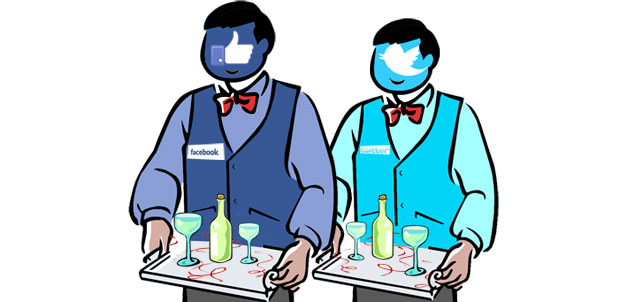
    On Monday, @BudweiserIndia tweeted out a cheery message to its 6,000 followers: “How are you coping with your #MondayBlues! Keep your #Buds close and watch them disappear!” Does a tweet urging beer consumption constitute advertising? It’s not quite clear. The rules banning the advertising of liquor products are at least about half a century old and predate the computer age. Social media is, naturally enough, a grey area.


    No matter, liquor companies have been happily making use of the platform. Diageo, the world’s biggest liquor company, the UB Group’s Kingfisher beer, Budweiser, Tuborg, SAB Miller, Johnnie Walker are all active on Facebook and Twitter, using them to spread the message about their brands, complete with visuals. Kingfisher tweeted to its 44,000 followers on Wednesday from @kingfisherworld: “Okay so beerheads, here we go. Remember that 1st #KFBeer you ever had?


    We want to know the story! Tweet to #HowIMetMyKFBeer right away!” Last year, Diageo’s vodka brand Smirnoff, using the handle @SmirnoffIndia, had this to say: “You don’t need an occasion to gift someone gold! Treat your friends to the royal taste of Smirnoff Gold today.”


    Samar Singh Shekhawat, senior V-P (marketing), UB, said: “The guidelines do not clearly define ban on social media and there are no clear clauses for liquor companies by the I&B (information and broadcasting) ministry on social media and online advertising.”


    However, he added that liquor companies tend to self-regulate by strictly following the age-restriction policies of the sites. “So whoever comes on to the social media platform are well within the drinking age limit. Whatever is not allowed on mainstream media we do not put on as digital advertising unless it is age gated,” Shekhawat said.


    However, while brands ask consumers to enter their age or date of birth in order to access their websites, there is no way to restrict the visibility of tweets.


    A top executive at another leading liquor brand said, “The maximum traction that social media gets is from our core target audience. The absence of any law has made it easier for us to interact with them directly.”


    Arvind Sharma

    Arvind Sharma, former chairman of the Advertising Standards Council of India (ASCI), said social media messages from a manufacturer qualify as advertising.


    “On the whole any message put out by a company is an ad,” he said. “It is not an ad if it is created by the consumer.


    While ASCI is yet to receive any complaint against liquor brand related to social media activities, “such messages should not be allowed as social media is also a form of media”, he said.


    Although the rules haven’t been amended in the last 50 years, the spirit of the law can still be implemented, said Prem Rajani, managing partner of legal firm Rajani, Singhania & Partners. “While one may argue that you need a clear statute to pin them, I would say the current statute if interpreted properly should be enough to pin them down.”


    The information and broadcasting ministry hadn’t responded to queries as of press time. Interestingly, tobacco brands in India which are also barred from advertising, have not taken the social media route. Even international brands such as Marlboro don’t have any social media engagement with Indian consumers.


  • Shailesh Kapoor: Too Much Oxytocin on TV? Try Adrenaline

    By Shailesh Kapoor


    If you have been watching Star Plus’ Mahabharat, you would know that the worthy show is nearing a worthy conclusion soon. The story is currently in the latter half of the epic Kurukshetra war, though the mindgames off the battlefield are equally, if not more, intriguing.


    The sudden and decisive jump in Mahabharat’s ratings over the last two weeks has been heartening to see. From averaging 3.1 TVR in Week 25-28, the show jumped to 4.4 TVR in Week 29, and has held onto that number in Week 30 too. This is the period when the battle has gathered steam, and stalwarts like Abhimanyu, Bhishma and Drona have been killed, but not before providing high drama and excitement.


    Conventional television wisdom may suggest that war scenes are not the most TV-friendly content, especially in the Indian context, where GEC viewing is still largely family-led. I’m not sure if Indian parents would want their children to see Bheem drinking Dushasana’s blood. Wars are essentially violent, and that female audiences have low thresholds for violence is a universally proven fact, both via research and science.


    Yet, war is working. Not just in Mahabharat, but recent war sequences in Jodha Akbar and Maharana Pratap too have managed to pull in new audiences, and engage the existing audiences better. There could be several reasons for this, but the one I find particularly strong resonance in is: Adrenaline.


    Several years ago, I heard a channel programming head remark: “Television is all about hormones”. The line has stayed with me ever since. It has eternal relevance, because it is based on how we, the human beings, are made.


    Some recent work made me read up more on various hormones and their functions. I was seeking correlation with their impact on television and film content. Essentially, almost all the explanation came down to three hormones – oxytocin (the love hormone), endorphins (stress-reducing or the happy hormone) and adrenaline.


    More than 90% of successful television and film content can be explained using one (or a combination) of these three hormones. Oxytocin gets its due when we speak of romance, chemistry and falling in love. Its impact extends to love that may not be “romantic” in nature, like a warm hug given by a mother to her child.


    Endorphins reduce stress, and the comedy genre is known to activate the release of this set of hormones. Indian audiences have even coined a phrase for it, something that everyone who works with us is familiar with: Mind Fresh.


    But adrenaline has been generally ignored. Being more “outdoorsy” in nature, this hormone tends to link closely to male content preferences, than those of female audiences in India. But increasingly, its impact is being observed in our work. This impact was strong enough for us to include the impact of adrenaline as a separate parameter in our content testing tool Ormax True Value earlier this year.


    If you have been following the Commonwealth Games closely, you would have noticed that weightlifters are given a sniff of adrenaline by their coaches just before they step forward to make their lift. A battle scene, if executed well, can provide a milder form of that rush to the audience at home. (I have never sniffed that adrenaline, so not quite sure of the comparison. Wonder why it is even legal for lifters to do that!)


    Indian content makers and analysts have ignored adrenaline for a while now, probably because execution capabilities to deliver the rush were missing in this marketplace. But that may be changing fast.


    It’s time the ‘josh’ hormone got its due!


    TV Trails is a weekly column written by Shailesh Kapoor, founder and CEO of media insights firm Ormax Media. He spent nine years in the television industry before turning entrepreneur. The views expressed here are his own. He can be reached at his Twitter handle @shaileshkapoor