Category: MEDIA

  • M&E CEOspeak: Towards Shreshth Bharat ka Shreshth Entertainment


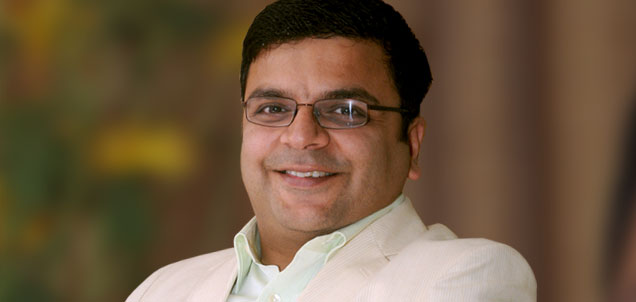
    Media & Entertainment captains met with new information and broadcasting minister Prakash Javadekar in New Delhi on Thursday, June 18 convened by the CII. Sudhanshu Vats, Group CEO – Viacom18 Media and Chairman and CII National M&E Committee for 2014-15 made his opening remarks. Excerpts from his speech:


    A warm welcome to colleagues in the media and entertainment fraternity to this round table conference

    I thought individual leaders will talk about the sub-sectors within the media and entertainment sub-sectors so I would very briefly underline the philosophy. We think media and entertainment could be built and taken forward. And also use this opportunity to take this industry from a USD 20-odd bn to100 bn USD by the end of the decade, which roughly translates to about five times over the next six years and almost doubling every three years.


    Reflecting upon this matter, one of the things that comes to surface is that it is a very dynamic industry. It is an industry which has so many sub-sections and there are so many things which are happening all the time. At the same time, when we reflect upon the election campaign which your party, under the able leadership of Shri Narendra Modi had undertaken. And it reminded me of how each element of media – whether it was social media, outreach to rural areas through mobile vans, 3D holograms, Twitter posts – everything which was being used has been so well understood. I was at times thinking, may be we’ll learn a lesson or two. Having said that, what I wanted to lay down was four areas in which I think the industry would benefit as we go forward.


    Purpose

    The first part, we set out with, is the PURPOSE with which we are going to drive this industry.The purpose, again to derive a phrase from Shri Narendra Modiji, is ‘Shreshth Bharat ka Shreshth Entertainment’. I think, that, if you ask me, is the underlying principle. It has to be about the consumers of this country, and through them, may be, all the global citizens and everyone else.


    Transparency

    It then involves transparency. It involves understanding of the models and allowing the free market free speech to prevail.


    Accountability

    The second piece is accountability. What can we do to actually drive it and let the market forces play?

    I think one is single-window clearance, which is needed across the board in our industry, whether we are talking of films, events, licenses…

    The second thing which is important is time-bound answers because one of the things that has plagued us at least in the last couple of years, more so, is the inordinate delay in trying to get anything done. To requisition a new channel for an established network, an organization must undergo the rigmarole of thousands of permissions/ clearances.


    Clarity

    The third thing which we seek is clarity. When it comes to clarity, making the policies clear and consistent over a period of time is of essence. And I think this will be very useful for the sector, especially when I talk on behalf of my distribution colleagues. If we have clarity in that sector, our ability to get investments in the industry will go up considerably.


    Foresight

    And the final piece is foresight. As an industry, we may be valued at approximately 22 bn, but I think we have two very important things: the multiplier effect in GDP growth of M&E industry is very well known. In the top G20 countries this multiplier effect is in the range of as high as 5% to 20% of the growth. And it sometimes gets hidden because the size (of the industry) at this time appears small.


    Our new esteemed prime minister recognized tourism as one of the most important things. Therefore the role which we can play as an industry to grow tourism in India -is by allowing shooting in the country, or whether by showcasing various parts of the country, there are several such things. It is the foresight which we bring in through


    1. That we have a huge GDP growth multiplier effect

    2. We have a huge impact on tourism as an industry
    3. And finally when it comes to foresight, as the world moves forward, as India moves forward, convergence of media, telecom and technology will be the key thing as far as consumers are concerned. The implication therefore on manufacturing in technology and manufacturing in other sectors.


    So with these four things, which are: very clear purpose, clarity of what we want to achieve, accountability, and finally foresight, that this industry has a big role to play, ability to generate direct employment of over 6 million and multiple more hired if you look at all the others concerned, I’d like you to address us and then all my esteemed colleagues to talk about specific issues.


    Minister of Information & Broadcasting Prakash Javadekar noted the address from various CEOs from the TV, Films, Radio, Print, DTH fraternity. Mr Vats commented on Mr Javadekar’s response to the various issues brought to surface:

    “The Hon. Minister of Information & Broadcasting, Mr Javadekar was extremely candid and open to discussion. He was receptive, and spoke from his heart with great conviction. He heard all of us CEOs across media domains and responded to each issue individually. It gives me hope, that if we work together, we shall achieve a 100-bn USD industry, that employs millions of Indians and createshundreds of IPs and products, and build the Shreshth Bharat.”


  • HBO Premium unveils campaign for uninterrupted viewing

    By A Correspondent


    HBO South Asia has announced a new campaign to promote HBO’s belief that nothing should come in the way of entertainment. The HBO Premium Channels campaign is launched with the aim of ensuring that audiences have an uninterrupted ad-free viewing experience. The objective of the campaign is to get people to visit HBOPremium.com website and subscribe to HBO Premium channels or directly through DTH or digital cable operators.


    Announcing the launch of the new multi-media campaign, Monica Tata, Managing Director, South Asia for HBO India Pvt Ltd said, “Both the HBO Premium channels maximize the entertainment experience by airing HBO Original content and blockbuster movies 100 per cent break-free. We have initiated a multimedia campaign developed by DDB Mudra to promote the visibility and popularity of this unique proposition of HBO Defined and HBO Hits across platforms including print, cinema, TV, digital and social media. Our aim is to spoil our viewers with the very best non-stop, high quality programming, thus providing an unparalleled viewing experience.”


    Speaking about the creative strategy behind the campaign, Anurag Tandon, Senior Vice President, DDB Mudra, said, “Content promotion on a channel has a very formulaic approach. The usual strategy is to build intrigue through teaser like edits by using existing footage of the content that needs to be promoted. We wanted to break away from this traditional approach and leverage the USP of uninterrupted original HD quality content in a way that goes beyond just claims and announcements of the product offering. Thus came about our creative proposition of ‘addictive viewing experience’ dramatized through two TV spots showing the consumers going through the experience. We believe it is imperative for a content brand to build the ideology of viewing experience in addition to the promise of fresh content for the consumers to feel compelled to subscribe”.


    The TVCs will be run on the HBO premium.com webpage and will include visitor engagement and interaction through gamification of elements from the TVCs.


  • How uncoupling fear and failure unleashes creativity at Pixar


    By Priyanka Sangani


    When the Walt Disney Company acquired Pixar Animation Studio eight years ago, its animation business, Disney Animation, was going through the roughest patch in its history. Pixar, on the other hand, was having a dream run.


    Pixar execs Ed Catmull and John Lasseter were asked to head both companies and the first thing they decided was to keep them separate – neither studio would do any work for the other. “We were suddenly put in charge of a group that we didn’t know at all.


    All we knew is that they were demoralised and had failed. We had all these principles about how to run an organisation based on candour, fearlessness and trust and while we had taken a conscious decision to keep both the businesses separate, we decided we would apply these principles here as well,” says Mr Catmull, president, Pixar and Disney Animation.


    The duo thought that instilling these principles would take them two years; it took them four. “Stating the principles isn’t the same as actually doing it. They needed to go through some problems and failures as a group before they earned each others’ trust,” says Mr Catmull.


    The results are there for everyone to see. All the films made by Disney Animation after this acquisition have been critical successes, with the most recent one, Frozen, going on to become the highest grossing animation film of all times.


    “The same people who were there when it was failing are there when it is successful,” says Mr Catmull over the phone from his home in California. Pixar will go into the history books for making Toy Story, the first feature length computer animation film in 1995.


    The company started off as a part of Lucasfilm which was eventually sold to Steve Jobs in 1986 which is when Pixar was formed. The various challenges it faced as it grew has played an important role in shaping its culture where the focus is on creativity, but not at the risk of alienating the non-creative people in the organisation.


    The desire to share the forces and factors that shaped Pixar’s culture spurred Mr Catmull to write a book, Creativity, Inc. co-authored with business writer Amy Wallace. The culture at Pixar has been consciously shaped so that it can outlive its founders and ensure that unseen forces don’t get in the way of the creativity that drives the organisation. Mr Catmull’s personal journey has been an interesting one.


    As a kid, he had a dream to make the world’s first computer animated film and that is what led him to joining Lucasfilm after studying physics and computer science (then an emerging field) at the University of Utah.


    Solving the problems in front of him is what has always driven him – it’s just that the nature of the problem kept changing. These started off as technical problems – not having the technology to make a movie using computers – and then became human ones. Being strategically located just an hour away from Silicon Valley and one hour plane ride from Hollywood, Mr Catmull found himself in a unique position.


    In the early days of Silicon Valley, there were creative groups that were successful but then they’d fall apart. “Observing from the outside you realise that there’s something wrong that smart people are missing out on and that leads you to realise that if they are missing out on it, I’ll probably miss it too. Then this leads to figuring out what these things are and working at fixing them,” he says.


    Given his background, Mr Catmull viewed these problems as a scientist, and not a manager. “I came to believe that most companies were trying to do the right thing, but in focusing on doing this right thing, they were missing out on a deeper problem – how human emotions form barriers and fears that get in the way,” he says.


    This led him to the realisation that most companies were so focused on competition that they didn’t introspect deeply enough on the other destructive forces that were at work. “If we can figure out what it is about managing and adapting to change that is so hard then we can find problems before they hit us. You have to work through the problem and not go around it. It’s an abstract but philosophical approach,” he says.


    What companies need to do is periodically become introspective. It’s important to examine the deeper reasons as to why they made mistakes or why they succeeded at something. Mr Catmull draws an analogy with meditation: “Facing inwards is a different experience from when you face the outside world, but until you experience it, you won’t know it. Similarly, it’s important for companies to occasionally be introspective and integrate it with how they act towards the outside world.”


    The act of management itself is a creative act, and the issues in the entertainment business are applicable to other situations as well. “The trick to solving a lot of problems lies in understanding the blocks and barriers that are based on human emotions. While we can address these, it also means that a problem never completely goes away because human nature is always there,” says Mr Catmull.


    For instance, the fear of failure normally stops people from engaging or speaking up in a discussion. An experiment Mr Catmull often tries is asking a group what can be done to make people more creative.


    Only a handful raise their hands, whereas when he asks how many know of ways to make people hold back, all the hands in the room go up. That’s because failure tends to be viewed through two contradictory lenses.


    While most leaders agree that their failures and mistakes have provided some of their biggest learnings and eventual success, at the same time there will be opponents who will bludgeon you for failing.


    “There is a very real aura of danger around failing and this is not going to go away. We operate in an environment where both these meanings are here to stay. Leaders need to accept that people have real fears about their responsibilities and the consequences of executing their job. It’s an active thing for leaders to make it safe so that if people fail, they aren’t punished and this is something that happens by example over a period of time,” he says.


    A unique aspect at Pixar is a think-tank called Braintrust. It’s made up of some of the most senior people in the company including Messrs Catmull and Lasseter. This group acts like a peer review system, going over the progress of each movie Pixar is producing with the director every few months. However, while it does provide critical feedback on the film, the decision on what to do with that feedback is left entirely up to the director.


    The company tried replicating this in other parts of the business over the years and failed every time. It took them time to realise that the reason Braintrust worked so well was because the group had no authority.


    The individuals in the room – collectively and individually – were extremely powerful and this could cause people responsible for the project to enter the meeting in a defensive posture. “We made it clear that nobody in that room, not even John or me, could override the director.


    By removing the authority from the room we were making it safer for the director to approach it with an open mind,” says Mr Catmull. The rationale delves deep into human psychology. People don’t want to embarrass themselves or other people, and they tend to naturally defer to those with more authority and experience. These barriers keep them from saying what they think.


    “The idea at Braintrust is about the dynamics in the room and discussing things with candour,” he says. Another conflict most organisations face is the power struggle between different departments, in this case creative and production. A healthy organisation accepts that each domain has a somewhat different agenda and respects that.


    At the same time the leader must realise that if any one department wins, it is detrimental to the organisation as the goals of the department have come first over the greater good. “We talk about balance as a calm yogic state, but it’s the wrong metaphor. It’s more about a physical activity like sports where things are dynamic and it is people who can adapt to the realities of this changing environment who are good at balance,” he says.


    Finally, he says that writing this book doesn’t mean that Pixar has it all figured out. “The figuring-it-out process is what we continually do. This is just the approach you take so that you are continually facing in towards the problem,” he says.When the Walt Disney Company acquired Pixar Animation Studio eight years ago, its animation business, Disney Animation, was going through the roughest patch in its history. Pixar, on the other hand, was having a dream run.


    Pixar execs Ed Catmull and John Lasseter were asked to head both companies and the first thing they decided was to keep them separate – neither studio would do any work for the other. “We were suddenly put in charge of a group that we didn’t know at all.


    All we knew is that they were demoralised and had failed. We had all these principles about how to run an organisation based on candour, fearlessness and trust and while we had taken a conscious decision to keep both the businesses separate, we decided we would apply these principles here as well,” says Mr Catmull, president, Pixar and Disney Animation.


    The duo thought that instilling these principles would take them two years; it took them four. “Stating the principles isn’t the same as actually doing it. They needed to go through some problems and failures as a group before they earned each others’ trust,” says Mr Catmull.


    The results are there for everyone to see. All the films made by Disney Animation after this acquisition have been critical successes, with the most recent one, Frozen, going on to become the highest grossing animation film of all times.


    “The same people who were there when it was failing are there when it is successful,” says Mr Catmull over the phone from his home in California. Pixar will go into the history books for making Toy Story, the first feature length computer animation film in 1995.


    The company started off as a part of Lucasfilm which was eventually sold to Steve Jobs in 1986 which is when Pixar was formed. The various challenges it faced as it grew has played an important role in shaping its culture where the focus is on creativity, but not at the risk of alienating the non-creative people in the organisation.


    The desire to share the forces and factors that shaped Pixar’s culture spurred Mr Catmull to write a book, Creativity, Inc. coauthored with business writer Amy Wallace. The culture at Pixar has been consciously shaped so that it can outlive its founders and ensure that unseen forces don’t get in the way of the creativity that drives the organization. Mr Catmull’s personal journey has been an interesting one.


    As a kid, he had a dream to make the world’s first computer animated film and that is what led him to joining Lucasfilm after studying physics and computer science (then an emerging field) at the University of Utah.


    Solving the problems in front of him is what has always driven him – it’s just that the nature of the problem kept changing. These started off as technical problems – not having the technology to make a movie using computers – and then became human ones. Being strategically located just an hour away from Silicon Valley and one hour plane ride from Hollywood, Mr Catmull found himself in a unique position.


    In the early days of Silicon Valley, there were creative groups that were successful but then they’d fall apart. “Observing from the outside you realise that there’s something wrong that smart people are missing out on and that leads you to realise that if they are missing out on it, I’ll probably miss it too. Then this leads to figuring out what these things are and working at fixing them,” he says.


    Given his background, Mr Catmull viewed these problems as a scientist, and not a manager. “I came to believe that most companies were trying to do the right thing, but in focusing on doing this right thing, they were missing out on a deeper problem – how human emotions form barriers and fears that get in the way,” he says.


    This led him to the realisation that most companies were so focused on competition that they didn’t introspect deeply enough on the other destructive forces that were at work. “If we can figure out what it is about managing and adapting to change that is so hard then we can find problems before they hit us. You have to work through the problem and not go around it. It’s an abstract but philosophical approach,” he says.


    What companies need to do is periodically become introspective. It’s important to examine the deeper reasons as to why they made mistakes or why they succeeded at something. Mr Catmull draws an analogy with meditation: “Facing inwards is a different experience from when you face the outside world, but until you experience it, you won’t know it. Similarly, it’s important for companies to occasionally be introspective and integrate it with how they act towards the outside world.”


    The act of management itself is a creative act, and the issues in the entertainment business are applicable to other situations as well. “The trick to solving a lot of problems lies in understanding the blocks and barriers that are based on human emotions. While we can address these, it also means that a problem never completely goes away because human nature is always there,” says Mr Catmull.


    For instance, the fear of failure normally stops people from engaging or speaking up in a discussion. An experiment Mr Catmull often tries is asking a group what can be done to make people more creative.


    Only a handful raise their hands, whereas when he asks how many know of ways to make people hold back, all the hands in the room go up. That’s because failure tends to be viewed through two contradictory lenses. While most leaders agree that their failures and mistakes have provided some of their biggest learnings and eventual success, at the same time there will be opponents who will bludgeon you for failing.


    “There is a very real aura of danger around failing and this is not going to go away. We operate in an environment where both these meanings are here to stay. Leaders need to accept that people have real fears about their responsibilities and the consequences of executing their job. It’s an active thing for leaders to make it safe so that if people fail, they aren’t punished and this is something that happens by example over a period of time,” he says.


    A unique aspect at Pixar is a think-tank called Braintrust. It’s made up of some of the most senior people in the company including Catmull and Lasseter. This group acts like a peer review system, going over the progress of each movie Pixar is producing with the director every few months. However, while it does provide critical feedback on the film, the decision on what to do with that feedback is left entirely up to the director.


    The company tried replicating this in other parts of the business over the years and failed every time. It took them time to realise that the reason Braintrust worked so well was because the group had no authority.


    The individuals in the room – collectively and individually – were extremely powerful and this could cause people responsible for the project to enter the meeting in a defensive posture. “We made it clear that nobody in that room, not even John or me, could override the director.


    By removing the authority from the room we were making it safer for the director to approach it with an open mind,” says Mr Catmull. The rationale delves deep into human psychology. People don’t want to embarrass themselves or other people, and they tend to naturally defer to those with more authority and experience. These barriers keep them from saying what they think.


    “The idea at Braintrust is about the dynamics in the room and discussing things with candour,” he says. Another conflict most organisations face is the power struggle between different departments, in this case creative and production. A healthy organisation accepts that each domain has a somewhat different agenda and respects that.


    At the same time the leader must realise that if any one department wins, it is detrimental to the organisation as the goals of the department have come first over the greater good. “We talk about balance as a calm yogic state, but it’s the wrong metaphor. It’s more about a physical activity like sports where things are dynamic and it is people who can adapt to the realities of this changing environment who are good at balance,” he says.


    Finally, he says that writing this book doesn’t mean that Pixar has it all figured out. “The figuring-it-out process is what we continually do. This is just the approach you take so that you are continually facing in towards the problem,” he says.


    Source:The Economic Times

    Copyright © 2014, Bennett, Coleman & Co. Ltd. All Rights Reserved

    Licensed to republish


  • Ten Sports extends broadcast rights for UEFA CL

    By a correspondent


    Ten Sports has bagged the rights for the UEFA Champions League and UEFA Europa League for the next cycle of 3 Seasons starting 2015-16. Ten Sports who are also the incumbent broadcast rights holders for the properties have been broadcasting these premier football competitions since 2006-07. UEFA Champions League and UEFA Europa League rights had become the most key football property up for acquisition and Ten Sports Network re-affirms its commitment to promoting quality football through this major acquisition after beating other rival broadcasters to secure these rights.


    The new deal between UEFA and Ten Sports beginning from the 2015-16 season covers exclusive broadcast rights for the Indian Subcontinent which includes India, Pakistan, Sri-Lanka, Bangladesh, Nepal, Bhutan, Maldives and Afghanistan. Ten Sports will broadcast these properties across all its platforms including premium HD offerings and live streaming of matches on tensports.com. Ten Sports will broadcast 145 matches of UEFA Champions League and 205 matches of UEFA Europa League every season. Apart from these matches, Ten Sports will also broadcast the annual UEFA Super Cup, the curtain raiser at the beginning of the European Season played between the winners of the UEFA Champions League & UEFA Europa League.


    Rajesh Sethi, CEO, TEN Sports, said “We are delighted to extend our partnership with UEFA and have the UEFA Champions League and UEFA Europa League on the Ten Sports Network. Over the last decade, the UEFA Champions League & UEFA Europa League have found a home in the Indian Subcontinent at Ten Sports. Over the next 4 seasons we will continue to build on the quality programming we offer around these marquee properties and strive to innovate to increase viewership and audience interest and engagement around these properties.”


  • Adani appoints Quasar as its digital AoR

    By a correspondent


    Adani Enterprises Ltd. has awarded the digital mandate to Quasar Media Pvt. Ltd., following a multi-agency pitch. Quasar has won the digital duties across social media strategy and management, search engine optimization, media planning & buying and online reputation management. The account will be handled by the Quasar Mumbai office.


    Commenting on this new win, Gaurav Nabh, Head, Quasar said, “We are exciting about working with Adani, one of the leading infrastructure company’s in India. They have some extremely ambitious plans on the table and we welcome the challenge to partner with them on their journey. We have started 2014 on a very positive note and look forward to some breakthrough work in the coming months.”


    The Adani Group is one of India’s leading business houses with revenue of about US $9.4 billion. Adani is a globally integrated infrastructure player with businesses spanning coal trading, coal mining, oil & gas exploration, ports, multi-modal logistics, power generation & transmission and gas distribution.


  • Content testing tool Ormax Xpressive launched

    By a correspondent


    Ormax Media has announced the launch of Ormax Xpressive, an automated facial coding based content testing tool. The product is powered by Europe-based RealEyes, a global thought leader in facial coding services.


    Ormax Xpressive can be used by media companies, such as TV channels, film studios, content producers and media agencies, to test video content ranging from 10 seconds to one hour in duration. Ormax Media have already tested 11 videos using the tool, even before its formal launch slated for this week.


    Speaking about Ormax Xpressive, Shailesh Kapoor, CEO – Ormax Media, said: “Facial coding based testing captures the consumers’ actual behavioural response to the content being tested, instead of relying on them answering a set of questions. The product is based on the premise that for any content to work, it needs to emotionally engage with its target audience. Decoding facial expressions into emotions enables us to measure which specific emotions were triggered off by the content, at a second-by-second level. We are extremely proud to bring this technology to India, in association with RealEyes.”


    Alex Slater, Commercial Director, RealEyes, added: “Every day we’re bombarded with thousands of marketing messages. But to achieve any sort of cut-through, you’ve got to move people.  If 80% of behaviour is determined by the subconscious, why is it that 90% of research seeks to mine the conscious, rational brain? The face doesn’t lie. Facial movements are spontaneous and subconscious.  This type of emotional intelligence is richer and more pure, and it makes little demand on the audience during the test.”


    The emotions tracked by the product include happiness, surprise, confusion, sadness, disgust and scare. Data can be analysed by age, gender, markets, SECs and other relevant consumer variables. The only equipment required to participate in a test is a webcam-enabled computer. The test can be conducted at the respondent’s home or at a central location.

  • Havas Media appoints Josh Gallagher as Regional Strategy Director

    By a correspondent


    Havas Media Group has announced the appointment of Josh Gallagher as Regional Strategy Director.


    In his new role, Josh will be responsible for driving offline and online strategy for the agency’s key clients including AXA, Emirates, LG Electronics and Shangri La Hotels. He will also lead the adoption of agency’s proprietary planning process Meaningful Connections Planning with an eye to delivering innovative solutions to new and existing clients. An integral part of his mandate is to propel the uptake of Havas Media Group’s Meaningful Brands research, a unique framework that analyses and tracks the connections brands have with our quality of life and well-being.


    Josh joins the agency with ten years of experience working with international media and digital agencies in Australia. He was most recently with Zenith Optimedia Melbourne, where he worked as a Communications Strategist, driving strategy for Honda, Lion Nathan and Reckitt Benckiser. Prior to this, he spent seven years with Universal McCann Brisbane, where he worked as Client Services and Strategic Director. He has also had a stint at digital agency Kruse Digital.


    Based out of Singapore, Josh will report into SK Biswas, Chief Strategy Officer at Havas Media Group, Asia Pacific.


    Commenting on his appointment, Biswas said: “Josh is a very welcome addition to the regional strategy team. He has an unrelenting curiosity for uncovering consumer insights and is a champion of integration. He is one of those rare strategists, who have a hands on and practical experience of working on integrated strategies and expertise in both offline and digital communications planning processes.”


  • Hungama unveils PRO service for its native app

    By a correspondent


    In a bid to further augment its reach in the digital music entertainment industry, Hungama Digital has taken yet another step towards innovation by announcing the launch of its PRO service for Hungama mobile app.


    Commenting on the robust digital music industry, Siddhartha Roy, Chief Operating Officer (Consumer Business & Allied Services) at Hungama Digital, said, “It is known fact that as Indian audiences we don’t just listen to our music but we watch it as well. It’s this specific gap, which has prompted us to rollout the Hungama music service that has both Audio & Video offering for our consumers. Hungama has been a pioneer in the digital music industry for over a decade and a half and basis our understanding we have observed that there is a need of providing consumers a solution where they are free from being dependent on their internet connectivity, specially where there is an issue with the quality of connectivity.


    Given this, music streaming will continue to grow exponentially, Hungama is delighted to launch the PRO service, which allows consumers to listen to their streamed music without data connectivity.


    The unique features of the Hungama app include:

    :: Patented Loyalty feature and Gamification – that rewards you for every action on the app. You can earn (and redeem) points every time you watch videos, play/share music, invite friends or even create playlists


    :: Patented Mood Discovery – finds and plays music to match your mood. This feature allows you to discover music based on your preferences – Mood, Tempo, Language, Genre or Era


    :: Access to lyrics – You can experience music intelligence with an add-on feature which brings interesting trivia and lyrics with just a touch


    :: Artist Radio: With over 20,000 artistes on Hungama.com, you have access to a massive music pool. Tune in to your favourite celeb’s music playlist on Artist Radio feature


    Social Music: The ‘My Stream’ option allows you to invite, share and connect with your friends online through social networking platforms and create waves of interesting music conversations online


  • Bloomberg TV India is the only channel reaching out to global investors: Vivek Law

    It’s that time of the year where all business media entities get hyperactive. Yes, it’s Budget time. And this year’s edition is going to be extra special given that it’s the BJP-led Narendra Modi government’s maiden fiscal discourse. After all of the promises of ‘Achche Din Aane Waale Hain’, there is much anticipation from Corporate India.


    Bloomberg TV India has got its act together for the Budget that is scheduled to be presented on July 10. We caught up with Vivek Law, Editor, Bloomberg TV India on his plans for the channel’s coverage of the Union Budget 2014-15.  Excerpts from an interview:


    Before we get on to discussing plans for the Budget, tell us more about the channel is doing.

    Well,  we’re probably the only business channel which is relayed across the world. We’re live on the Bloomberg terminal. All the 400,000-odd subscribers of the Bloomberg terminal actually get to see the video that’s the TV version of the channel on the terminal. In addition to that, we feel in the last two to three years; especially in the build up to the elections our global TV network has been carrying a lot of dedicated Indian content. Also, we known that the Indian stockmarket is pretty much driven by FII investments. And it’s the global investors who’ve been very keen and interested in knowing what’s going on in India. They’ve already put in hundreds of billions of dollars and intend to put in more which is why we are at the levels where we are. Their interest in India has only grown. If you are an investor sitting out of New York or London; to my mind, your only window to the Indian economy or market is Bloomberg TV India.


    Yes, even though you are essentially a business channel, we saw a fair bit of elections coverage on your channel.

    Even though we’re a business channel, we had a daily one-hour programme which was called Political Capital. I know we’re not a general channel so our coverage was very distinct from what the others were covering. We were very sharply focused in terms of what the global investor would want to know in terms of the Indian elections.


    Your theme for the Budget programming ‘Will they walk the talk? is interestingly worded?

    This theme was chosen because there’s been a lot of expectation built up in the stockmarket in terms of the fact that this government is going to turn things around and is going to lift the economy out of the slumber. The message is: Wait for the Budget and the Budget will be the first document we’ll present in terms of giving a direction of what we want to do. So there’s a lot of interest as far as the global community is concerned. We’re also very clear that given the global interest, that’s where our actual strength lies… in terms of reaching out to investors internationally from across our studios all over the world. That would be the sharper focus we’d go with this time.


    But does the theme mean that you will take a critical view of what could possibly happen.

    The point we are trying to make is there have been enormous expectations right from September when Narendra Modi was formerly anointed as the PM candidate. If you see the market from then, it has jumped 20% and there’s a huge amount of expectations built in the markets especially with global investors. Here’s a person whose entire campaign was actually around the economy. He talked of inflation, lifting economic growth and jobs. In fact, we called it ‘Economy Election’ on our channel. Perhaps for the first time, he’s brought economic issues to the centrestage in many years. Therefore, there are great expectations built in. And there are various concerns in terms of whether he’ll be able to deliver all that he promised? It’s not that he’s going to be able to do everything in just one budget but the expectation factor is huge. That’s why we want to raise the question that a: how much is he going to be able to do? And b: What’s the kind of road map he’s going to be able to present?


    Any specific highlights and differentiators of the Budget telecast on Bloomberg TV India?

    I gave you the biggest differentiator. It’s not that we won’t give you what the others are doing. But there are two very important differentiators from what I expect others to do. A large part of our run-up to the programming is where the post-Budget will be in the whole personal finance space that’s an area I’ve been personally involved with. There’s a reason for that. It’s a fact that the Indian retail investor has been pretty much sitting out of the markets in the last few years. He or she has not been participating at all. In fact the redemption figures of both insurance and mutual funds testify. Now what we’re beginning to see is some of them coming back. It’s a very small amount; it’s still just a trickle. So again from the wider audience perspective, in terms of investing in equities there’s a lot of interest as well. I know we’re not a mass channel but at the same time we have a large number of viewers from the aspirational segment who’d want to be investing. That will be one of our major pillars in terms of the personal finance space. The second is we also intend to do a lot of programming around the youth. A large part of Modi’s following really seems to have come from the younger lot. Hence some of our programming will be going to campuses and trying to get a sense from the youth in terms of what are their expectations and once the Budget is presented, what do they think about it? This is in addition to the Indian stockmarket gurus and the stockmarket chiefs which we of course will do, but if you ask me honestly, that’s something everyone will do.


    In terms of show packaging, what can one expect?

    All our packaging and graphics are completely in sync with what Bloomberg does globally. If you watch our channel here and you watch Bloomberg Asia or Europe or America, they are identical. I’m not so sure I can give you more details at this point but what I can you is it will be a much fresher look on Budget Day for us.


    Is that going to change post-Budget Day or will it be only for Budget Day?

    It will change post-Budget day. We’ll introduce it around Budget Day or around that time. But that will be a permanent change. It won’t be something that’s just for one day.


  • The Past, Present & Future of Ormax Media


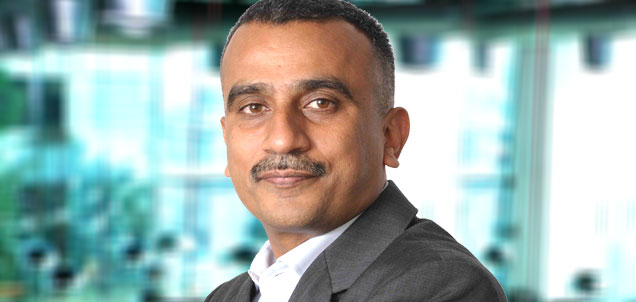
    Behind every channel and reality/fiction show’s success is a lot of hard work by its programming and business teams. And over the last few years by a  Mumbai-headquartered research firm called Ormax Media. It’s small in size, but big in ideas. Almost every television channel will vouch for that and in recent times other media companies too. But the maximum growth has been with films where the processes are getting structured and scientific. As Ormax Media completes six years in the business, Pradyuman Maheshwari spent an hour-odd with co-founder and CEO Shailesh Kapoor in his office last week and asked him for insights on the firm’s journey and plans for the future. Excerpts from the interview:


    Six years seem to have just flown by. As you look back, how’s the journey been?

    I think the most interesting part of the journey originates from the idea that while we are a media insights firm, we set ourselves up to be more like a media company than a research company. We are very proud of the fact that we don’t follow some of the processes and practices that typical research companies follow either in the way they approach their proposals, they way they do fieldwork or the way they write presentations and reports. We have always taken a very media expertise-driven approach instead on processes and people. It’s really worked well over time. Increasingly, when we meet our clients today, they see us less and less as a research company, but instead see us as people who understand their business well and also have a contact with the consumer. But ‘understanding the business well’ part is critical to Ormax Media’s existence.


    The fact that you were already part of the industry must’ve helped much in the early days?

    Yes, in the first year, a lot of business happened through personal contacts, both Vispy Doctor’s and mine. But that can only take you to a certain level and thereon you have to create equity and grow. I think we did something very well in 2009 and 2010, which is giving us rich dividends now. Which was that rather than just scouting for bespoke business, we focused on creating a lot of standardized products that could cater to common industry needs. Today, we have about 24 such products. Our top-end products keep us very stable in terms of our business growth.


    For example, Ormax True Value is a product we use to test television shows for GECs, kids, youth and other categories. Many channels were testing shows using qualitative research, but there was no standardized product for show testing that would give a forecast of the viewership and actually get into the diagnostics of what will work and wouldn’t, and have a very strong predictive sense to it. So once we have a product like that, which no other research company is offering, there is a natural advantage we build. If you need to test a show and you see a good product and that is the only product available in the market, you would tend to use that. And once you’ve used that once or twice and you like what you’re getting as an output and you get the confidence that this is accurate, you start using it more and more. We have used this product-led model to secure a lot of business over time.


    Content testing is a tricky business, right? Television software is very tough to forecast viewers. So, aren’t you forever treading on very tricky terrain?

    Yes, it is tricky. But I believe that forecasting any business parameter, be it box-office or viewership, has a very ‘put your money where your mouth is’ kind-of feel to it. There are times when we get it wrong too, but if we don’t take the risk, our impact on the channel’s or film company’s business is considerably reduced.


    When we were not in the forecasting business, our access was more to the marketing and research departments. Now that we are forecasting across industries, we deal a lot more with CEOs, CFOs, GMs, Business Heads and CXOs. I think that’s a very encouraging shift for us from commanding a certain market positioning. Today, 70 percent of our meetings have a boardroom impact. The number was less than 40 percent till two years ago.


    Of course, there is a lot of back-end work that goes into creating the right forecast models and generating accurate forecasts over time. A lot of data has to be collected and analysed. It’s like the black box or the secret sauce.


    Can you share some examples where you’ve made some specific comment and that possibly transformed the show for a channel?

    There’s very little I can share with names, as most such work is commissioned. But to give a general idea, there was a show we tested around three years ago. We tested it three times over a period of six months. It first tested average. There was an issue with the casting of the female lead and some issue with the narrative treatment too. But the basic idea tested well. The channel backed the idea and re-tested another pilot with a different female lead and director. By the third testing, the show had scored exceptionally well. It continues to be a successful show even today.


    Is it right to say then that Ormax has clearly moved from being essentially a research firm to now advising CXOs?

    I think that’s an accurate description of our recent journey. We’ve always had some consulting assignments, even when we started in 2008. But at that time, 90 percent of our work was still conventional research. Today, we are increasingly getting projects that are ‘mixed’ in nature, where we are playing the role of a consultant, doing some primary research, relying on some secondary data already in our system, or in the client’s system. So, we have liberated ourselves of the distinction between research and consulting, or between various types of researches for that matter. All that matters is the impact on the client’s business.


    When you speak to CXOs directly, doesn’t it create resistance with the research guys?

    There may be certain instances of that. But our Bollywood experience really taught us a lot regarding this area. Film people are driven strongly by box-office. Whether it is the studio head or the director or the marketing head, everyone understands the language of box office numbers. Even the creative people like directors and actors have a very strong orientation towards their film being a hit.


    Dealing with the film industry, we realized that the moment you can talk business language, people just open up to you and are far more willing to have discussions that they won’t have with a research company. We have applied this insight to TV, radio and other areas of our work. If we can tell you that this is the way you can increase your GRPs or TVR or whatever the currency is, then everyone would want to be in the room listening to us.


    When you have CEOs, CFOs and programming heads pouring their heart out to the problem they have, how do you manage with the confidentiality? Is that an issue?

    It’s an often-asked question, but it’s never been an issue so far in six years. Confidentiality is at the heart of our business. It is one of the core values we espouse as an organisation. Since 2009 itself, we started spending on data collection so that we build insights that are owned by Ormax, and hence, can be freely shared across clients. But the life of the data we collect on a client project ends with the project. That’s a clear distinction we make.


    We are bound by Non-Disclosure Agreements across clients. But more importantly, confidentiality, and the maturity needed for that, runs in our bloodstream as an organisation.


    Tell me a little about your structure, team size etc.

    We decided in 2009-10 that we won’t look at how the research industry is structured and replicate that. We intuitively structured ourselves as a service company instead, like say a good ad agency. We have three departments under which the 35-member team is structured.


    Keerat Grewal heads the Account Management team, which is responsible for business development, client servicing and relationship building. Amit Bhatia is a part of her team and in-charge of our Delhi business. He also handles new priority products strategy for the entire company as an additional responsibility.


    The Insights team is structured by domain. Anurag Bakhshi heads television insights, Gautam Jain leads film insights and Namrata Sukumar is responsible for print, radio and branded entertainment. Their teams include product managers and researchers.


    The Operations team, headed by Khushroo Dumasia, is responsible for quality execution of projects. We have a state-of-the-art CATI (Computer Assisted Telephonic Interview) setup in Surat, from where a lot of our products run. It’s arguably the best CATI research facility in India, in terms of technology, processes and best practices.


    What will the breakup of various domains in terms of their contribution to your business?

    TV would currently be about 60%, films about 20% and the rest put together will be the remaining 20%. All three domains are growing, and the growth in films has been the fastest – over 100% for the last two years.


    I remember you also doing work on radio. Give me an example of the work you do there.

    We have a long-standing relationship with Radio City. Also, one of our very popular products is Ormax Heartbeats. It’s a weekly music charts product, which radio stations, music channels, music labels and film studios use to decide which songs to play and promote more than others. We also have an annual RJ Track we conduct in about 10 cities across India.


    Are you looking at news channels?

    Definitely. We have a product called Ormax Brand Matrix (OBM), which is a viewership maximization tool. OBM is being used widely across genres, ranging from news to infotainment to movie channels, and of course, GECs.


    A lot of research companies offer ‘brand track’ products. The problem with brand tracks is that they are good-to-know, but not actionable. They give you a lot of data, but don’t help you convert it into specific plans to increase viewership.


    OBM is a complete 360-degree turn on the old idea of a brand track. It gives a brand track a complete viewership orientation. That’s where our domain expertise comes in handy.


    What about the kids’ genre?

    A lot of very interesting work has happened in the kids space in the last five years. Ormax True Value is used across channels to test new kids shows. Ormax Small Wonders, our kids tracking study, is now into its tenth edition. It captures media and entertainment habits and preferences of kids every six months.


    There is a lot of very satisfying bespoke work happening in kids’ genre, whereby the focus is on understanding trends and need gaps. We are very proud of our association with kid’s channels in India.


    As you said, your films business has increased considerably over the years. Are they relying more on consumer insights or have you established your expertise or both?

    I think it’s a bit of both. We’ve been very committed to growing our films business. We launched Ormax Cinematix, our flagship product in the films space, in 2010. Today, nine studios are subscribing into it for box office forecast of unreleased films and marketing inputs to improve their opening box office. But in the first year, we have only one client. We knew that film tracking and box office forecast is a big deal internationally. Our internal discussion was that we need to back our belief. Till 2012, we won’t question whether this product will work for us. We started seeing big results in 2012, and then there was no looking back.


    Our other films product is Ormax Moviescope, where we pre-test the actual film weeks or months before its release with real audiences, and give content inputs and lifetime box office potential estimate of the film. We have now tested about 40 films across studios. Word of mouth really spreads in the film industry, which is how we have grown so rapidly in this sector. TV is a little more insular.


    You’ve, in a sense, reached a stage of super-stardom in your business. There’s no direct competition, no specialized research firm doing this. So what next?

    There are two clear areas we want to focus on in our seventh year. We still believe that our journey from being seen as researchers to being seen as media super-specialists has still not finished. We’re probably 50-60% there. We want to be in a state that six months from now, we can say that we will not take work that does not do justice to our boardroom positioning. That day, we would have completed the transition. It should happen by early 2015 if all goes well.


    The second area we are focusing on is technology. We firmly believe that to remain relevant, we need to embrace the latest technology available to us, than sticking to traditional research methods. I understand we’re still not an Internet country as far as GECs or mass content is concerned. But that doesn’t mean we can’t bring in technology in another form.


    One of our recent collaborations has been with a UK-based company called RealEyes. They provide automated facial coding services. Suppose you have a video, like a promo or a trailer even a half-hour episode, you can get the viewer to sit in front of a computer and watch the content, and the webcam will record their facial expressions. In the backend, the software will analyse the emotions. When did the audiences feel happy, sad, confused, scared, etc.? It’s actually not “research”. You aren’t asking any questions. It’s behavioural data. It can be quite spooky to know that normal viewing of content can be converted into emotional response.


    We have created an India-specific product called Ormax Xpressive based on the RealEyes technology. We have already finished seven projects, even though the formal launch of the product is slated next week. The results are very encouraging. The sharpness of response we have got is something conventional research will never get close to.


    It’s like you can have your ECG and see how the heartbeat reacts when Arnab Goswami speaks.

    It’s like you just realized you don’t need an ECG! The technology is entirely via the webcam. No gadgetry is required, yet the results can be very interesting. We tested the first 2 States trailer as a pilot, when we were building the India product. The moment Amrita Singh would come on screen, the engagement with the promo will show a huge spike. This happened thrice in the trailer. It was clear that the trailer is working far more for its cultural stereotyping-led comedy, and less for its youthfulness. Claimed responses rarely give such clarity of thought.


    We’ve already started building India benchmarks. Also, you may see a graph for a promo and say this is the scene where it went up and this is the scene where it went down. But you need the expertise of the category to understand what exactly led to the rise or the fall. In a promo test, we realized that close-ups are working much better than long shots. And that became a larger point. We are now wondering if it is true in general for all promos? So, we want to and can marry technology with our understanding of content. That’s the advantage we have.


    There’s a belief that the best channels or the top shows across the world are all based on gut feel. Shows like Satymaev Jayate and Bigg Boss etc are on air more because of gut feel than research (or at least as much of both). What’s your view on this (and does basing content strategy on gut impact an insight advisory firm like Ormax)?

    My answer to this question often surprises people. Ironically, though we’re in the insights business, where we should negating gut, we’ve been quite open to the idea that gut is very important. We try and promote the whole idea of ‘informed gut’. We say, you should look at all evidence, whether it comes from the consumer, it comes from ratings, internal discussions, gut, anywhere.


    The research industry is globally moving towards evidence-based consulting, where you look at all the evidence available to you, including gut, and then you take an informed decision. We don’t enter a meeting where we’ve done some research and we say this is what it is and this has to be done. I think we put various perspectives on the table. Once the choices are sharply articulated, good business leaders find it easy to make choices. Even if they go with their gut, it will be an informed decision.


    Also, our role is to increase the probability of success. There’s no guarantee, but if out of ten shows you launched last year, three worked, if you work with us, five will work! So if we can push that ratio, we are relevant.


    You’ve been a business head of a channel yourself. Do you sometimes feel you should be sitting on the other side and actually running a channel?

    The answer is a definitive no. Just the amount of diversity of work Ormax offers, and I think I speak for many others who work here, is enviable. In the morning, if I have a GEC meeting, in the afternoon I’m working on a kids’ project, and then meeting a film studio head in the evening. Next morning, it’s probably a radio research, followed an editorial meeting at a news channel. This variety in work can create vast knowledge and always a sense of freshness. The ability to learn and grow is decided by every person working at Ormax, not by the market. I’m not sure how many media organisations can promise this.


    Would you be open for an acquisition or such a thing? There are others in the business that are looking at value-added television research.

    I think while you should never say never, at this stage, that’s definitely not a thought in the mind. Instead, there’s the thought of going public in next 2-3 years, say around 2016. There are a lot of ideas in incubation, which may require funding at some stage. We believe we have only scaled a small peak so far. There’s a lot more to achieve. But the acquisition route is not a thought on either Vispy’s or my mind.



  • Eulogy Media completes four years in India

    By a correspondent


    London-based PR agency Eulogy Media recently completed four successful years of existence in India. Headquartered in Bangalore, the India operations functions across offices in India including Mumbai, New Delhi, Pune and Kolkata.


    The team expertise and the client portfolio of Eulogy ranges from national as well as international clients from Education, Power, Fashion/Lifestyle, F&B, Automobiles, Information Technology, Media Buying and Advertising, Data & Media Analytics, Realty, Bio-sciences to Alco-Bev.


    Talking about the journey in India, Cyrus Jogina, Managing Director, India, stated, “It has been a great journey and specially last year has been very exciting in terms of overall growth and structuring; client wins, office expansions, geographical spread amidst positive client testimonials for bringing to the table innovative, out-of-the-box ideas and designing successful campaigns time and again. We have an unremitting aspirant vision of broadening our reach across sectors and markets in India.”


    Adrian Brady, CEO, Eulogy, said “The India office was our first expansion of the Eulogy brand into a foreign market – four years hence I am pleased and proud of the journey we have been on. From a single office to five offices and mixed bag sectorial expertise being built slowly but steadily, we have extended our mission of ‘igniting profitable conversations’ through the communication campaigns in India as well. We have confidence in our personnel in the India office lead by Cyrus, of taking the consultancy to the next level within a short time.”


    Eulogy has also successfully forayed into Digital PR and is currently organically growing this division.


  • Myntra.com unveils ‘Live for Likes’ campaign

    By a correspondent


    Myntra.com has launched its largest marketing campaign to date, christened ‘Live for Likes’, in an endeavor to engage today’s social media savvy generation. The ad aptly portrays people’s increasing desire to upload attractive pictures and gather maximum likes for it. It is a multi-media campaign which kicked off on social platforms and has extended to TV; and will be brought alive in various media over the coming weeks.


    The campaign, ‘Live for Likes’, taps into the global trend of taking ‘selfies’ and getting appreciated by friends on social media. Myntra.com encourages its shoppers to look their stylish best with the latest fashion trends coupled with a million dollar smile for a perfect picture on every occasion, be it a leisurely hangout with friends, a cocktail dinner or a slumber party. The campaign has a slightly quirky ‘take’ on this trend, reflecting how people go a little out of their way to get more ‘Likes’.


    Vikas Ahuja

    Speaking about the launch, Vikas Ahuja, Chief Marketing Officer, Myntra said, “Young shoppers of today are totally digitally savvy, and highly active on social media platforms. ‘Selfies’ are a common trend and people try to put their best foot forward to share pictures of themselves – often it is as important, or more important, to look good online as it is in real life! In our campaign, we have tapped into this trend and married it with the key role that fashion plays in helping people look good. The TV commercial is very fashionable and stylised, has a peppy, foot-tapping music track, and is aspirational yet relate-able to youth. And encourages them to Get the looks, Get the Likes!”