Category: MEDIA

  • Nothing wrong in airing Pak content: Punit Goenka


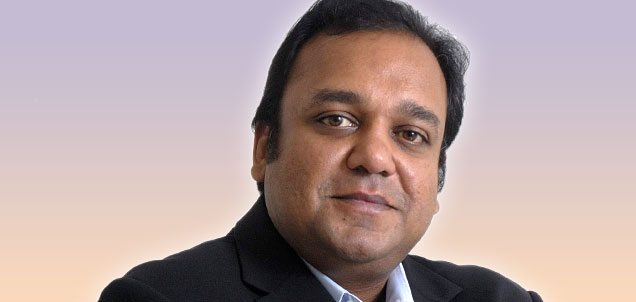
    It’s Zee’s boldest venture thus far: a premium all-India Hindustani GEC with ‘Made in Pakistan’ (and elsewhere) fictions. Launching on June 23, it is targeted at, as a communiqué notes, family viewing with today’s Indian sensibilities of wanting to balance household responsibilities and at the same time, creating one’s identity, the channel is set to infuse fresh storytelling to the Indian television industry.  An interview with ZEEL Managing Director & CEO Punit Goenka.


    Bold move to launch a channel like Zindagi?

    You have to do something every couple of years, to keep the blood rushing.


    Hmmm, since when has this been in the making?

    We’ve been working in the concept for a long time, but truly, about 15 months.


    Do you anticipate any problem given that Pakistani serials in India are not official aired in India. It’s not a done thing to be showing Pakistani serials.

    Well, there’s no law that says you can’t do it. I’ve received all my permissions. I’ve got everything in order. We’ve acquired all content on legal basis through legal entities. So my view is that if Hollywood content or content from the West can be brought here, why not content made in Pakistan? As long as it’s nothing to do with anti-India sentiments, there should be no reason why any entertainment content can’t be brought here.


    Given that there’s over rising hatred towards Pakistan and you have the likes of the Shiv Sena creating a lot of fuss about Pakistan, do you anticipate trouble. You may be on the right side of the law, but is there a fear or worry?

    No, it’s not a fear or a worry.


    And have you taken any one into confidence….

    No, I don’t think I need to take anybody into confidence, I’m doing what I believe is a good for the business and a good thing for the country also. I think, at the end of the day I’m entertaining and also bringing about a change which would allow people see the similarity in our cultures is so much that the reason for hatred is only select people. So, hate those select people. Don’t hate a country! That’s my view.


    Pakistani serials have been very popular in India in the last 25-odd years. I remember how they were huge even in the early days of the video wave. How old or new are the shows that you will be airing?

    They’re in the last two to three years’ range. Nothing older. Everything is as recent as the last two years.


    And are these among the top shows from Pakistan?

    Our barometer for selection was not how they’re performing in Pakistan. But the category we want to create is of the progressive mindset. While the predominant viewer is female here, the mindset of the female is progressive; not traditional… unlike what we offer through normal GECs that exist today. Therefore we handpick shows on that basis, irrespective of the fact of what the ratings were in Pakistan.


    Is the handpicking of shows been done by you or do you have somebody in Pakistan helping you..

    We have a team in Pakistan also and those are more outsourced kind of people. But largely it is our team in India.


    Would you also look at freshly produced content at any point?

    We’ve already started. We’ve already commissioned 12 telefilms that we’re producing and we’ve identified shows that we will be producing going forward. So it won’t be just syndicated content…


    How much of originai content will we see?

    Within a year I think we should be doing about 10 hours a week of original production.


    How much new programming every day?

    Four to start with, per day.


    Your press statement says that the footprint of the channel is all-India and you are also targeting South India? Are we going to see the channel dubbed in South Indian languages?

    No, it’s not dubbed. It’s going to be in Hindi and we do believe that the progressive mindset will consume Hindi, even down South, irrespective of the fact that it might not be their mother tongue. Our research has shown there are enough audiences available in different states, but therefore we deliberately chose to make it an all India launch.


    This is a significant difference from the audiences regular Hindi GECs have always looked at?

    Because they focus on the mass. This focuses on the premium mass. We’ve defined a new category which doesn’t exist today. My research tells me the premium mass are willing to accept content, irrespective of the language. They have to make a connect with the content rather than the language.


    In terms of distribution will it be part of the Zee package?

    Yes, absolutely, it will be in the Base Tier.


    So no extra money to be paid for this?

    Well, I think they should be charging extra for a premium channel like this. If they don’t pass on the cost to the customer, that’s the platform’s choice. But I do believe this gives them the opportunity to increase prices.


    Have you tested the concept with advertisers?

    We’re getting reasonably good response from them as well. So, I’m quite hopeful that we will have some sponsors and tie-ups on board before we launch the channel.


    Coming back to the original shows,  would you look at syndicating to Pakistani channels too?

    Why not?


    Zee TV is already available in Pakistan, now will it officially available?

    No, we cannot be officially available. Even Zee TV isn’t officially available in Pakistan. Pirated signals go, but officially we can’t sell it there.


    You mentioned that a year from now there will be 10 hours of original content. Would there be reality shows also or..

    No reality shows on this channel. It will predominantly remain fiction based.


    Any reason for this?

    I think the USP is the fiction part which we want to highlight. There are many reality shows which are already being done. So we didn’t want to bring in another element here. It helps us focus on the TG we’ve targeted and reality shows go away from the core and try and target a lot more than your bread and butter. So, we want to focus on the bread & butter rather than get garnished sprinkled on top of it.


    In the past we have had instances of popular shows being moved to the flagship channel of the network? Could that happen here too?

    No, that will not happen. How does it matter to me if tomorrow Zindagi becomes my flagship? Should it matter?


    Over the years, the second GEC hasn’t done well

    Zee Next.


    And before that, EL TV

    Well,  EL TV did very well. In fact Zee got scared of EL and therefore had it converted to a news channel (laughs)


    On a serious note, the second channel across networks hasn’t done well. Life OK took off well, but is still not up there. What is the Zee Network’s commitment to Zindagi?

    My view is that if we as a network were not sure about giving this a full shot, I wouldn’t be sitting here doing these interactions. I think we’re very clear on what has gone wrong. We can debate that till the cows come home! The fact is, have we plugged all those holes? Have we made sure that our go-to-market strategy is right or not? I think we’ve covered all grounds. The success, the viewer will decide. I’m no one to decide that. I have to make sure that I’m available. I’ve made the consumer aware of the product and then I’ve to get him or her to sample it and like it.


    Would you at some point also look at Bangladeshi content or from other markets in newer channels?

    I haven’t studied that market yet. But I do remember we were discussing the possibility of getting Bangladeshi movies which could run on the Bangla channel. But we haven’t studied it in that much detail. We’ve studied this market. It’ll be 15 months by the time we launch. A lot of work has gone in to get it to this stage and get it ready to launch. But definitely, we’re not closed to that. We can study that market also and if we find there is some proposition that can work, why not!


    And would you look at other cross-border content coming into Zindagi?

    I must add, in Zindagi itself we’ve identified content that we’ll be sourcing from markets like Turkey, Egypt and some of the Latin American countries where it’s not that we’ve just picked up shows, dubbed them and are going to be running them. We’re actually remaking those shows in Hindi. That’s part of the 10 hours of content I talked about. So, it’s not just Pakistan…


    You mentioned Hindi, but these are shows in Urdu, right. It may be a little tough for some to understand the language….

    This was one of the key parameters in my research. To my pleasant surprise, it came out that people appreciated that fact! Rather than making it a negative. They said that while some words are difficult to understand, in a conversation or sentence, as long as you get the gist of it, it’s fine. And the Urdu that was in existence 20 years ago when we watched PTV or Lahore TV has simplified. Quite like the way our Hindi was 20 years back to what it has become today. So, from that perspective I don’t think it will be such a big issue that it gets rejected. I’m quite hopeful that people will appreciate it and that will be one of the USPs. The dialect is so soothing to the ears unlike the tu-tadaak that you see here on our GECs today.


    Would you also at some pint of time look at other cross border content on your other channels? Like with your food channel Khana Khazana given the similarities between food in India and across the border? Do we see a Khana Khazana Pakistan?

    That’s quite possible. Definitely. Why not? We’ll definitely explore all that. Thank you for a business idea!


    With Zindagi and the rest of the offerings you have, what is the direction you’re looking at for the Zee Network over the next year?

    We’re definitely looking at outward growth for the Zee Network going forward. And as you know we love to beat the market projections every time. And that’s the endeavour for us. If the market is growing at X, how can we grow at 1.5X…


    Any specific targets for Zindagi?

    Yes, we have all those targets in place. The investment levels and all those things have been done to keep those parameters in mind. I wouldn’t want to pre-empt what my targets are right now, but I can tell you that they’re definitely aggressive.

     

  • RAPP India’s McDElections campaign initiative scores big

    By A Correspondent


    McDonalds and RAPP India have recently launched the #McDElections campaign for the launch of two premium burgers – the Grilled Chicken Royale and the McPaneer Royale, in their menu.


    Phase 1 of the campaign kicked off with all the McDonalds foods seemingly electing the leader amongst their candidates. The cast included a number of participating candidate burgers each with an interesting personification and McDonalds foods that play their supporters. With the just to be launched Royale Burger duo threatening to sweep the polls.


    Facebook posts and banners set up the context of the McDElections with the candidates and their supporter foods all campaigning for victory.


    But the inevitable happens, and the Royale Burger Duo wins the McDElections and forms the McDSenate.


    Venkat Mallik, President RAPP India said, “The McDElections campaign has provided us with a fantastic platform that helps us set up the food value of current and new Royale Burgers from McDonalds mixed in with the spice that the election brings in. The wide cast of characters with seven candidates and many supporters has helped us build a property which can potentially go on for a really long time ahead. The campaign lends itself extremely well to all parts of the digital landscape and we have used Facebook, Viral Videos, Youtube, a Microsite, Twitter and Banners.”


  • Genesis Burson-Marsteller announces new leadership developments

    By a correspondent


    Genesis Burson-Marsteller has announced the appointment of Krishna Vilasini Bharadwaj, in a new leadership role, as India Practice Chair (IPC), Health and Wellness Practice and Charu Benegal, who has come on board as India Practice Chair (IPC), Brand and Consumer Practice.


    A seasoned communications professional and previously Co-Chair (West and South) of the Brand and Consumer Practice, Krishna’s appointment in her new role, further strengthens the firm’s position in the Health and Wellness sector, post the recent announcement of an exclusive partnership with Medulla Communications. While she is focused on building the healthcare credentials of the firm, Krishna will continue to lead the Broadcast and Entertainment clients in Mumbai.


    As IPC, Health and Wellness, Krishna will work closely with Medulla Communications, to provide greater value to healthcare clients and teams across the country. Krishna has extensive experience in Public Relations and journalism and has worked across clients in FMCG, healthcare, technology and fashion verticals. She has managed healthcare assignments, both at Genesis BM and in her previous agency role in Singapore, across categories like infant nutrition, adult food nutrition, diabetes and medical devices. As a journalist, she has also worked with Bio Spectrum Asia, Dataquest and ciol.com.


    Commenting on her plans for the practice, Krishna said, “With more players, increased competition and closely followed regulatory framework, differentiated communications will be a key to win in the healthcare marketplace. Our strategic partnership with Medulla Communications will enable us to partner with industry leaders and help them navigate the complex health and wellness communications landscape with our comprehensive offerings in this space.”


    Having more than 20 years of domestic and global experience in public relations, marketing and events, Charu Benegal takes on the role of IPC for Brand and Consumer. Charu’s last assignment was in New York where she worked at Star TV, a News Corp owned Indian television channel.


    As IPC, Brand and Consumer at Genesis B-M, Charu will be responsible for ensuring business growth of the practice in line with the firm’s strategy, provide leadership and direction to the teams for building and delivering domain expertise and ensuring high quality of service delivery and customer satisfaction. She will be supported by Rohit Moudgill, who will continue to be Co-Chair of the Brand and Consumer Practice, based in Gurgaon.


    Commenting on her decision to join Genesis B-M, Charu said, “While I have tremendously enjoyed my stint in New York, I am happy to be back in India and quite enthusiastic to be a part of such an inspirational leadership team at Genesis B-M. I am confident of supporting the organizational growth by providing strategic client direction and building and growing the Brand and Consumer Practice nationally. ”


  • Tangerine Digital launches analytics-driven content solution

    By A Correspondent


    Tangerine Digital has announced the launch of Analytics Driven Content Services to aid travel companies enhance their customer engagement across digital platforms. The uniqueness of this offering is backed by analytics that will drive a brand’s content strategy. Tangerine Digital has expanded its existing range of services across the content marketing spectrum from content creation, content management, content aggregation and crowd sourcing services to analytics for content strategy.


    With this launch, Tangerine Digital will now enable brands in the travel industry in India with travelogues, destination guides and videos, advanced photo shoots, user generated content, expert reviews and ratings, celebrity feeds, travel blogs, itineraries, traveler reviews and hotel description.


    Kesavan Kanchi Kandadai, CEO, Tangerine Digital stated, “Today companies like to be constantly connected with digitally-savvy customers at every step of their travel planning. The travel industry greatly depends on reviews, advices from other travelers and the spread of opinions on digital platforms. Content strategy backed by analytics will allow travel companies to empower their customers with customized and personal experience, driving brand loyalty and ROI. Over the content offering we ensure that all relevant metrics are pulled out from various digital platforms on the content trends that help brands drive engagement.”


    Tangerine Digital has an array of renowned clients across sectors and is now aggressively focusing on growing the business in the travel sector. According to a new report by Waggener Edstrom Communications released in January 2014, an astonishing 97 per cent of the Indians surveyed follow their favorite brands on social media. The study also stated that Indian consumers who follow travel & tourism brands spend up to 187 per cent more on these company products per year.


  • Sam Balsara on the BJP’s Media Magic


    By Shobhana Nair


    While there’s no doubting the fact that it was Narendra Modi who led the Bharatiya Janata Party to victory, there were many who worked backstage to create the message. MxMIndia spoke with Sam Balsara, Chairman & Managing Director of Madison World, the media planning and buying agency that worked along with Team Modi to pull of what was decidedly the biggest ever political campaign the country has ever seen. Excerpts from an interview:


    Learnings for other Advertisers:

    > Don’t under-spend; most brands make that mistake and dilute their campaigns and sometimes waste the entire advertising money

    > To change consumer behaviour or establish brand preference - multi-media is a must


    What the new government must do:

    The new government must focus on growth in economy and provide incentives for that, provide infrastructure, make India the toast of the world once again, not focus on giving doles to the poor. Even if you distribute all the money to the poor there isn’t enough money to go around. It needs to focus on growing the economy. Most of India’s problems would get taken care of. In the media area, it must not interfere and allow free market forces to play.


    How did the mandate come to Madison? Who from the BJP called you and how and why did you decide to work on the campaign?

    We were first contacted by Prashant Kishore in Ahmedabad through our client Lodha. Subsequently, we were contacted by Ajay Singh and Arun Narendranath. Then we met Piyush Goyal and Arun Jaitley. We entered the fray late. All major agencies were competing for the account. What won us the business was a lot of detail work revolving around media reach in different constituencies, grouping them in three priorities and summating the whole strategy in an elegant 10 pillar strategy. Our reputation for transparency and integrity sealed the deal.


    When you took on the mandate, or any time during the campaign, did you get any direct brief from Narendra Modi?

    Lara has met Narendra Modi. I haven’t, yet.


    When you took on the job was there any apprehension about delivering it? Political parties like BJP, RSS are known to be conservative, not open to modern ideas and so on. Was there a problem on that count?

    We were confident of delivering on our product not just because of faith in our own experience, expertise and capability but we knew we had a strong product, compared to competition. Advertising works brilliantly for a good product, but kills a bad product fast.


    For the first time ever in India a political party was presented as a brand. Was BJP open to this idea from the beginning? How did you sell your ideas?

    Yes. That was the very reason they reached out to professionals and then played a supportive role, not an interfering role. I must say the people at BJP are not the politician stereotypes; they are smart, savvy and intelligent managers who have left their corporate jobs to help the nation catch up on lost time.


    Reaching out to media dark markets like UP and Bihar seemed to be a big challenge for BJP. How did you resolve that?

    These markets did pose a challenge and obviously got our greater share of our attention. In addition to mass media these markets got intensive below-the-line support.


    What were some of the biggest challenges you faced while executing the campaign? We have heard in many regions district magistrates refused to cooperate.

    Outdoor in UP especially, posed huge challenges because of unfair play by the ruling party in granting permissions for putting up hoardings. The other challenge was negotiations with media, some of whom artificially inflated their rates for political campaigns! Random numbers floating around in the media of the budget of our campaign made our task more difficult. Ultimately, it worked out well and we were able to do our job without fear or favour and I hope the media owners are also happy.


    Will you call this the toughest campaign of your career?

    What made it tough were the frequent changes based on feedback from state units communicated to us through BJP HQs that necessitated my team to work almost every night till 3 and 4 am. Work-day timings for the team changed from 9 to 5 to 12 noon to 3am. In many cases we succeeded in releasing jackets in newspapers at four hours’ notice (2am to 6am) and TV spots too at 2 hours notice. We launched the campaign on cricket. You can’t do better than that, based on our experience and the creative also was specially created for cricket.


    Going forward, will you continue to work for BJP or the new government? Has there been any discussion?

    We hope so. In addition, what I would really like is for the Government of India to appoint us as media advisors for all their advertising! We could make a huge difference in terms of efficiency and effectiveness. Communication is a very important element in the nation-building process. Most political parties unfortunately think of it only at election time.


    A number of people said BJP spent close to Rs 5000 crore for the election ad campaign. What do you have to say to that?

    That is indeed the finest compliment that Madison Media has ever received. The actual is just a miniscule fraction of that number, but I am not at liberty to reveal the number. Some professionals have put the mass media campaign at Rs 1000 crore. I am offering a prize to anyone, mass media professionals included who can guess or calculate the exact number spent in mass media! The BJP campaign has once again proven that mass media has the power to move mountains; that mass media is not expensive as it is thought to be and multi-media is essential for effectiveness. I must also admit that in my view NDA would have won anyway; they had a strong product and the competition was weak. What our campaign achieved is that it cost effectively raised the pitch to a crescendo, constituency by constituency as polling day neared which converted a communication task into what you in media call a Modi WAVE that resulted in a landslide victory for the BJP.


  • Sony SIX urges fans to ‘Live the Magic’

    By a correspondent


    Sony SIX has announced its new marketing campaign for 2014 FIFA World Cupâ„¢ called ‘Live the Magic’. The marketing campaign sees the star studded support of John Abraham in a whole new football avatar encouraging viewers to join in the party to catch the ultimate footballing extravaganza on SIX. The inspiration of the campaign has been drawn from the global obsession of viewers assembling to catch the most anticipated international tournament in the world of football. The term ‘Live the Magic’ was coined to ignite the fervour and the passion for football fanatics, as well as to call out to non-sport enthusiast to join the party.


    The campaign is shot with the idea of replicating the carnival atmosphere surrounding Brazil. The opening scene shows John Abraham donning the avatar of Brazil’s beloved and sensational strikerNeymar Jr. exiting onto the town street. He is joined by fellow town football fans donning the avatar of Portugal’s superstar- Cristiano Ronaldo, Argentina’s footballing Maestro – Messi and France’s lightning bolt – Ribery. The film takes on from here where the characters mosey through town and arejoined by their entourage and ensemble of sports fans replicating the feel of the Brazil’s trademark carnival parade. Showcasing colours from several popular international teams, the film emits a grandeur experience signifying an important message on how viewers come together to celebrate and watch the sport of football. The commercial exudes Brazil in its beach, narrow streets, music and carnival-like atmosphere.


    This intent of the campaign emanates from the channel’s endeavour to capture sports enthusiasts and urge non-sports viewers to come together and enjoy the international football extravaganza. Further the campaign aligns itself to the channels continued commitment of bringing in high quality sports content for viewers across the nation.


  • mCordis’ Paul Barney to speak at IAA webinar series today

    Paul Barney

    International Advertising Association (IAA) India Chapter has invited Paul Berney, Co-Founder & Managing Partner EMEA of mCordis for its webinar on 22nd  May 2014 at 4:00 pm. Mr. Barney has over 25 years experience in a wide variety of sales, marketing, business development and commercial roles spanning several different industries and market sectors including automotive, printing, internet development and management consultancy. He was recently invited to join the editorial Board of the IDM and was voted one of the Top 50 influencers in mobile marketing in the UK by The Drum magazine 2013.


    Abhishek Karnani, Director, Free Press Journal and Manish Advani, Head – Marketing and Public Relations, Mahindra Special Services Group, are co-chairing the IAA Webinar series.


    Questions for Paul Berney could be submitted through the IAA India Chapter facebook page – www.facebook.com/IAAIndiaChapter.


    The hangout will be broadcast live on our YouTube channel – www.youtube.com /iaaindiachapter on 22nd May, 4pm IST.


    International Advertising Association (IAA) India Chapter has recently hosted speakers like Sajeev Kapoor, CMO, Citi (India); Ashish Hemrajani, Founder and CEO, Bookmyshow.com; Rajan Anandan, MD, Google (India); Nishant Rao MD, Linkedin (India); Ajit Balakrishnan, Founder, Rediff.com; Julie Roehm, Chief Story Teller, SAP and Neeraj Roy, MD and CEO of Hungama Digital Media Entertainment Pvt. Ltd.


  • Cyriac Mathew turns entrepreneur, launches ‘Media Accelerate’

    By A Correspondent


    Former Mid-Day Chief Operating Officer and Publisher Cyriac Mathew has turned entrepreneur and founded Media Accelerate, a boutique business consultancy that will advise media houses and allied businesses in enhancing reach, revenue and ROI.


    Mr Mathew and team will work with media organizations to bring down publishing expenses as well as collaborate to bring printing contracts to utilize non-prime time printing slots. In addition to revenue generation across the big cities, one of the services it plans to offer is offer consultancyin launching publications including title clearance, recruitment and various launch events.


  • Shailesh Kapoor: Reality Shows: Trendy No More?

    By Shailesh Kapoor


    When KBC first launched in 2000, the term “reality show” was not a part of this country’s lexicon. The long-running Sa Re Ga Ma Pa (1995) was then referred to as a singing talent show, not a reality show. But by end 2004, reality shows were emerging as a formidable force, fuelled by the launch of Indian Idol and India’s Best Cinestars Ki Khoj that year.


    The amount of activity this category saw in 2004-08 made one believe that its share of viewership would continue to rise year-on-year. But the reality shows genre in India has flattered to deceive. In 2008, 21% of viewers named a non-fiction show as their favorite GEC program. In 2014, this number remains in the 20-25% range, and that includes Comedy Nights With Kapil, which contributes to more than half the share.


    Why did the category stagnate? This summary of 2014 tells a story:


    1. Khatron Ke Khiladi Season 5 (arguably the best season of the show since season 1) ends this weekend.


    2. Dance India Dance, currently airing in the Li’l Masters variant, is into its ninth cumulative season, if you could the main show (4 seasons) and variants such as Li’l Masters, Super Mom and Doubles (5 seasons).


    3. Jhalak Dikhhla Jaa Season 7 is slated to launch this June.


    4. KBC 8 is calling for entries currently, and is slated to launch around August.


    5. As an aberration, only the second season of Zee TV’s Cinestars Ki Khoj is scheduled for a mid-year launch, coming back after a decade.


    6. Bigg Boss Season 8 should go on-air around October, like every year.


    7. Being an annual fixture, India’s Got Talent is likely to be on-air this year too, in what will be Season 6.


    You get the trend? All these properties are at least five years old.  All, barring one, are into their fifth to ninth seasons. We have fallen into a pattern. And the viewer is not exactly pleased with this turn of events.


    Except the two Zee TV formats, all other formats are imports. Four out of seven are talent show formats. Clearly, India’s ability to create original, homegrown reality show formats is highly suspect. Many attempts have been made, but have been largely unsuccessful. Imagine’s unofficial adaptation of The Bachelor got good attention, especially in the first season with Rakhi Sawant. But overall, it has been a tough ride for the industry.


    Doordarshan and Zee TV have been creating reality show formats even before the imports descended upon us. From Meri Awaz Suno in the 90s to Saanp Seedi, Antakashari, Sa Re Ga Ma Pa and DID, these channels had a lot to offer, though most of it was in the talent and games show space. When the industry showed growth and the market became ready to import foreign formats, it emerged as a low-risk option to go for. In the process, the homegrown formats began to get step treatment from most channels, in terms of attention and budgets provided to them.


    Today, the reality shows genre is facing imminent decline. The audiences who grew up watching these formats would have recently got married or are likely to get married soon. The impact of marriage on TV content preferences can never be overstated. And no young generation likes to inherit what the “oldies” liked. They want to create their own trends, their own hits.


    With a culture and heritage as rich as ours, we should be bursting at the seams with reality show ideas. The time can never be more right!


    TV Trails is a weekly column written by Shailesh Kapoor, founder and CEO of media insights firm Ormax Media. He spent nine years in the television industry before turning entrepreneur. The views expressed here are his own. He can be reached at his Twitter handle @shaileshkapoor


  • Flipkart buys Myntra. Finally!


    By Archana Rai


    So, finally Flipkart has bought Myntra, exposing an open secret and sending a not-so-subtle message-to rival Amazon. Despite loud protestations, it is quite clear that the investors, three of whom own shares in both companies, played a big role in seeing this deal through. Bringing together India’s largest online retailer and the country’s hippest fashion portal makes financial sense for the investors, and also strategic sense. The hard part is going to begin now.


    Flipkart-Myntra deal: The anticipated FDI in e-retail a big driver


    By Mehak Chawla


    The Indian e-commerce industry has fared pretty well, especially if we consider that there are only about 200 million internet users in India. This number could grow to 500 million by 2015, according to consulting firm McKinsey & Co.


    The size of India’s e-commerce market in 2013 was around $13 billion, according to a joint report of KPMG and Internet and Mobile Association of India (IAMAI). The online travel segment contributed over 70 per cent of the total consumer e-commerce transactions last year.


    Online retail companies earned revenues of around 139 billion rupees ($2.24 billion) in the financial year that ended on March 31, 2013, according to a Crisil report. Though this is just 0.5 per cent of the total revenues of brick-and-mortar retail companies, online retail sales have been growing much faster. Revenue of e-commerce firms grew by 56 per cent annually between the financial year that ended March 31, 2008, and the year ended March 31, 2013, according to Crisil.


    The pressures on e-commerce companies have long been known, be it cost competition with brick and mortar retail or the first mover advantage. And while the Flipkart-Myntra acquisition is surely a step to combat Amazon, the looming FDI regulation could also be a big factor in this deal. Once the 100 per cent FDI in e-commerce comes in, big retailers like Amazon and eBay will be able to follow an inventory-based model, as against the marketplace model they are currently bound to follow.


    Currently, global B2C e-commerce firms like Amazon and eBay operate in India as online marketplaces. In this model, these companies do not own any inventory and do not sell any of their own merchandise to Indian shoppers. They offer products from third-party sellers. This model can completely upturn if the 100% FDI in e-retail is to come in. Indigenous products from the likes of Amazon and Walmart (and their own inventories) can change the dynamics of the Indian e-commerce industry like never before. No wonder then, that the home-grown players like Flipkart are upping their ante.


    Though the stand of the Modi led government on 100% FDI in retail, especially in e-retail is not yet very clear, chances are that the regulation will go through. According to Vishal Tripathi, Principal Research Analyst, Gartner India, chances are that FDI in e-retail will happen. “Even if they don’t allow 100% FDI investment in retail immediately, chances are they will make the retail environment (including online retail) friendlier. NDA has always leaned towards private enterprises and they are likely to bring business savvy regulations.”


    The pressure on the government to pass this regulation is also high with the likes of Walmart lobbying for it and UK based Tesco showing a keen interest in entering the Indian e-commerce space.


    When 100 per cent FDI in (online) retail does come in, chances are that we shall see a lot more consolidation happening in the e-commerce space, believes Tripathi. Given the fact that global brands will intensify the competition in an already fiercely competitive e-commerce space, desi ventures are likely to start rolling up their sleeves.


    Other than the FDI in retail segment consideration, there are of course other elements that both Flipkart and Myntra were dealing with. The biggest of them being the cost considerations. According to market sources, Flipkart is losing close to Rs 70 crore a month. Myntra on the other hand, is fast losing market as well as mind share to the likes of Jabong.


    As a result, the deal seems like a win-win for both the parties because they have several synergies in their processes (and investors) that they can exploit for innovation. “The e-commerce market will be eventually decided by the customer experience. And Flipkart and Myntra have a lot to do in that regard in order to match up to the Amazon experience,” says Tripathi.


    Source:The Economic Times

    Copyright © 2014, Bennett, Coleman & Co. Ltd. All Rights Reserved

    Licensed to republish


    Instead of Flipkart and Myntra burning more cash to battle each other and the rest of the lot in the crowded online retail industry, investors now have the comfort of knowing their money will be used to fight the real challenger- Amazon-whose founder Jeff Bezos views India as a key market where he is willing to commit considerable sums of money from his considerably large war chest.


    Myntra, which informed observers estimate has been valued at around $370 million, is a strategic fit for Flipkart. As fashion becomes the premier battleground for online portals in India, Myntra with its higher margins from branded apparel, will help bolster Flipkart’s defences.


    With a product mix dominated by electronics, books and low-cost apparel, the seven year-old company founded by IIT-Delhi graduates Sachin Bansal and Binny Bansal has demonstrated that it is willing to think different and think big.


    Even as talks with Myntra’s Mukesh Bansal started and stalled in recent months, Flipkart has been busy. Inhouse logistics arm eKart now delivers products sold by rivals, while payment gateway PayZippy is being nurtured as a separate business, the first of several technology products the company says it will build.


    But these are just good beginnings. So far, Flipkart’s Bansals, who hope to sell everything apart from cars and groceries, have wooed customers with steep discounts that have coloured their books red. To grow faster, they need higher margins that are delivered mostly by products designed in-house.


    Myntra will help with its portfolio of private label apparel that enjoy margins of up to 60%, but Flipkart needs more such arrows in its quiver. Private label electronics-as Kindle has done for Amazon-can boost notoriously low margins in the segment. They can also do well by scouting for ideas and products in India’s technology startup space that is throwing up innovations ranging from wearable devices to technology that can automate warehouses and help customers get a feel of the clothes displayed on their portal.


    More boldness has to be the calling card for the Bansals, who claim to draw inspiration from Jack Ma’s Alibaba, as they take on Bezos’s challenge on their home turf. Investors who have sunk money into this battle and are banking on Sachin Bansal’s famed “cool temperament” to see them through, will need to ensure he has enough motivation to invest skin in the game.


    Bezos owns nearly 18% of Amazon, while Ma’s 8.9% in Alibaba is set to deliver a fortune to the Chinese entrepreneur who has built an empire that spans the gamut from a wholesale portal to an investment platform for online shoppers Flipkart’s Bansals are estimated to together own about a fifth of their company that is now valued at about $ 2.5 billion. With Myntra in the fold, surely they have much to do battle for.


    Source:The Economic Times

    Copyright © 2014, Bennett, Coleman & Co. Ltd. All Rights Reserved

    Licensed to republish


  • Orchard wins mandate to promote ‘Meelo Evaru Koteeshwaru’ on MAA TV

    By A Correspondent


    Orchard Advertising has been assigned the mandate of promoting the launch of Meelo Evaru Koteeshwaru, the Telugu version of Kaun Banega Crorepati on Telugu entertainment channel MAA Television Network Limited. Going on air from mid-June 2014 and hosted by South Superstar Nagarjuna, MAA TV aims to raise the bar in the Telugu TV general entertainment space.


    Ratnakar Rao, CEO of MAA TV said, “Having known Leo Burnett for many years and looking at the agency’s track record in promoting KBC and other big shows, the obvious choice for us was to work with them on this project. We have been working with Orchard, Leo Burnett’s entity based in Bangalore for a while now and for our latest show, the fit seemed right and it didn’t take long before we signed up with them.” Adding further he said, “The team at Orchard came up with an insightful and relevant concept that connects the essence of the program’s benefit with the aspiring participants of the show. We are working with Orchard on an integrated campaign for the two phases – one to promote participant registrations and two, the viewership build up.”


    Neha Contractor, Branch Head and Vice President, Orchard Advertising, Bangalore added, “We are very excited about this partnership. We have put together an extensive mass media campaign that has been designed using all media platforms like TV, newspaper, radio, hoardings, digital and social media to promote the show in every nook and corner of the state. Ratnakar himself is a veteran from the advertising world and it has been wonderful working with him in co- creating this successful campaign.”


    MAA TV has received 1.2 million calls for entries already through the initial reveal and CFE ads executed by Orchard Advertising.


  • Star India’s Uday Shankar to speak at Paley Center for Media

    By A Correspondent


    Uday Shankar

    Star India CEO Uday Shankar will achieve a new milestone when he becomes the first Indian CEO from the M&E industry to speak at the Paley Center for Media, the premier institution dedicated to advancing the understanding of media and its role across cultures and societies. Uday Shankar will be addressing a breakfast session, which will be moderated by Bobby Ghosh, Editor Time International at Paley Dialogue on Friday, May 30 in New York. He will be introduced to the distinguished guests by James Murdoch, Co-COO, 21st Century Fox.


    The Paley Media Council is an exclusive, invitation-only membership community for entertainment, media, and technology industry executives and provides an independent forum for top industry leaders. Featuring candid conversations with the best minds in the industry, this year’s Paley Media Council will see an exclusive gathering in presence of the most distinguished guests from major American business organizations, foreign press organizations and leading social organizations.


    At this global media platform, CEO Uday Shankar will discuss the journey of STAR India and how the company has become India’s leading media business by using its programming to spark national discussions on a range of social and political issues. Most notably, the series ‘SatyamevJayate’, STAR’s hit talk show about India’s pressing social concerns, has become the premier platform through which Indians can discuss social issues. This achievement, combined with STAR’s track record of cultivating forward-thinking programming, casts STAR as a model for what a 21st century media business should look like—one that harnesses the power and reach of television to touch lives and create meaningful change.


    Since 1995, the Paley International Council Summit has provided an independent forum that brings together chief executives of the world’s most important media, entertainment, and technology companies to advance the exchange of ideas and to foster community among them. Informal and organized discussions cover a wide range of critical issues that define the media industry and its role in society for generations to come.