Category: MEDIA

  • Eclectic NorthEast ties up with India Today Mind Rocks

    By A Correspondent


    Guwahati-based Eclectic Publications has tied up with the India Today group to be the youth partner for its annual youth conference ‘India Today Mind Rocks’. The group’s flagship English magazine Eclectic NorthEast will offer specially discounted passes for the youth from amongst its readers to attend the conference.


    The publishers expect this association will go long way and help youth of the region to discover true potential of this land, notes a communiqué.


    This year’s edition of ‘India Today Mind Rocks’ will be held in New Delhi on September 21 with keynote speakers such as Farhan Akhtar, Kiran Bedi , Chris Gayle , Ranveer Singh , Hard Kaur , Amish Tripathi and Ajay Bijli.


  • Star gets set for mother-of-all fund-raisers for Uttarkhand relief

    By A Correspondent


    Leading film icons Amitabh Bachchan, Lata Mangeshkar, Ajay Devgn, Kajol, Anil Kapoor, AR Rahman, and a cross-section of television stars have pledged their support for what promises to be one of the biggest fund-raising events ever held in the country.


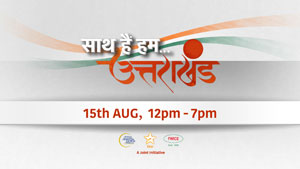
    Organised by media conglomerate Star India, the seven-hour event called ‘Saath Hain Hum Uttarakhand’ will be held in Mumbai at the NSCI and the event will be aired live Star Plus, Star Utsav, Life OK, Channel V and Star Pravah.


    The end-use of funds will separately be overseen by a body of independent auditors, Star has informed even as it announced partnering not-for-profit organizations — Himmotthan Society and People’s Science Institute — to channel the funds raised to help with the rehabilitation work in flood-ravaged Uttarakhand. Donations will be open from August 15 to September 7.


    Uday Shankar

    “The task of rebuilding is difficult. But it isn’t impossible if we can join forces,”  Uday Shankar, CEO Star India, said. “We are glad to partner groups that are not only focused on providing immediate relief but are building sustainable solutions to equip people prepare for the future.”


    The Film Producers Guild, Federation of Western India Cine Employees (FWICE), TV Artists Forum, Corporate Charity Trusts and several independent industrialists and donors will partner the fund-raiser.


    “The event is evidence that there is a strong desire in the community to help,” Mr Shankar added. “The unflinching support of the stars is humbling and in turn will help us extend a helping hand to those in need. The film world’s support also reinforces our belief in the power and reach of television, and its ability to be a force for good.”


    Said Sabbas Joseph, director and co-founder of Wizcraft which is organising the event: “Saath Hain Hum Uttarakhand is one of the biggest fund-raisers to muster support for any natural calamity. We sincerely hope that this initiative will go a long-way in helping the victims of this unprecedented tragedy. We are delighted to express our support and join hands with Star India and the film industry to celebrate the Independence Day, dedicated to the people of Uttarakhand.”


    The Himmotthan Society and People’s Science Institute have been actively involved in rehabilitation works in Uttarakhand after the floods. While Himmotthan is focusing on speedy reconstruction of livelihoods through innovative, novel techniques in agriculture, water and sanitation, livestock management and afforestation, People’s Science Institute is engaged in devising sustainable solutions and building robust infrastructure that’s better equipped to handle natural calamities.


  • 66 years of Independence, Bollywood still follows British Raj map

    Click to enlarge


    By Vikram Doctor


    Telangana will be India’s 29th state. More states may follow; India will change. But arguably one of India’s most iconic and popular institutions – Bollywood – will have no truck with the changing map of India.


    Through all of post-Independence India’s cartographic controversies, Bollywood’s map of our country has remained unchanged – faithful to India of the Raj, and indifferent to the politics of states.


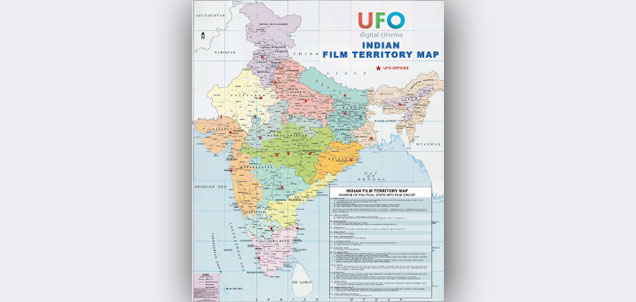
    Bollywood’s map is dictated by distributor territories. Mumbai territory, for example, includes Mumbai city, Goa, Gujarat and parts of Maharashtra and Karnataka that belonged to the old Bombay Presidency.


    But interior Maharashtra districts that were part of the old Hyderabad state are clubbed with the districts around Hyderabad and parts of Karnataka into a territory called Nizam. Say that to Telangana activists!


    Other Bollywood areas also retain old names. Punjab, Haryana and Himachal Pradesh are not just undivided, but are still called East Punjab (including, for convenience, Kashmir), since West Punjab territory is now Pakistan.


    Practical Divisions

    Central India under the Raj was divided between the big British province of Central India and Berar, and a number of princely states; the former is now the CP/Berar territory and the latter is the CI (Central India) territory.


    Delhi/UP territory is the capital plus the old United Provinces, including the hill regions that are now Uttarakhand. Eastern India is divided between the Assam territory, which includes the whole Northeast, except for Tripura and Sikkim which joins West Bengal and the Andamans in the Eastern territory.


    This also includes Bhutan, which shows how Bollywood can be above national boundaries. Nepal is also often clubbed into the Bihar circuit, a fact that has sometimes annoyed nationalistic Nepalese (Bhutanese don’t seem to care, but perhaps they don’t watch much Bollywood).


    The Andhra territory quite neatly anticipates what is now going to be Seemandhra, while Tamil Nadu and Kerala, two states with little interest in Bollywood, are usually lumped into one South territory.


    Shyam Shroff, the founder of Shringar Films, says the structure was even more basic at the start with the country split into Bombay, Delhi-UP, East Punjab, West Bengal, C. P. C.I., Rajasthan and South territories. As the industry developed and areas within these became more promising, they were spun off into the current structure, but they have never seen the need to align these with political states. “The old territorial method still continues and it is still working well and no one is complaining,” shrugs Mr Shroff.


    He admits that territories like Mumbai which cross three states can pose legal and tax issues for films, but these seem to be administrative issues which can be handled.


    Dr Tejaswini Ganti, professor of anthropology at New York University, whose book – Producing Bollywood – analyses the mechanics of the industry, has been researching Bollywood territories, and says that while the precise origins of the divisions are unclear, they can be dated to the 1930s and the start of sound.


    After the advent of talking films, the volume of Indian films picked up significantly and the need to create a market structure would have come in.


    The larger question is why the division has persisted. A strong reason must be simple inertia, or perhaps the desire to avoid the conflicts and perhaps even court cases that attempts to redraw boundaries might entail.


    But the divisions may also be practical. As Mr Shroff explains, “a distributor of a particular territory understands his area very well and accordingly negotiates with the producer.” If states reflect the electoral calculations of politicians, Bollywood territories reflect the capital-raising calculations of the distributors.


    Dr Ganti also argues that the rise of powerful national distributors like UTV and Viacom might have been expected to end the old divisions, but may actually reinforce them. “It appears as if these big companies still rely on the individual territorial distributor to execute the release in the centres farther away from the metros and it also seems they raise capital – the big guys pay huge amounts in rights to the producers, but they sell the subsidiary rights to those independent guys who have now gone from distributor to sub -distributor status.”


    The old Nizam territory is a good example of how Bollywood calculations might be more efficient than political ones. For reasons of language and their own strong film industries, the four Southern states have never been great markets for Bollywood – Andhra Pradesh, for example, had the booming Telugu industry which was headquartered in Hyderabad. Yet Hyderabad and the districts around always did decent business, probably because of more awareness of Hindi that was a residue of the old Nizam’s state.


    “Nizam has always been seen as a profitable territory and hence filmmakers always talked about it separately from the ‘South’,” says Dr Ganti.


    It is, of course, exactly this area that will now become Telangana, and if Vidarbha follows as a reality, then the combination of the two will almost resurrect the old boundaries of Hyderabad state, except for the districts that became part of Karnataka. But for Bollywood, nothing changes since all this is already part of the Nizam territory, a reflection perhaps of wisdom more lasting than that of politicians.


    Source:The Economic Times

    Copyright © 2013, Bennett, Coleman & Co. Ltd. All Rights Reserved

    Licensed to republish


    Image courtesy: UFO Moviez
     

  • Happy Independence Day! Next update: Friday

    By A Correspondent


    Our offices are closed tomorrow (Thursday, August 15) on account of India’s 67th Independence Day. While we will be around to update you if there’s any significant development, our next scheduled big update and newsletter/viewsletter edition will happen on Friday, Aug 16.


    Yes, we agree that August 15 ought to be a day when we should be working harder, rededicating ourselves to the Nation and ensure that we live up to the expectations of those who fought for our freedom for over a century.


    So even though we many of us celebrate Independence Day as a holiday, spare a thought for those who fought for the cause. And also, how we can make our Bharat really mahaan.


  • Social Access offers I-Day treat with tricolour film

    By A Correspondent


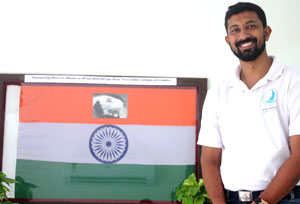
    Lt Cdr Tomy

    Earlier this year, on Republic Day 2013 to be precise, Lt Cdr Abhilash Tomy rounded the Mount Everest of sailing, Cape Horn, at the southernmost tip of South America, and hoisted the Indian national flag at sea, the farthest spot away from India. His extraordinary voyage was India’s first solo, non-stop, unassisted circumnavigation of the world’s oceans in a sailboat. The hoisting of the tricolour was a world first, and Lt Cdr Tomy had only the ocean and its creatures to sing the national anthem along with him.


    Lt Cdr Tomy’s historic video footage on this occasion was edited by Guruvayur Films to a special version of the national anthem with music rendered by Audiosynkrasy. Social Access Communications produced the film for cinema and television broadcast.


    The medium of cinema was chosen for the reach it delivers among young men aged 18 to 35. UFO Moviez arranged for the film to be screened from August 9 to 15. PVR-Cinemax also replaced the national anthem usually screened in Maharashtra with this special film. Over sixty national and regional television channels were engaged to broadcast this anthem.


    Speaking on the release of this film, Lt Cdr Tomy said, “Hoisting the national flag on a tumultuous sea at Cape Horn on Republic Day was an extremely proud moment for me as an Indian and a naval officer.”


    Lynn de Souza

    Lynn de Souza, Founder, Social Access Communications added, “We want to inspire patriotism and courage in our youth and Abhilash is a role model and real icon of change to them.”


    Speaking on the occasion of the special screening of this film at its corporate office, UFO Moviez’ JMD Kapil Agarwal said, “UFO is extremely proud to be associated with this initiative and would like to congratulate Abhilash Tomy for his incredible achievements.”


    Said Santosh Menon, of Guruvayur films, “It’s a huge honour to be associated with our national anthem, and a complete pleasure to meet a real life hero, AbhilashTomy.” Biby Sam of Audiosynkrasy, who composed the music said, “Working on the Indian National Anthem was a first for me. As an Indian, I was thrilled to work on this project, and in keeping with the theme, I was moved to render the Anthem with an upbeat blend of Indian and western music styles, hopefully reflecting the pride of every one of us Indians.”


  • Jaldi 5 with Arun Anant, CEO, Hindu: No plans to launch ‘Hindu’ in Mumbai

    By A Correspondent


    So does the entry of Hindu’s schools edition into Mumbai mean that the bigger daily will follow suit soon? MxMIndia asked this and some other questions to Hindu CEO Arun Anant, and got responses which are clear, direct and unambiguous. Excerpts:
     

    01.  While The Hindu is well-known brand, not all schools and school children in Mumbai may be familiar with the brand. Why this decision to launch the Hindu in School in Mumbai?

    We have a  product based on the Hindu editorial values customised for children that we launched last year and has been well-received by the children, teachers and parents. We therefore felt that it would be good to increase the footprint of the school edition to other markets


    02.  Any plans for a launch in Mumbai for the main paper? Is this move an effort to catch them young?

    No. We have no plans for a launch in Mumbai.


    03.  Other than being a circulation-booster for the parent edition, what kind of revenues does your schools edition generate currently in the rest of the country?

    We expect this initiative to be cost-neutral.


    04.  What are your targets for the Mumbai schools edition Will you also extend this to Pune and around Mumbai?

    We would like to extend to Pune. We have no specific targets for Mumbai yet.


    05.  Are you looking at marketing promotions and any activity for schools who subscribe in bulk?

    We will do some events and ground level education initiatives for schools across the country


  • Shailesh Kapoor: Primetime News: Talking Heads or Headless Chickens?

    By Shailesh Kapoor


    In the middle of a heated news television debate, the spokesperson of a top political party asserts: “Can you just give me two minutes to make my point? Then I have to go to another channel.” I was amused the first time I heard this line about two years ago. But over time, it’s become par for the course. Not too long ago, I was switching news channels and found the same spokesperson, sitting on the same seat, on four different news channels within a span of an hour, engaging with the same debate with roughly the same panelists!


    Till about a decade ago, news television was about reportage, accompanied by analysis, peppered with bytes that added value to it. NDTV Profit has been repeating old episodes of The World This Week as a part of the 25-year celebration of the group, and the difference between the approach to news then and now is striking, to say the least.


    I’m not suggesting that debates-heavy news programming on primetime is bad. In fact, if done well, it can be significantly more engaging than the more passive classical reportage format. But for that, you need talking heads who can debate – authoritatively and intelligently. And the current lot falls short on both counts.


    It’s evident to any regular news viewer that the spokespersons designated by the top political parties, the likes of Sanjay Jha, Nirmala Sitaraman and Rahul Narvekar, have no real authority at their disposal. They are foot soldiers, thrown in a hostile situation and left to dodge the missiles being hurled at them. To make themselves heard in the cacophony may well be their only KRA.


    Talking heads from regional parties, such as Derek O’Brien from Trinamool, clearly display more authority, though it is another matter that half of the time, he is defending the indefensible.


    On intelligence (and I don’t mean IQ here but political acumen), you can sense that parties have relaxed it as a criteria for the choice of spokespersons. From Abhishek Manu Singhvi to Sanjay Jha is quite a big shift, for example. It seems there are too many channels and you need an army to share the “workload.”


    In any case, the real voices that matter choose not to come to primetime television shows. Rarely would you see a minister making an appearance in a one-on-one with one of the top anchors. Because they have made themselves so inaccessible, they are treated with near reverence when they indeed make that odd appearance.


    Interestingly, the same revering anchors go ballistic with the lesser mortals, read spokespersons. It’s as if the anchors start their show licking their lips in anticipation of the “tough questions” they will hurl at their guests.  Nidhi Razdan’s latest interview with British MP Barry Gardiner proves that the infection to be mean has spread thick and fast. Blame Arnab, of course.


    I believe political parties will do well to focus on quality rather than quantity, i.e., present themselves only on 2-3 channels on any given night, but send erudite and articulate talking heads, who can rise above petty out-shouting, to deliver the goods. It will serve the parties well in the long run.


    Channels, on the other hand, will do well to limit a debate to 3-4 talking heads. There is no empirical evidence to suggest more talking heads means a more engaging debate or more ratings. A leaner panel will, in fact, encourage quality politicians to participate.


    Lest I should be misunderstood, I am not advocating a “reduce noise” recipe. I (kind of) like the noise of primetime television. It is provocative and stimulating in its own right. But if the noisemakers are just headless chicken, the point is lost. We need noisemakers who are also newsmakers!


    Shailesh Kapoor is founder and CEO of media insights firm Ormax Media. He spent nine years in the television industry before turning entrepreneur. The views expressed here are his own. He can be reached at his Twitter handle @shaileshkapoor


  • Vishal Maathur elevated to new role @ MEASAT

    By A Correspondent


    MEASAT Satellite Systems has announced the promotion of Vishal Mathur from Director (South Asia) to Senior Director, Sales and Marketing.

     

    In his new role, Mr Mathur will be responsible to build the MEASAT’s customer base with a focus in the broadcasting and DTH customer segments across MEASAT’s footprint on 91.5 East.


    Mr Mathur joined MEASAT in 2006. During his seven years with the satellites supplier, he has been instrumental in expanding the company’s position across South Asia.  Prior to joining MEASAT, Mr Mathur has worked with Zee Telefilms, ESPN Star Sports and Ten Sports.


    MxMIndia View: Way to go, Mr M. Even the sky’s not the limit, and in your case, literally!


  • GSEAMS to market 3 regional films for Viacom

    By  A Correspondent


    Global Sports Entertainment And Media Solutions Pvt Ltd (GSEAMS, recently set up by Arjun Singgh Baran and  Kartik Nishandar, have signed a three-movie marketing deal with Viacom Motion Pictures. GSEAMS has already done the marketing alliance of the first regional movie of Viacom “Zapatlela 2 -3D”  and will be involved in handling the marketing for “72 Miles – Ek Pravas” and “Kumari Gangubai Non Matric”.





    Said Mr Baran: ‘We have been quite fortunate to have been involved with the promotion of Viacom Motion pictures’ first regional movie Zapatlela 2-3D within 10 days of our company’s launch. After the success of the movie, we have been thankful to the Viacom team specially Jayesh Muzumdar (Viacom Regional Movies – Business Head) and Neeraj Joshi (Viacom Regional Movies- Marketing Head) to have extended the deal to two more regional movies.”


    Commenting on the association, Mr Nishandar that GSEAMS couldn’t have asked for a better association to start its movie marketing division.


    Kartik Nishandar
    Arjun Singgh Baran

    Said Mr Muzumdar: “I have known Arjun and Kartik for a few years and have been aware about their work on the 50 strong IPs created during their days at Reliance. Movie marketing at various levels such as alliances and tie-ups help grow the topline and visibility for a movie. We look forward to working with the team and create an exciting association.”


    MxMIndia View: Good to see regional cinema being promoted in a big way!


  • Jack in the Box elevates Abhishek Gupta, appoints Mairu Gupta to head Delhi

    By A Correspondent


    Jack in the Box Worldwide, the integrated communications brand of The 120 Media Collective with clients including Pepsi, 7Up, Louis Philippe, Nivea, Epic TV and EkStop, has opened an office in Delhi and brought Mairu Gupta on board as Vice President & Business Head, Delhi. Abhishek Razdan has been promoted to Senior Vice President & Business Head, Mumbai.


    Both Mr Razdan and Mr Gupta will report directly into Roopak Saluja, Founder & Chief Executive Officer, The 120 Media Collective.


    Mr Razdan has headed client servicing at Jack in the Box for over a year. Mr Gupta was  most recently at SapientNitro as India Marketing Lead.


    Roopak Saluja

    On this new dual Business Head structure and the setting up of the Delhi office, Roopak Saluja, Founder & Chief Executive Officer, The 120 Media Collective said: “The value a Delhi-Gurgaon presence will bring to our PepsiCo mandate is unquestionable. While that’s the immediate driver of the decision, we’ll be pitching agressively and responding to long-time requests to establish a presence there, allowing us to ramp up to a mid-size office by the end of the year. This dual decentralized structure makes perfect sense in the evolution of JITB, lead by two very competent professionals who are not only extremely passionate about delivering strategic and creatively excellent work but have proven abilities in nurturing client relationships with a long-term strategic view.”


    Said Chief Talent Officer Heather Gupta: “Expanding into Delhi is a natural progression for us.


    We are delighted to be able to expand our footprint, geographically, and I am confident that under Mairu’s leadership, our Delhi office will soon become a force to be reckoned with.”


    MxMIndia View: Hmmm. Delhi-NCR is where the action, er, moolah is!


  • India 5th best in online motivation as per Mindshare Digital Normalness Index

    By A Correspondent


    India leads the way with entertainment and information gathering online, but lags behind in the areas of motivation to transact and self-express. This was revealed as part of a report entitled, Are you Digitally Normal? by media agency Mindshare. China is #1 in the study and the US is a low #20.


    The 2013 Mindshare Digital Normalness Index (MDNI) research challenges some of the world’s widest held preconceptions about the motivations for the use of digital media by 33 nations across the globe, from Australia to the US and includes India – helping to reveal what really drives us to go online and in which ‘mode’ we are in when we are there.


    The methodology of the research saw the motivations behind online behaviour (self -expression / entertainment / information gathering / transacting) matched against a ‘normal’ benchmark created by looking at the quality of digital infrastructure ( penetration and quality of connection) available in the country, Mindshare also has revealed:

    • The US is among the least motivated (31st) for using digital media for self-expression, being beaten by neighbour Canada at 17th. Instead, things traditionally associated with self-expression (e.g. blogging) are driven by a desire to be entertained.
    • South Korea, one of the most advanced digital nations in the world, lays only 23rd globally when it comes to being motivated to search for information, whilst scoring highly on all other motivations.
    • The UK is below ‘normal’ in its motivation to use digital communications across the four areas (17th) when compared to the quality of its infrastructure, as are the USA (20th) and Japan (28th)
    • The BRIC countries are all above ‘normal’ in their use of digital communications across the four motivational areas when compared to the quality of their infrastructure (Brazil  14th, Russia 12th, India 5th, China 1st)
    • Chile is the most advanced (ahead of ‘normal’) Latin American country (11th) beating  Brazil (14th), Venezuela (18th), Colombia (19th), Mexico (21st), Peru (26th) and Argentina (29th)
    • Portugal is the most advanced European country (2nd), beating Sweden (6th), Spain (9th), Poland (10th), Germany (13th) and the UK (17th)


    Of the 33 countries, only 14 were above ‘normal’ in their use of digital communications across the four motivation areas when compared to the quality of their infrastructure – leaving the rest, which includes the UK, US, Australia and Japan lagging behind ‘normal’.


    Said Norm Johnston, Global Digital Leader at Mindshare: ‘This new research is a fresh way of looking at online national audiences and shows the importance of understanding that every group is motivated by different reasons when they go online – and when in these different ‘modes’ they need to be communicated with in bespoke ways, making the use of Adaptive Marketing techniques vital. The research also challenges our pre-conceptions; for example the USA is the world’s richest nation, but with people who are less motivated to go online for transaction (26th) than almost every other nation on the planet!-


    MxMIndia View: While the overall rank (#5) is good, but transaction and communication/expression ranks (#19) are too low! Cholbe naa!


    Country Communication /
    Self Expression
    Rank
    Entertainment
    Rank
    Information
    Rank
    Transaction
    Rank
    Overall Rank
    Argentina 15 32 27 14 29
    Australia 32 11 17 20 22
    Belgium 7 20 20 30 23
    Brazil 4 28 14 16 14
    Canada 17 15 18 17 16
    Chile 2 18 32 4 11
    China 1 16 8 1 1
    Colombia 21 24 19 9 19
    France 22 33 33 12 33
    Germany 12 27 9 10 13
    Hungary 33 25 15 31 32
    India 19 3 4 19 5
    Indonesia 14 21 29 13 25
    Italy 30 12 2 33 27
    Japan 26 31 11 29 28
    Malaysia 8 9 12 32 15
    Mexico 13 26 22 15 21
    Netherlands 18 29 30 23 31
    Peru 25 19 24 21 26
    Philippines 27 4 3 28 8
    Poland 20 13 16 8 10
    Portugal 3 17 1 7 2
    Russia 24 2 31 18 12
    Singapore 9 1 21 6 3
    SouthAfrica 29 22 28 25 30
    SouthKorea 6 8 23 3 7
    Spain 11 6 5 22 9
    Sweden 16 5 7 11 6
    Switzerland 10 30 10 27 24
    Thailand 5 14 25 2 4
    UK 28 7 26 5 17
    USA 31 10 13 26 20
    Venezuela 23 23 6 24 18


    MDNI Methodology:

    1. The research focuses on the motivation of online consumers falling into four areas (self -expression / entertainment / information gathering / transacting). A sample of 33,000 respondents were questioned about whether, and how often, they undertook a range of online behaviours, from blogging to online banking. Statistical analysis was then used to group these behaviours by country and by motivation.

    2. In parallel an ‘infrastructure score’ was created for each country by looking at internet availability and the average speed of connection.

    3. The two ‘scores’ were then cross-referenced, producing a trendline to map the relationship between the two. This line demonstrated what was typical at any given level of infrastructure, and showed whether a country’s motivation score was above or below ‘normal’ based on the available infrastructure.


  • Jaldi 5 with Nikhil Madhok: Be prepared to be amazed by Junior MasterChef talent

    While the seniors were busy showcasing their culinary skills to the nation a few weeks ago, it is now the turn of their junior counterparts to prove that they too can match them all the way. With the inaugural season of Junior MasterChef – Swaad Ke Ustaad set to be kicked off this weekend, Nikhil Madhok, Senior Vice President, Markerting, Star Plus tells MxMIndia’s Johnson Napier what the show has in store for its audiences and why it could be a game-changer in the kids programming genre.


    01.We’ve seen much promotion on Junion MasterChef. Can you highlight what’s different about the Indian edition of Junior MasterChef that goes on air this week?

    After three successful seasons of Amul MasterChef India, we wanted to do something different for our viewers. So we decided to launch an edition with kids. For the first time, you will see kids showcasing their cooking talent. You’ve seen kids singing, dancing and acting, but never seen them doing some serious cooking. With Junior MasterChef, they enter a territory that was till now assumed to have been owned only by adults. You will be amazed by their talent.


    02.Worldwide, how has the junior version of the renowned series been received by the audiences? And what are your expectations form the Indian edition?

    Junior MasterChef has been very successful internationally and we believe the Indian edition will also do very well. The recently concluded third season of MasterChef did very well and we are hoping to recreate the same magic with JMC as well. These kids have some serious cooking talent and can take on adults both with their culinary skills and knowledge. Not to mention the fact that is much more amazing and inspiring to see kids cook.


    03.Does it matter that corresponding season shows in India are not consumed as generously compared to the first? What has been your experience on that front?

    That’s not true for all shows. The recently concluded 3rd season of MC 3 was extremely popular and reached out to millions of viewers. In fact the success of the third season has prompted us to bring out a new variation in the form of Junior MasterChef.


    04.Do you see the digitization exercise bolstering your chances of delivering good ratings especially from newer markets?

    Digitization gives the viewer not only a better access to the content but also a superior viewing experience.  This is beneficial to all content not only JMC.


    05.What has been the response from the advertisers for the inaugural JMC?

    The response from the advertisers has been great. Amul’s association with the show goes back a long way and they continue to be the main sponsors for JMC as well. In addition Fiona, Pigeon and Yippee Noodles are already on board as associate sponsors.