Category: MEDIA

  • Divya Marathi launches 6th edition from Akola

    By A Correspondent


    DB Corp Limited announced the launch of its latest edition of Dainik Divya Marathi from Akola in Maharashtra. With this launch, the Marathi daily has expanded its presence into 6 cities in Maharashtra with 6 editions in the region and 65 editions across India for the Dainik Bhaskar group.


    Commenting on the launch, Sudhir Agarwal, Managing Director, DB Corp Limited, “Divya Marathi newspaper Akola edition launch has extended our footprint even further across Maharashtra, this being our 6th edition in the state. Akola is a developing city and one of the major cities of Vidarbha region. The city is taking rapid strides in the IT sector and also has a rich cultural heritage. Evidently, Akola brings with it a new proposition and reach to advertisers and we aim to fortify our presence here to emerge as the most preferred media for corporates while also strongly connecting with readers in this region.”


    As has been done by the group for the launch of its previous editions and newspapers, a survey was conducted to introduce the Divya Marathi brand to readers for the first time, connect with them, ascertain their individual preferences to ultimately develop news daily that will address their unique issues and highlight aspects that will contribute to Akola’s socio economic development.


    A brand campaign supported the launch and announced the progress of the survey at every stage – “Tumchi Marji Janoon Ghyayla Yetoye” (We are coming to know your opinion/wishes!) and “Na Ravanchi, Na Sahebanchi, Aata Chalel Tumchi Marji” (Neither of influential class, nor of politicians, now only public opinion will make a difference!)


  • Sanjay Bhambri is CCO at OnMobile Global

    By A Correspondent


    Leading telecom value added services provider OnMobile Global Limited has announced the appointment of Sanjay Bhambri as Chief Commercial Officer.


    In this role, Mr Bhambri will be the global Client Facing Unit head for the company and will lead teams in emerging markets, LATAM, Europe & North America. The new COO rejoined OnMobile a year ago, as Regional Vice President, Emerging Markets. He has been handling OnMobile’s engagements with India, APAC, Middle East and Africa and played a critical role in driving growth and streamlining operations in these geographies.


    “Sanjay has been associated with OnMobile for more than 6 years and has been playing a critical role in leading transformational initiatives globally. He has consistently delivered superior results and shown tremendous leadership over the years.” said Mouli Raman, Co-Founder & CEO, OnMobile.


    Said Mr Bhambri: “OnMobile is present in 59 countries across the globe and I look forward to firmly establish it as the global leader in the Mobile Services space by maximizing revenues from our current footprint and expand it further.”


  • MIB seeks TRAI & Press Council views on FDI cap in TV & print

    By A Correspondent


    In response to the draft consultation paper of the Ministry of Finance on FDI caps in the Print and Broadcasting Sector, the Information & Broadcasting Ministry has sought the recommendations of TRAI for issues related to the broadcasting sector and has sought the comments of the Press Council of India for matters concerning the print media.


    As the process of consultations with both TRAI and PCI would take time, the ministry has communicated to Department of Industrial Policy and Promotion (DIPP) that the existing limits of FDI caps and entry routes in the print and broadcasting sectors may continue and status quo in the interim be maintained as prescribed in the consolidated FDI Policy 2013.


    Earlier, on receipt of the draft consultation paper on FDI Caps, the ministry undertook comprehensive consultations with stakeholders in the print and broadcasting sectors to elicit their views on the issues concerned. During the consultations, divergent views emerged leading to the issues remaining inconclusive. It may be pointed out that while the Indian Newspaper Society (INS) has sought additional time to give its comments, the News Broadcasters Association (NBA) has not furnished its comments till date. In view of the given position, the Ministry has felt that the matter be referred to TRAI and PCI for seeking their comments.


    According to a communique, since TRAI is the regulator for broadcasting and cable services, as in the past, it  needs to be consulted on account of the likely impact of the proposal is expected to have on the Broadcasting Sector as a whole. In September 2012, the foreign investment limits of various segments in broadcasting sector were revised based on TRAI recommendations. TRAI had gone through the due process of consultations with the stakeholders before it made its recommendations.


  • AAAI goes on offensive, says advertisers left with no option but to cancel activity on 8 broadcast groups

    By A Correspondent


    Arvind Sharma

    In what appears to be a clear offensive against broadcasters, the Advertising Agencies Association of India issued a statement on on the current impasse on Television Audience Measurement. Said Arvind Sharma, President of the AAAI: “For fourteen years, TAM has been the TV Audience measurement system in the country. It has been the currency on the basis of which advertising planning, buying and selling have been conducted. We all agree that this measurement system needs to evolve. That is the common goal towards which broadcasters, advertisers and advertising agencies came together to create Broadcast Audience Research Council (BARC). BARC will take 10 months or so to start generating its audience measurement data. In the meantime, however, if individual broadcasters try to force unilateral changes in the current system, as some have tried, it will result in a disorderly and hybrid measurement system. It will become impossible for advertising agencies and advertisers to plan and therefore, buy TV spots. In this scenario, it is natural for advertisers to begin to question the value of advertising in this medium at all. Cancellation of TV releases by many advertisers on eight network groups that have insisted on unilateral changes is a natural outcome of that. More clients are following”.


    The statement adds: AAAI believes that any change in the TV measurement system needs to be thought through and to have support from all the three industry constituents – Broadcasters, Advertisers and Advertising Agencies. “We continue to be firmly of the belief that dialogue among all constituents is essential for evolving the system. We remain open to discussions, as always. However, this does require similar openness across all constituents. We will continue to work towards a dialogue,” said Arvind Sharma.


  • Will the ad switch-off get broadcasters to revert to weekly ratings?


    By A Correspondent


    Logically, ads of FMCG majors who sent letters to eight broadcast group on Friday evening should’ve been off air from late last night, but given that there was a Sunday in between, the 72-hour notice given is being considered to be 72 working day hours.


    The advertisers have decided to take on the broadcasters head-on. “We’ve decided we don’t want to get bullied any longer,” one big spender told MxMIndia, adding that the channels need to acknowledge that until there is enough money from distribution, it’s the ads that are funding their business.


    While broadcasters have adopted a wait-and-watch game, privately, they admit that they are cornered this time around. Moreover, a Colgate needn’t worry about Oral B using this opportunity to over-advertise because both Colgate and P&G have sent us pull-out letters, one channel revenue head told us.


    However, the real losers, as industry analysts tell us, are the broadcasters because the revenue loss will be real when it actually starts. “Since most broadcasters are CEO-run or are publicly listed, the stakes are lower for CEOs,” the analyst told us. Except for Zee and Sri Adhikari Brothers, a blip is not a huge worry for MNC-owned or listed company CEOs. “It’s only when the losses mount that the international/regional headquarters will start putting the pressure.”


    Meanwhile, another analyst MxMIndia spoke to reasoned that broadcasters will lose out by asking for monthly data. “The monthly release is not going to be a combined number for 30-31 days. It will give you the same weekly break-up. So it’s in a sense a case of deferred live.” Advertisers and media agencies can still review the numbers and nail the channels sales team, he said. “The problem is also for the channel programming team and bosses because in the absence of weekly data, they will not be able to tweak content if ratings are going south and it’s tougher doing it after month,” said the analyst.


    The industry-watchers we spoke with believe that for advertisers the issue is now of their egos being hurt by the insistence of broadcasters to go monthly. The demand to refer the matter to the BARC technical committee has been shot down because there is a feeling that the switch to a monthly release of numbers will not get a two-thirds majority that may be deemed imperative for changing the ‘technical’ framework of measurement.


    Meanwhile, the offensive against broadcasters was raised last evening by the Advertising Agencies Association of India issuing  a statement on the current impasse on Television Audience Measurement. Said Arvind Sharma, President of the AAAI: “For fourteen years, TAM has been the TV Audience measurement system in the country. It has been the currency on the basis of which advertising planning, buying and selling have been conducted. We all agree that this measurement system needs to evolve. That is the common goal towards which broadcasters, advertisers and advertising agencies came together to create Broadcast Audience Research Council (BARC). BARC will take 10 months or so to start generating its audience measurement data. In the meantime, however, if individual broadcasters try to force unilateral changes in the current system, as some have tried, it will result in a disorderly and hybrid measurement system. It will become impossible for advertising agencies and advertisers to plan and therefore, buy TV spots. In this scenario, it is natural for advertisers to begin to question the value of advertising in this medium at all. Cancellation of TV releases by many advertisers on eight network groups that have insisted on unilateral changes is a natural outcome of that. More clients are following”.


    The statement added: AAAI believes that any change in the TV measurement system needs to be thought through and to have support from all the three industry constituents – Broadcasters, Advertisers and Advertising Agencies. “We continue to be firmly of the belief that dialogue among all constituents is essential for evolving the system. We remain open to discussions, as always,” said Mr Sharma.


    Hinting at the broadcasting fraternity’s refusal to budge, Mr Sharma said: “This does require similar openness across all constituents. We will continue to work towards a dialogue.”


    What all stakeholders are hoping for is the emergence of a back-channel to negotiate a settlement between the stakeholders. Watch this space for more.

     

  • Discovery asks TAM to revert to weekly ratings

    By Chaitanya Rathod


    In what is being termed a significant development and possibly a crack in the solidarity of the broadcasters on the television measurement issue, Discovery Networks is said to have communicated to the measurement agency asking for a revert to the weekly format. The network had written to TAM recently to switch to monthly reporting of data for three channels.


    Though we could not reach the Discovery or TAM spokespersons for comment, the news has been confirmed to us by a reliable industry source.


    As is known a slew of advertisers have sent 72-hour notices to broadcasters asking for their ads to pulled given the insistence that TAM publish measurement data for the channels only once a month.


  • 1 Minute View: Goodness gracious! Government asks Press Council for views on FDI cap on print!!!

    Ha ha ha ha. Hahahahahaha. Ha ha ha ha ha. Ha ha ha ha. Hahahahahaha. Ha ha ha ha ha.

    Ha ha ha ha. Hahahahahaha. Ha ha ha ha ha. Ha ha ha ha. Hahahahahaha. Ha ha ha ha ha.

     

    Sorry about the excessive laughter, but the only way to describe our state of being is to use the term that one uses in smses or instant messengers: ROTFL. Rolling on the floor laughing.


    There is indeed reason to cry wtf. The ministry of information and broadcasting has asked the Press Council for its recommendation on the foreign direct investment cap in print. It has also done the same for television where it has referred the FDI cap matter to regulator TRAI.


    But by its various acts, the Press Council of India is hardly a regulator of any standing (and teeth). It’s got a retired Chief Justice at the helm whose outbursts tell us what makes him so outstanding and a bunch of members whose role in the report on paid news some years back was indeed questionable.


    While the ministry must’ve been compelled to refer the matter to the Press Council of India in the absence of a TRAI-like body, it ought to know that one can’t really expect any significant and progressive recommendations from the Council.


    Sad.


  • Online classifieds site OLX selects Lowe Lintas as creative agency

    By A Correspondent


    After some memorable advertising creative by Saatchi & Saatchi, OLX had moved its mandate to ITSA even as it was rumoured to be looking at an all-new creative agency.

     

    Now, the online classifieds site has announced the selection of Lowe Lintas & Partners to build on its brand communication and strengthen its position in the digital space.


    In a communique, Amarjit Singh Batra, CEO, OLX India, said, “The initial TV ads and messaging of ‘Sab Kuch Bikta Hai’ and ‘OLX pe bech de’ has witnessed positive mass appeal resulting in immense brand recall and a clear user preference for the brand. Building up from here, we want to take this notion a step further to fortify OLX’s brand equity and humanize the brand. Having weighed all the proposals and looking at the best fit, we chose Lowe Lintas for their ‘Populist’ creativity, their focus on business results and their understanding of our brand.”


    Commenting on the win, Amer Jaleel, National Creative Director, Lowe Lintas said: “OLX is an extremely dynamic and exciting brand. The most interesting thing is that it’s a completely new category with challenges of changing human behaviour. There will be opportunities to crack new insights, and therefore the brand would allow us to introduce absolutely fresh communication.”


  • Lokmat Samachar launches 7th edition in Chhindwara, MP

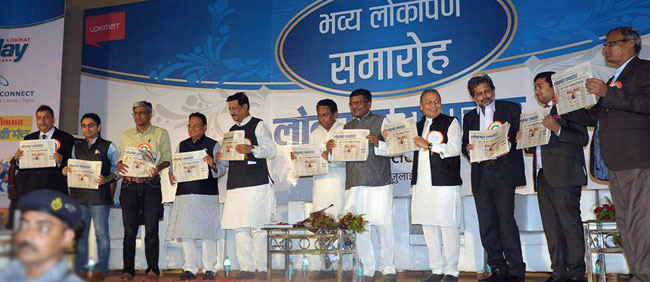
    Senior politicians and journalists at the launch of the Lokmat Samachar edition

    By A Correspondent


    The Lokmat group launched the seventh edition of its Hindi daily Lokmat Samachar with much fanfare in the industrial town Chhindwara in southern Madhya Pradesh last Friday (July 12).


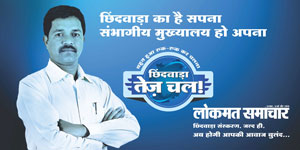
    The edition was launched by Union urban development minister Kamal Nath who praised the Lokmat group for launching the paper in Chhindwara. “While Bhopal cannot become Chhindwara, Chhindwara can become Bhopal,” he said adding how the city had changed a lot over the years with its citizens redefining their concept of development.” An aggressive marketing drive was also initiated to coincide with the launch.


    Jaldi 5 with Vikas Mishra, Editor, Lokmat Samachar: Loads of surprises in store for readers

    A quick Q&A with Vikas Mishra, senior journalist and Editor of Lokmat Samachar.  The Hindi daily is published from Nagpur, Aurangabad, Akola, Kolhapur, Jalgaon, Pune and now Chhindwara

    01. It’s interesting that you have launched the first edition of Lokmat Samachar in Madhya Pradesh from Chhindwara and not a larger city like Indore or Bhopal? What was the reason for this decision?
    Chhindwara has very close contact with Nagpur and the distance is only around 130 km and earlier also Madhyanchal edition of Lokmat Samachar was circulated to Chhindwara and adjoining areas. There was a demand of readers to have a separate edition for Chhindwara because it’s a fast-growing city of Madhya Pradesh, hence we have launched our edition from here.


    02. You already have six editions in Maharashtra. Editorially, how much of a change will the Chhindwara edition have from the others edition in Maharashtra?

    We are having a separate edition of Lokmat Zamachar for the readers of Madhya Pradesh named Madhyanchal since two decades and it’s quite acceptable in several districts which are situated on the border of Maharashtra and MP. We already have bureaus in Bhopal, Indore, Jabalpur, Ujjain and Ratlam. We are making them more stronger.


    03. Any specific issues or campaigns that you expect to take up in the next few months at Chhindwara?

    Wait and watch. We have a lot of surprises for our readers which will be unveiled on a regular basis


    04. The language spoken by people in Chhindwara would be dramatically different from that of people in, say, Pune or even Kolhapur? Is the Hindi that use in the headlines and stories different in the Pune and Chhindwara editions to suit the local taste?

    Chhindwara edition of Lokmat Samachar may be the first independent edition of Madhya Pradesh but as mentioned earlier, we have had our Madhyanchal edition for two decades and hence have had a strong relationship with the readers of Madhya Pradesh. I personally know the journalistic taste of MP because I have spent 25 years in the state.  As far as the headlines and stories are concerned, we always try to write simple Hindi which is acceptable to each and every Hindi reader.


    05. In the run-up to the State Assembly elections in MP later this year, are you looking at expanding in MP and Chhatisgarh?

    The decision will be taken by the management.


    The event was also attended among others by Leader of Opposition in the Rajya Sabha Ravishankar Prasad, Maharashtra Chief Minister Prithviraj Chavan, Chairman and Editor-in-chief of Lokmat Media and Rajya Sabha member Vijay Darda, Maharashtra School Education Minister Rajendra Darda, Executive Editor of Aaj Tak Punya Prasoon Bajpai and Ashutosh, Managing Editor of IBN7.


    Editorial Director and Joint Managing Director Rishi Darda, Executive Director Karan Darda, Lokmat Samachar Editor Vikas Mishra, Product Head Mateen Khan, Resident Editor of Lokmat Samachar’s Chhindwara edition Devesh Thakur  were among those present on the occasion.


    The brand campaign for the Chhindwara edition launch of Lokmat Samachar


    A seminar on “Role of politics and media in the development of common man” was held on the occasion. The Maharashtra CM stressed the need for the media to maintain its neutrality and impartiality. He said both mediapersons and politicians carried a heavy responsibility on their shoulders. He expressed concern over a section of the media resorting to unscrupulous means to increase circulation. He said it is the primary duty of the media to inform the policies and programmes of the government to the masses.


    Speaking on the occasion, chairman and editor-in-chief of Lokmat Media  and Rajya Sabha member Vijay Darda said the main duty of the media is to bring about change in the life of the common man.


    He said Hindi can play a prominent role in unifying the country. He also added that Lokmat did not represent any political party but just acted as an impartial organ of public opinion.


    Maharashtra school education minister Rajendra Darda said there is a sea change in politics and media in the last two decades. During the pre-Independence era, there was coordination between the media and politics which is no longer seen. The media is the protector of the public interest.


    Ravishankar Prasad stressed the need for the media and politicians to establish a dialogue with the masses to prove their relevance. “The media should understand the agony and anguish of the common man and reflect the same through its columns only then it will win the appreciation and trust of the masses,” he said, adding: “The common man stayed buoyant about the future of the country.”


    Punya Prasoon Bajpai said there was a communication gap between the politicians and the common man. The politicians often use the common man during elections and then forget them till the next election. He also said the media needs to highlight the common man’s concerns to establish a link with the masses. If mediapersons or politicians establish a line of communication with the common man, the country will progress.


    Ashutosh said there has been a massive transformation in the country since 1950.  The country has seen technological as well as intellectual development. Common man has changed his thinking a lot. The Indian society has attained a maturity and they can no longer be conned by anybody. This is high time both politicians and mediapersons established a close contact with the common man and reflected his concerns.


    The Chhindwara launch marks the Lokmat group’s 21st edition in the country..


  • MSLGroup is Asia Pacific Consultancy of the Year

    MSLGroup, the Publicis group’s strategic communications and engagement consultancy, was awarded ‘Asia-Pacific Consultancy of the Year’ by the Holmes Report, a web-based publication and engagement firm. Last month, the firm was also awarded the Agency Network of the Year by Campaign Asia-Pacific 2013 PR Week Awards.


    “A third consecutive year of 30 percent or better organic growth in Asia means that the MSLGroup has established itself as a force to be reckoned with in the region,” said Arun Sudhaman and Paul Holmes of The Holmes Report 2013 Asia-Pacific Consultancy of the Year award winner.


    Glenn Osaki, Asia President, MSLGroup, was unavailable for comment when MxMIndia tried to reach him via his office in Mumbai. However, in a communique, he sent this comment on the win: “If an agency can be in ‘pole position’, then MSLGroup in Asia is. Our business plan for the region outlines ambitious and aggressive plans in Asia.”


    Meanwhile, among the other winners of the Asia-Pacific Consultancy of the Year awards for 2013 were: Perfect Relations for India Consultancy of the Year and Adfactors for Financial Consultancy of the Year.


    The Holmes Report is conducting its Sabre Awards for India in association with the Public Relations Consultants of India (PRCAI) on Friday, July 26.


  • Open magazine launches breakfast chat series

    By  A Correspondent


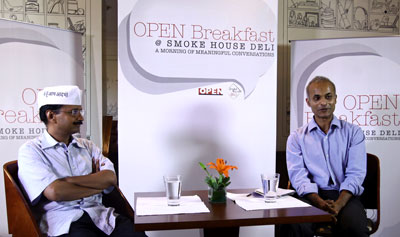
    Arvind Kejriwal with Open editor Manu Joseph Digivijay Singh with Open political editor Hartosh Singh Bal

    Open magazine has launched a breakfast chat series called Open Breakfast @ Smoke House Deli in association with restaurant chain Some House Deli. The chat series has been planned to be held every month and will host prominent public figures, in conversation with the journalists from the newsmagazine. Through the monthly conversations, the magazine desires to illuminate its readers’ understanding of politics, people and culture, notes a communique.


    The inaugural event on June 1 featured Arvind Kejriwal, activist and leader of the Aam Aadmi Party in conversation with Manu Joseph, Editor, Open magazine.


    The second edition of the series was hosted on July 6 with Congress Party General Secretary Digvijaya Singh in conversation with Hartosh Singh Bal the magazine’s Political Editor.


  • Broadcasters-advertisers bhai-bhai?!


    By A Correspondent


    Frenetic activity has been on to hammer out an amicable and workable solution to the television measurement imbroglio.


    While advertisers are adamant, broadcasters who MxMIndia spoke to, also believe that the environment is much in favour of a settlement. “The market’s bad and a withdrawal of any advertising will be like the final nail on the coffin,” said the sales head of one of the networks. “Also, it’s not just the seven broadcast networks which will suffer, the entire television sector will go down.”


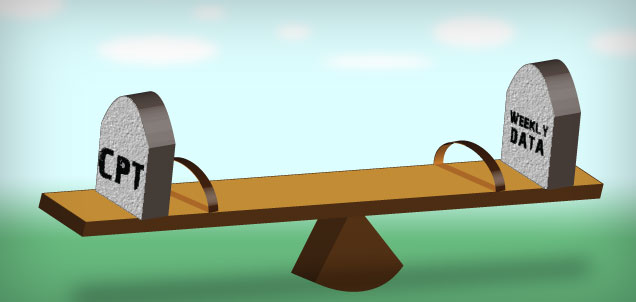
    But a back channel has been initiated and a compromise is imminent. A senior employee of a network who is not a participant of the discussions informed that one thinking is to get broadcasters to agree to weekly ratings and advertisers to accept CPT. The debate will be on niche and news channels. While broadcasters insist on monthly issue of numbers, advertisers don’t want any of that. “I don’t belong to a news channel, but why don’t they agree to a middle-ground like fortnightly release for news and niche players,” said the employee.


    An industry analyst is hopeful of a compromise because broadcasters have traditionally wanted a more frequent release of numbers, in fact at one time they even desired a daily release. Also, CPT is a proposition made by advertisers and media agencies in the first place.


    What’s important is that all parties must sit together agree to either work with the BARC technical committee or set up an interim joint industry committee/body.


    “Any further loss of time will cause much damage to the entire broadcast sector as people have already started weighing the efficacy of the medium over others,” a senior broadcaster told MxMIndia.