Category: MEDIA

  • Ritu Midha: A single media measurement platform, anyone?

    By Ritu Midha


    Earlier this week, I had an interesting conversation with a friend who was stuck in traffic in Mumbai’s Western Express Highway. Jammed close to a hoarding of ‘New Woman’ magazine which read ‘She is just like you’, his reaction ‘Only if she (HemaMalini/new woman) knew who she is being compared to…’


    Though I found the comparison amusing at that instant, the media journalist in me immediately said, ‘spill over and wastage’.  To be honest, Outdoor has been off my radar for quite a while, and I have no clue how its effectiveness is measured.


    However, I’ve been interested in measurement currencies of other media – be it Print, Television, Radio or Internet. And often I find myself wondering if it was possible to measure all of people’s media consumption habits instead of measuring each media individually. The consumer, after all, is the focus of all marketing communication – and key is to reach him/her effectively and cost-effectively – the medium being just the vehicle.


    Coming back to various media, the measurement data for each one of them is available digitally, and that is where similarity ends.  Frequency, sample size and delivery platform are completely different. Nonetheless, while currencies for all mediums are different, they are identical in a sense that they target consumers’ media consumption habits and patterns.


    A disclaimer here: my blog this week is just an outcome of my curiosity and quest for knowledge, rather than a statement.


    Moving on, is it not possible to merge all these currencies together and create a single media consumption currency? What if it could be done at the industry level?  Technology majors like IBM and Wipro are well-equipped to take care of such a system. During my stint with a telecom giant, I have witnessed how various systems on different platforms can be effectively merged together. Multiple data sources and systems are merged into one with customer-centricity as the driving force. Whatever marketing and service delivery could imagine, IT delivered.


    An industry body delivering data that reflects the media and product consumption habits of people.  Awesome!!!


    Can we find out what the media and product consumption habits of SEC A person in a small town in Uttar Pradesh are on a single platform?


    It’s not an easy task, and could see many glitches to start with. But if it can be done, it would take consumer-centricity to a new level.


    And most important of all, would it not save several manhours and monies for media agencies?


    Ritu Midha is a senior journalist and web strategist based in Mumbai. She is also Consulting Editor and Editor – Special Projects, MxMIndia.


  • Ritu Midha: The second screen… or is it the first?

    By Ritu Midha


    Three screens – television, computer and mobile put together devour Indian urban populace’s maximum waking hours. And, then of course, there are tablets and cinema screens.


    Television, of course, continues to create maximum engagement – and hence the centrepiece of most marketing strategies. In spite of its measurement currency being marred in controversy at the moment – it would continue to be the key medium to reach us.


    Computer as a medium of advertising communication is on the upswing – innovations, interactivity and measurement system all working for it. To add to it, there are learnings from other markets.


    Interestingly, it is the third screen – mobile – that is not delivering on the expectations it has raised as far marketing is concerned. Mobile, in my view, is the first or the second screen for many of us – I would define this target group as SEC A B, male skewed, 18+ populace, studying or working. Though they spend considerable time in front of a computer, they are not really glued to it when out of home, and are hardly home.


    One has been hearing for more than half a decade that mobile would change how the brands engage with consumers. And how mobile marketing would be the ‘in’ thing shortly. However, one daresay there is not much evolution in mobile marketing. Leave aside marketing, it has not even emerged as a powerful advertising medium.


    It is still ‘good morning, I am calling from xyz and your number has been selected for XYZ’. And 99 percent of the time the cold call gets a cold shoulder. In the best of scenarios, mobile advertising is a clone job of television and computer advertising.


    And this despite mobile consumption increasing by the day. As per TRAI data for February 2013, there are 861.66 million mobile connections. Add to it the numbers thrown by Nokia Siemens Networks’ MBit Index study, and the picture becomes all the more interesting.mobile data traffic generated by 3G services increased by 196 percent between December 2011 and December 2012, while mobile data traffic generated by 2G services increased by 66 percent over the same period.


    On to the smartphone users. As per the recent ‘2013 Internet trends’ report by Mary Meeker, partner at the venture capital firm Kleiner Perkins Caufield & Byers (KPCB), India ranks the fifth with 67 million subscribers. The four above it are China, the US, Japan and Brazil. However, when it comes to smartphone penetration it is just 6 percent, pushing it to number 30. Whatever be the case 67million is not a small number – specially if you take into consideration 52 per cent yoy growth rate.


    Despite the staggering numbers mobile fails to be a unique medium – and can be personalized like none other. Do we believe mobile, after all, is not the right marketing medium? Has it got something to do with the screen size, or lack of efficiencies with the agencies and marketers alike? Or, are we reluctant to experiment?


    One of the youngest countries in the world, with more mobile phones than television sets, can definitely do better than agar aapka answer A hae to ekka button dabaen – though one must admit that media owners are doing a far better job of using mobile as the medium of engaging people than others including FMCG behemoths and telecom operators themselves.


    Ritu Midha is a senior journalist and web strategist based in Mumbai. She is also Consulting Editor and Editor – Special Projects, MxMIndia.


  • Ritu Midha: If no TAM TAMming, then what?

    By Ritu Midha


    Flashback to October 2012. DAS was rolled out in the metros. TAM organised workshops – made quite a few modifications in its universe size and otherwise, so that it could keep pace with the changes brought in by DAS.


    LV Krishnan, CEO, TAM Media Research, explained that there could be quite a few changes in television viewing pattern – fall could be seen in the numbers, mainly of big channels. After the initial turmoil – set patterns were expected to emerge again.


    We spoke to many a media professionals – everyone was happy about DAS, and in sync with TAM’s readiness for the new universe. Interestingly, a handful of media professionals pointed out the difficulties faced by them due to the number dark period of 30 days – when TAM chose not to release data for certain markets as DAS was settling in. In a world where television is bought and sold based on TAM ratings – it indeed was a difficult scenario to work in.


    And now suddenly the media space is abuzz with ‘news’ (newsy gossip) that Sony Entertainment television, Times television and NDTV have bid adieu to TAM, while Star, Zee, Viacom18 and Network18 are all set to do so in the next few days. And if everyone does quit, these biggies will not return to the TAM fold in a hurry. As I understand it, they will not subscribe to TAM data, but TAM will continue to measure them!


    To put it in a nutshell, the carpet is all set to be swept from under TAM’s feet this week. The biggest soap opera of the television industry is heading towards a climax.


    One might remember there was TAM and there was INTAM. They ran parallel for nearly eight years (throwing different data sets) before they merged. And as for measurement system, It took quite some time for the industry to see the virtues of people meter, complete roll over from diary system to people meter! And now while BARC is asking for a tender for the new television measurement system globally, the new system will not be in place in a hurry. Considering the sheer size of the country, even if it does not require seeding of people meters in every home and for every television set – it still will take substantial time to capture the width TAM is capturing now.


    Jumping again to early DAS days, all the constituents – channels, media agencies and marketers found it difficult to manage life with 30 data dark days – how will they then manage till BARC gets the new system in place? While every agency has its own optimising and predicting models – the key currency continues to be the data provided by TAM – and television continues to be the backbone of most media plans.


    I distinctly remember seeing ads of competing channels – both claiming to be No 1. And they would be both correct too! TG, markets or some other parameter would be different. Important thing, I assumed (and rightfully) was to prove oneself to be No 1 based on TAM numbers.


    Moving to now, whether the channels are right or not – is not under the purview of this piece (and neither do I, by no stretch of imagination, understand the numbers game better than the media professionals on either side of the fence). My concern is how will television be sold? Do the channels have a Plan B? Or, will the channels sell only on qualitative – which will not mean much, unless and until these are syndicated studies encompassing all channels of a specific genre.


    Digressing a little, on one side we have print – where quarterly research is considered to be a good option – and till it happens, half yearly numbers too are good enough. Collecting this data is a cumbersome process despite the recent changes – and print really does not change that frequently in content- and one does not have the luxury of changing newspaper by pressing a remote button.


    Web, meanwhile, spins numbers real time – and one can track data till previous day on most web tracking systems.


    Television, of course, releases weekly data. And with digitization – possibilities of more accurate, micro, and higher frequency measurement are unlimited – out of these frequency, obviously, does not really need to be enhanced. Transparency, cited everyone, was one of the key advantages of Digital Access System – which also implied more transparent and accurate measurement. And it is the same accuracy of data that is being questioned now – culprit, of course, is said to be the methodology or one can say data slicing.


    Back to my concern: how will the channels sell in the period between the TAM era and BARC system era:

    1. Projections based on historical numbers: What about the ‘coming up’ and ‘upcoming’ shows? Will the new shows be sold based on the previous shows in that slot?

    2. IRS data: Till the time the new system comes in – dependence on IRS data for television viewing pattern – it is a different issue many a show might have ended by the time the data comes out, or an event be long over – changing the entire paradigm

    3. Yearly deals are already closed – so less worry – only thing is the clients would never be convinced they are getting the value committed till they see numbers in their mailbox at regular intervals

    4. Or, they are just hitting TAM – where it hurts the most. Commercially! As media agencies and marketers will continue to subscribe to TAM – there is no need to worry. And continue they will till the time a better system is in place, and it manages to convince everyone that it is a better system

    5. Ironically, convincing agencies and marketers that TAM numbers do not project the complete picture might be the hardest battle channels would need to fight – unless they have a more plausible proof of their pudding being better than others.


    As a parting shot: I believe the most interesting will be the battle of news channels in a GRP-, TRP-, CPRP-free world – the year ahead is going to be the year of news channels courtesy the elections, flip-flopping economy, unfolding mysteries of IPL, and of course the gore! What will it be: my anchor was better than his… or Narendra Modi was on my channel for 30 seconds longer than his channel?!


    Ritu Midha is a senior journalist and web strategist based in Mumbai. She is also Consulting Editor and Editor – Special Projects, MxMIndia.


  • Ritu Midha: Off with the false covers!

    By Ritu Midha


    To begin with a digression, even as I have print on my mind I mentally think ‘Facebook’ alongside. Facebook has succeeded in conditioning many a mind by the simple questions it asks in its status update field. The new kid on the block – changing consumer behaviour with tiny masterstrokes! But this is just an off-the-cuff observation. On my mind at the moment – really – is print.


    What is with the false covers on newspapers! Frankly, now if a newspaper lands on your doorsteps without a false cover – it, err, in a weird sense of way appears nude! Now tell me – if you are 30+, and if I ask you which was the last false newspaper cover that made you take note, and your answer is still Indya.com – Well I already rest my case!


    I am sure there must be plenty of customized research proving that noticeability of products promoted on false covers is higher than that on inside pages… and more! But is RoI (whatever be the measurement) directly in proportion to the monies spent on it? Does noticeability mean higher brand recall? Is yes, then what is all this noise about contextual advertising?


    One, of course, remembers a few print innovations that had nothing to do with false covers, but worked extremely well. Be it product sampling, a car promotion, first creative innovation for a soap with bubbles on the page (it has become mundane now), or experimentation with aroma!


    However, these innovations are increasingly taking a back seat as the false cover syndrome takes over. So much so that on occasion, a newspaper is endowed with not one, but two false covers! If I might add, I would love to understand what spiel do sales guys give for the second false cover to be sold. As effective as the first false cover – but at 50 percent rate? Some research to prove the same would be a big help, please!


    Print, at the moment, is in the danger zone. However much we shout from the rooftop, the fact remains. There is an effort on increasing reach and distribution – focus on smaller towns, and one does hope it works well for the newspaper industry.


    But does it imply that run-of-the-mill advertising in newspapers (including false covers) will become far more effective? At the risk of sounding risque – one needs to check out fake ads to realize what print advertising can be all about!


    It is time print woke up and smelled the coffee! And strove towards creating advertising that is far more effective!! The wow factor has to come back! Indya.com has to cease being the benchmark. The clients have to give right brief, ask right questions and push for right solutions. Let go of the false covers – return to me my newspaper, where the headlines that shocked and surprised stared at me when I picked it up. And I promise to take note of ‘noticeable’ ads in my morning newspaper and all the supplements it comes with.


    Ritu Midha is a senior journalist and web strategist based in Mumbai. She is also Consulting Editor and Editor – Special Projects, MxMIndia.


  • 1 Minute View: Franchise and spread out!

    So the franchising industry is set to quadruple from 2012 to 2017, according to a KPMG report. Given the large Indian middle class, the opportunities for enterprise are bound to be huge. What’s heartening to note is that it has the potential to contribute to 4 percent of India’s GDP from 1.4 percent that exists today.


    Franchising is indeed the way to go for businesses to spread their tentacles. But there’s also the tendency for many to over-franchise given the easy money.


    What’s important is to administer strict quality control and ensure the franchise maintains the same values that the original business does. This is of paramount importance especially in the health and wellness sectors which is expected to see the boom.


    The growth in the franchising industry also augurs well for the media ecosystem. More franchisees would mean more media spends in the traditional and non-traditional sectors.


    Three cheers to that!


  • Big RTL Thrill now on Dish TV

    By A Correspondent


    Big RTL Thrill has inked a distribution deal with Dish TV ensuring that the dual feed action entertainment channel will be available on the DTH platform (Channel No 488).


    Speaking on the occasion, Vijay Koshy, Vice President of the channel, said: “By signing on Dish TV, the reach of the channel will increase exponentially and we are certain that it will live up to the expectation of the viewers.”


  • Awards for excellence in printing announced

    By A Correspondent


    Buoyed by the success of the PrintWeek India Awards from 2009 to 2012, Haymarket Media India, has announced the PrintWeek India Awards 2013 to recognise excellence in the Indian print industry.


    This edition of PrintWeek India Awards 2013 is supported by industry majors including AGS, Bobst, Canon, Dupont, EFL, Epson, Galaxy Propac, Henkel, ITC PSPD, Kala Jyothi, QuadTech, Roland, Skyscreen, Sona Commercial, TechNova, Vinsak and Welbound Worldwide.


    There are two types of Awards: the ‘Quality Awards’ which judge the quality of output from different sectors, such as labels, magazines, catalogues and posters and the ‘Performance Awards’, which are judged on financial performance, strategy, capital investment and training programmes. Within those Awards types, there are 25 categories in all with the choice of multiple entries.


    The jury for judging the entries and samples will be drawn from a wide spectrum of print buyers, print specialists, professionals, designers and technologists. Last year it consisted of professionals from Aditya Birla Group, Olive Design, Max Mueller, Grey Barclays, HUL, JWT, Leo Burnett and others.


    Speaking about the Awards, Suresh Ramakrishnan, publishing director, Haymarket Media India says, “Rather than piling the jury members with all the work, print firms were selective. They showcased the best and most relevant print jobs. I expect PrintWeek India Awards for 2013 to be bigger and better than those from 2009 till 2012.”


    Last year, the PrintWeek India Awards saw 334 entries from 116 companies -which were judged by a 30-member jury.  The final date for sending in entries for the fifth edition of PrintWeek India Awards is July 15, 2013.


  • Madison Sigma wins Piramal Healthcare media AOR

    By A Correspondent

    Madison Media Sigma has announced the win of Piramal Healthcare’s media AOR. The account was won in a multi-agency pitch where OMD and MPG also reportedly participated in the pitch. The account was previously handled by Lodestar and the estimated size of the account is Rs 70 crore.

    Piramal Healthcare has aggressive plans for OTC category and has recently launched skin creams under its Lacto Calamine brand name. The company has plans to launch several other brands as well in the healthcare space.

    Says Kedar Rajadnye, COO – Consumer Products, Piramal Healthcare Ltd, Given our ambitious plans, we wanted to enhance our current capabilities in media strategy and buying front and hence looked out for partners who could create a higher value on this aspect. Madison Media fitted very well in the requirement & our scheme of things as we were very happy to see their approach being very similar to our mindset.

    Added Vanita Keswani, COO, Madison Media Sigma: We are delighted with this new win and are looking forward to a long and mutually beneficial relationship.


  • Mukesh Ambani joins Anand Mahindra to back ‘Epic TV’

    By Arijit Barman & Nandini Raghavendra


    Anand Mahindra

    After Anand Mahindra, it’s the turn of India’s richest billionaire Mukesh Ambani to once again turn a venture capitalist and back a new media venture that is due to go on air mid-August.


    “Epic TV” – a niche entertainment pay channel will be India’s first to showcase genre specific content related to history, folklore and mythology. Set up in October 2012, Epic Television Network is being led by Mahesh Samat, former managing director of Walt Disney Company who left the multi-national last year after a four year stint.


    Mukesh Ambani

    But interestingly, through this investment Mr Mahindra and Mr Ambani each have a 25.8% stake in the company and together have financial control. Even though the quantum of their investments and other financial details are not yet disclosed, according to industry sources there is an initial commitment of Rs 100 crore from the group of  “angel investors.” The amount can increase going forward depending on the business and expansion plans. Mr Samat himself has a 48.5% stake in the venture, as per the company’s filing with the Registrar of Companies (RoC).


    A Reliance spokesperson confirmed the development but said the investment by Mr Ambani is “in his personal capacity.” The investment in Epic TV is routed through Reliance Ports and Terminal Ltd, one of Mr Ambani’s personal companies. Mr Mahesh Samat, Managing Director, Epic Television Network refused to comment about his investors.


    Mr Samat in an earlier interaction had said a group of four investors has been instrumental in propping up his unique start-up but refused to divulge specific details. Only the name of Mr Mahindra became public last month. Even though Mr Mahindra or Mr Ambani are neither present in Epic’s board, senior M&M executives Rohit Khattar and Zhooben Bhiwandiwala are going to be the representatives.


    The focus on niche content to be a clutter breaker is what attracted Mahindra at first who subsequently roped in his close friend Mr Ambani to support Epic, said people closely following the developments.  While Mahindra is known for his passion for the liberal arts and had studied film-making at Harvard, Mr Ambani himself is also a movie and entertainment buff. “This is a lucrative investment. Epic will create a new genre altogether and  post-digitization, the scope of pay TV will also grow exponentially, ” said an RIL executive.


    “The idea is to be entertaining. Be episodic and build characters, actually investigate our past, create characters set in history to help us understand our history better and yet be entertaining,” explained Mr Samat. He however is clear that Epic will not be a general entertainment channel (GEC) like Star Plus or Colors. Industry sources add that around six shows have already been commissioned and one of the period shows is based on a Sherlock Holmes like sleuth set in the backdrop of Mughal India.


    Currently Mr Samat’s focus is on creating intellectual property for Epic and then leveraging the IP into verticals like publishing, live events, theatre as well as syndication. While the channel is the first offering, the investors are open to adding other channels, though not in the areas of news, music or youth.


    Analysts see this move as part of a larger trend of primetime corporate newsmakers bankrolling media ventures – news and entertainment – themselves. “Corporate India is actually no stranger to owning media, especially news organisations. That history may have been chequered but their aborted experiments is hardly desisting anybody anymore. Smart CEOs and savvy industrial houses think this is the opportune time to tweak their strategies to relook at the sector either through personal investments or strategic corporate diversifications. In a growing economy with rising discretionary spending, the evolving media and entertainment sector is grabbing unprecedented business eyeballs,” quipped an investment banker, specialising in M&As in this space, on condition of anonymity.


    The road to profitability will come only from clearly segmenting the industry and in finding a niche. Thus Mr Mahindra’s existing venture Mumbai Mantra is scouting for opportunities to create niche content and also at infrastructure that will be like an intersection between media and lifestyle. Mr Mahindra’s family is also involved in several publishing ventures.


    Just like his younger brother Anil, Mukesh Ambani too via several of his promoter group entities has made several media investments, like Rajya Sabha MP of the Congress and a junior minister with the planning and parliamentary affairs portfolios, Rajeev Shukla and his wife Anurradha Prasad’s BAG Group companies. In the past his name had also cropped up as a potential investor behind Peter Mukerjea’s entertainment venture INX News and INX Media. But last year, Ambani’s flagship Reliance Industries hit the headlines after agreeing to fund a transaction that resulted in a sizeable stake for itself in a company controlling two of the industry’s largest businesses, the Network 18 Group and the Hyderabad-based Eenadu Group of Ramoji Rao.


    Source:The Economic Times

    Copyright © 2013, Bennett, Coleman & Co. Ltd. All Rights Reserved

    Licensed to republish


  • Linking In with Nishant Rao @ IAA Webinar


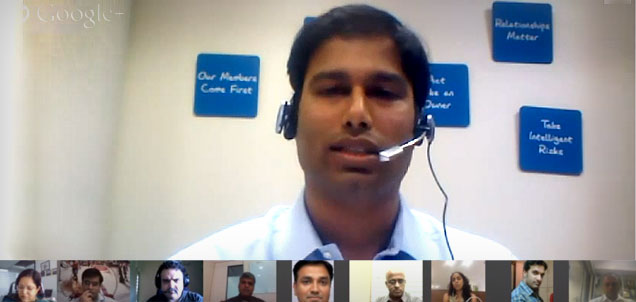
    The International Association of Advertisers (India Chapter) conducted its third webinar on Thursday, June 27 with Nishant Rao, Country Manager, Linked In India.. The IAA Webinar series with the theme ‘World Goes Digital’ is spearheaded by Abhishek Karnani and director, Free Press Journal group and Manish Advani, head – marketing and public relations, Mahindra Special Services Group as co-chairs. *


    The panellists included:  Manish Advani, (Mahindra Special Services Group), Gaurav Mendiratta (Sociosquare), Deepali Naair (L&T General Insurance), Sheran Mehra (Mahindra Holidays), Vinay Krishna (JigServ), Ramakrishnan Laxman (MCCS, ABPNews group) and Suraj Lokare (Xanadu Consulting).  Pradyuman Maheshwari, Editor-in-chief and CEO, MxmIndia moderated the event. Other than the panellists, some questions that came in from the public in response to our announcements on social networks were also posed to Mr Rao.


    Excerpts from the Q&A:

    Opening Remarks by Nishant Rao:

    As consumers, we’re getting tonnes of information at our disposal and what avenues like Social are creating is a way to have a voice and participate in that and create our own information. So as this information floats what becomes super important is its relevance to us. What LinkedIn is trying to solve is help each professional to be more productive and successful. And we are trying to do that by ensuring those relevance because we know who you are based on your industry, your function and the sort of things you have mentioned on your profile we can try and make sure that there are insights that are relevant to you. So that’s a big part of our consumer-value proposition in addition to having a critical mass of professionals that we can collaborate and communicate with. With so much information being created we see an opportunity for companies and brands to play a part in making our members more productive and successful. The way we are doing that is by tapping into a lot of insights that are being shared by consumers on LinkedIn whether it is their opinion on news or opportunities etc we are using those signals to help understand what their unique needs are and allowing brands and companies to play a part in getting them their relevant information and content so that they help these professionals in whatever way they can. So fundamentally, what the internet has enables is because of this explosion of information it is changing not only how we collaborate and communicate but also how companies can play their part in making us more productive and successful in this hyper-competitive and super-charged environment.


    In the last few years, news seems to have become an important focus area especially for portals like LinkedIn. Could you share what’s the percentage that news as a domain contribute to the overall traffic on your website. Also, most content on your website in US-based, are we going to see content being updated from India as well?

    Nishant Rao: As we analysed as to what kind of information helps make the consumer more productive news is definitely one of those things that all of us professionals look to update ourselves with because it is so important. The broader vision is for LinkedIn to become a professional publishing platform for individuals and part of that is generating insights that are relevant to a news article or content piece…but overall this is a shift in direction to make sure that we move away from being just a static profile to being a more holistic representation of who you and I are as members. So the starting point is to have some content so that people can share their opinions. Where news is concerned, we are making it a point to have more integrated channels with it. For example, a leadership channel which could come from some influencer content or some news content or from some individual writing a post. So that’s an overall direction that LinkedIn is taking.


    As for the question on percentage share, we do not report site metrics at that level but what I can say is that LinkedIn is catapulted to becoming the largest source of a lot of news sites. So we respect the IPs of the news sites out there and so when we find a news article and click on that it’s actually a page view that gets generated and because of that we have become one of the largest routers of traffic of different sites and that gives you a sense of impact that LinkedIn is having in this space. As for content, we are trying to take the approach where be it a global influencer or somebody else they will offer views and insights from an overall perspective and gradually we will be having more local news and local influencers having local relevance. So we are in the process of making that happen.


    Personal networking platforms have really taken off in India and if one were to compare LinkedIn to these websites, it is slightly on the backfoot and the fact that Twitter stopped the feed to you didn’t help at all. From a consumer behaviour perspective, if one wants to attract the B2C customers, could you help us understand what LinkedIn does on that front apart from using your platform to update their profiles?

    Nishant Rao: We started our business about a decade ago and around that time we were more of a profile-update or looking-out-for-jobs offering. What we seen in the US about 3-4 years ago and which we are starting to see in India also is that people have stopped updating their profile just when they are looking for jobs and that is really when what’s enabled a lot of magic to happen. People are realising that their profiles are kind of their conduit to other factors. If you think about the three types of content that consumers are saying they want from the sites are information on connections and opportunities, looking for updates on brands that help make them more productive and successful and they are looking for information which is relevant to current affairs. What people are also realising is that the more you fill your profiles and keep it fresh the more the opportunities that are presented. In fact according to a research that we conducted, jobs was the No 5 out of top 5…so that’s the kind of shift that we have experienced especially in markets like US and are now seeing it in India as well. Eventually we believe that the more information you give us the more we can make it more relevant.


    As for the demographics, we think of our site as being for ‘prosumers’ – professional consumers. These TG are skewed towards being an educated, affluent audience in comparison to other larger sites that are there around. That just comes from the bias that LinkedIn has on the professional context. It’s a self-selection mechanism; we do not aspire to be a site where one comes for entertainment reasons or just to hang out. TNS did this survey for us which helped us codify the difference between a personal networking platform and a professional networking platform. The genesis of what they found is that people go to personal networks to spend time and they go to professional networks to invest time. So each consumer can have these different personas and as a result these different sites give you a manifestation of this. I use FB, Twitter, LinkedIn but I am a different person across each of these platforms. So the professional context has really helped us in terms of not playing the same game as the other networks; we want professionals to come and not have diluted conversation but aspirational and productive comments on the site. The numbers are a manifestation of that and I would say even in India where we have more than 20 million users the ratio of number of users on LinkedIn versus the personal networks is closing fast and that gives you a sense of the value that people see on our site.


    One has to come up with new ideas and strategies on a daily basis and when one talks of strategies on LinkedIn one feels very restricted because it has been a kind of a closed network when it comes to APIs in building applications. While it is kind of opening up now, is there a conscious decision behind what you decide to do?

    Nishant Rao: As a company, part of our hesitation to completely open up APIs is making sure that the member experience is not compromised as a result of that. We are constantly straddling the line between making sure that we are fostering innovation as well as making sure that our members have a good experience on our network. We have seen a tremendous increase in the number of members using our APIs and are realising the power of our APIs that are available. So we do have a large set of APIs for people to use and I think part of our philosophy of taking care of our members’ concern has helped us keep our context to a professional level. Also, we are helping marketers leverage some of these APIs in a more creative way. Sometimes there is a disconnect between the creative ideas that one has and which APIs do you use. So sometimes it becomes more of an educational exercise than anything else. It’s not like we are trying to make a monetisation play on building up those APIs as propriety to us… but we are helping give them that mindshare or the education needed to harness the full power of LinkedIn.


    Big Data seems to be the buzzword these days. How much of it is LinkedIn leveraging in India?

    Nishant Rao: I agree with you that Big Data has become one of those buzzwords that everyone wants to do something with it but I came across an observation where it was revealed that about 68 per cent of the companies have some sort of a data warehousing BI solutions but only 8 per cent used it. So that gives you a sense of disconnect that exists. This is something that LinkedIn had to take into consideration seriously because of the volume of data that is seen. The way we use it is that we are moving on to having unstructured information using technologies like Hive etc. We’ve also taken it further to use those insights and pull it back into our product processes. For example, when we launched our iPad application it was a single mirror image of our website but we observed a spike in the usage at coffee time in the morning between 7-9am and again in the evening called as the couch time where people were catching up on what they missed out. So that insight we used to get another reiteration out so we integrated a calendar for the morning time where people get sort out their agendas and meetings and for the evening we added the news element where people could catch up on what they missed the whole day. So that was an example where we used Big Data to funnel back into product.


    LinkedIn charges vendors to reach out to candidates, is there a way this accessibility that can made more user friendly?

    Nishant Rao: If you compare LinkedIn to some of the other talent firms they take a different approach by publishing phone numbers and email addresses and stuff like that. But it’s our philosophies to not such things as we do not like doing it because we value our members first. One can even message a person if he is not in connection and it is up to that person to realise that it is important to him and thus respond to the message or to the connection. So the power rests with the members to make those decisions rather than in some sense bastardize the concept of a connection.


    How can small and midsize businesses (SMBs) leverage best from a platform like LinkedIn both from a hiring and outreach perspective?

    Nishant Rao: For us at LinkedIn, we see enterprises playing a big role in enriching the lives of our members. So we are looking at transforming the way companies hire, market and sell by making it more relevant. If there is a relevant job for the member it is better for the member as well as the company because you are moving on from quantity-based to quality-based processes. So for SMBs in particular, we are seeing in particular that LinkedIn is a platform rather than a one-off point solution. LinkedIn provides SMBs to provide your TG in a manner that you want to target them. We even have an option for SMBs to display ads to the relevant TG that they wish to online.


    Hs LinkedIn thought about using Verified Accounts?

    Nishant Rao: We haven’t announced anything on those lines as yet and our belief is that verification may not be unique to any given person. We’d like to think about verification as the network verifying for you though we already have tools out there that are free and for public use. Also, we always encourage our customers when they are making a hiring decision to tap into the fact that a person is not a single person but there is a network around him and more likely than not there could be a lot of common factors between the two.


    As for the question of verification, we haven’t picked up any noise as yet about profiles being inaccurate or factually wrong. Maybe that’s the reason why it hasn’t bubbled up to the top list of priorities that we have. But we have seen a lot of traction in these other more dispirit verification sources.


    How can regional players look at integrating with what LinkedIn has to offer to its members?

    Nishant Rao: What we’ve realised is that consumers can wield a lot of power from our network. It goes back to what is the business problem that one is trying to solve. If it’s a business problem then we do have consumer-based solutions or enterprise-based products that can drive there. As we’re able to get local relevance from that content they can use it as their traffic source and use it to build awareness about his products. They can even use it to solve talent solutions. So it all depends on the problems that regional players are looking to solve.


    Would we see a comeback of LinkedIn Events online?

    Nishant Rao: We used to have LinkedIn Events and we are in the process of sun-setting a lot of things that were individual features into a larger amalgamation. I wouldn’t be able to tell on what’s the immediate future on that and fundamentally that’s because we have so many features running on our site. We are always looking to see where our members are seeing for traction.


    LinkedIn is trying to make a paradigm shift in Sales as well. We have a Sales Navigator as a premium subscription product that’s there where the premise is that of we can take cold calls and convert them into warm prospects it is a win-win for everybody. We are always looking at opportunities for making the lives of our members productive and successful.


    *Disclosure: MxMIndia has partnered the IAA (India chapter) Webinar series



  • HT Media gets more ‘social’ with Webitude

    By A Correspondent


    HT Mobile Solutions, the mobile solutions organization from HT Media Ltd. has announced the acquisition of Webitude, a social media organization based in Gurgaon. With this, the company has announced its intention to offer strong digital solutions that leverage the combined power of mobile and social media, under an umbrella brand Digital Quotient that will operate with the mantra ‘Go Mobile, Get Social.’


    As per Vinish Kathuria, COO, HT Mobile Solutions, ‘The Indian digital marketing landscape can be summarized by 3 megatrends – explosive growth in mobile usage, social media and videos consumption. As Digital Quotient, we’re going to be able to offer our clients a rich array of solutions across mobile and social media, and leverage the power of multimedia to help establish a strong, meaningful connect with consumers.’


    Santosh Kumar, Co-founder, Webitude said ‘We are looking forward to leveraging the scale and the mobile acumen of the HT group to take our offerings to the next level. While we will retain our identity as Webitude and continue to operate our agency business, we will now also operate as part of the larger group Digital Quotient – where social and mobile will together drive exponentially higher value.’


    Girish Mahajan, Co-founder, Webitude said: “For our existing team, who have made Webitude the recognizable name it is, this opens a whole new world of possibilities. It also means growth on a personal level, just as the business grows.”


  • 1 Minute View: Linking in with LinkedIn

    Getting your profile updated on LinkedIn is a near-must-have for every professional. There are of course many who don’t do it fearing that their bosses and organizations would think they are looking for a job. Over the years though, and in the words of its country manager for India Nishant Rao, LinkedIn has moved on from being a “looking-out-for-jobs offering” to being used for a variety of other things.


    “What people are also realising is that the more you fill your profiles and keep it fresh, the more the opportunities that are presented. In fact according to a research that we conducted, jobs was the No 5,” Mr Rao said at the International Association of Advertisers (India Chapter) webinar held last month.


    Professional networking platforms like LinkedIn, said Mr Rao, can be used for a lot more than just jobs. And the starting point is to build one’s profile on the site.


    But just having several connections is not the solution to success via such platforms. There’s no alternative to a good educational qualification, quality work experience and overall knowledge and proven expertise. Once you have these, networking sites can help you get to the top.