Category: MEDIA

  • Community panels will change the way research is done: Bruce Wells

    By A Correspondent


    In a business environment that’s getting increasingly competitive by the day, one can find clients making a beeline for research so as to stay ahead of the curve. Over the years, one is aware of the role that research has helped in making clients understand their TG and get closer to addressing their every need.


    From the traditional mode of questionnaire-filling & face-to-face surveys, market research today has evolved to include support from technological resources, including social media, which not only helps in lowering the costs and time but also gives customized information from the target audience. One such client that’s made an entry into India is Vision Critical – one of the largest global software developers for market research. Having achieved success worldwide, the company has entered India by associating with market research company, MRSS India.


    Bruce Wells, Managing Director and President, Asia of Vision Critical was in India recently and spoke to MxM India about his plans for India, expansion plans in Asia and how research software can alter the market research scenario in India. Excerpts:


    How would you describe your foray into the Indian market with a venture with MRSS?

    The Indian market plays a very important part in the global market research landscape and Vision Critical is very excited to partner with MRSS in India. We know that with the digital media coming of age and the rapid increase in the adoption of mobile phones and internet access represents an exciting opportunity for Vision Critical, given our suite of technology. So yes, the going has been exciting this far.


    Do you have a phase-wise activity plan that you’ve drawn up for the Indian market?

    The platform that Vision Critical has works across many different consumer segments such as media companies, FMCG clients, financial services, telecom, travel, and so on. What we are doing in India is looking at segments that have high growth potential, especially in the digital domain. We’ve been talking to some large multinationals and also local companies that have increased number of customers moving into the digital age.


    What is the investment push that you plan to pump into the Indian market?

    The way our business model works in Asia is that we are tying up with local market research companies that have a similar view and strategy in terms of recognising the opportunities of using digital communication. So, we have tied up with our strategic partner MRSS and we are working very closely with them in terms of giving them best practice, giving access to our technology…it’s a partnership model where we are investing our knowledge, experience and skills in supporting Majestic MRSS.


    Research activity in India is still looked upon as being a manual exercise with less inclination towards dependence on software. Going forward, do you see a shift taking place in the way research will be conducted in India?

    What we have observed in other markets is that, for example, people using social media for communication and engaging with the outside world is on an upward swing. This trend is not going to reverse. As the consumers consume media and use social media differently as a communication platform, so must brands and research companies adapt – that’s exactly where Vision Critical sits. Just as social media has changed the way people communicate, we believe community panels will change the way research is done.


    What has been the response from clients to software solutions being doled out by specialist firms like Vision Critical?

    If we look at the clients who are gravitating towards the new way of doing research, these are mostly companies with a technological background. So clients from telecom, ISPs, travel, retail, finance and so on are high on our list. But where we see a greater adoption of digital consumption, those are going to be the areas that we will prioritise in. As I said, it’s amazing to see such an alarming growth of the digital medium…especially the number of new mobile phone subscriptions in the country that’s growing at a staggering rate. So it’s an exciting place to be in.


    We’ve spoken to a host of clients and they have been pretty enthusiastic about the offering. The Indian research market industry is very smart – they produce some of the best research work ever seen. This validates our assumption that we are doing the right thing at the right time and the right place.


    What are the challenges facing research software companies like Vision Critical?

    The first challenge is to use our platform in the community panel space. The thing is that the consumer needs to be online so that will limit certain aspects of research that we will be able to touch on in the short term. The biggest challenge is moving from traditional methodology to something new. Also, the challenge is identifying companies that are ready to adopt new approach where we have seen great success with our technology in the West – from North America all the way through Europe, Australia and now Asia. So it is about finding clients who are eager to move to newer way of doing research.


    Any upcoming or developing markets that you plan to expand to?

    We are looking to expand into Mainland China, Singapore and Japan. These are our next markets to focus on. It will mainly be about focusing on countries that have high concentration on digital. As for the other markets, we expect to expand our footprint in Latin America, Africa and similar markets where we expect to see more people come online.


    What is the growth you are anticipating for Vision Critical in a year’s time from now?

    I would expect at least more than 20 clients to use our service within the next 6-8 months. I am a firm believer of the expression ‘success breeds success’. Once a few companies start using it and we get people aware of using community panel, then we will see what the scene is in other markets. The challenge right now is that most clients are not even aware that these types of technologies exist. But we hope to see people using community panels very quickly.


     

  • ESPN Star searches for Asia’s ultimate football manager!

    By A Correspondent


    ESPN STAR Sports kicks off the 2012-13 Barclays Premier League season in search of Asia’s ultimate ESPNSTAR.com Football Manager. Following the phenomenal success of last season which saw 46 per cent increase in unique players across Asia, ESPN STAR Sports will be giving football fans the chance to win a share of US$25,000 in cash prizes playing this seasons’ ESPNSTAR.com Football Manager.


    The grand prize winner, who accumulates the most number of points in the season, will walk away with US$10,000. A monthly prize of US $1,000 for the player that scores the most number of points is also up for grabs.


    This year Football Manager participants will get the opportunity to compete against resident ESPN STAR Sports football experts and presenters. Participants will find themselves pitting their skills against familiar names such as former Liver pool player Steve McMahon, and football experts such as Andrew Leci, Doug Chalmers, Jamie Reeves, Paul Parker and Paul Masefield. Participants will also be able to challenge ESPN STAR Sports’ Sports Center presenters Steve Dawson, Christy Simson, Jason de la Pena and Colette Wong.


    In addition, participants will now also be able to bring their passion to the next level, as ESPNSTAR.com Football Manager has been optimised for mobile and tablet devices, allowing participants to manage their teams whenever and wherever they choose.


  • Demystifying plagiarism, the legal way


    By Nandita Saikia


    Can one be jailed and fined if convicted?
     

    All you wanted to know about plagiarism but didn’t know who to ask. We posed a few questions to Nandita Saikia and requested her for a response sans the legalese

    1. Is plagiarism a crime? As in, does copying of substantial portion of a published work written by someone without attribution and without permission become a punishable offence? What exactly is the punishment?

    Plagiarism alone involves copying another person’s ideas without attributing them, and is not a crime by itself although it is considered unethical.


    If plagiarism involves copying not only ideas but also a substantial portion of a copyrighted work without attribution and without permission, it would amount to both copyright infringement and the violation of the ‘special right’ of the author to be credited.


    Copyright infringement and the violation of an author’s right to be credited are both civil wrongs and criminal offences. A civil suit may be instituted, and criminal charges may also be filed.


    In a civil suit, the remedies which may be obtained are: injunctions to restrain further infringement, damages, the rendition of accounts of profit, and the delivery up of both infringing copies of the work and the plates used to make them. If required, certain administrative orders may also be obtained to assess the extent of infringement.


    If criminal charges are filed, a convicted infringer is liable to be imprisoned for between six months and three years and to be fined between Rs 50,000 and Rs 2 lakh, for the first offence. This punishment is enhanced for subsequent convictions.


    2.Does attribution without permission for text or photographs or graphics (for instance: Photograph courtesy xyz) amount to an infringement of copyright? And if it is an offence, what is the punishment?

    Assuming the work is protected by copyright, in most cases:  It is infringement to publish a work without permission.  It is both infringement and a violation of moral rights to publish a work without permission and without attribution. It is a violation of moral rights to publish a work with permission and without attribution — (possibly) unless the author has agreed not to be attributed. The remedies available to those authors whose right to claim authorship has been violated are similar to those available in cases of copyright infringement as described in response to question 1.


    3.Assuming an article is written and has taken some vital research data or information from another article (and this information is not easily available or is not publicly accessible), but the information is presented in a different language and different from the one already published. Will this be considered plagiarism and is it infringement of intellectual property?

    It would amount to plagiarism if the ideas of another author were used without credit. It is also likely that it would amount to plagiarism if the research of another author was used without credit.


    However, if the language used in the later article was completely different from that used in the original article, it is unlikely that the subsequent article would infringe the copyright in the original article.


    Depending on the circumstances, the later article may violate the moral right of the author of the original article to be credited for his work.


    4.In a typical writer-publication relationship, who owns the copyright in the absence of any written contract on it… the publication or the writer/photographer/artist? What if the writer/photographer/artist are freelance? And what if he/she is an employee?

    The employer generally owns copyright in the employee’s work for the purpose of dissemination through the employer’s publication and similar publications. For all other purposes, the employee owns the copyright.


    However, a freelance journalist would ordinarily be the first owner of copyright in his work unless he signs an agreement to the contrary. Ownership may vary depending on whether or not the work is commissioned.


    The commissioner generally owns the copyright in a commissioned photograph.


    To a large extent, the ownership of copyright in a work is determined by contract. This area of the law contains a number of caveats and exceptions, and it is extremely difficult to make generalisations.


    5.What about ideas and concepts? And page designs and headlines?

    Ideas and concepts are not protected unless expressed and ‘fixed’. Original page designs may be protectable as artistic works if they are distinctive. Headlines are unlikely to be protectable, although it may be possible to argue that especially distinctive, original headlines are protectable.


    6. And lastly, what is the legal standpoint on plagiarised advertising… visuals and copy? Also, television and films?

    In broad strokes, the general principles relating to infringement apply across the board regardless of the nature of the work. If a work is protected by copyright, the permission of the copyright owner is usually required to do things like reproduce or adapt the work. Also, authors have the right to be claim authorship of their work.


    Nandita Saikia

    The terms ‘plagiarism’ and ‘infringement’ are often used interchangeably although they are different.  Plagiarism itself is primarily an ethical issue, which involves using the work of another author without crediting them. The right not to be plagiarised is not recognised by statute, except to the extent mentioned in Section 57 of the Copyright Act (which gives authors the right to claim authorship of their works, among other things).


    Plagiarism may occur independently of copyright infringement. This is because any use of a work without crediting its author would be plagiarism. However, copyright infringement can only occur if the earlier work copied from is protected by copyright. So, for example, copying from a very old work whose copyright has expired would be plagiarism but not infringement.


    Also, plagiarism may involve merely copying the ideas which another person has expressed in their work either without crediting them or using their words. If plagiarism occurs without copying or adapting the actual words of the author of the earlier work, it is unlikely that the plagiarism would also amount to copyright infringement.


    Further, it is worth bearing in mind that it works both ways. If the earlier work was protected by copyright, copying or adapting any substantial part of it without permission would infringe the copyright subsisting it even if its author was credited. In other words, the unauthorised, substantial reproduction or adaptation of a copyrighted work is copyright infringement even if its author is credited.


    As such, copyright infringement and plagiarism generally occur simultaneously only if the words of an earlier work are copied or adapted without permission and without attribution, and the earlier work is protected by copyright.


    Copyright itself subsists in certain works such as books, films and music. As a general rule, the initial owner of the copyright in a work is its author (although this is subject to several exceptions).


    Copyright owners have the exclusive right to do things like reproduce, adapt, translate and publish their works, or to allow others to do so. These exclusive rights are collectively called copyright, and vary in their specifics depending on the kind of work.


    In most cases, doing anything which is the exclusive right of the copyright owner without his or her permission amounts to copyright infringement, which is both a civil wrong and criminal offence. As such, a civil suit may be instituted (usually seeking to obtain damages and an injunction to restrain further infringement).


    In addition to this, Section 63 of the Copyright Act states that convicted infringers are liable to be imprisoned for between six months and three years and to be fined between fifty thousand and two lakh rupees, while Section 63A stipulates an enhanced penalty for second and subsequent convictions.


    Apart from copyright, the Copyright Act also recognises the right of an author to be credited for his work via Section 57 of the Copyright Act which, among other things, grants authors the ‘Special Right’ to claim authorship. If this right is violated, remedies similar to those obtainable for copyright infringement may be sought.


    Widely referred to as a moral right, the Section 57 right to claim authorship is perpetual, is independent of copyright, and remains unaffected by transfers of copyright ownership. Thus, it could be considered to be similar to the right not to be plagiarised, although it is not identical to it.


    Nandita Saikia is a media and technology lawyer practising in New Delhi


    Plagiarism: No good word, this
     

    While the reasons to plagiarise can be debated, and argued, what remains essential is editorial integrity to see it as a bad practice

    By Ananya Saha


    Fareed Zakaria has opened a Pandora box after being accused of plagiarism. Editorial sanctity is being now being questioned when it comes to using plagiarized content. With internet becoming a major source of stories filed by journalists, it has actually become difficult to keep a tab on plagiarized material. Indian media has been, time and again, put under scanner for plagiarism.


    The business daily, Mint has addressed the issue of ‘plagiarism and fabrication’ in its ‘MintCode’ clearly: ‘We don’t copy the work of others. And we don’t make things up. We do not plagiarize, meaning that we do not take the work of others and pass it off as our own.’ In fact, Mint does not transmit news releases in their original form. “A story that appears in our paper and has plagiarized work from a press release is a serious violation of our Code of Conduct.” If any of its own journalists’ or columnists’ work is plagiarized, Mint asks them to notify the editor, deputy editor, and immediate editor. According to the code, any Mint reporter and writer have to use original content, language and phrasing.


    While the ‘MintCode’ is clearly charted out on its website and The Economic Times too has a code of ethics on its website, not many newspapers have such a clear ‘code’ charted out.


    What is also important to understand is that such code of ethics is also bypassed by journalists who succumb to pressures of deadline.


    Deccan Chronicle uses software that alerts the desk when more than eight words are plagiarized. A T Jayanti, chief editor of Deccan Chronicle, said: “You do not need a policy on something so blatantly wrong! Our team is aware that they can be suspended, and can even lose their jobs.”


    Chandan Mitra, editor and managing director of The Pioneer, has come across few columnists who have plagiarized content while writing for his paper: “The columnists were found guilty, and we stopped their columns as soon as we got to know. We take a hard line against such practice. If there is a complaint, we prefer to run our checks and if found guilty, we do not have to think twice before stopping their columns.”


    Mr Mitra insisted that Fareed Zakaria’s case is an alarm bell, and the Indian newspaper industry needs to be more cautious, especially “when the laws of the land are not as stringent.” He also feels that because of the internet, it is easier to track down if the article or any written piece has been extracted as is from its original source.


    While the reasons to plagiarize can be debated, and argued, what remains essential is editorial integrity to see it as a bad practice.


    Vikas Mishra, Editor, Lokmat Samachar said: “Nobody in our newspaper is authorized to copy-paste from any article. Never in the history of Lokmat has anyone plagiarized. If there is an article worth mentioning, we always mention the source or attribute the quote in our write-ups.”


    When asked if plagiarism is more rampant in the regional and vernacular newspapers, Mr Hari Mohan Mishra, news editor, Dainik Bhaskar said that it is actually the English newspapers that see more of plagiarism and that he has not come across any of his team plagiarizing ever. Even Mr Mitra of The Pioneer agreed with his viewpoint.


    M. Kesava Menon, editor, Mathrubhumi – the Malayalam language newspaper – also believes in attributing the original author in articles, and sees plagiarism as serious offence. Even though the editors are quite sure the copying a work is an offence, it is actually not unknown that plagiarism sometimes goes unregistered.


    In a rapidly changing newsroom set-up, influenced vastly by ‘research’, it is important that writers and columnists create original work. And only strong and stringent measures can curb such a practice.


  • Exclusivity is an attractive proposition to not only viewers but also sponsors: PIX

    By A Correspondent


    Over the past few years, competition in the English movie channels genre has intensified. However, the genre still enjoys a limited audience. Therefore, each channel has to out-do its competition to stand out in the crowd.
     

    From differentiated marketing to programming strategies, channels try their level best to capture maximum eyeballs. MxMIndia spoke to Amogh Dusad – Programming Head at PIX which showcases various festivals to find out how well has this mantra worked for the channel…


    PIX keeps coming up with ‘festivals’ like the 3 Legends. What is the rationale behind it?

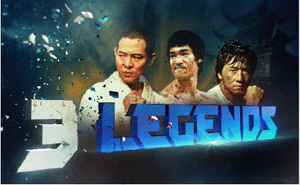
    We at PIX strive to provide popular and interesting content to our viewers. 3 Legends is a new programming block we have created this month which will showcase movies of the three martial art legends – Bruce Lee, Jackie Chan and Jet Li. Similarly, Sunday Breakout, Awesome Saturdays, Hand PIX and Super PIX are blocks created to offer variety and meet the ever-growing appetite for Hollywood films. Also, festivals break the monotony on a channel as they always offer something interesting to look forward to for the viewers.


    Why is it important to have these festivals?

    Blocks and festivals create a sense of excitement and appointment amongst the viewers towards the slot, in specific, and the channel, in general. They also bring uniqueness to the channel, which simply means that at any given point of time you will not see more than one channel programming or treating a particular genre, cast, theme or local festival in the same fashion. This ‘exclusivity’ is an attractive proposition to not only the viewers, but also the sponsors.


    How has been the response on this from viewers?

    Our viewers often write to us about how unique they find PIX – whether it’s our titles, promotions or even hoardings. The response from the market too has been good, since sponsors know they will get a good response by choosing our programming festivals as a media vehicle for their brands. Our viewers between the ages of 15 to 25 years are most vocal about their feedback, which we often get to know through our Facebook community and our youth community called the PIX Movie Club.


    How do you chalk-out the plan for a year? And when?

    At the start of the fiscal, we set out goals for ourselves, but we are not rigid and are always open to making changes as per evolving viewer needs.


    Which has been the most successful festival package, so far? Why?

    Over the past few months, Sunday Breakout and Hot Summer Collection have performed very well in terms of numbers and viewer engagement. Sunday breakout is a slot programmed on Sundays from noon to early evening wherein two tiles with a single break are scheduled, targeting the entire family. Another successful slot has been Hot Summer Collection which was programmed during summer vocations and was directed toward school and college students.


    What else can we expect from the channel?

    We will be showcasing the biggest animation movie of the year next month for which we are all very thrilled! Going forward you will see many big ticket properties of the creme de la creme of Hollywood.


  • Sunil Punjabi is India Business Head for SPT Networks

    By A Correspondent


    Sony Pictures Television Networks, Asia has appointed Sunil Punjabi to lead its Indian operations in the newly created role of Business Head, India. Mr Punjabi is based in the company’s Mumbai office to lead its local team in all business functions, with the responsibility for the profitability for SPT’s networks in India, said a release from the company.


    Overseeing the day-to-day management of the channels, Mr Punjabi will develop business opportunities and channel equity. He will lead the team in developing the go-to market strategy for new channels as well as oversee the development, acquisition and production of a content mix for SPT’s networks in India. Mr Punjabi is also charged with driving marketing strategies to grow the channel brands and to pursue further distribution opportunities. He reports to Ricky Ow, Executive Vice President and General Manager, Networks, Asia, Sony Pictures Television, who is based in the company’s regional head office in Singapore.


    Mr Punjabi brings 12 years of well-rounded experience in the Indian media and entertainment industry across key business functions including advertising sales, marketing, theatrical exhibition, business development, production, distribution, and operations.


    “We are pleased to welcome Sunil to drive our business in India. His acumen and experience across all functions will be key assets to lead our channels to greater heights in one of Asia’s largest and most competitive TV markets,” said Mr Ow.


    Mr Punjabi joins the company from one of India’s top three film exhibition chains, Cinemax India Ltd., where he served as Chief Executive Officer from 2010. Prior to that, he worked at Multi Screen Media Pvt. Ltd. where he was Senior Vice President for Business Development, leading the new media, mobile telephony and syndication divisions’ integration with the company’s sports and music TV channels.


    Mr Punjabi was instrumental in the formation in Fox Star Studios, the joint venture between Twentieth Century Fox and Star TV, and was also involved in major films including Slumdog Millionaire and My Name is Khan.


    Sony Pictures Television Networks, Asia, based in Singapore, was established in 1997 as the Asia headquarters for Sony Pictures Television Networks. It operates five ad-supported 24/7 channel brands in the region which are wholly owned by Sony Pictures.


  • New: Life’s Lessons | Anil Kakar: Thank you, Mohammed

    Anil Kakar

    And on this third Thursday of the month, we start a new monthly series with senior professionals and captains from the industry reminiscing about something that was told to them by their bosses, mentors or colleagues that dramatically changed their outlook to work… and life.


    It was the summer of ’96. The time was 11:02 am. There I was with my head propped up on my hands, in the Enterprise office, aged 21 and a half, staring at the blank page on my computer with barely concealed disdain. It was time for Mohammed to walk into the office any moment now. We were already way past the material deadline. Panic sets in. The Production Manager walks straight up to me and yells, “Since you were not done with the copy, I’ve kept the artwork on hold. Is it ready yet?” More panic. My mind was blank, just like the page staring back at me from my computer. After all, this was an ad I had rewritten 216 times, no less.


    In comparison, a resignation letter seemed much easier to write. Looking at my impending fate in the agency, I decided to quickly write one. Just in case.


    Mohammed Khan

    I quickly added a new page on my computer and I started typing: ‘Dear Mohammed…’


    Gosh, where does one start? In the time I had spent at Enterprise, I had learnt that every piece of communication could be turned into a conversation piece. Yes, even a resignation letter.


    Right. Delete page. Start over again. Change background to black. Change typeface to Goudy Old Style. Change point size to 16. Print.


    There it was. At last. A crisp, black print-out fluttering with the pages of my writing pad. The letter gave me much-needed relief. In a matter of minutes, I felt like a whole new person.


    Unfortunately, the feeling didn’t last long. At least, not until I pulled out and looked at the print-out again.


    White type on black? I must have lost my marbles. The copy was totally illegible. Well, if my aim was to get sacked, this would have worked wonderfully well, but not before I was minced and grilled like meat. Damn.


    Change the background to white. Set the copy again. Wait a minute. Suddenly, the whole layout looks imbalanced. Adjust spaces on top. Still too much imbalanced negative space at the bottom. Increase point size to 17. Nah, let’s make it 16.7. That looks just right. Place a picture in the centre. The picture is too wide for the page size. I crop the picture. Something doesn’t feel right. Mohammed’s words come darting back at me; ‘You have no right to crop a picture, you’re playing around with a photographer’s vision’. Right. Apologies. Control Z. Should I expand the font, instead? There, it’s stretched to 125% and sits comfortably. Wait. This is not the way the typographer envisioned his typeface, either. Control Z. And so it went on. And on. And on. 3 dots in the headline? Blasphemy. An exclamation mark? Instant death. A visual of fish served on a square plate? Annihilation. What about a headline? Damn, I just wrote 216 which didn’t make the cut.


    Yet, after an hour of careful deliberation, I came to the conclusion that anything is better than leaving an agency which had taught me everything at the start of my career. Yes, even the 217th headline.


    At that moment, I disappeared. I hopped across to a seedy bar and grabbed a beer in the middle of the afternoon. Perhaps, my first ‘afternoon’ tipple which started a trend.


    I wrote headlines on paper napkins and headed straight back to the office. I walked in to Mohammed’s room, my hands still trembling with anticipation. He lit a cigarillo and sat on his chair. I showed him a set of headlines which he kept reading over and over again, intently.


    Finally, he looked up at me with a wrinkled forehead and asked me angrily, “What on earth is this?”


    “Headlines”, was my dumb reply. Dumbstruck, I almost reached for my resignation letter.


    He turned around and said, “How clever of you, I can see that. Why couldn’t you write these earlier?”


    Relieved, I slipped the resignation letter back into my pocket and asked him what was wrong with the 216 headlines I had written earlier.


    “Well, on the 217th attempt you wrote for no one else but yourself.”


    Thank you, Mohammed. That was perhaps the most important lesson I’ve learnt in the 20 years that I have been in the business.


    Anil Kakar is founder of Gasoline, an independent brand communications agency based in Mumbai. He has worked for close to 20 years with agencies such as Leo Burnett, Enterprise Nexus, Ambience Publicis, SSC&B Lintas and Percept. Anil worked with Mohammed Khan at Enterprise Nexus for four years between 1996-2000. Has he been in touch with Mr Khan and when was the last time he met him? “Unfortunately, I haven’t been in touch with him in the recent past.  The last I bumped into him was a year ago at Palladium. :)”


    Compiled by Meghna Sharma


  • TAM offers 6 action steps in meeting with ISA & AAAI

    By A Correspondent


    The Indian Society of Advertisers (ISA) and the Advertising Agencies Association of India (AAAI) called a joint meeting on August 16 for TAM to present facts as they are relevant to the users.


    “As key users of audience research data, advertisers and advertising agencies need to know facts directly from the research agency. And if there are challenges at any level in the research, the research agency needs to share its proposed action plan with us,” said Bharat Patel, Chairman-ISA and Arvind Sharma, President-AAAI in a communiqué.


    TAM shared its perspective with ISA and AAAI and outlined six key action steps:

    • Appointment of a security officer and a security agency
    • Expansion in number of meters in the existing 6 top metros
    • A review by the industry of research processes that determine what TAM reports in its weekly reports. And what meter homes are left out of reporting for being data outliers
    • Getting the outlier homes independently audited
    • Faster panel rotation
    • An internal audit team to be put in place as soon as possible


    “We look forward to speedy implementation of the six action steps outlined by TAM. With the formation of Broadcast Audience Research Council-BARC on the anvil, it will be appropriate for us to request BARC to review if these steps are adequate,” added Messrs Patel and Sharma in the statement.


  • A year of glittery success for UTV Stars

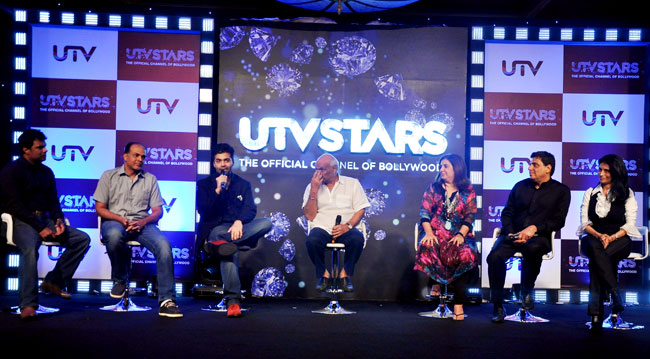
    From Left to Right – MK Anand (MD, Media Networks), Ashutosh Gowariker, Karan Johar, Yash Chopra, Farah Khan, Ronnie Screwvala (MD, The Walt Disney Company India), Zarina Mehta at the launch of UTV Stars, last year


    By Meghna Sharma


    On August 19, the world of glamour and glitz had one more reason to celebrate – UTV Stars turned one. The Bollywood and lifestyle channel launched last year by the network promised to give the audience more than what the current lot of channels were offering.


    Nikhil Gandhi

    “UTV is synonymous with Bollywood. Having revolutionized the movie production space over the past few years, it seemed logical for us to launch a Bollywood channel. We believe that we have an edge over the channels because of the backing and our enviable access to the Industry. We provide the viewer with innovative content and showcase the land of Bollywood from the inside as opposed to an outsider’s perspective. We are the insiders and very much part of the industry that we’re showcasing,” said Nikhil Gandhi, the business head of the channel, describing what differentiates it from the rest in the genre.


    The channel takes immense pride in offering the audience outstanding and unique content. “Right from its inception, UTV Stars has been offering the average viewer path breaking and innovative Bollywood content, thereby bringing Bollywood closer to the audiences. Before launch, Bollywood channels were mostly all about music and news formats. But ever since we’ve launched, we’ve emphasized a lot on original content that has resonated very well with the audiences,” explained Mr Gandhi.


    But that’s not enough; it strives towards moving beyond TV too. In less than two months of launch, the channel took the brand on ground via prestigious associations with ‘The People Best Dressed Show’, Lap Buddh Circuit After Parties, ‘Cosmopolitian Fun Fearless Awards’ and FICCI FRAMES Excellence Awards as official broadcast partners. And in March this year, the channel went on to launch country’s iconic landmark – Walk of Stars. “The response to the initiative has been overwhelming, from both, the film fraternity and the audiences. And yes, we do plan to launch in other cities. We’re planning to launch in Gurgaon at the Kingdom of Dreams in association with Wizcraft, following which we also plan to take the property international”, said Mr Gandhi.


    Speaking on the marketing spend by the channel, Mr Gandhi said, “Marketing Activities are of utmost importance and we have indulged in several marketing activities right since launch. During launch, the channel was backed by an extensive outdoor brand campaign with the messaging ‘Touch,Feel, Believe’ endorsed by all the A-listers of Bollywood. Our shows Live My Life and Up, Close and Personal with PZ, were also backed by extensive outdoor campaigns. Also, with a view to strengthen the brand presence beyond television, we indulged in several prestigious on ground associations as the exclusive broadcast partner. In fact, our most recent marketing activity was an on-ground association with IIFA 2012 wherein we took ‘Walk of the Stars’ global.”


    The channel was launched simultaneously in India and Middle East. And, in less than a year, the channel was launched in UK as well. It plans to continue to grow from strength to strength in future by broadening our horizons and making inroads into other markets.


    “The channel will continue to create outstanding content and strive towards continue to build itself as a 360-degree brand. Ie, a brand beyond TV,” concluded Mr Gandhi on an optimistic note.


  • 1 in 4 online mins spent on social networking in June

    Digital media measurement leader comScore has released a study on the top online sites and activities in India from its comScore Media Metrix service. The report says that Google sites ranked as the top destination in June 2012 reaching nearly 95 percent of the online population, while social networking reigned as the top online activity accounting for 25.2 percent of all online minutes.


    In June 2012, Google sites ranked as the top online destinations in India reaching 57.8 million people age 15 and older accessing the Internet from a home or work computer. Facebook.com followed with 50.9 million visitors (83.4 percent reach), followed by Yahoo! sites (65.5 percent reach) and Microsoft Sites (48.1 percent reach). Local web properties secured several spots in the top 10 ranking, including Times Internet Limited, reaching 33.7 percent of the online population, Network 18 (29.3 percent reach), Rediff.com India Ltd (25.2 percent reach) and NIC.in (21.8 percent reach).


    Among the top properties, visitors were most engaged on Facebook.com, spending an average of nearly four hours on the site in June. Visitors spent 2.5 hours on Google sites, with YouTube accounting for a strong share of time spent on the property. Among local brands, Network 18 led as the most engaging property with visitors averaging 31.6 minutes during the month.


    An analysis of the top online activities in India found that social networking accounted for 25.2 percent of all time spent online in June, an increase of 0.8 percentage points from the previous year, as social media continues to be a primary driver of people’s daily digital media consumption. Entertainment sites ranked second, accounting for 10 percent of minutes (up 1.2 percentage points from the previous year), while Portals accounted for 8.8 percent of total minutes. Although it represented just 2.0 percent of total minutes, time spent on Retail sites grew 0.5 points in the past year as online shopping continued to gain adoption.


  • Zee TV creates ‘virtual temple’ for Ramayan

    By A Correspondent


    Zee TV’s latest salvo in the cyber-competitive world of social networking websites is an innovative ‘virtual temple’ on the Facebook page of its new mythological show, ‘Ramayan’.


    The virtual temple holds the promise of a few moments of daily spiritual solace for netizens. The imagery, the colors and the music used have a calming effect and can easily transport a devotee to a harmonious, divine space. Packaged beautifully, the temple is a re-creation of the Ram Durbar showcasing Lord Rama, Lakshman and Sita with Lord Hanuman. The temple has unique features that let them ring the bell, light a diya, play a choice of aartis, shower flowers and smear haldi kumkum on the deities, break a coconut and even rotate the aarti ki thali!


    In the coming days, Zee TV also plans to create a mobile application that will make the virtual temple available to smartphone users and let them interact with ‘Ramayan’ through aartis and chaupaayis.


    The launch of the virtual Ram Mandir comes in the wake of the launch of new mythological series ‘Ramayan’ which went on air on Sunday, August 12 on Zee TV and Doordarshan.


  • New name, look for HT’s Brunch Quarterly

    By A Correspondent


    HT Media Limited (HTML) has unveiled the new avatar of its magazine Brunch Quarterly.  Having completed a year, Brunch Quarterly has been renamed Brunch Q. The magazine will take on a new and improved format with each issue created around a special theme. Brunch Q seeks to help readers in their ‘Quest for the Good Life!’


    Poonam Saxena, Editor, Brunch Q, commented on the revamp, “With the Brunch Quarterly completing one successful year of publication the time was right to give our growing reader base something more punchy and exciting.  The revamped magazine hits the stands with an eclectic collection of stories and features – the equivalent of an unputdownable book.  There’s Aamir (Khan) and Sunny Leone like never before, plus a special Wellness section and a guide to portable gadgets. We are planning to continue this new format in the following issues with a wide variety of interesting and engaging content making each issue of Brunch Q a collector’s special.”


    The 140-pager Brunch Q will retail at newsstands for Rs 100. The first issue under this new format, August-October 2012, has a special segment on wellness covering spas, tips from celebrity dietitians and trainers, a story on organic and healthier alternatives to everyday food items plus a feature on Yoga.


    The revamped magazine comes in a larger format (22.5wX29.5h) and the paper and production quality has also been kept on par with the best international magazines.


    Rajan Bhalla, Head – Corporate Marketing and Magazines, HT Media said, “We decided to give Brunch Quartely a makeover for the benefit of our readers. With over 31.53* Lakh readers who enjoy HT Brunch every Sunday, the demand for Brunch Q is high among the targeted SEC A & A+ segments and it is most popular among the 25 -45-year age bracket. We wanted to give our readers, who are progressive, smart and well read, a sharper, wittier and more exciting experience. We have improved the design and added new content complemented with international print quality. We are certain that Brunch Q will be embraced by our readers.”


    Approximately 1.25 lakh copies of Brunch Q will be circulated on newsstands each quarter, across the country. The magazine will be heavily promoted in HT Media Group properties such as Hindustan Times, Fever 104 FM and Mint. The Brunch Weekly, circulated with Hindustan Times on the weekend, however, will remain same.


  • Vserv.mobi client portfolio grows 3X

    By A Correspondent


    Vserv.mobi, a leading mobile advertising network for app developers, publishers and advertisers announced that their client portfolio of advertisers and brands has grown three times over the last quarter. Some of the marquee names amongst the company’s clients are top brands such as Mahindra & Mahindra, Microsoft, Google, ICICI Bank, Airtel, Nokia, Titan, Toyota, General Motors, Mid-Day, Dulux, Maruti and Aircel.


    Commenting on the company’s growth and strategy for advertisers, Dippak Khurana, Co-founder and CEO, Vserv.mobi said, “Being among the frontrunners of the mobile advertising wave in India, we have always strived to push the mobile ecosystem forward. Through constant innovation on our ad formats such as premium full screen ads and a clutter free viewing experience, we believe that our ad network is creating a compelling choice for brands to commence their mobile advertising journey.”


    Berg Insight, an independent wireless analyst firm states that the total value of the global mobile marketing and advertising market will see 37 percent growth by 2016, bringing the industry’s total value to USD 22.6 billion. Riding this wave, Vserv.mobi saw an 18X increase in premium inventory clicks on its network in the last one year, which contributed to 41% of the total click mix. This growth was driven by demand for powerful monetization by the company’s flagship technology, AppWrapper. With its simple one-click and zero-coding monetisation process, the unique AppWrapper has contributed to building Vserv.mobi’s repository of 10,000+ exclusive apps from developers across the globe. These apps along with mobile internet sites serve as powerful ad inventory for advertisers on impactful formats such as Full Screen Ads, Video, HTML5 interactive ads on both feature phone and smart phone apps.


    Commenting on the prospects of the rising mobile internet usage in India, Kshitiz Randhir Shori, Head of Sales – India, Vserv.mobi said, “We have seen tremendous traction with new brands that are starting to work with us, as well as RO value increasing significantly across our portfolio. As the mobile medium grows, brands are increasingly showing interest in our differentiated mobile media offerings that offers massive reach, unique ad placement, impactful ad formats and thus offering the best bang for the buck. With the festival season coming up, our ability to carry out circle/state targeting on the mobile will play a key role for brands looking at reaching the right audience with the right regional festive message.”


    Since Vserv’s inception in January 2010, the company has been delivering App and mobile web advertising for leading Fortune 500 brands & digital media companies, in over 200 countries. KFC is one of the many companies that initiated its mobile advertising journey using the company’s ‘AppWrapper’ technology. “Companies such as KFC have been instrumental in transforming the mobile advertising paradigm and we are proud to have partnered with them for this journey. The rising demand from marketers has augured well for us and we are strengthening our team, to continue growing the market.” added Mr Shori.