Category: SERVICES | RETAIL

  • Wildcraft takes step into new territory with shoes, eyewear

    By Tuhina Anand

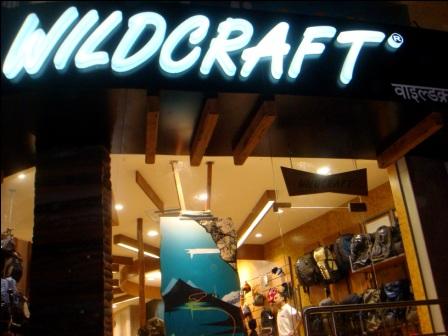
    Wildcraft, the adventure equipment and outdoor gear company, has forayed into outdoor apparel and plans to launch the range across the country by November-December this year. The company also has plans to launch its range of footwear by the last leg of next year while it is geared up to launch its eyewear range by next quarter. This range in keeping with the core of outdoor ethos will be high in functionality, light weight and compact, weather resilient and high in reliability or FLWR as that’s what the mantra to follow at Wildcraft.

    The company which was set up in 1998 has seen a CAGR of 100 percent in the last four years which was propelled by the change in travel itinerary in India as people have become receptive to adventure travel. In fact, the market for this industry is estimated to be around Rs 750 crore and has been growing steadily. Wildcraft itself has been doubling YoY for the last four years, with its top line approximately Rs 65-70 crore this year. It has set its sights on reaching the magic figure of Rs 100 crore plus by next year.

    About these plans, Mr Gaurav Dublish, Director at Wildcraft, says, “Being the only organized player in the adventure equipment and outdoor gear, we do have the first mover advantage plus also the fact that we have been in this category for long and we understand the category well. We have created an ecosystem around this category and take pride in the fact of manufacturing 100 per cent in India without any imports. Though still in its nascent phase, the category will only grow further from here on.” That explains Wildcraft’s decision to extend their offering in this category beyond their popular sleeping bags, rucksacks, tents and bag packs to apparel, footwear and eyewear.

    The company will also be open to outside funding once it reaches the figure of Rs 100 cr. Despite its good run in the last few years the company has hardly advertised because, as Mr Dublish puts it, constraints in supply meant they would have been incapable of catering to the surge in demand. However, this issue is now in control with a factory in Solan that started functioning in August this year. It has another factory in Bangalore which was set up in 2004. The company hopes to go all out with a marketing blitzkrieg in another 18 months.

    There is also a plan to enter the East market which was initially planned for next year but will now happen before the end of this financial year. Wildcraft is also exploring the opportunity to be in the Middle East and SE Asia, and that is one of the reasons for the company sprucing up its offering. The spurt of activity at Wildcraft can also be in preparation for the onslaught of foreign players who have been waiting at the fringes but have not really turned their focus now to India, and would probably look at this space in two to three years’ time.

    Wildcraft currently has a direct presence in 15 cities and plans to be in another 17 cities by the end of this financial year. It has a presence in around 50 cities through distribution channels and multi-branded stores.

    “We are looking at e-commerce in a big way and have recently revamped our website and made it more user-friendly. In fact, we expect 5 percent of our sales coming from e-commerce. We have also partnered with almost 10-12 e-comm players in the last two months in a bid to get into this space seriously. Also we have revamped our digital team on both sales and marketing sides, and will have new people on board by October 1 who will be dedicated to the digital medium,” added Mr Dublish.


  • Diamonds in the Tanishq classroom

    By Tuhina Anand

    There seems to be a strategic shift in communication of Tanishq jewellery, from the Tata Group, which has taken on the task of educating people on diamonds. They embarked on this journey in April this year when they roped in Amitabh Bachchan and Jaya Bachchan in the True Diamonds campaign, which aimed at making consumers aware of the various aspects of the quality of diamonds.

    It is intriguing to understand why Tanishq took on this route of imparting lessons on getting to know your diamonds better, rather than just toe the line of communication of its earlier campaigns which focused on offers or a new collection.

    One of the reasons behind this shift would definitely be the amount of misguided information that comes the way of the average diamond buyer. There are many practices followed which definitely can’t be called fair, hence leading to even less clarity and leaving interested buyers with even lesser and confusing parameters to evaluate the quality of the diamonds.

    Mr Parvesh Debuka, Brand Manager, Tanishq told MxM India that education is among one of the core mantras to follow when it comes to communication, and features high on their priority list. He said, In the last three years we have seen phenomenal rise in sales for diamond jewellery but we realized that to tap the market to its best we need to provide few basics that will help consumers ask the right questions while purchasing diamonds.

    The campaign with the Bachchan couple was fantastic for Tanishq in terms of sales and customer queries, hence they decided to take it further with the curious case of the missing diamonds which is an online campaign. The purpose of this campaign is to engage consumers via the digital medium, also taking from its previous campaign which gave them visibility and addressed key issues. This online campaign rests on the microsite missingdiamonds.tanishq.co.in and will conclude by the end of September.

    The microsite enables users to help Amitabh Bachchan find the missing diamonds through an online game. This online game has a series of clues in the form of captivating videos of suspects who would have stolen the diamonds. Five lucky winners who complete the task in the shortest period of time get an opportunity to take part in the on-ground chase to hunt down the culprit in Mumbai. The winner who hunts the thief during the on-ground hunt gets the chance to gift the diamond necklace personally to Jaya Bachchan.

    According to Mr Sirish Chandrashekha, Marketing Manager, Tanishq, Getting the modern city dweller to learn about diamonds was a challenge. We embarked on this education campaign online through the missing diamonds idea. Interaction, engagement and education were the key words around which this idea is based.

    This campaign is conceived and executed by Tanishq and their agency partners Maxus, Lowe and Interactive Avenues.

    Mr Sairam Ranganathan, the digital head at Maxus South, said, We wanted to make diamond education more interesting and engaging for the urban upscale audiences and through Maxus creativitis we arrived at the missing diamonds idea. This is a social design enabled game, we worked with KRDS to create this experience.

    Ads and offers will, of course, continue, but educating people on diamonds is a task that Tanishq has taken up and will continue to carry out.

  • Reliance Trends takes the toons to the tots

    Kiddie TV’s cartoon characters are set to come to life during Reliance Trends month-long Toon Fest at its stores across India. The event began with a meet-and-greet with Spiderman at the Reliance Trends Mantri Mall outlet.

    Reliance Trends Toon Fest is a gala event dedicated to the kids of the country, which gives them a chance to meet cartoon characters on the weekends, including, besides Spidey, Doraemon, Power Puff Girls, Ben Ten and Chhota Bheem.

    Mr Arun Sirdeshmukh, Chief Executive, Reliance Trends said, Children are an integral part of our customer base. Toon Fest is yet another endeavour towards making the kids shopping experience at our stores a memorable one. The Reliance Trends Toon Fest, held in about 35 stores across India, is one of the biggest children’s activities we organise. A special range of kids clothing featuring their favourite cartoon characters is also available at all stores at a starting price of Rs 199. I am sure our young customers will thoroughly enjoy the various activities and our new range of outfits for them.

  • Bids get hotter at online auction site Dealite.in

    By A Correspondent
    Dealite.in announced the launch of their disruptive auction site where buyers compete with limited bidders in quick-format auctions to win products at up to 5 percent of the MRP. The founding team includes ex-eBay, ex-PayPal, IIM-A alumni and e-commerce industry veterans with a mission to break the price barrier for acquiring leading aspirational brands.

    Unlike traditional penny auctions, Dealite differentiates by being exclusive to a limited number of bidders who buy a seat to participate in an auction. In return, Dealite offers them an equal amount of free bids which can be used in the auction. As the starting price is always zero and each bid increments by only Re 1, auction participants can win premium products at 5 percent of MRP. Dealite provides all participants an option to Buy it Now, where the entire seat cost and bids are added to the final discount.
    In India, according to sources at a leading payment gateway, there are over 130 deal sites as of August, 2011, that are competing for 100+ million internet users. Dealite’s founder, Mr Vijayanand Shekokar claims, Dealite is going to turn the conventional e-commerce model on its head, and create an exponentially dealiteful experience for its users. We aim to make aspirational branded products available to all Indians at affordable prices.

    As Head of Online Marketing Mr Sameer Khandelwal summed up, Dealite is the missing link in the Indian e-commerce evolution that will enable consumers to experience a new freedom in shopping & gaming. With delivery across India and alliances with leading payment gateway and logistics firms,


  • The PHD of growth

    Pizza Hut Delivery (PHD), not just an adjunct of the main pizza brand but one which is positioned as a sub-brand of Pizza Hut, has been slowly but steadily increasing its footprint across India. PHD is actually a global concept which was launched in India in 2007 though it has kept away from limelight until now, as the company had decided at first to focus on providing consumers with a world-class dining experience in-store. The focus on dine-in was also because the delivery market had not really evolved at that point. But now there has been a change with people being more amenable to the home delivery option, hence the need to step up the PHD offering.


    The Indian food and beverage industry has been showing a healthy growth in the last few years and if one were to look at the organized pizza market, it would now stand at approximately Rs 450 crore and is growing at almost 25 percent year on year; the average bill size has also increased in the last few years and one can easily put a conservative figure of a 15 percent rise in that amount. With the trend showing a rise in home delivery, it is natural that Pizza Hut would tweak its offering to reach those potential consumers. In fact, its competition Domino’s has built its whole communication around the fact that it delivers in 30 minutes or the customer gets the pizza free.


    Ashok Bajpai, General Manager, PHD, explains the strategy behind bringing PHD into prominence. He said, Over the years, the delivery segment has gained importance in India and PHD has the ability to provide great tasting pizzas, pastas, garlic bread, desserts and drinks right to your door. We are committed to bringing restaurant-quality food to the homes of our customers. Also consumers today are increasingly looking towards delivery as an option to enjoy restaurant-quality food in the comfort of their home.


    Mr Bajpai added that the time has come for PHD to expand faster. Pizza Hut Delivery ensures that it fulfils its promise of delivering great tasting food, hot, to its consumer’s doorstep every single time, he added.


    PHD’s premise of hot pizzas delivered to the doorstep takes the form of the hot dot, which is a heat-sensitive sticker on the pizza box. If the dot is hot, so is the pizza inside. This replicates the restaurant offering of a hot pizza on the spot, and combats the concept that home-delivered pizza is not hot enough, which is sometimes a deterrent.


    Currently, PHD stores stand at 37 and the focus is to bring the number to 300, countrywide, by the end of 2015. Mr Bajpai is of the opinion that delivery is still nascent and more of a metro phenomenon. He said, India is growing at an unprecedented pace and in the future, a lot of action will be seen in tier 2 cities and other smaller towns. PHD is now one of Yum’s fastest growing brands.


    Aren’t Pizza Hut and PHD in conflict with one another? At Yum!, rather than conflict, PHD is seen as growth driver. While Pizza Hut is gaining prominence in Affordable Casual Dining (ACDR) space, PHD is developing the growing delivery business in the country, concluded Mr Bajpai.


    The challenge for Pizza Hut will also be from many QSR that has emerged in a short span and specializes in Indian food like Goli Vada Pav and Kaati Zone. There are also many local pizza brands like Pizza Corner, Slice of Italy or the homegrown US Pizza, and all of these either are QSR or focus on home delivery. Hence, if Pizza Hut is stepping up its focus on PHD to grow, it is in sync with the demands of today and with future growth strategy.

  • The anchor: Harish Bijoor on 6 lessons today’s marketers can learn from Salman Khan

    # 1 Hold your sense of humour and your panache even when the chips are down. It’s the reverse of what we have all grown up with: What goes down has to come up some day or the other! Oops!

    One needs to learn from every downside the star has gone through. The Chinkara, Aishwarya Rai, Vivek Oberoi, Amercian Express Cleaners not withstanding. Listen to the way he cheekily (pun unintended) describes his latest health downside as a flaming affair between his nerves and his veins, giving him an electric shock in his brain.


    #2 Think young, as the market is young

    Never mind that you are on the wrong side of 40. Think 25. That’s the median age of the country 56 percent of the population of India is below the age of 25. You might be an old marketer, but think the age of the nation. Don’t try to get the young nation of consumers think your age. Get contemporary in your marketing.


    #3 Stay fit

    The market is young. Youngsters themselves may not be fit, but everyone loves to live vicariously fit lives through the lives of their brands and stars. Keep your brand looking contemporary, young, with-it and trendy. Invest in those small little changes forever. Keep your brand looking different all the time. Don’t get cast into a stereotype. Gone are the days when a brand needed t look just the same. Today, visually, brands need to evolve. Evolve as fast as the consumer is evolving. The marketing problem today is that marketers are changing far too slowy as compared to consumers.


    #4 Poke the other brand in the eye and make him blink

    Brands that maintain the status quo with the competition are boring. Poke the competition in the eye. Wake it up. Make it react and make it make all those mistakes as well. Be seen as the market-mover. Be seen as the one who is the gold standard on everything around. Be the hero brand. The hero is forever on the prowl.


    # 5 Stay naughty

    Every consumer has a child in him and her. Most are pushed to suppress this side altogether. Life and the rat-race at large makes one suppress it all. Wake up this naughty side of your consumer through your own naughty brand stances. Do it all the while. Make your consumer live his life vicariously through the brand he uses. Stay naughty in your brand stances and push the gauntlet one step at a time.


    #6 Be Human. Be faulty

    This is not a pun on Salman’s Being Human! It is all about he fact that Salman is the first to accept all his faults. No point in hiding the fact that you love your drink. Be real. Be open. Be transparent. Be human. Consumers love the fact that the brands they franchise are alive as well. Good to think that everyone is faulty at large. Brands with foibles will be the new trend. Brands that falter just as you the consumer falters, will be the new trend of the future. Marketers can learn much from this. Brands that are level with the consumer and speak form the same level as the consumer will be loved. Gone are the days when brands spoke top-down language with the brand on top and consumer below. Today is the day and age of level peer-to-peer communication. Brand Peer to Consumer Peer communication, if you will!

    Harish Bijoor is a brand expert and CEO of Harish Bijoor Consults Inc. You can follow him on Twitter @harishbijoor

  • Suzlon goes for youth connect with green message

    Why would a wind turbine supplier’s campaign target the youth? That’s just what Suzlon has done with p.a.l.s (Pure Air Lovers Society). The campaign, which was kickstarted with a teaser and culminated in highly visible print advertising, aims at driving audiences to its website (http://pals.in/) which indicates that it is looking at bringing the young population into its ambit as they are the ones most active on the digital platform. The website too is unlike what one would imagine from a company that’s into wind power, as p.a.l.s is young, refreshing and interactive  in short, everything that would seem inviting to the youth.


    If one were to look at the link between Suzlon and p.a.l.s, it is really the issue of clean and energy-efficient quality of air. The inspiration for the initiative came from the truth that air pollution and the quality of air in our cities is becoming a serious issue today. This, coupled with research which suggests that Indians are concerned about this and address it as their number one environmental concern, was reason enough for the crusade exhorting people to stop air pollution. The company in fact quotes that more than 5 lakh people a year die of air pollution-related ailments in India.


    Ms Dharini Mishra, Global Head for Brand, Suzlon Group, explains, Suzlon has always been committed to sustainable development of the country. Since we are in the business of clean, pollution-free energy from the wind, we thought Pure Air was the best way to connect our philosophy with the youth of India and the country in general.


    The timing of the initiative is well thought of, as Indian wind energy is attracting global attention. Also, Suzlon’s order books are looking strong and giving the company the confidence of being well placed in the Indian market.


    Suzlon is India’s leading wind energy company for more than 13 years now. We already

    had a cause which is inherent to our business but we were waiting for the most

    engaging manner and right time to take it to the people, that’s how Ms Mishra explains the timing of the initiative.


    The youth connect may not be apparent at the outset but it’s clear when one understands the vision of Suzlon, which is all about a better tomorrow, a change for the better and renewable energy. Ms Mishra added, These attributes are directly related to the young. India’s

    youth is bringing in wide sweeping changes to the way we live and do business. We strongly feel that connecting our brand with people of a young mindset will see a revolution of change across this country which is very critical for our sector and our business as a whole.


    The campaign, which is conceptualized by LoweLintas, has seen a huge response with the number of p.a.l.s growing by more than 1,400 a day. The website has stories, videos and real-time updates on what pals are up to, besides other engaging and interactive features. The company sees it as one of the most successful social cause campaigns for the youth. In the first phase the advertising managed to create awareness about the cause, but now Suzlon will move on to activations and tools that encourage p.a.l.s to make a tangible impact. In this phase the focus will be on partnerships, school connect programs and creating a digital stir.


  • The Anchor: Pradeep Chopra on 8 mistakes marketers make about social media

     #1 Marketers treat social media like a short-term advertising campaign.

    Social media is all about building a lifetime relationship with your audience. However, marketers are still to understand and acknowledge that. It requires more of unlearning vs new learning.


    #2 Marketers measure ROI of social media like other digital marketing avenues.

    Unlike SEO, PPC or even email marketing, social media is not just about driving traffic to a website and measure the contribution in a typical funnel approach as used in SEO or PPC advertising. Leveraging FB ads for lead generation will be an exception.


    #3 Marketers underestimate the value of content and quality of conversations.

    Unfortunately, even today a significant percentage of marketers are focusing on metrics such as number of fans on Facebook. While the number of fans is necessary, it’s not sufficient.


    #4 Marketers don’t put required effort into defining objectives.

    While social media requires constant experimentation, laying down the objectives lays down the framework to think, execute and measure appropriately.


    #5 Marketers believe social media is about technology.

    A large number of marketers still consider social media more of a technology and less of a marketing activity. Thus, they don’t put the right resources in at the right place.


    #6 Marketers think that listening to their customers is optional.

    In the fear of confronting negative conversations about their brand, marketers don’t realise that they don’t control what others are saying about them. Hence, listening to their customers on social media is not a choice.


    #7 Marketers believe that they’ll jump in when it gets settled.

    It’s been over seven years and the only thing which is constant about Facebook is change. By the time social media reaches a stage of stability, the opportunity will be proportionally low of newer players.


    #8 Marketers still feel that social media is timepass.

    Unfortunately, a large number of marketers still feel that platforms such as Facebook are only for socialising or passing the time. While Facebook started as a social network, today it has taken the shape of a hybrid (social + professional) network and there are global case studies of B2B companies, such as Intel, Dell and GE, which have been leveraging Facebook to fulfil various business objectives.


    Pradeep Chopra is co-founder and CEO of Digital Vidya, and co-founder of dvBytes

  • The Future is on the Shelves: Devendra Chawla

    As per Boston Consulting Group estimates, the size of the organized retail market is approximately $28 billion and is likely to grow nine times to $260 billion in 10 years. Modern retail is no longer testing the water but is all set to grow at a reasonable pace. And as is known, the Future group has played a key role in the growth of modern retail in India.

    Mr Devendra Chawla, President, Food & FMCG Category, Future Group, reflects upon the increasing importance of retail in brand communication, consumer insights and trends among other things, in conversation with Ritu Midha of MXM India.


    Customer engagement is the buzzword. What steps can a retailer take to keep the customer involved and engaged?

    The landscape for brands is undergoing a transformation. While media is proliferating from one channel to multiple channels and one screen to multiple screens, brands need to shout louder to get consumers’ attention in this age of the addictive remote. Yet, the bigger challenge for marketers is not to get attention but to engage with this consumer. While the media is expanding, retail is converging in the sense that a brand can reach and interact with more consumers under the same roof. Though in a nascent stage, modern trade is contributing in a major way towards the growth of categories such as breakfast cereal, cheese, packaged rice, toilet cleaners, liquid soaps, air fresheners and hair conditioners, to name a few. A retail store in that sense is the new media vehicle to create awareness about new brands/products for a large number of consumers visiting the stores.


    It is said that most purchase decisions are now made in the last leg  or seven minutes before the customer actually shops. Are marketersmaking specific point of sale strategies to influence customers?

    Last mile marketing is about engaging the consumer and most decision by the consumers are taken at the final consumer touch point, the store, where given new information, brands may interrupt the decision-making process and enter the consideration set. One can activate last mile marketing by engaging in the following effectively in the retail theatre.

    • Celebrating new product launch
    • Sampling
    • Category Dressing
    • Knowledge to customers  usage, recipes
    • Break-the-routine promotions
    • Multi/Combi Pack
    • Cross promo
    • High customer engagement activities like lucky draw
    • Education & upgradation of Customer


    As per a recent Forbes study in the US and Europe, customer retention is far more important now than gaining new customers  how true does it hold for India? And more specifically for modern retail?

    Modern retail penetration is very high in case of Europe and the US. So more and more players are targeting the same set of customers. But in India, modern retail is still nascent (7-8 percent of total trade), penetration primarily limited to Metros and state capitals. For India there is huge opportunity particularly in the tier 2 and 3 towns. The pie is so large that acquiring new customers is as important as retaining them. Having said that, loyalty needs to be worked on to create customer stickiness.


    Data and research seem to be gaining in importance; how do you track the customer behaviour? Can you give a few examples of learnings bringing change in your retail format?

    Interestingly for us, the stores also double as a live research laboratory and a constant source of feedback . There is as much feedback as one wants to accept on behavior of categories, the way they are consumed, what need gap exists giving way to valuable consumer insights.

    Some examples… Kids engagement with products is much higher in a supermarket environment where products are displayed at their eye level and are well within their reach. For example, in the ketchup category, we learnt how kids are dependent on grown-ups for usage, thanks to the heavy and breakable glass bottle. Consumers were indirectly asking for innovative solutions here as the bottle is consumer unfriendly for the primary consumer.

    We worked around the issue and launched an easy-to-use standee pouch with spout for our ketchup brand, Tasty Treat. Mothers instantly loved it since it made them anxiety-free and their kids self-sufficient. This pack reduced packaging cost by 30 percent and supply chain cost by 40 percent due to lighter weight, providing even more value to the consumer.

    We Indians are unique and unconventional in our own way. In a category like soups, speaking to consumers before the launch of our private brand regarding the ideal soup serving size brought to light the fact that 70 percent of them preferred drinking soups in mugs, in the comfort of their homes  while the form of consumption is in bowls under public gaze like in a restaurant!

    Apart from insights , POS data is also a huge repository of consumer behavior, but still nascent in India. Plus we also work on

    • ACN reports
    • Kitchen Audit where we study in which catchment what consumers are consuming so we can stock them.
    • Catchment Studies within a given radius of the store.
    • Community Studies  Food habits, Festivals.


    Experiential marketing is a much talked about phenomenon now  how important a role does a retail outlet play in it?

    It’s the retail theatre where imagination and the buying experience can be fired up. We enable market development and driving consumption, as India is still under-branded and under-penetrated in most categories. We gave away mugs during our soup launch with a campaign ab soup ka mazaa mug mein, and saw category expansion of 25 percent. Traditionally, category expansion role was played by the advertised brands. Future group has rewritten some of those rules.

    We follow a toolkit including a multi-sensorial engagement with the consumer in the retail theatre.

    • In food categories, where taste and palate play an important role in buying decisions, experience in terms of sampling is very effective.
    • We have sampling counters in all the family centres, live cooking/recipes.
    • In the non-food category, testers are provided to help customers with decision-making.
    • Promoters play an important role  eg, case of beauty products through demonstrations.


    Talking specifically of the Future group, how do you distinguish in brand experience across your retail formats?

    The focus obviously is on providing customer satisfaction  whichever food retail format store they shop in. We have segmented our formats keeping customer type and convenience in mind. We have KB’s Fairprice largely for the people who are looking for convenience. Store formats keeps limited assortment but we stock all the top brands and SKUs that consumers would require.

    Then comes the Food Bazaar  which is mainstream and for the aspiring class. As it is now a food shopping destination for a large urban and semi-urban class, the focus is on making brands available at different price points, and ease of navigation. These have wide and deep assortment play.

    Next is FoodRight, and the aim is to delight the customer by making available aspirational products. At the top of the pyramid is Foodhall  the new upmarket format we have introduced for the discerning customer. From layout to the products on the shelf, everything is for a specific customer  it is the outcome of a lot of research and consumer focus groups coupled with kitchen audits. The initial feedback tells us we are in the right direction.


    Talking specifically of food and beverages, how do you strike a balance to keep both the customer and the brand happy?

    The most important thing is driving consumption, working with national brands to upgrade consumers to more value-added categories , thereby giving choice and new status to the customer, and sales to the brand via category management .

    • Properties like Monthly Bachat Bazaar, Sabse Saste 3 din, Mahabachat, give an excellent opportunity to brands to interface with consumers.


    Would you say retail has far more to offer in terms of PoS experience, and brands need to take advantage of it?

    • The moment of truth for the retailer is the PoS, a gold mine to understand behavior, data, money spending patterns like share of wallet on various categories. Though data is extremely perishable, brands need to capture pattern/behavior on a regular basis by tying up with the retailer in lieu of remuneration.


    Any instances of Big Bazaar working together with a brand to make it a part of consideration set?

    Quite a few, and just to give some examples…

    • Coffee Category project with Nestle, Coke fixture for CSD category, PoS data sharing with elect sambandhis.
    • Juices project in leading brands.
    • Solution Centre for Chinese with brands like Ching’s.

    In the case of private labels, which are the categories where private brands are doing well?

    Future Group has significant presence in the private brands fashion, electronics and general merchandise categories. In Food and FMCG, though we are a recent story, our brands are no 1 or no 2 in a dozen product categories including staple food, ready to cook and home care. Our entrenched brands are Tasty Treat, Clean Mate, Fresh & Pure, Premium Harvest and rising brands are Sach, Ektaa and John Miller. Tasty Treat now ranks as the 5th Brand in terms of sales in our stores from the 3000+ brands that we offer in Food and FMCG categories.


    Has the customer mindset towards store brands changed for better?

    A label on the shelf becomes a brand by covering the two-foot distance from the shelf to the trolley. After all it is the consumer’s choice, the rest is marketing terminology we marketers use. For consumers everything on the shelf is a choice and are all brands. The proof of the pudding is in the eating, and the leadership status of many private brands shows the acceptance of these brands. We are creating independent brands like John Miller, Tasty Treat, Clean Mate and Premium Harvest, and these are not store brands as store brands use the store’s name as the brand.

    In many cases, our brands are manufactured by the same factories that produce for brands marketed by leading multinational and domestic companies. Our formulations are arrived at with rigorous development process. We work closely with our vendor partners for fostering high quality and long term relationships.


  • M&M start toy store-y with Beanstalk

    By Sagar Malviya & Sarah Jacob


    Utility vehicle maker Mahindra & Mahindra has launched a toy store and driven into a new market that pits it directly against the Mukesh Ambani-led Reliance Retail. The store, Beanstalk, which opened at Brookefields in Bangalore’s IT suburb Whitefield, will target children up to their late teens. “We have been piloting a toy store for the last two weeks in Bangalore,” said Mr K Venkataraman, MD of Mahindra Retail, without sharing further details.


    With its first toy store, Mahindra Retail has forayed into the highly unorganised and fragmented 1,500 crore domestic toy market which is growing at 15%-20% according to industry estimates.


    This is the company’s second venture in the retail sector, after it launched the mother and baby care brand Mom & Me more than two years ago. Mahindra & Mahindra has, however, been distributing toy brands such as Lego, Disney and Mattel, among other products, through group subsidiary Mahindra Intertrade unit.


    For Mahindra Retail, toy retail is likely to be an extension of catering to children, expecting and new mothers across categories such as baby food, strollers, toys and apparel. Its 49 Mom & Me stores are spread across metros and smaller cities such as Amritsar, Aurangabad and Coimbatore. It has also launched Mom’s Lounge, a wellness studio for new and expecting mothers, at two stores.


    Mahindra’s toy store has opened less than a year and a half after Reliance Retail entered the domestic toy market. Reliance Retail, which stitched a franchise agreement with British toy maker Hamleys, opened its first flagship outlet in April 2010. It plans to invest around 125 crore in five years and open 20 Hamleys outlets, two of which are the large-format stores that have opened in Mumbai and Chennai.


    Besides Mera Toy Shop, which has 19 stores across the country, most toy retailers are either regional players such as Sapphire in Karnataka or owner-managed standalone stores.


    A relatively late entrant into the $20-billion organised retail segment in India, Mahindra & Mahindra has focused on specialty formats to benefit from non-crowded retail segments.


    But selling toys is no child’s play.


    “Children are much clued into not just games but also the brands today. And pester power works,” said Mr Sudhir Pai, senior VP & head of Hamleys. With both parents working in many nuclear families, toy retailers stand to benefit. “Parents are unable to spend enough quality time with their children and the guilt factor is prompting buying,” he said, adding that infant and play school categories are growing faster.


    Mr R Jeswant, VP sales & marketing at toy maker Funskool India, said higher purchasing power of young parents, better merchandising of products and awareness of the role of toys in aiding child’s development are boosting growth in the industry. Funskool India, a joint venture between American firm Hasbro and MRF, expects to report a 35% growth in revenue at 100 crore this fiscal.


    “The average selling prices of toys have been moving up as higher-priced toys are being sold in much large numbers. Customers are willing to spend upwards of 20,000 on toys,” Mr Jeswant said. Besides traditional toys, video games are expected to be a high-growth segment.


    The industry is, however, plagued by duplicates.


    “There are probably three dozen versions of Scrabble and two dozen versions of board game Monopoly in the market. But only one each of that is authentic,” said Mr Amit Bagaria, chairman of retail consultancy Asipac Projects.


    The consultancy estimates that toy retail within leisure megastores typically generate sales per sq ft of around 450, a little more than half of what children’s apparel stores do because consumers prefer lower-cost options.


    “The challenge will be for companies to convince consumers to switch from purchasing non-branded counterparts to the branded types,” said Ms Parita Chitakasem, research manager-India at market research firm Euromonitor International.


    Source:The Economic Times

    Copyright © 2011, Bennett, Coleman & Co. Ltd. All Rights Reserved

  • Anchor:K Vaitheeswaran on 6 reasons why this is the time for e-commerce in India

    #1 Big market

    When we started Indiaplaza, India’s first online shopping company in India in 1999, the internet population in India was just 3 million. Today, this number has crossed 50 million and by 2015, it is expected to cross 350 million, which will make India the world’s second largest internet market after China.


    #2 Growing comfort with the medium

    Millions of Indians are now comfortable with buying tickets online, paying bills, internet banking and other such transactions which is increasing their comfort with online transactions and also reducing their security concerns. And for the remaining skeptics, there’s always cash-on-delivery


    #3 Penetration of the web in smaller towns

    In large metros, organized retailers provide reasonable selection and good shopping ambience which is absent in smaller towns. As the web becomes popular in tier II and tier III towns, consumers in these places are realizing that internet retailers provide them with astounding selection and low prices across categories that were not available to them till now.


    #4 Infrastructure challenges in large metros

    As the pace of daily life in metros gets more challenging and driven, gone are the days when families could casually drive to stores, park in comfort and shop with time on hand. Online shopping and the associated convenience is really a boon for such money-rich-time-poor class of consumers.


    #5 Product standardization

    Online shopping is well suited to standard products and brands. As Indians shift their purchases to global brands like Apple, Nokia, Canon, Sony, Acer with detailed product information available online, it is so easy to simply research and order online, in most cases at lower prices also.

    #6 Investment

    There is a positive climate today with many investors willing to put up serious capital for e-commerce companies. This capital availability is sure to result in more e-commerce players launching and offering better service levels to consumers which will further fuel growth and demand.


    K Vaitheeswaran is Founder & CEO, Indiaplaza.com


  • India Shops Online is thrust of HomeShop18.com’s new campaign

    Shopping for the Indian consumer usually means in-store  but with e-commerce gaining ground, HomeShop18.com has unveiled its new television commercial, called India Shops Online.


    The TVC is built around the idea that the e-commerce portal delivers the best brands at great value, and emphasizes the click of a button concept visually as well as in the audio.


    Announcing the launch of the new commercial, which is produced by Cell18 under the direction of Zubin Driver, the company shared some key statistics: 300 percent growth in traffic over the past 12 months, six-fold growth in online shopping revenues and nearly 30 percent repeat customer base.


    In creating the commercial, the brand has taken care to introduce the modern within the context of the traditional in the Indian household. The commercial also captures the instant nature of e-commerce shopping, and reflects the growing stature of homeshop18.com in the category.


    Commenting on the commercial, HomeShop18 CEO Sundeep Malhotra said, This commercial is reflective of our deep focus on the e-commerce domain and is meant to accelerate the growth of the e-commerce category and of homeshop18.com as a consequence, being the clear leader. In this commercial you will find a clear leader-like tonality and a deep association of e-commerce and homeshop18.com.


    The TVC, the first in a series, has been produced in a 30-second format with 15-second versions to follow, and more commercials are scheduled to be produced under the Indian Shops Online theme.


    HomeShop18 has recently been in the news for having acquired a books e-tailer called coinjoos.com and also for raising funds worth Rs 100 crore.