Category: ETC

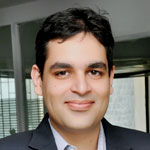
  • Jaldi 5 with Tripti Lochan, CEO-Asia, VML Qais

    Tripti Lochan

    By Tuhina Anand


    1. Does the tag of ‘Cannes Lion winning network’ make it easier for VML Qais to make inroads into India?

    Winning Cannes Lions is a fantastic achievement – because being recognized for something like Cannes is a validation of one’s work. But in India clients are looking for our local portfolio as much as they are looking at what VML has achieved globally. To that end, awards are great – but equally important is the context of work you do in that market for brands that are recognized.


    2. How do you perceive the Indian digital advertising space and the opportunities here?

    The Indian digital advertising space is an extremely interesting place to be. There are fantastic opportunities, and brands that have global aspirations. But, digital is still at the “lets experiment seriously with it” stage. As brands get successful with their digital initiatives, we will see the real opportunities open up.


    3. What will be your focus for the next year in India?

    Continuing to build a solid company, hiring the right people, delivering against the promise we have made to clients, and ensuring that best practices from around the world are show-cased to our clients.


    4. What is one factor that differentiates VML from others in India operating in a similar space?

    It’s our insights-based strategic thinking. What we recommend to clients is based on real knowledge of what users want from specific brands. We create actionable insights through research that drives strategy. We have a full research team that does 360-degree research that drives strategy. This is our differentiation.


    5. What is the biggest drawback in India that is holding back the progress of digital advertising/marketing making the most of its potential?

    Frankly, India is like the rest of the world in its evolution of digital. The budgets put against digital advertising do not reflect the amount of time consumers are spending online. When this imbalance gains equilibrium, that’s when we will see the real potential of digital unfold!


  • Jaldi 5 with Sunil Kumaran: UP has much affinity to action content

    It’s been action time for a while for Sunil Kumaran, Business Head, Language TV at Reliance Broadcast Network Ltd. The channel has been in the works ever since a jv with leading European network, the RTL Group, was inked last year. Mr Kumaran spoke to MxMIndia soon after announcing the launch of the BIG RTL Thrill next month.


    01. Yours will be the first national Hindi channel doing a phased-wise launch. Why this strategy?

    The strategy for the channel is to enter the different markets with local language feed, catering to the need of the respective market. UP is part of the first phase as it has affinity to action content.

    Our strategy is to consolidate our position further in the markets where we already enjoy a significant presence with our Radio and existing TV offerings.  This gives us a significant edge over the others in the space as we already reach a very large part of the population.

    Also the Hindi-speaking markets contribute to more than 65% of total advertising spends across television, radio, print etc. and the idea is to create a media network that rides on the consumer boom in the tier II and III markets.


    Does the UP launch mean consumers in Mumbai will not be able to access it?

    BIG RTL Thrill will be available on DTH platform across India, so people across all metros including Mumbai will able to see it. We have already tied up with Reliance Digital TV and are in the process of closing the rest


    Will you also be looking at dialects of UP being used in the dubbing?

    We will be dubbing it in Hindi for UP but with regional undertones.


    Will we see it entering southern markets too with local dubbed feeds?

    Too early to comment.


    02. Will we see any ‘Made in India’ programming on the channel?

    Yes, that is part of the programming line-up in the future…


    03. What has been the response from advertisers thus far?

    We have got a good amount of response especially the brands which have Male as the primary TG. They are also excited to be part of channel which provides differential offering… across Automobile, telecom, FMCG, BSFI, Consumer Durables


    04. Any special promotions to hook viewers?

    Apart from big marketing campaign, we are looking innovative on-ground and rural activations. We are also hunting for local Action ka Baap’s


    05. Given that action programming lends itself to loads of on-ground activity, do we see that happening?

    Yes, on-ground activation and programming is going to be part of the promotional strategy and sustenance.


    Akhadas, et al?

    We are not only limiting it to Akhadas, but also extending it to action stunts in local mela and local talent hunt etc.

  • Jaldi 5 with Ankur Warikoo, CEO, Groupon India

    By Johnson Napier


    India has witnessed huge growth in e-commerce in the past one and a half years where customers online have been bombarded with innumerable offerings. But while many see the space as being crowded there are a few that are making a mark by way of their positioning. Like Crazeal.com, a portal that operates in the daily deals category space.


    As Crazeal.com celebrates a year of existence in India there are a lot of things that are going right for the portal like it has managed to sell more than 5 lakh deal vouchers and the fact that it has worked with more than 3000 unique merchants across the country.


    As it enters year two of operations, Ankur Warikoo, CEO, Groupon India is clear on the strategy to take the company far ahead. The strategy, he says, is to focus on the quality of deals as only then can it be in the business for a long time. “If you give the best quality of deals, customers will stay. We focus on one deal a day and make that special.” In an interaction with MxMIndia.com, Mr Warikoo says that Crazeal.com is in the market of products, travel and local services – and all three of them are growing at such a pace that for the next 1-2 years we are simply looking at consolidating base in the three.


    1 How inspirational has been the journey for Crazeal in India as it completed a year of existence in India recently?

    We entered the market just last year and have grown tremendously to reach the #1 rank in the daily deals category (as per ComScore data). We are experiencing super-normal growth quarter-on-quarter and repeat buying pattern of close to 50%. Additionally, we are recognized as the best destination for high quality deals, by our consumers, which is a fantastic achievement in just 12 months.


    We have attained this mark within one year of our existence in India because of the deal quality! Groupon globally works with the best merchants and offers the best deal structures to our customers, while solving business problems for the merchants. This has been the same philosophy India has worked on.


    We are strongly committed to the Indian market and are also launching our global robust technology to cater the needs of the merchants in India. The Merchant Center is an intelligent application that provides merchants a platform to evaluate and track their performance. The launch of this technological innovation in India will mark yet another milestone in our growth trajectory while setting unmatched global standards for the Indian e-commerce industry.


    2 How would you analyze your growth – both organic and inorganic, over the past year?

    I would like to present some key milestones:

    Featured more than 15,000 deals in 12 months

    Average transaction value highest in the category

    More than 5 lakh deal vouchers sold

    Worked with more than 3000 unique merchants across the country

    Sell a voucher once every 33 seconds


    3 The space has seen a sudden spurt in activity with a number of players stepping in with their offerings. How uniquely is Crazeal positioned among its competitive peers? 

    Competition is always healthy as it leads to the overall growth of the industry. For me, the real competition for Crazeal are other Groupon countries such as Malaysia, Singapore, Hongkong. India has witnessed a huge growth in e-commerce in the past one and a half years and customers online have been bombarded with innumerable offerings. India became too crowded too soon and has been molded into a discount deal chasing set-up where merchants do not really understand how their businesses can benefit. The main objective of our channel is marketing. From day one, we have focused on having the right set of merchants on board. We start with city planning, doing merchant reviews followed by personal visits to experience what the merchant has to offer before closing the partnership deal eventually.


    4 Will you be laying more emphasis around marketing & promotions activity going forward? What is the budget that you have allocated for the same?

    Our strategy is to focus on the quality of deals as only then can we be in the business for a long time. If you give the best quality of deals, customers will stay. We focus on one deal a day and make that special. We are in the market of products, travel and local services – and all three of them are growing at such a pace that for the next 1-2 years we are simply looking at consolidating our base in the three.

    We will continue to entice consumers with our experiential marketing campaigns. For the birthday week we launched a special consumer campaign to surprise consumers with irresistible raffles every day. Up for grabs were 5gm Tanishq Gold Coins, iPads, Shoppers Stop gift vouchers, Sony Bravia- LED TV, Tata Nano and more.


    Previously, we have run ‘larger than life’ raffles including an all paid trip to Las Vegas for 2 at the Bellagio, and a free Harley Davidson bike which saw tremendous enthusiasm from consumers across the country.


    We recently hosted a special screening for Hollywood blockbusters – Spiderman and The Dark Knight Rises across 9 cities (Delhi, Mumbai, Bangalore, Kolkata, Hyderabad, Chennai, Jaipur, Chandigarh & Pune) and gave consumers and exclusive preview of our ad campaign. The special screening involved Crazeal team manning the ticket booking stalls, addressing the entire crowd before the start of the movie and steering on-ground activities to give them a flavor of Crazeal’s personalized services. Multiple on-ground touch points were also created to increase its brand presence and engage with consumers in a fun way. The tickets were priced at a 50% discount and the hall was booked exclusively for Crazeal consumers!


    Tell us a bit about your just-announced application Merchant Center. What is its USP?  

    As a commitment to the Indian market and to drive efficiency in operations, Crazeal has launched an intelligent application to provide merchants with a platform to evaluate and track their promotion performance.


    Each of our vouchers are bar-coded and have a unique QR code that helps merchants recognize customers who have bought their deal. It can also be done through our merchant mobile applications available on the iOS and Android platform.


    No internet company in India offers this kind of technology to their partners, free of cost!


    Merchant Center enables merchants to

    Track the number of vouchers their deal sells daily

    Check how many vouchers are redeemed in each of their outlets in different locations

    Get real time feedback from customers on their experience at the merchant’s outlet

    Determine how many customers would recommend the merchant to others

    Redeem the vouchers to enable their payments, on a real-time basis


    5 How do you see the e-commerce space panning out in the near future in India?

    Everyone is craving an eShare these days; corporates are looking at diverse product mix, merchants joining hands to offer strong value propositions and consumers shifting to online purchase for obvious reasons. This ePie surely has an opportune slice for all. And with 100 million internet users supporting the e-revolution, the total number of transactions in India is set to take a leap from the present 8-10 million to 40 million by 2015.


    The daily deal websites comprise India’s fastest growing web vertical. The coupon business is 16.5% of the total e-commerce audience in India, growing at the rate of 629 per cent with 7.6 million unique users a month in November 2011, as per comScore report. This clearly shows that Indian consumers who were earlier apprehensive about shopping online are now browsing more often to make high value purchases and avail experiential offers.


    Internet has played a silent but important role in giving a boost to India’s consumption story. With the advent of 3G, telecommunications and high mobile penetration, e-tailing in India has intensified closing many gaps between urban and rural consumer’s tastes, preferences and consumption patterns. Currently 60 percent of our sales come from six metros with remaining 40 per cent from non-metros. We see this trend catching up fast as consumers increasingly aspire to purchase brands and lifestyle products like never before.


    Tier I cities has already seen an explosion in travel and products related e-commerce. They will now witness the next big thing called local commerce. If one thinks of it, this new category is the most frequently consumed category in offline retail, which will now move to online.


    Tier 2 and 3 cities are lagging behind, but not in terms of growth. Products e-commerce has made major inroads driven by the ease of buying online and the massive assortment. Travel is following suit. However, local services might take some time as for that to develop as it requires a minimum number of high quality merchants to be present. With large restaurant chains now expanding and the food, wellness industry growing substantially there is a huge scope here.


     

  • Jaldi 5 with Divya Radhakrishnan: If you haven’t seen the Bad how can you acknowledge the Good

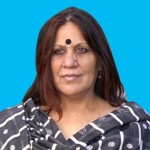
    When veteran media agency honcho Divya Radhakrishnan decided to start Helios last year, there were no doubts about the success of her venture. Her experience in the agency business and her connects in the media are well-known. Yesterday, Helios completed a year of existence, and as a media entity which has just celebrated a year in the business, at MxMIndia, we understand the feeling. We asked Ms Radhakrishnan, founder-CEO of the Helios, a few questions on the year that was.

     

    01.   How has the year been for Helios?

    It has been a year of discoveries every single day. After all we ventured into a relatively new format i.e. a speciality advisory service across various spaces to broadcasters so a substantial part of the year was spent seeding the concept in the  market and continues to be so. Setting up of our infrastructure i.e. team in full force (30) and offices across 4 metros  has also been an adventure of sorts. Besides of course all the standard issues faced by start ups. But, all in all, a great year.


    02.   The year has been hit by a slowdown… as you look back, good time to start out?

    Absolutely, it has been relatively slow this year but if you haven’t seen the Bad how can you acknowledge the Good? Getting inducted into the facets of business among adversities brings out the best in you!


    03.   You have had a mixed bag of clients… could you share some specific highs in the last year?

    MTunes HD India’s first Bollywood channel in HD has had a great beginning with us. The channel stands tall as a leader in the youth and urban space, hence have managed to build a brand that is now a serious contender in the music space. As far as sales is concerned the proof of the pudding is in the eating as AdEx bears testimony we have managed to give sleepless nights to established players in the segment.


    04.   Are media organisations willing to share critical functions like – ad sales, marketing, advertising, etc, or do they prefer to keep it to themselves since they finally contribute to the success of an organisation? 

    There are many obvious fall-outs of the plethora of TV channels that have emerged in India, but a very pertinent one is the need for multiple specializations to be housed with every broadcaster. Limited talent resources and high value investments are being channelized to develop content and ensuring distribution. Hence there is an evident need gap for an ancillary service provider for the channels There is a requirement of a professional set up with an experienced set of specialists having the right skill-sets and expertise, taking charge of specific requirements from the channels Providing them with the best talent in the industry as outside resources, Helping the channels maintain their internal costs/ resource balance and healthier bottomlines in the process


    Yes, it has not been so easy however in the last couple of months that we have actually started pitching for business other than those we already had on board, we have had some positive responses based on the way in which we have projected the offerings. The media organisations are warming up to the same


    05.   What next… what are your targets for the following year?

    The efforts that we have put in seeding this concept in the market is surely materialising into some major new business wins for us, which you will hear from us shortly. Also these wins are all encompassing, that is besides Ad Sales, Content Advisory & Creation, Marketing, Advertising, PR, Digital, Social Media and Research


    Any chance of expanding your portfolio to media planning, which is personally your core specialisation?


    NO


  • Jaldi 5 with Roop Sharma: All set for digitization!?

    Roop Sharma

    It’s the day of reckoning for the Indian media sector as mandatory digitization is scheduled to happen in the four metros of Chennai, Kolkata, Mumbai and New Delhi. While there are various stakeholders, the role of the local cable operators (LCOs) is most critical for the move to be successful. Over the last few weeks, LCOs have been exceedingly vocal on the problems with digitization move. MxMIndia spoke to Roop Sharma, founder and president of the Cable Operators Federation of India on the morning of October 31…


    01.   So the sun is finally going to set on analogue transmission in the four metros today?

    Yes, this is what looks like considering the attitude of the government.

    Don’t you think some teething troubles would exist even if there was 100% set-top box installation?

    Firstly, everyone including the Ministry knows that seeding of STBs is not 100%. So many consumers would be having a dark day if analogue is switched off tonight. Secondly, consumer choice has not been asked and fed into the SMS systems of the MSOs. Ministry press release says that this would be done in the next 15 days. I doubt if that is possible to collect and feed the data of about 10 million subs in such a situation. Any way, the Ministry’s job will finish after they give another release patting their own back for a good job done. It damn cares for what the consumers go through. I expect a chaotic situation for another two to three months when people come to terms with what has happened.

    Do you still have reservations about whether it will work?

    I have never suspected working of the technology and always favoured digitalisatioin.  However, I do suspect the intention of the government behind the whole exercise. It appears that it is being pressurized by some external force otherwise government would have remembered its social, economical and political responsibility while implementing a new technology, forcing down the throat of the masses in the name of doing good.

    You check the experience in rest of the world. No government has ever mandated digitization in a private cable TV industry anywhere in the world. In the US, Europe, South Africa, Australia and in many other countries, they digitalized terrestrial television services given free to the masses because it frees lot of spectrum that can be used for new telecom services. While doing this, they ensured that till the last customer is given a digital STB, no analog switch off takes place. Not only this, they offered free STBs to millions or gave a subsidy to buy an STB for each TV set.

    India is not so rich. It could have let analogue exist for the poor masses or provided an alternative, digitizing the free terrestrial services of Doordarshan for them. Don’t forget it is cable TV that made a information and knowledge based society in India and not mobile communications. Real globalisation started with cable TV revolution in India in early nineties.


    02.   If the government turns a blind eye to data pilferage to non-digitised subscribers for a few months, LCOs and MSOs should not have any problems?

    Let’s not talk about pilferage of data. Even in the US there is 15% accepted piracy. Has the government stopped pilferage of food grains from its godowns, tax avoidance or corruption in the big industries and politics? However, government should have ensured that every existing customer is enabled to receive digital service and afford the service. Ministry is working like Gestapo as if it is a question of life and death for the nation.


    03.   If LCOs don’t get proactive, you’ll lose customers to DTH, as there are some attractive schemes on offer?

    No, this cannot happen. Don’t forget that DTH existed since 2003 in India. If the service was affordable and so good, cable TV would have lost all its connections to it. This has not happened in the last eight years. It will not happen now also. DTH gains are only in cable dark areas or far flung isolated areas. This is the main reason that Ministry is so proactive in making Cable TV more costly than DTH so that consumers are forced to shift to DTH.

    For your information, there is no transparency on DTH in spite of it being a fully digital service. All their content deals are done not based on the actual consumer consumption but lump some deals. Consumers do not get their choice. To get your choice on DTH, you shell out not less than Rs 400 per month. Government is befooling the masses to help a few large media groups who enjoy monopolies in the media markets through their numerous TV channels, This was very evident from the ads given by the government, broadcasters and DTH companies on TV and print media. They had a threatening and scary tone to terrorise the consumers rather than convince them. Otherwise, why should the ads tell the cable TV subscribers to approach DTH operators when the law is made to digitalise cable TV.

    If you ask me, this law will prove a death knell for all small players, both cable operators and broadcasters.


    04.   Is there fair clarity on the subscription pack tariff and how much LCOs will earn in the new regime?

    No, there is no clarity so far. Many popular channels are missing from packages offered as well as a-la-carte offerings. Consumers are clueless till now.


    05.   As owners of the all-important last mile, your role in this gamechanging move is critical. But there are many who think that cable operators have suddenly started creating obstacles to delay digitization. Why this sudden reluctance?

    We appraised the government what is the true situation on the ground. However, since that was against their mindset, they started ignoring us. In fact, they started having separate meetings with broadcasters and MSOs where cable operators were not made to participate.

    Your critics say that LCOs have realized that their income is going to take a beating… legimately with margins and because digital transmission will require reporting correct subscriber numbers

    It is not a question of dwindling income, what is disturbing to the cable operators is that government has made a law to force LCOs to hand over their years old family business to the big media houses.


  • Jaldi 5 with Keertan Adyanthaya on Fox Traveller’s first anniv

    On October 30, Fox Traveller completed a year in India, billing itself as India’s number 1 Travel and Lifestyle channel. An HD channel and clutter-breaking content such as ‘What’s With Indian Men’, ‘Twist of Taste’ ‘Freaky Traveller’, ‘It Happens Only in India’ and ‘Life Mein Ek Baar’ making the channels focus on locally made productions very high. MxMIndia interviewed Keertan Adyanthaya, MD- FOX International Channels, on the channel’s first anniversary and its plans for the year ahead.

     

    01 How would you see the travel and lifestyle genre changing in the recent past? Where do you see it heading to in India?

    I think we’ve only seen the tip of the iceberg as far as the genre is concerned. There’s so much more to experience and invite people to immerse in.


    02 The channel has a lot of localized shows like ‘What’s With Indian Men’, ‘It Happens Only in India’, ‘Life Mein Ek Baar’, etc. Given that high-profile presenters would obviously increasing your programming costs, how is easy is it to get advertisers to buy in such content?

    We believe that it’s the tone and tenor of the show that really matters and that’s why we have always looked for celebrities who can seamlessly integrate into the fabric of the show. Advertisers look for various things when it comes to sponsorships – Channel, Relevance of the programme concept, Marketing & Communication Plan, Show entitlements, Talent associated with the show etc etc.


    03 Do you see digitization impacting a niche channel like Fox Traveller?

    Digitization will have a huge impact on many aspects of the TV channel business.

    o Until now, subscription was a B2B-led vertical, we will now need to re-calibrate our thinking to it being a B2C vertical.

    o Channel communication was strongly dependent on show-led marketing. This will need to change to a marketing strategy where we ask people to subscribe to the channel

    o Co-marketing with MSO / DTH platforms will gain even more importance


    04 Given that there exist opportunities for channels like ‘Fox Traveller’ to get picked ‘a la carte’ post-digitization, are you looking at adding on more content that will attract people to subscribe to the channel?

    We are always on a quest to bring innovative, differentiated content that will help us engage better with our audiences. That’s an on-going process. There will not be any change or further bolstering on that front.

    05. Any new shows and activities that we can hope to see on the channel in the immediate future?

    There’s David Rocco’s Amalfi Getaway coming up this week and next month, we start What’s with Indian Women?, which is a sequel to our popular show ‘What’s with Indian Men?’ that was aired last May.

    Interviewed by Meghna Sharma


  • Jaldi 5 with Mahesh Ranka: The Tendulkar impact is waning

    Okay, the ghost of the Champions Trophy T20 is behind us. The India team for the first two Tests has been announced. Cricket will soon be back on the front pages of the newspapers and essential chatter in the metros and local trains. And above all: Sachin Tendulkar (SRT) appears to be in good form. Since matters off the field (especially on monies in the game) get as discussed as matters on it, MxMIndia asked Mahesh Ranka, CEO, Indus Sports and Sponsorship, a few questions which every sports enthusiast would like to ask.

     

    01. Now that Sachin Tendulkar is back in the runs (albeit against Railways) in the Ranji Trophy, do you think the interest in cricket will rise again?

    Interest in cricket isn’t related to interest in Sachin Tendulkar alone… anymore. However, this will get all enthusiasts to sit up and take notice of his performance in the upcoming series… should he play. The fact that we are seeing cricket after long (CLT20 without Indian teams qualifying ahead was forgotten by people), and the holidays/festive season may enhance interest to some level.


    02. From the sales point of view, is it true a lot of viewer interest goes up and down given the way Sachin plays?

    It was the case until 2005-6. Post that, interest connected to SRT has really been achieving the 100th 100, 50th 100 in one format… and when he hit the first 200 in ODIs. Even today, many enthusiasts out of sheer expectancy of a good innings from the master batsman will switch off their TV sets if and when Tendulkar is out cheaply. The SRT impact however is waning thanks to a decent balance in performances (forget the last England-Australia tours).


    03. We’ve seen a lot of cricket this year, and we’ve also seen the interest go up and rock-bottom with Champions League. What’s your prediction for the rest of the cricketing season?

    The rules have always been simple… India performs (read wins or stages a heroic effort) and the nation watches, India performs badly… and no one’s happy… viewers, advertisers, media… even experts! We are very emotional about the performance, and that reaction is clearly visible across the spectrum.


    04. Over the last few years,other sports have gone up the popularity charts. Tennis, F1, Football and even hockey? Which sport do you think will be next to cricket in terms of sponsorship monies?

    Next to cricket, F1 seems like the strong one, thanks to the Airtel Indian Grand Prix. Football is creating its own ecosystem which generates a decent amount of sponsorship monies. The popularity of Indian football, however is limited. TV viewing is skewed to European football and Indian football has big enthusiasm in traditionally strong pockets only.


    Tennis had the makings of being #2, but it didn’t?


    It was a lot of media-created and fuelled. That probably pushed opinion. Tennis was getting popular thanks to the exploits of Saina…. and of course consistent performance of Leander Paes and Mahesh Bhupathi. Monetarily, it was never a big business spinner. Many companies invested and failed to raise the necessary sponsorship and other revenue options to run the effort successfully. Apollo’s 10-year plan worth Rs 100 crore crashed within two years of inception, Kingfisher Open, Sunfeast Open… never found support after the first round of deals (three years or so). So much so, that Globo Sports did not continue with the events they had created. Only Chennai open has survived all these years, and that’s thanks to the support of the Tamil Nadu government.


    05. Lastly, any truth in sponsors/endorsements playing a role in player selection or staying on even if he or she may not be in top form?

    In my position, I wouldn’t know the dynamics that go on in ‘selection’ of players or ‘staying on’ as it’s nowhere close to my function. Neither do we represent athletes nor do we manage their commercial interests. In the past, there have been cases that have been argued on the above, not only in India but also in foreign markets. It’s probably as true and as visible as betting in sports in India.


  • Jaldi 5 with Amith Prabhu: Only so much ‘spin doctors’ can do in election campaigns

    It’s US Presidential Elections week and given the importance that United States of America affairs have on India (apart from family and friends in all parts of that country), it’s not surprising that our media too is working overtime to bring you comprehensive coverage over the next few days.

     

    Having read the tweets from Chicago-based Amith Prabhu, former head of communications at VivaKi and co-founder of the Promise Foundation and co-chair of the upcoming PRAXIS 2012, we asked him a few questions on the US Presidential elections and how much of a role the campaign managers of President Barack Obama and Mitt Romney played in their respective campaigns.


    Mr Prabhu keeps a keen eye on Indian and American politics and hopes to manage his own campaign someday. The views here are personal and do not represent that of any organization Amith is associated with.


    01. Having tracked the run-up to the US Presidential elections closely, how much of the campaigning do you think is a creation of the respective campaign managers?

    Matt Rhoades and Jim Messina have definitely played a big role in shaping the campaigns of their bosses Romney and Obama respectively. Unless the machinery is run with exact precision and thorough planning there is no way for a fight to be as close as it has been.


    We read that Obama’s campaign is aided by the way he handled Hurricane Sandy. Obviously perception-management at play? Or he did work to ease the plight?


    Hurricane Sandy was able to influence a few undecided voters who are certainly crucial. Obama is a politician at heart and he knows how to do the right things at the right time. That won’t change the decision of staunch supporters of either party. It definitely had a small role to play.


    It’s obviously naïve to say that the Presidency of the world’s strongest nation is won thanks to spin doctors? Or, is that how it really is?


    American voters are educated and understand the difference between the ideologies of the two parties. There is only so much the so-called spin doctors can do. The rest is what is done and what is seen by the well-informed citizen who finally takes the call on whom to vote for.


    02. With general elections round the corner in India – 2014 or earlier, do you think our political parties too should appoint professional image management practitioners for their positioning?

    Indian political parties have been working with professional firms but like in the US most of the marketing and communications is managed in-house to have better control and for ease of management. I don’t think image management is a positive term. The phrase has been abused and people mistake image management for spin doctoring. What Indian political parties need is a panel of mentors who have great credentials and solid values to guide them to do not just the right things but everything right.


    03. We know that you were at the Obama rally in the early hours of today (India time) and we also figure from your tweets that you actively follow Indian politics from your base in Chicago. As a PR professional, is there an Indian politician whose image you would like to work on?

    I would prefer never to work on individuals but rather would prefer to work for an organisation. I was a summer intern in the Congress party media office way back in 2003 and I subscribed to some of that party’s ideology and had the option of working there in the future but I chose not to, since I wanted a decade of corporate experience. However, two interesting men who have fascinated me are Nitish Kumar and Arvind Kejriwal. I would like to work with the former someday. Another politician who knows how to be in the news is for wrong and right reasons is Lalu Prasad Yadav and is a case study on his own.


    Rahul Gandhi?

    Not likely because from what I have gauged he is not keen on running a government unless push comes to shove. He would prefer to operate like his mother where he runs the party and appoints a PM who can manage the government.


    04 Is there an Indian politician who could do well with US-style image management?

    I think Arun Jaitley and Jairam Ramesh could do very well if they build a mass base, which is not difficult for them to do if they choose to.


    05. Narendra Modi, for instance, seems to have got his ‘image’ in order?

    Narendra Modi had two options after 2002. To either let it all crumble or go the other extreme and focus on building a solid positioning based on development and an iron-hand. He chose the latter, which was a smart decision. He has a bunch of excellent IAS officers with whom I have had the pleasure of working who drive a lot of what is seen and heard about him. Unfortunately, his support base is restricted to his state and to sections of citizens in various parts of the country and on Twitter. His image problem is within the party and that is something he needs to focus on.


    PS: We also asked Amith Prabhu one last question: Your gut feel… Obama or Romney? And his response:  Obama all the way.

    Ah, well. Psephologist, loyalist or just a good observer of political trends?


  • Jaldi 5 with Sourabh Sharma: Light up lives this Diwali!

    Milaap is a unique community welfare organization as it raises money not in the form of donation by way of loans which can then be claimed back by the donor. Set up by a group of professionals, it is now running a ‘Light a 1000 homes’ for Diwali (*see disclosure). MxMIndia Milaap interview co-founder Sourabh Sharma.


    01.   Milaap is a unique concept in fund-raising where you loan money for causes as against donate. How has it worked thus far?

    It has worked really well so far… Our company started in June 2010 and in the last two years, we have raised over 600,000 USD, with more than 5000 lenders — impacting more than 13,000 lives in India and we expect it to grow at much faster pace as more and more people are getting involved.


    It’s critical that organizations who borrow pay back… is that secured?

     

    Microfinance is unsecured lending in traditional banking parlance but it has seen better repayment rates than even the best of banks. The industry average is close to 98% repayment rate. This is because of the unique model of lending in joint liability groups where group members vouch for each other.


    In our two years of lending, we have not had any defaults till date – which is a proof that the model works. Still, we clearly tell our lenders that lending via Milaap carries an inherent risk of loss in principal and therefore the motivation to lend is still primarily philanthropic. Additionally, our field partners do offer to cover up to 20% of the defaults in case there are any.


    02.   Tell us briefly of the ‘Light a 1000 homes’ Diwali campaign…

    As much as 50% of rural India does not have access electricity and are forced to use kerosene lamps for light and firewood for cooking. Noxious fumes claim a life every 20 seconds as a result of early childhood pneumonia, emphysema, cataracts, lung cancer, bronchitis which claim more lives than malaria or tuberculosis.  On this Festival of Lights, we plan to bring light to 1000 homes in India by providing them with solar lights and smokeless stoves thereby providing them with clean and healthy life.  People can either make a loan directly or adopt a village and help us raise funds by spreading the word among their friends. The cost of providing solar lights to 100 homes (village) is about 1lakh INR.


    03.   Specifically, how has the response been?

    The reponse has been great so far. Besides individual loans, we already have 22 fundraisers – where people have adopted villages are helping us raise funds from their friends. Adding to your previous question- fundraisers are another way of gaining traction hence we are looking to grow and much faster pace in the future.


    04.   Would you say NRIs are more responsive than resident Indians

    It really does not matter where the person is located. We have seen benelovent people making loans from all stratas of society  and both from within India as well as outside. In our limited experience, we have observed that geographical location or financial status has nothing to do with goodness of the heart.


    06.   Apart from writing about Milaap, how do you think can Indian media and advertising help in your efforts?

    By adopting a village and help us 🙂 Also, by writing about the change which has come in the lives of the people who may be poor but are equally hard working and smart and take control of solving their problems in their own hands.


    Any efforts towards this direction?


    Please look at some of the videos we have made of stories of change in the lives of the people we are helping: youtube.com/milaapdotorg We would love to invite people from the press to join us on our field assessment trips and write about working poor.


    05.   What are your current promotional strategies and campaigns in India?

    We primarily engage our audience via newsletters and social media (Facebook and Twitter) and also come up with seasonal campaigns such as the Adopt-an-entrepreeur campaign we did around Independence Day and now this Diwali campaign.


    Disclosure: MxMIndia is supporting Milaap’s ‘Light a 1000 homes’ campaign for Diwali


  • Jaldi 5 with Mandeep Malhotra: Jugaad is our way of life

    Last month (October 2012), DDB Mudra Max president Mandeep Malhotra and DDB Mudra Concrea Chief Youth Marketer and MxMIndia columnist Samyak Chakrabarty were invited by Aller Media, Finland’s leading publishing house, to speak to advertising agency and brand heads on ‘The Art of Indian Jugaad’ in the context of marketing  and advertising.

     

    MxMIndia interviewed Mr Malhotra on his view on Jugaad and why the concept was such a huge hit with the European audience.


    01.  Jugaad in India has a very negative connotation. So how come talk about it to a European audience?

    When first invited, I too was surprised – not because of the negative connotation as such but more about how and when did the Europeans start wanting to learn more about Jugaad. However, upon interacting personally with my hosts and audience – I realized that post the slowdown, they wanted to discover more innovative and ‘street smart’ ways of doing business.


    Despite of the global recession, India has managed to tide through and hence they wanted an insight into our way of doing things. In fact, they were surprised to know how our advertising and marketing industry was so vibrant even in such testing economic conditions. The kind and quantity of innovations we continue to produce was a great eye opener for them.
    02.   Do you think the fact we have more economic imbalances in India as against the West causes this desire for the Jugaad? And in the developed economies there is greater complacency?

    I think Jugaad is ingrained in our social fabric – it is not just business, it is our way of life. Indians by nature are streetsmart, hardworking and ‘quick’ individuals. Whether people at the bottom of the pyramid or the SEC A+, this method of working is utilized by all at different scales and purposes. Those in the west are advanced at one end (in terms of technology especially) but at the same time are also quite primitive (with respect to approach to business processes), they prefer to rely of what is tried and tested leaving not much room for change.

    But due to recent circumstances, they are slowly opening up to newer ideas and are keenly looking at international success stories hence the interest in Jugaad – The art of doing business in India! This new-found interest has also much to do with the rise in the number of successful entrepreneurs in India.

    03.   In many ways, it’s this aggressive can do.. by hook or by crook attitude in India has also resulted in inefficiencies?

    No I disagree, one can still be efficient and aggressive at the same time. It is all about how seriously you take your business, comply to deliverables and create value for all stakeholders. Ineffeciences occur when there is no proper monitoring, control and strong leadership…this has nothing to do with using Jugaad.

    04.   If it can work to help business abroad, surely it can work here in India too. What’s your view on how we can use this ‘Jugaadoo’ spirit without short-cuts and corruption?

    Why are ‘corruption’ and ‘short-cuts’ synonyms to Juagaad? It is but a technique of getting around (without compromising fundamental ideals) your goal without wasting precious time and ensuring 100% results. We just got to be clear about what we want, critically analyze enabling factors (that can help reach the goal) and smartly use all available advantages.

    05.   Regrettably those with a spirit of enterprise in India (like Parle’s Ramesh Chauhan or R Mohan of GoodKnight) gave up their topselling brands to international or larger players like Coca-Cola and Godrej respectively. Are those into Jugaad, short-term entrepreneurs or is there no clear rule? 

    By the fifth question, I’ve begun to realize how misunderstood Jugaad is in our very own country especially by the current generation. In Jugaad, the clear rule is only about how to do business, not what to do with it. It is an enabler to success, not a destination. If someone wants to sell his/her business, that has nothing to do with it. One must know that this practice of doing business prevails even in the smallest of commercial ventures and deliver results everyday. At the outset, I urge everybody not to complicate and over-analyse Jugaad – its success lies in how simple it is!


  • Jaldi 5 with M R Srinivasan: Chennai could need 3-6 months for digitization switch-over

    01. The court has extended the sunset date. How is the situation in Chennai post the extension?

    In Chennai currently, there is a big confusion. One day we went to the court and got interim order stay and now the case has gone to the Bench, which will have the hearing on 19th. Secondly, despite our letters to MSOs and MIB from our end, none of them are importing the set-top boxes. SAB said that they will be able to import boxes in 21 days provided the LCOs deposit advance money. But some of our members have already deposited two lakh rupees as advance last month. They are yet to receive to boxes. We will be submitting the dealing to the Court on 19th.


    There is uncertainty also because Arasu cable has not been given license yet to provide STB, and once it is given the license it will conquer the market. So, the existing MSO and licensed players are not sure of importing the boxes yet. As they may get wiped out once Arasu gets license.


    Four out of eight players who have got license, only three have installed head-ends.


    02. What are your expectations from the Bench on 19th?

    Well, they should extend the deadline. And if the extension is given, I&B Ministry should take views from all stakeholders. And all the information should be furnished clearly for and by stakeholders in front of MIB. Verification should be done if the said number of STB have been installed and activated. It should be made known as to how many boxes have been imported and how many of it installed by every player, since the imported boxes are usually smuggled in Middle East or Sri Lanka.


    03. How much of Chennai has been digitised, according to you?


    Right now, as per active status given to broadcasters by SAB it is 1.25 lakhs. As per our calculation, the active status is 1.3-1.5 lakhs only. DTH players are claiming that they have sold seven lakh connections. Most of these boxes, almost about 300-400 per month, are smuggled out of Chennai. In Chennai, about three-four lakh of these claimed DTH connections are active. We require about four million boxes in Chennai metropolitan area, which also covers the outskirts of Chennai.


    04. Even if the extension is given, how much time would Chennai require to reach 100% digitisation?

    Chennai would need 3-6 months to switch completely to digital signals. It is well-known that analogue signals are still on in Delhi and Mumbai where 100% digitization has been claimed. In Delhi and Mumbai, boxes are available aplenty and still they have analogue signals. Here in Chennai, we do not have STBs. It is important that analogue signals are not switched off.


    05. How does analogue benefit the stakeholder?

    We have 4G spectrum, but TRAI has not wiped out 2G. With digital, 10-15 analogue channels should be available. Not everyone can afford a STB. One should also think of low-income households.


    As told to Ananya Saha


  • Jaldi 5 with Bharat Dabholkar: Thackeray was unique… he was a Brand

    In his long career as an adman, playwright and theatrperson, Bharat Dabholkar has interacted much with Shiv Sena supremo Bal Thackeray, including sharing some lighter moments. MxMIndia asked the veteran adman for his views on Mr Thackeray and why he thinks it’s appropriate to call him a Brand


    01. Your comments on the sea of humanity and outpouring to pay their last respects to Bal Thackeray.

     It’s a demonstration of the kind of sway the man held over people in Mumbai and Maharashtra. This is not some sponsored rally. On one hand, this is a tribute to his charisma. And it is also the picture of Shiv Sena, who from every nook and corner are very well-organised. From what I heard, there are over 20 lakh people and they are behaving in disciplined and orderly manner. It is great tribute to him. And it is a personal love of people for him.


    02. We heard a few people on television discussions refer to him as a Brand. Would it be right to dub Bal Thackeray as that… a Brand?

    Yes. H was a brand because he was only politician that I have met who was very outspoken and simple. Even his speeches were not very literary. He was very straightforward. He spoke the way things should be spoken. This is what made him a unique brand. A brand has to be unique otherwise it is just a product.


    03. Mr Thackeray had a view on the Arts and life. Do you recall any observations or run-ins he may have had over any ads?

    No. He was very respectful of any creative art whether it was music. He might have said something about a writer or so but according to my knowledge, I do not remember him saying something about an ad.


    04. As an editorial cartoonist, do you think he was a propagator of freedom of speech in the Arts?

    He practised that as a cartoonist. And his newspaper and magazine also carries that. And he would have to be like that for the comments and observations he had about his opponents and politics, they had to have a background that allowed him to say all these things. He was a propagator of freedom of speech since as a cartoonist or a journalist, he needed that.


    05. Your personal experiences or anecdotes that you remember.

    I have known him for many years and have had many interactions with him. but one that I remember is the way we used to celebrate his bypass surgery. It used to be celebrated as ‘Punar Janam Diwas’. It used to be very small get-together with a few close friends. And politics or so was never discussed, it was basically fun and games and cracking jokes.


    In one such meeting, I told him a joke and he laughed a lot. Then, after dinner as I was leaving, his Man Friday Mr Thapa, came and said, ‘Sa’ab is calling you’. So I went inside again, and Mr Thackeray said ,’Bharat, you told me that joke, tell that to me again.’  So I told him again. And he asked for my permission to use it in his speeches.


    I found it very endearing that normally people do not ask for permissions to re-use jokes. But he actually called me back and asked for my permission to use that joke. He was a polite guy in person.


    Can you share that joke?

    It was about a guy who is Congressman and goes to another Congressmen’s house. And he is talking to his little boy about how Congress family is doing. And the boy said, “Uncle, everybody in our family is a Congressman. My father is, my mother is, and I am a Congressman. Our cat is Congressman, and she has just got three kittens who are all Congressman.” The man was very happy to hear this, and after a month he visited the kid’s house and asked again, ‘How is the Congress cat and kitten doing?’ The kid replied, “Uncle, everybody is a Congressman but the kittens have joined Shiv Saina since their eyes have opened.”


    Interviewed by Ananya Saha