By Johnson Napier
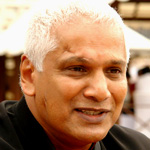 It was a dream that was waiting to become one big reality. When the rest of India was hooked on to the goings-on of the Gulf War in 1991 through relay from international news channels, a bunch of visionaries were contemplating launching a private channel that would do something similar in India. Thus was sown the seed of India’s first and private Hindi channel, Zee.
Ashok Kurien, the man who ran Ambience Advertising which handled the ad business of Essel Group, recounts how a chance conversation took shape to create one of India’s earliest and most successful Hindi channels. Mr Kurien continues to be on the Board of Directors of Zee Entertainment.
1. Do you recall how you reacted when Mr Subhash Chandra first came to you with the idea of launching Zee? From what we hear, it’s after your reassurance and active support that he got into it.)
January 1991: Subhash, my client at Esselworld, and I were watching the Gulf War ‘Live’ on CNN. It was our early exposure to satellite TV in India.
“Why can’t we do this here in India?” the conversation went.
“What do you know about TV?” asked Subhash.
“More than anyone else,” I replied, having spent many years on the ad agency side: Concepts and Pilot programmes, Sponsored programmes and FCT during the Doordarshan days…
“Write me a business plan,” said Subhash.
I did… and the rest is history.
Of course, Subhash was way ahead of me, with advice and plans from some ex-Doordarshan people.
The first 5 or 6 years, working hands-on to help Subhash build India’s first private TV station, was the most exciting chapter of my life.
Zee changed the Indian entertainment scenario, and along with it changed the Indian consumer forever.
2. Zee obviously had the advantage of being the first mover in the Hindi space, and later there were many others who entered the scene. What according to you is the reason Zee has been such a success story?
Zee moved fast, was always the first, and stayed far ahead of everyone for over the first decade.
Zee understood the emotions and tastes of the Indian consumer. It took a long time for the competition to figure it out… mainly by hiring Zee TV’s people.
3. Other than being a director on the Board, are you active in advising the Zee management presently?
No advice to Zee at all….. unless I am asked to.
I have played a role in helping Dish TV grow to leadership over its first 3 or 4 years, and now helping to take the Zee group into new media with India.com.
4. If there was one thing that Zee could have possibly have done differently in these 20 years, what would it be?
Zee should have launched a Tamil/South channel 15 years ago. But it was my error of judgement and ill advice that prevented that. My one, big, unforgettable mistake!
5. Zee, it’s said, mirrors Mr Subhash Chandra’s personality: dynamic, aggressive, a maverick, often restless, cost-conscious, risk-taker and a visionary. He’s been a friend for many years, would these descriptors be appropriate (for him and Zee). And how much would you attribute the success of Zee to Mr Chandra and in recent years, his family?
Subhash’s personality is all this and more. He is fearless and will walk where angels fear to tread!
But as a friend I have seen the warm, but very private, human side of him too. He has great inner strength, and this too is inbuilt in Zee’s DNA.
Zee’s success was driven almost 100 percent by Subhash for many years, and only in the last decade or so did the professionals who joined Zee start contributing majorly.
Punit has reinvented the ‘creative magic’ that Zee started with 20 years ago.
But today, it’s certainly TEAM ZEE!!


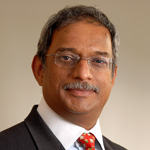
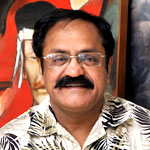 While digitization is supposed to help bring in greater transparency into the broadcast ecosystem, the real beneficiary will be the small broadcaster who could well be on a near-equal playing field as a big broadcaster. But does the small channel-owner really feel that he or she is going to benefit. While there are several independents in the business, we approached one who is indeed completely unattached to any ‘big’ force and is not part of any major broadcast association or pressure group.

 1. We have a little less than a month to go for digitization in the four metros. If the government estimates are to be believed, by now over 70 per cent of four metros have been digitized. Is that the case?
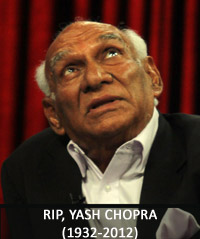 He was more than a master film-maker… he was an industry leader whose views on the business of cinema held as much weight as those on cinematic craft. Excerpts from an interview canned some time back with MxMIndia columnist DEEPA GAHLOT which we carry in our Jaldi 5 interview section.
 Good Food, the popular BBC magazine published in India by The Times of India group’s Worldwide Media, completed a year of publishing last week. And a very successful one at that, having achieved the mindshare of the discerning Indian when it comes to food-related content. MxMIndia interviewed Tarun Rai, CEO, Worldwide Media, a day after it celebrated the Good Food Day at Mumbai’s ITC Grand Central hotel.