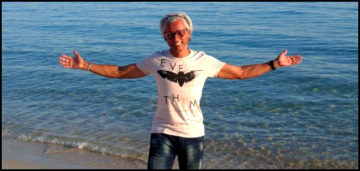
 Yet again a sensitive question, but answered in no ambiguous words by Dr Bhaskar Das in the October 19 edition of Das ka Dum. Read on…
If you wish to access the archives, please go to the Das Ka Dum tab on the website’s top navigation bar.
Q. The loss of Shashi Tharoor in the Congress Presidential elections clearly indicates that while he may be a darling of the social media, but clearly not that of the holy souls of the Congress. Is there a lesson in personal branding out there?
A. In any democratic country or a political party, a win or a loss is part of the game. And the game is different is different in every area of combat. I presume your question is related to lessons in personal branding, but being a novice and an apolitical person, I shall abjure the path of any reference to any political party or political personalities.
Jeff Bezos once said: “Your brand is what people say about you, when you’re not in the room.” I haven’t read a better definition of personal branding as of now. That Personal Branding (aka PB) is an important element of positioning an individual (in the process, the rub-off effect goes to an organisation) cannot be over emphasised. When there was no ubiquitous social media, even then, no one could deny the PB of Mahatma Gandhi or Rabindranath Tagore or Nelson Mandela. They were charismatic by their deeds and authentic appeal.
In today’s world of internet and social media, PB has assumed a very different dimension and the rules of the game differ by the format of the medium and its respective ecosystem of communities. A PB in Meta can be very different in Instagram or Twitter or LinkedIn. And a PB (built through broadcast media) may or not have any repercussion on narrowcast or monocast media. So one has to customise building of PB as per the characteristics of the medium. But core principles of PB remain the same: consistently authentic on what one does and what one says, expertise in an attractive, even quirky niche, deep knowledge in a domain and ability to articulate in an audience-sticky way (both online and offline).
So much for the principles. Finally, followership may not get translated into winning an election mandate. By that logic, all influencers could been leaders in a country. Leaders can opt for social media to complement their position through social media but it is double-edged sword as trollers can target any discordant note in any inadvertent communication of a leader. After all one’s reputation is an opinion of others. So constant tracking through social listening is a must to respond to such discordant rumblings.
Followership in social media generally should never be conflated with one’s popularity in any area, specially political. Otherwise, if you check the correlationship of the rush in political rallies and the number of winners, the findings can be startling. I don’t have data but just thought of that. I am wondering if I have answered your question-definitely not to your liking, I guess.