Category: Point of View

  • By Invitation: N Chandramouli: The Trust Bond between a Brand and its Ambassador

    By N Chandramouli


    The relationship between a brand and its ambassador is highly interconnected, and that which will impact one will also invariably impact the other also very closely. The reaction of the consumers on the other hand is a case of the ‘congruence of values’ of the consumers with the brand. So when a brand or its ambassador consider its actions in the current day social era,  each must have a responsibility of building the trust of the other. Else, with its unfettered and unfiltered information exchange of the age, often even small things have a high potential of exploding out of proportion.


    After the recent Aamir Khan controversy, the brand he endorses, Snapdeal, came out with a statement distancing themselves from the ‘personal’ comments of Aamir. This was probably after a huge public resentment of the ambassador’s statement, demonstrated by one star ratings of its app by angry consumers, nearly 67,000 of them.  Similar incidents have happened in the past, but why do some actions get the response they do, while others simply slip by?


    The answer depends on how close a relationship the brand and its ambassador share. A similar reference that can be taken as an example that (luckily for the brand ambassador!) did not have the a different result – that of Shah Rukh Khan in his ‘intolerance’ quote to a TV channel a few weeks ago. However, that statement did not impact Bigbasket.com in the same manner as Aamir’s statement hit Snapdeal goes to show two things.  Firstly, it shows the success of the Snapdeal campaign in totality.


    If the first thing that comes to the public’s mind on saying Aamir Khan was Snapdeal, in no certain terms, the connection between the two was quite well-established. Secondly, it goes to show the relative importance of the brand to the consumer and its importance that the consumers place in its values. The consumers of Snapdeal relate to more than in the case Bigbasket, and this is evident in the sharp consumer action against Snapdeal. In all this mess, Snapdeal should rest happy in one deep insight, that whatever they were doing with Aamir Khan in their campaign was working well, and they should use this as an opportunity to knowing and understanding the trust of their consumers better.


    N Chandramouli is CEO, TRA Private Limited (publishers of ‘The Brand Trust Report’)


  • Special2MxM | Pooja Chaudhri: Monsoon Wedding & Mumbai Masala with the Tofflers

    By Pooja Chaudhri


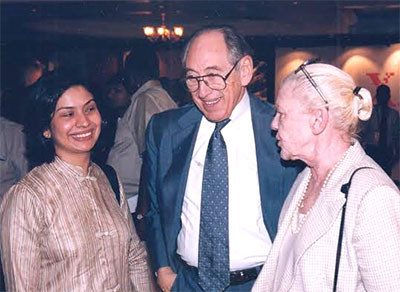
    When the ‘man who saw the future’ departed from the world he had predicted, I mourned with everyone else on the passing away of a beautiful mind, but it also brought back beautiful memories when the Tofflers decided to descend on Mumbai almost 15 years ago.

     

    It was January 2002 when as a young public relations professional I was assigned to work on this mega international event called Docuworld by Xerox Corp in Mumbai, with none other than Alvin Toffler as the keynote speaker. The world’s best futurologist was coming to town, and as a 20-something, I was going to interact with him one-on-one… I was the envy of my learned colleagues at work just for this opportunity alone.


    I quickly brushed up my knowledge on this illustrious man, the equally important Heidi Toffler, who was accompanying him, Toffler Associates, his management company, his global bestselling books – Future Shock, Powershift, The Third Wave… not once claiming to have read them, but, yes, enough to know about them.


    The morning of my introduction with them was a nervous one for me… I dreaded the moments that I would be alone with them… after all, what conversation could I possibly make with a couple that is so high on the global knowledge quotient and on topics that were clearly beyond my realm?! The time prior to the event went by quick, the event itself was a resounding success… the audience clearly in awe of seeing the man in flesh and blood right here in aamchi Mumbai. The rest of the day was a humdrum affair going about with my routine tasks at the event.


    During the course of the day, I had many opportunities to interact with them, and my nervousness soon disappeared. By lunch, the equations were set very clearly between us… I didn’t need to attempt any false gyaan and he was only too happy not having to share his! He treated me as an accomplished professional, and I treated him just the same. We were just normal people. He didn’t want to be fussed about… he had a childlike curiosity about things, was visibly enjoying Indian food. “Never mind the spice,” he said. For someone of his stature, he was just so normal, ensured my comfort above all… and immediately put me at ease.


    Mrs Toffler, on the other hand, was reserved, very stern, not as chatty as her husband… she would often interrupt him during media interactions to the point that they’d argue with one another right there in front of the journalists… she wanting to assert her point of view more than him! An accomplished author herself, she was always cognisant of the fact that HE was the keynote speaker at the event, and not her or them… and she felt it was only right to not have their combined brand power on display. She was the more argumentative of the two and not hesitant to show it. With me, she eventually softened up, and from there on, it was smooth sailing.


    The day of the event ended well… the Tofflers invited me over to their suite for dinner, much to the surprise of my client and my seniors (neither of whom got the invitation!). I politely accepted, not wanting to seem disrespectful. We ordered in room service… chatted about their travels, my work, home city, their family, Indian culture and food among other things. It was a quick dinner, and I left with a recapping the next day’s schedule. I was relieved that Day One had surpassed my expectations.


    I met the Tofflers the next morning after an early breakfast… we had a handful of media interactions lined up one after another. All went to plan, we wrapped up work at about noon… the client had done its customary sign-off and the Tofflers were scheduled to fly out later that night.


    Just as I said my goodbye, Mrs Toffler asked if I had any prior commitments for the rest of the day. Confused, I said, I was heading back to the office. Mr Toffler, the perfect gentlemen, requested if I could take the day off from work, and show them around Mumbai. I couldn’t believe what I was hearing… Mrs Toffler, her mother-like warmth at display, absolutely insisted that I accompany them for the day. Suddenly, I saw tourist-like exuberance in them. I agreed (who wouldn’t, right?!). Not wanting to waste any time, we quickly set off from Bandra straight to SoBo.


    It was a chirpy drive all through (no sealink those days, so, yes, took longer than it does now). We talked about many things, mostly them asking me questions and me filling in with answers… felt odd to be getting interviewed by THE Tofflers! They were fascinated with the drive, the driving styles on display, the crowds, the cops… clearly soaking in Mumbai’s sights and sounds like tourists normally do. We drove past all of SoBo’s iconic Victorian buildings, me the tourist guide with a running commentary as we drove along. We got off at the Gateway of India, they marvelled at the architecture.


    As we headed towards Churchgate, they said they’d like to watch a Hindi movie… and insisted that I take them for one even if it didn’t have English subtitles. It was just a little past 3pm… Monsoon Wedding was playing at Eros theatre. I quickly bought three tickets, and in minutes we were seated inside… me perched in between the two of them! Thankfully, the movie had a generous dose of English dialogues and subtitles too… I only had to fill in with the local cultural nuances, and of course, a quick overview on the changing face of modern Indian society.


    Having enjoyed the movie, popcorn et al, we set off back towards the hotel in the midst of peak rush-hour traffic. The drive back was quiet, the couple now anxious about reaching back in time and having enough time to pack, dinner, and head off to the airport. I was nervous, praying that we don’t get delayed along the way.


    As we reached the hotel, I said my final goodbye to them, wishing them safe travels… but they would have none of it. They insisted yet again that I join them in their suite for dinner and also drive them to the airport and that the car assigned to them would drop me home at night. I wasn’t given a choice actually and just had to do as told. I helped them pack, we ordered dinner in… after their last masala chai in Mumbai, we headed off to the airport.


    I had thoroughly enjoyed two full days with them in a way that no one could believe… it was one-on-one unadulterated time with one of the most renowned futurists the world had seen.


    As we parted ways at the airport for the last time, Mrs Toffler gave me a gift from her bag… we exchanged the warmest hugs, our eyes moist. There was something about how the two days had gone by… some wonderfully warm moments for me, both personally and professionally.


    Sadly, the Tofflers never came back to India after that, but I always looked them up and read about them as they continued to make an impact on the global stage.


    During our many conversations, the part I cherish most is when I asked them the secret to being happily married for more than five decades then… and pat came the reply in unison: “Our life has been one long argument, we both just never want to give up!”


    May your soul rest in peace, Sir.

    May God give you the strength to cope with the future, Mrs Toffler.

    And thank you immensely for giving me some of the best memories of my life.


    Pooja Chaudhri is Executive Director, Concept PR


  • By Invitation/Spoof: Vivek Kaul: Tracking the Sensex Crash in a Biz Channel

    By Vivek Kaul


    What follows is a figment of the author’s imagination


    In the office of a leading business news channel:

    “Okay, we go in with the dark look today,” said the shift editor of the business news channel. The BSE Sensex had fallen by more than 1000 points.
    “Dark look?” asked the female anchor.
    “Are you carrying a change of clothes?” he asked her.
    “Yes, kind of,” she replied.
    “Your clothes are too bright for today’s show. Makes you look too happy. Wear black!”
    “Oh.”
    “The investor is unhappy today. You also need to look unhappy. Also, that lipstick is too bright.”
    “Eh? I just bought it yesterday.”
    “And hope you are carrying that kajal thingie. Make your eyes look dark.”
    “Dark?” the female anchor asked again.
    “Yes, I want that lack of sleep kind of look. You know slightly unkempt,” the editor said. “And why did you have to shampoo your hair today.”
    “Shampoo?” the female anchor asked, all confused.
    “Yes, messy hair goes very well with a falling stock market,” he explained.
    As soon as he had finished saying this, the male anchor walked in.
    “Hello, boss,” he said. “Aaj kya karne ka hai?” The male anchor was an old pro at these things.
    “Fold your shirt sleeves. And loosen the tie,” replied the editor.
    “Done.”
    “Ah, now you have that hard-working look,” said the editor. “Just right for the day.”
    “Yes, I know,” replied the male anchor. “Worked so well for us in 2008. The investors really bought into it. They really thought I was working so hard to save their money that I did not have time to wear my tie properly.”
    “And what angle should we take boss?” the female anchor butted in.
    “Kya yaar! This is the problem with these new girls,” said the male anchor. “Never seen a proper bear market.”
    “Sorry?” the female anchor turned around towards the male anchor and asked.
    “It’s simple,” said the editor.
    “What’s simple?” she asked again.
    “Every time the market falls, we sell it as a ‘good time to buy’ opportunity.”
    “Why?”
    “Why not?” the male anchor butted in.
    “That’s the business model yaar,” explained the editor, who was slightly irritated by then. “All our advertisers, from insurance companies to mutual funds to stock brokerages will only keep making money if the stock market keeps going up.”
    “Ah,” exclaimed the female anchor.
    “Tubelight jal gaya!” said the male anchor.
    “Yes. And they will keep advertising only if the keep making money,” continued the editor. “Okay, now let’s get onto the job.”


    In the studio, some 30 minutes later.

    “We have with us today, the technical analyst Mr Pehlaj Guglani. Sir, where do you think the market is headed?” asked the female anchor.
    “You know there is a resistance at 26,420 points. Or actually there is a support. And when the resistance meets the support, the stock market will start to rally again because the JET indicator is looking very robust. You know the whole country of the system is juxtapositioned by the haemoglobin in the atmosphere because you are a sophisticated rhetorician intoxicated by the exuberance of your own verbosity,” said the technical analyst.
    “Sorry Sir, but what does that mean?”
    “Talk less, invest more.”
    “Oh,” replied the female anchor.
    “We also have with us today Mr Tarun Sabharwal, who is a fund manager,” said the male anchor. “Where do you think the market is headed Sir?”
    “That is not important,” replied Sabharwal. “What goes up, comes down, only to go up again. The investors should realise there is a sale on at lower prices and they should buy. If they can buy things on Flipkart and Amazon sales, they should definitely be buying here as well.”
    “Sir where do you think the stock market is headed?” persisted the male anchor.
    “You see, Modi ji is doing a lot of good things for the country. And I can safely tell you that by next August the market will touch 35,000.”
    “How sir?” asked the female anchor.
    “Modi ji will ensure that,” said the fund manager, knowing fully well no one was going to remember what he said, even if the Sensex did not touch 35,000 points one year later.
    Meanwhile, the editor is getting bored with this conversation and tells the anchors over the teleprompter to get back to the technical analyst.
    “Mr Nehlani, what are your targets for this week?” asks the male anchor.
    “Oh, I think if the Sensex crosses 26,420 then it will touch 27,308. And if it does not cross 26,420, then it can fall to 25,768.”
    “What should an investor do then?”
    “If he believes in the first forecast, the investor should then buy stocks. If he believes in the second forecast, he should sell them.”
    Meanwhile, the editor is thoroughly bored with the responses. The female anchor has smudged her kajal and needs a touch up. An ad break is taken.


    The investor’s house:

    “Kya Ramnik bhai, aaj to stok market gir gaya,” Choksi bhai tells Raminik bhai.
    “Yes. Yes,” replies Ramnik bhai.
    “Oh, but why do you have the television on mute?”
    “Arre, bus bhav dekhne ka tha.”
    “Sun ne ka nahi?”
    “Sab upar se jaata hai re!”
    “To?”
    “Koi stok tip hai to bata na?”


    Vivek Kaul is a senior journalist and author of the Easy Money trilogy. He tweets at @kaul_vivek


  • Jaisurya Das: The Genericisation of Brands… Arnab & beyond

    By Jaisurya Das


    How often have you called  Acetylsalicylic acid’‘Aspirin’ or for that matter enjoyed the feeling of a warm ‘Jacuzzi’ jetting against your body? Or used a BandAid for that nick?

    How many of us actually know that Aspirin is actually a trademark owned by Bayer and Jacuzzi a brand name for hot tubs with swirling jets?

    Or for that matter Band Aid (from Johnson & Johnson ) is just one brand among many translucent, antiseptic, pressure adhesive plasters!

    This is precisely how much a brand can erode itself and become generic with the product category.

    It’s interesting how we have internalised these terms to the extent of believing that these are now products and services that go beyond brand names and symbols. Xerox or Fedex or for that matter Photoshop (Adobe) have today                                                                                                             become integral to these segments and sweet nothing will change this.

    The human brain internalises and transfers to the sub-conscious resulting in almost instant recall and brand linkage when demanded. Obvious links are identified and picked up by our neural network and returned to our conscious mind in milli-seconds. This by itself happens at a staggering speed that beats most human calculation.

    This is the science of brand recognition, linkage and ‘Genericisation’  that we have to deal with as marketers. Simple as it may seem, this can prove to be the toughest of all battles as we go along.

    If we were to study the TV news scenario in our country as it is today, it would be apparent that English news is much about one anchor and what a lot of noise he makes.

    Yet he’s in the news always be it his Newshour, or the news of his ostensible resignation that went viral. People chose to comment on him despite their seemingly indifferent attitude. The dichotomy of existence. We say we hate, we loathe and yet we wish to be associated with a newsmaker be it with hate, love or just camouflaged awe.

    And amidst all this din, one question remains unanswered: What will become of a channel that is known to have become so synonymous with Brand Arnab?

    I have friends in positions of pre-eminence in TTN who can’t be particularly relaxed having to deal with a high profile exit, or If I may so, the brand resonance exiting in itself.

    Was this brand marketed a bit too well for comfort? If you ask me, yes

    I seriously believe so.

    He sure has the intensity of a super investigative journalist coupled with amazing stage presence but does that translate to being the only face the channel should position?
    Stupas are good for the soul. One too little though.

    Maybe it’s time TTN takes stock and revisits the business of news and what really needs pride of place. Is it the anchor that makes the difference or do we  bring in enough meat to go beyond the individual ?

    And yes, if TV news is all about the anchor, then it’s time India creates a few

    good ones lest the same faces get bandied around from one channel to the other. This may just be the right time for TTN to get in a new face for Indian news who can also be moulded well into the corporate ideology framework

    among other things.

    I guess only time will tell. Till then Indian news channels can hope and pray that they have their act in place for this man is certainly capable of disruption with Fox News or otherwise!


    Jaisurya Das is a leading media professional and commentator based in Pune. He is also Contributing Editor,MxMIndia


  • Jaisurya Das: Careers at stake as startup financials fail

    By Jaisurya Das


    Yet another robust member of the famed startup ecosystem in this country just announced an 87 per cent cut in its workforce. Almost overnight the HR department handed out pink slips with 90 days’ severance pay.


    In 12 calendar months starting January 2016, over 11,000 employees of the startup ecosystem have been rendered jobless. Check the headlines: Snapdeal decides to get lean, Flipkart’s valuation takes yet another downsizing…


    Are we seeing yet another dotcom bubble on its way to extinction or is this much-touted ecosystem just losing focus?


    It’s interesting how a lot of young entrepreneur startups behave the moment they get their first round of funding. It’s almost magical, the old Accents are replaced with spanking Audis and Mercedez cars, cursory exploratory trips move from Indian cities to NYC and other exotic locations.


    No, I don’t envy them one bit despite their in-the-face display of opulence.My heart goes out to the investors and VCs who saw merit in a fancily packaged presentation and let their flood gates swing open.


    Great ideas and slick packaging isn’t a sign of maturity any longer. I wish a lot of these young companies had the ‘sphericals’ to weather the market. Unfortunately, they did not as a majority of them are built on the promise of community building beyond what is humanly possible.


    For long, valuation was the game and then came the dotcom crash and the ground realities brought people back to brick and mortar. And now, it’s come full circle again with exponential expansion and million in sales numbers bandied around as success.Enter the downsizing era now and every conceivable “successful startup” is busy crunching numbers to figure its relative staying power. What is the perfect business model then? And why do VCs believe in them? Maybe its time to examine the very fabric of business in today’s environment.


    As a keen marketwatcher, I can say with vehemence that a lot of the companies that are currently figuring the way ahead have majorly flawed business plans and projections. Unreasonable may be too kind a word for the sheer creativity used in their Excel-powered forecasts.


    All fine for the men at the helm for they have probably encased out but what happens to the thousands who are unleashed into the market in search of new employment? Is it time for regulation to avoid such bloodbaths? I seriously think a lot of this needs a closer look before a few more companies shut shop or downsize to dwarfed numbers.


    Several crores of rupees are borrowed and spent on higher education and all this seems comes crashing down when the fancy employment is pulled under their legs overnight.

    1. At the risk of sounding myopic, today I seek answers to these questions of every startup that’s touted “a success story’.
    2. How well do you know the audience of today? Do you know how irrationally their neural networks work?
    3. With such price-points, where do you ever see breakeven from a sustainable business point of view?
    4. You’re keeping the consumer happy, your brand is all over town but when will you deliver to your VC?
    5. How important is your personal gain in this enterprise? Shouldn’t this be linked only to profits and not revenue much like taxation ? Or are you a significant cost that the VCs need to fund despite horrid bottom lines?
    6. What is a successful business finally? Shareholder value? Consumer benefit? Employee Satisfaction? Or Principal Shareholder Wealth?


    To be honest, I haven’t got answers for these questions from all the discussions I have had with eminently successful startups that I have met.


    Yes, most are armed with fancy cars, internationally designed workspaces and an amazing work culture that comes pre-loaded with a generous wad of pink slips to meet that eventuality, but do they possess the craft and grit to sustain?


    Right at this moment while I write this, I hear of another telecom major Le-Eco firing 85% of its staff in India and two of its senior most resources have exited with immediate effect.


    Maybe it’s time they wake up and smell the coffee.


  • Jaisurya Das: Tabloidisation of News: Bitching their way into oblivion

    By Jaisurya Das


    The past few months have seen tabloids and extensions sensationalise their news component that are pushed down your throat through vendors.

    There was a time when it was considered fashionable to ape international tabloids and rags that put out stories using paparazzi and their multi-faceted editors’ fertile imagination.

    Some perished as an outcome, and the others went on to become meek spectators of the media world. The readers moved on quite nonchalantly.

    The print media in India however, had a reasonable sense of maturity left in them and toed the safer, researched storyline. Never demean, rarely defame and certainly not sensationalise personal lives was the brief. Obviously this has changed for reasons best known to them!

    From names of rape victims to gory details and so-called scoops on income tax raids on prominent personalities find place every other day. It’s a different matter that a lot of this is based on editorial imagination and nothing may have come out of all this but that is ok. They know the media business best and never need to justify anything. Power of the pen, or so they imagine in this archaic world they see reason with…

    Pity isn’t it that their calendar hasn’t flipped pages in years?

    I asked a few of my friends in these papers to find out what this fresh whiff of scandals were about. Did they honestly believe their audience have an insatiable appetite for such journalism or was it part of a new corporate strategy to get the hormones racing? The latter of course makes more sense considering the graphic detail a lot these reports go into.

    I must confess at this juncture that I am not the universe, and certainly not the ideal sample of the readership these publications boast about. But, honestly, does all this get lapped up?

    Or is just their gut against audience intelligence? I have reason to believe this is the case today. A majority of the younger readers are not print-friendly and rarely glance at anything printed, leave alone a newspaper, so who is all this aimed at?

    At the risk of sounding like a soothsayer of doom, I have reason to believe that it won’t be long before such print brands cease to exist. After all clones of the digital world can never win over the original. I am reminded of Monica Lewinsky’s poignant talk at Ted when she talked about the power of the digital medium and how within hours her life was brought to a standstill.


    Yes, digital does this better. Why waste your time even trying.You have USPs and it may be prudent to stick to your knitting after all.

    Maybe it’s time these formidable print journalists realise that ‘Readers’ as we knew them, do not exist any longer. This is the generation of the ‘Consumer’; Informed, flirtatious and highly volatile.

    Understand them beyond what is apparent, befriend them and give them their piece of flesh! There is really no other option. Amen.


    Jaisurya Das is a senior industryperson and brand specialist based in Pune. Other than being Contributing Editor, MxMIndia, he runs consulting firm Xanadu and is co-founder of Pune365.com. The views expressed here are his own.


  • Chintamani Rao: NBA vs Republic TV – Pot calling the kettle…?

    Apart from being a former Chairman of BARC, Chintamani Rao has been a veteran mediaperson – working in advertising for many, many years (37!) and later in the news broadcasting (six years) as also a stint at RK Swamy Media after which he based himself in Delhi NCR as strategy and media consultant. This article first appeared in The Hoot, and we are republishing it with permissions as part of our continuing coverage of English news channels boycott of BARC ratings. Read on

    It was inevitable. It was only a question of who would be first to pull the trigger, and when.

    Two years ago, almost to the day, I raised the red flag – even before BARC started publishing data. Asked in a Q&A with The Hoot about the watermarking technology to be deployed by BARC, I had said (in part) the problem with it is that the broadcaster controls the switch. If you’re disgruntled and don’t want your channel to be measured you can simply stop watermarking, and the system will not be able to read your channel. That will distort the picture, and a major network doing that could hold the whole system to ransom.

    Last week it happened. All English news channels turned off watermarking, and with that BARC’s ability to measure and report their viewership. All except Republic, that is, which was the cause of the action. The other English news broadcasters want BARC, or someone, to take action against Republic for multiple placement of the channel on distribution networks – having multiple LCNs, as it is termed.

    Let’s rewind a bit.


    “He that is without sin among you…”

    As Republic was gearing up for launch the word went round in the business that it had acquired multiple LCNs on several distribution networks. Perturbed, the News Broadcasters Association (NBA), of which Republic is not a member, wrote to BARC not to report its data. NBA also complained to TRAI.

    Republic went on air on Saturday, 6th May. (Saturday is a good day to launch, because BARC’s reporting week is Saturday-Friday and you get a full week of data from your very first week. Data for the week are published on the following Thursday.) Accordingly, data for Week 19 (6th to 12th May) were published on 18th May – and all hell broke loose.

    Republic was reported to have had, in its very first week, a 51% share of viewership of English news channels. Unthinkable, and unacceptable.

    Times Now, long the undisputed leader in English news, had been widely expected to crash when Arnab Goswami quit. Everyone watched keenly but  week after week it remained no. 1, to the utter surprise and frustration of its competition. Then Goswami came back on air, now as the face of Republic, and – lo! – promptly that channel appeared on top while Times Now slid to second place. Worse, the viewership of Republic was 80% higher than that of Times Now, and twice that of the next three combined. No ifs and buts: Republic was it.


    “Yes, the same India Today which had done the same thing two years ago, when Healines Today was rebranded and relaunched as India Today.”

    Meanwhile India Today TV also complained, to both BARC and TRAI, about Times Now too engaging in the same practice, of multiple LCNs. Yes, the same India Today which had done the same thing two years ago, when Headlines Today was rebranded and relaunched as India Today. According to a Chrome Data Analytics report at the time India Today TV was on dual frequencies on each of 70 cable networks, giving it an additional 22% reach. At a cost, of course: by some estimates, 50%  over its normal carriage fee.
    Nor were they shy about what they had done. Ashsih Bagga, CEO of India Today Group, was quoted commenting on it, and expressing his delight with the outcome in viewership and market share. Alas, the glory was shorlived: the channel was no. 1 for one week, before dropping back to its usual place in the pecking order. An expensive, if happy, week.

    Times Now did not deny India Today’s charge, only justified it as a “defensive manouvre”.


    “BARC chose to do nothing about either complaint – NBA’s against Republic or India Today’s against Times Now – and for very good reason.”

    BARC chose to do nothing about either complaint – NBA’s against Republic or India Today’s against Times Now – and for very good reason. They said they were aware of broadcasters engaging in this practice in the past too, and took the position that they “… measure viewership of channels basis their unique Watermark ID, irrespective of the platform the channel is available on or the number of instances within the platform.” And, quite rightly, that “BARC India is not the regulatory body for resolving issues concerning multiplicity of LCNs for a channel.” Unexceptionable, on both counts.
    In fact BARC’s policy already states that, “Regulatory issues pertaining to this, if any, would lie within the domain of the Ministry of Information & Broadcasting (MIB) and/or Telecom Regulatory Authority of India (TRAI).”

    Reacting to what they saw as BARC’s inaction against Republic, all other English news channels stopped watermarking, thus effectively pulling out of the BARC system and rendering it unable to measure and report English news viewership at all.

    Now it is reported that TRAI will conduct an enquiry. Into what and to what end remains to be seen.


    Heads, they win; tails, we lose

    Matters are now rather interestingly poised. For all the sound and fury the anchors display on their nightly shows, English news is a very tiny genre in the overall context of Indian TV: less than 0.1% of total TV viewership. Even within the news category itself all of English news is only about 8% of the leading Hindi news channel, Aaj Tak – which itslelf is only about 9% of the leading Hindi GEC, Star Plus.

    So what does that imply for the current impasse?

    The most important reason for audience measurment is for advertisers  to know where to put their money. If the channel or the genre is important enough they manage without data because they cannot afford to miss the audience it delivers. That is what they did during the painful period of transition from TAM to BARC: they bought on the basis of old data.

    In this case, though, it’s not just the absence of current data: the whole category has been disrupted. Data up to Week 18 does not feature Republic, while data with Republic is available only for Week 19 and cannot be comapared with earlier weeks. So there is, in effect, no data at all.

    Nor is English news is central to any advertiser’s plans: it is just too tiny. There is probably not a single media plan in the country which would be disrupted in its absence. That is not to say that advertising on English news is useless: just that it’s not essential. And what it adds to a media plan – frequency, impact and delivering a focused audience – it does at a relatively high cost, getting as it does 22-25% of what advertisers spend on news channels for delivering a tiny fraction of the news audience.

    The affected broadcasters are caught in a cleft stick. Unless a knight in shining armour – the government, TRAI or the courts – charges in to their rescue, they have two choices: make some face-saving gesture, get back in, and risk having the Week 19 kind of data again; or stay out and risk advertisers pulling out in the absence of data. While they have acted as a subset of the NBA all of them are also members of the IBF, the biggest shareholder in BARC, and a couple of them are on its board. What they do have going for them is of course the clout of the news media, which can often induce matters to take an unpredictable turn.

    BARC, on the other hand, is not immediately affected. The largest part of its revenue comes from broadcasters, and of about 900 TV channels in India only 6 are in English news. Their broadcasters cannot afford to pull out of BARC fully because all of them have other channels, for whcih they need the data.

    BARC’s other source of revenue is media agencies, on behalf of advertisers, who can afford not to buy English news. This means the absence of data on English news will not materially affect the value and usefulness of BARC data to its subscribers, and therefore will not affect BARC.

    If TRAI does uphold the complaint against Republic and orders it to operate on a single LCN, it is highly unlikely that the broadcaster will snap to attention and comply: they are bound to fight any adverse ruling through all the appelate processes available to them. In other words, whatever Republic is doing or has done is not going to change in a hurry.

    For the present, then, BARC is safe, advertisers are unaffected, and it is the English news channels which have something to think about: they got themselves into this situation and they have to dig themselves out of it.


    But that is only for the present

    What this standoff has done is to expose the weaknesses of the system, the better to be exploited by those better placed to do so.

    First, that BARC can be held to ransom. This time it has been challenged by a small genre that does not materially affect it or its other stakeholders, but what’s been done once can be done again: next time by a single broadcaster or a group of them whose absence is keenly felt and forces BARC to the negotiating table.

    Second, the practice of multiple LCNs is out in the open. It’s not financially viable on an ongoing basis but is a useful way to get a temporary blip in ratings for the launch of a new show, for example. It distorts the data but BARC will – even if rightly – do nothing about it. So, unless there a law or a court ruling to prevent it, it’s here to stay.

    The advantage of a system run by a vendor – like TAM – is that the vendor has no role in the business except to provide data. They are answerable to the industry  and the survival of the system depends on their being able to keep the stakeholders satisfied.

    On the other hand, the problem with an industry-owned and –driven system like BARC is that the players have interdependent relationships outside of the measurment system and have conflicting stakes in the business. Worse, in the case of BARC the ones being measured not only control the system, but also individually have the power to opt out of it at will. That cannot be a sustainable situation.

    BARC as an entity is not responsible for the shenanigans of broadcasters, but those very broadcasters own (60 per cent of it) and drive it. They are the plaintiff, judge and jury. Unless it finds a solution outside the judicial system in which affected parties – which would most often be the constituents of its own shareholders – can approach an objective, independent body of third-party experts, the audience measurment ecosystem can look forward to the proverbial interesting times.


    Chinatamani Rao is a Strategic Marketing and Media Consultant living in New Delhi NCR. He is a former Chairman of BARC and has served on the IBF and NBA Boards.  He has headed Times Global Broadcasting and India TV as also RK Swamy Media Group, MAA Bozell, McCann after spending nearly 11 years at Ogilvy as Executive Director and earlier as Associate Director at Lintas for six years. He is a PGDBM from XLRI and graduated from St Stephen’s College, Delhi


    This article first appeared in The Hoot at http://www.thehoot.org/media-watch/media-business/nba-vs-republic-tv-pot-calling-the-kettle-10106. Republished with permission form the publisher and the writer. 

  • Market cap drops, opportunities rise: What investors can’t miss in 2025

    India’s equity market saw its first cooling-off in nearly two years, with overall market capitalization dropping 7.6% in H1 2025. According to recent data from Geojit’s latest Market Cap Categorization Report, investor flows are tilting toward safer largecaps even as smallcaps and IPOs remain attractive for retail investors. With 41 companies changing buckets and several high-profile demergers creating fresh investment avenues, mutual fund investors must recalibrate allocations.

    Market-Wide Softness, But Still the Second-Highest Cap in India's military strikes against Pakistan, hopes it ends quickly”>History
    The total average market capitalization stood at ₹425.5 lakh crore, down 7.6% from the previous six-month block (Jul–Dec 2024), but still the second highest ever recorded.

    Market cap of Largecaps fell by -7.1% ; Midcaps by -7.3% ; Smallcaps by -9.6%.

    Largecaps fell by 7.1%, midcaps by 7.3%, and smallcaps by 9.6%, signaling broad-based pressure, especially in high-beta names.

    Largecaps Hold Ground as Defensive Play Gains Steam
    Despite the decline, largecaps’ share of total market cap rose to 61.3%, slightly up from 60.9% in the previous half, even though it remains lower than the 63.6% share a year ago

    This increase in weight, amid falling values, hints at capital rotating toward safety in the face of volatility between India's mcap rises October trn since March; leads gains in top 10 sortd.pro/business/indias-mcap-rises-1-trn-since-march-leads-gains-in-top-10-equity-markets/” title=”India's mcap rises equity markets trn since March; leads gains in top 10 equity markets”>equity markets”>October 2024 and February 2025.

    Shuffling Between Categories: 41 Companies Change Status
    10 midcaps graduated to largecap status, while 11 largecaps were downgraded — indicating a churn driven by sharp valuation corrections.

    9 smallcaps moved up to midcap, while 11 midcaps fell into the smallcap bucket, a sign of compression in the middle of the curve

    IPO and SME Surge Keeps Smallcap Momentum Alive
    34 IPOs in H1 2025 contributed ₹1.59 lakh crore to market capitalization. Of these, 71% (33 IPOs) were smallcaps, with at least 29 of them in the microcap segment (rank >500), raising ₹46,600 crore.

    7 SME companies migrated to the main board, contributing ₹8,800 crore in market cap, all in the smallcap bracket

    Microcaps: A Quiet but Active Corner
    17 companies jumped from microcap (rank >500) to smallcap (rank <500), but 25 smallcaps fell into the microcap bucket due to price erosion or demergers While this segment remains under the radar for institutions, retail investors continue to be drawn to it for its perceived upside potential. Sectoral Movement and Demergers Add to Market Dynamism Nearly 10 prominent demergers added ₹1.84 lakh crore to the market cap. Notable among these were Siemens Energy (largecap), ITC Hotels (midcap), and AB Lifestyle Brands, Onesource Pharma (smallcaps) . These events not only created new investment opportunities but also led to category reshuffles and index realignments. Entry Thresholds: Steeper Ladders in Every Category Largecap threshold: ₹91,572 crore (↓8.5% in 6 months, ↑8.6% YoY) Midcap entry: ₹30,756 crore (↓7.4% in 6 months, ↑11.6% YoY) Smallcap floor: ₹10,299 crore (↓9.2% in 6 months, ↑12.1% YoY) . Investors in mid and smallcap mutual funds should track these thresholds to anticipate likely reclassifications in July 2025. Why this matters: Mutual fund investors—especially those invested in midcap or smallcap schemes—should take note. AMFI’s biannual stock reclassification, used by mutual funds to align their portfolios, has seen: 10 midcap stocks promoted to largecap 9 smallcap stocks elevated to midcap 11 largecaps demoted to midcap 11 midcaps pushed down to smallcap These movements can trigger rebalancing in mutual fund portfolios, which in turn may impact your scheme’s NAV and volatility. If you're holding smallcap-heavy funds, this might be a good time to reassess your risk appetite. What Should Investors Do? Reassess fund allocation in smallcap and midcap schemes. While the correction was broad-based, valuations have cooled and some funds may be better positioned post-rebalancing. Look for defensive largecap exposure, especially if nearing a financial goal. The category has shown relative resilience. Explore select IPO plays — many high-quality smallcaps are entering through this route, and mutual funds are beginning to capture these listings. Track demergers and spin-offs, especially in the mid- and smallcap universe. Some of these new entities may enter mutual fund portfolios post-rebalancing.