Category: CMO Interviews

  • ‘Taking bets that pay off’

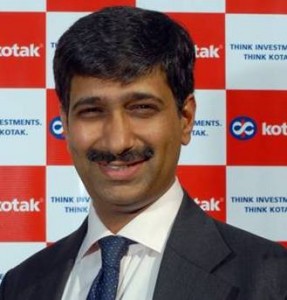
    Mr Karthi Marshan heads marketing for the Kotak Mahindra Group, India’s fourth largest private sector bank and BFSI conglomerate. In his role at Kotak, Mr Marshan oversees marketing efforts across all the verticals that Kotak is present in, including insurance, banking, brokerage, asset management et al.

    An alumnus of IIM Bangalore (class of 92), Mr Marshan started his professional career as a copywriter, then moved on to account management at Grey Worldwide, producing television content for Sony India, heading marketing at IDBI Bank, and founding Sharekhan, one of India’s leading retail brokerage firms, along the way. Prior to joining Kotak, Mr Marshan was based in Sydney, where he helped turn around an ailing DTH business that catered to the Indian diaspora in the ANZ region.

    In a candid one-to-one with Tuhina Anand, he speaks about Kotak’s age, both physical and mental, and why Facebook is better than the company website.


    What would you describe as the Kotak Mahindra edge among the other players in the banking sector?

    The first edge we can talk about is the fact that though our firm’s name is that of a bank, we are actually a unique, fully integrated financial services provider, which is able to serve all your financial needs under one roof.

    Beyond that, we have long had a sterling reputation among consumer segments with respect to our expertise in the various financial spaces we operate in.

    Finally, our relative youthfulness is, I believe, our most powerful differentiator. The fact is that our firm and its myriad offerings are all the progeny of the rapid pace of financial reform in this country over the last few decades. Thanks to this, we understand the emerging young post-liberalization India and are able to connect with, customize and serve it best.


    When it comes to banking advertising, relationship seems to have become the focal point of conversation for all banks and it becomes difficult to differentiate one brand from another. Agreed that relationship building is important in banking, but how does one succeed in creating a brand that’s not me too?

    You are absolutely right, the emphasis on relationships in BFSI communication has rendered the space quite commoditized and undifferentiated.

    While the insight is valid, that relationship management is at the heart of successful business in our category, I think a key fact which has been glossed over is that things like service and relationships are merely empty promises if used in advertising, since consumers don’t believe such claims without trying. If you see an ad for a new ketchup that promises something special, next time you can pick up a bottle and give it a chance. If a coffee shop promises great service, you can sample it and decide for the price of just a cup. Banks don’t have the luxury of letting you sample anything, making trial very difficult. And it is compounded by approaches that boast claims which are hard for consumers to digest without trying.

    As far as answering how one can succeed at creating a brand that’s not me too, I can only speculate. What we have been trying to do over the past couple of years is certainly an attempt in that direction, but only time will tell if our recipe worked.


    Kotak’s earlier campaign was It’s great to be 25; now the campaign is Money ka matlab. What prompted them and how do the campaigns tie with each other?

    The grt 2b 25 campaign was our response to what we saw as a disruptive positioning opportunity, rather than just a hoary anniversary celebration. It was our bet that the campaign would help us further enhance our credentials, create disproportionate growth in our recall scores and tell the story of our coming of age.

    The campaign did all that and then some. So when it was time to do another round, we sought to consolidate the good it had done, and build on it. So, for instance, we stayed with the strategic choice of allowing regular folks to speak their minds instead of doing brand propaganda, which had worked really well. Needless to say, we also wanted to ensure we kept the youthful flavor of the brand alive. Beyond that, with Money ka matlab, what we essentially are seeking to do is use our age and connect it with a distinctive insight we developed on the evolving role of money in our country.

    The bridges between the last and the current campaign are in the creative strategy, as also the fact that the current campaign also continues to celebrate our 25 years in the business.


    What is the aim of the campaign and how has it helped the bank?

    It is our belief that for categories like ours, as it is for categories like colas, the advertising is a part of the product. Hence a key aim of our campaigns is to make our brand one that people will prefer, at least from those segments that we are targeting. To this end, our research tells us that we need to constantly work on objective metrics like spontaneous and total recall, and soft measures like credibility, trust, et al. It’s too early to say if this campaign has helped move the needle or not, but I can say that the last campaign did certainly make a significant impact.


    How long will this campaign continue, and what do you expect going ahead?

    This campaign has just reached its most exciting part. We are in the last lap of the broadcast part, where we used TV, outdoor, radio and the internet quite aggressively to communicate the Money ka matlab platform. We have just now kicked off an engagement programme, where two motorcyclists are riding from Chandigarh to Bangalore, and asking people across India what money means to them. These interactions are being captured in video form and will be uploaded every day from along the route.

    At the end of the journey, I am hoping we will be able to produce a meaningful document, in video and other forms, which will provide rich perspective on what money means to the people of India today.


    As the campaign is active on the digital platform, it would mean you are looking at the young TG. How has the campaign fared with that TG?

    The bulk of our fans on Facebook are in the 18-34 age group. However, it is a misconception that our target audience is only youth. We are conveying the brand’s youthful stance, to ensure it resonates with people of all age groups with a youthful bent of mind. What I mean by that is that in mindset terms, we are targeting people who will be comfortable with mobile and net banking, net-based trading, as well as the use of social media etc.


    How much has been the spend on the Money ka matlab campaign? Would you say it looks like about Rs 100cr?

    I will tell you what I can say. We have taken some fairly radical media strategy calls on this campaign.

    First, we opted for very short length films, since we believe frequency is critical in this age of ADD (attention deficit disorder). Our average film length is 15secs.

    On TV itself, we took a bet that really paid off, where we eschewed the main general entertainment channels and focused on news, movies, infotainment etc.

    Next, we used outdoor as a primary medium, not a support medium. We spent as much or more on OOH as we did on TV. Our insight was that people in cities are spending more time on the road than they are in front of their TVs and its mostly idle time, waiting in traffic jams, providing us a receptive audience. Also, the format of the medium itself lends stature to the brand.

    Finally, we focused all our messaging to drive traffic not to our brand website, but to our Facebook page. This again is insight-based. Today, people want to hang out at the mall, not come to your branch. Hence, if we want to engage them, we have to go to the mall. Similarly, few people actively seek out and visit brand websites, but it seems almost everybody will soon be on Facebook. Hence the bet.
     

  • The Future is on the Shelves: Devendra Chawla

    As per Boston Consulting Group estimates, the size of the organized retail market is approximately $28 billion and is likely to grow nine times to $260 billion in 10 years. Modern retail is no longer testing the water but is all set to grow at a reasonable pace. And as is known, the Future group has played a key role in the growth of modern retail in India.
    Mr Devendra Chawla, President, Food & FMCG Category, Future Group, reflects upon the increasing importance of retail in brand communication, consumer insights and trends among other things, in conversation with Ritu Midha of MXM India.


    Customer engagement is the buzzword. What steps can a retailer take to keep the customer involved and engaged?

    The landscape for brands is undergoing a transformation. While media is proliferating from one channel to multiple channels and one screen to multiple screens, brands need to shout louder to get consumers’ attention in this age of the addictive remote. Yet, the bigger challenge for marketers is not to get attention but to engage with this consumer. While the media is expanding, retail is converging in the sense that a brand can reach and interact with more consumers under the same roof. Though in a nascent stage, modern trade is contributing in a major way towards the growth of categories such as breakfast cereal, cheese, packaged rice, toilet cleaners, liquid soaps, air fresheners and hair conditioners, to name a few. A retail store in that sense is the new media vehicle to create awareness about new brands/products for a large number of consumers visiting the stores.


    It is said that most purchase decisions are now made in the last leg  or seven minutes before the customer actually shops. Are marketersmaking specific point of sale strategies to influence customers?

    Last mile marketing is about engaging the consumer and most decision by the consumers are taken at the final consumer touch point, the store, where given new information, brands may interrupt the decision-making process and enter the consideration set. One can activate last mile marketing by engaging in the following effectively in the retail theatre.

    • Celebrating new product launch
    • Sampling
    • Category Dressing
    • Knowledge to customers  usage, recipes
    • Break-the-routine promotions
    • Multi/Combi Pack
    • Cross promo
    • High customer engagement activities like lucky draw
    • Education & upgradation of Customer


    As per a recent Forbes study in the US and Europe, customer retention is far more important now than gaining new customers  how true does it hold for India? And more specifically for modern retail?

    Modern retail penetration is very high in case of Europe and the US. So more and more players are targeting the same set of customers. But in India, modern retail is still nascent (7-8 percent of total trade), penetration primarily limited to Metros and state capitals. For India there is huge opportunity particularly in the tier 2 and 3 towns. The pie is so large that acquiring new customers is as important as retaining them. Having said that, loyalty needs to be worked on to create customer stickiness.


    Data and research seem to be gaining in importance; how do you track the customer behaviour? Can you give a few examples of learnings bringing change in your retail format?

    Interestingly for us, the stores also double as a live research laboratory and a constant source of feedback . There is as much feedback as one wants to accept on behavior of categories, the way they are consumed, what need gap exists giving way to valuable consumer insights.

    Some examples… Kids engagement with products is much higher in a supermarket environment where products are displayed at their eye level and are well within their reach. For example, in the ketchup category, we learnt how kids are dependent on grown-ups for usage, thanks to the heavy and breakable glass bottle. Consumers were indirectly asking for innovative solutions here as the bottle is consumer unfriendly for the primary consumer.

    We worked around the issue and launched an easy-to-use standee pouch with spout for our ketchup brand, Tasty Treat. Mothers instantly loved it since it made them anxiety-free and their kids self-sufficient. This pack reduced packaging cost by 30 percent and supply chain cost by 40 percent due to lighter weight, providing even more value to the consumer.

    We Indians are unique and unconventional in our own way. In a category like soups, speaking to consumers before the launch of our private brand regarding the ideal soup serving size brought to light the fact that 70 percent of them preferred drinking soups in mugs, in the comfort of their homes  while the form of consumption is in bowls under public gaze like in a restaurant!

    Apart from insights , POS data is also a huge repository of consumer behavior, but still nascent in India. Plus we also work on

    • ACN reports
    • Kitchen Audit where we study in which catchment what consumers are consuming so we can stock them.
    • Catchment Studies within a given radius of the store.
    • Community Studies  Food habits, Festivals.


    Experiential marketing is a much talked about phenomenon now  how important a role does a retail outlet play in it?

    It’s the retail theatre where imagination and the buying experience can be fired up. We enable market development and driving consumption, as India is still under-branded and under-penetrated in most categories. We gave away mugs during our soup launch with a campaign ab soup ka mazaa mug mein, and saw category expansion of 25 percent. Traditionally, category expansion role was played by the advertised brands. Future group has rewritten some of those rules.

    We follow a toolkit including a multi-sensorial engagement with the consumer in the retail theatre.

    • In food categories, where taste and palate play an important role in buying decisions, experience in terms of sampling is very effective.
    • We have sampling counters in all the family centres, live cooking/recipes.
    • In the non-food category, testers are provided to help customers with decision-making.
    • Promoters play an important role  eg, case of beauty products through demonstrations.


    Talking specifically of the Future group, how do you distinguish in brand experience across your retail formats?

    The focus obviously is on providing customer satisfaction  whichever food retail format store they shop in. We have segmented our formats keeping customer type and convenience in mind. We have KB’s Fairprice largely for the people who are looking for convenience. Store formats keeps limited assortment but we stock all the top brands and SKUs that consumers would require.

    Then comes the Food Bazaar  which is mainstream and for the aspiring class. As it is now a food shopping destination for a large urban and semi-urban class, the focus is on making brands available at different price points, and ease of navigation. These have wide and deep assortment play.

    Next is FoodRight, and the aim is to delight the customer by making available aspirational products. At the top of the pyramid is Foodhall  the new upmarket format we have introduced for the discerning customer. From layout to the products on the shelf, everything is for a specific customer  it is the outcome of a lot of research and consumer focus groups coupled with kitchen audits. The initial feedback tells us we are in the right direction.


    Talking specifically of food and beverages, how do you strike a balance to keep both the customer and the brand happy?

    The most important thing is driving consumption, working with national brands to upgrade consumers to more value-added categories , thereby giving choice and new status to the customer, and sales to the brand via category management .

    • Properties like Monthly Bachat Bazaar, Sabse Saste 3 din, Mahabachat, give an excellent opportunity to brands to interface with consumers.


    Would you say retail has far more to offer in terms of PoS experience, and brands need to take advantage of it?

    • The moment of truth for the retailer is the PoS, a gold mine to understand behavior, data, money spending patterns like share of wallet on various categories. Though data is extremely perishable, brands need to capture pattern/behavior on a regular basis by tying up with the retailer in lieu of remuneration.


    Any instances of Big Bazaar working together with a brand to make it a part of consideration set?

    Quite a few, and just to give some examples…

    • Coffee Category project with Nestle, Coke fixture for CSD category, PoS data sharing with elect sambandhis.
    • Juices project in leading brands.
    • Solution Centre for Chinese with brands like Ching’s.

    In the case of private labels, which are the categories where private brands are doing well?

    Future Group has significant presence in the private brands fashion, electronics and general merchandise categories. In Food and FMCG, though we are a recent story, our brands are no 1 or no 2 in a dozen product categories including staple food, ready to cook and home care. Our entrenched brands are Tasty Treat, Clean Mate, Fresh & Pure, Premium Harvest and rising brands are Sach, Ektaa and John Miller. Tasty Treat now ranks as the 5th Brand in terms of sales in our stores from the 3000+ brands that we offer in Food and FMCG categories.


    Has the customer mindset towards store brands changed for better?

    A label on the shelf becomes a brand by covering the two-foot distance from the shelf to the trolley. After all it is the consumer’s choice, the rest is marketing terminology we marketers use. For consumers everything on the shelf is a choice and are all brands. The proof of the pudding is in the eating, and the leadership status of many private brands shows the acceptance of these brands. We are creating independent brands like John Miller, Tasty Treat, Clean Mate and Premium Harvest, and these are not store brands as store brands use the store’s name as the brand.

    In many cases, our brands are manufactured by the same factories that produce for brands marketed by leading multinational and domestic companies. Our formulations are arrived at with rigorous development process. We work closely with our vendor partners for fostering high quality and long term relationships.


  • No passive, one-sided communication…


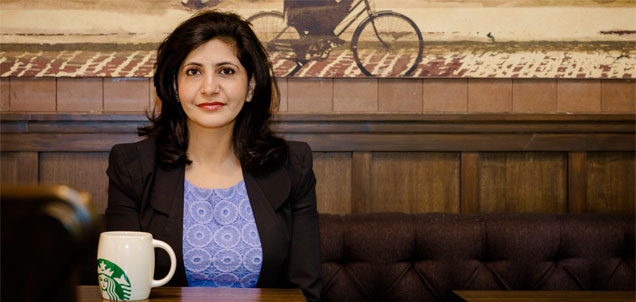
    Marketing at Tata Starbucks Private Limited outlets is more of building connections with customers, says Manmeet Vohra, Director – Marketing and Category of the international chain which open its 75th outlet in the country in Bandra today. The lady behind the much-seen but less-advertised brand speaks on what has kept the buzz going, ever since it made its India debut in October 2012.


    From your first store at Fort in Mumbai to the 75th one in India, how has the journey been so far? 

    It’s been amazing. In less than three years, we’ve reached the 75th store milestone. For Starbucks, India’s been [one of] the fastest growing markets. It’s been overwhelming to see how customers here have embraced us. We still get long queues every time we enter a new city or a different location. The excitement of the brand is very much alive.


    You have stores with proper seating, and you also have kiosks. Going forward, what’s your focus going to be?

    We have two or three classifications for our stores. Some of them are ‘flagship’ stores, like the one in Horniman Circle in Mumbai, Hamilton House in Delhi Indira Nagar in Bengaluru and Koregaon Park in Pune. These stores are special in terms of design, decor and space. For instance, the Hyderabad flagship store has drawn its inspiration from Hyderabadi pearls. Then there are ‘core stores’ and ‘corporate stores’ which are in commercial complexes, and are more like corporate stores. So all this is a function of the space available, and the neighborhood you’re in. But the one common thread is that all the stores reflect the values of the neighborhood and the spirit of the area in which they operate.


    While the familiarity with the Starbucks brand is high, were there challenges with the brand over the last three-odd years?

    The welcome we got when we launched has continued, and it’s really encouraging that we have been able to bring more customers to our stores. And not just the ones who have traveled abroad. So, more people have accepted us.


    Every time a new store opens, there’s a lot of local advertising and promotion. What’s been your stand on promotions?

    First, the offerings we have are designed — in terms of food, beverages and merchandise — to suit the needs of a wide variety of Indian customers, with regard to local sensibilities, culture and palette. We’ve made sure we have the signature blueberry muffin alongside a murg kathi wrap. Food is very important for Indians. A lot of our customers look forward to coming to Starbucks not just for coffee, but for the complete [dining out] experience.


    Another thing that attracts more customers is the connection our store partners have been able to create with them. It’s a key ingredient to a brand’s success in India. Starbucks’ store partners are not addressed as ’employees’ but ‘partners’. And this really reflects in the warmth and passion with which they make every handcrafted beverage. That connection between our customers and store partners has become stronger, as reflected in our loyalty programme. Customers are choosing to come to Starbucks over any other place because of this feeling of a connection.


    The third thing we’ve done is to engage with customers through various campaigns. One of them is the ‘Meet me at Starbucks’ campaign, launched in November 2014. The campaign turns on the need of people to meet, rather than be in touch over the phone or SMS. Today, youngsters are spending more time on their phones and laptops rather than with their family. In a world where everyone’s connected through social media, Starbucks emphasises that need to meet. So what we’re trying to tell our customers is that Starbucks is the place you can come to: a unique ‘third place’ (away from home and office) where you can meet people or spend time with friends and family, or talk business etc.


    Players like McDonald’s are doing similar things with their ‘Kuch offline ho jaye’ campaign, and connect with customers is a given in most snack outlets. How do you ensure there’s differentiation in what you do?

    Coffee has a strong social connotation. In a tea-drinking country like India, even people who drink tea at home, will go outside for coffee. These are some unique insights our brand has noted. We’ve actually seen customers come in for coffee, stay for the warmth [of the treatment from store partners] and come back for the human connection.


    What’s your biggest marketing tool? Is it the relationship your store partners have versus typical tools like ATL or BTL?

    Beyond the product, the customer looks for an emotional connection with the brand. And that emotional connection is what is required to build any marketing programme or brand communication. For us, it’s not just about a marketing campaign or a promotion, it’s about creating experiential marketing to build that emotional connection. And a big USP of our brand are our store partners who are really our brand ambassadors. Another way in which we connect with customers is through the ‘fourth’ or digital place. Your communication is not complete as a brand unless you also connect digitally.


    In terms of your spends (marketing and advertising), what’s the distribution like? Digital versus BTL, experiential and ATL?

    About 30 per cent each on store experience and digital. The rest are miscellaneous elements. That’s how much importance we’re giving to not just connecting at the store level, but also in the digital space. It’s important to have these ongoing conversations with customers — whether it’s through social media or our ‘meet me at Starbucks’ programme. Recently, we had a summer campaign called ‘Starbucks Fun Ventures’, in which we engaged with youth influencers. And in the internet space, we had great engagement with food and beverage enthusiasts and bloggers, and got people like Sonakshi Sinha, Rannvijay and Saina Nehwal involved.


    And what about mass media advertising?

    We don’t believe in passive communication.


    As you go pan-India, are you looking at doing television and print advertising at all?

    Some of it is important purely from an awareness creation point of view. For us, it’d be more from an awareness objective, than engagement. And 95% of my focus is on engagement marketing, not on passive, one-sided communication. Plus, every two months we launch new beverages. Recently we had the Alphonso mango Frappuccino, and our Christmas beverages are hot favorites. There’s a bit of awareness-led communication that one needs to do, but our focus is always on how to put engagement in the whole communication.


    Do you run campaigns on social media or is it all organically grown?

    A lot of organic conversations happen on our social channels — through bloggers and old assets — but we’ve also done a lot of campaigns like ‘Meet me at Starbucks’. We ran that campaign selectively in Bengaluru because it had a larger younger audience. In the internet space, we had a microsite called meetmeatstarbucks.in. We asked people to post stories and asked others to vote on it. There were stories that got up to 28,000 likes, and showed that people spent an average of 4.18 minutes on the site. And that’s a lot of time. These kind of things tell us that people want to engage with us.


    Is there any change in strategy for markets in the south, where coffee drinking is already big?

    One of the things we did for our Chennai launch was offer a special pour-over set there. This is a method of brewing coffee that we had especially for Chennai so that customers can buy from our selection of coffees, take it home and brew it using the pour-over system. Apart from this, the offerings of the brand have been quite consistent, whether in Chennai or Delhi.


    From the time you started to now, on the basis of insights that you’ve had, has there been a change in strategy that you employed to get more customers?

    In our product offerings, we have made certain modifications, given the local touches that we’ve created. In terms of food as well, we’re constantly introducing new items in keeping with the Indian taste palette, which appreciates international offerings but also wants its own comfort zone.


    What’s the next milestone and how fast do you think it’ll be achieved?

    We are already the fastest growing market for Starbucks worldwide, and I think the journey is pretty much clear ahead of us. We are going to be in locations where our customers want us to be and where they expect us to be. We’re constantly evaluating new locations, new cities, new geographies. So we are definitely going to grow beyond the current six cities we are present in, and go to other metros as well.


    Could you give any rough indicators about what kind of targets you have for the next year?

    We are evaluating more cities in the north, and more in Gujarat. We’re there in the main metros of the west and south already. We want to evaluate and move forward in some cities in the north.


    This interview first appeared on MxMIndia.com on July 20


  • Trust before eyeballs


    Ajay Kakar, Chief Marketing Officer– Financial Services, Aditya Birla Group, feels there are two problems with the sector he works in. While the first is poor penetration and knowledge about various offerings, such as insurance or mutual funds, the bigger issue is that of building trust in your brand – and not necessarily through splashy advertising campaigns. If you have customers’ trust, you have them for life, Kakar tells Pradyuman Maheshwari


    So this is a season for financial services, for investments?

    The Aditya Birla financial group represents 10 lines of businesses across the financial services spectrum, and we intend to launch an eleventh, which is health insurance. While people view these as individual categories, ie, life insurance, mutual fund, banking, broking, wealth management and such, we see all of these as representing only one product category, which is money, and these are all shades of it. It’s like when Asian Paints advertises, you know they are advertising one product called paint, and they will have various shades of it.


    But money is possibly the toughest thing to part with.

    Yes, that’s why I started with that, and will then come to the individual categories. Interestingly, you will find certain common trends, whether it is a consumer site or industry site across all these verticals. First, imagine a category that is relevant to any and every person alive, and that is money. This needs no sell. Yet banking in India has got only 40 % penetration. I would have thought that everyone across the country, even in the smallest pockets, would have a bank account with, say, the State Bank of India. Yet that is not the case. Second, while all of us are busy selling our products and categories, very few of us are even thinking of selling solutions to either the customer’s felt or perceived needs. That’s why we advertise what we sell; we don’t advertise what customers buy. For example, nobody ‘buys’ a car loan. You want a car and the loan is a necessary evil. All of us are busy talking about what we have. We don’t try to understand the customer’s unique need.


    I believe the Indian financial services consumer is a financial simpleton, even though he may be globally aspiring, thanks to the media and the opening up of boundaries. And even the richest man may not have the time to manage his finances, let alone a common, office-going person. They want somebody to hold their hand and guide them to their dream destination. There is still a lack of connect between what the customer wants and what we offer, and that’s why [the financial services] penetration levels remain low. So we at the Aditya Birla Financial Group, decided to be different. The first thing we decided is that we must be an agent provocateur to help the Indian masses self-realise the importance of making money work in their lives. So that’s why we’re taking approach to customer with the entire spectrum called money and yes, we have products and solutions in every category. We are committed to being a broad-based as well as an integrated player.


    Your ‘Janoge tabhi toh Manoge’ campaign has been there for more than three seasons. Don’t you think people would tire of the same kind of message?

    Of course. But, first of all, ‘Janoge’ is a brand created for investor education and is directly related to Birla Sunlife mutual fund. Two, it’s a brand which tells me what’s in my best interest. We are wearing two hats — we are wearing the earning hat or the business hat, and we are also wearing the corporate social responsibility (CSR) hat. We want to tell you to buy our products and solutions but first tell you what is in your interest. Our commitment in ‘Janoge’ is investor power; making you learn how to fish, rather than handing you some fish. Second, we have found different facets in mutual funds in our three seasons. In our first season, we talked about how mutual funds need time though not a lot of money. Today, we are talking about a smarter way to benefit from the equity market. So we are changing our message with every season.


    When it comes to mutual funds, people look at NAVs, past performance, and which scheme will make them the most money. Given this, does advertising really work?

    We need our customers of Mass India to realise the cost of no action. Having taken a decision, you must act because not acting is going to make you miss the bus. You won’t get money sitting at home; you have to work at it. So be smart about it, take an informed decision. Brands capture the hearts of customers but the problem with our category is under-penetration. If we don’t understand why this is so, it will not work. The life insurance industry loses money if a customer leaves after two or three years. But If I’m in a hurry to make a sale, there is a chance the customer will, after two or three years, question his decision to have bought the insurance. So if you buy for the right reasons, you will stay for the right reasons.


    In the last few years we have seen a severe liquidity crunch and job losses. How much has that impacted the investment behaviour of people?

    Everyone needs money, and those who have it, need to know what to do with it. And this will always be the case, in both good times and bad. But a lot of financial services categories are fair-weather friends; they advertise when the market is good, and pull back when it is not. Imagine a doctor who will be ready to see you when you’re healthy, but is not available when you are ill. Customers want and need to see throughout the year. They need to know that what they are buying, is in their interest. If they trust you, they will stay with you for a lifetime


    There are a host of players in this business, and while some of them advertise, many others don’t. What are the most critical components to look at?

    Everyone has his own strategy. The Aditya Birla group is highly committed to building and nurturing brands because they believe brands abide for generations. They believe in investing across economic and sentimental cycles because they know that at the end of the day, the human being decides with his heart which brand to go with. There are three things you need to look at for this. First, are you fortunate enough to have and invest in a brand, to start with. Second is what you say, and third is how you say it. And I think we are blessed with all three. We don’t rest on past laurels but keep nurturing and investing in our brands. Advertising is not the end; striking a cord [with people] is. Our brand track shows that as against our investments — which are most conservative compared to our competition — our benefits have been the highest.


    What is your strategy towards promotions, in terms of percentage spends on ATL, BTL etc?

    A marketer spends where he can capture the most eyeballs, right? And that differs from category to category, and from brand to brand. In the financial services industry, you reach out to a relatively mature consumer, so you must target [people of a] certain age and above. To reach mass India, you must use mass media. About 70% of our marketing spends are on campaigns leaning towards mass media and television. Mostly television because we are not only selling categories, we are selling categories the emotional way. So print takes a back seat.


    How much of digital do you use?

    Last year, our life insurance campaign was a 3.5-minute film where we dared to tell a story, rather than have a regular ad. We dared to not plug our product or category, and we dared to invest heavily in digital, even though this reaches a far lower mass [of people]. This strategy paid off, and now three leading brands have followed us in quick succession with possibly the same strategy. It’s not the spends, but what you do with the spends. In financial services, the biggest award you can think of is the Midas Award of New York, where you only compete against the financial services ads of the world. We have won for five consecutive years. I believe that customers have given us the thumbs-up (if you look at our brand track scores) and I think the industry and our peers have given us a thumbs-up, going by our awards and recognition.


    How much of social media and content marketing do you use to influence the influencers?

    We have something called zipsip which is an instant and convenient way of investing in systematic plans of mutual funds. It’s in our portal. We have promoted it in a very big way and it has surpassed our marketing and business expectations. For that, we spent a lot because we knew it was a product for the digital-savvy audience in a digitally-savvy world. With our ‘Khud ko ker Buland’ campaign, we crossed one million views on YouTube within days. We were trending on Twitter on Day Two. Today, we have five million views by people who have chosen to view our film so the fact is we do work for our audiences, irrespective of where they are, and then we tailor [our campaigns accordingly]


    But YouTube hits and ‘likes’ are not verified, right?

    I would like to believe that in social media, you have to crank the engine and then see where you go. And the fact is, you can land up anywhere. For example when we had [cricketer] Yuvraj Singh talk about his illness on social media, I would like to believe that ours was the platform which was helping him spread the message.