Category: ADVERTISING

  • Amir Kassaei, Prof John Philip Jones & Rishad Tobaccowala to speak @ Goafest

    By A Correspondent


    The Goafest Committee has announced the names of three renowned speakers for Goafest 2012 Knowledge Seminars. Amir Kassaei, Chief Creative Officer, DDB Worldwide, Rishad Tobaccowala, Chief Strategy and Innovation Officer, VivaKi and Prof John Philip Jones, Emeritus Professor at the Newhouse School of Public Communications, Syracuse University, New York will impart their knowledge and expertise at the Goafest 2012 Knowledge Seminars to be held on April 20 and 21.


    Commenting on the exciting lineup of speakers for Goafest 2012 Knowledge Seminars, MG. Parameswaran, Member of GoaFest Committee said, “We have lined up a galaxy of globally renowned speakers with an interesting mix of creative, branding, digital and media experts for the Knowledge Seminar this year. We conducted a survey last year and realized that the young delegates wanted Goafest 2012 to cover all aspects of communication at our seminars. Hence we left no stone unturned to get the best speakers to enrich and enlighten young minds this year.”


    “To reiterate our promise of having a bigger and better Goafest 2012, we have brought the best minds from across the globe to be a part of the fest and engage in conversation through their thought provoking ideas and discussions. I am certain that these speakers will add immense value to our event,” added Arvind Sharma, Chairman, Goafest Organizing Committee.


    Amir Kassaei is the Chief Creative Officer DDB Worldwide and one of the most lauded creatives in the world. Born in Iran, raised in Austria, and educated in France, Amir settled in Germany in 1997, gaining experience early in his career in a variety of roles ranging from Account Manager to Strategic Planner to Art Director and Designer at agencies such as TBWA, Barci & Partner and Springer & Jacoby. At Springer & Jacoby, Amir advanced from Copywriter to Creative Director and finally to Executive Creative Director on the global Mercedes-Benz and smart accounts. In 2003, Amir joined DDB as Chief Creative Officer and Associate Partner of DDB Germany, where he quickly helped reshape the agency. After joining the agency as the youngest DDB Chief Creative Officer in Europe, he quickly transformed it into one of the most creative and successful agencies in Germany. Under Amir’s leadership, DDB Germany has also been ranked the most awarded German agency in the Gunn Report. During his tenure at DDB Germany, Amir founded and established Tribal DDB Germany as a modern and multichannel agency. Amir and his teams are the recipients of more than 2,000 national and international awards, including 40 Cannes Lions in the past five years.  He was named TheBig Won Report’s Top Chief Creative Officer” in 2009, and has been one of TheBig Won’sTop 3 Chief Creative Officers for each of the last three years.


    Rishad Tobaccowala helps guide strategy and serves as a catalyst to innovation efforts across Vivaki – a Publicis Groupe entity that combines the collective scale, clout and talent sitting inside of Denuo, Digitas, Razorfish, Starcom MediaVest Group (SMG) and ZenithOptimedia. Working closely with brand CEOs and VivaKi Country Chairs, he helps VivaKi’s companies show clients the way forward in an exciting and changing time for marketing.


    Prof. John Philip Jones was born and educated in Britain and graduated with the Economics Tripos from Cambridge University (BA with Honors and MA). He spent twenty-seven years working in the advertising agency business, mainly in branches of the J. Walter Thompson Company in Europe and as a market researcher and manager of the advertising for major international clients. For eight years he was international account director on Unilever’s Lux Toilet Soap, the largest-selling bar soap in the world. He has also published sixteen books and 100 articles in professional and academic publications: all on branding, marketing and advertising.


    Goafest 2012 is being organized by AAAI and Ad Club Bombay in partnership for the 5th year. Over the years, specialist areas like Out of Home & Ambient, Design, Digital & Mobile Advertising, Direct, and Integrated Advertising have been growing in importance. In recognition of this phenomenon, in 2012, Abbies at Goafest will have provision for Grand Prix in all the nine verticals- the Grand Prix is being introduced in the media awards as well.

    Click here to view all Goafest 2012 stories


  • ASCI, Goafest come together on self-regulation

    By A Correspondent


    The Advertising Standard Council of India (ASCI), in a bid to encourage self regulation in Advertising, has announced its unique association with Goafest 2012. As a part of this partnership, ASCI will be a conducting a one-of-a-kind contest to promote responsible creativity, under the theme “Creativity with a Conscience” during Goafest 2012.


    The ASCI Mobile Movie Challenge contest, which is open for advertising, marketing and media professionals, revolves around creating short films using a mobile phone.  As per the contest, teams of 3 young professionals, under the age of 30 years, will be asked to create a short film (between 30 and 60 seconds), using their mobile handsets.  Each team will be assigned a mentor film-maker who can guide the team members on the nuances of film making. The teams will create the art forms on one of the four briefs provided by ASCI.


    The teams will create the art forms on the four tenets of ASCI’s code of self-regulation: Honesty & truthfulness in advertising; Decency in advertising as per generally accepted societal norms; Safety & avoiding exploitation of vulnerable sections of society, especially children; Fairness in competition.


    To register, one has to log onto http://www.ascionline.org/goafest2012/ and last date for registration is March 22.


    According to, Subhash Kamath, ASCI Board Member: “The theme ‘Creativity with a Conscience’ goes hand-in-hand with ASCI’s objective of responsible advertising. Our aim is to inspire professionals to abide by the guidelines set by ASCI and to take up self regulation on an individual level as the only other alternative is governmental censorship, which is, not desirable for a creative industry like ours.”


    He added: “By reaching out to young professionals, we’re ensuring that our efforts towards self regulation are understood by the people who will be implementing the work. Through this initiative, we want to instill the message in the mind of young professionals to always remember that with great creative power, comes greater responsibility.”


    These films will then be showcased at Goafest 2012 and will be uploaded on youtube.com and select online portals to inspire professionals to understand the importance of self-regulation in advertising. The entries will be judged by a jury of top creative directors and film makes of the industry.


    Four winning teams, one per brief, will be selected and each team member will be awarded during the Creative Abbys. Alongside, there will be a ‘Popular Choice’ award for the winner of a shortlisted best 16 film, which will be voted via SMS by over 3,000 participants at Goafest.


    Advertising Standards Council of India is a self regulatory voluntary organization of the advertising industry. The role and functioning of the ASCI and its Consumer Complaints Council (CCC) is in dealing with complaints received from Consumers and Industry, against advertisements which are considered as false, misleading, indecent, illegal, leading to unsafe practices, or unfair to competition, and consequently in contravention of the ASCI Code for Self-Regulation in Advertising.

    Click here to view all Goafest 2012 stories


  • The media planner has become a zombie: Shashi Sinha


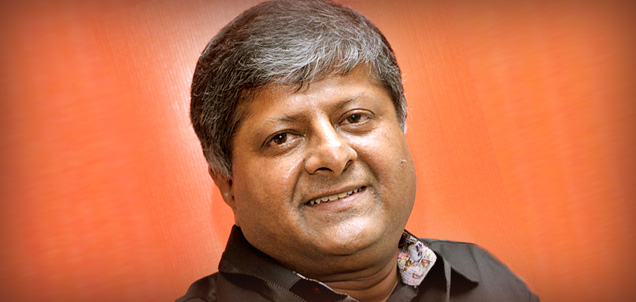
    Shashi Sinha has done a lifetime in the business of advertising and media. It’s been an interesting journey for an engineer who went from selling booze to crunching complicated numbers. The CEO of Lodestar UM shares his views on many important issues, including media research, the demise of the full service agency, key challenges facing media buyers in today’s market and how he managed to restore some credibility in the creative awards. The 54-year-old, who’s usually soft-spoken and politically correct, candidly speaks his mind on this occasion. Media buyers and creative directors must pay close attention. He makes some very valid points.


    By Anil Thakraney


    You work for two companies?

    I work for the Draft FCB group where I handle Lodestar. And recently I have taken charge of a creative agency called Interface. But my primary responsibility is Lodestar.


    Whom do you report to?

    I have dual reporting. I report to the Draft FCB Global CEO, Laurence Boschetto. On the Universal McCann side, I report to a gentleman called Jim Hytner who’s based in London.


    Dual reporting is always a tricky thing…

    It is tricky. Since they are sister companies you have to keep both masters happy. One of my strengths is getting along with people and ensuring that their objectives are met. I have been doing this for five years now. As long as the combined operation is successful, things are okay.


    Cut to the past. What attracted you to advertising, when you were a sales manager with the UB group?

    I actually came into advertising for the wrong reasons. I grew reasonably fast in the UB group at a young age and I was in sales there. But I wanted to migrate to marketing and that would have been an effort. Then a friend said to me I should work in advertising as I would get to work on many brands at one shot. And so I joined the ad world in 1986 and stayed on.


    And you started out as an account planner in Ulka. How did media happen?

    In those days planning was an unknown concept. Bal Mundkur used to run the agency at the time, and he thought planning was an airy fairy function, that it had lost steam. He asked me to do some ‘real work’. So I started doing odd jobs like running the financial advertising cell, selling sponsored prorgammes, etc. Later I shifted to client servicing. Along the way my interest in media grew. When the FCB guys decided to make India the regional hub, Anil Kapoor said the time had come for me to fully move to the media function.


    Share an interesting memory of Bal Mundkur.

    He had balls. Today our revenues and profits are huge and yet I would not take a decision which Bal took in the late eighties. The servicing team handling a large multinational client was very unhappy, they said they were being treated like shit. Bal wrote a six-page hand-written letter to the client explaining why the agency would like to part ways with them. When he told me about it, I was horrified. I asked him to instead change the team on the account. But Bal said, “No, it is a matter of pride.” (After some prodding Shashi reveals the name of the client. It was Glaxo.)


    You are involved in many activities, you run the GoaFest awards, now you are heading the Ad Club as well.  You have excess time on hand?

    (Laughs.) I have enjoyed it for the last three years but it’s getting to me now. I believe when you take something on you must give it your best. I took on GoaFest last year because it was in a mess. So one had to get some credibility back, I had a point to prove.


    I guess next year you would not want to do it.

    I will definitely not run the awards next year.


    Why has the Bombay Ad Club gone dead in the last few years? I recall they used to hold many events in the past.

    You are right, it has ended up becoming an awards-only body. The regular interactions have reduced. The agenda for the future is to make it broad-based. The Delhi market has become very big and it’s a starved market. So we can collaborate and do things. As soon as GoaFest is over you will see a lot of action happening in the Ad Club.


    Do you miss the days of the full service ad agency?

    I do. In fact, I’ll let you in on a secret. I want to go back to the integration system with Interface, and the response I have got so far is very good. I genuinely believe that full service is the final solution. The best ideas come when you are sitting around the table.


    Shashi, after all these years of happily running a media buying agency you are suddenly talking of integration.

    One has been playing to a role. One is building the media agency, building one’s clients. But the best quality works happens in a full service agency.


    And the media buying market has become like a sabzi mandi. How much fun can that be for someone who comes from the old school?

    This is the unfortunate downside of globalization, global clients and global processes. Truth is that internationally advertising is not a hot profession any more, it comes way down the totem pole. Though in India it still has a pedigree, there’s some respect left. Ten years later it may not be there.


    One super media innovation you are most proud of having effected.

    It’s always teamwork so it’s embarrassing to say I did it. We have enabled many, but the one I am most proud of was for Nerolac Paints about five years ago. We took up a Mumbai local and deposited the shades onto the train. Nerolac deposited their paint on the outside of the train and made a shade card out of it. It was a wonderful idea.


    How many years do you give the print medium in this country?

    I can’t say about Bombay, Delhi and Bangalore, but as a country, print will be here for a very long time. The smaller towns are under-leveraged. Secondly, even if there’s internet access, there’s no power supply in these places. So how much can one use the computer, how much can one read on the mobile? If the time spent in Bombay on a newspaper is 15 minutes, for a town in UP it would be forty minutes. The entire family reads it.


    Key challenges the buyer faces in a highly fragmented media market.

    Everyone chases the rate game and how to buy it cheap. To me that’s stupid. For most of the organized media there are metrics in place to measure the media efficiencies. So in media terms how many consumers we’ve reached is all bull. The big challenge is to find whether that’s working for my brand or not. That, no one is able to answer.


    That’s the media planner’s job. And the industry has killed the planner.

    Correct. The problem is that the media business has become all about volumes, the business has become transactional. The planner today has become a zombie, a computer programmer.


    How can the industry improve media research in this nation? There are too many question marks on television audience measurement and print readership studies.

    Someone has to put money on the table, it’s as simple as that. The solutions are all known, I know very bright and talented people in research, what needs to be fixed is known. The problem is: No one is wiling to invest. Today, if television measurement costs Rs 20 crores, what if Rs 100 crores was spent on it? Or, for readership surveys, which cost Rs 4 cores today, what will happen if they had Rs 15 crores? So it’s nothing but lack of funds. Neither the newspapers nor the media agencies nor the clients want to put down that kind of money. And that’s the only problem.


    GoaFest will be a sub-continental event this year?

    This being a tough year, we’ll have to see how to bring Pakistan and Bangladesh in. We have to see how many of them will come, it’s early days yet so I don’t know the answers. We are also trying to get the clients in.


    On the awards, how did you lick the problems of self voting and media leaks?

    On the problem of self-voting, it was very simple, it didn’t need a very bright mind. We stopped the practice of raising hands during the judging, and they had to vote on a piece of paper. So if a judge voted for his own agency’s work, we would block that score.


    You must be very disappointed with the creative directors who were indulging in this.

    Yes, 110 percent. In the Effies, the majority of the judges are the clients. And they are not as desperate to win as the creative directors. Which is why the creative directors take short cuts. And as long as you allow short cuts to happen, people will get even more emboldened. As far as the issue of the leaks goes, we solved it from the media end, because it’s very difficult to nab the person who was doing it. I reached out to various people in the media and got a commitment from their senior leadership that they won’t do it. Also, the switch to secret voting format helped.


    And yet, Lowe refuses to take part. Which means you still haven’t been able to crack the core credibility issues.

    Balki has taken a position and his problems are beyond the purview of someone running the awards. I am just a process coordinator. If he says he does not like his peers judging his work, that he doesn’t respect them, I can’t do anything about it. I can only clean up the processes. But forget Balki, there are other people who have their own agendas for not entering the awards, they fire over the awards committee’s shoulders. Privately they’d say to me they don’t have a good enough body of work so they won’t take part. But their public posture would be very different.


    Can’t you change the composition of the jury? Does it have to consist of creative directors?

    I would definitely like to bring the clients on the jury. Perhaps 50 percent of the panel. But I have been told by creative directors that ‘these are our awards’. You must understand that one is running an industry association and there will be many voices. And so it’s like a democracy; I may have a point of view but there are nine other people voting.


    One rival media buying agency head you admire.

    Jasmin Sohrabji (Managing Director, OMD India). She is far younger than I am but I respect her for building something from the start. She’s built the company from scratch in the last five years, and she’s done a terrific job.


    What are the future goals you’ve set for yourself?

    I think there’s a huge opportunity in the content space. And one would like to do something that’s related to advertising. It could be digital or television content. We have taken some baby steps in that direction but haven’t been able to ignite it. In fact, I have told our global parents they should offer quasi-entrepreneurial opportunities to the team members. In the sense that people within the company are given pilot projects to run, in which they have some stake.


    One big life regret.

    It’s not a regret but sometimes I wonder if after completing my IIT I made the right decision to stay on in India. I had the opportunity to get a scholarship to do my MBA abroad, and I could have stayed on there.


    Why? Don’t like working in India?

    Nothing like that. But the scale of operations abroad is dramatically different. The quality of life is good out here, but one is a big fish in a small pond.


    Click here to view all Goafest 2012 stories
     

  • Goafest launches “Marketing Wizards” for young clients

    By A Correspondent


    Keeping up to the promise of a ‘bigger and better; Goafest 2012, the organizing committee on Monday announced the launch of “Marketing Wizards” open to the Indian Society of Advertisers (ISA) member companies for delegates under the age of 30.


    Marketing Wizards is an interesting initiative wherein each ISA member can nominate up to two rising stars from their marketing teams under the age of 30 years to experience the highs and thrills of Goafest 2012. This offer is available at a discounted fee of Rs 6,000 only. This amount will covers two nights at a five star hotel, food & beverages, local transportation, seminars, award shows and much more with no further costs.


    Speaking about the programme, Arvind Sharma, Chairman of Goafest 2012 said: “This year we are focusing on getting clients to Goafest 2012. We hope to see many more senior marketers and a large contingent of young advertisers at the festival. Marketing Wizards has been created as an initiative to drive young advertisers’ participation and ensure that everyone is aware of what is in store for them at Goafest 2012.”


    Mr Sharma added: “There are many firsts for Goafest 2012. The inclusion of SAARC nations, Grand Prix’s across categories. The latest addition, Marketing Wizards, will be an ideal platform for marketers to reward their rising stars. Goafest 2012 will not only help them widen their advertising horizons they will also have a great time at the event.”


    Mr. Bharat Patel, Chairman, ISA said: “We welcome this initiative from AAAI & Goafest to increase participation of our members, and specifically their rising stars. Successful partnerships between advertisers and their advertising agencies are fundamental to the success of brands. In many ways, Goafest and the Abbies are a celebration of this success. Equally, they are opportunities for our bright young marketers to imbibe and learn. I believe our rising stars will benefit immensely by actively participating in this opportunity. The ‘Marketing Wizards’ initiative is indeed very attractive and I am sure our members will make the most of it.”


    Goafest 2012 is being organized by AAAI and Ad Club Bombay in partnership for the fifth year and will be held from April 20-21 at the Zuri White Sands in South Goa. It will be preceded by an advertising conclave on April 19th. The festival is themed the ‘Magic of Ideas.’


    Over the years, specialist areas like Out of Home & Ambient, Design, Interactive Digital Advertising, Direct, and Integrated Advertising have been growing in importance. In recognition of this phenomenon, in 2012, Abbies at Goafest will have provision for Grand Prix in all the nine verticals – the Grand Prix is being introduced in media awards as well.


    Advertising Agencies Association of India (AAAI) is the official, national organization of advertising agencies, formed in 1945, to promote their interests. The Association promotes professionalism, through its founding principles which uphold sound business practices between advertisers and advertising agencies and the various media. The AAAI is recognized as the apex body of the advertising industry at all forums – advertisers, media owners and associations, and even government, as the spokesperson for the advertising industry.


    The Advertising Club Bombay, incorporated in the year 1954, is arguably the biggest Advertising Club of its kind in the world, and, according to many, also the busiest. It has over 1,400 members drawn from media organizations, marketing companies, advertising agencies and allied professional bodies.

    Click here to view all Goafest 2012 stories


  • Goafest 2012 brings S Asia into ambit

    By Robin Thomas


    Goafest 2012 has been extended across South Asian countries. Pakistan, Sri Lanka, Bangladesh and Nepal have been invited not only as delegates, but also as award entrants. Specialist agencies have been encouraged to participate in Goafest 2012, and Grand Prix have been introduced in more categories. These were some of the announcements made by the Goafest Committee. The advertising festival is scheduled to be held from April 19 to April 21, 2012 at the Zuri White Sands in South Goa. The theme this year is ‘Magic of ideas’. Goafest 2012 has been presented by AAAI and Ad Club Bombay.


    Since specialist areas like Out-of-Home, Ambient, Design, Interactive Digital Advertising, Direct and Integrated Advertising have been growing over the years, Abbies at Goafest 2012 will have a provision for Grand Prix in all nine verticals. Last year the Grand Prix was given only in Film, Print and Radio verticals. Grand Prix will also be introduced in the media awards.


    Goafest 2012 is said to be looking at strong client participation with senior clients expected to be an integral part of knowledge seminars. The Goafest committee is also said to be looking to attract young client delegates in large numbers. It is offering special packages for under-30 marketers.


    In order to spread awareness about Goafest 2012, the committee has decided to conduct roadshows across South Asian countries.


    In conversation with MxMIndia, Arvind Sharma, Goafest Committee Chairman said, “The theme is inclusiveness, we clearly present what value each one will get by participating at the festival. We haven’t really reached out and marketed ourselves. We have not sent out a clear message about inclusivity and the importance of participation. It is said the nature of business is changing, and that there are a whole lot of specialist areas to be ventured into. By allowing Grand Prix in each of the verticals Goafest 2012 has highlighted the importance of each of the verticals. Goafest is a property like no other else therefore it is important to bring in specialist agencies that have traditionally not been part of Ad Club.”


    On his expectations from Goafest 2012, Shashi Sinha, President, The Advertising Club Bombay and Chairman of the Awards Governing Council said, “With Grand Prix opening up and more organizations participating, hopefully even from other countries, expectations are quite high. This time although the delegates are much higher, there will be a lot of fragmentations because of increased participations from different agencies.”


    The decision is also expected to encourage many more specialist agencies to come forward and enter their work in the show. This is likely to give a further impetus to the trend observed over the last few years. Consistent with its growing importance, digital will find a place at Goafest 2012. Digital Awards will be held on April 20, 2012 as will Media Awards. Design, Direct Awards will also be held on April 20, 2012 and as in past the rest of the Creative awards will be held at the awards night on April 21, 2012.


    In line with the overall festival theme, Goafest 2012 Conclave theme is ‘Ideas for impacting the full circle’. The Conclave aims to help the entire industry gear up for opportunities that lie ahead. The festival is said to be inviting global leaders from major clients as well as major communication groups to participate in the Conclave.

    Click here to view all Goafest 2012 stories


  • Goafest 2012 to be held on April 19-21

    By A Correspondent


    Goafest, the much awaited yearly event from the Advertising Agencies Association of India and Advertising Club Bombay, has come out with its festival dates for 2012.


    This year’s Goafest will be held on April 19-21 at the same venue as last year, The Zuri White Sands resort on Varca beach.


    Other details of the festival will be announced following a committee meeting on January 9.


    Over the years Goafest has become the biggest congregation of advertising professional under the sun and sand inGoa. It is touted asIndia’s biggest advertising and awards festival.


    The theme for last year’s festival was ‘Ideas are all around us-can you SPOT one?’ Two of the biggest awards held during the festival include the Media Abbys and Creative Abbys.

    Click here to view all Goafest 2012 stories


  • 9 Days to Go-Goafest | Shashi Sinha on the judging process

    Shashi Sinha, President of Ad Club Bombay and Chairman of Awards Governing Council has played a critical role in the cleaning up of awards at the Goafest which has come under a scanner post the incident of self voting and leaking of award results. Having started the process last year to bring credibility to the awards, Sinha is now upbeat on crossing the first hurdle and promises that this year the work showcased at the Fest will be high quality. Here’s Sinha throwing some light on the judging process.
     

    Yesterday evening, as I stepped out from the Direct jury discussions, I must admit that I felt overwhelmed by the quality of conversation this year. We have been encouraging the jury to engage in long discussion as that is the only way to understand the nuances involved in the work. More the discussion, more the clarity in judging the works.


    In fact, this year we have increased the number of jury in each category from 6 to 8 in the last year to 10 to 12 this year, thus having a better representation of people. We have fine-tuned the judging process and added more categories. We have also increased the number of Grand Prix that will cover all the 9 verticals (10 if you consider Print and Print Craft separately) where again role of conversation will play a critical role in finding ‘the work’. We have also moved to secret voting thus allowing the jury to make their choice without worrying about upsetting anyone from the fraternity which was the case when voting happened by show of hands.


    We had tackled these issues last year, but I would say that last year at the Fest the focus was to get the process right and clean up the issues that had marred the awards. We were focusing on bringing transparency to the entire judging process and make it tight and fair. The AGC and KPMG are now familiar with how things ran last year hence there is more comfort with the procedure and protocol.


    Now with process in place we are working towards improving the quality of work being showcased. I must admit that we have achieved this seeing the quality of discussion we have been having, I feel proud to be part of the industry.


    We have also been giving a week’s break after the R1 of judging just so that there is a gap and judging happens with a fresh perspective, without any preconceived notions. Also, while shortlists were announced earlier, we are not doing this now, so that even for judges as they walk in for R2 there is an element of surprise to see the shortlist, paving way for fresh conversation. As earlier, where all the shortlists were showcased at Goa, now we will only showcase the finalists, resulting in a better quality of display as the works would have gone two filtering process.


    In fact, we are finished with the R1 in all categories this year and almost in the last leg of judging with 3 categories left. Today, we will judge the interactive which I am looking forward to. It is an upcoming category and I am sure it would be fun being a part of it. This year, we have also had entries from South Asian countries and even though the number is not much but it is good beginning that will give the fest a larger footprint.


    We have also split the award to two days as that was a feedback we got from people. So the 3Ds- Direct, Digital and Design will be given on the night of April 20, the rest will be given on April 21.


    In my mind, the judging process may have become complicated and is time consuming but the changes have happened for good. Goafest is here to stay and each year we have bettered it, like this year we have an impressive list of international speakers, given the fact it’s been a rough year for the industry. We have also managed the location issue as the Zuri White Sands is a better location as opposed to the beach. I think we have got the formula right for the Fest now. Just keeping my fingers crossed.


    Click here to view all Goafest 2012 stories


  • National Public Relations Day celebrated

    By A Correspondent


    The National Public Relations Day was observed by the Bhopal Chapter of Public Relations Society of India (PRSI) at a function held at Krishak Jagat Office recently.

    The theme of this year’s National PR Day was “Cancer Awareness”. Speaking on the occasion, guest speaker Dr KV Pandya, Director, Jawaharlal Nehru Cancer Hospital high lighted the types of cancers, techniques to detect it and remedial measures that can be taken. He asked the PR practitioners to promote cancer awareness.


    Dr Pandya also added: “Cancer is a leading cause of death worldwide. It accounts for 7.4 million deaths. It often creates fear, which comes out of ignorance and misconception. PR People must take pledge to create awareness on this dreaded disease”.


    Mr. Vijay Bondriya, Chairman, PRSI Bhopal Chapter, said that the National and Public Relations Day is observed to highlight the growing role of public relations practice in the society today, as well as to make its practitioners aware about their professional responsibilities.


    Mr Vishnu Khanna, Vice Chairman, PRSI Bhopal, added that today’s PR has assumed great importance in the day-to-day functioning of the government and other organizations. Mr KC Mouli, Advisor, PRSI Bhopal underlined the need of PR education for which PRSI is making endeavours at the national level.


  • Anil Thakraney: What to do with scam ads?

    By Anil Thakraney


    Quite frankly, if there is a scam happening in every walk of life in this maha corrupt nation of ours, how can we expect the advertising creative people to behave like Bapu or Mother Teresa? They are products of the same rotten system; they haven’t arrived from planetNeptune. Which is why I don’t really blame the sods who indulge in fraudulent ads. They are simply living up to the high moral ideals that have been set in this country.


    Still, have you ever wondered about the real reason why creatives do this mischief?

    And what can be done to control this menace without Anna Hazare’s intervention? I think both, the explanation and the solution is simple. This is no Agni missile science.


    The reason these scam ads thrive is the same reason hawkers land up on the footpath right outside your apartment block. Because people buy from these hawkers. If the residents become united and declare that they will not buy a single item from these trespassers, the hawkers would vanish. Similarly, ad agency chiefs must not only throw out job seekers who land up with scam work, they should blacklist these chors, so that the entire ad world becomes aware of their misdeeds.


    Even a simple thing like a Facebook page can be created to upload resumes of habitual scamsters. This will ensure folks think many times before they cheat.


    The core problem is that creative directors ACTUALLY hire people based on the work done and awards won through scamming, rather than based on the real advertising they produce. And this encourages people to churn out fake ads. So the solution lies at the desk of the agency leaders.


    The question is: Are they willing to stem the rot? Probably not. My own suspicion is that some of the ad bigwigs themselves do scam ads. And so this explains why the problem is proving to be so difficult to solve.


    In short, no point blaming the youngsters. They are only following a system that has been allowed to flourish.


    * * *


    PS: Here’s a list ofIndia’s worst journalists. Compiled by a blogger, and it’s the result of a poll. (Also don’t miss the comments.) You may or may not agree with the views expressed, but you have to agree it’s a totally interesting read!


    Link: http://www.mediacrooks.com/2012/04/indias-worst-journalists-2012.html


  • Ad Strat: Jumpin – Bade Kaam Ki Masti

    Rajesh Saathi – Director, Keroscene Films


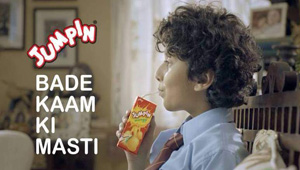
    Name of the Campaign: Jumpin Bade Kaam Ki Masti


    The Brief:

    Jumpin has been present in the Indian market for over 15 years now, with a loyal set of consumers. We were to show that the new Jumpin has the delicious taste of real Alphonso mangoes, and the rich, thick, lip-smacking juice gives you loads of energy.


    [youtube width=”400″ height=”200″]http://www.youtube.com/watch?v=dTlGqnHyHLY[/youtube]

    Research insights:

    The communication task in hand was to make consumers relook at Jumpin in the clutter of options that are available to them and give them a reason to choose Jumpin over other mango drinks available in the market.


    The thought process behind the creative:

    The TVC is highly clutter breaking and brings alive the brand as a Jumpin-boy who is smart, active and quite the all-rounder – enjoys his studies but makes sure he doesn’t miss out on fun. He is full of beans and is quite mischievous and cheeky, exploring boundaries and handling everyday challenges with zealous enthusiasm


    Media vehicles chosen: TV


    Key issues kept in mind while executing the ad:

    Clutter breaking communication; to stand tall amidst clutter:  Keep the humor quotient high…..bring alive the idea of fun and masti but with a cause, hence Bade Kaam Ki Masti


    Drive the stickiness of the copy and enhance the appeal:  Excellent use of the classical Bollywood hit “Nani Teri Morni Ko Mor Le Gaye” enhances the appeal of the film. Superb work done with the remixing of the song makes it even more contemporary.


    Does the treatment do justice to the brief:

    The one line brief on the communication task was – To make consumers (kids/moms) relook at Jumpin in the clutter of options that are available to them. The TVC completely does justice to the brief and the overall treatment of the film, its tonality, the song and the storyline helps relaunch Jumpin into the big league.


    What according to you is the differentiating factor about the ad?

    Excellent use of the jingle “Nani Teri Morni Ko Mor” to establish the storyline and hence the idea of Bade Kaam Ki Masti


    Market and client feedback for the Jumpin TVC:

    It had been about 6 years since Jumpin last advertised in 2006 and communicated with consumers through mass media. In the meantime, all leading mango drink players were not only very aggressive but also spurred their growth through much larger media presence. The challenge with Jumpin was to not only stand out amidst the clutter but also to appeal to the strategically selected audience, kids aged 10-14yrs. To achieve this, it was pertinent to seamlessly weave the brand promise of “Bade Kaam Ki Masti” into the storyline and also stay true to the personality of Jumpin being a fun & playful brand.


    Through this new TVC jumpin not only manages to capture the attention of kids but also engages them comprehensively. The excellent use of the classical Bollywood hit “Nani Teri Morni Ko Mor le gaye” increases the appeal of the film. It helps to cut across the age barrier and is being equally liked by adults as it takes them on a nostalgic trip since they also grew up listening and singing the song to their grandmothers.


    Initial response to the TVC has been phenomenal. Everyone who has seen the film has immensely liked the film & found it entertaining. They have also appreciated the big idea of “Bade Kaam Ki Masti” and are seen humming the song Nani Teri Morni koMor…


    The same has been equally liked by our trade partners and retailers.


  • Goafest 2012: ‘Need for old & wise to guide youth’

    By A Correspondent


    Keeping in line with the theme, ‘Ideas that impact the full circle’, a panel discussion moderated by Anuradha Sengupta, Features Editor, CNBC TV18 and including panelists like Tim Love, CEO, APIMA, Vice Chairman, Omnicom Group; Jonathan Mildenhall, VP, Global Advertising Strategy and Creative Excellence, Coca-Cola; Jayant Murty, Director of Strategy, Media and Integrated Marketing, Asia Pacific Region, Intel Corp and Jean-Yves Naouri, COO, Publicis Group discussed the need to present their agencies differently; the loss of long-term relations between the clients and the agencies and the need for multiple agencies to build a brand.


    Tim Love observed that advertising is actually an education and noted that while the advertising industry is all about ideas and thus need young rebellious minds, there is also a need for the old and the wise to guide and direct the youth.


    Jean-Yves Naouri, on the other hand, insisted that creative agencies are here to respond to business and gain the trust, mind and presence in their client’s life. “Keep the dialogue between brand and consumer alive. Engage consumers as there will be people who will be inspired by the brands and this is what matters the most.”


    Speaking on the agency-client relationship, Jonathan Mildenhall said that it is easy to maintain one relationship better that ten different ones, and therefore he would reluctantly look outside his roster agencies for creativity. However, he felt that brands may scout for multiple creative agencies if they find the need for specialist agencies that could help them reach out to their clients more effectively. He was also quick to point that although digital is showing robust growth in India, it needs to boost its creativity in this space. “Majority of UK spends on digital, however the internet reality is bigger than the creative ambition in India.”


    Click here to view all Goafest 2012 stories

  • Ads must be rational: Prof John Philip Jones

    By A Correspondent


    The internet would be the third largest medium in the world by 2020 after television and direct mail, said Professor John Philip Jones, Author and Brand Guru at the last day of Goafest 2012.


    The last day, which saw another good and powerful line up of speakers at Goafest 2012, commenced with Professor Jones talking about ‘Adding Drive to Magical Ideas’ and about the need for brands to use right strategies and right data to make advertising more effective.


    Interestingly, Professor Jones was of the opinion that like in India, even the US did not make the best use of internet advertising. However, he felt that the medium would continue to grow in both parts of the world.


    In the Q&A session moderated by Mr Rajesh Jejurikar, President, Zee Entertainment, Professor Jones said that while it is good for advertisements to have emotional contents, there has to be some elements of rationality in the advertisement to make it more effective to reach out to the consumers.


    Mr Simon Wardle, Chief Strategy Offer, Octagon spoke on ‘Passion Drivers and the Magic of Why’, citing the example of passion for sports which varies from country to country, for instance, the passion for cricket in India and the passion for football in another.  He said that in order to understand the consumers’ passion, brands will have to think like the consumer. He gave the example of ‘Mars’, a chocolate bar that didn’t change the colour of its wrapper since the 1930s, but during the Football World Cup a few years ago, it ran a campaign and tweaked the wrapper giving hope to its consumers that their country would win the World Cup after many years. He also said that it is not the sport that the consumer is loyal to, but the team and brands must understand this.


    Mr Rishad Tobaccowalla, Chief Strategy and Innovation Officer, Vivaki spoke on the future of creativity and the different mediums available today. He highlighted the abundance of opportunities in creativity within mobile itself, be through sound, picture, or even video. He was of the view that the real test of a brand is when consumers remember a brand for its creative, even after a period of time.


    Click here to view all Goafest 2012 stories