Category: ADVERTISING

  • TBWA India launches data practice Weapon

    By Our Staff


    Advertising firm TBWA India has launched Weapon-the data practice designed to solve key growth problems and challenges CEOs grapple with. Weapon brings Disruptions alive with a mix of creativity and data to solve the growth profitability and efficiency challenge of today’s organisation in an increasingly complex and ever changing business


    Vishwajit Vyas
    Vishwajit Vyas

    Vishwajit Vyas joins TBWA India as head of Weapon, with immediate effect. Vishwajit  will be responsible for developing and delivering TBWA India’s data strategy, while working closely with the global collective leveraging TBWA’s unique capabilities to implement intelligence, thinking and execution across the marketing and advertising value chain.


    Said Govind Pandey, CEO of TBWA India: “TBWA is on a continuous journey to find new avenues through which we can deliver disruptive growth for our clients. Weapon is our way to be strategic partners to our clients throughout the value chain. Our cultural creative design-now combined with our expertise in data insights and execution critical in framing and answering the key growth questions that every CEO has.”


    Added Vyas: “The CEO a faced with a multitude of factors that are affecting brand performance and the changing customer needs. At TRWA we have an opportunity to use data to develop  thinking and solutions. The unique consumer centric point of view, entranced with a data driven thought process is a gamechanger in the industry and TRWA is well positioned to leverage this need effectively. I am excited to join TBWA to help fuel the level of innovation and strategic thinking we can offer our clients and finding opportunities to unlock growth using the power of dot.”


  • Aakash’s print ads for scholarships

    By Our Staff


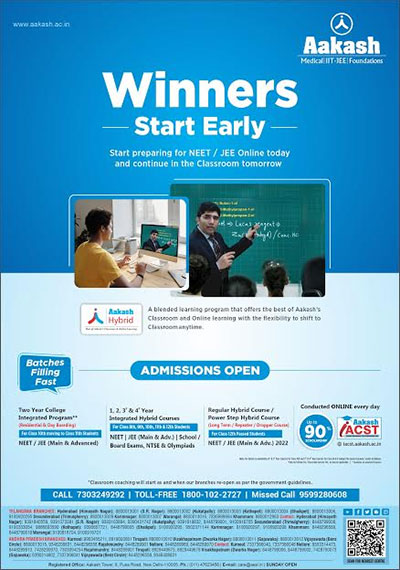
    Aakash Educational Services Limited has launched print campaigns for its instant admission-cum-scholarship test, also known as the iACST. The campaign will run over a period of fifteen days across national and regional dailies.


    The campaign highlights the opportunity that iACST gives to students so that they can start their journey early post a 60-minute test. The scholarship enables students from different social and financial backgrounds take advantage of quality teaching at Aakash.


    Said Abhishek Maheshwari, CEO, Aakash Educational Services Limited (AESL): “We are committed to providing the best to the students who are preparing for JEE and NEET examinations. We empathise with the parents and students predicament in these tough times and want to highlight the importance of early and timely preparation. Our Hybrid offering allows students to start their preparation online and seamlessly migrate to offline when the centers open and our scholarship exam enables them to avail upto 90% scholarship.”


  • Adspending globally degrows only 1.2% in 2020!


    By Indrani Sen


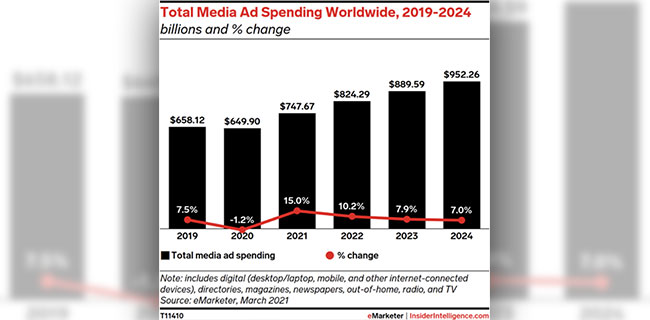
    Indrani SenLast week, I read an article “How the pandemic changed worldwide ad spending” by Etham Cramer-Flood on emarketer.com. The article compared the forecasts made by them with the revised estimates and spoke about their predictions for 2021. The reason I would like to share the highlights of that article here is due to the optimistic attitude reflected in their calculations. They pointed out that according to their analysis, the final figures for 2020 “outperformed dire mid-pandemic projections.” According to this article, the global adspending has a degrowth of only 1.2% in 2020 which is the lowest among all the various estimates seen till now. (https://www.emarketer.com/content/how-pandemic-changed-worldwide-ad-spending?ecid=NL1001)


    As shown in the above chart, after a contraction of 1.2% in 2020, the global ad pending is predicted to grow by 15.0% in 2021. Even traditional adspending will grow this year, by 7.6%.  The growth rate will come down to 10.2% in 2022 and subsequently over next two years will fall down to 7% in 2024 compared to 7.5% growth rate of 2019. By the end of 2024, ad spending worldwide is expected to be close to $1 trillion.


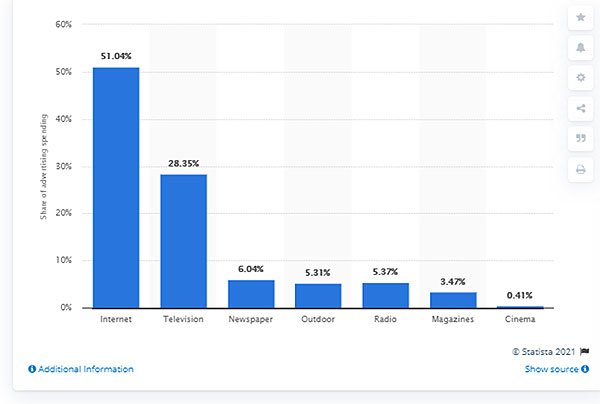
    All the various estimates on global advertising spending released so far agree that while the ad spending on traditional media suffered a huge degrowth, the overall situation was saved by growth of adspending on digital media with the share of digital advertising varying from one research to another. Traditional media were already in slow declining mode across various countries in the pre-pandemic years. The pandemic aggravated their degrowth. As the article does not have a chart showing the share of different medium in worldwide advertising spend. I have sourced one chart from www.statista.com with the medium-wise distribution of global advertising spend in 2020 which is shown below:


    Distribution of advertising spending worldwide in 2020 by medium

    Source: https://www.statista.com/statistics/376260/global-ad-spend-distribution-by-medium/


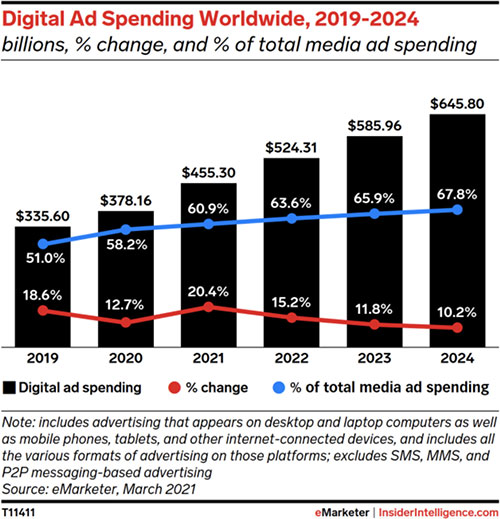
    The www.statista.com has estimated that in 2020, the shsre of digital advertising in the worldwide advertising has touched 51.%. The balance 49% is distributed among the traditional media with TV leading the pack with 28% share followed by newspapers 6%, outdoor 5%, radio 5%, magazines 4% and cineam 0.4%. The analysis of www.emarketer.com agrees that globally the share of digital advertising spend may touch 60% by end of 2021 and 70% by 2025.


    The pandemic has surely accelerated the growth of digital media across the world in the middle of major economic disruptions.  We have also been surprised by the kind of resilient growth of digital advertising in India showed in 2020. However, it will take at least this decade before the share of digital advertising in India can have the highest share in the Indian advertising pie.


  • Former ASCI secy-gen Shweta Purandare quits Diageo

    By Our Staff


    Shweta Purandare
    Shweta Purandare

    Shweta Purandare, who was until last year Secretary General of the Advertising Standards Council of India, has decided to leave Diageo, which she had joined as Head of Corporate Communications in September 2020. Although there is no official word from Diageo or Purandare, according to our sources, Purandare is serving notice will exit by the month-end.


    After a pharma masters and an MBA, Purandare worked for several years at P&G, L’Oreal and her own consulting practice  before an eight-year stint at ASCI.


  • Tonic Worldwide bags digital mandate for Pure Nutrition

    By Our Staff


    Tonic Worldwide has bagged the integrated digital mandate for Pure Nutrition. As part of their mandate, Tonic Worldwide will be managing the social media, paid media, website development and SEO for Pure Nutrition.


    Chetan Asher
    Chetan Asher

    Said Chetan Asher, Co-Founder & CEO, Tonic Worldwide: “Pure Nutrition wants to create a strong impact in the domain of health and nutrition and we are delighted to partner with a brand which focuses on this realm in times like these. With our strategic and creative strengths, we look forward to building the brand on digital platforms.”


    Sushil Khaitan
    Sushil Khaitan

    Added Sushil Khaitan, CEO and Director, Pure Nutrition: “In today’s world it is of vital importance for businesses and brands of all kinds to have an effective online presence and stay relevant. Pure Nutrition’s prime forte lies in enhancing the complete well-being and quality of life of its customers through its natural supplements. With this association we are looking forward to exploring new avenues and serving our consumer base better. To encourage conversations with our consumers in the digital space, keep them engaged and create a strong relationship with them digitally will be the primary goals of this partnership. We look forward to everything that the digital space has to offer and hence work towards our consumers more effectively.”


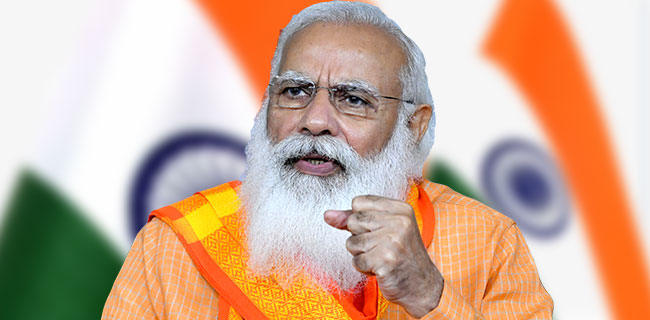
  • Time for Brand Modi to strategically act and regain shine


    By Sanjeev Kotnala


    Sanjeev KotnalaBrand Modi, in its upgraded National Avatar, completes seven years as Prime Minister of India. It is an accepted fact that Brand Modi (Narendra Modi) came into the spotlight as a powerful star brand for the BJP, the Indian Government, and the international community. However, today, the brand’s capabilities, impressions, perception, utility, and functionality are questioned by the majority stakeholder; the country’s citizens and more specifically the voters.


    It does raise the possibility of Brand Modi resurgence, rejuvenation, or weakening before burning out. All is possible, as the stakeholders are known for a short memory. Brand Modi knows that regionalism, religionism, and patriotism-coloured emotions easily arouse the stakeholders and the last two years of politics can help him to power in 2024. It can.


    Brand Modi is about centralised decision-making and venturing where others don’t dare to think. It been communicative and connecting with the masses and the global leaders, but has lost the link with recent silence. It forgets: the nation wants a leader that leads from the front. Brand Modi, built on hyper-expectation, lacks effective delivery. It is lost in the future vision for a country that thrives on instant gratification.


    The recent debacle in  Bengal Election, the election rallies, and Kumbh during the pandemic has raised doubts on Brand Modi’s extendibility.


    In spite of short memory, the recent cries for help and exposure of the lack of infrastructure in the fight against Covid may have a long-term impact. Covid-19 deaths are no longer numbers- they are names, as everyone has in one way or another experienced the loss of someone close. The lethargic flip-flop on the vaccine and the resultant crisis has further eroded the brand.


    The audience questions Brand Modi on secularism, industrialist lobby, funds utilisation, farmers reform, GST, Rallies, vaccination, freedom of speech, Kashmir, China, Shaheen Bagh, etc. The list is too long. Now action and inaction, both further polarise the people who love or hate him.


    Brand Modi may still win the centre in 2024. But, it is losing ground connect and support, which has rejuvenated competition. Comparatively, today, the Brand Modi looks robust, bankable, and sustainable only because of the weak opposition.  However, in the absence of a strong candidate of force, the battles can still be won on a regional basis, if not on a religious basis. Brand Modi needs to understand that the pride of enhanced international image is of no use in these games.


    Mastermind Sunil Verghese from Chennai feels there are not too many wrongs by Brand Modi to decisively impact the perception. The Gujarati coterie has been running the country with a commercial outlook, which is excellent in good times and great for the industry. But when it comes to a crisis, you need insurance of some sort. So far, Modi has been upfront and communicative. He has taken the burden of unpopular decisions of the government. However, after the second wave, Modi has been silent. He needs to reassure the country. He needs to have a good set of professionals and experts around him. These are the only wrongs. Nothing serious. But there are a lot of rights. He has taken on corruption, cut out middle man, direct benefit transfer, world quality roads. He has the guts to take every coterie head-on. The threat is china; his hands are tied more by china than by Rahul or other opposition or hostile media.

    The brand is finally a perception adulterated with reality.

    Brand Modi’s silence or lack of well-coordinated strategic communication in the recent past is surprising and it is negatively impacting the brand. The audience makes their mind based on the available information. Unfortunately, the brand calling for transparency is clouded under veils of misinformation. Hopefully, BJP understands the power of communication and that milestones have no meaning- for the masses, till they don’t understand how they impact their lives. Nothing else matters.


    A small dipstick and individual discussion suggests that the masses believe Brand Modi has taken the mandate and support granted. It underestimates the opposition. The patriotic feeling and hype are seen as hygiene for the BJP, and today carries no weight. The Ram Mandir issue is resolved! Kashi- Mathura are minor political diversions.


    In past, Brand Modi like the magician Houdini has emerged shining after major politically hard decisions. The image took a beating earlier too. But the pandemic is a different case altogether.


    During the Covid-19 second wave and vaccination drive, the masses have parked most of the blame at the doors of central Government, which equates to Brand Modi. When empathy was required, Modi was seen leading towards chaos. Where social distancing and masking were desired, Modi was seen as undisciplined rallies. The emotional scars and the perceptual imagery of an unprepared government that could not (or did not) act or come to rescue will not be easily erased.


    Modi was seen as the capable PM ready to take hard decisions for the long-term benefit of the country. The followers defended every action. The situation has changed. No one knows what all and how to defend what seems ill-informed autocratic decisions, that too against the expert recommendations.


    The masks come off in time. Seven years have shown chinks in the armour of brand Modi. The magician Modi and maverick Amit Shah, along with Rajnath Singh and Nitin Gadkari, need to act now to ensure the Brand Modi shine again.  


    Someone in advertising and unwilling to be identified commented. Brand Modi is like a snail. Slow with a hard shell. It goes into the shell when a crisis hits. A brand built on the expectation of results and supported by the best in advertising, cannot survive on past laurels.


    Just because Modi seems to be the only viable alternative should not lead it to complacency and silence. It must act strategically to revitalize, rejuvenate, re-connect or it will be branded defaulted. It is time to seek a second opinion and a call for a Pitch.


    N.K Gontia, a Professor in Gujarat feels, Brand Modi has apparently gone down during the pandemic; however, people will realise its abilities and development works done at the end of the pandemic, and it will rise to become the real leader and BM will shine. The opposition lacks constructive ideas for people. They only criticise every step of the government, which may not be going to damage the net perception of brand Modi.


    Brand Modi, even today, owns few positive adjectives like Integrity, Target-oriented, Tough Taskmaster, Down to Earth, and Patriotic. This contrasts with the adjectives associated early in 2014- Tough Taskmaster, People-Centric, Political Solution, and Untainted.


    People strongly believe in Brand Modi and its ‘Nation First’ approach. They see him build a country of future and expect that the results and benefits will take time to accrue. But, is that relevant in the political scenario- the Brand Modi marketplace.


    Unfortunately, Brand Modi is strongly associated with regionalism and religionism. He is seen as Hindu dominant and has not done much to negate it. It is the strength and the weakness of Brand Modi. The Kesariya and the Ram Lala cards are past expiry dates.


    BJP under Brand Modi came to power as a well-crafted alternative to congress and other dynastic-oriented state parties. But this strength is diluted. Many don’t see BJP much different from its political foes. But seeing as the lesser of the two evils and more capable- voters may be forced to still bank on Brand Modi.


    Mohan Singh, a professor from Jabalpur, believes if the citizens displace their faith from brand Modi, it will be a disservice to the country. Modi and his team are working very nicely on all fronts to construct and develop India towards a better tomorrow for the safety comfort and convenience of all the citizens. They are working hard to change the image of India and Indians in the world and also bringing honour and confidence to the citizens of the country. His foreign policy is best since independence. Team Modi is going very nicely and they deserve a comeback in 2024..


    People still believe Brand Modi can deliver, but their confidence is shaken. Everyone has a lot to say about what Modi must do. However, all believe that it is time for the brand to act. The Brand Modi has a dent and it is no longer ‘shagun ka dent’ – it is a visible dent that needs repair.


    I think the Swarajya Magazine has got it right on what Brand Modi must do. Similar thoughts were voiced in discussions. Three years is a lot of time for damage control


    Decentralise. Give people the freedom to act. Use experts in the field. Create – nurture a strong level two in the party. Present and implement transparently with vigor the policies and programs to revive the economy.


    This government and Brand Modi have been known for being decisive. Stop vacillating and prostration. Go full out on what is best for the country. Somehow do things to remove the Adani-Ambani-Patanjali camp image.

    Though many will want Brand Modi to be finished, the brand has excellent support and possibilities to resurge, revitalise and revamp.


    …………………………………………………


    I am no political analyst, but a Brand & Marketing Consultant. The above is the summation of perceptions tracked in discussion on social media, individual conversations, and small dipstick. Some references are Free Press Journal – Amid rising Covid-19 cases, RSS chief Mohan Bhagwat blames Modi-govt and the public for ‘complacency’.  Economic Times- Covid wave 2, leadership pitfalls, and the Stockdale Paradox.  The Economist – India’s national government looks increasingly hapless. Swarajya https://swarajyamag.com/politics/if-modi-wants-to-win-2024-heres-what-he-must-do?s=08


    Sanjeev Kotnala is a senior business strategist and educator. An alumnus of IIM-Ahmedabad, he has worked across organisations including a few leading ones in advertising and media. He writes on MxMindia every Wednesday. His views here are personal.

     

  • Kavita Kamath joins Wondrlab as Group CD

    By Our Staff


    Kavita Kamath
    Kavita Kamath

    Wondrlab, has bolstered its creative team by announcing the bringing in of Kavita Kamath as Group Creative Director. In her new role, Kamath will report to Amit Akali, Co-Founder and Chief Creative Officer at Wondrlab.


    At Wondrlab, Kamath will lead creative integration and content creation on a large set of key accounts.


    Amit Akali
    AmAmit Akaliit Akali

    Welcoming Kamath on board, Amit Akali, Co-Founder & Chief Creative Officer, Wondrlab, said, “Being platform-first, we’re a very different kind of a start-up and therefore hire people with unique skillsets. The coming days are full of opportunities and I am sure someone senior and experienced like Kavita will help us make the most of it. At her level, she’s not expected to bring just skillsets to the table but also a mindset. While she’s from an art background, she’s very comfortable handling a huge team. She has worked on tech platform brands like Google and done truly integrated work – more importantly, she believes in what we are trying to achieve here and is looking at it as an entrepreneurial opportunity. I’ve been in talks with her for a couple of years now and am looking forward to finally working with her. She’s going to be working out of Delhi and Mumbai, reporting to me. Here’s expecting a lot of ‘Wondr’ from her.”


    Kamath has nearly 16 years of experience, a large part of which she gathered at MullenLowe Lintas, where she spent a decade.


    About her new role, Kamath said: “There is a more holistic approach to marketing and brand communication now, and the way forward is integrated solutions to keep brand conversations going meaningfully. I had been following WYP’s work for some time. What interested me was the integrated approach with which ideas were curated and the platform-first solutions to help brands with effective communication. The work on Diageo and Tanishq, to name two of many, has been truly refreshing. I’m thrilled to be a part of the WYP and Wondrlab family and look forward to doing some exciting work.”


  • Rediffusion files trademark for ‘Postalgia’

    By Our Staff


    Sandeep Goyal is at the helm and it’s raining communiques and announcements. The Rediffusion Consumer Lab (Red Lab) has coined a new word, Postalgia, or nostalgia in the future tense or ‘post-nostalgia’. It has filed a trademark on the usage of the word.


    Said Navonil Chatterjee, Head of Red Lab and the person who coined the term: “Postalgia is a new pandemic-driven twist to the traditional concept of nostalgia. We at Red Lab observed this trend of consumers today wanting the future to reflect their pandemic-freepast, and came up with the term postalgia to describe it. If nostalgia is for the past or the ‘pre’, postalgia is all about the future or the ‘post’. Hence the coinage.”


    Added Goyal, who is Managing Director of Rediffusion Brand Solutions: “Trademarking of ‘postalgia’ is just to ensure that Rediffusion and Red Lab are credited for the coinage. We will otherwise encourage its widespread media usage, and its usage by brands. Red Lab is dedicated to greater understanding of consumer behaviour, and to sharing key insights with our clients and peers.”


  • ASCI Influencer Guidelines: A Good Start But Must Evolve With Time

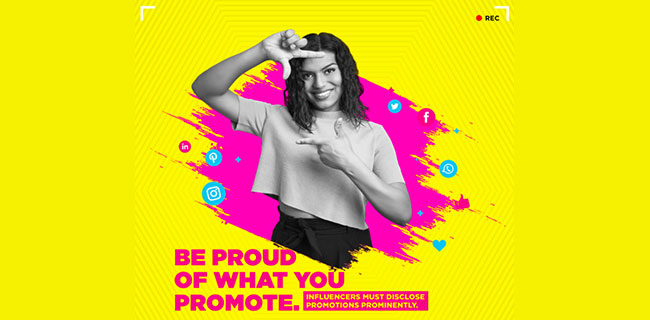
    Picture edited from a post on the ASCI social media handle


    By Sanjeev Kotnala


    Sanjeev KotnalaI enjoy such epic moments and milestones in the evolution of our marketing and advertising fraternity. It is heartening to see that ASCI, the Advertising Standards Council of India, finally launch the much-awaited and much-debated guidelines on influencer marketing. To be operational from June 14, 2021, simply put, it asks an influencer to clearly flag a sponsored/ paid-for content. Because, with great influence comes greater responsibility.


    I love watching polarised views emerge and new debates taking birth. Points and counter-points are traded, and a few of the masks come down. Good, Bad and Ugly punches are exchanged without the famous tune. Everyone is like – if you want to shoot, shoot. Don’t talk!


    Everyone agrees that it is the need of the hour. A few with the experience with past guidelines and their impact – wait with bated breath to see – how successful the implementation will be.

    And that is where I too had many questions.


    I was in a positive mood as recently ASCI had upheld my complaint on a product’s Covid immunity claim. Also, it upheld the complaint against an actor for violating celebrity guidelines.


    So, over the weekend, I had a Zoom meeting with my dear friend and consultant Vermajee. Here is the summary of what we discussed over a cup of ID filter coffee.


    Vermajee said that brands and marketers are finding new ways to communicate and influence consumer choices with technology. It is the right of the audience to know if the message is sponsored or paid for. Honestly, if it not self-regulated, someone will step in to regulate, and none of us wants it.


    So, ASCI had to start somewhere someday. Influencer advertising was rising and was being misused. He questioned as to why do I expect the guidelines to be perfect. He reminded me that perfection is a myth and that guidelines and rules lag behind abuse and exploitations. So, there is no point in waiting for perfection and trying to close every loophole before implementation. According to him, full marks to ASCI for taking action in a time-bound fashion. I never knew he was that pro-ASCI. 


    PAST EXPERIENCE CREATES DOUBTS.

    But, he also had doubts. He questioned if ASCI can really stop anyone from posting on social media without following the guidelines. ASCI expects peer pressure and influencers to set examples as a way to change behaviour. That is one of the most foolish things to expect.

    Vermajee believes, and I too sincerely endorse, that ‘Nothing will happen unless the erring brand is held responsible for the actions of the influencers and celebrities. Unless infringement in one media cannot be penalised by debarring the brand from every other media. Pointing out that the life of a social media campaign post is shorter than the time taken to file a complaint, ASCI must act in hours and not weeks. Technology and AI usage to catch the erroring Influencer is a good step. Hopefully, these guidelines will not be another toothless tiger. But, frankly, he doubts if anything will happen.


    DOUBTS PERSIST.

    So, it is not surprising that I had a sinking feeling about the whole thing.


    It reminded me of the powerful sequence from Hindi cinema. Deewar, where Shashi Kapoor, the policemen aka ASCI, asks Amitabh Bachchan, the erroring fraternity member aka Influencer, to write that the content is paid or sponsored.


    The influencer AB answers, which so cheese off with non-inclusive polarised guidelines that impact media differently, is full of anger and frustration in being single out for its success. The Influencer says, ‘Jao Pehle akhbaar se Sahi tareekhe se likwakar aao ki content sponsored advertorial hai editorial Nahi.’ ‘Go first make the newspapers write prominently that the content an advertisement, paid and sponsored and not an edit material.’


     DIFFERENT TAKE.

    Maybe it will manage to push every Influencer to transparently declare their association and or conflict of interest while posting about the brand. It is going to be a tough one. As the moment such a declaration is made, the possible impact of the message drops. Who will pay for this decreased efficiency and lowered revenues of the influencers? The truth is, it is in the interests of the brand that such associations are not publicly acknowledged. So, in case of guidelines violations, it is brands that should be penalised.


    There is another point of view and a possibility, that the market will self correct itself. And in some time the impact of labelling a content as paid/sponsored etc on its reach and effectiveness will get neutralised. When that happens and the audience will no longer have to guess the association, it will have a net positive impact. 


    MORE ISSUES.

    How is ASCI going to control foreign influencers and celebrities from not following the guidelines? Social media is, after all, global with no boundaries. I am not sure how it can control and object to a tweet that did not originate on Indian soil or an Indian Influencer. So, will it shift the focus from Indian influencers? Vermajee reiterated, unless you do not hold the brand primarily responsible for it, the problem will remain.


    THE INFLUENCER AND CELEBRITY DEBATE.

    Is the influencer guidelines different from the celebrity guidelines? Should they be different? How are we sure that the audience can differentiate and advertisement and content when it comes from a celebrity but fails to do so when it comes to the influencers? And, when does an influencer become a celebrity? Does the number of followers, frequency of the post, or the quantum of the monetary transaction define the status?


     ACT EARLY.

    The error and mistake need to be curbed at the start.


    ASCI processes are long-drawn. The change-modification demand is in reality a request. Unless ASCI is willing to haul some brand all the way – across the legal challenges- and make an example of it- trust me, the violations will remain.


    Vermajee, taking another sip of coffee, clarified his position. “I am all for the influencers and celebrities doing due diligence and getting the paperwork right. Misinformation should be avoided at any cost. So, I would welcome, if the onus of guideline implementation is firmly on the brand.”


    TURBULENT PAST.

    ASCI has failed to demonstrate the intent and implementation of such guidelines in the case of newspapers. The inclusive educational approach to shape the narrative across media, creative developers and celebrities have failed. We continue to see the best of the brands and marketers flouting the guidelines. And ASCI still thinks such an education outreach initiative in influencer advertising will show any different results.


    Why can’t all member bodies ensure that everyone associated with the creative development and media functions has taken the ASCI course on guidelines?


    HOPE IS EVERYTHING.

    But life must continue. One must believe in the intent and the ASCI promise to ensure that the guidelines evolve with time. It is in the interests of consumer, influencers, agencies, platforms and advertisers.


    WHAT ABOUT THE SOCIAL MEDIA.

    While licking the last bit of coffee, Vermajee shared what he was thinking. We have seen the arrogance of these social media giants. They arrogantly address parliaments and committees. They challenge the rules of the nations and even suggest what rules the country should have. They believe in creating and expecting their own rules and guidelines to supersede everything else. Everything under policies, privacy and freedom of expression- how will ASCI work with them?


    What will be the role of the social media platform?


    Will the social media platform on ASCI request or complaint closing the account of an errant influencer not following the guidelines? Don’t we know the answer!


    STILL, EACH ONE OF US CAN CONTRIBUTE.

    So, enjoy the feel-good moment and clap for the ASCI milestone of influencer guidelines. Wish ASCI all the best. And let us contribute by taking the pledge to religiously follow the guidelines. At least we can individually do so.


    Sanjeev Kotnala is a senior business strategist and educator. He writes on MxMIndia every Wednesday. His views here are personal


  • Zenith appoints Priyanka Kapur as Vice President

    By Our Staff


    Priyanka Kapur
    Priyanka Kapur

    Zenith India has appointed Priyanka Kapur as Vice President to lead its Nestlé business. She will be responsible for media planning, relationship management and supervising the complete and integrated offering for the client. Her key focus will be on strategy, digital transformation, data, analytics, implementation and buying.


    A postgraduate from NMIMS, Kapur has over 18 years of rich experience in media and marketing. Her last assignment was with Lodestar UM for almost 10 years as Connections Lead for its key client Coca-Cola. Her role involved spearheading the strategic planning product across portfolio brands and in crafting solutions, connecting brands to consumers. She was also responsible for research, insights and staying updated on the latest consumer trends and building them seamlessly into  solutions for brands.


    Announcing the appointment, Jai Lala, CEO, Zenith India said: “I am delighted to have Priyanka on-board.  Priyanka’s diverse work experience in the field of media and strategic approach towards the  business will help provide impactful and effective solutions to our clients, in an evolving media landscape.”


    Added Kapur: “I am really excited about Zenith’s unique ROI plus and digital-first approach that delivers maximum business results for clients. Also, I am delighted to be part of  Publicis Groupe and look forward to the PowerOfOne advantage.”


  • DDB Mudra bolsters creative leadership

    By Our Staff


    Pallavi Chakravarti
    Pallavi Chakravarti

    DDB Mudra has announced the appointment of Pallavi Chakravarti as Creative Head of the West office. Chakravarti will work closely with Rahul Mathew, CCO, DDB Mudra Group to take on the responsibility of driving the agency’s creative product. Her last stint was at Taproot Dentsu, where she led the creative function for the Mumbai office as Executive Creative Director.


    Rahul Mathew
    Rahul Mathew

    Speaking on the appointment, Mathew said: “Over the last couple of years, we’ve been slowly gathering momentum as an organisation – No.2 at Effies, topping the new biz league, back-to-back Grand Prixs at Spikes Asia and our more recent performance at Kyoorius. And Pallavi is just the person to help us keep this momentum going and add more kick to it. She strengthens our belief and our ambition to do unexpected work that gets disproportionate results for our clients.”


    Added Chakravarti: “I’m here to build, to enjoy the creative process, to love the business of advertising even more than I already do. I’m here because it felt like the right place to be. And I’m looking forward to the journey – there’s really nothing else to say, is there?”


  • Dentsu X and Carat get two new senior leaders

    By Our Staff


    Dentsu International has announced two new senior leadership appointments across its global media agency portfolio: Fiona Lloyd, has been promoted to the role of Global Client & Brand President at Carat and Sanjay Nazerali steps up as the new Global Client & Brand President, dentsu X.


    Peter Huijboom
    Peter Huijboom

    Said Peter Huijboom, Global CEO Media & Global Clients, Dentsu International: “We now have new faces and fresh thinking driving each of our global leadership media brands, each with the determination and spirit needed to deliver meaningful progress and growth for our clients and our business. Even before taking on these new roles, both Sanjay and Fiona have already been instrumental in shaping our new, simpler and streamlined market proposition.  Sanjay helped to establish and grow the dentsu X brand outside of APAC when it launched and, Fiona has been driving an entire global re-brand of Carat and created its new ‘Designing for People’ proposition ready for the next phase of our growth plans.”